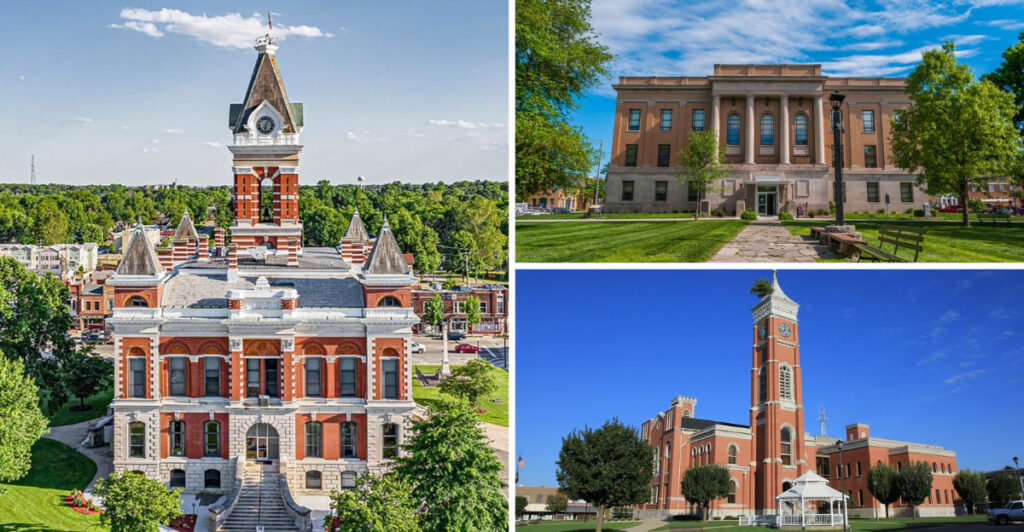
Indiana’s most beautiful courthouses are among the state’s greatest architectural treasures, drawing travelers with soaring domes, ornate clock towers, stained glass, and beautifully preserved historic details. Scattered across courthouse squares from bustling county seats to quiet small towns, these landmarks showcase the craftsmanship, civic pride, and rich history that helped shape Indiana’s communities.
They are far more than government buildings—they’re some of the most photogenic stops you’ll find on an Indiana road trip. Whether you love historic architecture, scenic downtowns, or discovering overlooked landmarks, these 12 Indiana courthouses deserve a prominent place on your travel itinerary.
1. Allen County Courthouse (Fort Wayne)
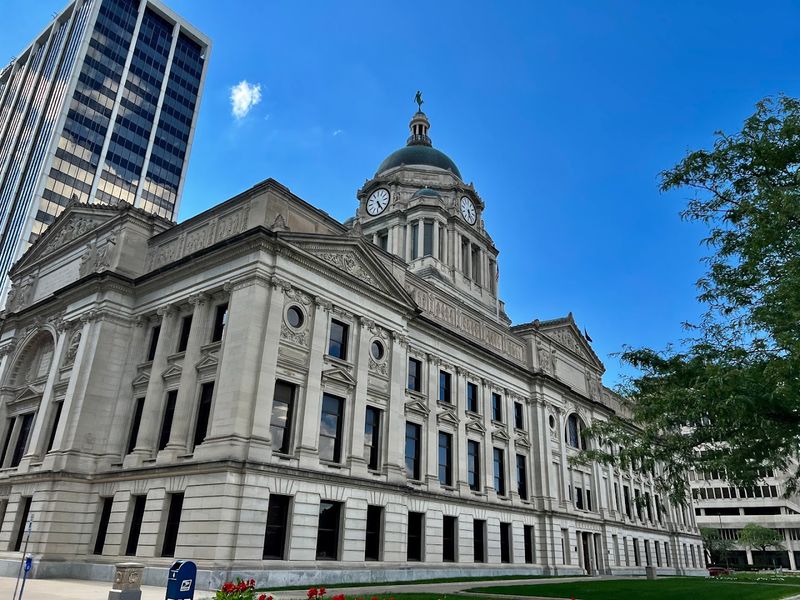
Start in Fort Wayne, because Allen County Courthouse sets the bar absurdly high. This Beaux-Arts landmark rises over downtown with a commanding dome, sculpted limestone, and the kind of formal symmetry that makes even a quick curbside glance turn into a full stop.
Every angle offers another detail to chase, whether your eyes land on carved ornament, tall arched windows, or the rich layering around the entrances.
Step closer and the craftsmanship becomes the main event. The building carries itself with serious civic grandeur, but it never slips into stiffness because the decorative work is so lively, from stone figures to trim that rewards slow looking.
You can tell this place was designed to impress people before they ever crossed the threshold, and it still does that job with ease more than a century later.
Inside, the experience shifts from stately to downright lavish. Marble surfaces, stained glass, murals, and polished architectural flourishes create a sequence of interiors that invite your camera to work overtime, while the dome overhead keeps drawing your gaze upward.
Instead of one showpiece room, the courthouse offers a whole procession of them, each with a slightly different mood and texture.
For a road trip stop, this is the courthouse that can turn a casual architecture fan into a full convert. It anchors downtown Fort Wayne with the confidence of a building that knows it belongs in every conversation about Indiana’s best public spaces. Go for the dome, stay for the details, and do not rush the interior if you get the chance to see it.
2. Tippecanoe County Courthouse (Lafayette)
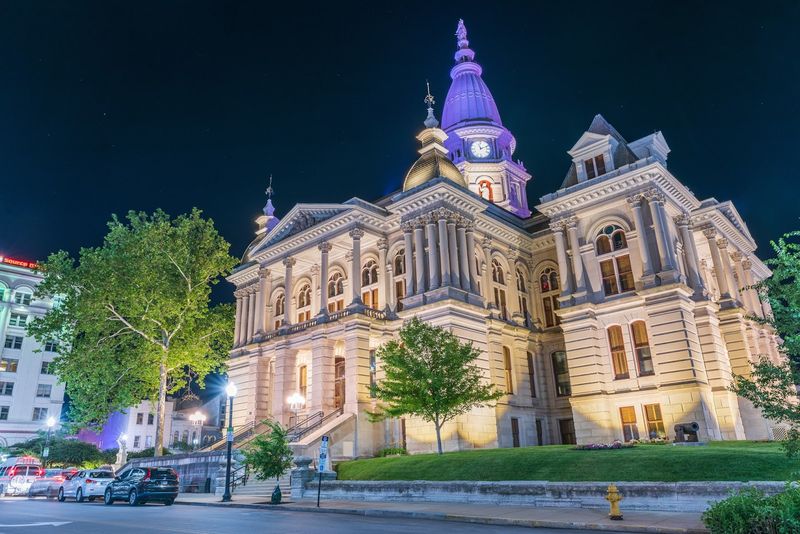
In Lafayette, Tippecanoe County Courthouse brings instant personality to the center of town. The Second Empire design announces itself fast with a dramatic mansard roof, a tall clock tower, and colorful slate that gives the whole composition extra swagger.
It is the kind of building that looks lively even when standing perfectly still, thanks to all the texture packed into the roofline and stonework.
Plenty of courthouses rely on sheer scale, but this one wins with silhouette and detail. As you circle the square, the roof shifts shape, dormers appear and disappear, and the tower keeps resetting the view like a visual anchor.
The exterior feels carefully composed without losing charm, which is a tricky balance and one this building handles beautifully.
The restored interior adds another layer to the visit. Instead of peaking outside, the courthouse invites you to keep going, rewarding that curiosity with handsome finishes and a sense of historic continuity that suits Lafayette’s old downtown streets.
You get the pleasure of seeing a building that reads as grand from a distance and then stays interesting when examined up close.
This is an easy stop to fold into a day of wandering shops, cafes, and the surrounding square, but the courthouse never blends into the background. It has too much character for that.
Between the clock tower, the patterned roof, and the rich stone detailing, Tippecanoe County Courthouse offers the kind of architecture that keeps your attention moving, which is exactly what a memorable road trip landmark should do.
3. Vigo County Courthouse (Terre Haute)
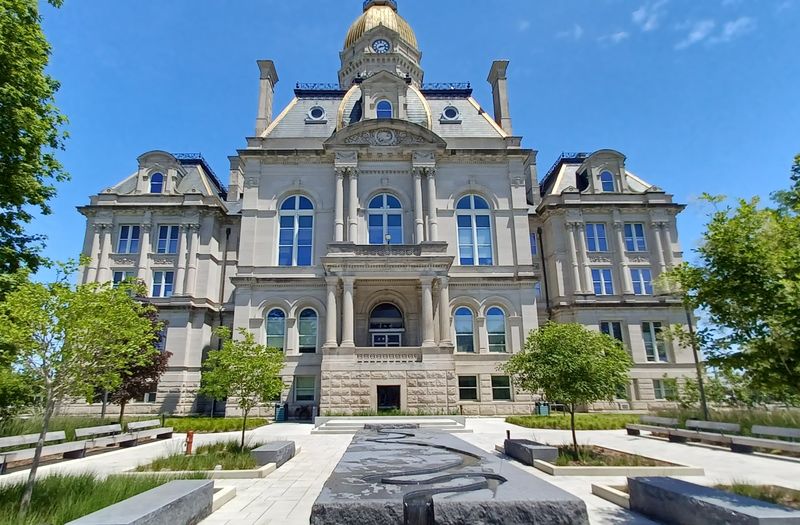
Terre Haute’s Vigo County Courthouse makes a strong first impression without needing any gimmicks. Grand columns, an elegant dome, and richly ornamented façades pull together into a Beaux-Arts composition that looks both formal and inviting.
It has the kind of presence that instantly clarifies where downtown’s visual center is, even if you arrive without a map.
Seen from street level, the courthouse plays with scale in smart ways. The dome gives the skyline a clean focal point, while the classical detailing along the lower levels keeps your eye busy with cornices, trim, and stonework that grows more impressive the longer you look.
There is confidence in the design, but also restraint, which helps the building age well in photographs and in person.
If you get inside, the rotunda is the major draw. Spacious and light-filled, it turns the courthouse into more than a handsome shell by creating a memorable interior volume that matches the exterior ambition.
The decorative language stays cohesive throughout, with classical influences carrying from the outside walls into the interior spaces in a way that feels polished rather than overdone.
For travelers chasing Indiana’s best civic architecture, this stop has real range. It satisfies from a distance, rewards close inspection, and holds its own among the state’s more famous domed courthouses.
Vigo County Courthouse also benefits from the surrounding downtown context, where historic streets make the building look even more at home. Bring a camera with a wide lens if you can, because fitting the dome, columns, and façade into one frame becomes part of the fun.
4. Bartholomew County Courthouse (Columbus)
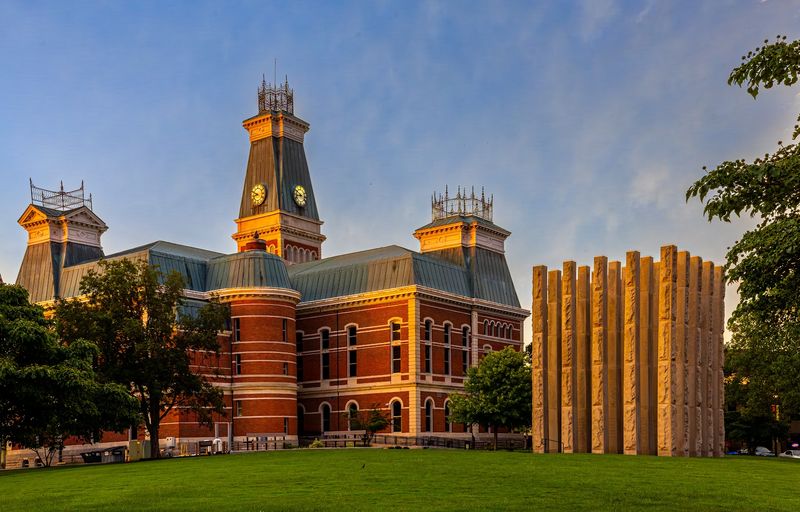
Columbus gets plenty of attention for modern architecture, but Bartholomew County Courthouse proves the city also knows how to do nineteenth-century drama.
Built in the Second Empire style, it stands out with a tall central clock tower, decorative iron cresting, and a roofline that brings welcome color and texture to the square. Even before you notice the finer stonework, the silhouette grabs you.
This courthouse rewards a slow lap around the block. The tower keeps shifting its relationship to the rest of the building, the cresting adds a sharp decorative edge against the sky, and the stone surfaces reveal a layered, ornate approach rather than a plain monumental one.
It looks proud without seeming heavy, which is not always easy for historic civic buildings to pull off. Because Columbus is such a noted design destination, this courthouse benefits from contrast.
Instead of blending into the background of the city’s architecture conversation, it brings older visual language into the mix and does it with real confidence.
The mix of vertical emphasis, roof ornament, and carefully composed massing gives the whole building an energetic presence that holds up from multiple viewpoints.
On a road trip, this is the kind of stop that broadens the story of Columbus beyond the expected headlines. The courthouse serves as a reminder that architectural interest here did not begin in the twentieth century.
Between the clock tower, the decorative trim, and the colorful upper levels, Bartholomew County Courthouse offers a smart, photogenic counterpoint to the city’s newer landmarks and makes the downtown core richer for it.
5. Decatur County Courthouse (Greensburg)
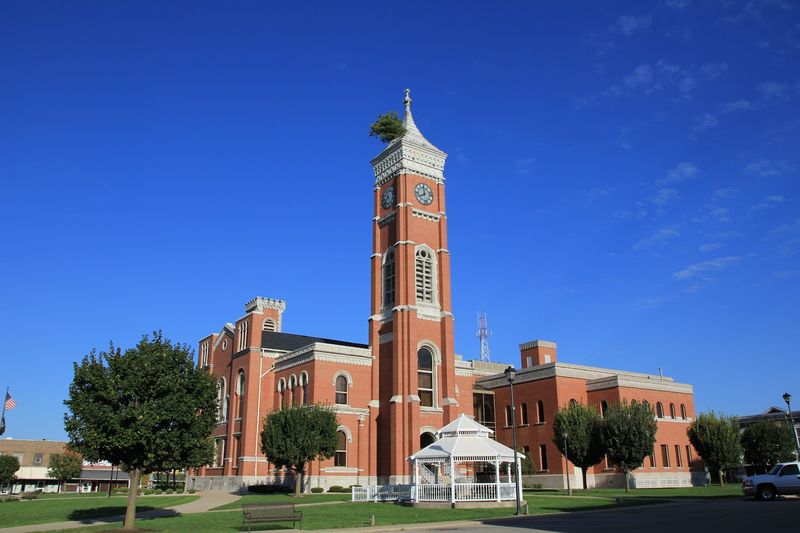
Greensburg’s Decatur County Courthouse has one of Indiana’s most talked-about courthouse views, and yes, the tree on the tower gets attention fast. Still, the building itself easily earns a stop with or without that famous detail.
Its Romanesque Revival design brings arched windows, textured stone, and a commanding clock tower together in a way that looks sturdy, distinctive, and full of historic character.
The best approach is to let your eyes move beyond the tower headline. Once you do, the courthouse starts showing off rounded openings, layered masonry, and a weighty composition that feels grounded rather than ornate for ornament’s sake.
There is a satisfying solidity to the architecture, and that heft gives the more decorative features extra impact instead of competing with them.
Because the building is so closely tied to Greensburg’s identity, it reads as more than a backdrop. It shapes the downtown experience, anchoring the square with a look that is at once practical and memorable.
The clock tower adds vertical drama, while the stone textures and Romanesque arches keep the lower levels visually rich for anyone walking around with a camera.
This stop works especially well for travelers who like a landmark with a conversation starter built right in. You get the novelty people mention first, but you also get a courthouse with real architectural depth and a pleasing sense of preservation.
Decatur County Courthouse proves that a famous detail does not have to overshadow the whole building. In this case, it simply gets you there, and the rest of the structure handles the job of keeping your attention.
6. Dearborn County Courthouse (Lawrenceburg)
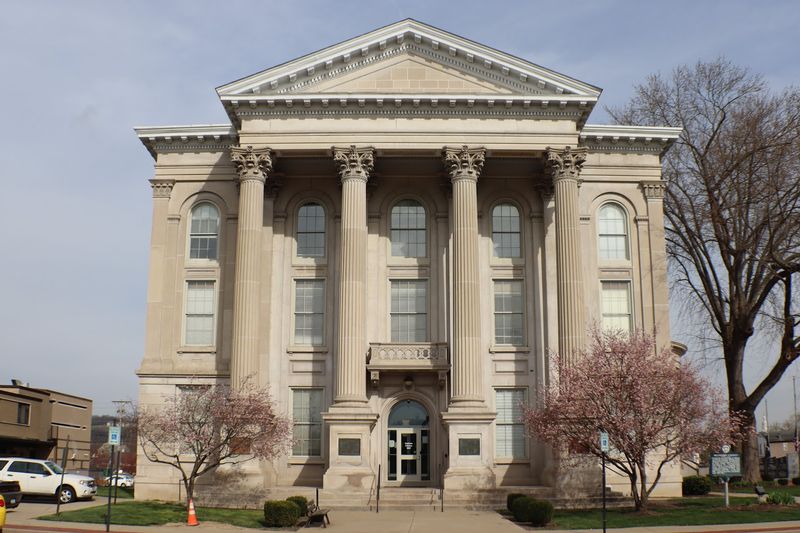
Lawrenceburg’s Dearborn County Courthouse brings a calm, commanding elegance to its historic downtown setting.
Built in limestone and shaped by Beaux-Arts and Classical Revival influences, it relies on symmetry, massive columns, and an elegant dome rather than flashy excess. The result is a courthouse that looks polished from every side and carries itself with real confidence.
The dome gives the building a clear visual signature, but the columns do plenty of heavy lifting too. They create a strong front-facing rhythm that makes the courthouse read as formal and balanced, while the stone exterior adds just enough softness through texture to keep it from looking severe.
From the sidewalk, the composition feels measured in the best way, with each element supporting the next. Lawrenceburg’s river-town context helps this courthouse shine even more. Historic surroundings often need one architectural anchor that settles the whole streetscape, and this building does exactly that.
It does not shout for attention, yet it never disappears either, which is a rare strength for civic architecture and one that makes it especially satisfying to visit in person.
If your road trip taste leans toward stateliness over spectacle, put this one high on the list. Dearborn County Courthouse delivers the classic courthouse image many travelers hope to find, complete with a handsome dome and broad columned façade, but it does so with enough refinement to keep the experience fresh.
Spend a little time taking it in from different corners of downtown, because the proportions are part of the appeal and they read best when you see the building settle into its surroundings.
7. Posey County Courthouse (Mount Vernon)
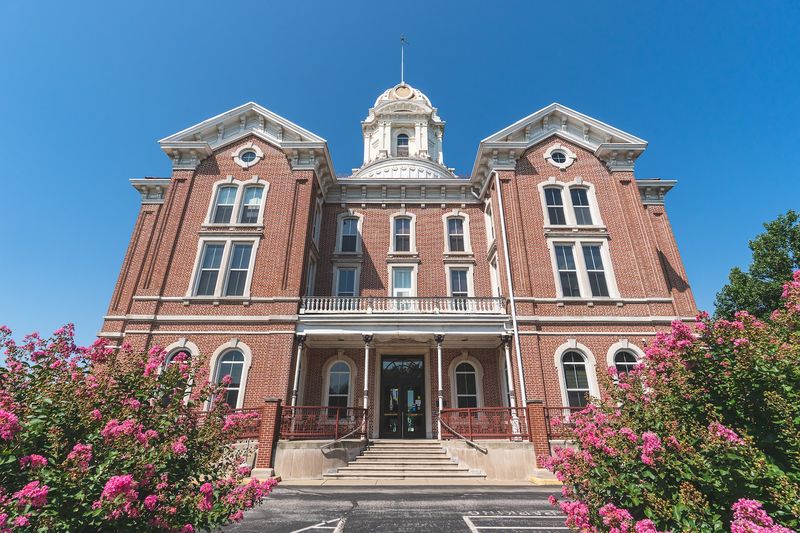
Mount Vernon’s Posey County Courthouse has the sort of poised design that sneaks up on you. Completed in 1876 in the Renaissance Revival style, it combines graceful proportions, a decorative clock tower, and a richly ornamented façade into a downtown centerpiece that looks composed from top to bottom.
Nothing seems accidental here, and that precision gives the building lasting appeal. The first thing many visitors notice is the balance.
This courthouse does not rely on one oversized feature to carry the entire design, because the tower, windows, cornices, and façade details all work together in a steady visual rhythm.
As you move around the square, the ornament keeps the building lively while the overall shape remains clean and readable.
That mix of elegance and order suits Mount Vernon’s historic setting perfectly. Courthouse squares can sometimes feel dominated by traffic or modern clutter, but this building still reads as the main event because its design has enough intricacy to hold your eye and enough discipline to avoid looking busy.
The clock tower adds a nice lift upward, giving the silhouette a memorable finish against the sky. For travelers exploring southwestern Indiana, Posey County Courthouse offers a rewarding change of pace from the state’s bigger domed landmarks.
It is less about overwhelming scale and more about proportion, ornament, and the pleasure of a well-maintained historic square built around a standout civic structure.
Bring time for a full walk around rather than a quick glance from the car. This courthouse earns appreciation gradually, detail by detail, until the whole composition clicks and you realize just how polished it really is.
8. Carroll County Courthouse (Delphi)
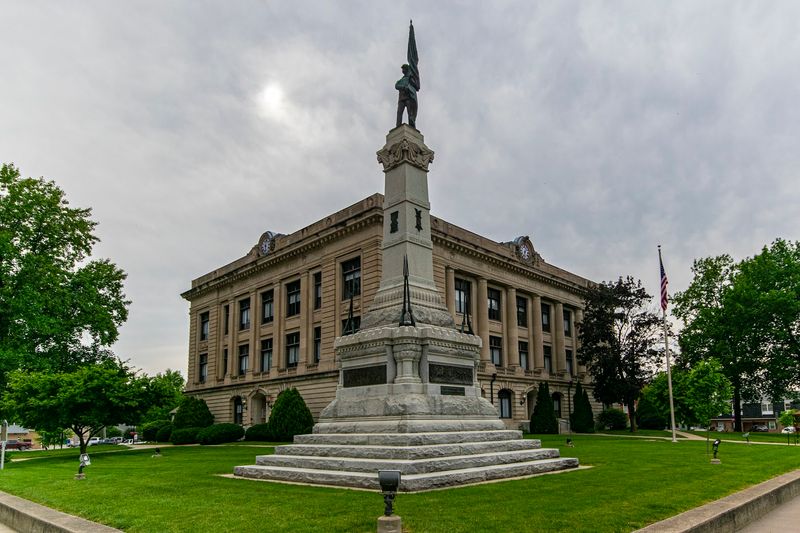
Delphi’s Carroll County Courthouse brings a cool, composed kind of grandeur to the town square. Built in 1916, the Classical Revival design leans on grand Ionic columns, a dignified limestone exterior, and an impressive dome that rises with quiet authority over north-central Indiana.
It is formal without being stiff, which makes it especially satisfying to see up close. The limestone gives the building a clean, refined surface that works beautifully with classical detailing.
Instead of relying on heavy ornament everywhere, the courthouse lets proportion and repetition carry much of the visual impact, with the columns setting a stately rhythm across the façade.
That restraint is part of the charm, because it makes the dome and entry sequence stand out more clearly. Delphi’s historic courthouse square adds to the experience by giving the building room to breathe.
You can step back, study the full composition, and appreciate how neatly the dome, cornice lines, and columned front come together.
There is a sense of balance here that makes the courthouse easy to photograph and even easier to remember once you leave.
This is one of those stops that proves refinement can be just as compelling as exuberance. Carroll County Courthouse may not compete through color or wildly elaborate decoration, but it does not need to.
The classical language is so confidently handled that the entire structure comes across as dignified, polished, and deeply rooted in its square. If your road trip includes a soft spot for domes, columns, and limestone done right, Delphi earns a place on the route with very little effort.
9. Knox County Courthouse (Vincennes)
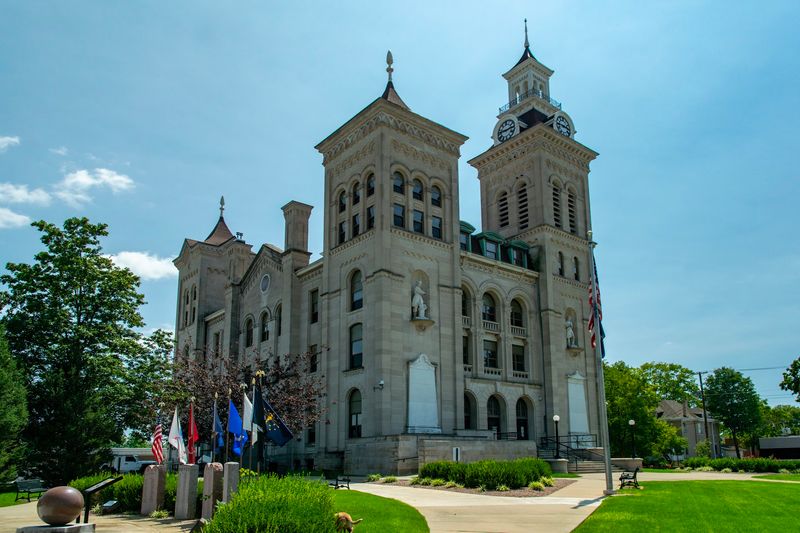
Vincennes has the weight of history behind it, and Knox County Courthouse answers that setting with appropriately monumental architecture.
The Beaux-Arts design features an imposing dome, massive columns, decorative sculptures, and a broad civic presence that suits Indiana’s oldest city. It is a courthouse that understands scale and uses it well without letting the details disappear.
From outside, the composition reads as bold and ceremonial. The dome establishes the skyline, the columns create a strong frontal statement, and the sculptural accents give the building enough texture to stay interesting at pedestrian speed.
Even from across the street, you can see the effort to make this more than a practical government building. It was clearly meant to project importance.
Inside, the spacious rotunda carries that ambition forward. Big public interiors can sometimes feel cold, but a good rotunda adds drama and orientation at the same time, and this courthouse benefits from exactly that effect.
The classical detailing helps connect the interior to the exterior so the whole experience feels consistent rather than split between two personalities.
As a road trip stop, Knox County Courthouse gains extra strength from where it stands. Vincennes already gives travelers plenty to think about historically, and this building adds architectural heft to the mix without leaning on nostalgia.
The dome, columns, and sculptural details create a memorable civic landmark that looks completely at home in a city with such deep roots. Plan enough time to look at it from several directions, because the massing and ornament shift nicely as you move around the block.
10. Gibson County Courthouse (Princeton)
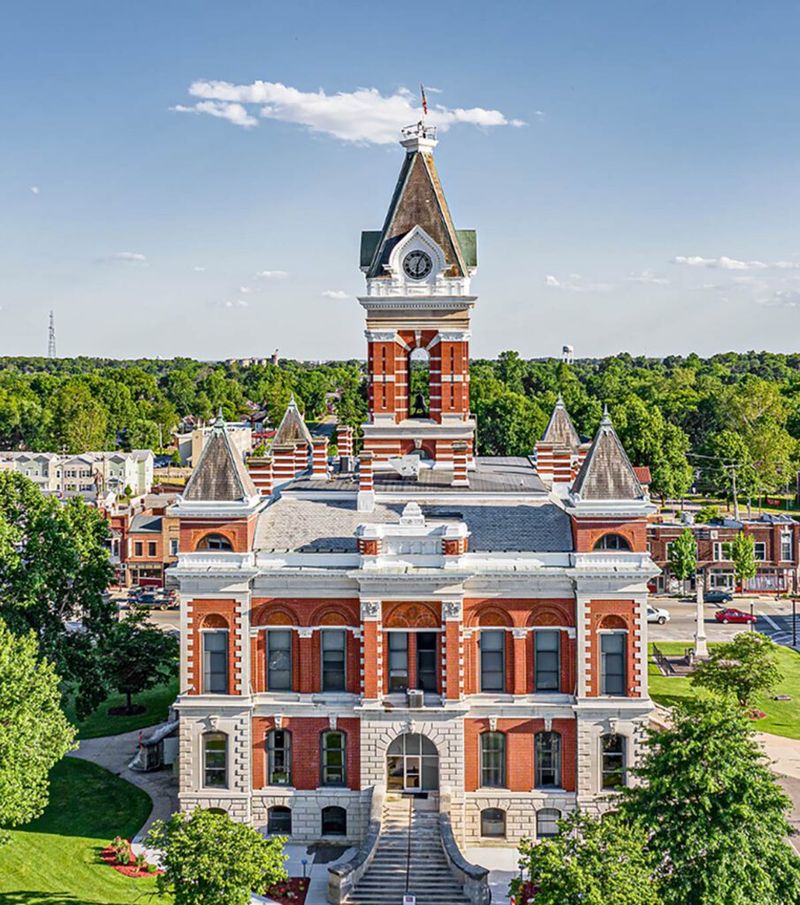
Princeton’s Gibson County Courthouse knows exactly how to hold the center of town. This beautifully preserved Beaux-Arts building pairs a large central dome with classical columns, elaborate stone carvings, and a symmetrical layout that gives the whole structure a confident, timeless look.
It is the sort of courthouse that instantly tells you where downtown’s visual heart is located. The symmetry is a big part of its power. Every element seems carefully aligned to reinforce the dome, while the carved stone details keep the façade from becoming too restrained.
That mix makes the courthouse easy to read from a distance and rewarding to inspect at close range, especially if you enjoy the small decorative moves that separate a solid civic building from a memorable one.
Princeton benefits from having a landmark with this much architectural clarity. The courthouse does not need surrounding height or dramatic topography to make an impression, because its own proportions and detailing carry the scene.
The dome rises cleanly above the roofline, the columns lend formality at ground level, and the ornament provides enough texture for long, unhurried walks around the square.
For road trippers, Gibson County Courthouse offers one of those satisfying stops where nothing feels overhyped once you arrive. The building delivers on the classic courthouse image, but it also has the craftsmanship and balance to keep the experience interesting beyond the first photo.
If you are mapping out a route through southern Indiana, this is an excellent example of how Beaux-Arts design can bring elegance, order, and visual drama to a smaller downtown without overwhelming it.
11. Harrison County Courthouse (Corydon)
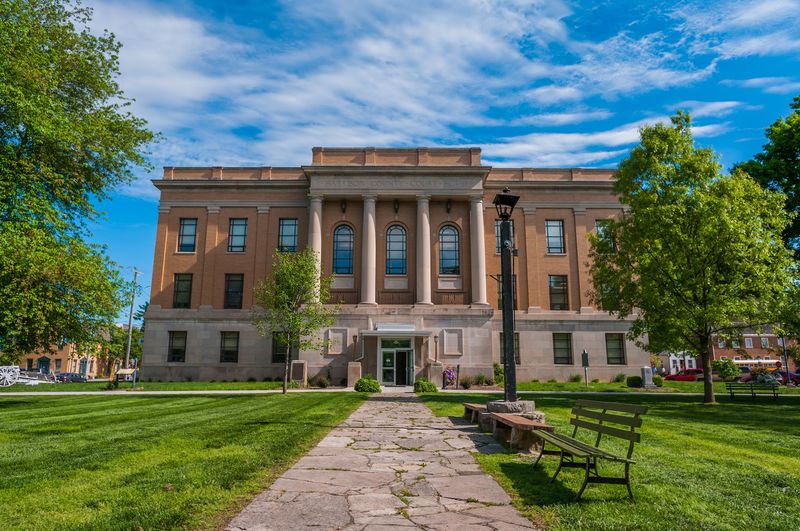
Corydon’s Harrison County Courthouse brings architectural grace to one of Indiana’s most historically significant places. Located beside the state’s first capitol area, this Classical Revival building uses brick construction, stately columns, and a prominent cupola to create a landmark that fits its surroundings with uncommon ease.
It does not try to overpower the district. It strengthens it. The brick exterior gives the courthouse a warmer, more approachable look than some of Indiana’s grander limestone monuments.
That warmth works especially well with the classical elements, which add dignity without making the building seem remote.
The cupola provides a clear focal point overhead, while the columned front establishes the courthouse as a civic building with presence and order.
Because the nearby historic setting is already so compelling, this courthouse succeeds by complementing rather than competing. It feels carefully scaled to the district, and that sense of proportion makes the visit especially enjoyable if you like places where architecture and local history are in active conversation.
Walk the area slowly and the courthouse starts reading as part of a larger ensemble rather than an isolated attraction.
That is exactly why Harrison County Courthouse belongs on a road trip list. It offers beauty, yes, but also context, which can be even better.
The building’s brick walls, crisp classical lines, and cupola add a polished civic note to Corydon’s historic core, making the whole stop richer than a single-photo landmark visit. Pair it with time around the surrounding district and you get one of the state’s most satisfying courthouse experiences without needing any extra theatrics.
12. Boone County Courthouse (Lebanon)
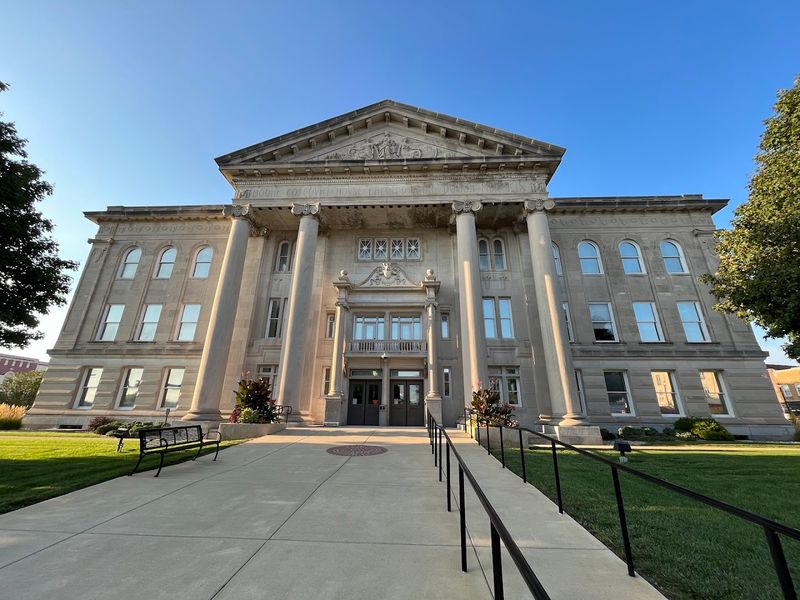
Save room on your camera roll for Boone County Courthouse, because Lebanon finishes strong. Widely admired for its Classical Revival design, this 1911 landmark combines Bedford limestone, granite, soaring Ionic columns, an elegant rotunda, and a towering clock cupola into one seriously impressive package.
It has the kind of confidence that makes the entire square seem to organize itself around the building. The exterior alone would earn it a spot on this list. Those giant columns create a powerful front, while the stone materials give the courthouse both monumentality and refinement.
Then your eyes move upward to the cupola, which adds height and presence without tipping the design into excess. Every piece looks deliberate, and that coherence is a major part of the appeal.
Inside, the stained-glass dome and rotunda push the experience into standout territory. Public buildings often save one dramatic flourish for visitors, but this courthouse layers its effects beautifully, pairing classical formality with luminous interior color overhead.
The rotunda gives the building a ceremonial center, and the stained glass makes that center memorable in a way photographs only partially capture.
For travelers touring Indiana courthouse architecture, Boone County Courthouse lands as a must-see rather than a maybe. It offers scale, materials, craftsmanship, and one of the state’s most eye-catching interior features, all while remaining a working civic landmark at the center of Lebanon.
Give yourself time to appreciate both the grand view and the smaller details around the entrances and stonework. This courthouse does the big dramatic notes extremely well, but it also wins through precision, and that combination is hard to top.