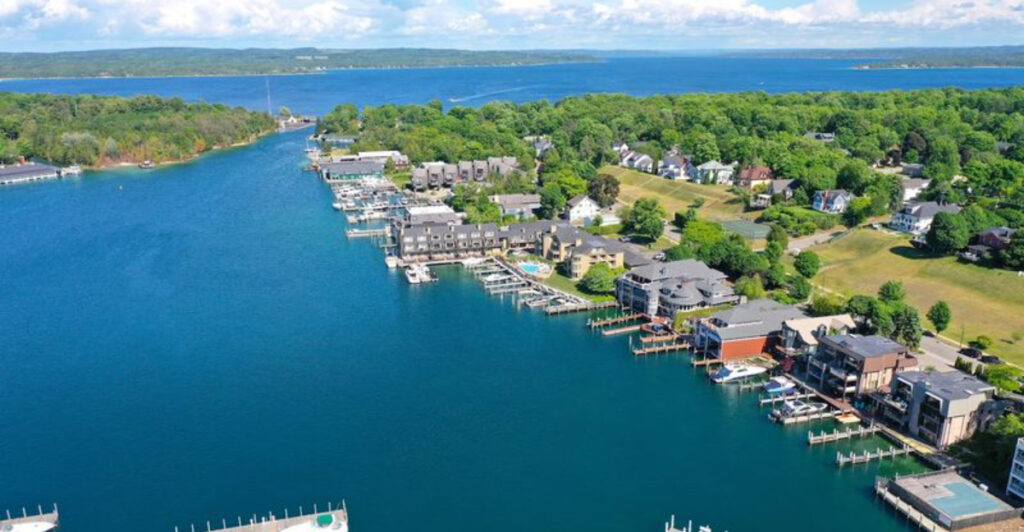
Tucked into the northern tip of Michigan’s Lower Peninsula, Charlevoix sits on a narrow strip of land between two bodies of water that could not feel more different from each other. On one side, Lake Michigan rolls in with wide open waves and sandy shoreline.
On the other, a calm harbor filled with sailboats sits quietly behind the Pine River Channel. Most people drive through without stopping long enough to realize what they almost missed.
The Pine River Channel: Where Two Worlds Meet in Five Minutes
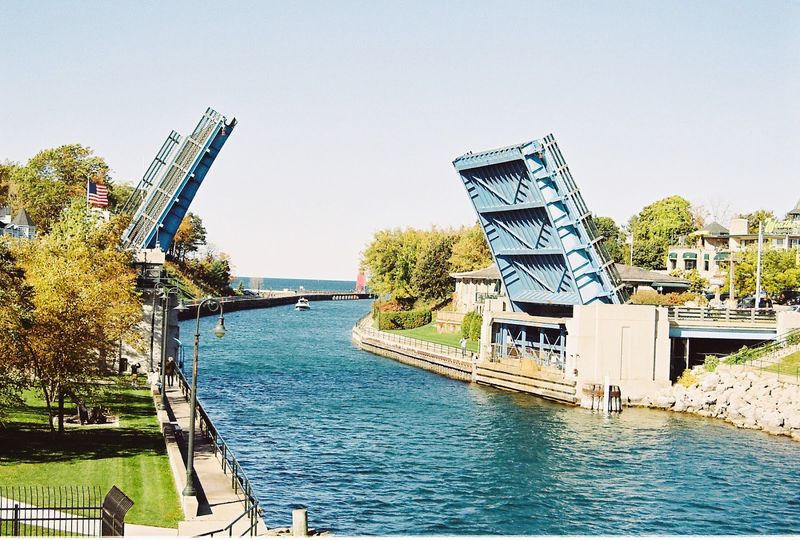
Stand at the center of the Pine River Channel bridge on a clear summer afternoon and you will feel pulled in two directions at once. To the west, Lake Michigan stretches out flat and enormous.
To the east, Round Lake and the marina sit calm and organized, full of masts pointing straight up like a forest of white poles.
The channel itself is short — barely a quarter mile — but it does a lot of work. Sailboats, powerboats, and the occasional tall-masted cruiser pass through here regularly during the warm months.
When a large vessel approaches, the drawbridge lifts and traffic on US-31 pauses, which is a small inconvenience locals have made peace with a long time ago.
Walking from the Lake Michigan beach to the harbor along the channel path takes about five minutes at a relaxed pace. The path is flat, easy, and lined with benches where people sit to watch the boat traffic.
Kids especially love it here — there is something genuinely entertaining about watching a boat taller than the bridge clear the opening with just a few feet to spare.
The channel also marks a kind of personality shift in Charlevoix. The lake side feels wild and open, like the edge of something vast.
The harbor side feels contained and social, with restaurants, docks, and the low hum of marina life. Both feel completely natural here, and neither one overshadows the other.
If you only have an hour in Charlevoix, spend it walking this corridor. You will understand the town better than most people who have stayed a whole weekend.
Round Lake Harbor: A Sailboat Harbor That Actually Earns the Name
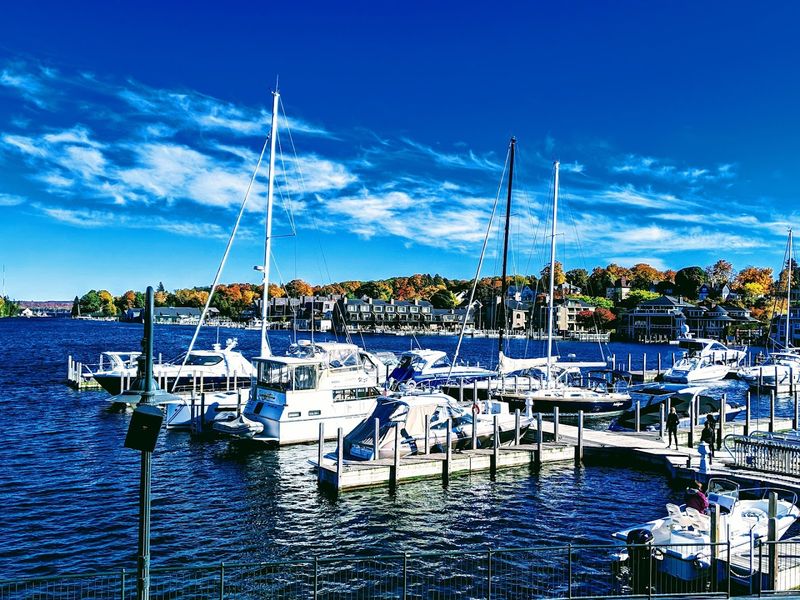
Round Lake is the reason Charlevoix has a harbor culture at all. It sits just east of the Pine River Channel, roughly circular in shape, and it functions as the town’s central marina.
On a busy July weekend, the water is so full of boats that navigating through them feels like threading a needle.
Sailboats dominate the visual here. Their masts create a distinct skyline that you can see from a surprising distance as you drive into town on US-31.
The harbor has slips for transient boaters, which means the population of vessels changes constantly throughout the season. One morning you might see a modest 30-foot sloop from Wisconsin.
By afternoon, a sleek 50-foot ketch from somewhere in the Great Lakes system has taken its place.
The waterfront around Round Lake is walkable and compact. Restaurants with outdoor seating look directly onto the docks.
You can eat a fish sandwich and watch someone motor past trying to find an open slip, which is a perfectly good way to spend a lunch hour.
Charlevoix Yacht Club has a presence here, and sailing races are a regular feature of summer life in town. On race days, the harbor buzzes with a specific kind of organized chaos — crew members hauling lines, people checking wind direction, and a general air of competitive focus mixed with obvious enjoyment.
Even if you have never sailed a day in your life, Round Lake pulls you in. There is something about the combination of moving water, polished hulls, and the smell of lake air mixed with sunscreen that makes it hard to leave the waterfront quickly.
Most visitors end up staying longer than planned.
Lake Michigan Beach: Wide, Cold, and Completely Honest
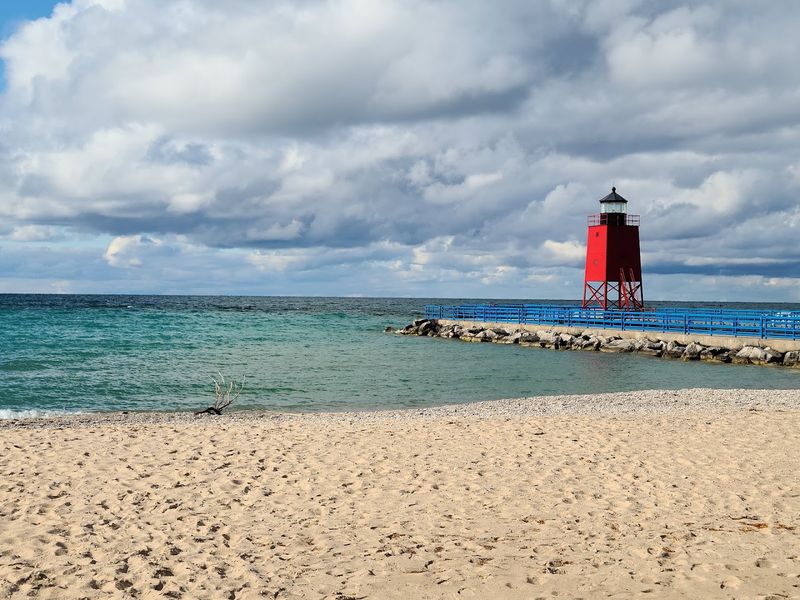
The Lake Michigan side of Charlevoix does not try to impress you. The beach is wide and sandy, the water is cold even in August, and the waves do whatever they want depending on the wind.
Some days it is glassy and almost Caribbean-looking. Other days it churns gray-green with whitecaps that slap the shore hard enough to discourage swimming.
North Beach is the main public stretch, and it sits just minutes from downtown. Parking fills up fast on summer weekends, so arriving before 10 a.m. is a practical habit worth developing.
The beach has restrooms, a small concession area nearby, and enough open space that it rarely feels crowded even when it technically is.
The water color here is one of those things that photographs never quite capture. On sunny days with a light wind, the shallows turn a transparent green-blue that looks borrowed from somewhere much warmer.
The sand underfoot shifts from fine and pale near the dunes to darker and coarser at the waterline.
Sunsets on this side of town are a serious local event. People bring chairs, blankets, and sometimes wine.
The horizon over Lake Michigan is perfectly unobstructed, and the light does things to the water and sky that feel genuinely worth stopping for. Nobody is performing enthusiasm — they are just watching.
One thing that surprises first-time visitors is how quickly the depth drops once you wade in past your knees. Lake Michigan has a way of reminding you it is not a pool.
That slight edge of wildness is part of what makes the beach here feel different from resort-town beaches further south.
Bridge Street: The Main Street That Actually Delivers
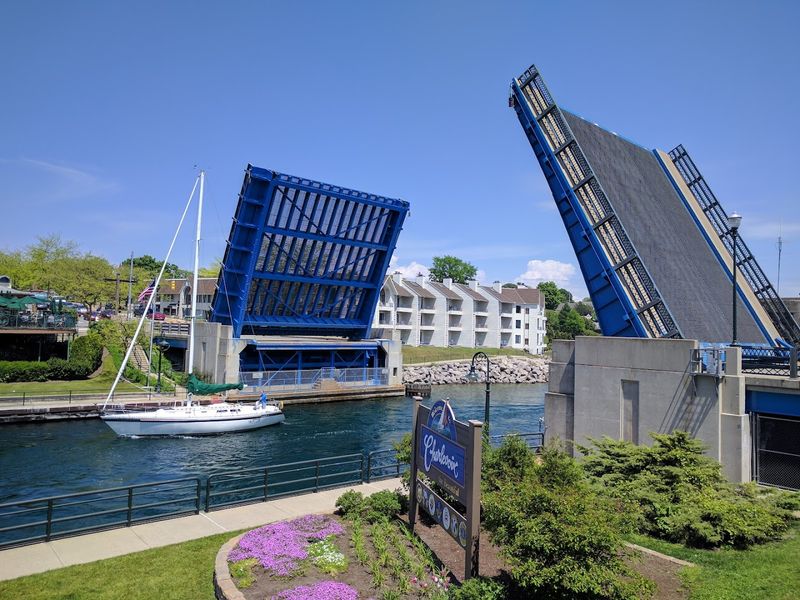
Bridge Street is Charlevoix’s commercial spine, and it runs right over the Pine River Channel on the drawbridge that stops traffic every time a tall boat needs through. That built-in pause in the flow of the street is part of what gives downtown its rhythm.
Nobody seems particularly annoyed when the bridge goes up. People get out of their cars, lean on the railing, and watch.
The shops along Bridge Street lean toward the locally owned end of the spectrum. You will find a good bookstore, a few clothing boutiques, some galleries showing work by regional artists, and enough ice cream options to suggest that the town has strong opinions about dessert.
Chain stores are mostly absent, which keeps the street from feeling like every other small-town commercial strip in the Midwest.
Food options here are solid without being pretentious. There are spots for a quick lunch sandwich, places for a longer sit-down meal with a water view, and at least one bakery that draws a line out the door on weekend mornings.
The quality generally reflects the fact that Charlevoix attracts visitors who expect decent food and are willing to pay for it.
In summer, the sidewalks fill with a mix of boaters in dock shoes, families on vacation, and locals running errands who have clearly learned to navigate the tourist foot traffic with practiced patience. It is a functional street, not a performance of small-town charm.
Stores are open because people actually shop in them.
Evening on Bridge Street has its own feel — quieter, warmer in the lamplight, with restaurant patios filling up as the sun drops. It is the kind of street that rewards a slow walk rather than a quick scan.
The Mushroom Houses: Architecture That Makes You Look Twice
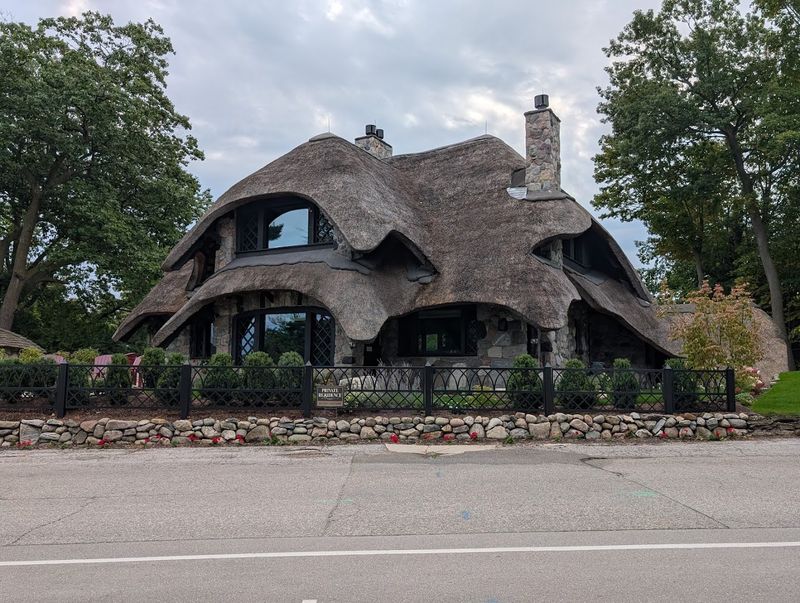
Somewhere between a hobbit hole and a fever dream, the Mushroom Houses of Charlevoix are unlike anything else you will see in a small Michigan town. Built primarily by a local builder named Earl Young during the mid-20th century, these structures use boulders, fieldstone, and dramatically curved rooflines to create homes that look like they grew out of the ground rather than being constructed on it.
They are clustered mostly in the Boulder Park neighborhood, within easy walking distance of downtown. You do not need a map to find them — just walk west of Bridge Street toward the lake and keep your eyes open.
The first one you spot will make you slow down. By the third or fourth, you will be standing in the middle of the sidewalk with your phone out.
What makes them striking is the specificity of the vision. Every curve, every stone, every low-slung roofline reads as deliberate.
Young had a philosophy about organic architecture that predated the term becoming fashionable, and the houses carry that conviction in every detail. They are not trying to be whimsical — they just are.
People actually live in several of these homes, which adds a layer of normalcy to the whole thing. You might walk past one and see a garden hose coiled by the door or a car in the driveway, reminding you that these are houses, not installations.
That contrast — extraordinary architecture in ordinary residential use — is part of what makes them stick in your memory.
The neighborhood surrounding them is pleasant and walkable, with mature trees and quiet streets. Even if the houses themselves did not exist, it would be a nice area to wander through.
Lake Charlevoix: The Quieter Water Nobody Talks About Enough
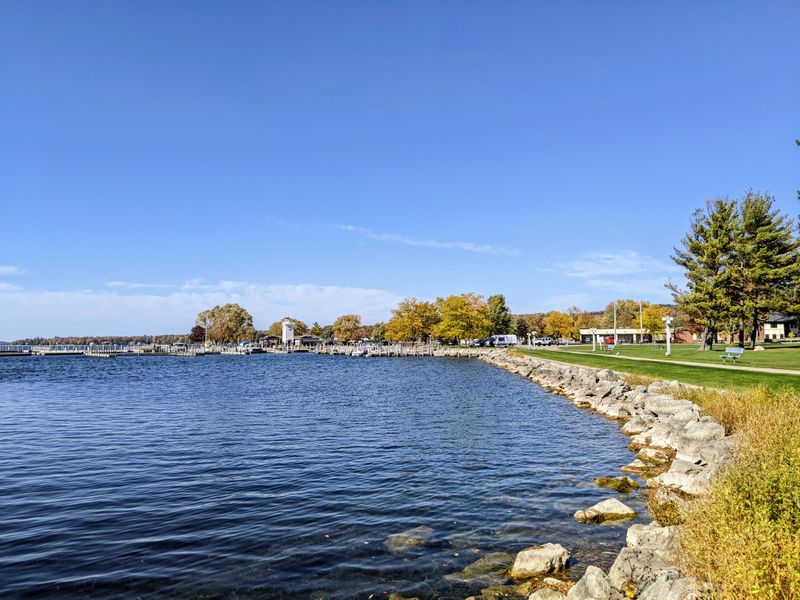
Most visitors come to Charlevoix thinking about Lake Michigan and leave having barely noticed Lake Charlevoix, which is a significant oversight. The lake stretches east from town for miles, with wooded shorelines, quiet coves, and water that warms up faster than Lake Michigan because it is shallower in most places.
For swimming, it is genuinely more comfortable during the peak of summer.
From the water, Charlevoix looks completely different. The town’s marina and waterfront buildings appear compact and tidy against the treeline.
Boaters heading east from Round Lake pass through a channel and open up onto a lake that feels much larger than it looks on a map. There are islands, bays that fold back into the forest, and stretches of undeveloped shoreline that make you forget you are minutes from a commercial downtown.
Kayaking and paddleboarding are popular here, and rentals are available near the waterfront during the season. The lake is calm enough on most mornings for a confident beginner to feel comfortable, though afternoon winds can pick up and change the calculation quickly.
Early mornings, when the surface is flat and the light is low and golden, are the best time to be out on the water.
Fishing is a real draw as well. The lake holds a variety of species, and you will see anglers in small boats anchored in the shallows or trolling the deeper sections throughout the day.
Nobody is performing the activity for anyone else — they are just fishing.
The shoreline communities around Lake Charlevoix have their own low-key character. A few marinas, some waterfront restaurants, and long stretches of private docks mark the edges of a lake that rewards the people who actually take time to explore it.
Charlevoix in the Off-Season: A Different Kind of Town
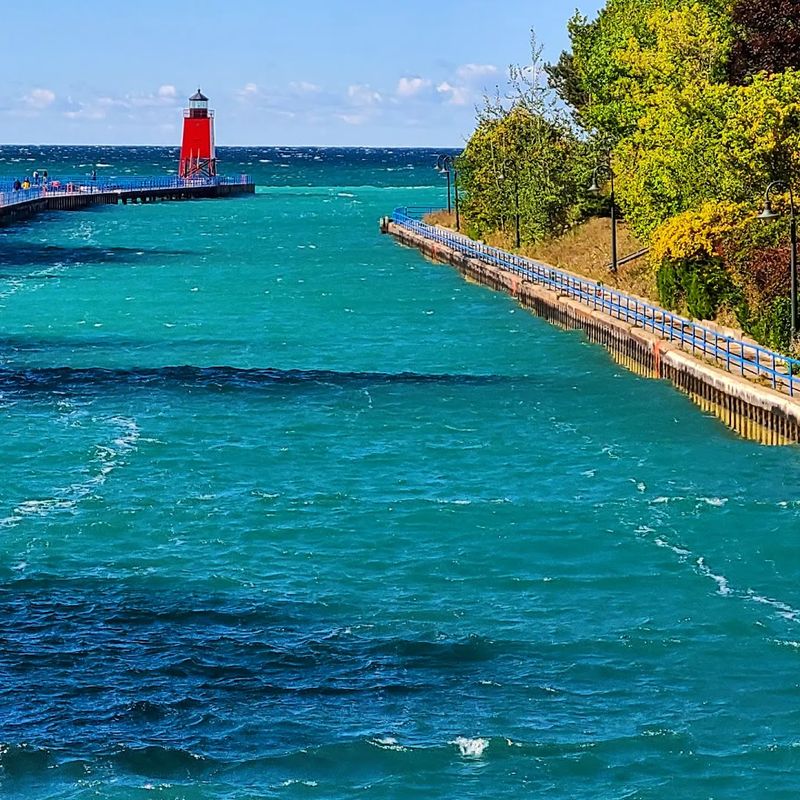
Summer Charlevoix and shoulder-season Charlevoix are almost two separate places. Once Labor Day passes and the boat traffic thins out, the town settles into a quieter version of itself that some people actually prefer.
The restaurants that stay open have shorter waits. Parking on Bridge Street is no longer a competitive sport.
The beaches are empty enough that you can walk a long stretch without passing anyone.
Fall brings color to the trees around Lake Charlevoix and along the residential streets near the mushroom houses. The quality of light in October here has a particular clarity — the sky gets bluer, the shadows get longer, and the air off the lake carries a cold edge that makes a cup of coffee feel like a necessity rather than a preference.
Winter closes most of the tourist-facing businesses, but the town does not disappear. Locals who live here year-round have their own rhythms, their own restaurants, their own understanding of what the place is when nobody is visiting.
If you come in January or February, you are seeing a version of Charlevoix that most summer visitors never encounter.
Ice forms on the harbor. The Pine River Channel stays open for shipping longer than you might expect, but eventually the cold wins.
The Lake Michigan shoreline in winter is a completely different proposition — raw, loud, and occasionally spectacular when the waves freeze mid-crash against the breakwater.
Spring is tentative and slow. The shops start reopening in phases.
Boats come back to the marina. The drawbridge starts going up again for the first tall-masted arrivals of the season.
If you time a spring visit right, you can have the town mostly to yourself while everything is waking back up.
Share this story