A lot of presidential museums lean formal, polished, and a little distant. The Gerald R.
Ford Presidential Museum in Grand Rapids pulls off a harder trick: it makes a complicated national era feel immediate, tense, and surprisingly personal. Step inside and the 1970s stop looking like faded textbook pages and start reading like breaking news.
This is the rare museum that can hook history fans, curious locals, and anyone who wants to understand how the country steadied itself after a political earthquake.
Riverfront Arrival With Serious Presence
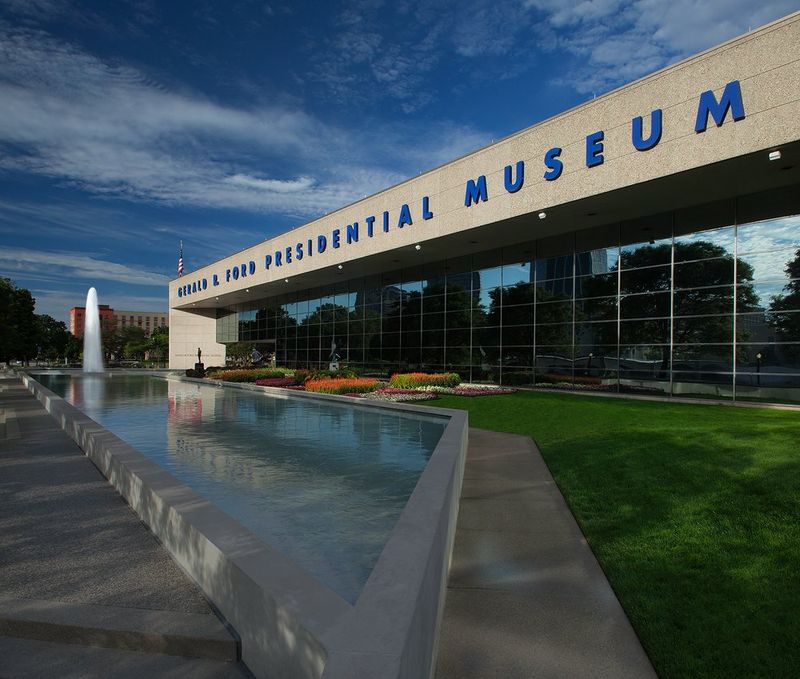
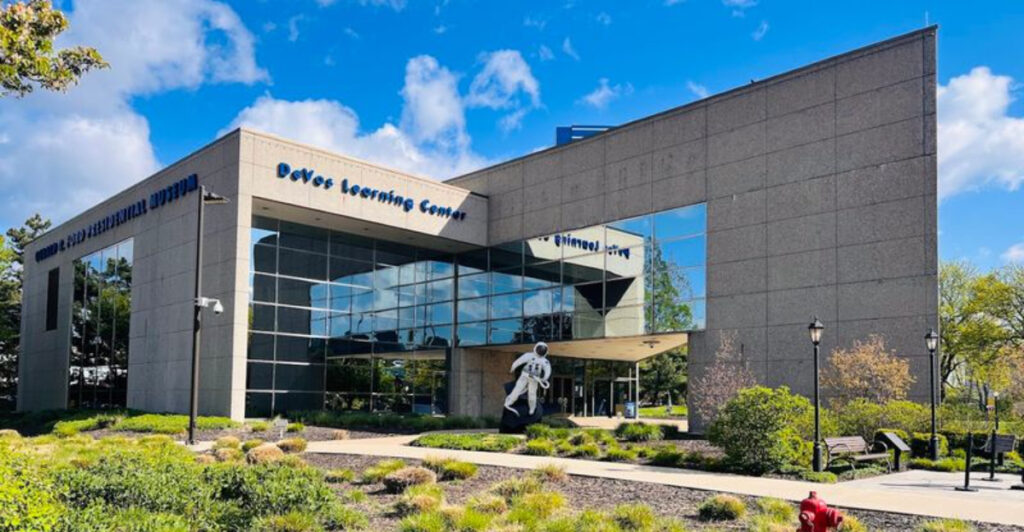
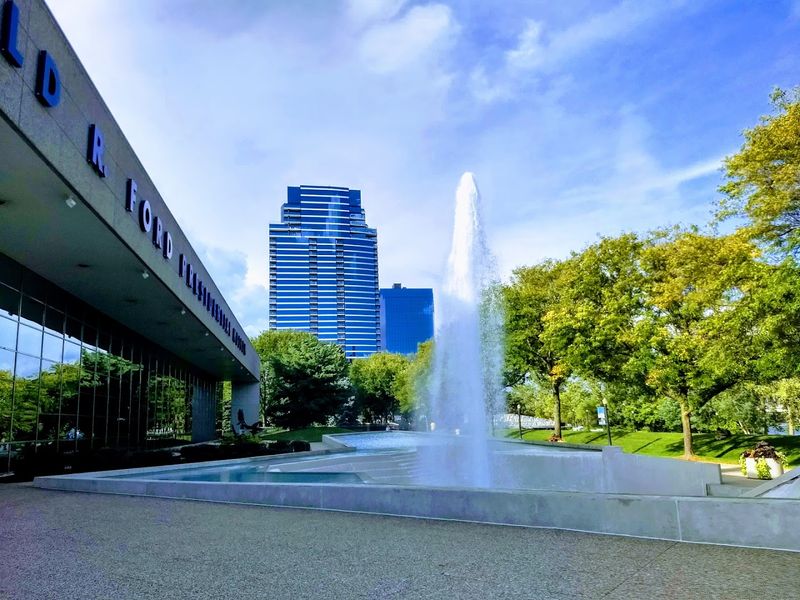
Set along the Grand River near downtown, the Gerald R. Ford Presidential Museum opens with the kind of clean, official presence that immediately shifts your pace.
The building does not try to overwhelm the riverfront around it, yet it still carries the visual weight you want from a presidential museum. Broad walkways, trimmed grounds, and a clear sense of order frame the entrance before a single exhibit has started doing the interpretive work.
That setting matters in Grand Rapids because the museum is not tucked away like a niche stop for specialists. It sits in a visible civic corridor, close to other cultural attractions, which gives the visit a stronger public character.
You are not entering a sealed archive hidden from daily life; you are stepping into a national story placed right in the middle of the city.
Outside, the river adds a calm counterpoint to the turbulence covered inside. The contrast lands well.
A museum centered on Watergate, political distrust, economic strain, and the long shadow of Vietnam could have announced itself with heavier symbolism, but this one lets the location do something quieter and smarter.
The approach also helps reset expectations for anyone arriving with only a vague memory of Gerald Ford. His presidency was brief, and his public image can read as steady to the point of understatement.
The museum’s exterior hints at the better framing: steadiness was not bland here, it was the assignment.
Before you even reach the galleries, the place establishes a tone of dignity without stiffness. It is well kept, easy to spot, and visually composed in a way that fits both the riverbank and the office it represents.
Grand Rapids gives Ford a strong front porch, and the museum uses it well.
The Timeline That Turns Ford Into More Than a Footnote
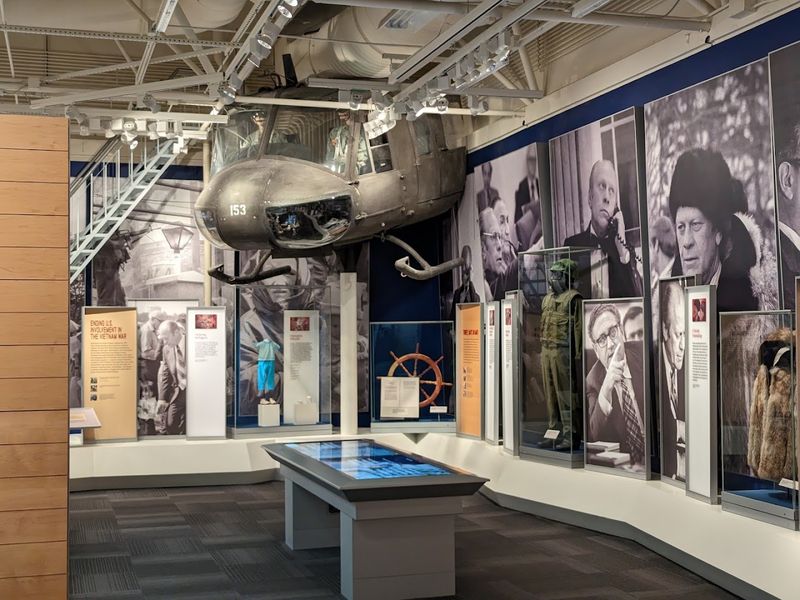
Inside, the museum’s chronological layout is one of its sharpest strengths. Instead of dropping you straight into the White House years, it builds Gerald Ford from the ground up through childhood, education, military service, family life, congressional years, and the improbable route that carried him to the presidency.
That sequence gives later decisions more texture because the man making them no longer appears as a flat chapter heading from a civics book.
The galleries move with an easy rhythm that makes a lot of information feel manageable. Artifacts, text, photographs, and media are arranged so you can follow the story quickly or pause for detail without losing the thread.
That flexibility is a bigger advantage than it sounds, especially in a museum covering both one individual life and a highly unstable period in American politics.
Ford’s path matters because it was so unusual. He was never elected president or vice president on a national ticket, a fact the museum treats as central rather than incidental.
The result is a story driven less by campaign mythology and more by institutional crisis, constitutional mechanics, and personal reputation.
That approach changes the energy of the visit. Instead of a triumphant march toward power, the narrative keeps circling around duty, trust, and preparedness.
Even if you arrive knowing only the basics, the museum steadily fills in how a Midwestern congressman became the person standing in the middle of one of the country’s most unsettled transitions.
By the time the presidency arrives, the groundwork has already done its job. Ford is no longer the answer to a trivia question about succession.
He registers as a fully developed political figure shaped by long service, ordinary discipline, and a moment in history that refused to be ordinary.
Where the 1970s Stop Being Background Noise
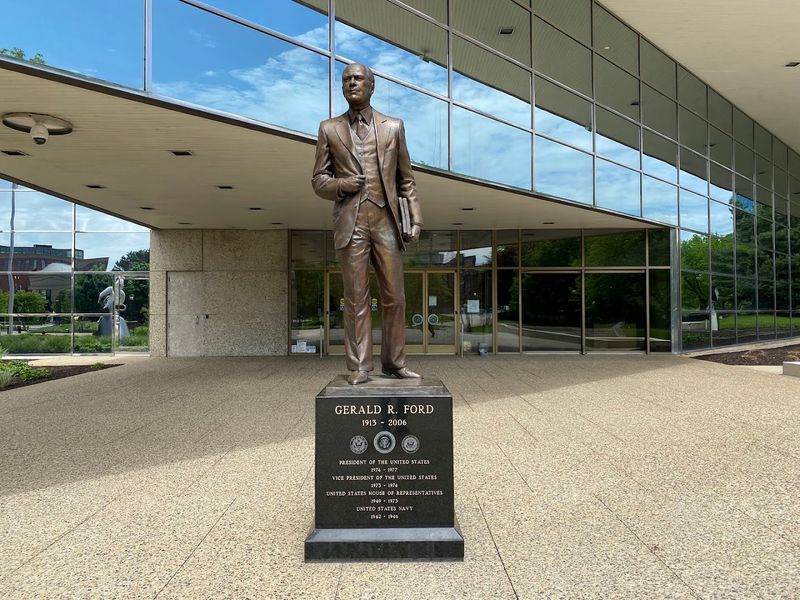
The most gripping stretch of the museum is not built around nostalgia for the 1970s. It is built around pressure.
Watergate, the Nixon resignation, the pardon, the end of the Vietnam War, and the country’s raw distrust of institutions are presented as overlapping shocks rather than isolated headlines, which makes the decade feel less retro and more unstable in a very modern way.
This is where the museum earns its title as a time capsule. You are not just reading that the era was divided; you move through evidence of a nation trying to regain its footing while every major decision arrived under suspicion.
Newspapers, photographs, audiovisual material, and interpretive text work best here because they keep the pace brisk while still allowing room for moral complexity.
The Nixon pardon section in particular has real weight. It is one of those subjects people think they understand in shorthand, yet the museum slows it down just enough to show the stakes, backlash, and long argument around Ford’s choice.
That is a smart editorial move because it trusts visitors to handle disagreement instead of steering them toward a single simplified reaction.
The Vietnam material and broader foreign policy context deepen that sense of national strain. These exhibits are not staged as distant geopolitical abstraction.
They sit in the same emotional weather system as the domestic unrest, pulling the decade into a tighter, harsher narrative.
Even visitors who know the headline events often come away with a clearer sense of how compressed Ford’s presidency really was. The museum repeatedly reminds you that these years were dense with consequence.
In a surprisingly compact amount of space, it turns a famously complicated period into a sequence you can actually track, absorb, and argue with on the way out.
The Oval Office Replica Delivers the Most Direct Jolt
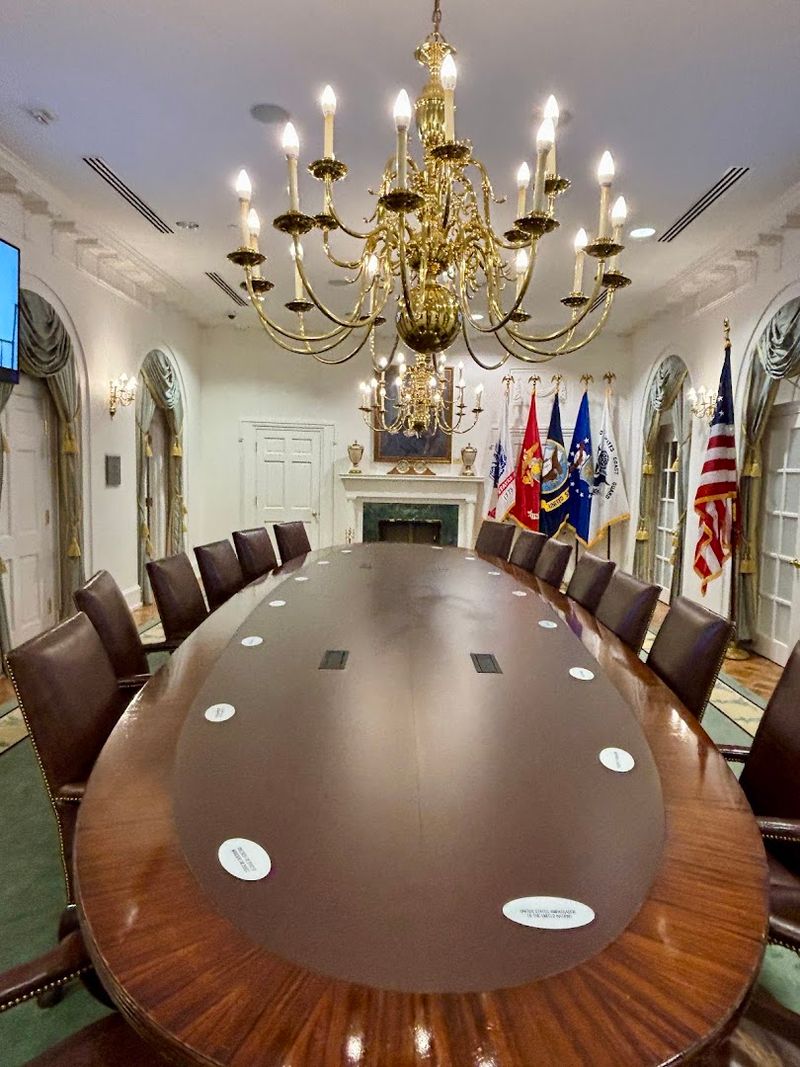
Every museum needs one space that changes the temperature of the visit, and here it is the replica Oval Office. After moving through timelines, context panels, and political upheaval, stepping into a room associated with executive power creates a sudden physical connection between biography and office.
It is the closest the museum gets to theatrical staging, and it works because it arrives after the history has already built the stakes.
The appeal is immediate even for people who are not deep into presidential history. Furniture, layout, symbols, and scale do something text alone cannot.
The room translates abstract authority into a space with dimensions, sightlines, and ceremony, letting you picture decisions being made amid relentless scrutiny.
Nearby Cabinet Room material reinforces that effect. Together, these areas help explain government as a working environment rather than an invisible machine.
You do not need dramatic gimmicks when the subject is already charged with national consequence, and the museum is wise enough not to overplay it.
What makes these installations effective is their position inside the larger story. They are not random photo-op bait dropped in for novelty.
By the time you reach them, you have already moved through the conditions that made Ford’s presidency so difficult, so the reconstructed spaces read less like set design and more like a practical stage for heavy decisions.
This section also widens the audience. Kids notice the recognizable room.
Casual visitors lock onto the visual reference. History-focused travelers get a more grounded sense of executive surroundings.
Few displays can serve all three groups at once without flattening the subject, but this one comes close. It is polished, legible, and exactly concrete enough to make the office of the presidency stop floating as an idea and land as a real place with real pressure inside its walls.
Michigan Roots Keep the Story Grounded
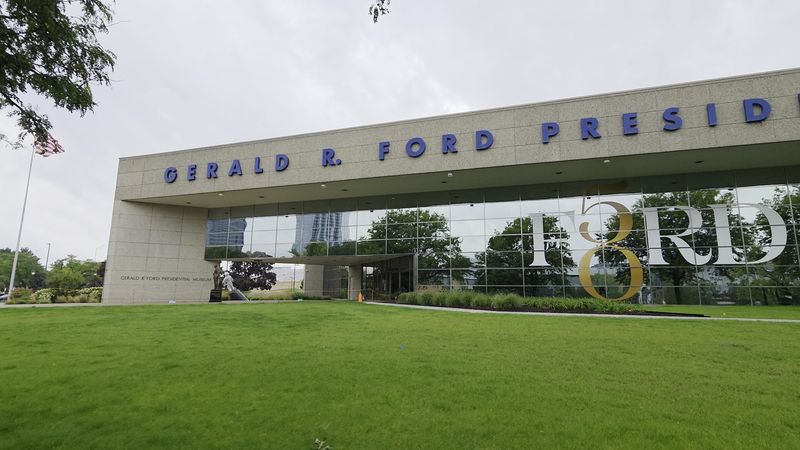
One of the museum’s most effective choices is how firmly it keeps Ford connected to Michigan. Presidential storytelling can drift into national myth so quickly that place disappears, but this museum keeps returning to Grand Rapids and the Midwestern framework that shaped his public image.
That local grounding prevents the narrative from becoming too distant or ceremonial.
In practice, that means the galleries do more than celebrate a president who happened to be from here. They show a man formed by ordinary structures of community, education, athletics, military service, and long congressional work before the White House ever entered the picture.
The regional context gives Ford’s steadiness a source, which is much more useful than treating it as a vague character trait.
For Michigan visitors, that connection adds a layer of civic ownership without turning sentimental. For out-of-towners, it explains why Grand Rapids claims this institution with such confidence.
The museum is not simply storing artifacts in Ford’s hometown. It is making the case that his political temperament cannot be fully understood without the city and state that produced it.
The adjacent burial site of President Ford and Betty Ford deepens that local dimension in a quieter register. Without needing elaborate interpretation, it reminds you that this is not just a historical exhibit hall.
It is also a place of memorial, one tied physically to the riverfront and to the city where the story began.
That combination of presidential scale and hometown specificity is rare. The museum covers constitutional drama, global tension, and one of the toughest stretches in modern American life, yet it still manages to keep its feet on Michigan ground.
The result is a national museum with a strong local center of gravity, which makes the larger history more legible, not less. In a subject full of institutions, the geography keeps the narrative human.
How to Tour It Without Rushing the Good Parts
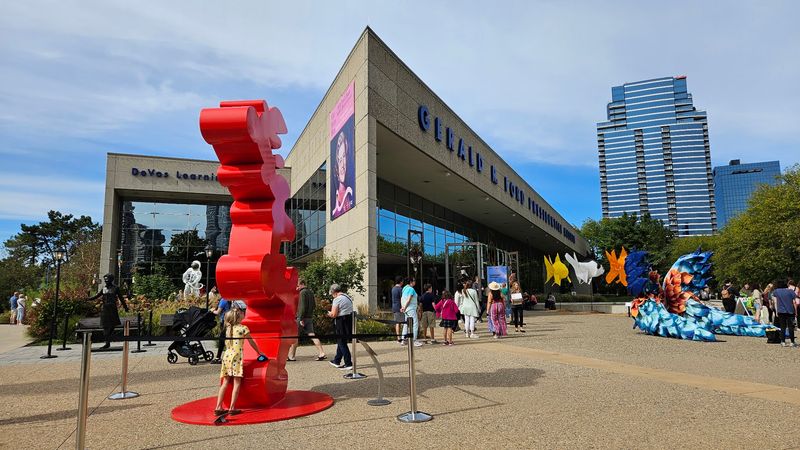
The best way to handle this museum is to resist the urge to speedrun it as a quick presidential stop. The layout is friendly enough for a short visit, but the strongest sections reward a steadier pace, especially once the exhibits move into the constitutional turmoil of the mid-1970s.
Give yourself time to read, pause, and let the sequence build the argument rather than skimming only for famous names and photo moments.
That does not mean the museum is exhausting. One of its practical advantages is how navigable it is.
The galleries are organized clearly, and the mix of objects, text, and media breaks up the experience so the information never turns into a wall of dates.
Short films and interactive elements help vary the tempo. If you are visiting with kids, younger relatives, or someone who does not usually seek out political history, those changes in format make a real difference.
The museum has enough hands-on and visual material to keep different attention spans moving in the same direction.
It also helps to arrive with a loose plan. Mornings and early afternoon fit best with the regular daily schedule, while Sunday opens later than the rest of the week.
Because the museum can easily pull you into exhibits longer than expected, building in extra time keeps the visit from turning into a constant watch check.
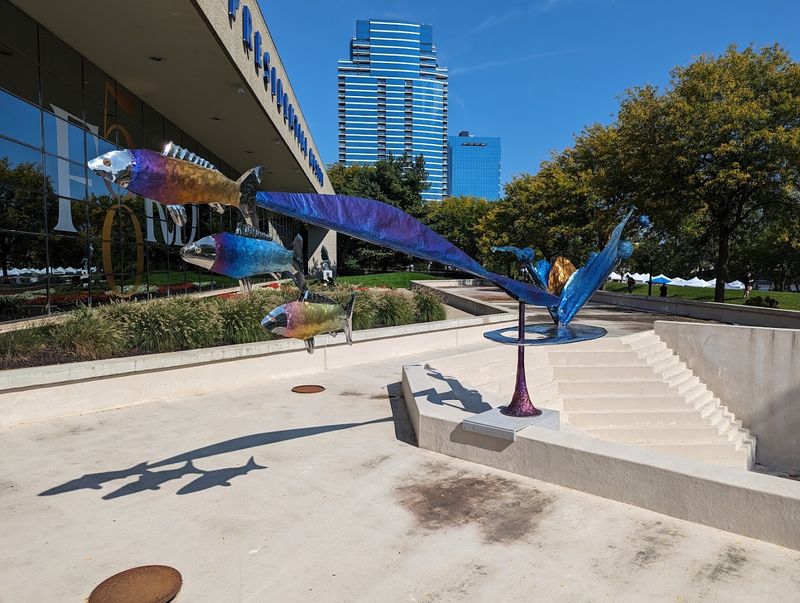
Try ending outside rather than heading straight for the car. The grounds and riverside setting offer a useful reset after the denser political material inside, and the memorial area deserves that final quiet pass.
In practical terms, this is a museum that works for solo travelers, families, and history-focused itineraries alike. The key is simple: do not treat it like a box to tick.
Let the chronology unfold, and the museum will do the heavy lifting for you.
A Grand Rapids Museum That Hits Harder Than Expected
The surprise of the Gerald R. Ford Presidential Museum is not that it is informative.
Of course it is. The real surprise is how effectively it reframes a presidency that many people know only in fragments and, in doing so, opens a much bigger conversation about trust, restraint, leadership, and national recovery.
This is where the museum separates itself from more static historical attractions. It does not rely on reverence alone, and it does not ask you to admire the subject without context.
Instead, it places Ford inside a brutal political moment and lets the tension between personality, office, and public anger carry the narrative.
That editorial confidence is a huge asset. The galleries are accessible without being watered down, serious without becoming airless, and detailed without feeling overloaded.
You can come in with deep knowledge of presidential history or barely more than a schoolbook outline and still find the story legible.
Grand Rapids benefits from having a museum like this in its core cultural landscape. It adds national scope to the city without losing local identity, and it gives the riverfront a destination that is more than scenic.
The building, the grounds, the memorial component, and the exhibits all work together to create a visit with range rather than a single-note civics lesson.
If there is a reason this place lands so well, it is because the museum understands the drama of understatement. Ford’s public style was not flamboyant, but the period around him certainly was.
By leaning into that contrast, the museum turns a seemingly modest presidential story into a sharp lens on one of the most volatile chapters in modern American life. Walk in expecting a respectful biography and you leave having spent real time inside the mechanics of a shaken country trying to hold itself together.
Small Details That Quietly Improve the Whole Visit
Beyond the headline exhibits, the museum gets a lot of small operational details right, and those details shape the visit more than flashy attractions ever could. The galleries are orderly, the path through the material is easy to understand, and there are enough visual breaks to keep the historical content from becoming punishingly dense.
In a museum dealing with constitutional crisis and war-era fallout, that clarity is not decorative, it is essential.
Seating opportunities and short media stops help the experience breathe. That matters for multigenerational groups, for anyone managing mobility or stamina, and for visitors who prefer to absorb history in stages rather than standing through every section.
The overall setup suggests a museum designed for actual use, not just idealized museum behavior.
Families also have more to work with here than the subject might initially suggest. Interactive elements and scavenger-style activities give younger visitors a reason to engage with the rooms instead of drifting through them.
That is a smart way to widen the audience without diluting the content for adults who came for serious history.
Then there is the simple matter of upkeep. Clean, well-maintained spaces send a message before any label text does.
At this museum, that neatness supports the tone of civic care and institutional respect that runs through the larger story.
Even the closing moments are handled well. A gift shop can be an afterthought in places like this, but here it functions as a final soft landing after heavier galleries, giving visitors a chance to decompress without snapping the mood.
None of these features alone defines the Gerald R. Ford Presidential Museum.
Together, though, they explain why the visit plays so smoothly. It is a museum that understands pacing, accessibility, and audience variety just as well as it understands presidential history. That competence may not be dramatic, but it is exactly what lets the drama inside the exhibits come through cleanly.
Share this story