Most Tennessee travelers stick to the popular spots, but those who venture off the beaten path discover something extraordinary. Pogue Creek Canyon State Natural Area sits quietly near Jamestown, offering dramatic sandstone cliffs, deep gorges, and some of the darkest skies in the eastern United States.
This remote natural area rewards adventurous visitors with waterfalls, rugged trails, and a wilderness experience that feels like stepping into another world.
Meet the Hidden Canyon Wonderland Most Tennessee Travelers Miss
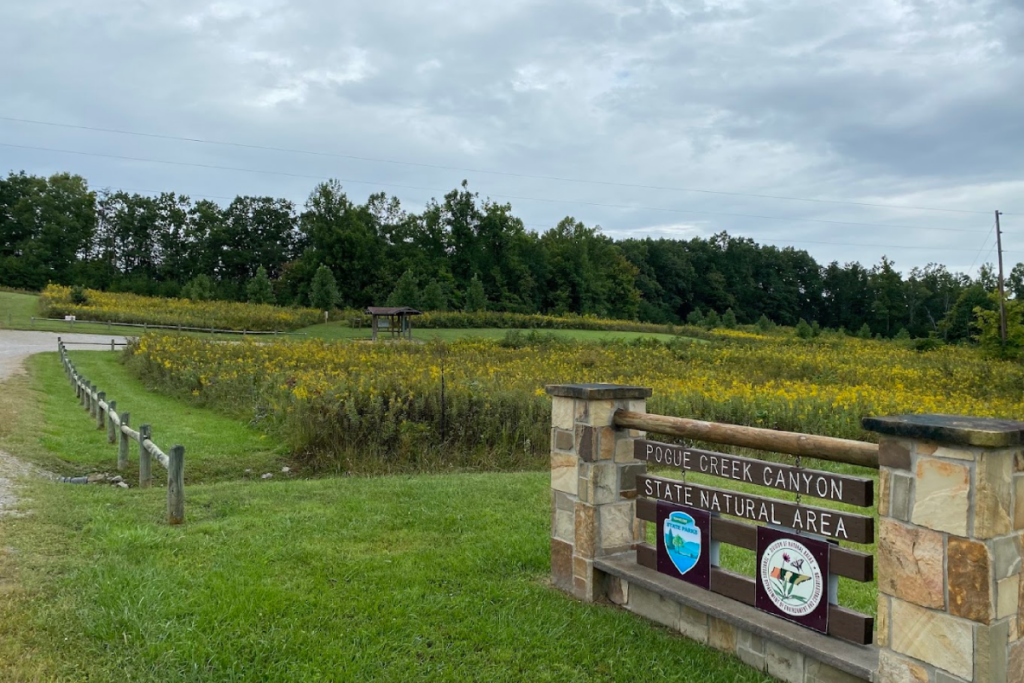
Pogue Creek Canyon State Natural Area doesn’t advertise itself with billboards or gift shops. You’ll know you’ve arrived when you spot the solar charging station along TN-154, a modern touch in an otherwise wild landscape.
This 1,000-acre preserve on the Cumberland Plateau operates quietly, welcoming visitors who seek genuine wilderness over tourist attractions.
The natural area maintains its under-the-radar status partly because it lacks the facilities most state parks offer. No campgrounds, no visitor centers, no paved paths leading to scenic viewpoints. What you get instead is raw nature, the kind that requires a bit of effort and rewards you with solitude.
Located in Fentress County near Jamestown, the preserve protects a spectacular canyon system carved over millions of years. The Tennessee Department of Environment and Conservation manages the area primarily for conservation, which means development stays minimal and the landscape stays authentic.
Hikers who make the trip often find themselves alone on the trails, a rare treat in an age of crowded outdoor spaces.
The preserve has gained recognition among astronomy enthusiasts as one of Tennessee’s official dark sky areas. The astronomy field here offers unobstructed views of the Milky Way on clear nights, with red-light-only policies protecting the darkness.
But even daytime visitors discover something special in the canyon’s dramatic rock formations and forested ravines.
Most people drive right past without realizing what they’re missing. The preserve doesn’t draw massive crowds, which preserves its wild character and makes every visit feel like a personal discovery.
For travelers willing to trade convenience for authenticity, Pogue Creek Canyon delivers an experience that feels genuinely off the grid.
Tucked Near Jamestown, It Feels Far From the Usual Tourist Trail
Jamestown sits in the northern Cumberland Plateau, a region known more for its rugged terrain than tourist infrastructure. The town itself keeps things low-key, serving as a quiet gateway to outdoor adventures rather than a destination packed with attractions.
Pogue Creek Canyon lies just outside town limits, accessible via TN-154, but the moment you step onto the trails, civilization feels miles away.
The Cumberland Plateau’s distinctive topography shapes everything about this area. Flat-topped ridges drop suddenly into deep valleys, creating the dramatic elevation changes that make the canyon so striking.
Layers of sandstone and shale tell geological stories spanning hundreds of millions of years, visible in every cliff face and rock overhang.
Unlike the Smokies or other heavily visited Tennessee natural areas, this region maintains a peaceful, almost forgotten quality. You won’t encounter tour buses or crowds jockeying for parking spots.
The preserve’s remote location keeps visitor numbers manageable, even during peak fall foliage season when colors explode across the plateau.
The surrounding Daniel Boone National Forest adds to the area’s wild character. Thousands of acres of protected forest create a buffer zone, ensuring that even the drive to the preserve feels like a journey into backcountry.
Cell service gets spotty, road noise fades, and the modern world starts to feel distant.
This remoteness isn’t accidental. The state designated this area for preservation specifically because it retained such intact wilderness character.
No nearby development threatens the viewshed, no industrial operations interrupt the quiet. What you experience here closely resembles what this landscape looked like centuries ago, a rare quality in the eastern United States where development has transformed so much terrain.
Sandstone Cliffs and Deep Gorges Steal the Show
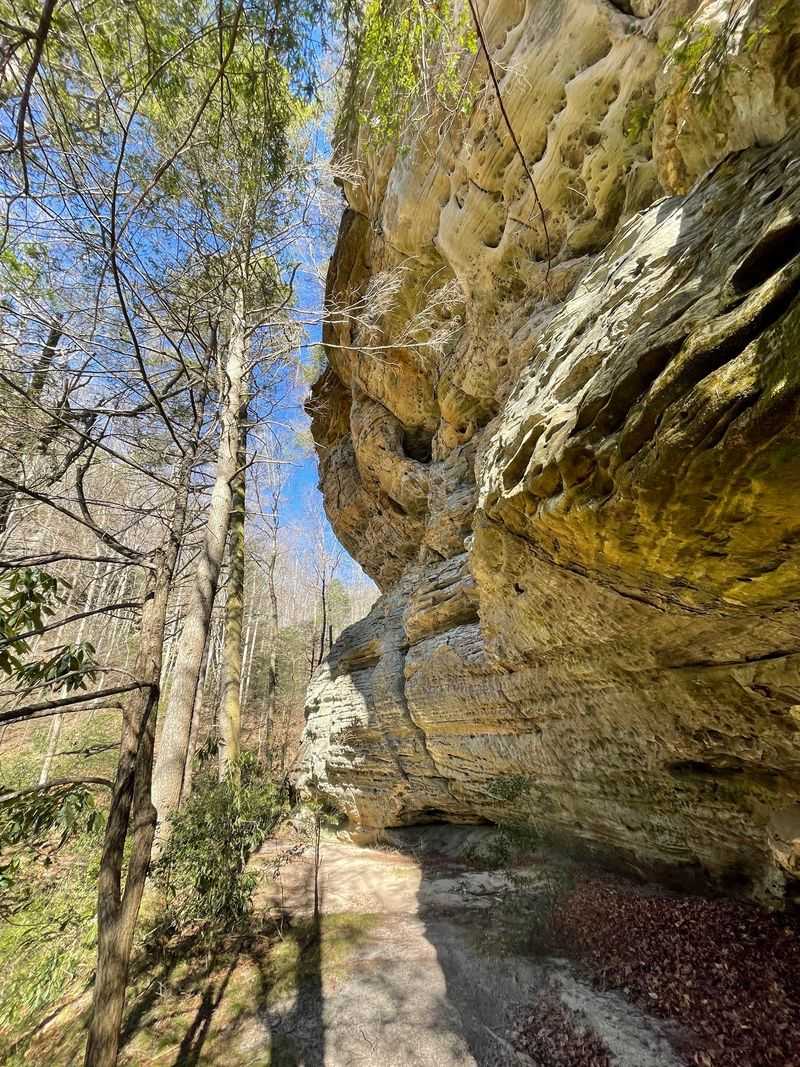
The canyon’s sandstone cliffs rise in vertical walls that seem to defy gravity. Erosion has carved these formations over millions of years, creating overhangs, rock houses, and faces that glow golden in late afternoon light.
Some sections tower dozens of feet high, their layered structure revealing the ancient sea beds that formed them.
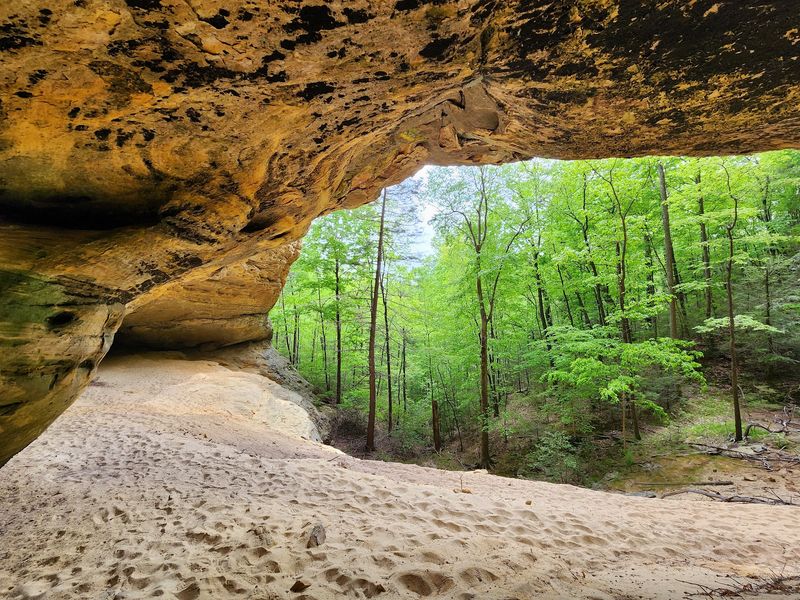
Rock houses dot the canyon walls, natural shelters formed when softer rock layers erode faster than harder capstone above. These shallow caves provided shelter for Native Americans centuries ago and now offer hikers shaded rest spots and photographic opportunities.
The largest formations create rooms big enough to stand in, their ceilings stained with mineral deposits and their floors carpeted with fallen leaves.
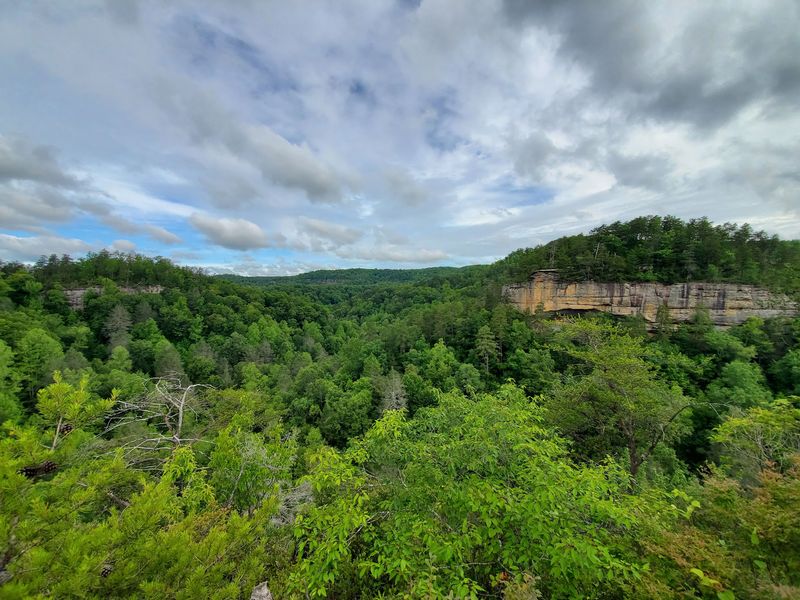
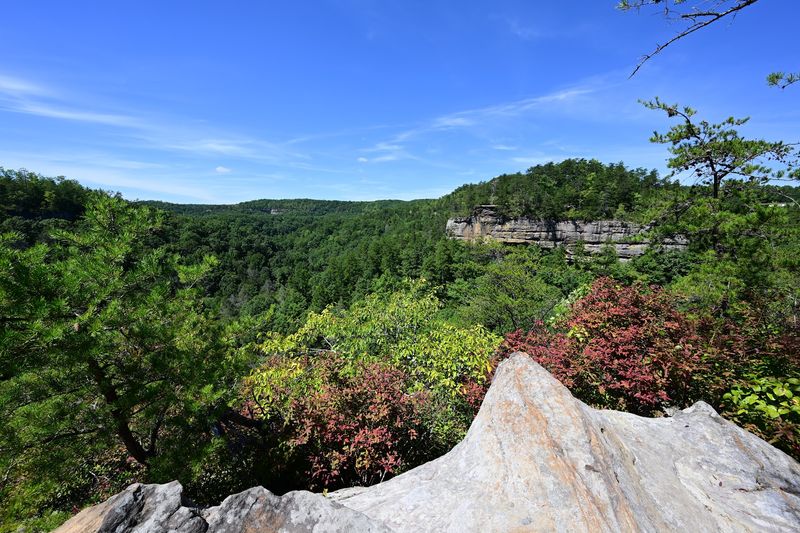
The canyon itself cuts deep into the plateau, creating a gorge system that rewards those who venture beyond the easy overlook trail. From the rim, you can see across to opposite walls, studying how water and time sculpted this landscape.
The depth creates its own microclimate, with cooler temperatures and higher humidity supporting plant communities different from those on the plateau top.
Natural arches add another dimension to the geological showcase. Circle Bar Arch and Kildare Arch represent rare formations in Tennessee, created when erosion carved completely through rock fins.
These features require hiking the more strenuous backcountry trails, but they deliver payoffs that casual overlook visitors never see.
The overlooks themselves provide stunning vistas across the eastern end of the canyon. Standing at the edge, you can watch hawks ride thermals rising from the gorge below.
The view stretches for miles on clear days, encompassing forested ridges that roll toward the horizon in waves of green and blue.
The Hiking Trails Lead Straight Into the Wild
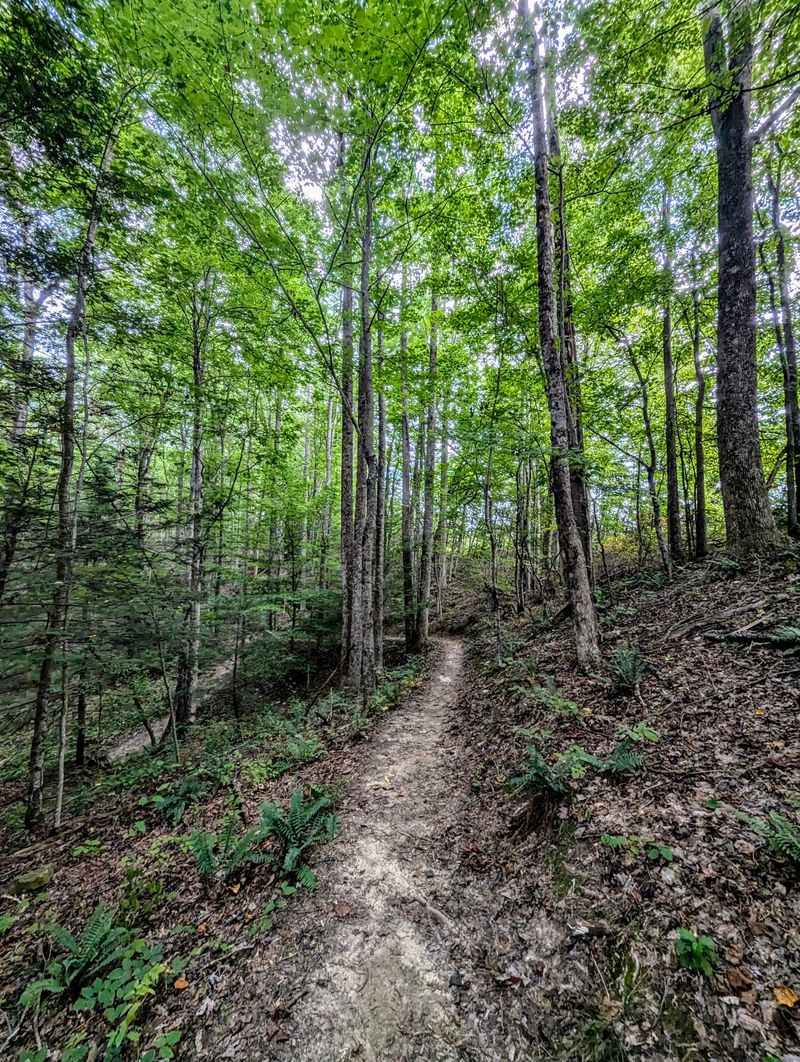
Two trail options give hikers choices based on their experience and ambition. The easier loop trail starts from the parking area and winds through deciduous forest to the overlook, covering about two miles with moderate elevation changes.
This path handles most of the visitor traffic and stays relatively well-maintained, though roots and rocks keep things interesting.
The trail surface varies from packed dirt to sections where you’re essentially walking on bedrock. Tree roots cross the path like natural steps, and rocky outcrops require occasional scrambling.
Nothing too technical, but definitely more challenging than a paved greenway. Wear real hiking boots, not sneakers.
The backcountry route ventures deeper into the canyon system, following paths that descend into the gorge and climb back out multiple times. Elevation changes here get serious, with some sections dropping or climbing several hundred feet.
The trail crosses streams, squeezes through rock passages, and navigates along cliff edges where attention matters.
Hikers describe a “fat man’s squeeze” along the backcountry route, a narrow passage between rock walls that adds adventure to the journey. These natural features make the trail memorable but also require reasonable fitness and comfort with uneven terrain.
Plan on four to six hours for the full backcountry experience, depending on how often you stop to explore side paths and formations.
Trail markings exist but don’t expect obvious blazes every fifty feet. Some navigation skills help, especially on the backcountry routes where paths can become faint.
Carrying a map and paying attention to landmarks prevents wrong turns. The wild character that makes this area special also means trails feel more primitive than what you’d find at a developed state park.
Waterfalls and Creeks Make the Canyon Even More Magical
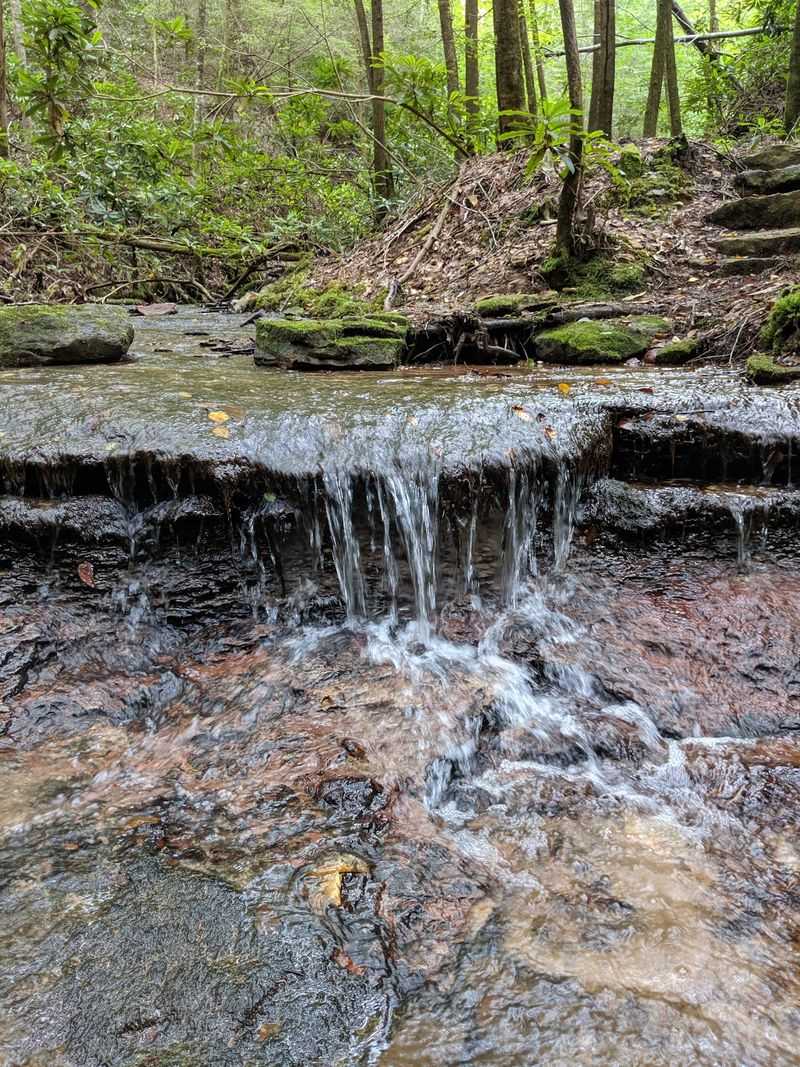
Pogue Creek itself flows through the canyon bottom, creating the aquatic heartbeat of this ecosystem. The creek runs year-round but swells dramatically after heavy rains, transforming from a gentle stream into a rushing torrent.
Water has done the heavy lifting here, carving the canyon over geological time and continuing the work today.
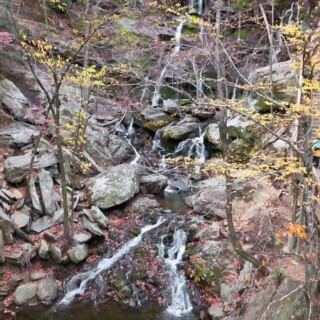
Seasonal waterfalls appear along tributary streams that feed into the main creek. Spring typically offers the best waterfall viewing, when snowmelt and April showers send water cascading over rock ledges.
These aren’t towering falls like you’d find in the Smokies, but they add movement and sound to the canyon experience, especially after wet weather.
The backcountry trail crosses streams multiple times, sometimes via stepping stones, sometimes requiring you to wade if water runs high. These crossings add an interactive element to hiking here and explain why waterproof boots make sense.
During dry summer months, some crossings barely trickle, but spring and fall can turn them into legitimate water features.
Moisture from the creek and its tributaries supports lush vegetation that drapes the canyon in green. Ferns colonize rock faces where seepage keeps surfaces damp.
Moss carpets fallen logs and boulders. Rhododendron and mountain laurel thrive in the humid microclimate, blooming spectacularly in late spring and early summer.
The best conditions for experiencing the canyon’s aquatic features come after rain but before trails turn muddy and dangerous. Check recent weather and give the area a day or two after heavy storms for water levels to moderate.
Early spring offers the sweet spot when waterfalls run strong but trails remain passable, and the forest hasn’t yet leafed out completely, allowing better views of the rock formations and cascades.
Wildlife and Quiet Forests Reward Those Who Slow Down
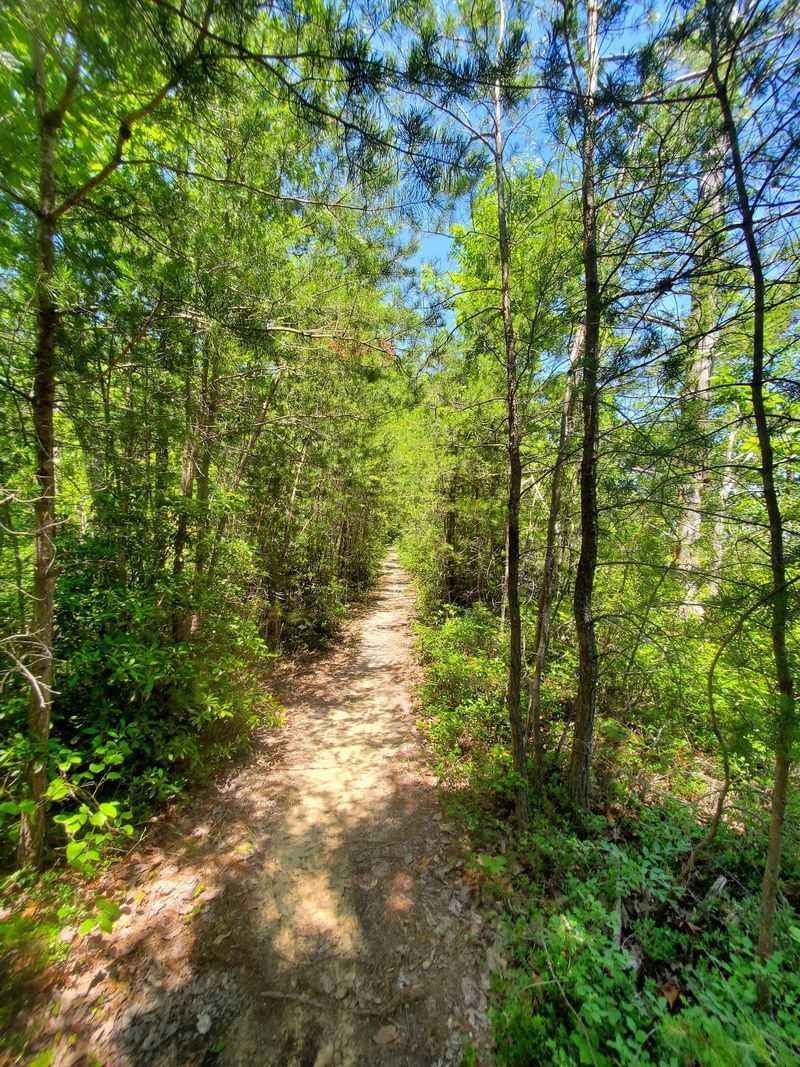
The forest here represents classic Cumberland Plateau ecology, dominated by oak, hickory, and maple that create a canopy protecting diverse understory plants. Spring brings wildflowers carpeting the forest floor before trees leaf out and shade returns.
Unique plant species thrive in the canyon’s microclimates, some restricted to these specific conditions of moisture, elevation, and rock chemistry.
Birdwatchers find plenty to observe, from common woodland species to raptors hunting from cliff edges. Hawks circle overhead, riding updrafts from the canyon. Woodpeckers work the dead snags that forest managers wisely leave standing. Songbirds fill the canopy during spring migration, turning morning hikes into concerts.
White-tailed deer browse the forest, and their tracks mark muddy sections of trail. Black bears inhabit the broader region, though encounters remain uncommon.
Smaller mammals like raccoons, opossums, and various rodents go about their business mostly unseen, leaving signs for observant hikers to notice.
The preserve’s uncrowded nature means wildlife acts more naturally here than in heavily visited parks. Animals haven’t learned to associate humans with food, and they maintain healthy wariness.
This creates better opportunities for patient observers who move quietly and pay attention to subtle movements and sounds.
The area’s dark sky designation extends beyond astronomy to mean genuine quiet and darkness rare in modern life. Standing in the forest at dusk, you might hear nothing but wind in trees and distant bird calls, a soundscape increasingly difficult to find.
Why Pogue Creek Canyon Deserves a Spot on Your Tennessee Road Trip
Spring and fall offer the prime visiting windows, each with distinct advantages. Spring brings waterfalls, wildflowers, and moderate temperatures perfect for hiking.
Fall delivers spectacular foliage as hardwoods turn the canyon into a tapestry of red, orange, and gold. Summer works too, though heat and humidity can make strenuous hiking less pleasant, and bugs emerge in force.
The preserve operates during daylight hours, generally 8 AM to 5 PM according to posted regulations. No entrance fee applies, and the solar charging station provides a useful amenity for electric vehicle owners exploring the region.
Facilities remain minimal, so pack water, snacks, and anything else you’ll need for several hours in the backcountry.
Nearby attractions include Pickett State Park, Big South Fork National River and Recreation Area, and various other Cumberland Plateau natural areas. This region rewards multi-day exploration, with enough hiking, paddling, and scenic driving to fill a long weekend.
Jamestown offers basic services including gas, food, and lodging for those planning overnight trips.
The preserve’s location between Knoxville and Louisville makes it an ideal stopping point for travelers crossing Tennessee or exploring the upper Cumberland region. The detour from major highways takes minimal time but delivers maximum impact, especially for visitors tired of the same old interstate rest stops.
What makes Pogue Creek Canyon worth visiting comes down to authenticity. This isn’t a manufactured attraction or a nature experience sanitized for mass consumption.
The preserve demands a bit of effort, rewards curiosity, and leaves you with a genuine sense of having explored wild Tennessee. For travelers seeking places that still feel undiscovered, this hidden canyon wonderland delivers exactly what it promises, a secret worth keeping but too good not to share.
Share this story