If you have ever wanted a bike ride that feels more like a painting than a workout, the Little Traverse Wheelway in northern Michigan might be exactly what you are looking for. This paved trail stretches along the shoreline of Little Traverse Bay, connecting several charming towns and offering views that make yocu want to slow down and just look around.
Whether you are a serious cyclist or someone who just rents a bike for the afternoon, this trail has a way of pulling you in. Pack a snack, charge your phone camera, and get ready for one of the most rewarding rides in the Great Lakes State.
The Bay Views That Make You Forget You Are Pedaling
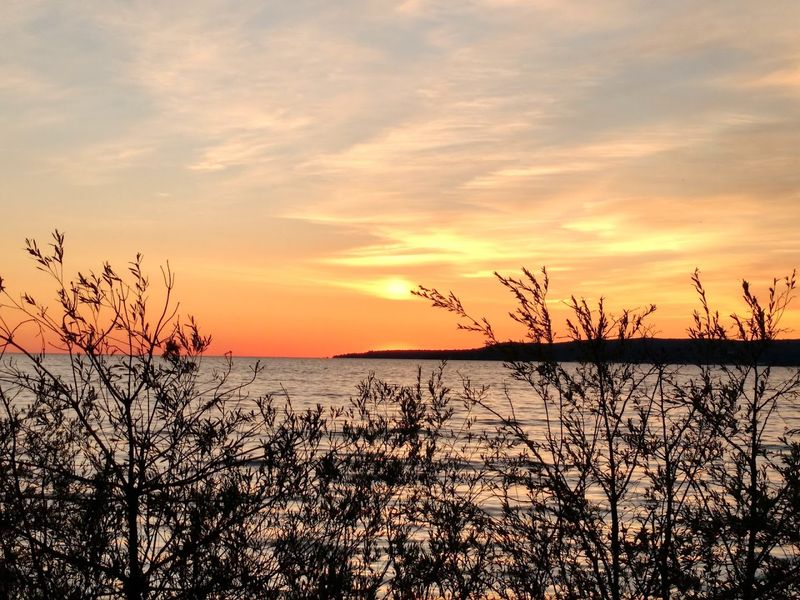
Some trails are about the destination. This one is almost entirely about what you see while you are moving.
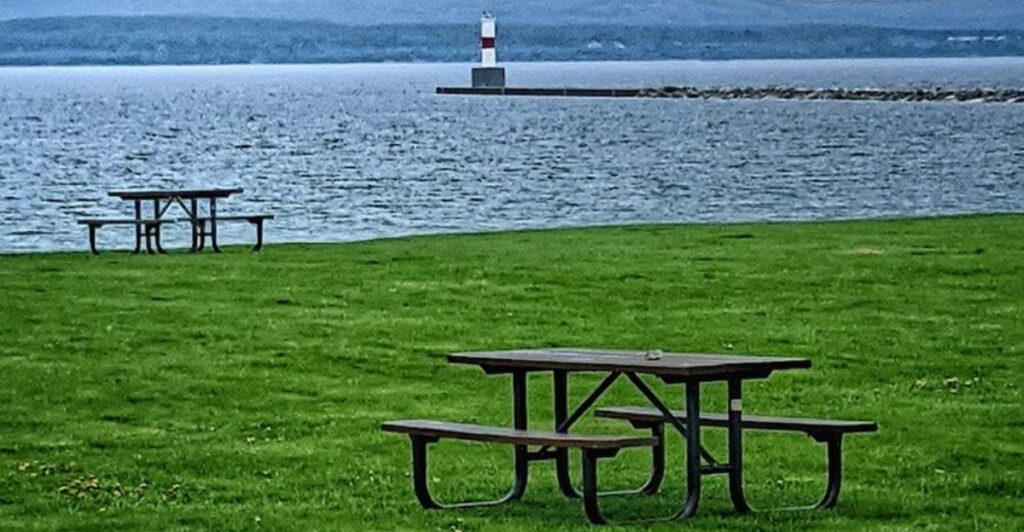
Along much of the Little Traverse Wheelway, Little Traverse Bay sits right beside you, close enough that you can hear the water on calm days and feel the breeze coming off the lake before you even realize how far you have gone.
The bay shifts color depending on the light. Early morning, it tends to look almost silver.
By midday, it turns a rich, layered blue that you would not expect from a freshwater lake. Late afternoon brings out warmer tones, especially when the sun starts dropping toward the western horizon.
Each stretch of the trail gives you a slightly different angle on it.
What makes these views work is that the trail sits low enough to feel connected to the water rather than elevated above it. You are not looking down at the bay from a ridge.
You are riding right alongside it, close enough that the scenery feels personal rather than panoramic.
There are natural pull-off spots and benches placed along the way where riders tend to stop, not because they are tired, but because stopping feels like the right thing to do. A few of those spots have become informal gathering points where strangers end up talking about where they started and where they are headed.
The trail surface is smooth and well-maintained, which means you are not fighting the pavement while trying to take everything in. That combination of easy riding and constant visual reward is what keeps people coming back to this trail season after season.
Once you have ridden it in the right light, it is hard to settle for anything less on your next trip north.
Petoskey to Harbor Springs: The Stretch That Tells the Whole Story
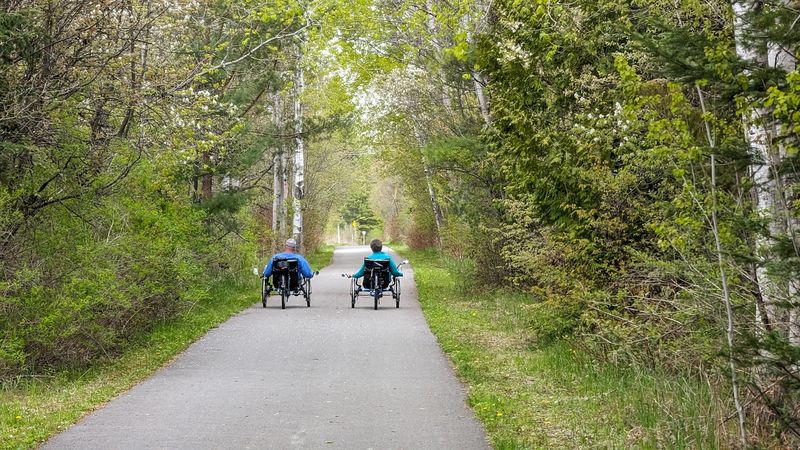
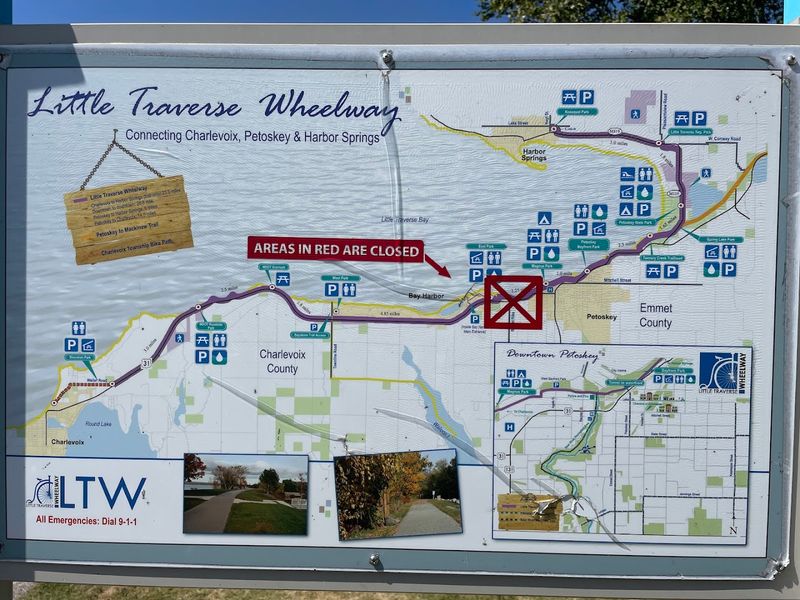
Ask anyone who has ridden the full wheelway which section they remember most, and a good number will point to the stretch between Petoskey and Harbor Springs. It captures just about everything the trail has to offer in a relatively compact distance, which makes it a great starting point if you are short on time but still want the full effect.
Leaving Petoskey, the trail moves through a mix of open shoreline and tree-lined sections that alternate in a way that keeps the ride visually interesting. You get a burst of bay views, then a cool shaded corridor, then open sky again.
It never settles into one repeated pattern, which is part of why the miles pass quickly.
Harbor Springs itself is worth the ride. The town sits tucked into a protected harbor, and when you arrive by bike you get a different feel for it than you would pulling in by car.
The pace slows naturally. People are walking dogs, carrying coffee, sitting on benches near the water.
The energy is unhurried in a way that feels genuine rather than performed.
The return trip back toward Petoskey has its own character. Riding in the opposite direction changes what catches your eye.
Shadows fall differently, the bay appears at different angles, and you notice things you missed the first time through. A few riders make a habit of riding the section twice in the same outing just for that reason.
Both towns have spots to grab food or a drink before heading back out, so there is no need to over-pack. The trail is well-marked and easy to navigate, which leaves your brain free to focus on what is actually happening around you rather than where you are going.
What the Trail Feels Like in Early Summer
Timing changes everything on a trail like this, and early summer might be the sweet spot. The crowds have not fully arrived yet, the vegetation along the path is at its greenest, and the air has that specific northern Michigan quality that is hard to describe but immediately recognizable when you step out of the car.
Mornings in early June on this trail are particularly good. The light is sharp and clear.
The bay is often calm before the afternoon wind picks up. You might share the path with a handful of other riders, maybe a few joggers, but there is still plenty of space to ride at your own pace without feeling like you are navigating traffic.
The wildflowers along the edges of the trail are worth paying attention to during this window. They appear in small clusters between the grasses and shrubs, nothing dramatic, but the kind of detail that makes a ride feel like more than just exercise.
Birdsong carries easily in the morning quiet, and it is not unusual to spot something interesting just off the path if you are moving slowly enough.
Water temperature is still cold in early summer, but that does not stop people from wading at the small access points near the trail. Watching someone react to that first step into the bay is its own small entertainment.
By mid-morning the temperature usually climbs into comfortable territory, and the trail starts to feel more alive. Families show up with kids on smaller bikes.
Rental cyclists from nearby shops appear with helmets slightly askew. The energy shifts, and the trail takes on a different but equally pleasant character.
Early summer gives you both versions if you start early enough.
How the Trail Connects Small Towns in a Way Roads Cannot
Roads connect places. Trails connect people to places, and there is a real difference.
Riding the Little Traverse Wheelway between Charlevoix and Petoskey, you move through the kind of transitions that a car window blurs past too fast to register. The shift from open farmland to wooded corridor to lakeshore happens gradually, and you feel each change rather than just seeing it.
The trail passes near enough to local neighborhoods that you get a genuine sense of what daily life looks like in this part of Michigan. Front porches.
Gardens. Kids playing in yards.
It is not a curated version of the region designed for visitors. It is just the actual place, seen from a slower and more honest angle.
Charlevoix has a personality that is slightly different from Petoskey, and the trail lets you feel that contrast rather than just read about it. Charlevoix sits on a narrow channel connecting Lake Michigan to Round Lake and Pine Lake, giving it a layered water geography that shows up in unexpected ways as you approach by bike.
The scale of things feels different there.
Small towns in northern Michigan tend to have at least one good bakery or coffee shop within easy reach of the trail, and that practical detail matters more than it might sound. A mid-ride stop with a decent cup of coffee and somewhere to sit for ten minutes resets the whole outing.
You leave feeling like you actually experienced the town rather than just passed through it.
The trail does not try to be a shortcut. It is deliberately slower than driving, and that slowness is the point.
It gives you enough time to notice things, form small opinions, and arrive somewhere feeling like you earned it a little.
Fall Riding on the Wheelway Is a Different Kind of Beautiful
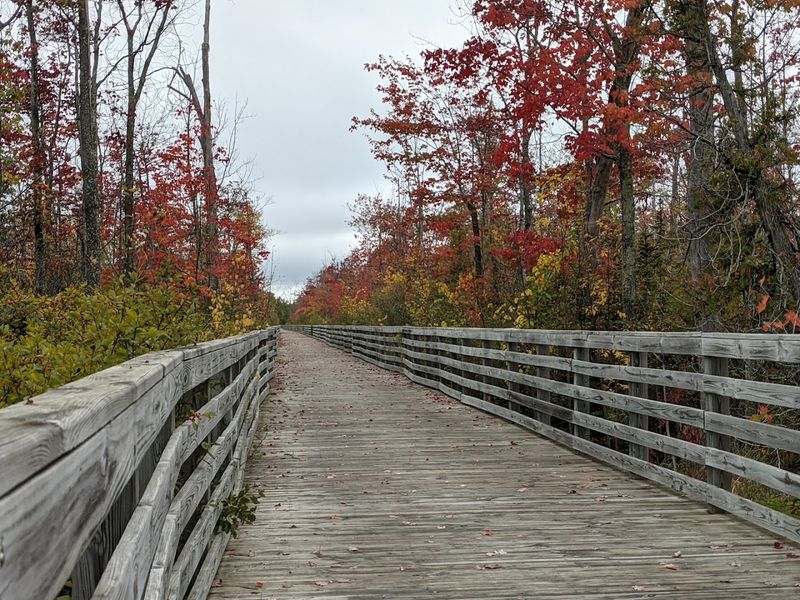
Most people think of summer when they picture cycling in northern Michigan. Fall tends to get overlooked, which means the trail clears out considerably after Labor Day and the whole character of the ride shifts in ways that are genuinely worth seeking out.
The foliage along the wheelway in September and October turns the tree-lined sections into something that feels almost theatrical. Reds, oranges, and deep yellows press in from both sides of the path.
The bay, still visible through the thinning leaves, reflects the colors in ways that can stop you mid-pedal. The light in fall has a lower angle that makes everything look more dimensional.
Temperatures in September are usually still comfortable for riding, cool enough to feel energizing but warm enough that you are not fighting the weather. October requires a jacket, but the reward is a trail that feels almost private.
You might ride for long stretches without passing another cyclist, which gives you a rare chance to hear the trail itself: wind through the trees, the occasional crunch of early fallen leaves blown onto the path.
There is also something about the smell of northern Michigan in fall that is worth mentioning. Damp leaves, lake air, the faint woodsmoke from nearby neighborhoods.
It layers together into something that feels seasonal in a very specific and satisfying way.
Local businesses near the trail stay open into fall, though hours can shift, so a quick check before heading out saves disappointment. The upside is that parking is easy, crowds are thin, and you have a much better chance of getting a table at the places worth stopping at.
Fall riding rewards the people who actually show up for it.
The Practical Details That Make This Trail Work for Everyone
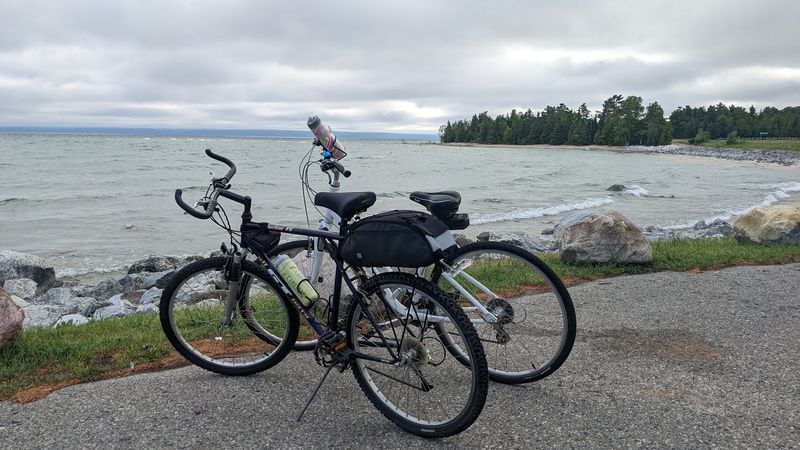
Not every great trail is also a practical one, but the Little Traverse Wheelway manages to be both. The surface is paved and maintained, which means it works for road bikes, hybrid bikes, and the kind of cruiser rentals that most casual visitors end up on.
You do not need specialized gear or serious training to enjoy it.
The trail is mostly flat with gentle grades in certain sections, which makes it accessible for a wide range of riders. Families with younger kids tend to do well on it.
Older riders who want distance without punishing climbs find it suits them. It is also friendly for people who are just getting back into cycling after a long break, which is a larger group than most trails are designed for.
Bike rentals are available in Petoskey and Harbor Springs, so arriving without equipment is not a barrier. Rental shops near the trailhead can usually give you a quick orientation on the route and let you know about any current conditions worth knowing about.
That kind of local context is often more useful than anything you find online before the trip.
Restroom facilities and water access exist at various points along the trail, which matters more than people admit when planning a longer ride. Knowing those stops are there lets you commit to the full distance without the mental overhead of managing logistics the whole time.
Parking areas near the trailhead fill up on busy summer weekends, so arriving earlier in the day is the simplest strategy. Weekday mornings are particularly good if your schedule allows.
The trail handles its busiest days reasonably well, but the experience on a quieter morning is noticeably more relaxed and easier to enjoy at your own pace.
What Stays With You After the Ride Is Over
There is a specific kind of tiredness that comes from a long bike ride in a beautiful place, and it is completely different from the kind that comes from a stressful day. You feel it in your legs, but also in your head, in the best possible way.
The Little Traverse Wheelway tends to produce that kind of fatigue.
People who ride this trail often mention the same thing when describing it afterward: they remember specific moments rather than a general impression. A particular bend where the bay suddenly opened up.
A cluster of trees that created a tunnel effect for about thirty seconds. The way the light hit the water at a certain point in the afternoon.
Those details stick in a way that broader descriptions of a place rarely do.
The trail also has a way of making the towns along it feel more real. When you arrive somewhere by bike, you have a physical relationship with the distance.
Petoskey to Harbor Springs is not just a number on a map. It is something your body knows it did, and that changes how you think about the place afterward.
Kids who ride it with their families tend to talk about it on the drive home, which is its own kind of endorsement. It holds attention in a way that passive sightseeing often does not, because there is just enough effort involved to make the views feel earned.
The last stretch back toward the trailhead, whenever the day starts winding down, often comes with a low sun hitting the bay at an angle that makes the water look like it is lit from underneath. That image tends to follow people home.
It is the kind of thing you find yourself describing to someone who was not there, knowing the words will not quite do it justice.
Share this story