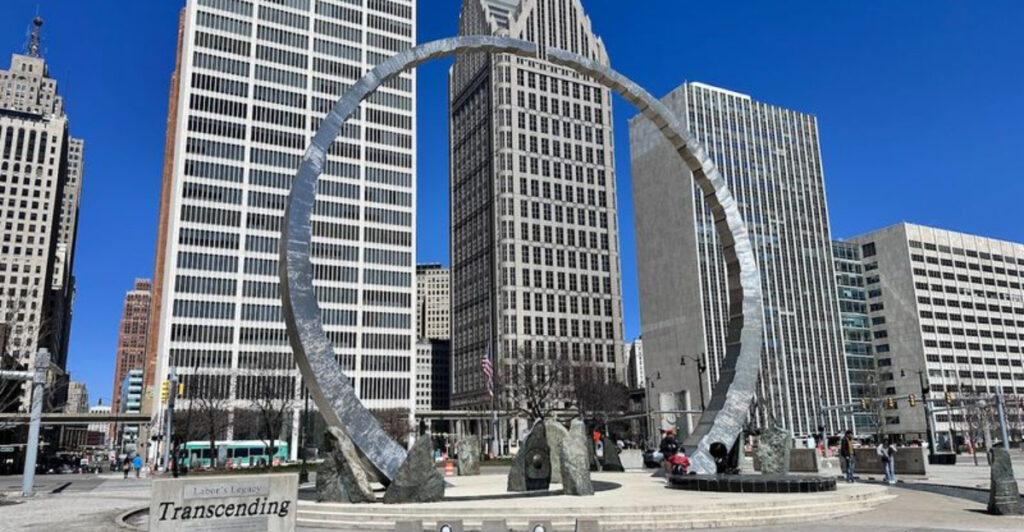
Right on the edge of the Detroit River, Hart Plaza stands as one of Michigan’s most energetic and welcoming public spaces. Spanning 14 acres of open riverfront land, this downtown Detroit landmark draws crowds year-round with its bold architecture, lively festivals, and one of the most striking fountains in the Midwest.
Whether you’re a longtime Detroit local or a first-time visitor passing through, Hart Plaza has a way of pulling you in and keeping you there longer than planned. From summer music events to quiet morning walks by the water, this place operates on its own vibrant frequency.
The Dodge Fountain: Detroit’s Liquid Landmark
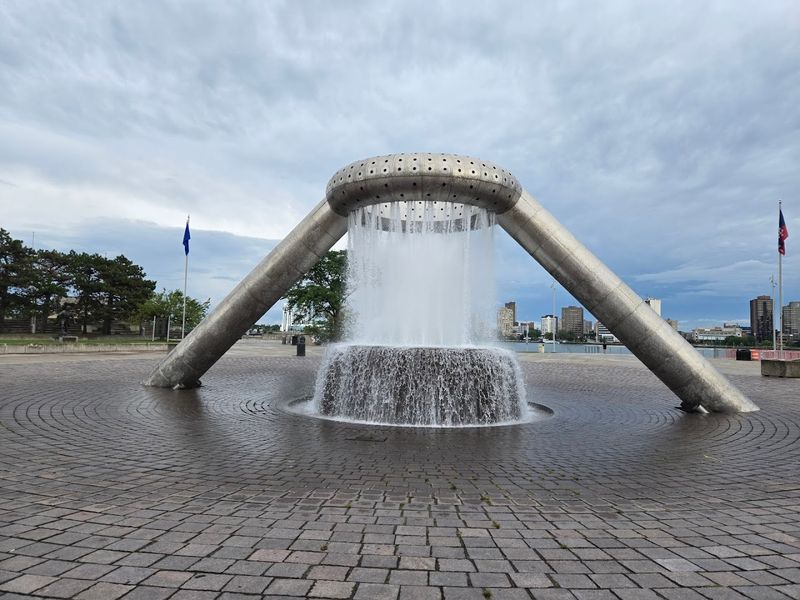
Few fountains in the country carry the kind of visual punch that the Dodge Fountain delivers. Designed by sculptor Isamu Noguchi and dedicated in 1979, this massive stainless steel structure sits at the heart of Hart Plaza and shoots water in dramatic arcs that can be seen from a significant distance across the plaza.
On a hot August afternoon, people gather around it just to feel the cool mist drifting off the jets.
The fountain went through extensive repairs before being fully restored to working condition, and people who grew up in Detroit talk about how exciting it was to see it operating again at full capacity. The lights that illuminate the water at night turn the whole structure into something closer to a performance than a decoration.
Families with young kids tend to linger here the longest, watching the shifting water patterns with genuine fascination.
Architecturally, the fountain is considered a serious piece of public art rather than a simple park feature. Noguchi’s design philosophy centered on merging sculpture with functional civic spaces, and the Dodge Fountain is one of his most recognized public works in the United States.
The circular platform surrounding it gives visitors a 360-degree vantage point.
Standing directly in front of the fountain when it’s running at full pressure is a surprisingly immersive experience. The sound of the water competes with the ambient noise of the city, and for a few minutes, the whole urban backdrop fades into the background.
Early morning visits, before the crowds arrive, offer the clearest view and the most peaceful setting to appreciate the structure in full.
Festival Season Along the Michigan Riverfront
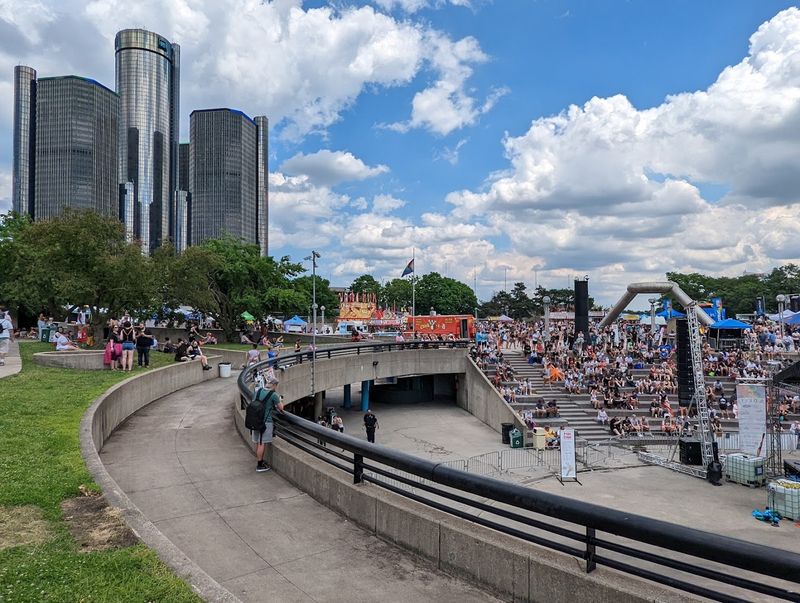
Summer at Hart Plaza operates like a rolling calendar of events, each one drawing a different crowd and filling the plaza with its own distinct energy. The Detroit Jazz Festival, one of the largest free jazz festivals in the world, transforms the space into an outdoor concert hall every Labor Day weekend.
Stages are set across multiple areas, and the music carries out over the river with a clarity that surprises first-time attendees.
Beyond jazz, the African World Festival brings together vendors, performers, poets, and families for a multi-day celebration that people describe as one of the most well-organized events on the plaza calendar. The layout encourages movement between stages, food stalls, and art displays without ever feeling cramped or chaotic.
Motor City Pride draws an equally enthusiastic crowd, with live music, dancing, and a vendor lineup that fills nearly every corner of the grounds.
The Movement Electronic Music Festival, known locally as DEMF, is another major fixture. Electronic music fans travel from across the country for this Memorial Day weekend event, and the sound system setup at Hart Plaza is purpose-built for that kind of large-scale production.
Entry and exit flow is well-managed, and security presence keeps the atmosphere safe without being intrusive.
For barbecue lovers, the RB Rib Festival has built a loyal following among Detroit residents who treat it as an annual tradition. The smell alone draws people in from the riverwalk before they even see the vendor tents.
Each festival brings its own food options, its own performers, and its own crowd personality, which is exactly why Hart Plaza feels like a different place depending on which weekend you show up.
Where the Detroit Riverwalk Begins to Shine
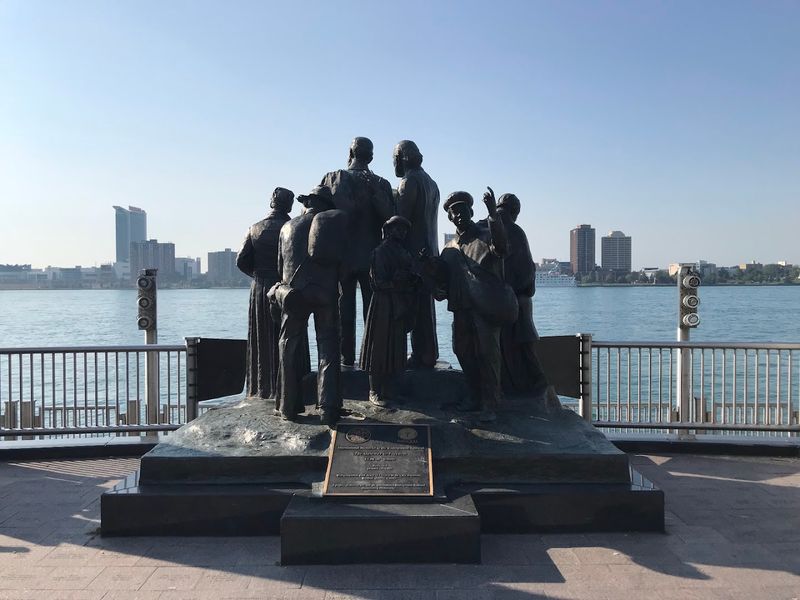
Hart Plaza sits at one of the most scenic access points along the Detroit Riverwalk, a multi-mile pedestrian and cycling path that stretches along the riverfront and connects several of the city’s most visited outdoor spaces. Arriving at Hart Plaza from the Woodward corridor feels like stepping out onto a stage — the skyline wraps around you, the river opens up ahead, and the Canadian shoreline sits visible across the water just a short distance away.
Morning walkers tend to arrive before 8 AM to catch the sunrise over the river. The light hits the water at a low angle during those early hours, and the combination of the city skyline, the fountain, and the open sky creates a view that people consistently describe as one of the most underrated in all of Michigan.
The plaza is quiet at that hour, with just the sound of water and the occasional cyclist passing through.
Renting a scooter or a bike is one of the most recommended ways to experience the broader riverwalk, using Hart Plaza as a central starting point. From there, riders can head east or west along the waterfront, looping past other parks and landmarks before circling back.
The path is well-maintained and wide enough to handle both foot traffic and cyclists without conflict.
People who grab takeout from nearby spots and bring it back to the plaza for a riverside picnic have stumbled onto one of Detroit’s best low-cost afternoon activities. The combination of open space, waterfront views, and the occasional breeze off the river makes eating outside here far more enjoyable than most indoor dining options in the area.
It’s a simple pleasure that locals clearly cherish.
Public Art and Architecture That Actually Stops You
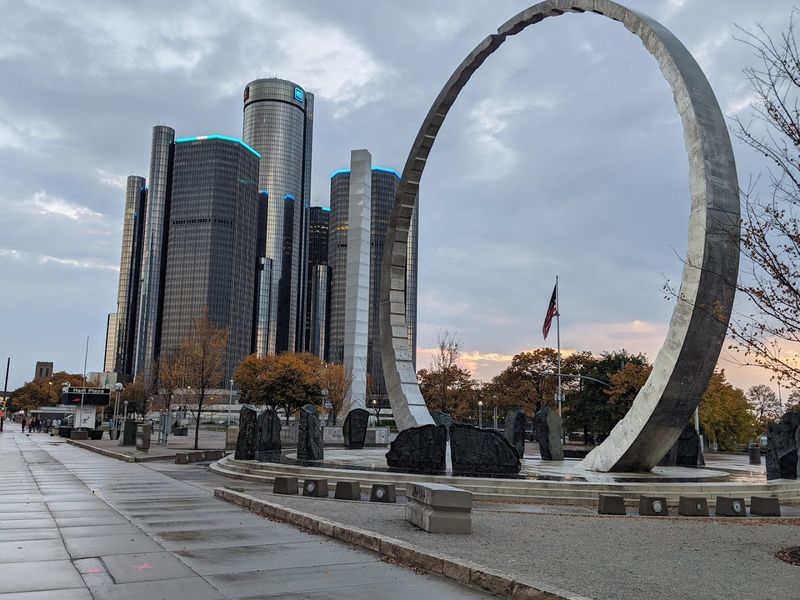
Hart Plaza was never designed to be just an open patch of concrete by the river. From the moment the space was developed in the 1970s, the vision included public art as a core element of the experience.
Beyond the Dodge Fountain, the plaza features a collection of sculptures and monuments that reward slow, curious exploration rather than a quick walk-through.
The Paved Paradise sculpture and various memorial installations are scattered throughout the grounds, each one tied to a different chapter of Detroit’s cultural and civic history. Some of the pieces are large enough to interact with physically, while others are more contemplative and designed to be read as much as observed.
Visitors who take the time to move through the plaza without a fixed destination tend to notice details that the hurrying crowd misses entirely.
The architectural design of the plaza itself, with its sweeping amphitheater bowl and tiered levels descending toward the river, gives the whole space a theatrical quality even when no event is happening. The geometry of the layout channels movement naturally, guiding visitors from the street level down toward the waterfront in a gradual, deliberate way.
That structural intention is visible in how crowds naturally distribute themselves across the space during large events.
During quieter months, the sculptures take center stage in a way they cannot during festival season. Without vendor tents and stage structures filling the grounds, the open layout reveals the full scale of the plaza and lets the individual artworks stand out clearly.
People who visit in late fall or early spring often find the experience of walking through the space without crowds to be surprisingly engaging, with the art and the river views doing all the heavy lifting.
Food, Vendors, and the Social Energy of Event Days
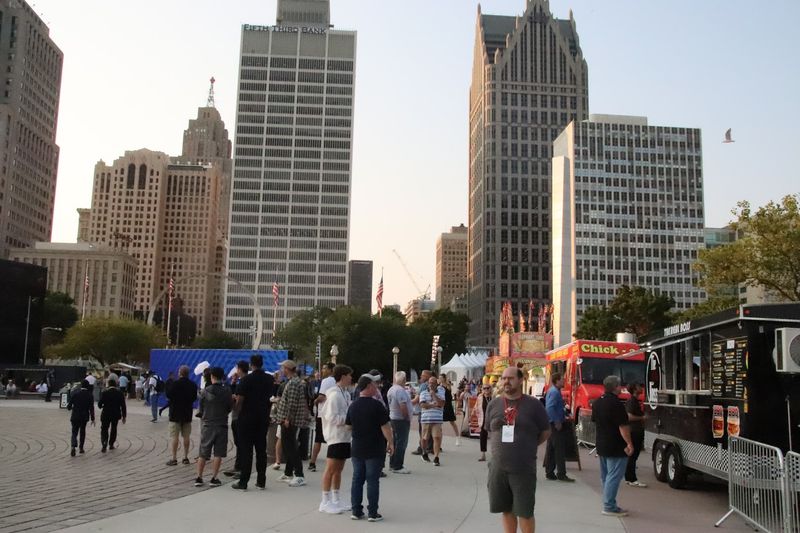
On event days, Hart Plaza transforms into something that functions almost like a temporary city within a city. Vendor setups stretch across significant portions of the grounds, offering everything from handmade crafts and cultural goods to full sit-down-style food service from tables and chairs set up right on the plaza surface.
The variety shifts depending on the festival, but the energy level stays consistently high regardless of which event is running.
Food trucks and vendor carts are a major draw in their own right. Chef 3059, operated by Chef Dameka, has built a strong following among festival regulars who make a point of tracking down the truck specifically for the fried catfish and chicken wing dinners.
People who know the truck say the quality is consistent and the staff keeps orders moving efficiently even during peak hours, which matters a lot when lines get long mid-afternoon.
The African World Festival vendor section is frequently mentioned as one of the most diverse and well-curated marketplaces of any event on the plaza calendar. Sellers bring cultural textiles, jewelry, books, and handmade goods that you’re unlikely to find at a standard craft market, and browsing the full vendor row takes a solid chunk of time if you’re actually stopping to look at things properly.
Even outside of organized festivals, the plaza attracts food vendors and mobile carts during warm weather months, particularly on weekends when the riverwalk foot traffic picks up. The combination of outdoor seating, river views, and rotating food options gives the plaza a lively daytime atmosphere that doesn’t depend entirely on a scheduled event to feel active.
Bringing your own food and finding a spot near the fountain is equally valid and equally popular among regulars.
Planning Your Visit: Hours, Access, and Timing Tips
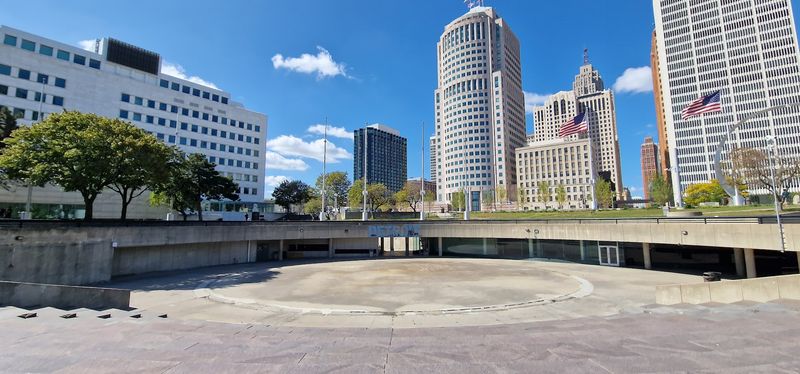
Hart Plaza is open daily from 8 AM to 5 PM during regular operating hours, though festival events frequently extend activity well beyond those times on specific dates. The plaza is located at 1 Hart Plaza in downtown Detroit, right on the riverfront, making it easily accessible from the central business district on foot.
Parking is available in nearby downtown structures, and the plaza is also reachable via the QLine streetcar and several bus routes that serve the Woodward corridor.
Timing a visit around a specific festival requires some advance planning since the most popular events like the Detroit Jazz Festival and Movement draw large crowds and can affect traffic and parking availability in the surrounding blocks. Arriving early on festival days — ideally before noon — gives visitors the best chance of securing a good viewing position near the main stage and avoiding the longest food lines.
Mid-afternoon tends to be the busiest window at nearly every event.
For non-festival visits, weekday mornings are the calmest time to experience the plaza. The fountain area is accessible, the sculptures are easy to walk around without navigating crowds, and the riverwalk connection is open for extended walks in either direction.
Early risers who arrive just after 8 AM have described the experience of watching the sunrise from the plaza as one of the most peaceful moments available in downtown Detroit.
Weather plays a significant role in the experience, particularly in a city like Detroit where summer heat and lake-effect conditions can shift quickly. August visits tend to coincide with the highest number of events and the warmest temperatures, so light clothing and sun protection are practical considerations.
Spring and fall visits offer cooler conditions and a noticeably different, quieter version of the same space.
Why Hart Plaza Holds a Permanent Place in Detroit’s Identity
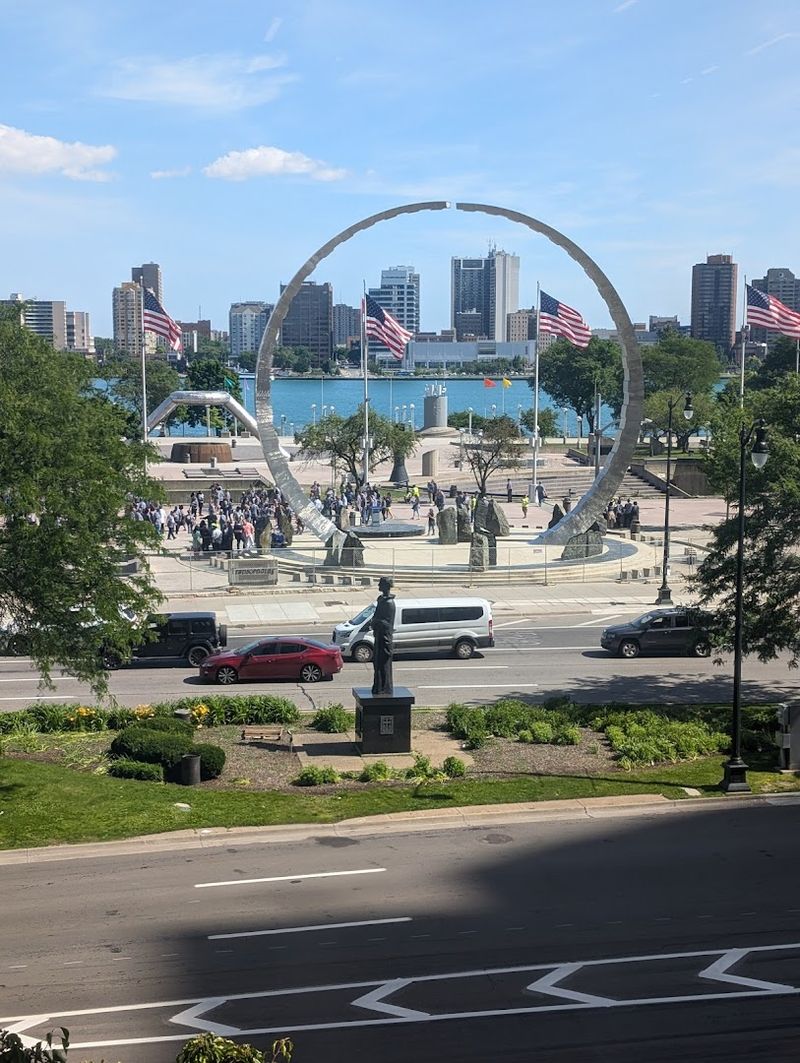
Detroit is a city with a complicated public narrative, and Hart Plaza sits right at the center of the story the city tells about itself on its best days. Positioned at the foot of Woodward Avenue with the river on one side and the downtown skyline pressing in from the other, the plaza occupies a geography that feels intentional — like the city placed its most open, democratic space at the exact point where everything converges.
People who grew up in Detroit carry specific memories tied to this place: watching fireworks from the plaza edge, attending their first jazz festival as kids, or riding bikes along the riverwalk with the fountain running in the background. Those generational connections give Hart Plaza a cultural weight that goes beyond its function as an event venue.
It’s a reference point in the personal histories of a significant number of Metro Detroit residents.
The recent restoration of the Dodge Fountain to full working order landed as genuinely good news for the city, and the reaction from longtime visitors reflected how much the fountain’s dormant years had been felt. Seeing it operating again — lights and all — carries a specific meaning for Detroiters who remember it from earlier decades and who watched the plaza go through periods of reduced maintenance and limited programming.
Visitors coming from outside Michigan frequently compare the plaza to Millennium Park in Chicago, citing the combination of signature public art, waterfront access, and large-scale event programming as the common thread. That comparison undersells Hart Plaza’s distinctly Detroit character, but it does capture the ambition of the space.
This is a plaza built to hold a city’s full range of public life, and on its best weekends, it delivers exactly that.
Share this story