At 7 a.m., the loudest thing at the southern tip of Ocean City may be a gull objecting to breakfast. There are no arcade bells, rolling surreys, or lines forming outside a pancake house—just wind moving through beach grass and a sandy path disappearing between the dunes.
Corson’s Inlet State Park preserves a remarkably wild piece of the Jersey Shore, where the Atlantic Ocean, tidal marshes, and back bay squeeze together at the end of the island.
Come early and you can follow the trails while the sand is still cool, watch shorebirds working the waterline, and reach a beach that feels surprisingly removed from the busy resort town a few miles north.
The park is not designed around rides, snack stands, or rows of rented umbrellas. Its main attraction is the breathing room.
For anyone craving a quiet morning without leaving Ocean City, this undeveloped coastal pocket delivers exactly the right kind of escape.
Corson’s Inlet State Park Is Ocean City’s Quietest Coastal Escape
Ocean City knows how to keep visitors entertained, but Corson’s Inlet State Park succeeds by offering almost none of the things usually associated with a Jersey Shore vacation. Established in 1969, the park protects one of the last undeveloped stretches of oceanfront in this part of New Jersey.
Instead of a boardwalk and groomed recreation areas, visitors find natural dunes, tidal shoreline, marine estuaries, patches of upland vegetation, and open water stretching toward Strathmere. That contrast becomes clear near the entrance at 59th Street and Central Avenue.
Houses and paved streets give way to sand, tall grass, and narrow footpaths remarkably quickly. The change is not dramatic in a theme-park sense; there is no giant entrance sign announcing that civilization has ended.
You simply begin walking and notice that the sounds of town have dropped behind you. The park’s small scale is part of its appeal.
This is not a place where you need a detailed itinerary or a full day of supplies. A morning visit can be as simple as walking toward the ocean, lingering beside the inlet, and returning before the midday heat builds.
The flat landscape also makes it approachable for families, casual walkers, photographers, and birders who would rather scan the dunes than tackle a steep trail. Corson’s Inlet is still a wild coastal environment, however, and that means it changes.
Tides reshape the edges, storms move sand, and seasonal nesting closures may redirect foot traffic. Those natural rhythms are exactly what the park was created to protect.
On a quiet morning, the lack of development makes it easy to forget that Ocean City’s restaurants, shops, and amusements are only a short drive away. The park does not feel like an attraction inserted into the Shore.
It feels like the piece that was wisely left alone.
Sandy Trails, Wind Through Dunes, Tall Grass, and Coastal Scrub
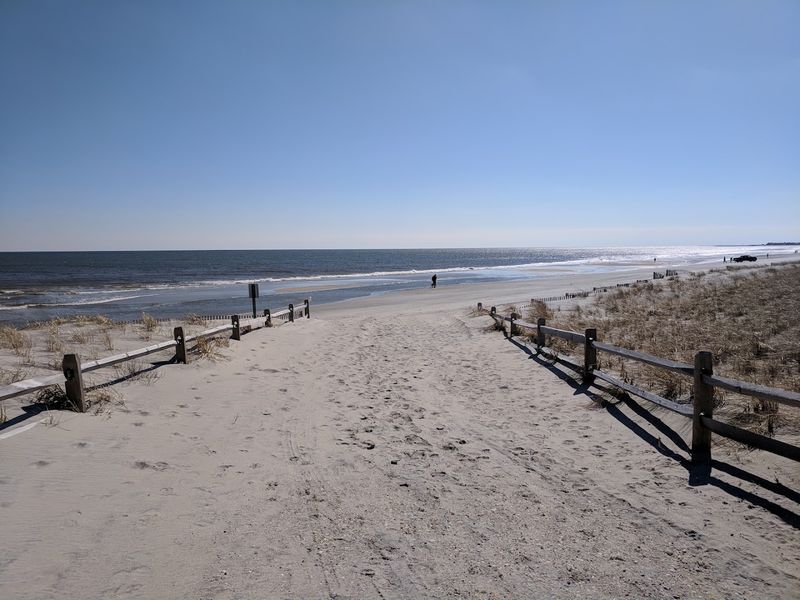
The first few steps can be mildly deceptive. The trails look easy—and technically they are—but every footfall sinks slightly into loose sand, turning an ordinary stroll into a gentle beach workout.
Sneakers are far more useful than flip-flops here, especially if you plan to explore beyond the shortest path to the shoreline. Rather than following a single paved route, visitors move through a loose network of sandy paths around the park’s ocean and bay sides.
Some stretches pass between high grasses and dense coastal shrubs. Others open suddenly to wide views of pale dunes, blue sky, or marshland.
The terrain is mostly level, so the challenge comes from the soft surface rather than elevation. Walking slowly pays off.
Coastal plants that appear scruffy from a distance are part of an ecosystem built to survive salt spray, shifting sand, strong winds, and punishing summer sun. The vegetation also provides cover for birds and other wildlife, which is why wandering over the dunes or cutting new paths is a bad idea.
Staying on established routes protects both the plants holding the sand in place and the animals nesting nearby. The park’s protected beachfront serves as nesting habitat for piping plovers as well as least terns and black skimmers.
American oystercatchers, sandpipers, sanderlings, herons, gulls, ducks, and other shorebirds may also appear depending on the season. Some dart along the wet sand with comic urgency, while others stand so still near the marsh that they can be easy to miss.
Summer walkers should bring insect repellent and consider long socks, particularly around thicker vegetation where mosquitoes, ticks, and poison ivy can complicate an otherwise pleasant outing. There is little shade once the sun climbs, so an early start is not merely more peaceful—it is more comfortable.
The real pleasure comes from taking the trail at an unhurried pace, noticing each small shift from scrub to dune to water rather than racing toward a finish line.
The Undeveloped Beach Feels Peaceful Before the Crowds Arrive

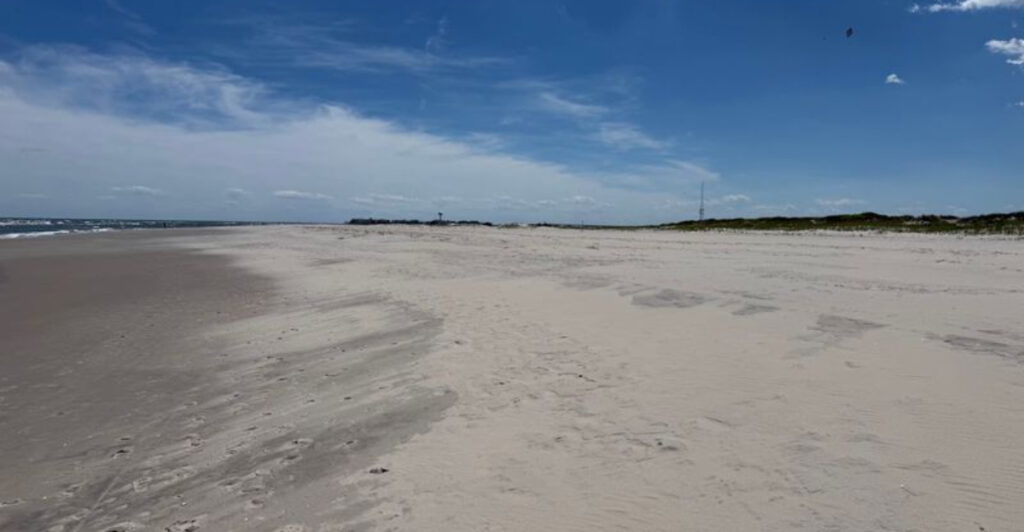
Reach the ocean early enough and the sand may look almost untouched apart from bird tracks and the thin, foamy border left by the previous wave. The beach here has none of the tightly arranged chairs or carefully claimed family territories found on more developed blocks.
It is broad, natural, and shaped by whatever the tide and weather have recently decided to do. That does not mean it is always empty.
Anglers, shell collectors, photographers, and walkers know about Corson’s Inlet, and warm weekends can bring a steady stream of visitors. The mood is still noticeably calmer in the morning, particularly before the heat settles over the dunes.
Sunrise light catches the beach grass, boats begin moving through the inlet, and the Atlantic supplies nearly all the background noise. This is a beach for walking, sunbathing, observing wildlife, and enjoying the view—not for taking a casual swim.
Swimming is prohibited at Corson’s Inlet State Park, and there are no lifeguards stationed along this undeveloped shoreline. The inlet’s moving water and currents also deserve respect, even when the surface appears calm.
The absence of swimming crowds gives the beach a different personality. Visitors tend to spread out, explore the waterline, or sit facing the inlet rather than clustering around a guarded bathing area.
Depending on the tide, you may spot shells, horseshoe crabs, small shorebirds, or anglers casting into deeper water. Seasonal fencing and posted closures should always be followed because several vulnerable bird species nest directly on or near the sand.
There are no snack bars waiting beyond the dunes, and that is part of the charm. Bring water, sunscreen, and anything else you will need, then carry everything back out.
The park operates on a carry-in, carry-out policy, so visitors should be prepared to take their trash with them. The reward for that small amount of preparation is a stretch of Ocean City shoreline that still feels governed by tides and nesting seasons instead of beach-chair rows.
The Back Bay Opens the Door to Kayaking and Wildlife Watching

Turn away from the Atlantic and Corson’s Inlet changes character again. The ocean side is broad, bright, and constantly moving; the back-bay side feels narrower and more sheltered, with marsh grasses, winding channels, and birds standing watch along the shallows.
Exploring both sides makes the park feel much larger than it appears on a map. Paddlers can launch kayaks or canoes from the park’s boat-ramp area along Bay Avenue.
The launch accommodates small paddle craft as well as motorboats, giving visitors direct access to the inlet, surrounding waterways, and quieter edges of the marsh. A kayak is particularly well suited to these sheltered corners.
From the water, the marsh stops looking like a flat wall of green and becomes a maze of small passages, muddy banks, feeding areas, and hidden pockets that cannot be appreciated from the road. Herons and egrets may lift away as a boat approaches, while ducks, gulls, and sandpipers move between exposed flats.
Ospreys are another common sight around the South Jersey coast, often appearing overhead or perched where they can scan the water. The best wildlife encounters usually happen when paddlers keep their voices low, move carefully, and give birds plenty of room.
Conditions can shift quickly with tides, wind, boat traffic, and weather, so this is not a place to launch blindly because the water looked calm from the parking lot. Check the marine forecast, wear a personal flotation device, and understand the tide before entering unfamiliar channels.
Less-experienced paddlers should remain in protected areas and avoid drifting toward stronger inlet currents. Seasonal boat-launch fees may apply during the summer, and parking can become tight when anglers, boaters, and beach walkers arrive at the same time.
An early launch solves several problems at once: the ramp is usually less hectic, the wind may be lighter, and the marsh is often at its quietest.
Fishing and Guided Beach Walks Add More Ways to Explore
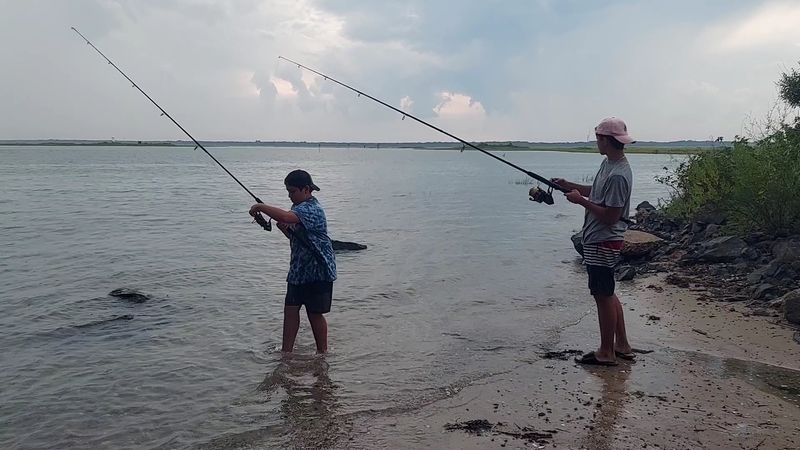
Long before most beach bags appear, fishing rods are already pointing toward the water. Corson’s Inlet is a popular spot for anglers working the oceanfront, inlet, and nearby channels, with striped bass, bluefish, weakfish, kingfish, fluke, and other seasonal catches drawing people to the shoreline.
Crabbing is another familiar activity around the calmer bay waters, especially when summer brings families looking for something more hands-on than another afternoon under an umbrella.
Fishing here can be as simple as carrying gear onto the beach, but driving onto designated areas requires a mobile sport-fishing permit, a properly equipped four-wheel-drive vehicle, and strict adherence to seasonal restrictions.
Beach-driving access is typically closed during the busiest nesting and summer visitation period, protecting both wildlife colonies and people using the shoreline on foot. Anglers should also complete New Jersey’s required saltwater fishing registration and review current size, season, and possession limits before casting.
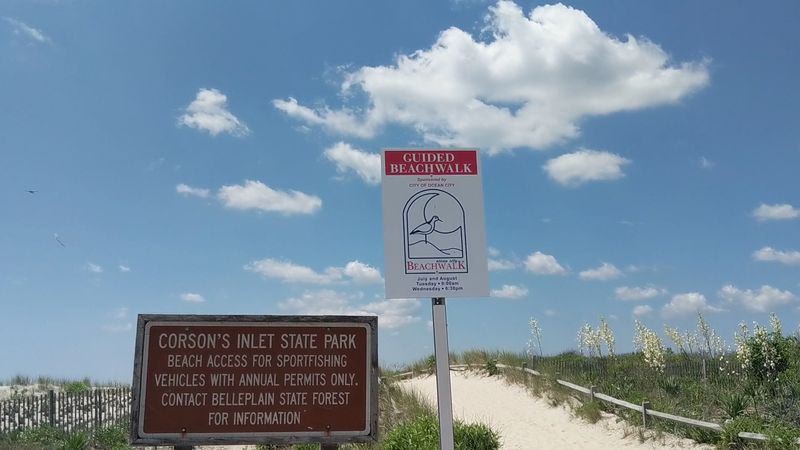
Visitors who prefer learning to landing dinner can look for Ocean City’s seasonal guided beach walks, which have traditionally been offered during summer mornings and evenings from the Corson’s Inlet entrance at 59th Street and Central Avenue.
The programs generally explore the beach environment, local wildlife, shells, crabs, dune plants, and the natural forces constantly rearranging the barrier island.
They are especially useful for families because children who might complain about “just walking” suddenly have tracks to identify, shells to examine, and tiny creatures to investigate. The experience also deepens future visits.
Once someone explains why dune grass matters, how a horseshoe crab fits into the food chain, or why nesting zones need so much space, the beach stops looking like an empty strip of sand.
It becomes a busy neighborhood operating on a schedule of tides, migration, feeding, and nesting seasons—one where humans are temporary guests rather than the permanent residents.
What to Know Before Visiting Corson’s Inlet State Park in 2026
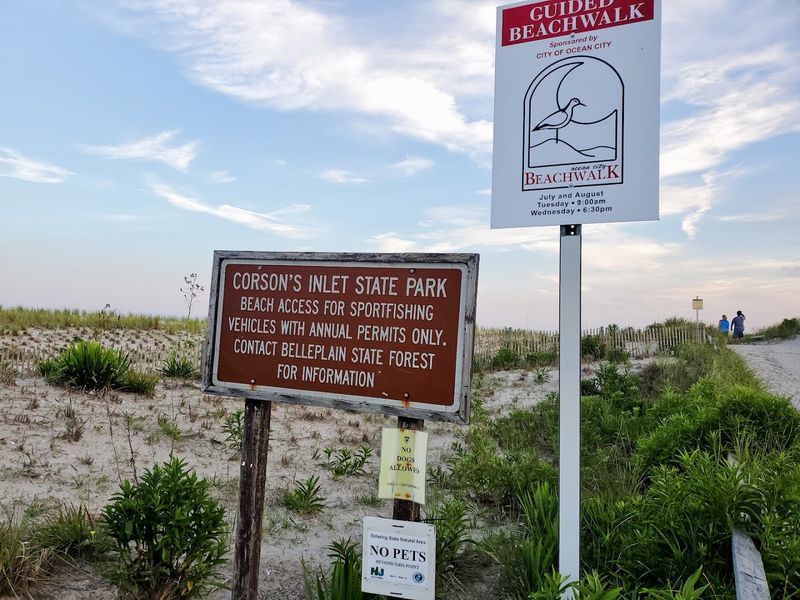
A little preparation makes this uncomplicated park even easier to enjoy. Corson’s Inlet State Park sits at the southern end of Ocean City, with beach access near 59th Street and Central Avenue and boating access from the Bay Avenue side.
The main park is generally open from sunrise to sunset, and there is no standard entrance fee for visitors arriving to walk the trails or explore the shoreline. Seasonal charges may apply at the boat launch, while specialized permits are required for activities such as mobile sport fishing.
Parking is more limited than at a large developed recreation area, so arriving early is smart on summer weekends, particularly when fishing, boating, and beach crowds overlap. Pack as though you are visiting a natural area rather than a serviced municipal beach.
Water, sunscreen, insect repellent, and sturdy shoes belong in the car. Restroom availability and other facilities may be limited, there are no concession stands, and visitors should be ready to carry out everything they bring in.
Swimming is prohibited, and the shoreline is not guarded by lifeguards. Dog owners also need to pay close attention to seasonal restrictions.
Pets are generally prohibited during the spring and summer nesting season, while leashed dogs may be permitted during the quieter part of the year. Posted signs should always take priority because wildlife closures and access conditions can change.
Dunes, fenced nesting areas, plants, and wildlife should remain undisturbed, even when a shortcut looks harmless. The best visit does not require a packed schedule.
Come for a sandy walk, birdwatching, fishing, paddling, photography, or a quiet place to sit near the water. On the right morning, a trail through the dunes, an almost empty beach, and an hour without boardwalk noise are more than enough.
Share this story