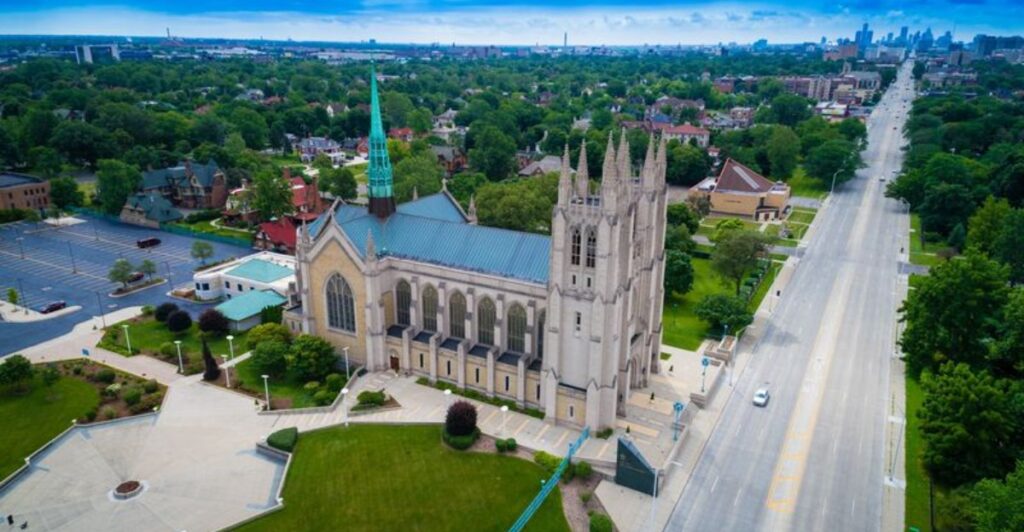
Grand buildings feel even more powerful when the quiet details inside tell stories most people miss. Along Woodward Avenue in Detroit, Michigan, the Cathedral of the Most Blessed Sacrament stands out with its impressive architecture, sacred art, and layers of history that reward a slower look.
The appeal comes from the unexpected touches, including a chair tied to a pope, a tucked-away Lourdes grotto, and spaces that feel both grand and deeply personal. It is more than a beautiful church; it is a landmark where faith, design, and Detroit history meet in striking ways.
For anyone drawn to Michigan places with architecture, meaning, and hidden corners worth noticing, this cathedral deserves a closer look.
A chair with a papal connection
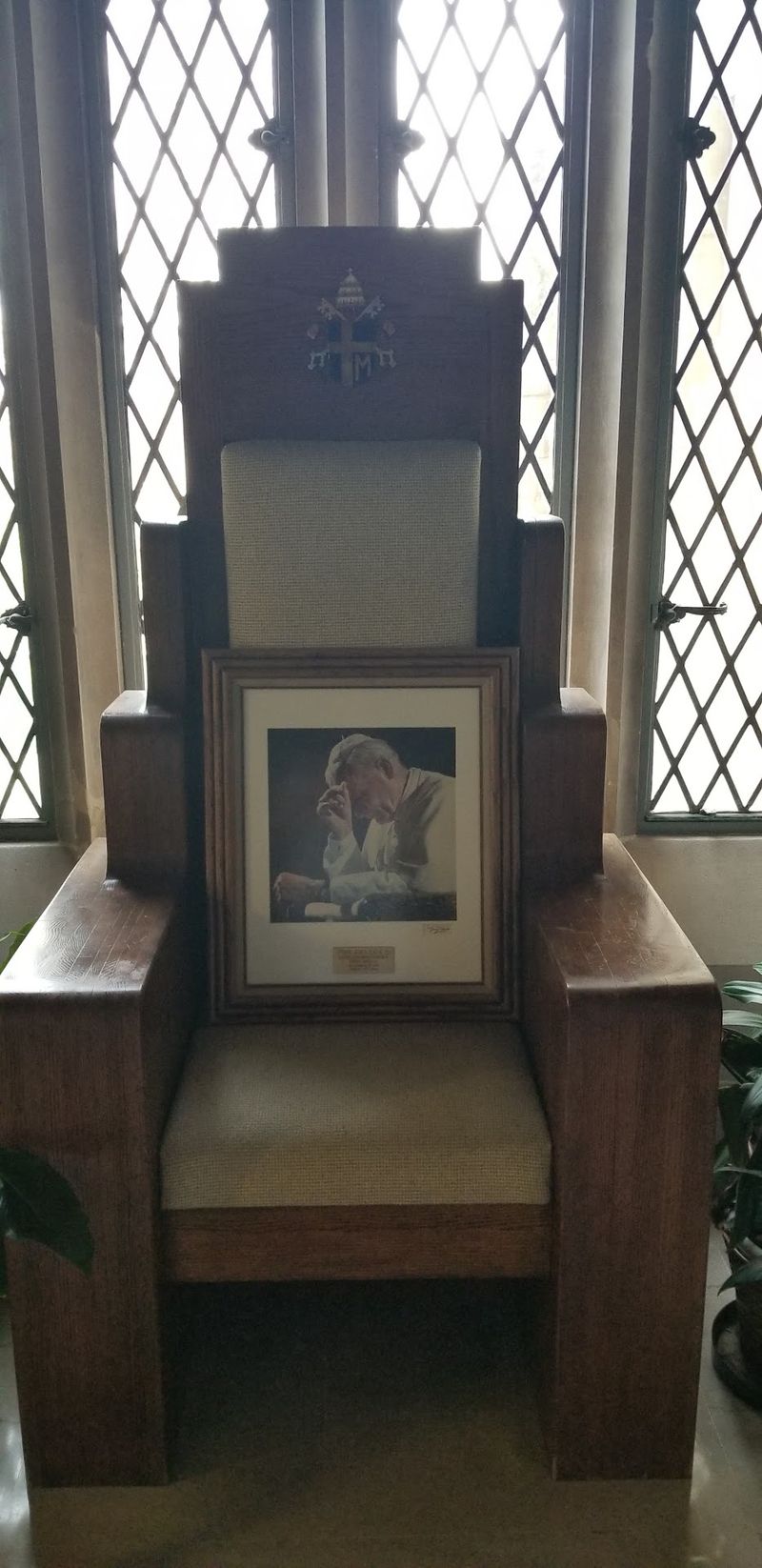
One of the most unusual details inside the Cathedral of the Most Blessed Sacrament is a chair made for Saint John Paul II during his visit to Detroit. That single object changes the way you look at the room around it.
Instead of seeing only a beautiful church, you start noticing how local history and global Catholic history meet in one place.
The chair is not flashy in a theme-park way, and that is part of why it works. It carries meaning through context, not spectacle.
If you are exploring the cathedral for the first time, slow down when you reach this area and give yourself a minute to take in why a seat can matter so much.
In a cathedral, a chair is more than furniture. It can symbolize teaching, leadership, and a direct link to the wider church.
Knowing that this one connects to a pope gives the interior a stronger sense of occasion, almost like finding a signed page in the middle of a very old family album.
Parents visiting with older kids can use it as an easy starting point for conversation. It opens the door to questions about who John Paul II was, why Detroit mattered on that trip, and how objects can hold memory long after an event ends.
Even readers who are not Catholic can understand the pull of that kind of connection.
Try not to rush past it on the way to the main sanctuary details. Stand off to one side, look at the scale of the space, then return your attention to the chair.
That contrast helps you understand how one carefully preserved piece can anchor a much larger story.
For many visitors, this becomes the detail that turns a quick stop into a deeper visit. Grand buildings impress right away, but a papal chair adds a human layer.
It reminds you that major world figures once moved through Detroit too, and some traces remain in plain sight.
The Lourdes grotto tucked inside the cathedral
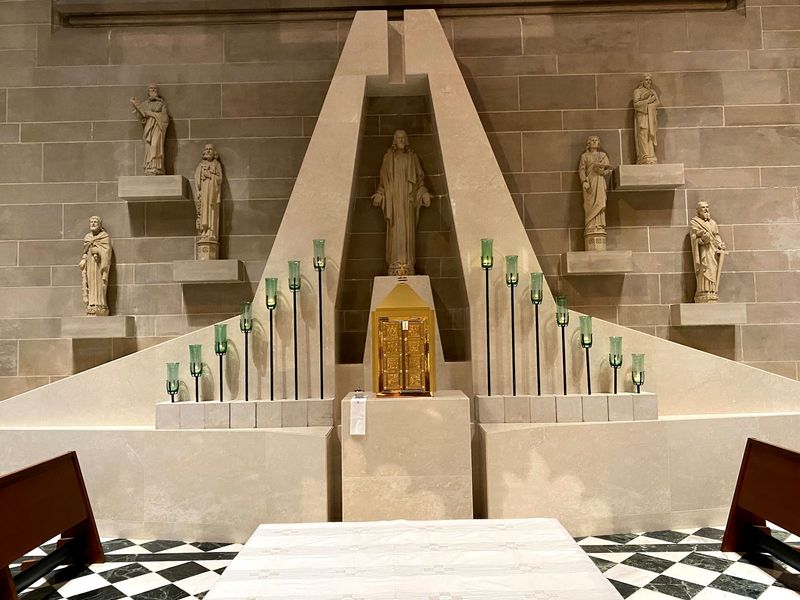
Hidden corners can change the whole mood of a building, and the Lourdes grotto inside this cathedral does exactly that. After the scale of the main worship space, a smaller devotional area offers a different kind of experience.
The shift is immediate: less grand performance, more personal pause.
A Lourdes grotto is tied to Marian devotion and usually brings to mind prayer, healing, and quiet reflection. Here, the appeal comes from discovery as much as design.
You might enter expecting stained glass and arches, then suddenly come across a prayer spot that feels more sheltered and intimate than the main nave.
That contrast is useful if you are visiting with someone who gets overwhelmed by large spaces. Not every meaningful part of a cathedral has to be towering or loud.
A tucked-away shrine invites you to lower your voice, slow your steps, and pay attention to small visual details like candles, stone textures, and the posture of the statue.
If you want the best experience, do not treat the grotto like a quick side note. Spend a few extra minutes there after looking through the main sanctuary.
The smaller scale helps reset your eyes, and it often makes the rest of the cathedral seem even more carefully layered when you return to the broader interior.
For families, it can also be a gentle teaching moment. Kids understand secret corners, quiet places, and symbols of comfort.
Explaining that some spaces are designed for personal prayer can help them engage with the church in a simple, respectful way without needing a long history lesson.
Among all the bigger visual attractions, the grotto earns attention by doing the opposite. It does not compete with the building.
Instead, it softens it. In a cathedral known for strong architecture, that hidden devotional stop adds tenderness and balance to the visit.
Norman Gothic lines along Woodward Avenue in Michigan
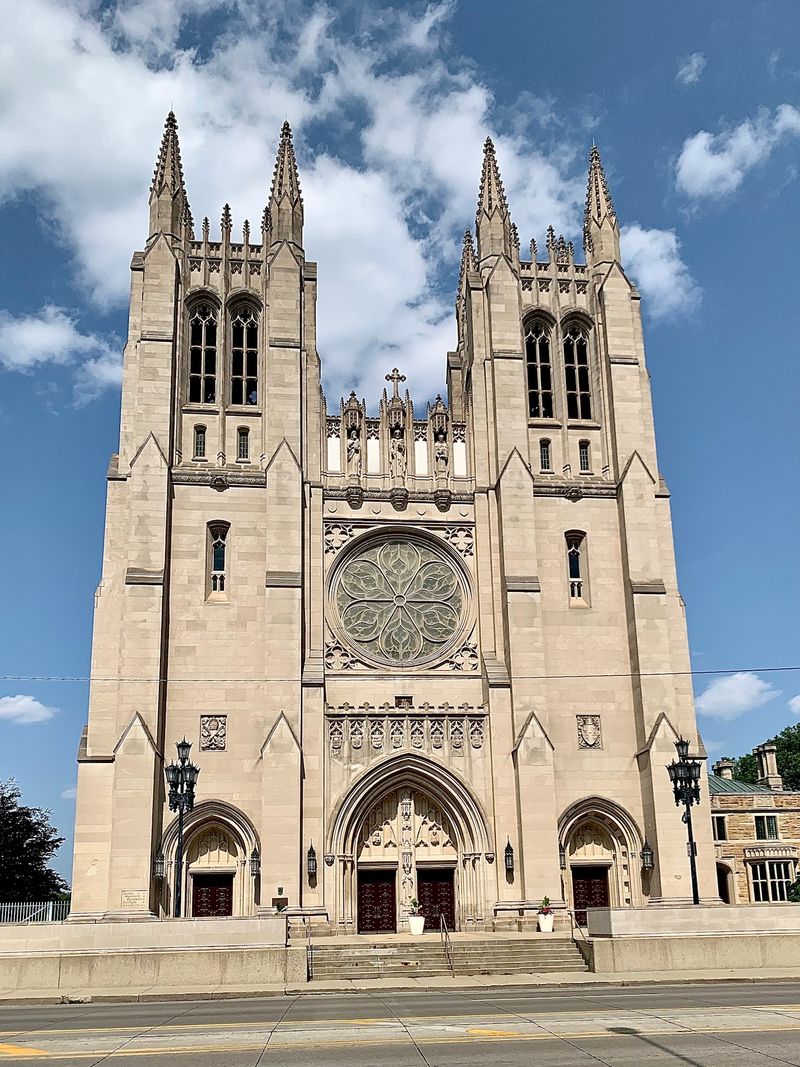
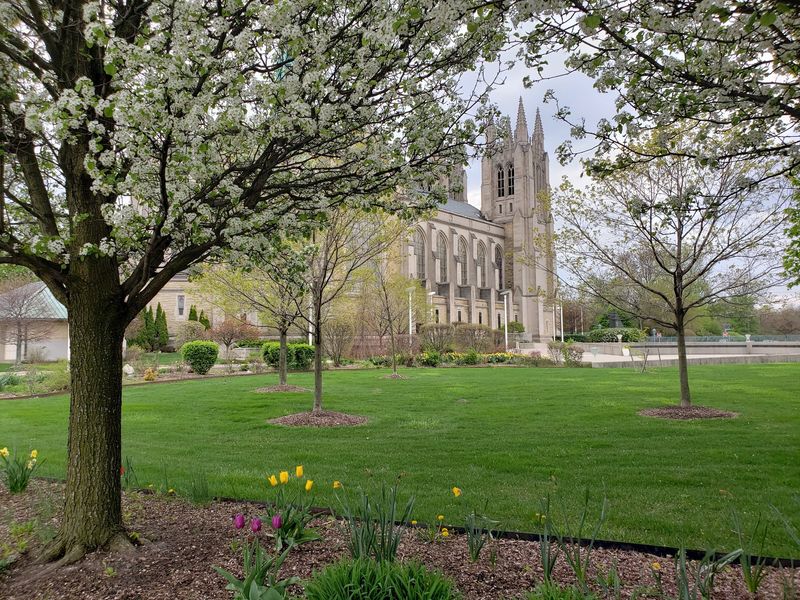
Before you even step inside, the Cathedral of the Most Blessed Sacrament makes a strong case for looking up. Its Norman Gothic design gives the building weight, height, and a sense of order that stands out along busy Woodward Avenue.
Traffic moves, the city hums, and the cathedral holds its ground.
Construction began in 1913 and was completed in 1915, which helps explain why the place carries both age and purpose so clearly. It was designed by architect Henry A.
Walsh, and the exterior still reads as carefully planned rather than merely old. Solid stone, pointed forms, and a commanding front work together without looking fussy.
That matters when you visit because the setting shapes your expectations. Some churches surprise you only after you walk through the door.
Here, the outside already tells you that the interior will be serious, ceremonial, and full of vertical movement.
If you enjoy architecture, give yourself a slow lap around the exterior if access and time allow. Notice how the mass of the building feels heavy at street level but directs your eye upward.
That tension between grounded walls and rising lines is one reason cathedrals can feel so dramatic even before a service begins.
The location also adds another layer. The cathedral sits near historic Detroit neighborhoods, and that surrounding context makes the structure feel connected to the city rather than isolated from it.
You are not looking at a monument dropped from nowhere. You are seeing a major religious building woven into an old urban corridor.
For first-time visitors, the best move is simple: pause outside before entering. Let the facade set the tone, then carry that visual memory indoors.
Once you begin spotting similar patterns in the arches, windows, and long sightlines inside, the whole place starts to read like one complete architectural sentence.
Sunrise glass, marble, and a sanctuary built for scale
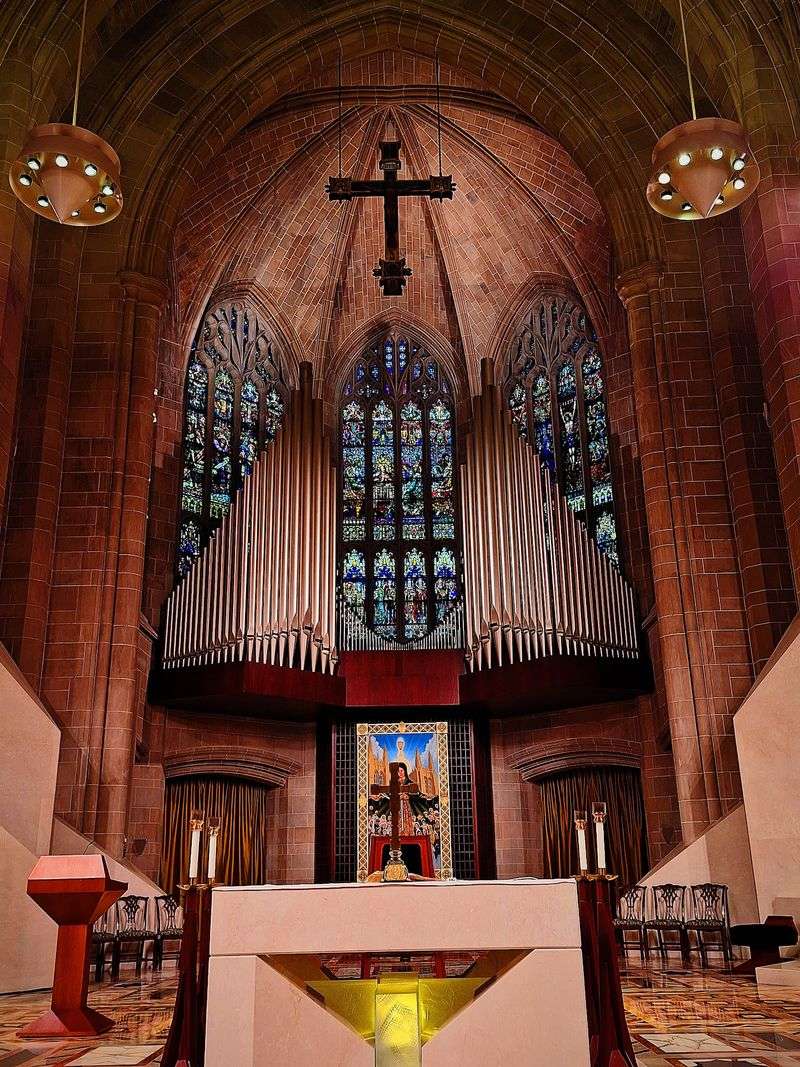
Light does a lot of the storytelling inside this cathedral. When the stained glass catches early sun, the interior shifts from impressive to vivid, with color and shadow moving across stone, wood, and marble.
A large sanctuary can sometimes feel distant, but changing light pulls it closer.
Several visitors have noticed how strong the morning effect can be, and it makes sense. Stained glass is not just decoration pasted onto a church wall.
It is part of the building’s rhythm, especially in a space where height and long sightlines already guide your attention forward.
The scale of the sanctuary also deserves time. Weddings and major liturgies work well here because the room is broad, tall, and visually organized.
You can imagine music rising into the ceiling, processions moving down the aisle, and large gatherings still having enough structure to feel focused instead of chaotic.
Marble details add another layer to the visual mix. Old Gothic character on the outside meets a more polished interior language in parts of the church, creating a blend that some people find surprising.
Rather than clashing, the contrast can help you notice that cathedrals are living spaces that continue to change over time.
If you are able to visit in the morning, aim for that window. Earlier hours often give you softer light and a calmer pace for looking around.
Sit in a pew for a few minutes instead of circling constantly, because stillness is often the best way to notice how color spreads across the sanctuary.
Even if you do not know church architecture terms, the effect is easy to understand. The room is large, the glass comes alive, and the materials catch light in different ways.
That combination gives the cathedral one of its strongest simple pleasures: you can just look, quietly, and keep finding new details.
Statues, relics, and the art beyond the main aisle
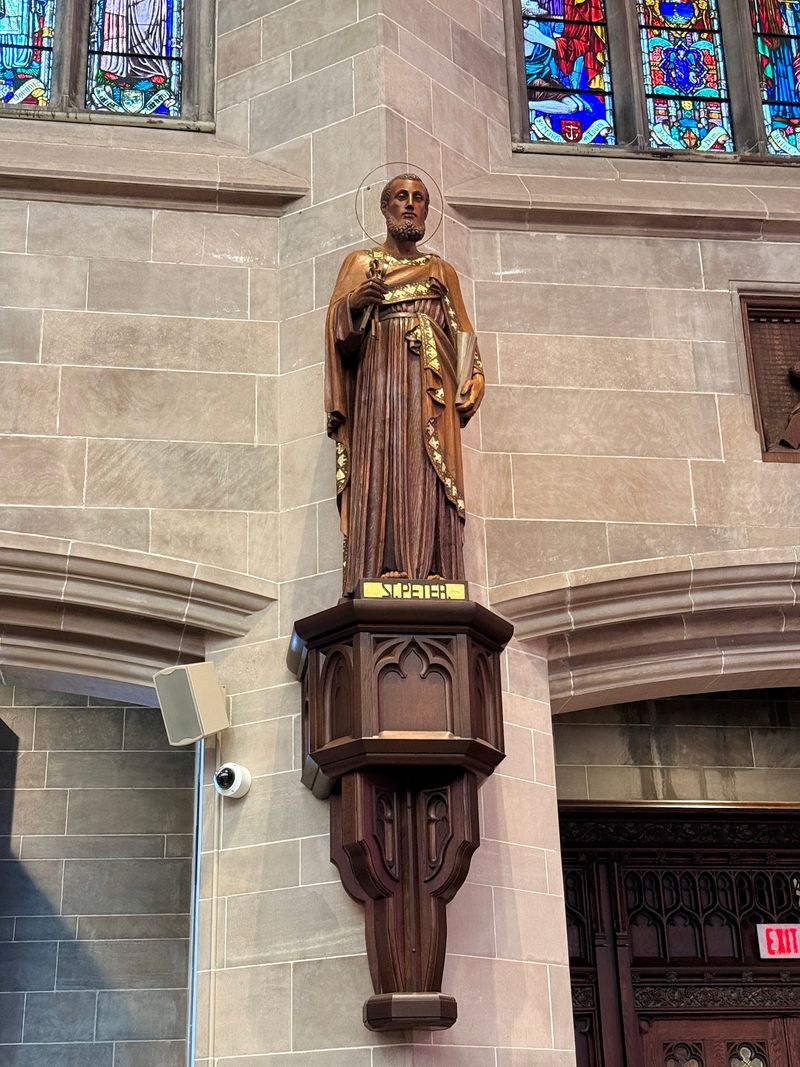
Some church interiors reveal everything at once. This one rewards wandering.
Beyond the main aisle and sanctuary, the Cathedral of the Most Blessed Sacrament includes statues, relics, and additional artwork that encourage you to keep exploring instead of stopping after the first big view.
Recent visitors have pointed to newer installations of saint statues and relics as especially striking. That detail matters because it shows the cathedral is not frozen in time.
Historic bones remain in place, but the visual life of the church continues to grow through devotional pieces that give people more to notice and reflect on.
Relics connected with the apostles add a stronger sense of continuity for Catholic visitors, while art lovers may focus more on display, placement, and symbolism. Either way, the effect is similar.
The cathedral starts to read less like a single room and more like a collection of connected sacred experiences.
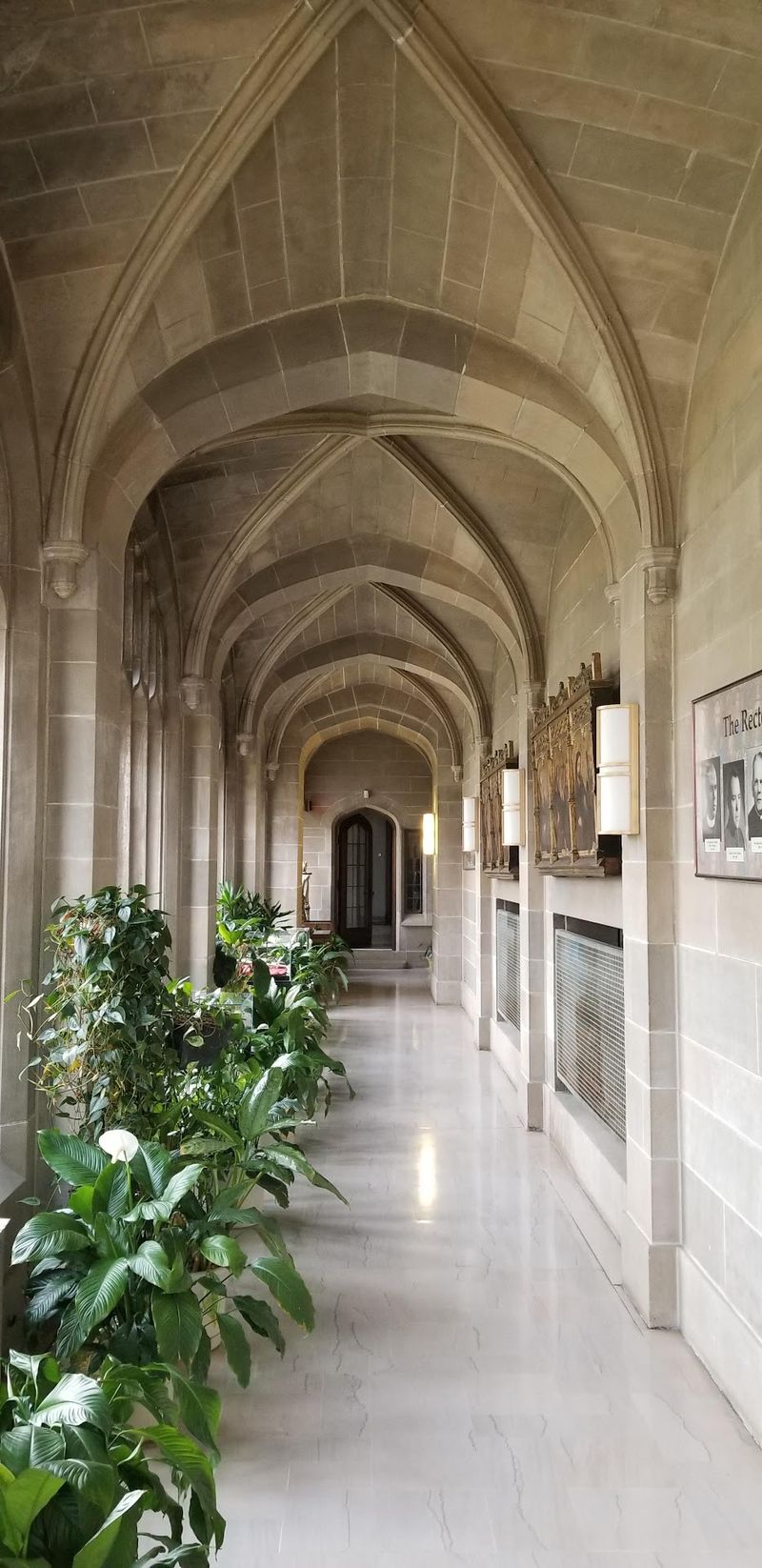
Do not skip the hallways leading toward the administrative areas if they are accessible during your visit. Multiple people have noted that there is meaningful art there too, which is a good reminder that not every memorable detail sits directly in the center of the church.
Side spaces often carry quieter surprises.
A practical tip helps here: visit with patient eyes. Instead of snapping one wide photo and moving on, look at each statue long enough to catch posture, expression, clothing, and placement.
Sacred art usually communicates through those details, and the cathedral gives enough variety to keep that process interesting.
This section of the visit works best for curious explorers. Maybe you care about saints, maybe you care about craftsmanship, or maybe you simply enjoy places with layers.
Whatever pulls you in, the art beyond the main aisle adds depth and texture, proving that the cathedral has more than one visual center.
A welcoming cathedral that still works like a neighborhood church
Big cathedrals can sometimes feel formal to the point of distance. Here, the surprising counterweight is warmth.
Along with grand architecture, the Cathedral of the Most Blessed Sacrament has built a reputation for friendly greetings, clear worship, and a sense that newcomers are not treated like they wandered into the wrong place.
That local energy matters because the building serves more than tourists or architecture fans. It is the cathedral for the Archdiocese of Detroit, so major church events happen here, but family milestones do too.
Weddings, baptisms, confirmations, and ordinary Masses all help keep the place active in a lived, practical way.
The choir is another piece of the experience. In a room this size, strong music does more than sound good.
It fills the architecture, giving shape to the silence above you and helping the scale of the sanctuary make emotional and physical sense.
Several accounts also highlight how easy it is to hear what is being said during services, which is not a small thing in a large church. If you are visiting for worship rather than sightseeing, that kind of clarity can make the difference between feeling lost and feeling included.
Even bilingual elements in services have helped the cathedral feel open and connected to the city it serves.
You can sense the neighborhood-church side of the cathedral in small interactions. A greeting at the door, someone willing to answer a question, or staff helping people move through a big event all soften the scale of the building.
The space is grand, but the social rhythm can be very approachable.
For visitors who worry that a cathedral might feel too formal, this is useful to know. You can appreciate the architecture and still encounter ordinary hospitality.
That combination gives the place a steadier pulse than many landmark buildings manage to keep.
Best way to visit without missing the quiet details
A little planning goes a long way at this cathedral. The building is large enough that you can miss important details if you treat it like a fast photo stop.
The smartest approach is to visit with a simple route in mind: exterior first, main sanctuary second, side devotional spaces third, then any accessible hallways or art-filled corridors.
Start outside so the architecture can frame everything that comes next. Once indoors, let your eyes adjust before lifting a camera.
Cathedrals reveal themselves in layers, and rushing often flattens the experience into one big impression instead of several distinct ones.
If timing is flexible, earlier in the day may give you the best light, especially if stained glass is high on your list. Morning also tends to support a quieter visit, which helps if you want to spend time near the Lourdes grotto or study details like statuary, marble, or the papal chair without distraction.
Parking deserves a brief note too. At least one visitor found the lot a little tricky to locate because it sits off a side road, and nearby one-way streets can make turning around annoying if you miss it.
Build in a few extra minutes so a simple driving hiccup does not rush the rest of your visit.
Respectful pacing is the key once you are inside. Sit down for a moment, even if you are mainly there for architecture.
Standing still changes what you notice, especially in a church where light, scale, and side chapels do a lot of quiet work.
The strongest visits here are not packed with constant motion. They alternate between looking, walking, and pausing.
Follow that rhythm and the cathedral becomes easier to read, from the bold Woodward Avenue facade to the smaller sacred spaces tucked deeper inside.
Why this Detroit cathedral stands apart
Plenty of churches are beautiful. Fewer offer a visit with this many different layers working at once.
The Cathedral of the Most Blessed Sacrament stands apart because it combines civic presence, Catholic history, personal devotion, and visual surprise in one address on Woodward Avenue.
Start with the obvious draw: the building looks important before you enter. Then the interior widens the story through stained glass, scale, and ceremonial design.
After that, the details keep shifting your attention, from the chair connected to Saint John Paul II to the smaller Lourdes grotto tucked into a quieter corner.
That mix gives the cathedral range. One visitor may come for architecture, another for prayer, another for a wedding, and another out of curiosity about Detroit landmarks.
The place can meet all of those approaches without losing its identity as an active cathedral rather than a preserved shell.
Its appeal also comes from balance. The church is formal enough to feel significant, but not so remote that ordinary people seem out of place.
Statues, relics, side art, and welcoming interactions help break the scale into smaller moments that are easier to connect with.
If you are deciding whether to stop, think about what kind of outing you want. For a quick look, you will still get strong architecture and a memorable sanctuary.
With more time, the side spaces and devotional features reward slower attention and give the cathedral a richer, less predictable shape.
That is the real strength of this Detroit church. It does not rely on one headline feature, even though the pope-related chair and hidden grotto are compelling reasons to visit.
The full experience comes from how those surprises fit into a larger setting that is historic, active, and deeply rooted in the city.