The route to one of South Jersey’s bluest bodies of water begins in a decidedly ordinary place: behind a KFC and a Sikh gurdwara near the Gloucester Township–Pine Hill border. Follow the sandy paths into the trees, however, and the fast-food signs and busy roads disappear remarkably quickly.
Soon, the woods open around a pool of vivid blue-green water known simply as Hidden Lake. The walk is short, the ground is mostly flat, and the reward arrives before anyone has time to complain about tired legs.
Yet this is not a polished park attraction with a visitor center, paved lot, and helpful arrows pointing the way. Hidden Lake remains an informal, lightly developed place where directions can be confusing and conditions can change.
That rough-around-the-edges character is part of its appeal, but it also means visitors should arrive prepared, respect posted restrictions, and admire the inviting water strictly from dry land.
The Short Pine Barrens Walk That Leads to Hidden Lake
Behind the businesses along Blackwood-Clementon Road, a narrow patch of woodland holds a surprisingly quick escape from suburban Camden County. The usual approach begins near the intersection of Little Mill Road and New Road in Gloucester Township, close to Pine Hill.
The South Jersey Land & Water Trust used this same meeting point for a Hidden Lake cleanup and nature walk on May 9, 2026, directing volunteers to gather behind the KFC and the Sikh Gurdwara of Pine Hill. From there, informal sandy tracks lead through the trees toward the water.
Depending on the exact route taken and how much of the shoreline is explored, hikers generally describe the outing as roughly 0.6 to one mile in total. This is less a formal hiking trail than a network of worn footpaths, so there may not be a trail sign announcing that the adventure has officially begun.
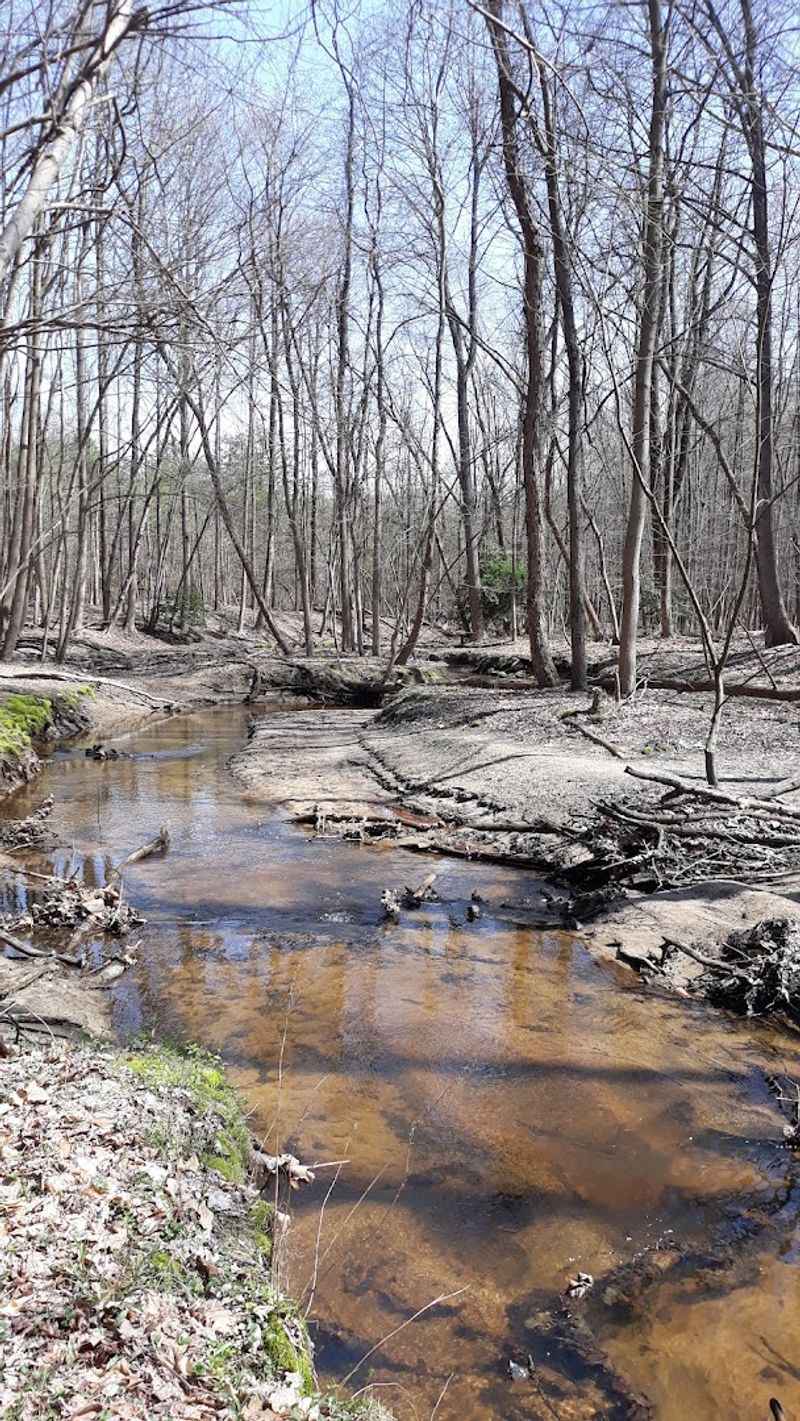
The landscape does the introducing instead. Pine needles cover the pale ground, scrubby vegetation crowds the edges, and traffic noise gradually fades behind the trees.
The terrain reflects the wider Pine Barrens ecosystem, where porous, acidic sand supports hardy plants such as pitch pine, scrub oak, huckleberry, and sweet fern. There are no long climbs or dramatic overlooks along the way.
The route’s job is simply to carry you from a commercial roadside into a pocket of unexpectedly wild-looking scenery. Keep a map open, note the direction of the road before heading deeper into the woods, and avoid wandering onto side paths that appear overgrown or posted.
Hidden Lake may sit close to restaurants, homes, and busy roads, but the loosely marked approach can still become confusing once every sandy track begins looking like the last one.
Why This Trail Is Perfect for a Low-Key Outdoor Escape
Some hikes demand an alarm set before sunrise, a backpack full of equipment, and a suspiciously large collection of energy bars. This one asks for comfortable shoes, drinking water, and perhaps bug spray during the warmer months.
The route stays largely level, with no sustained climbing and little of the rock scrambling found on trails farther north. Sandy soil makes the walking relatively gentle, although loose patches, exposed roots, and eroded edges can still catch anyone who is staring at the lake instead of the ground.
Running shoes or basic hiking shoes with decent traction are usually more useful here than heavy boots. The short distance also makes Hidden Lake an appealing choice when there is not enough time for a half-day outing.
It can fit into a quiet morning, an after-lunch walk, or that narrow Sunday-afternoon window before the weekend begins slipping away. The setting offers just enough separation from surrounding development to reset the mood without requiring a long drive into Wharton State Forest.
Wind moving through the pines supplies most of the soundtrack, joined by birds in the brush and the soft crunch of footsteps on sand. Even so, “easy” should not be confused with fully developed or universally accessible.
The paths are natural rather than paved, signage is limited, and the shoreline may include uneven slopes. Strollers, wheelchairs, and anyone needing a clearly maintained walking surface are likely to find it unsuitable.
Families with older children may appreciate the short route, but younger hikers should remain close to adults near the water and sandy drop-offs. Hidden Lake works best as an uncomplicated nature break rather than a mileage challenge.
You come for a walk that barely raises the heart rate, then stay because the view feels wildly disproportionate to the effort required to reach it.
The First Glimpse of Turquoise Water Feels Almost Unreal
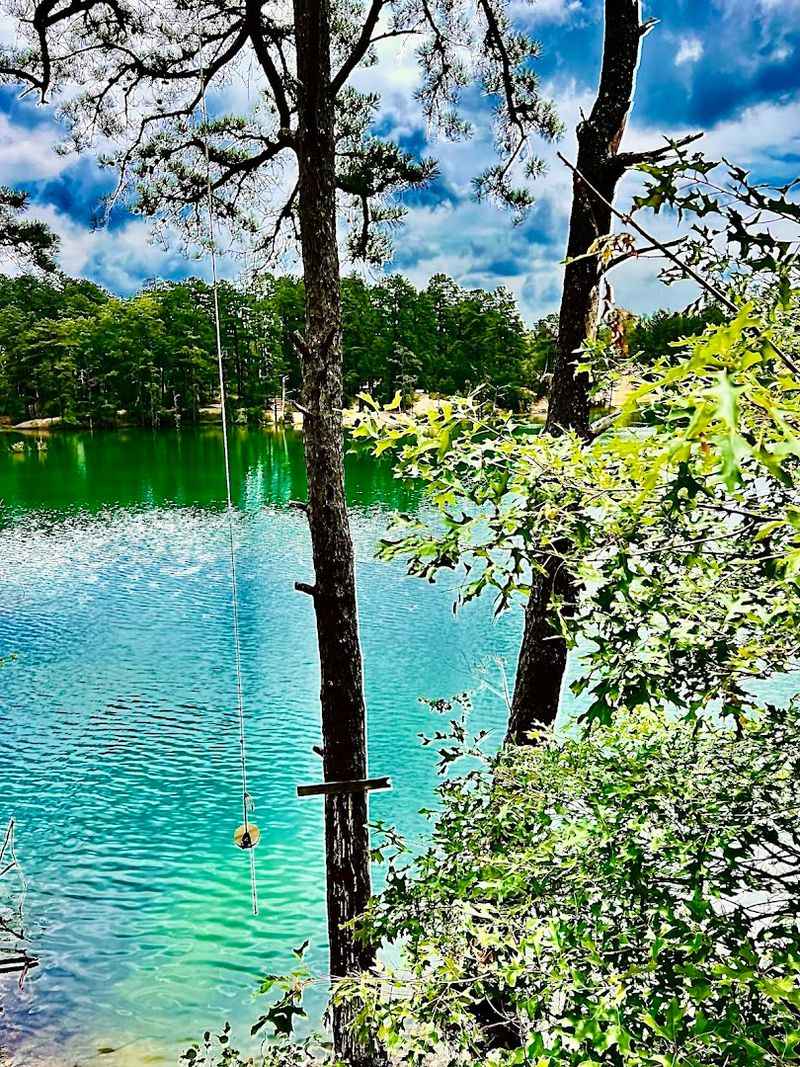
A flash of blue appears between the trunks before the full lake comes into view, and that partial reveal is probably the trail’s best trick. The surrounding woods prepare you for the dark, tea-colored water commonly associated with the Pine Barrens.
Instead, Hidden Lake can glow in shades ranging from deep green to pale turquoise, especially when direct sunlight reaches the shallower sandy edges.
The exact color changes with weather, water level, cloud cover, and viewing angle, so photographs taken from opposite sides of the lake can look as though they were captured on different days.
Clear, shallow water often appears turquoise when sunlight reaches a light-colored bottom and reflects back through the water. Fine suspended sediment can also scatter light and strengthen blue-green tones.
That does not mean every visit produces an electric emerald glow. After rain, under heavy clouds, or when the surface is disturbed, the lake may look darker and more subdued.
On a bright afternoon, however, the combination of pale sand, still water, and green trees can be startling. The shoreline provides several perspectives, but the most dramatic views tend to come from spots where the water is framed by pines rather than seen straight across an open bank.
Early morning can bring a smoother surface and fewer people, while lower late-day light creates stronger reflections and warmer tones along the trees. Photographers should resist edging down unstable sandy slopes merely to lose a branch from the frame.
A slightly imperfect picture from solid ground is a much better souvenir than a damaged shoreline or an unexpected slide toward the water.
Pause long enough and the novelty of the color gives way to smaller details: ripples bending the reflected trees, dragonflies hovering over the edge, and birds moving through vegetation that initially looked completely still.
How an Old Sand Quarry Became a Striking Natural Hideaway
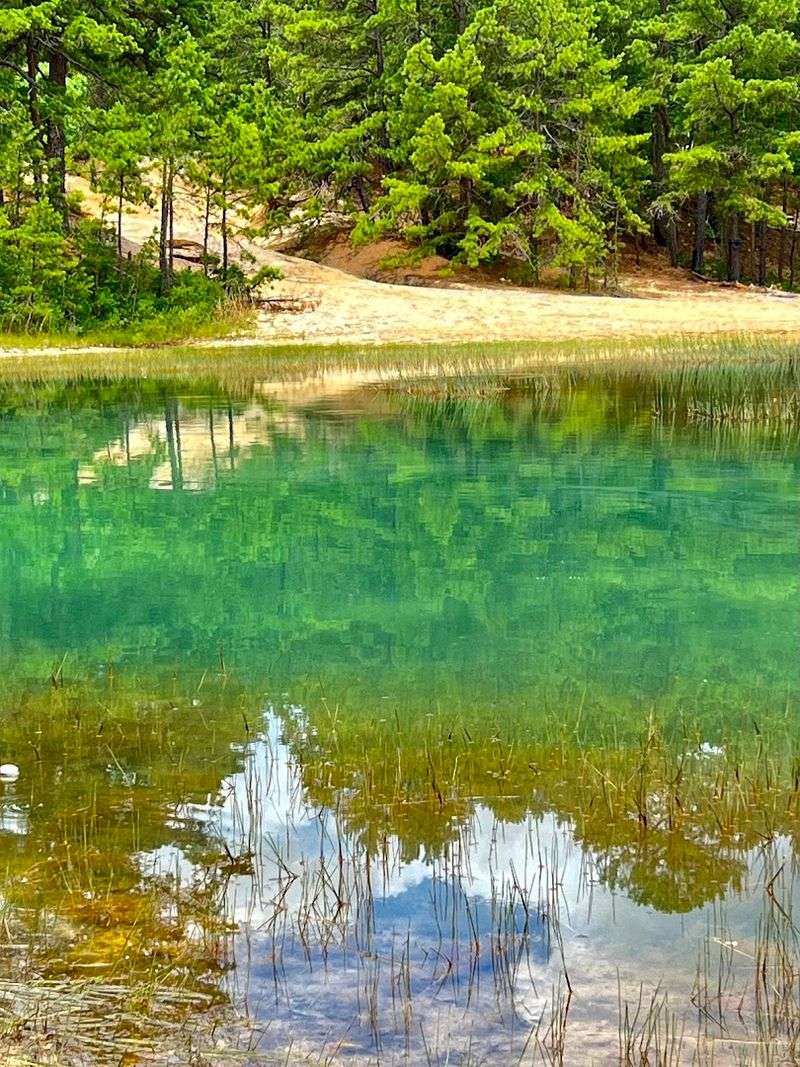
Look closely at Hidden Lake’s sandy cuts and unusual shape, and the landscape begins to reveal its human-made past. The lake is commonly described as a former sand excavation or quarry that gradually filled with water after digging ended.
That origin fits a broader South Jersey pattern. Sand and gravel extraction has left numerous deep pits across the Coastal Plain, some of which intersected groundwater and became the bright blue pools often nicknamed blue holes.
Publicly available details about the exact years and operators associated with this particular site are limited, however, so its history is not as neatly documented as the story of a state park or historic village.
One intriguing clue sits in the Camden County Historical Society’s collections: an undated box containing a map, scrapbook, and proposal concerning the construction of Hidden Lake in Gloucester Township.
The archival record confirms that people deliberately shaped or planned the lake, although it does not provide an online timeline explaining every stage of excavation and flooding. What happened afterward is easier to read on the ground.
Pines and shrubs reclaimed disturbed soil, leaf litter softened the paths, and birds returned to the water’s edge. The result looks natural at first glance, but it is better understood as a recovering industrial landscape.
That distinction matters because former quarry banks can remain steep, unstable, and much deeper than their calm surfaces suggest. It also makes the lake more interesting.
Hidden Lake is not an untouched wilderness preserved exactly as it was centuries ago. It is a place altered by human hands and then partially taken back by vegetation, weather, and water.
South Jersey is full of landscapes where industry and nature overlap, from abandoned bog-iron settlements to cranberry reservoirs and sand roads cut through the forest. Hidden Lake tells that familiar regional story in an especially colorful way.
The Best Ways to Enjoy the Lagoon Without Entering the Water
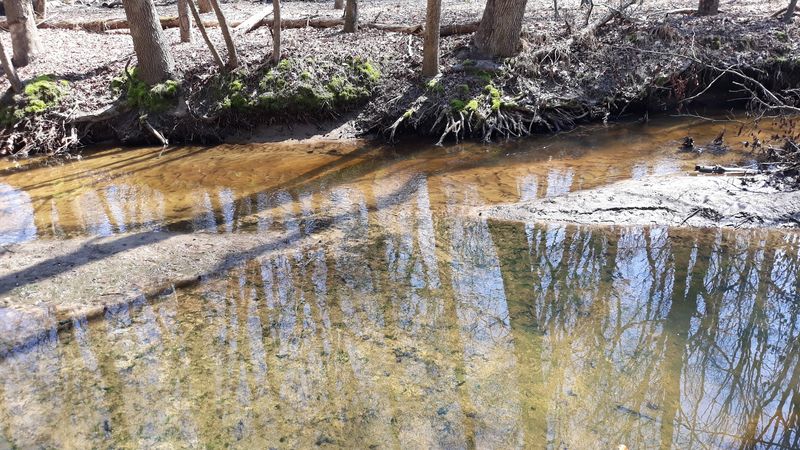
That glassy turquoise surface makes swimming look like the obvious next step, but Hidden Lake is a viewing stop, not a swimming hole. Former sand and gravel pits can conceal abrupt drop-offs, cold layers of water, submerged debris, soft bottoms, and banks that collapse under weight.
New Jersey emergency officials have warned that quarry edges may plunge from shallow water to depths of 30 or 40 feet with almost no transition, while temperatures can change sharply just beyond the bank. The New Jersey State Police has recommended against swimming in quarries on either public or private land.
Staying dry hardly ruins the outing. Bring a compact pair of binoculars and watch the tree line for woodpeckers, songbirds, and seasonal migrants.
South Jersey Land & Water Trust events at Hidden Lake have specifically included walks focused on birds, plants, and the area’s natural history, which is a useful reminder that the bright water is only one part of the setting.
A small sketchbook works surprisingly well here too; the strong contrast between pale sand, dark pine trunks, and blue-green water gives even casual doodlers plenty to work with.
Photographers can circle only where established paths and safe footing allow, comparing how the color changes from one section of shoreline to another. A quiet snack from a stable spot is another option, provided every wrapper, bottle, and crumb leaves with you.
Volunteer cleanups have been held here repeatedly, evidence that litter remains an ongoing problem around this lightly managed site. Avoid carving names into trees, building fires, climbing sandy banks, disturbing plants, or creating new shortcuts to the shore.
The lake is most enjoyable when treated less like a recreational facility and more like an outdoor gallery: walk slowly, find a safe viewpoint, notice what changes with the light, and leave the scene looking exactly as it did when you arrived.
What to Know About Access and Trail Conditions Before Visiting
This is one of those places where preparation matters more than the length of the hike.
As of July 2026, Hidden Lake is not presented on Gloucester Township’s published parks list as a developed municipal recreation site, and visitors should not expect posted operating hours, marked parking spaces, restrooms, drinking fountains, trail blazes, or an information kiosk.
The most consistently documented access point is near Little Mill Road and New Road, behind the businesses along Blackwood-Clementon Road, where conservation volunteers have gathered for organized cleanups.
Parking is informal and limited, so never block a gate, driveway, business entrance, emergency route, or the narrow roadway.
Because ownership boundaries and access conditions can change, obey every posted sign and barrier encountered on arrival. A route that appeared open in an old photograph or hiking-app entry is not permission to cross newly restricted property.
Download directions before leaving, since the web of sandy paths is easier to follow with an offline map than with guesswork. Bring water even for the short walk, and use insect repellent from late spring through early fall.
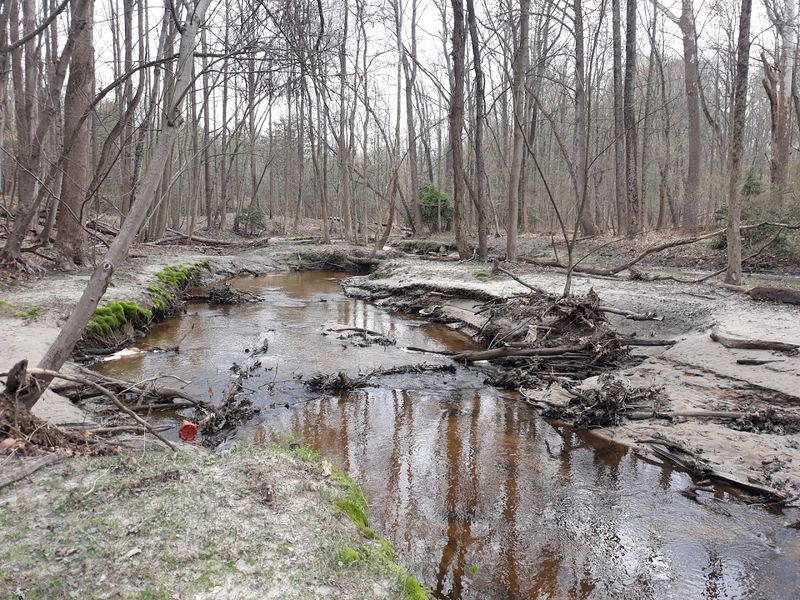
Long pants can help with ticks, briars, and poison ivy along narrower edges. After heavy rain, expect puddles, softer sand, mud, and possible erosion near the banks.
Dry weather generally provides firmer footing, although loose slopes remain hazardous in every season. Early mornings and weekdays tend to be quieter, but visiting during daylight is the sensible choice because there are no lights and few navigational cues once the woods darken.
Before leaving, check for ticks, carry out all trash, and make sure nothing was left near the water. Hidden Lake’s appeal comes partly from how little infrastructure surrounds it, but that same lack of development places more responsibility on each visitor.
The experience remains refreshingly simple: a sandy path, a stand of pines, and an improbable blue-green lake waiting just beyond the trees.
Share this story