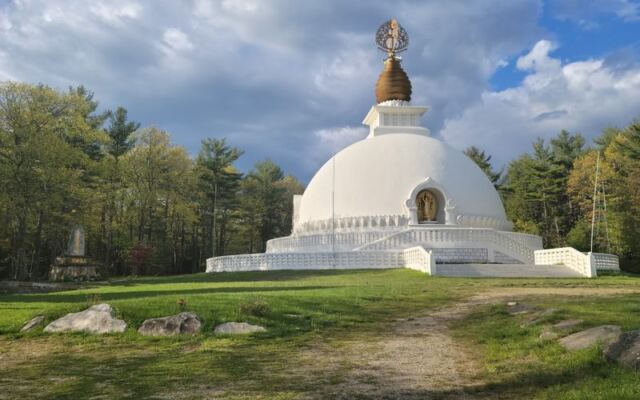
A dirt road climbs through the trees in a small western Massachusetts town, and at the top stands something most people never expect to find here. It is a white Buddhist monument built as a call for a world without war.
The walk takes only a few minutes, yet the place at the end has drawn people back year after year. Some come to sit quietly on a rock, some come to watch frogs in a lily pond, and some simply come to see what all the calm is about.
Admission does not require a long trip, a big budget, or a full day off. Keep reading to learn where it is, what waits along the path, how the grounds have grown over time, and the practical details that make this a realistic day trip for anyone in the Bay State.
A Hilltop Surprise in Leverett
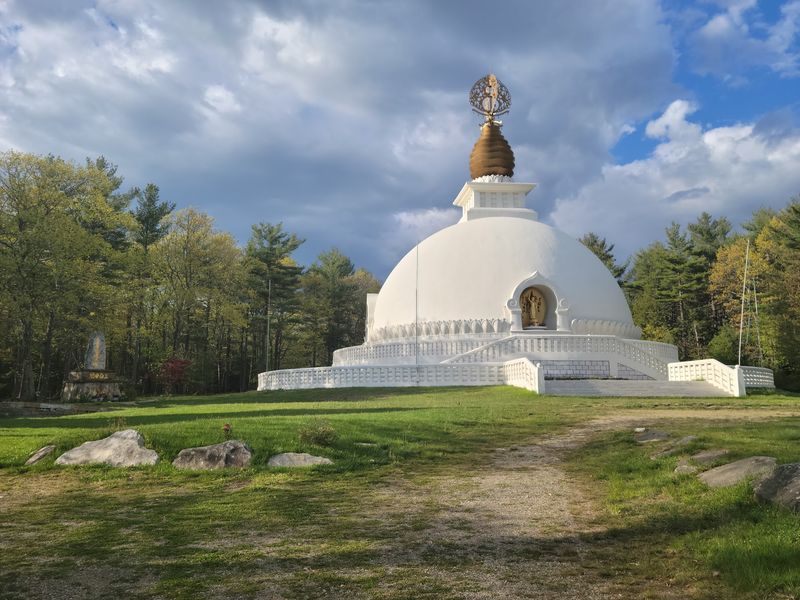
Tucked away from the main road, a white stupa rises above the forest in the quiet town of Leverett. The New England Peace Pagoda sits at 100 Cave Hill Rd, Leverett, MA 01054, in western Massachusetts, United States.
It is classified as a shrine, and it is cared for by Buddhist monks and nuns. The site is not a museum or a theme park, so it keeps a low profile.
Many people first spot the pagoda from far away. On a clear day, its pale shape can be seen on the horizon from the Holyoke Range.
Up close, the grounds hold much more than a single monument. There is a pond, a Zen garden, a temple, and several buildings used for meditation and gatherings.
The appeal here is simple. It offers a meaningful outing without a long drive across the state or a strenuous trek.
The place is also well loved, holding a 4.9-star average across more than 150 opinions on Google. That kind of steady praise is rare for a spot this quiet.
So what makes a hill in Leverett worth the detour? The answer starts with the people who built it and the idea behind it.
Four Decades of Working for Peace
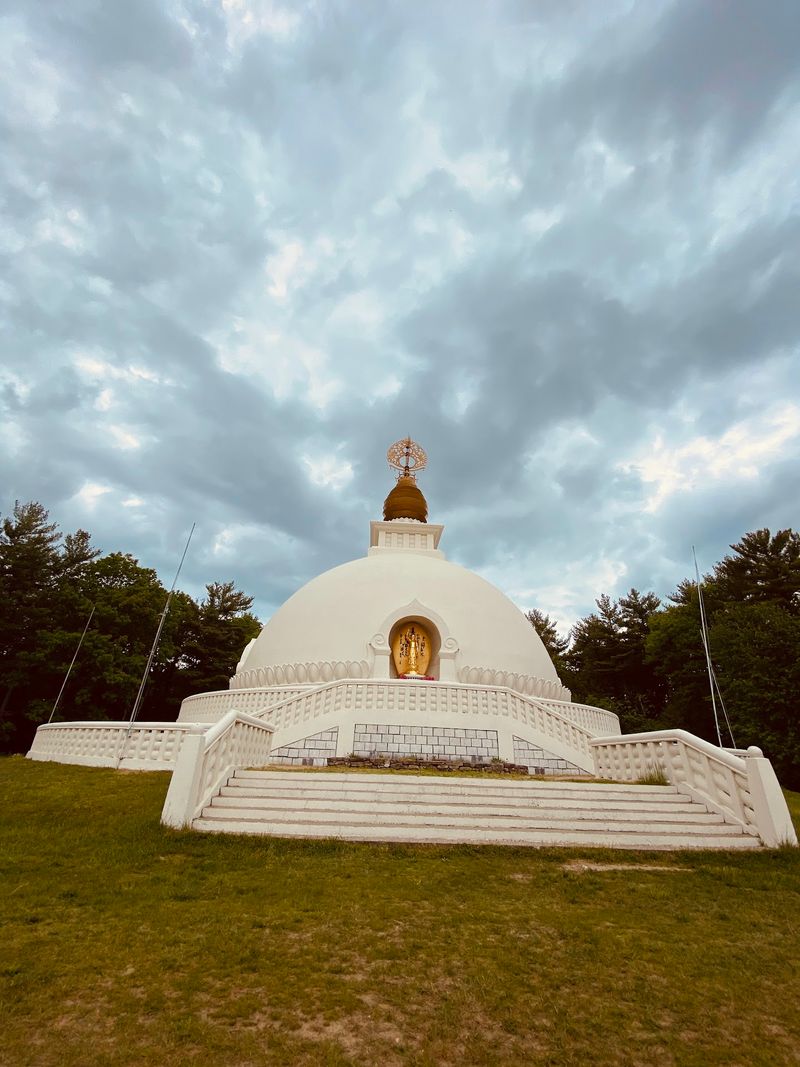
Peace is not just a theme here. It is the whole mission.
The pagoda stands as a symbol of hope for a world without war, and the community connected to it actively promotes that message. Recent years brought a 40th anniversary celebration, which drew a big and impressed crowd.
That milestone matters. Four decades means generations of families in the Pioneer Valley have grown up with the pagoda on their hill.
The monks also take part in organized walks with other temples in and near New England. These walks help bring important issues into public conversation.
Visitors often hear a chant here: Namu Myoho Renge Kyo. It is a phrase central to the practice of this community, and you may notice it spoken or written on the grounds.
People do not need to share the faith to appreciate the purpose. Many arrive curious, leave thoughtful, and return later with friends.
The story behind the stupa gives every step on the trail a little more weight. And those steps begin at the parking area below.
The Short Climb From the Lower Lot
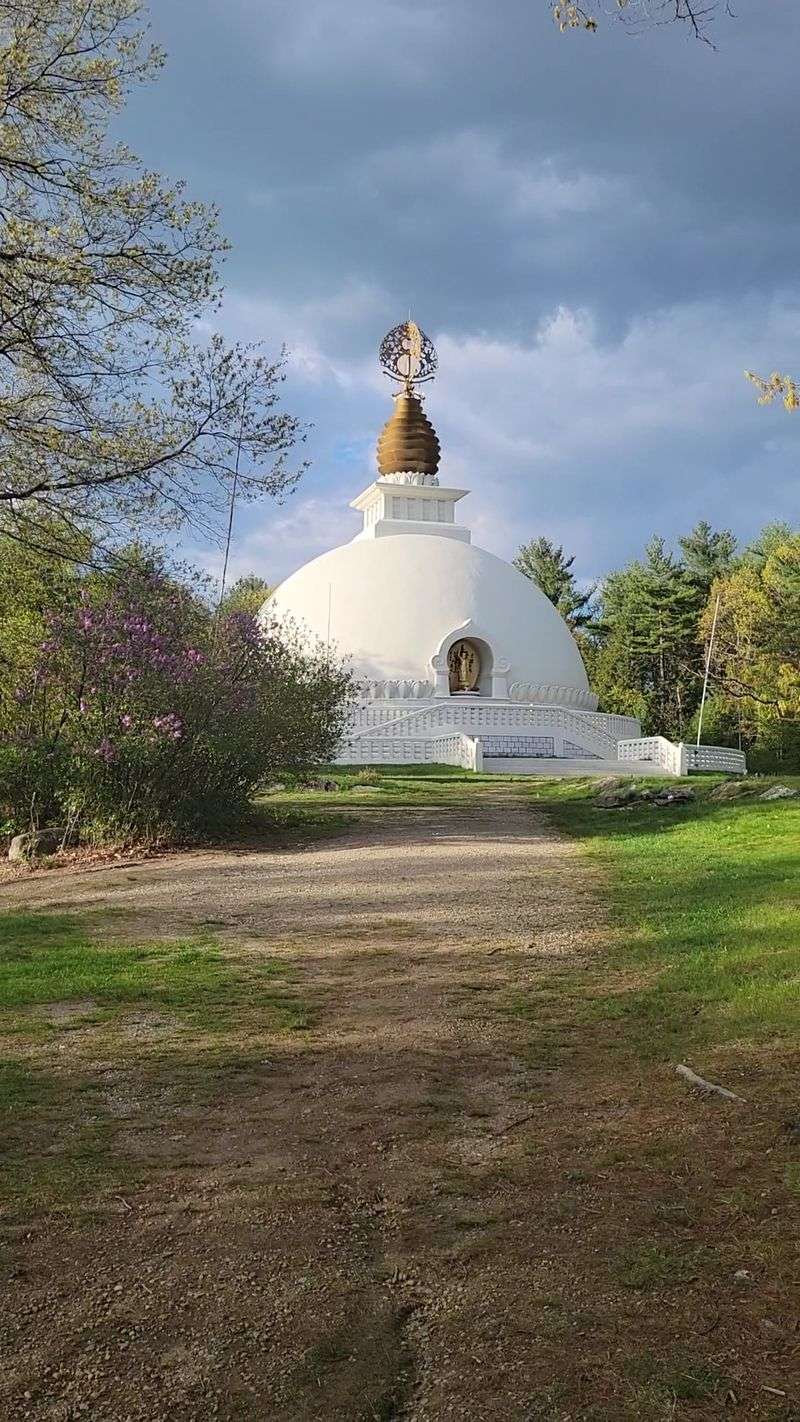
Good news for anyone who dreads long hikes. The trip from car to pagoda takes only a few minutes.
Parking for most guests is in a lower lot. From there, a dirt roadway heads uphill through the woods to the pagoda and grounds.
Some describe it as a three-minute stroll. Others call it a decent little uphill hike, not long, but long enough to tire young kids or anyone who has trouble walking.
It helps to plan with honest expectations. Sturdy shoes and an unhurried pace make the climb easy for most people.
During public events, there is a helpful extra. A free shuttle, nicknamed a taxi, is provided for those unable to comfortably make the walk.
The lot itself is roomy enough for a small but steady crowd. Even motorcycle groups on day rides have made it a stop.
Think of the walk as a slow warm-up for the quiet ahead. Before the pagoda comes into view, a few statues along the way tell stories of their own.
Statues That Tell a Story
Right at the base of the path, a statue greets arrivals. It shows Mayadevi, the mother of the Buddha, with the infant Buddha, along with an explanation of how and where the Buddha was born.
That small display works like a first chapter. It sets the stage for everything farther up the hill.
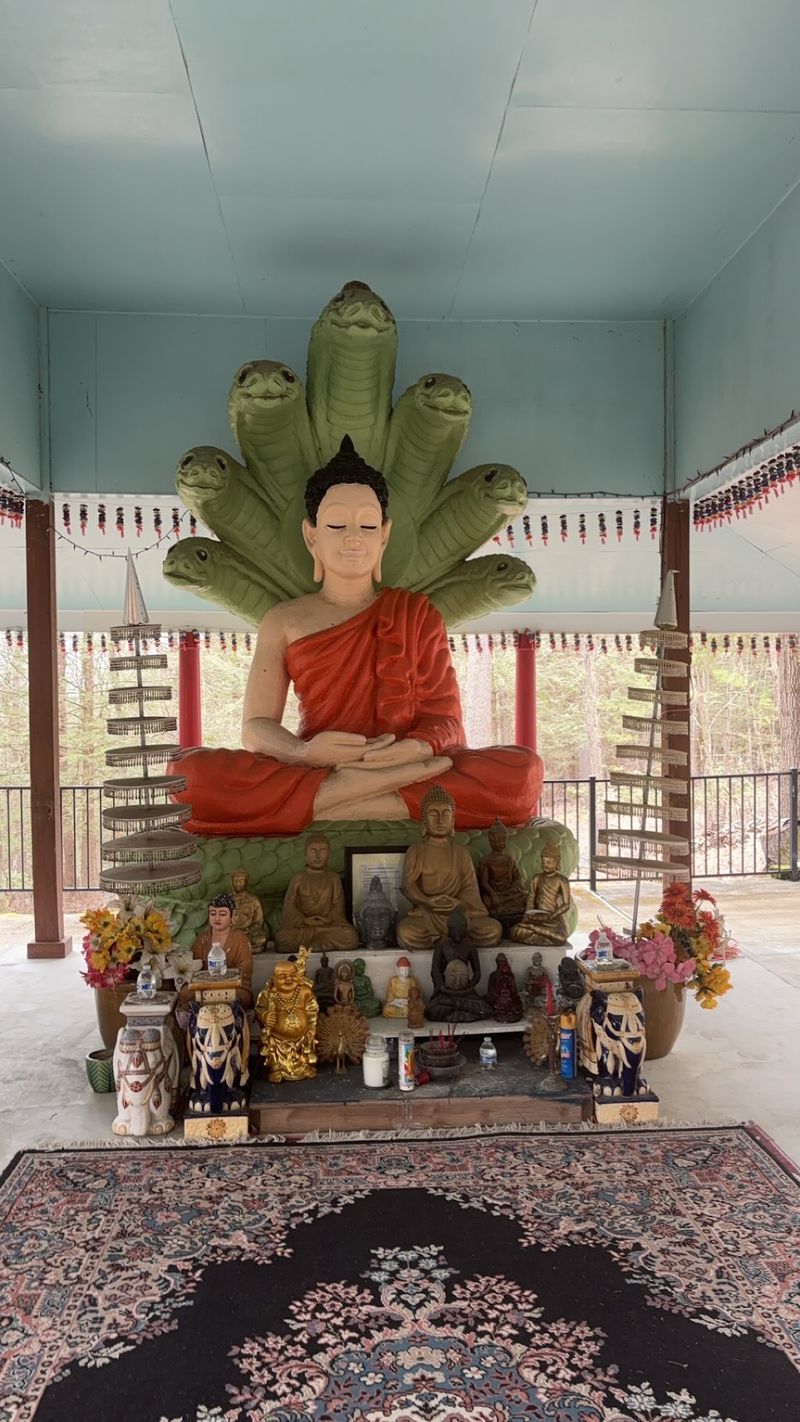
About a minute up the trail, another statue appears. It shows the Buddha seated on a huge serpent.
The scene depicts the serpent sheltering the Buddha from a powerful storm and rain. It is one of the more striking sights on the walk, and families often pause to talk it over.
Along the way, keep an eye out for stacked stones. Little cairns dot the route and make the woods feel cared for.
These details reward slow walkers. Rushing past means missing the storytelling built right into the trail.
Photographers tend to linger here too, since both statues make memorable shots. Still, the biggest moment is waiting at the top.
The Pagoda Itself
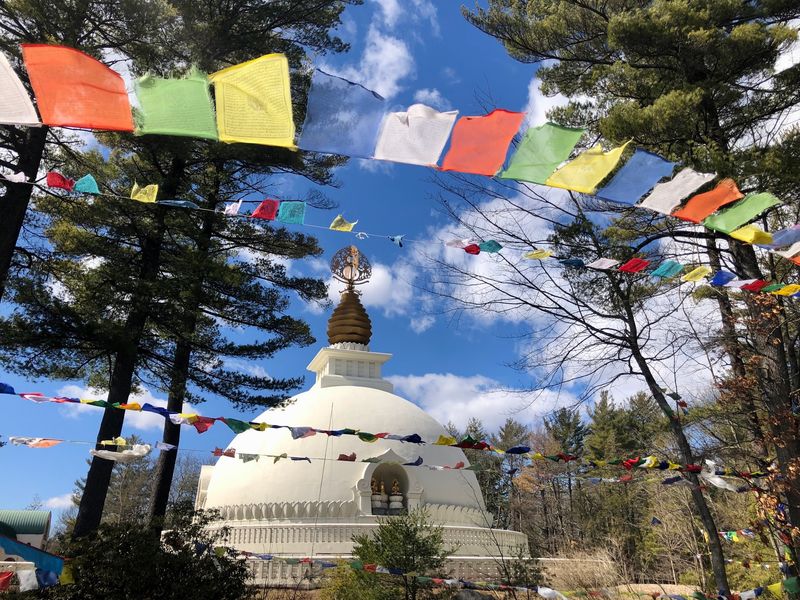
At last, the trees open up and the gleaming white pagoda takes center stage. It is the reason most people make the trip.
The monument stands in an open area, and on windy days the breeze sweeps across the hilltop. Many guests find a strong sense of calm right here.
The pagoda is a place for reflection rather than entertainment. People walk around it, sit nearby, or simply stand and take it in.
A number of guests have wished they could see inside. The structure is meant to be admired and circled, so plan to enjoy it from the outside.
The setting also brings a wide view. Many say the sky seems a deeper blue from up here, and the scenery stretches far beyond the hill.
It is a fine spot for a photo, but it works even better as a spot to pause. Ten quiet minutes here can change the mood of an entire day.
Just beside the pagoda, another space invites people to slow down even more.
Raked Calm in the Zen Garden
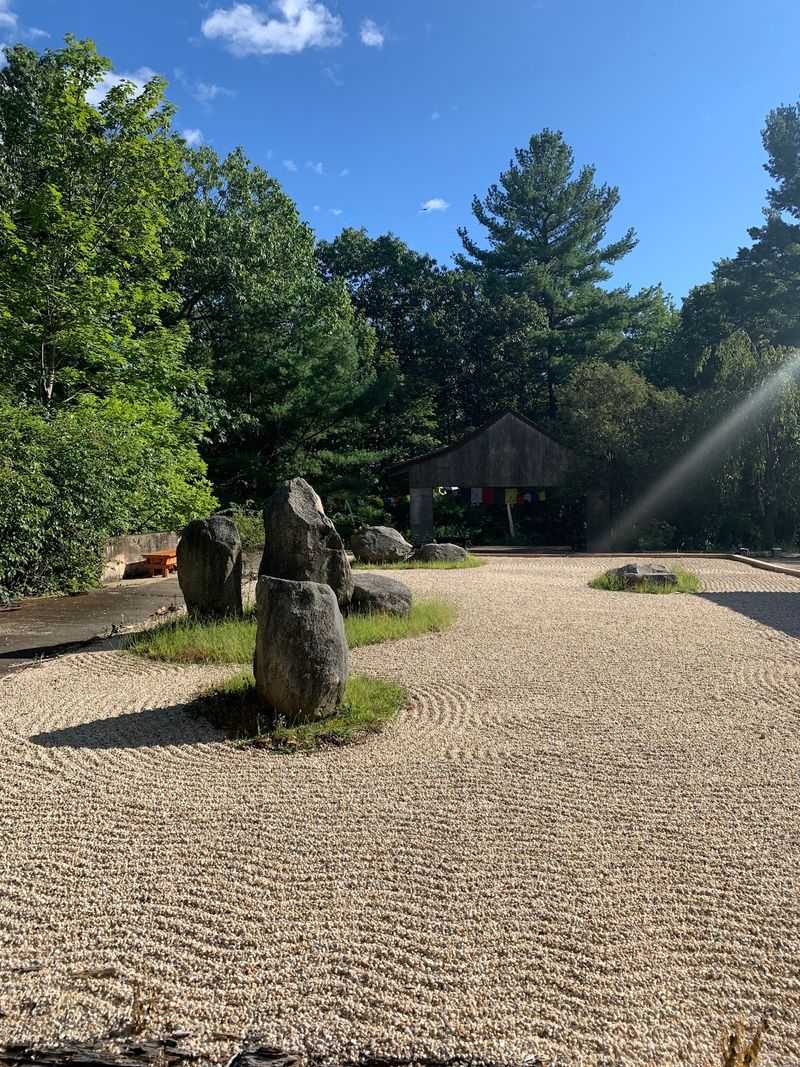
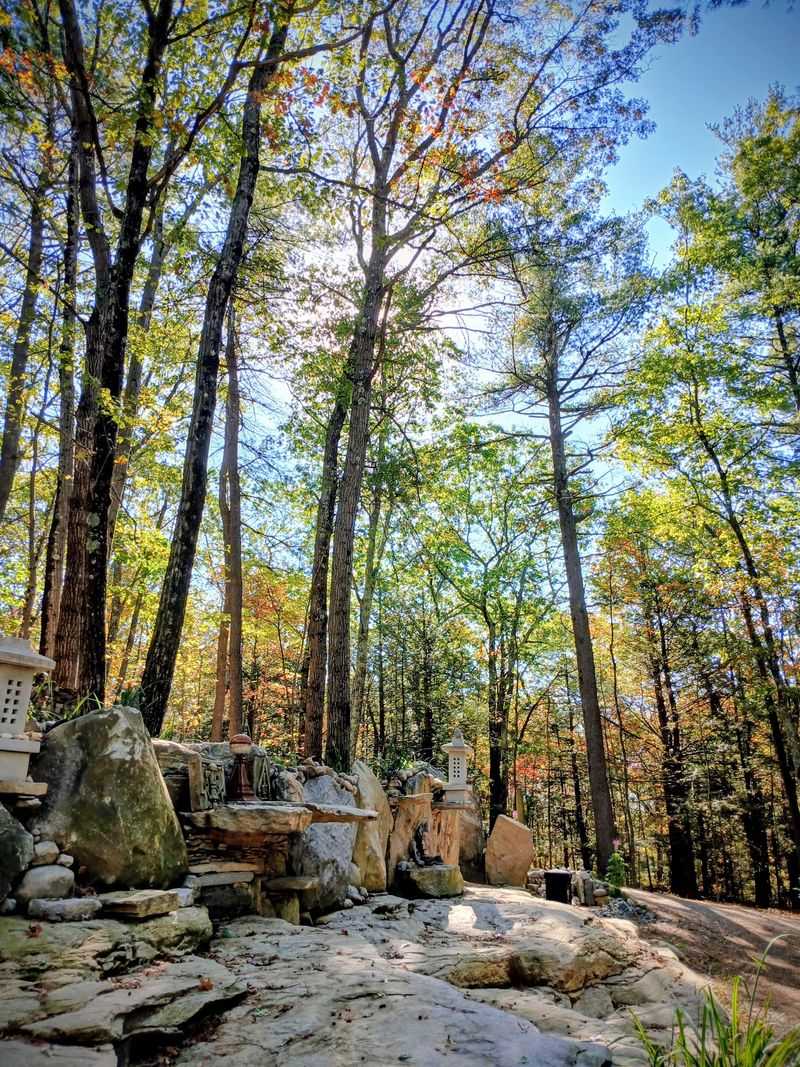
Right next to the pagoda sits a Japanese Zen garden. It is one of the most loved corners of the property.
The garden offers plenty of places to sit, both inside and around its edges. Small benches and large rocks serve as natural seats.
People use it in different ways. Some meditate, some read, and some just rest after the climb.
Etiquette is easy to figure out. If someone is meditating on a stone, groups lower their voices to whispers, which turns a visit into a quiet shared moment.
Regular guests have noticed the garden getting better over time. Each year the plantings look a bit fuller and the grounds a bit more groomed.
That steady improvement gives returning visitors something new to spot. It also shows the care the community puts into the space.
The Zen garden is the heart of the calm here, but water brings its own charm a few steps away.
Lily Pads, Goldfish, and Frogs
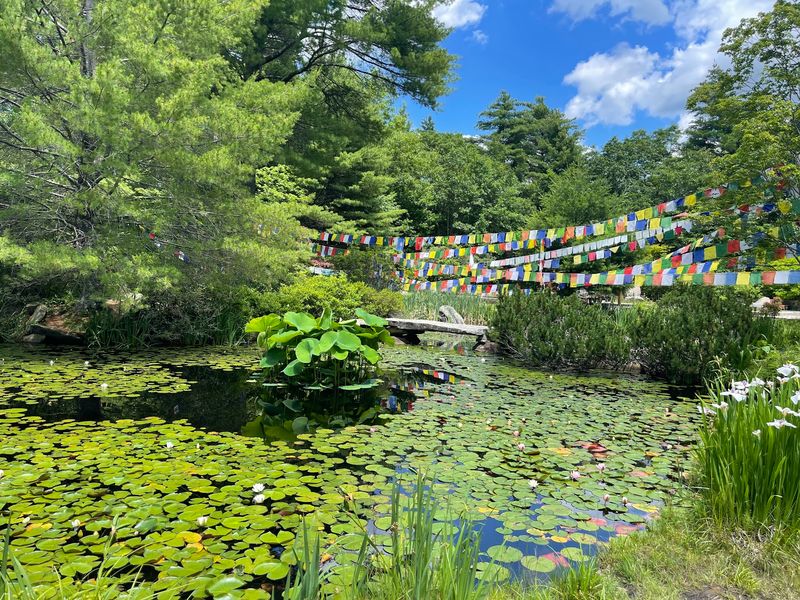
Kids and grown-ups alike tend to gather at the pond. It may be the liveliest spot on a very quiet hill.
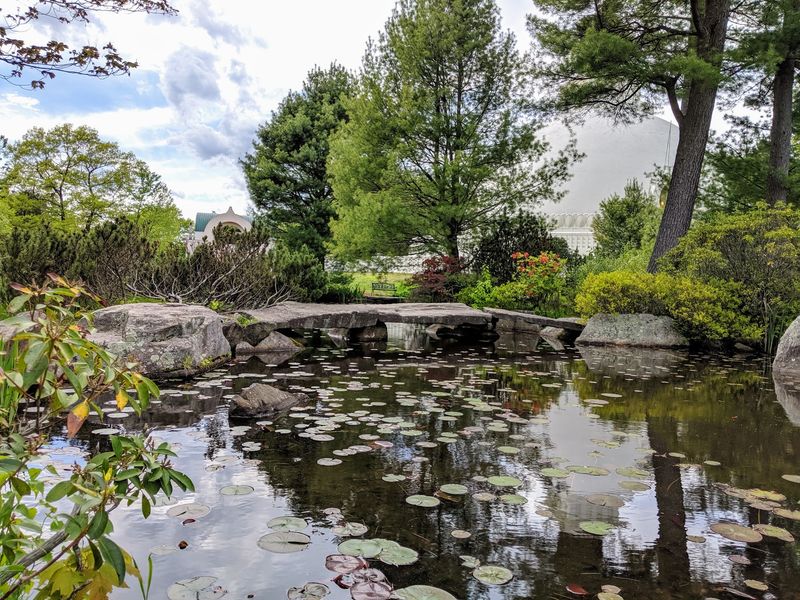
The water is covered with lily pads, and golden fish swim below. On many days, frogs make an appearance too.
Frog spotting has become a favorite pastime here. It is a simple activity that keeps younger guests happy after the uphill walk.
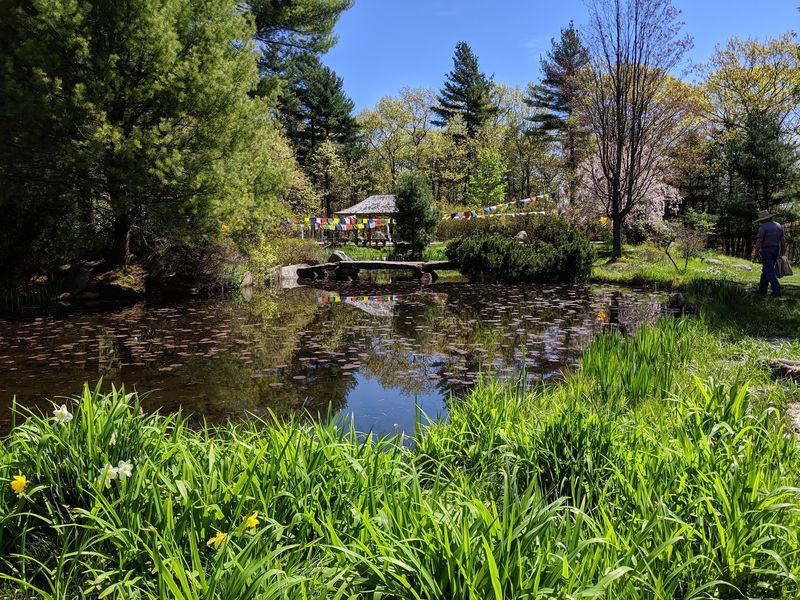
The pond area also serves as another peaceful seat. Many describe it as one of the most serene parts of the grounds.
It pairs well with the Zen garden nearby. Moving between the two makes for an easy, unhurried loop.
No special gear is needed, just patience. The frogs keep their own schedule.
Once the pond has been explored, the temple is waiting with a small gift for anyone who stops in.
Paper Cranes and the Temple
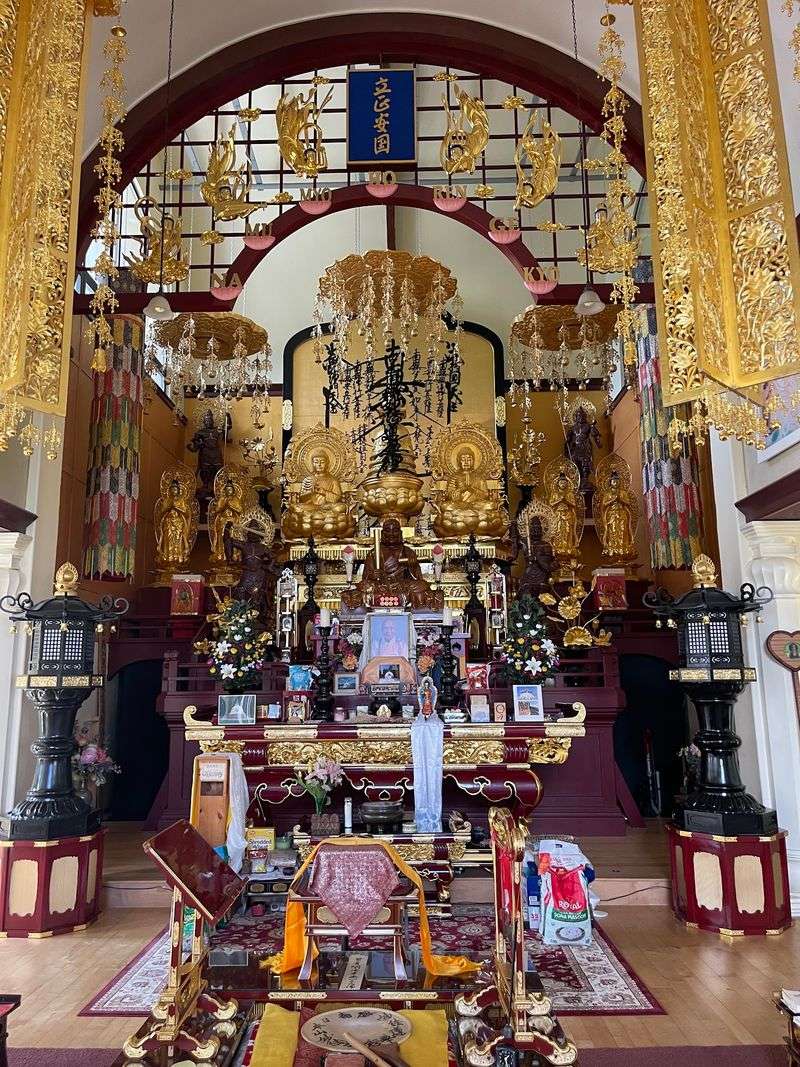
A folded paper crane makes a lovely keepsake. Inside the temple, guests can pick up an origami crane as a token of peace.
It is a small gesture with a big message. The crane fits the spirit of the whole site.
The temple is one of several buildings on the property. Others are used as spaces for meditation and gathering.
The grounds also include a spiritual tree, which many treat as yet another quiet spot for reflection. Between the tree, the garden, and the pagoda, there is no shortage of places to sit.
Remember that this is an active place of practice. Respectful voices and tidy behavior go a long way.
Guests who come with curiosity tend to feel welcome. The temple adds a personal touch that many remember long after the drive home.
That welcome, it turns out, comes from the people who live and work here.
Friendly Monks and a Welcoming Mood
People often expect a shrine to feel formal. Here, the mood is warmer than that.
The monks are easy to talk with and knowledgeable about Buddhist philosophy. Guests often mention how friendly everyone is.
That openness makes the site comfortable for first-timers. No background in meditation is required to enjoy an afternoon here.
The atmosphere suits many kinds of outings. Solo walkers come to recenter, couples come for a quiet stroll, and small groups come for a calm change of pace.
Meditation is clearly a big draw. Many people return specifically to sit and clear their minds.
It is also a natural fit for those who simply want fresh air and a meaningful stop. The calm has a way of finding everyone.
Honest notes matter too. Some guests have felt certain parts of the property could use more upkeep, so expectations should stay realistic.
Timing can shape the experience as well, and the seasons have a lot to say.
Planning Around the Seasons
Late summer and early fall have a loyal following here. Some people make the trip every year during that window.
Autumn is a strong choice for a gentle Massachusetts walk. The short climb feels easy, and the woods along the road make a pleasant backdrop.
Spring draws its own fans, with some guests counting down the months until they can return. The pond and gardens are a nice reason to visit when things turn green.
For practical planning, details like current hours and event dates are best checked ahead. The official website, newenglandpeacepagoda.org, is the place to look.
Public events are worth watching for. They can bring the free shuttle up the hill and a chance to see the community in action.
Bring comfortable shoes, and allow extra time to sit. The site rewards those who are not in a rush.
With timing sorted, the only question left is whether this hill earns a spot on the calendar.
Why the Hill Keeps Calling People Back
Few day trips deliver so much with so little effort. A few minutes of walking leads to a monument, a garden, a pond, and a message of peace.
The New England Peace Pagoda works well for Massachusetts residents looking to rediscover something meaningful close to home. It does not demand a full day or a long journey.
The grounds are not polished like a big attraction, and some corners show their age. Yet many guests notice steady improvements year after year.
That sense of growth is part of the charm. Each visit can reveal a fuller garden or a newly tended path.
It suits meditators, curious families, photographers, and anyone who needs a calm hour. The quiet does most of the talking.
So when the week feels loud, consider a drive to Leverett. The pagoda has been holding space for peace for four decades, and the bench by the Zen garden is still waiting.
Share this story