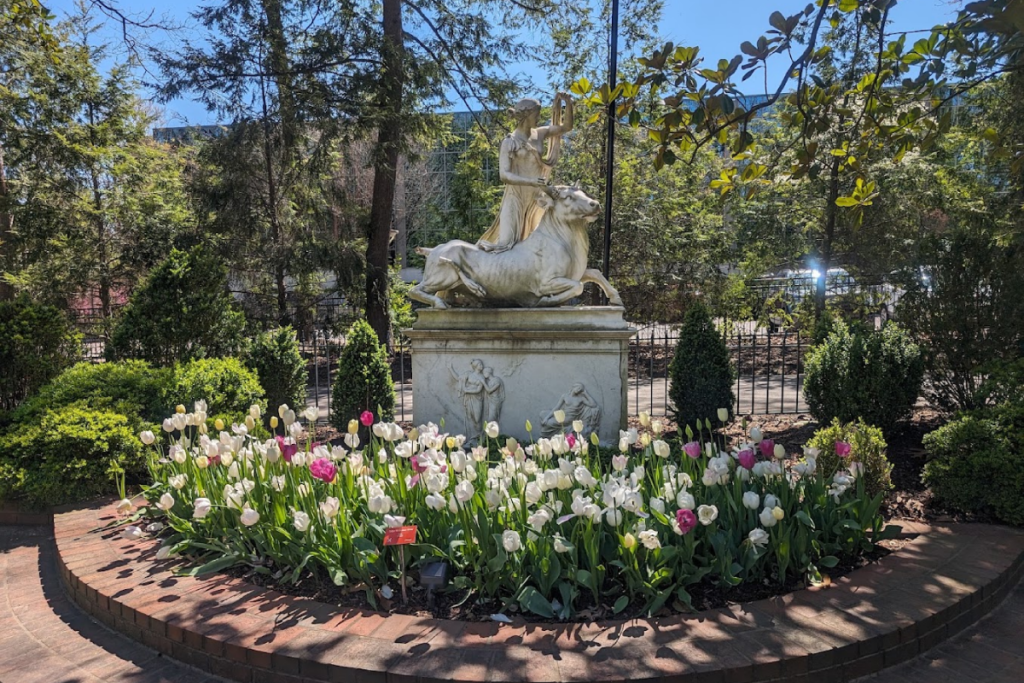
Tucked away on Park Avenue in Memphis sits a treasure that most cities would charge admission to see. The Dixon Gallery & Gardens started as the private estate of Hugo and Margaret Dixon, who decided their beloved home and art collection should belong to everyone.
Today, you can walk through European masterpieces and stroll acres of blooming gardens without spending a dime, making it one of Tennessee’s most generous gifts to the public.
A Private Memphis Estate Became a Gift for Everyone
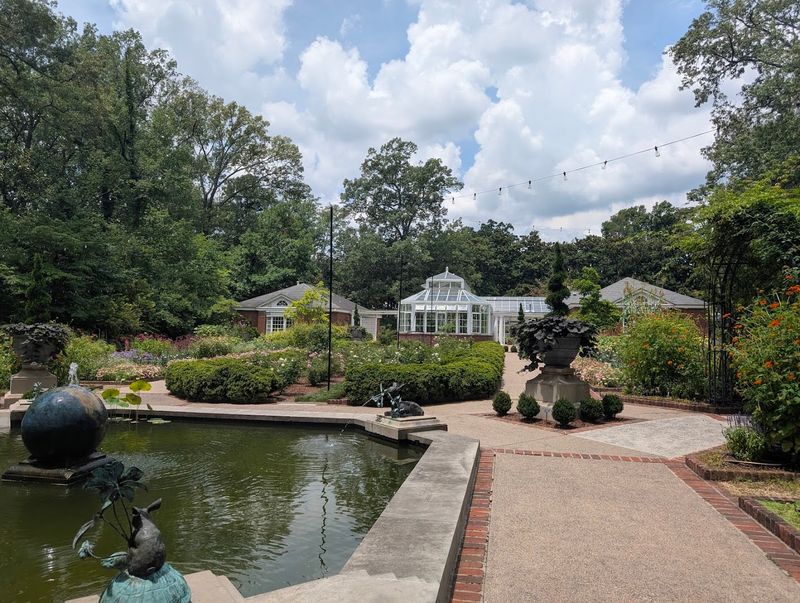
Back in 1976, something pretty remarkable happened in Memphis. Hugo and Margaret Dixon made a decision that would change the cultural landscape of the city forever.
Instead of keeping their stunning estate private or selling it off after their deaths, they donated the entire property to create a public museum and garden space.
Their vision was simple but powerful: art and beauty should be accessible to everyone, not just the wealthy. The couple had spent decades building an impressive collection of Impressionist and post-Impressionist paintings while cultivating spectacular gardens around their home. They wanted future generations to experience the same joy these treasures brought them.
What makes this story even more special is that the Dixons didn’t just hand over a building and some paintings. They established an endowment to ensure the property could remain free to visitors in perpetuity.
That means no matter how many years pass, Memphians and tourists alike can walk through the doors without reaching for their wallets.
The estate sits on 17 acres in one of Memphis’s most beautiful neighborhoods. When you arrive, you’ll immediately understand why the Dixons fell in love with this spot.
Towering trees frame the approach, and the grounds feel like stepping into a different era entirely.
Today, the Dixon Gallery & Gardens welcomes thousands of visitors each year. Families spread blankets on the lawn for picnics, art lovers spend hours studying the paintings, and garden enthusiasts photograph every bloom.
It’s become a beloved community gathering place where people from all backgrounds can experience culture and nature together, exactly as the Dixons intended.
The Remarkable Couple Behind the Dixon Legacy
Hugo and Margaret Dixon weren’t born into Memphis royalty, but they certainly understood the value of giving back. Hugo made his fortune in the cotton industry, and Margaret shared his passion for both art and horticulture.
Together, they traveled extensively throughout Europe, developing a keen eye for paintings and a deep appreciation for formal gardens.
Their collecting journey began modestly in the 1930s and grew more sophisticated over the decades. The couple gravitated toward French Impressionists and post-Impressionists, acquiring works by artists whose names would later become household favorites.
They didn’t just buy art as an investment; they lived with these pieces, hosting intimate gatherings where friends could admire the collection.
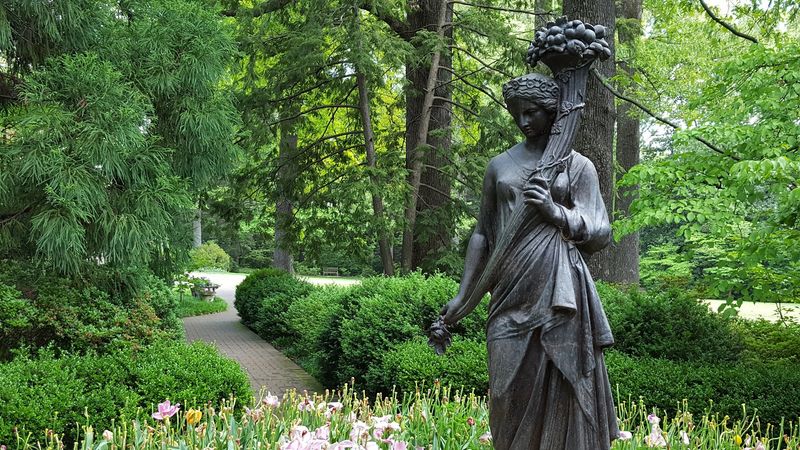
Margaret particularly loved gardening and spent countless hours planning the estate’s landscape. She worked with professionals to create different garden rooms, each with its own character and seasonal highlights.
Her attention to detail transformed the property into a living work of art that complemented the paintings inside.
What drove their decision to share everything? Friends say the Dixons believed strongly in education and cultural enrichment. They had no children of their own, so Memphis became their heir. They wanted to create a place where people could slow down, appreciate beauty, and maybe discover a love for art they didn’t know they had.
The couple’s generosity extended beyond just the physical property. They set up the institution with professional staff, conservation resources, and programming funds.
This foresight means the Dixon continues to thrive decades later, hosting special exhibitions, educational workshops, and community events that would make Hugo and Margaret proud.
Step Inside a Gallery Filled With European Masterpieces

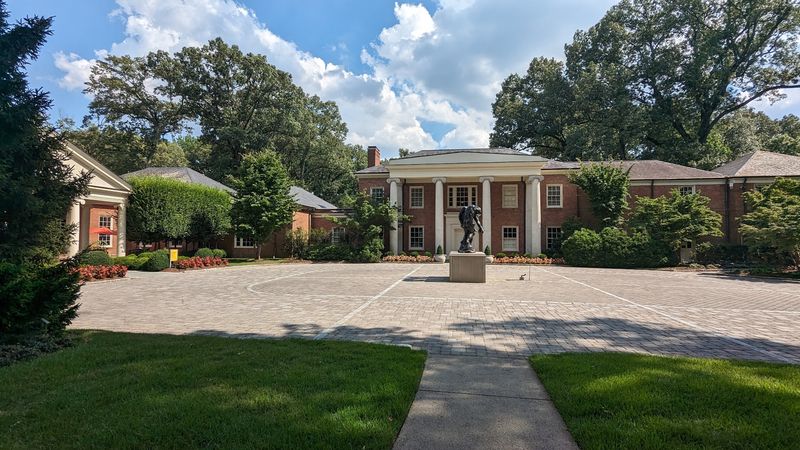
Walking into the Dixon Gallery feels like entering someone’s incredibly sophisticated home, which makes sense since that’s exactly what it was. The main house still retains the warmth of a residential space, but now those rooms showcase some seriously impressive artwork.
You’ll find pieces by Monet, Renoir, Degas, and other artists whose work typically requires a trip to major metropolitan museums.
The permanent collection focuses heavily on French Impressionism and post-Impressionism, reflecting the Dixons’ personal taste. These aren’t minor sketches or lesser-known works either.
The gallery holds paintings that art historians get excited about, including landscapes that capture light in ways that still feel fresh more than a century after they were painted.
One of the unexpected pleasures is the intimate scale of the galleries. Unlike massive museums where you can develop serious foot fatigue, the Dixon allows you to take your time with each piece without feeling overwhelmed.
You can actually sit on a bench and study a painting for as long as you want without crowds pushing you along.
The museum also houses an impressive collection of porcelain, with over 600 pieces of fine china that tell their own story about decorative arts and craftsmanship. These displays rotate periodically, so even regular visitors discover something new.
The attention to presentation means every object gets the respect it deserves.
Beyond the permanent collection, the Dixon brings in rotating exhibitions that keep the experience fresh. Recent shows have featured everything from contemporary Black artists to historical fashion exhibits.
The gallery staff clearly puts thought into creating shows that both complement the core collection and introduce visitors to new perspectives and artistic movements.
The Gardens Are Just as Beautiful as the Art
Some visitors come for the paintings and end up spending most of their time outside. The gardens at the Dixon aren’t just an afterthought or a pleasant lawn; they’re a carefully designed landscape that rivals botanical gardens you’d normally pay admission to experience.
Margaret Dixon’s vision created outdoor rooms that each offer something different throughout the year.
The South Lawn provides wide open space perfect for picnics, and you’ll often see families sprawled on blankets enjoying the shade of massive old trees. Kids run around while parents relax, and the whole scene has a timeless quality that feels increasingly rare.
It’s genuinely one of the best free outdoor spaces in Memphis for just hanging out.
Winding paths lead you through more structured garden areas where plantings change with the seasons. You might encounter a formal rose garden in full bloom, discover a quiet fountain tucked into a shaded corner, or stumble upon contemporary sculptures placed thoughtfully throughout the grounds.
The landscape architects who maintain the property clearly understand how to create spaces that invite exploration.
The cutting garden demonstrates serious horticultural skill, with rows of flowers grown specifically for arrangements used throughout the museum. Watching the gardeners work here offers a masterclass in cultivation techniques.
Even if you don’t know much about plants, you can appreciate the riot of color and the obvious care that goes into every bed.
Shaded woodland paths provide cooler walking options during Memphis’s hot summers. These areas feel almost like a nature preserve, with native plants and mature trees creating a canopy overhead.
Seasonal Blooms Make Every Visit Feel Different
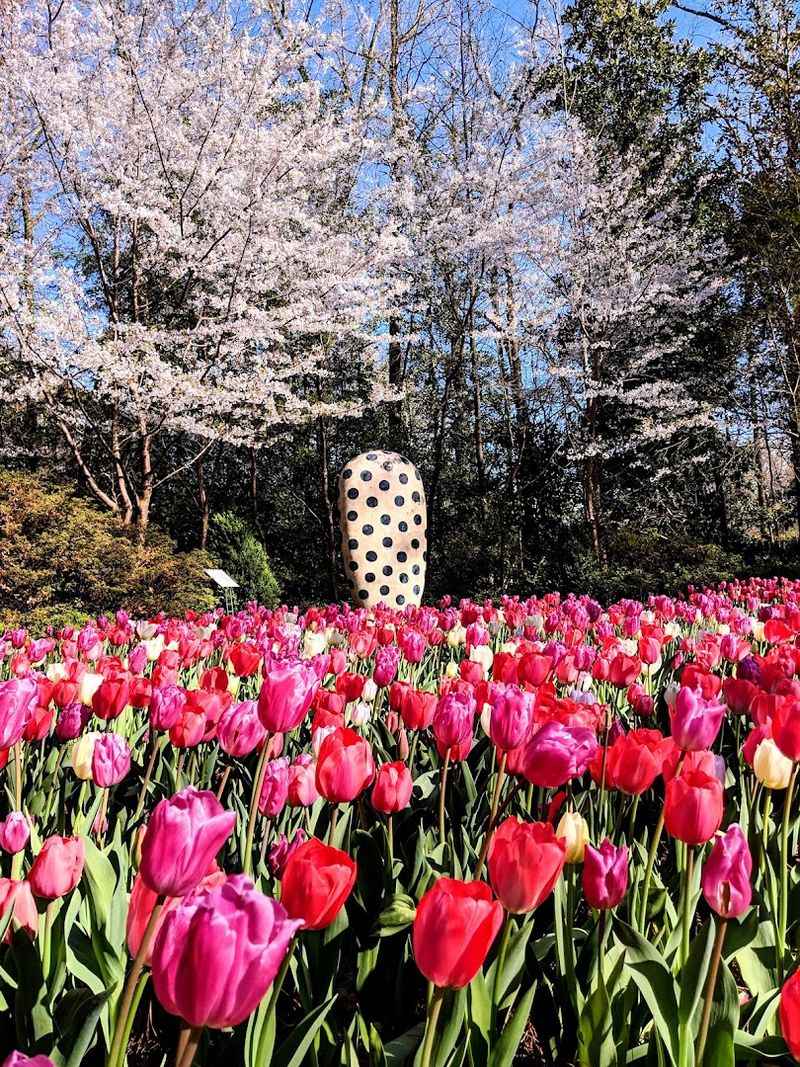
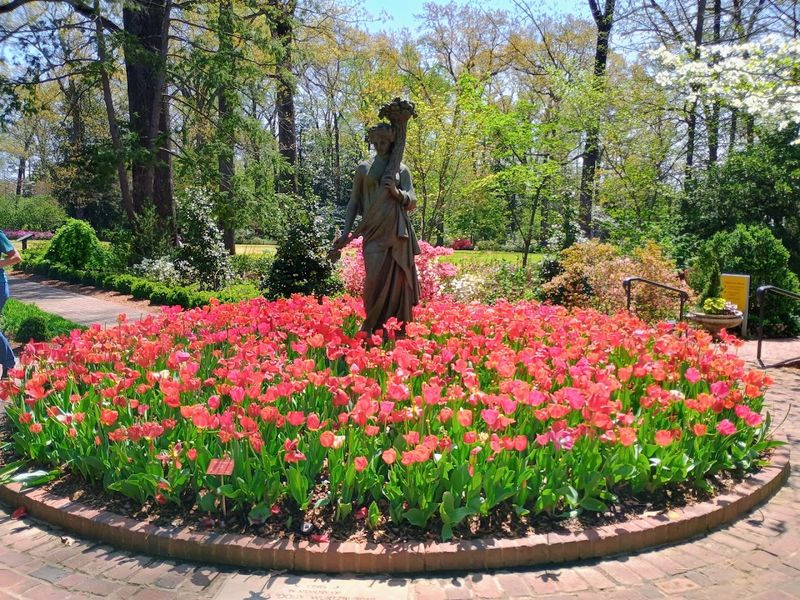
Here’s something locals know: the Dixon transforms completely depending on when you visit. Spring brings the property’s most famous display, when thousands of tulips erupt in waves of color that would make any Dutch garden jealous.
People plan their visits specifically for tulip season, arriving with cameras ready to capture the spectacular show.
The tulip display isn’t just a few flowers scattered around. We’re talking about hundreds of bulbs planted in deliberate patterns that create sweeping color effects along the paths.
Reds blend into yellows, purples stand next to whites, and the whole effect is almost overwhelming in the best possible way. Visitors from out of town genuinely can’t believe this spectacle is free to see.
Summer shifts the focus to roses, perennials, and the lush green canopy that provides much-needed shade. The gardens take on a more subdued but equally beautiful character.
Morning visits become particularly appealing when temperatures haven’t yet climbed, and you can enjoy the grounds before the afternoon heat sets in.
Fall introduces different colors as leaves change and chrysanthemums add bursts of gold and bronze. The light changes too, becoming softer and more golden, which photographers absolutely love. It’s a quieter season in the gardens, perfect for contemplative walks without the crowds that spring tulips attract.
Even winter has its charms, with evergreen structure plants and interesting bark textures becoming more visible. The bones of the garden design reveal themselves, and there’s something peaceful about walking the paths when everything is dormant.
Plus, the museum galleries feel extra cozy when there’s a chill outside, making it the perfect time to focus more on the indoor collections.
Special Exhibits and Events Offer Reasons to Return
The Dixon doesn’t rest on its laurels as just a pretty place with nice paintings. Throughout the year, the staff programs special exhibitions and events that give even frequent visitors reasons to come back.
Recent temporary shows have tackled subjects as diverse as women’s sporting fashion from the 1800s, contemporary Southern artists, and historical train-themed artwork that delighted both kids and adults.
These rotating exhibitions demonstrate real curatorial ambition. Rather than playing it safe, the Dixon takes chances on shows that might challenge expectations or introduce visitors to artists they’ve never encountered.
Community events turn the grounds into gathering spaces for everything from Symphony in the Garden concerts to art-making workshops. Mother’s Day typically brings special programming that draws huge crowds, and holiday events create family traditions for many Memphis residents.
The variety means there’s legitimately something for different interests and age groups.
The children’s interactive area inside the museum deserves special mention. While some museums treat kids’ spaces as afterthoughts, the Dixon provides hands-on activities that actually engage young visitors with art concepts.
Parents appreciate having a spot where children can touch and create rather than just being told to look quietly at things they don’t understand yet.
The on-site café, Park and Cherry, adds another dimension to visits by offering a place to grab coffee, pastries, or light lunch. While hours can be limited and popular items sometimes sell out, having this option means you can easily spend several hours at the property without needing to leave.
Wedding ceremonies and receptions also take place here, with the gardens providing an absolutely stunning backdrop for special occasions.
How to Visit This Free Memphis Treasure

Getting to the Dixon is straightforward: it’s located at 4339 Park Avenue in one of Memphis’s most established neighborhoods. Parking is free and generally plentiful, though popular events and peak tulip season can fill the lots.
The property sits right next to the Memphis Botanic Garden, so you could theoretically visit both in one day if you’re feeling ambitious.
Hours are Tuesday through Saturday from 10 AM to 5 PM, and Sunday from 1 to 5 PM. The museum closes on Mondays, which is pretty standard for smaller institutions that need time for maintenance and installation work.
Arriving earlier in the day typically means fewer crowds and better light for photography in the gardens.
When you arrive, you’ll check in and receive a sticker confirming your free admission. Staff members are genuinely enthusiastic about welcoming visitors, and they’re happy to answer questions about what’s currently blooming or which exhibitions are on view. Don’t hesitate to ask for recommendations if you’re short on time.
Plan to spend at least two to three hours if you want to see both the galleries and explore the gardens properly. Rushing through defeats the purpose of this place, which really rewards slowing down and paying attention.
Bringing a blanket for the lawn is encouraged, and you’ll see locals doing exactly that on nice days.
The Dixon operates on donations rather than charging admission, so consider contributing what you can. This generosity is rare, and supporting the institution helps ensure it continues to thrive for future generations.
You can donate at the entrance or give online through their website at dixon.org, where you’ll also find information about current exhibitions, upcoming events, and educational programs worth checking out before your visit.
Share this story