Frankenmuth does not do dinner halfway, and Zehnder’s is the clearest proof. This massive Michigan landmark on South Main Street holds the title of America’s Largest Family Restaurant, but its real claim to fame is the meal generations of visitors keep coming back for: family-style, all-you-can-eat fried chicken.
The building is impossible to miss, the dining rooms seem to keep going, and the smell of golden, crispy chicken starts making its case before you even reach the door. At 730 S Main Street, Zehnder’s is more than a restaurant — it is a Michigan tradition served one overflowing platter at a time.
A Building That Stops You Before You Even Walk In
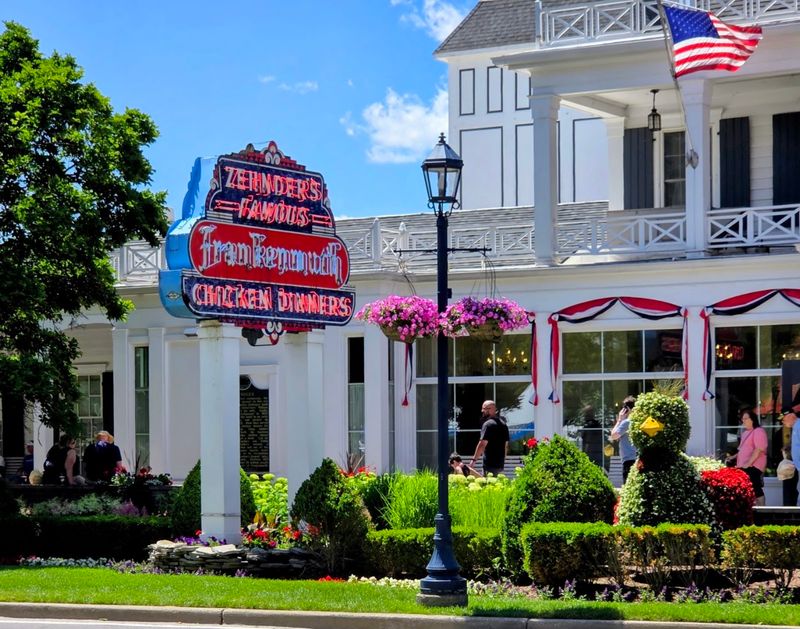
Standing at the corner of South Main Street in Frankenmuth, Michigan, Zehnder’s does not ease you in gently. The building is enormous by any standard — a sprawling white structure that looks like a cross between a grand roadside inn and a colonial-era tavern, with the kind of presence that makes you slow your car down just to take it in.
It was originally built in 1856 and rebuilt in 1957, and that layered history shows in every beam and panel inside.
The exterior sets expectations high before you reach the entrance. Signage is prominent but not flashy, the kind that signals confidence rather than desperation.
The covered walkway and entrance area are wide enough to manage the kind of crowd flow that most restaurants never have to plan for, because most restaurants are not seating thousands of guests on a busy weekend.
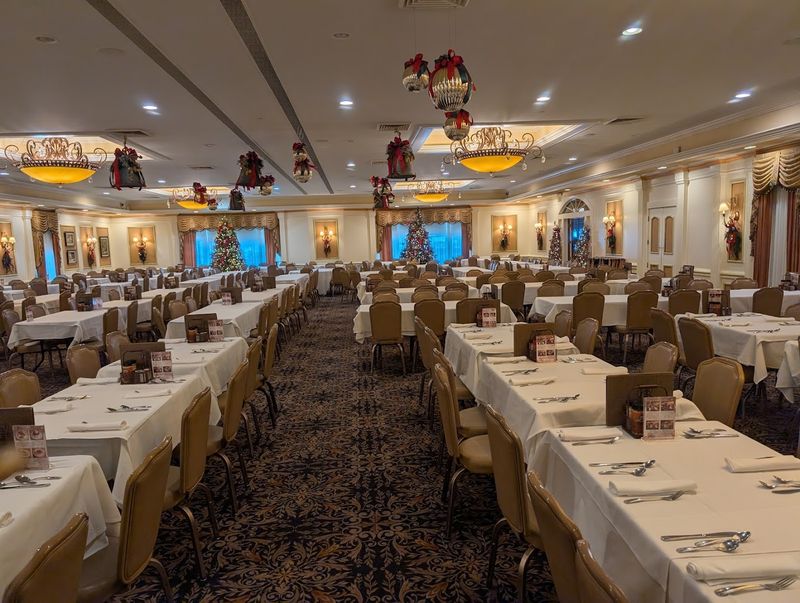
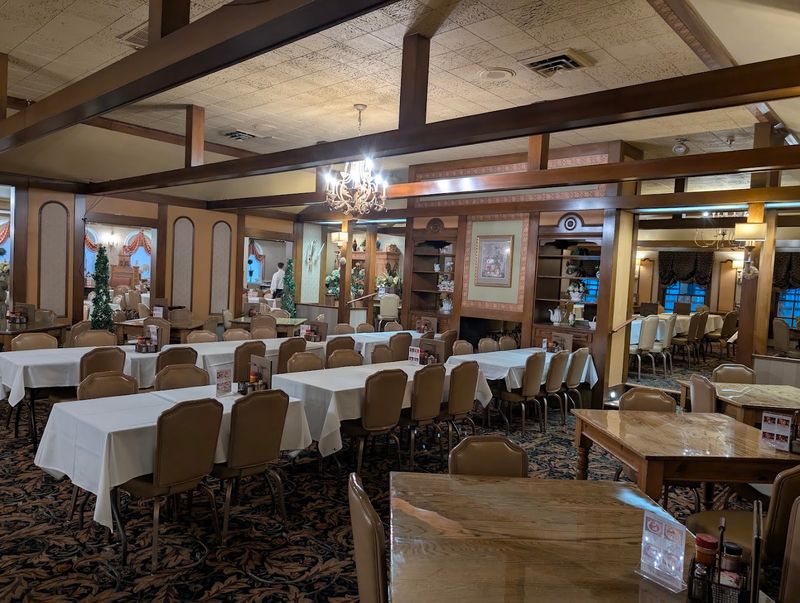
Inside, the scale becomes even more apparent. Multiple dining rooms branch off in different directions, each decorated with European-influenced woodwork, warm lighting, and table settings that feel more formal than the casual dress code requires.
The contrast works surprisingly well — a polished room full of families in jeans and sneakers, all passing platters of chicken around like it is Thanksgiving in July.
The waiting area near the entrance features a fireplace that crackles during colder months, turning what could be an inconvenient hold into something almost cozy. On busy Saturdays, waits can stretch to thirty minutes or more, though off-season visits in March or January often move much faster.
Reservations are strongly recommended, especially for groups, and booking well in advance on weekends is the difference between a smooth experience and a long sidewalk wait. The building alone is worth the stop.
The Fried Chicken That Made Frankenmuth Famous Across the Midwest
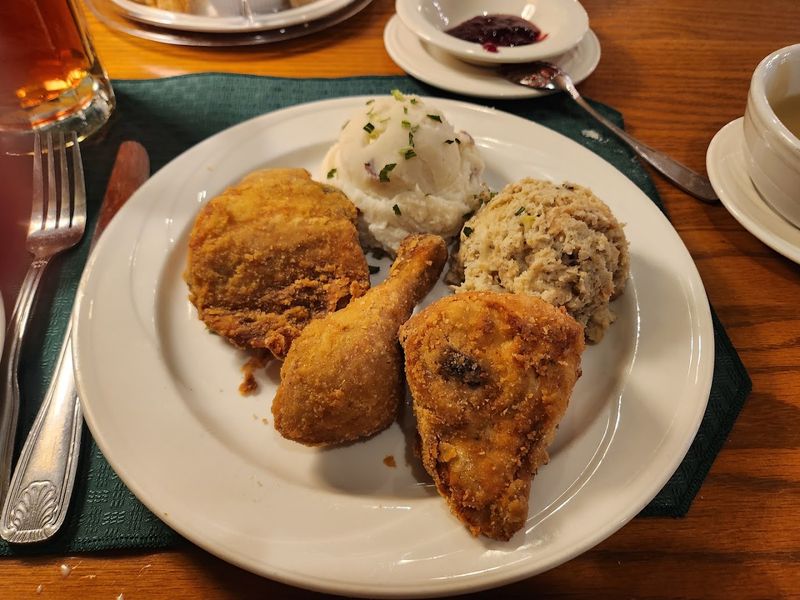
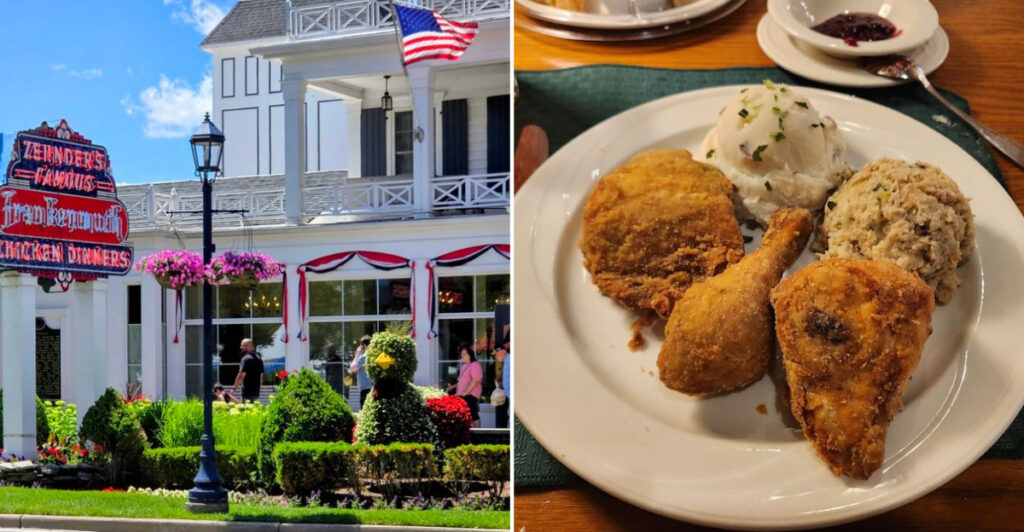
Crispy on the outside, genuinely juicy through to the bone, and seasoned with a blend that has been drawing road trips from across the Midwest for decades — the fried chicken at Zehnder’s is not trying to be trendy. It simply does what well-made fried chicken is supposed to do, and it does it consistently at a scale most kitchens never attempt.
The skin carries real flavor, not just crunch, and the interior stays moist even after the platter has made a few rounds of the table.
The all-you-can-eat family-style dinner is the main event. Platters arrive at the table and keep coming as long as you want them.
That format — everyone sharing from the same bowls, passing food across a crowded table — creates a rhythm that feels less like a restaurant meal and more like a holiday gathering. Families who have been coming here for four decades describe it the same way newcomers do: abundant, warm, and deeply satisfying.
A fun detail worth knowing: the original seasoning blend with MSG is sold in the downstairs shops, making it a popular souvenir for guests who want to recreate something close to the experience at home. It will not be identical, but it is a solid reminder of the meal.
The lunch version of the chicken dinner is a slightly smaller format — typically three pieces served with mashed potatoes and gravy, stuffing, and coleslaw — and it represents a more accessible entry point for first-timers who are not ready to commit to the full family-style spread.
Weekend dinner service also adds prime rib to the selection, which broadens the table considerably for groups with mixed preferences. The chicken, though, remains the clear anchor of every visit.
Every Side Dish on the Table Earns Its Place
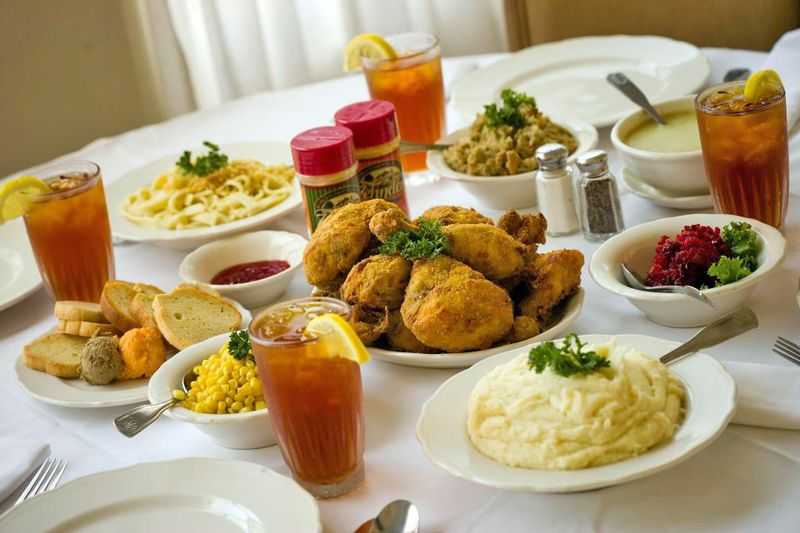
The chicken gets the headlines, but the sides at Zehnder’s are the reason people keep loading their plates long after they planned to stop. Mashed potatoes with gravy, stuffing, sweet potatoes, coleslaw, and mixed vegetables all arrive alongside the main course, and none of them feel like filler.
The stuffing in particular has a Thanksgiving-level quality to it — dense, savory, and the kind of thing that disappears from the bowl faster than anyone intended.
The coleslaw consistently surprises people who expect it to be an afterthought. Creamy without being heavy, refreshing without the sharp vinegar bite that can overpower a plate, it is the kind of slaw that prompts a second helping even when the table is already crowded with food.
For anyone with Germanic roots, there is something familiar in it — a richness and restraint that echoes old family recipes rather than mass-produced deli versions.
Bread arrives at the table before the main course and comes in two varieties: classic white bread and stollen, a fruit bread with a mild sweetness that pairs well with the house raspberry preserve and whipped butter. The bread alone can derail the best-laid pacing strategies, because it is warm, soft, and genuinely good.
Eating too much of it before the chicken arrives is a common and deeply understandable mistake.
Gluten-free options are woven throughout the menu without feeling like a secondary category. Several appetizers qualify, and the kitchen maintains enough variety that dietary restrictions do not shrink the experience significantly.
Fresh gluten-free rolls are available on request. The full scope of the meal — from the first bread basket to the final scoop of stuffing — is designed to leave the table satisfied in a way that a single-plate restaurant simply cannot replicate.
Over a Century of History Baked Into Every Dining Room Wall
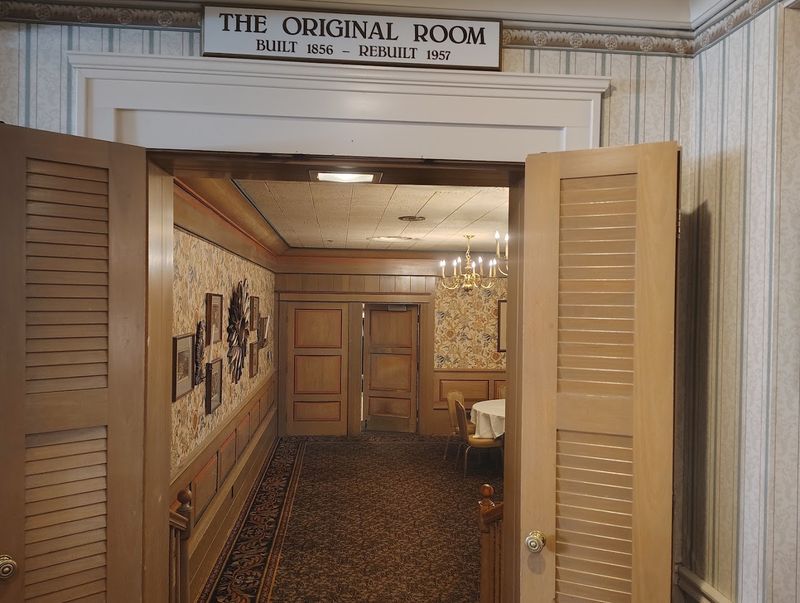
Zehnder’s traces its roots back to 1856, making it one of the oldest continuously operating restaurant operations in Michigan. The 1957 rebuild expanded the footprint dramatically, but the design choices made during that era were deliberately rooted in the original character of the place.
Walking through the dining rooms today, that decision holds up. The wood paneling, European-influenced decorative elements, and formal table settings all carry a consistency that newer restaurants spend fortunes trying to manufacture.
The staff uniforms add another layer to the historical atmosphere. Servers wear Bavarian-style attire, a nod to Frankenmuth’s German heritage and the town’s founding by Franconian Lutheran missionaries in 1845.
The costuming is not theatrical — it reads as part of the establishment’s identity rather than a theme park gesture. Combined with the decor and the format of the meal, the overall effect is a dining room that feels genuinely rooted in its own past.
Frankenmuth itself operates as a kind of living postcard — covered bridges, horse-drawn carriages, Christmas shops open year-round, and a river running through the center of town. Zehnder’s sits within that environment but predates most of it.
The restaurant did not adopt the town’s Bavarian identity as a marketing move; it grew alongside it, and the connection between the two feels organic rather than constructed.
Inside the dining rooms, details accumulate quietly. The formality of the place settings against the casual dress code of the guests creates a comfortable contradiction.
Nothing feels stiff or intimidating, even in the most elaborately decorated rooms. The history embedded in the walls does not announce itself loudly — it simply makes the room feel settled, like a place that has known exactly what it is for a very long time.
The Downstairs Marketplace Is Its Own Separate Destination
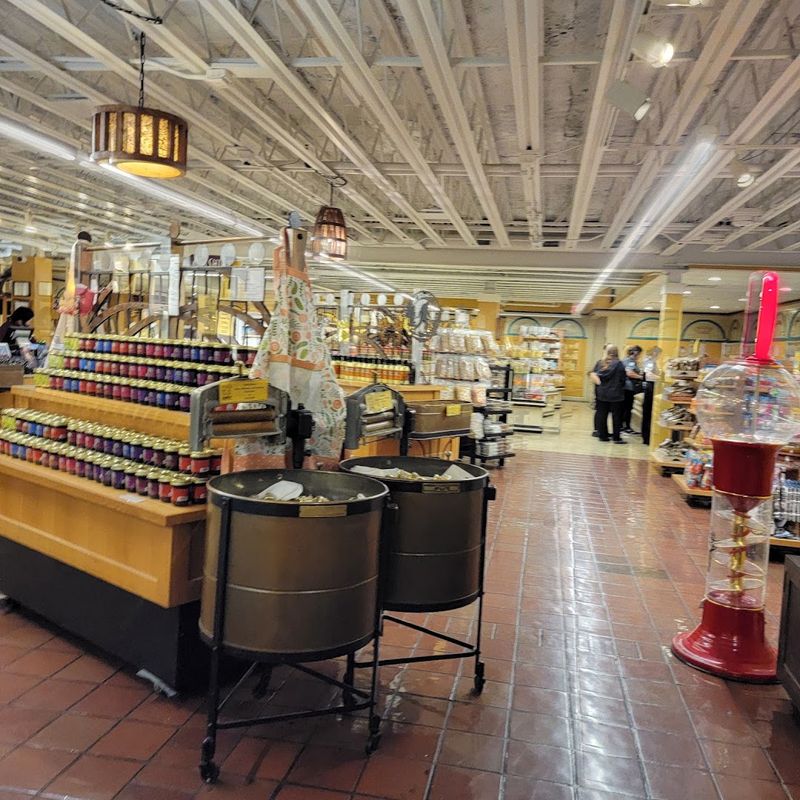
Most people come for the upstairs dining room and leave without realizing how much is happening one floor below. The lower level of Zehnder’s operates as a self-contained marketplace, and it rewards the curious.
A cafeteria-style dining area offers a more casual and slightly more budget-friendly way to enjoy the chicken dinner without the full table-service experience. Prices are lower, the format is faster, and it works well for solo visitors or anyone short on time.
The bakery is the standout. Caramel pecan rolls, brownies, cakes, and an assortment of pastries fill the cases, and the quality is consistent enough that leaving without something wrapped to go feels like a missed opportunity.
The rolls in particular have a reputation that extends well beyond Frankenmuth — they are dense, sticky, and generously sized in the way that only a bakery operating at this scale can sustain. A coffee from the cafe alongside one of those rolls makes for a strong argument for arriving early and skipping the rush.
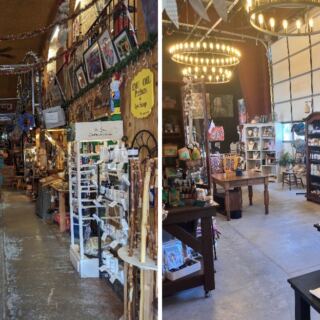
The gift shop portion of the lower level covers a broad range. Clothing, jewelry, souvenirs, decorating items, and packaged food products share the floor space in a layout that manages to avoid feeling cluttered.
The original MSG seasoning blend sold here is one of the more specific souvenirs available — useful, nostalgic, and connected directly to the food upstairs in a way that generic merchandise rarely achieves.
Elevators connect the levels for accessibility, and restrooms are located downstairs as well, which keeps foot traffic moving logically through the space. The lower level also hosts the Zehnder the Chicken mascot on occasion, which is a genuine crowd moment for families visiting with younger kids.
Plan at least thirty extra minutes after dinner to explore it properly.
How to Time Your Visit for the Best Experience
Zehnder’s opens at 11 AM every day of the week, which makes a late-morning arrival one of the smartest moves for anyone hoping to avoid the longest waits. Weekday lunch service runs at a noticeably calmer pace than Saturday or Sunday dinner, and the off-season months — January through early March — reduce crowds significantly without changing anything about the food or service quality.
Arriving in that window can cut wait times from thirty or forty minutes down to nearly nothing.
Saturday evening is the peak of the peak. The dining rooms fill quickly, the energy in the space climbs considerably, and the kitchen is running at full output.
For anyone who enjoys the buzz of a fully operational large-scale restaurant, that is actually a compelling time to go. For families with young children or anyone sensitive to noise and crowd density, a Tuesday or Wednesday evening hits the same menu at a fraction of the intensity.
Reservations are available and worth making, particularly for groups of six or more. Booking a day and a half in advance on a slow week might be enough to secure a decent time slot, but weekend reservations during summer and the holiday season should be made as far ahead as possible.
Walk-in waits during those periods can be unpredictable, and the waiting area near the fireplace, while comfortable, has limits.
The restaurant runs dinner service until 9:30 PM on Fridays and Saturdays, and until 9 PM Sunday through Thursday. Late arrivals are accommodated, though the kitchen pace naturally slows toward closing.
Luncheon events with live entertainment — including concerts in the dining room — have been part of the Zehnder’s calendar as well, so checking the current schedule before a visit can turn a standard meal into something considerably more memorable.
Why Zehnder’s Still Stands Apart From Every Other Chicken Dinner in the Region
Across the street from Zehnder’s sits the Bavarian Inn, another Frankenmuth institution built on fried chicken and German heritage. The two restaurants share the same block, the same claim to fame, and decades of friendly rivalry.
Visitors arriving in Frankenmuth for the first time are almost always told they have to choose. The honest answer is that both have genuine merit, but Zehnder’s carries a specific quality that sets it apart: the sheer consistency of an operation that has been running this format, at this scale, for this long without drifting from its identity.
The title of America’s Largest Family Restaurant is not just a marketing line. The dining capacity here is genuinely extraordinary, and managing food quality across that many covers, that many nights a week, requires a kitchen discipline that most establishments never have to develop.
The chicken arrives crispy and hot whether the dining room has fifty people in it or five hundred. That reliability is harder to achieve than it sounds.
Service adds another dimension. Servers in Bavarian attire move through the rooms with the kind of attentiveness that comes from a staff culture built over generations of hospitality.
Individual servers — Carla, Tammy, Kennedy, Kate — get named in reviews repeatedly, which suggests the training here goes deeper than scripted check-ins. A server who knows the menu well enough to recommend the lunch option to a guest who did not know it existed is a server paying genuine attention.
Zehnder’s is not a destination for anyone chasing novelty or innovation. The menu evolves slowly, the decor holds its ground, and the chicken dinner looks almost exactly as it did forty years ago.
That is precisely the point — and for the families who have been making the drive to Frankenmuth for generations, it is exactly what they come back for.
Share this story