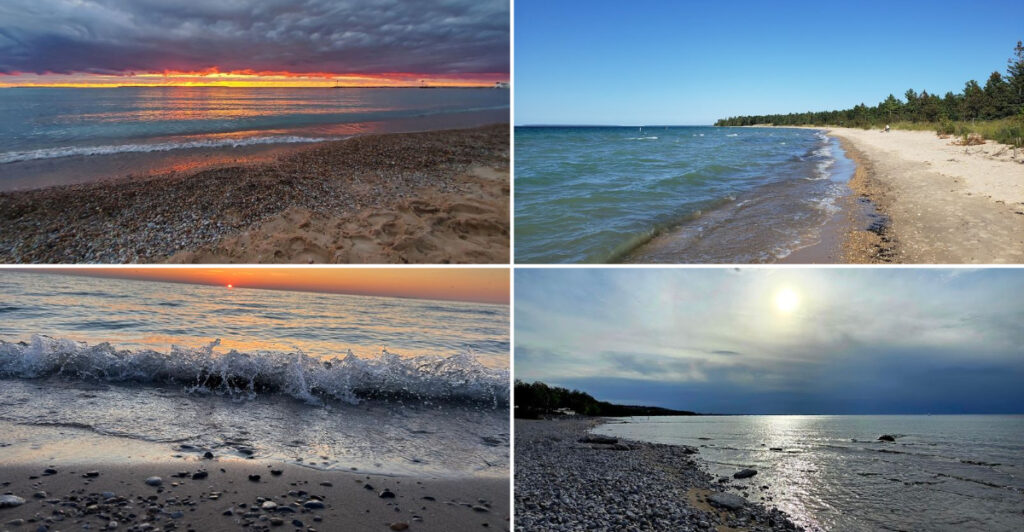
July is the kind of month when Michigan beaches reward anyone willing to slow down and look a little closer. Along the shoreline, waves, shifting water levels, summer storms, and steady foot traffic can rearrange the sand overnight, leaving each morning with a new chance at discovery.
Petoskey stones, beach glass, fossils, unusual rocks, and other small treasures tend to hide where gravel, surf, and patience meet. If you know when to search after a blow, where to scan the edges, and which stretches invite a longer wander, these 12 Michigan beaches give beachcombers a real reason to keep their eyes down and their hopes up.
1. Van’s Beach, Leland
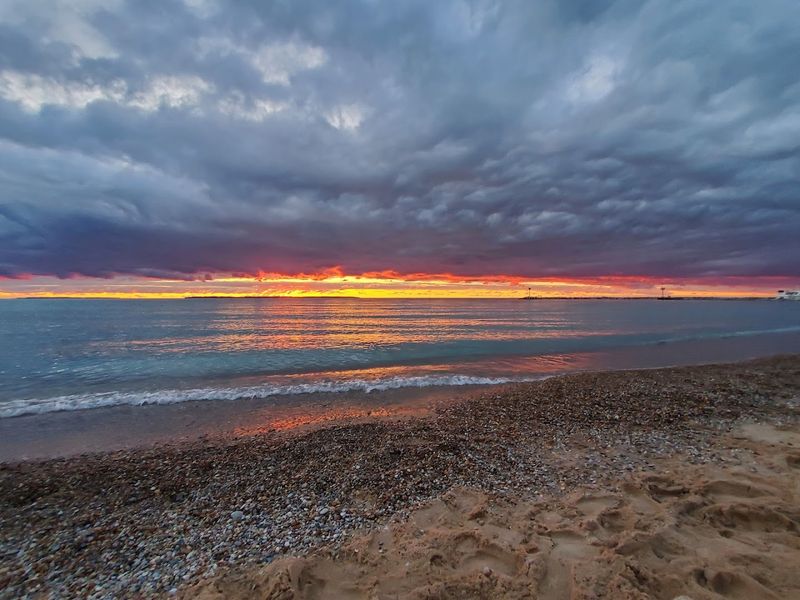
Van’s Beach gives you a strong opening move the second you step onto the shore. The beach is broad enough to let wave action sort material into visible bands, and that is exactly where patient beachcombers should slow down.
In July, the sweet spot is often the damp edge where the last set of waves dropped rounded stones, shell fragments, and the occasional piece that catches light differently.
Start early if you can, especially after a windy night or a choppy afternoon the day before. Freshly stirred water can rearrange the shoreline, exposing patches of gravel that are more interesting than the plain sandy stretches.
Look for transitions rather than perfection – darker wet stones beside pale dry sand, tiny ridges, and places where the slope changes just enough to collect heavier material.
This is a good beach for low, deliberate scanning instead of covering huge distance in a rush. Petoskey stones are the obvious dream find in this region, but smooth green, gray, and honey toned rocks can be half the fun when the light is right.
A small mesh bag, water shoes, and a habit of checking both directions after every wave line will serve you better than any lucky charm.
Van’s also has that practical quality smart beachcombers appreciate: it is visually readable. You can quickly tell where the beach has been recently worked by the lake and where it has not.
Give extra attention to pebble pockets near break transitions, keep your best finds wet while checking patterns, and do one last slow pass before leaving, because this shoreline can hide its most interesting pieces in plain sight.
2. Fisherman’s Island State Park, Charlevoix
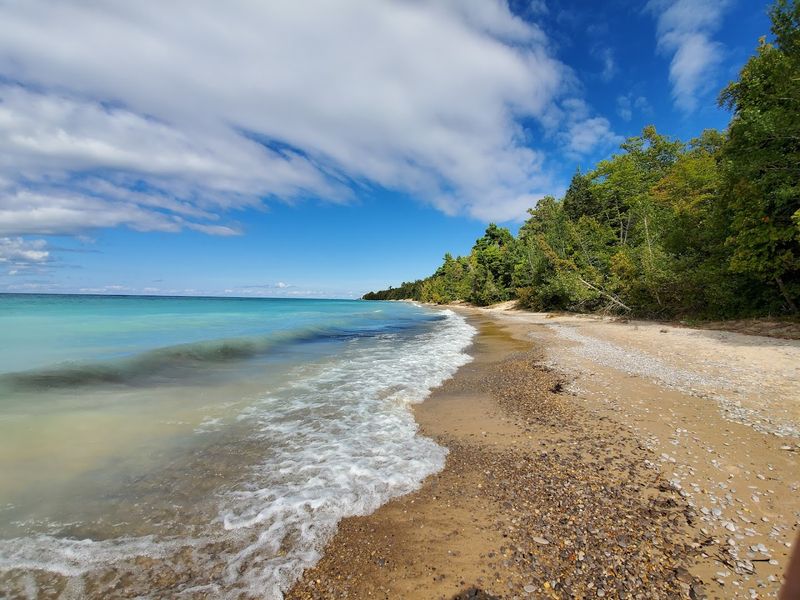
Fisherman’s Island State Park is the place to go when you want a shoreline that still looks a little unruly. That works in your favor, because rougher, less manicured beaches often hold mixed deposits instead of perfectly cleaned sand.
In July, the lake can leave behind long streaks of pebbles, wood bits, and wave sorted rubble that reward anyone willing to scan slowly.
The trick here is not treating every stretch equally. Some sections read flat and quiet, while others show fresh lines of stone where the water recently pushed harder.
Follow those clues. Driftwood clusters, slight bends in the coast, and places where small stones gather in repeated rows tend to be more promising than open, blank expanses with no texture.
This beach invites a longer walk, and that can be an advantage if the first section looks picked over. You are searching for contrast: coral patterned stones, unusually smooth shapes, interesting striping, beach glass, and pebbles with stronger color than the surrounding mix.
Keep an eye on the shallow swash zone too, since a thin layer of water can suddenly reveal pattern and polish that dry rocks hide.
Because the setting is broad and natural, it helps to pace yourself instead of constantly stooping at every sparkle. Do one pass close to the water, then another slightly higher where yesterday’s material may have been stranded.
A cloudy morning can actually help by reducing glare, and a simple rinse bottle can make instant identification easier. At Fisherman’s Island, the finds often come from reading the shoreline well, not from pure luck or speed.
3. Peterson Park, Northport
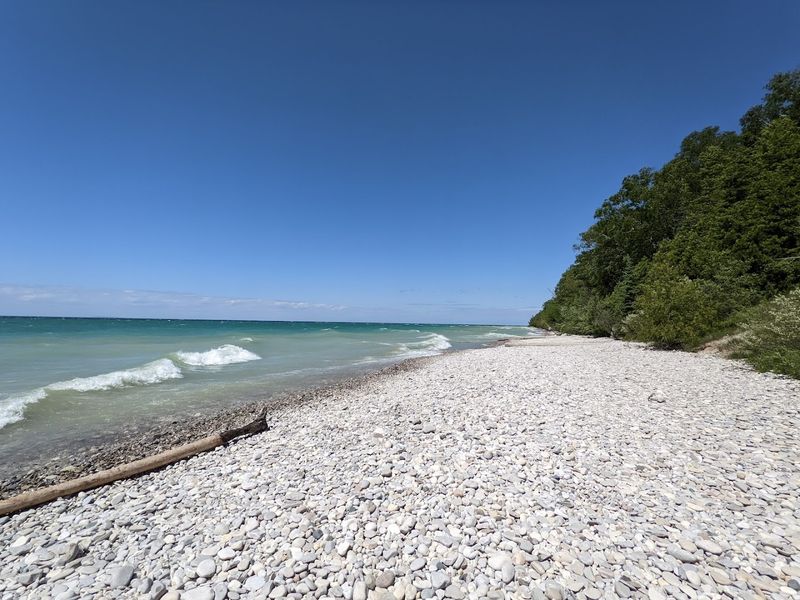
Peterson Park has the kind of shoreline that rewards careful eyes more than dramatic expectations. You are not showing up for flashy boardwalk energy here.
You are showing up for a quieter beach where stones, wave wash, and open water do the real work, and in July that can be a very good setup for a relaxed treasure hunt.
The best approach is to let the beach tell you where to look first. Notice where the water has pushed pebbles into narrow bands and where larger stones interrupt the smoother stretches.
Those interruptions matter, because they can slow movement in the surf and leave behind smaller interesting pieces that might otherwise roll away. A quick walk at normal speed helps map the beach before the slower searching begins.
Peterson Park is especially good for beachcombers who like comparing wet and dry zones. A stone that looks ordinary a few feet up the beach can show pattern the second it is rinsed in the shallows.
Keep checking anything with faint circular texture, honeycomb hints, or a worn coral look. Even when the headline find does not appear, the variety of shapes and colors keeps the hunt engaging.
July crowds can vary, so an early start still gives you the edge. Move along the waterline first, then circle back to any gravel pockets that seemed too busy on the initial pass.
Shoes with decent grip help on rounded stones, and a small towel is useful if you want to inspect finds without sun glare. At Peterson Park, the payoff usually comes from calm patience and repeated close looks, not from racing the shoreline.
4. Michigan Beach Park, Charlevoix
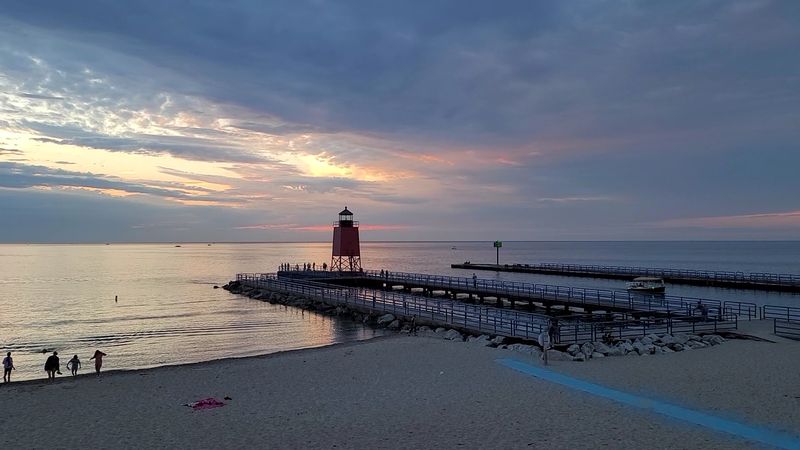
Michigan Beach Park gives you a classic Charlevoix shoreline with enough variation to keep beachcombers interested. It is easy to underestimate a more popular beach, but that can be a mistake when shifting waves keep reworking the surface.
In July, a stretch that looked ordinary the afternoon before can reveal fresh pebble lines by morning, especially where water has cut a clean edge through the sand.
The smart move here is to look beyond the obvious open sections. Search the spots where coarse material gathers, where the beach slope steepens slightly, and where the retreating water leaves a narrow band of polished stones.
Those areas concentrate visual detail, and detail is what helps a good find stand out. Slow down whenever the beach changes texture underfoot.
Because this shoreline mixes broad views with smaller pockets of stone, it works well for quick scanning followed by short, focused pauses. Check for Petoskey stone patterns after rinsing candidates in the lake, and do not ignore pieces that seem too dull at first glance.
Thin film from sand or dried minerals can hide the pattern until the surface is wet. Beach glass and nicely rounded pebbles also show up where finer material has been swept aside.
One advantage of Michigan Beach Park is readability. You can usually tell which zones were recently stirred and which ones have sat still.
If the beach is busy, let other people march straight ahead while you work the margins, especially at the edge of stone bands and near subtle drop offs in the swash zone. July can be generous here, but only if you keep your attention on the details the lake just arranged for you.
5. Wilderness State Park, Carp Lake
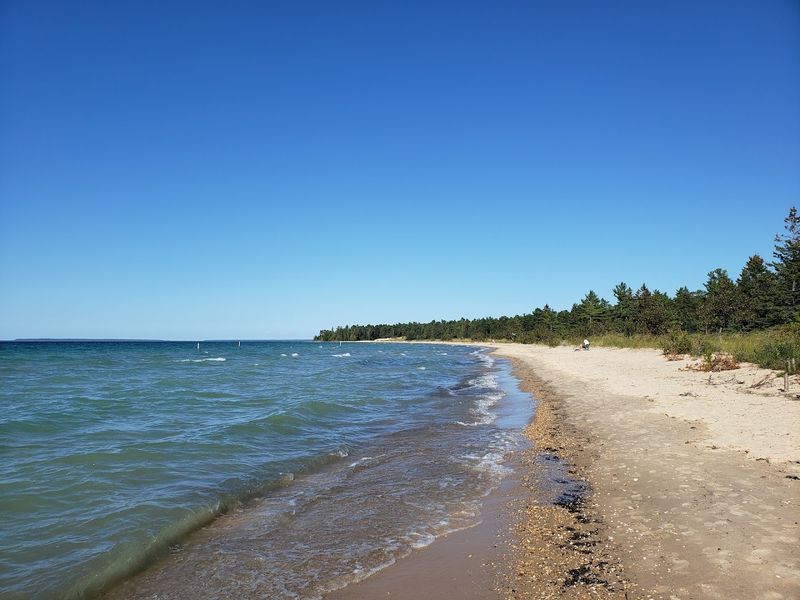
Wilderness State Park is built for beachcombers who prefer room to roam and fewer visual distractions. The shoreline can stretch out in a way that makes every promising patch feel like a separate little mission.
In July, that matters, because long natural beaches often reveal different materials from one section to the next depending on wind, waves, and how the shoreline curves.
Instead of locking into one spot too soon, start by reading the whole scene. Look for darker gravel seams, drift deposits, and points where the beach narrows or bends.
Those small geographic shifts can alter how material settles, and that is exactly the kind of natural sorting that makes a search more interesting. The surface may seem random at first, but a pattern usually appears once you slow down.
This is a strong choice if you enjoy collecting a range of finds rather than chasing only one famous stone. Rounded pebbles, banded rocks, possible beach glass, and pieces with unusual texture can all turn up depending on recent conditions.
Keep the sun angle in mind, because low side light can reveal pattern and translucence that overhead glare washes out. A quick rinse in the shallows is often the difference between a maybe and a yes.
Wilderness rewards steady attention more than flashy luck. Walk one pass with your head up to identify active areas, then return with your eyes down and your pace cut in half.
If the water is clear, inspect the first few feet offshore as well, where the lake sometimes displays good stones before it releases them. On a July morning with light wave action, this beach can turn a simple walk into a very productive search.
6. Christmas Cove Beach, Northport
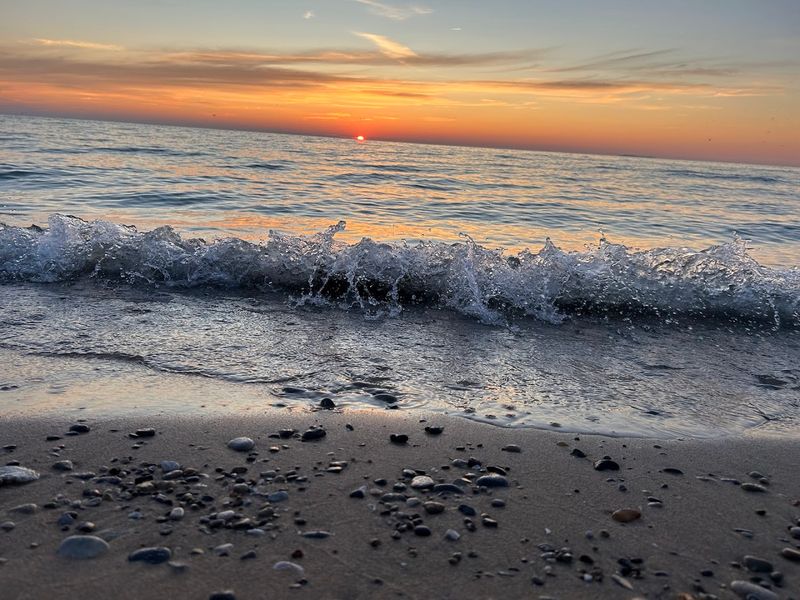
Christmas Cove Beach has a name that sounds festive, but the real appeal for beachcombers is practical. This shoreline can offer clear water, readable wave lines, and enough stone mixed into the beach to make searching feel purposeful.
In July, when light is strong and the lake often shows off every contour near shore, that clarity can help you spot promising shapes before you even bend down.
Approach this beach like you are editing the scene rather than trying to inspect everything. Ignore the broad empty stretches and aim for places where pebbles cluster in thin bands or where a ripple in the shoreline changes how waves break.
Those tiny shifts can collect heavier material and expose better polished stones. If the beach looks uniform at first, walk farther before committing to a search lane.
Christmas Cove works especially well for beachcombers who like visual contrast. Wet stones can flash their pattern against pale sand, and candidates that seem plain in dry light often improve after a quick dip.
Look for rounded coral textures, unusual symmetry, and color combinations that do not match the surrounding rock mix. Keep checking the edge where each wave loses energy, because fresh pieces can appear there without much warning.
Midday glare can be a nuisance, so angle matters. Sometimes standing with the sun over one shoulder turns a confusing patch into an easy read.
Water shoes help if you want to inspect the nearshore zone, and a small container prevents delicate finds from getting banged around. Christmas Cove is not a beach to rush through.
It is a beach to work in short, observant stretches, letting the shoreline reveal its better material one subtle clue at a time.
7. Magnus Park – City Beach, Petoskey
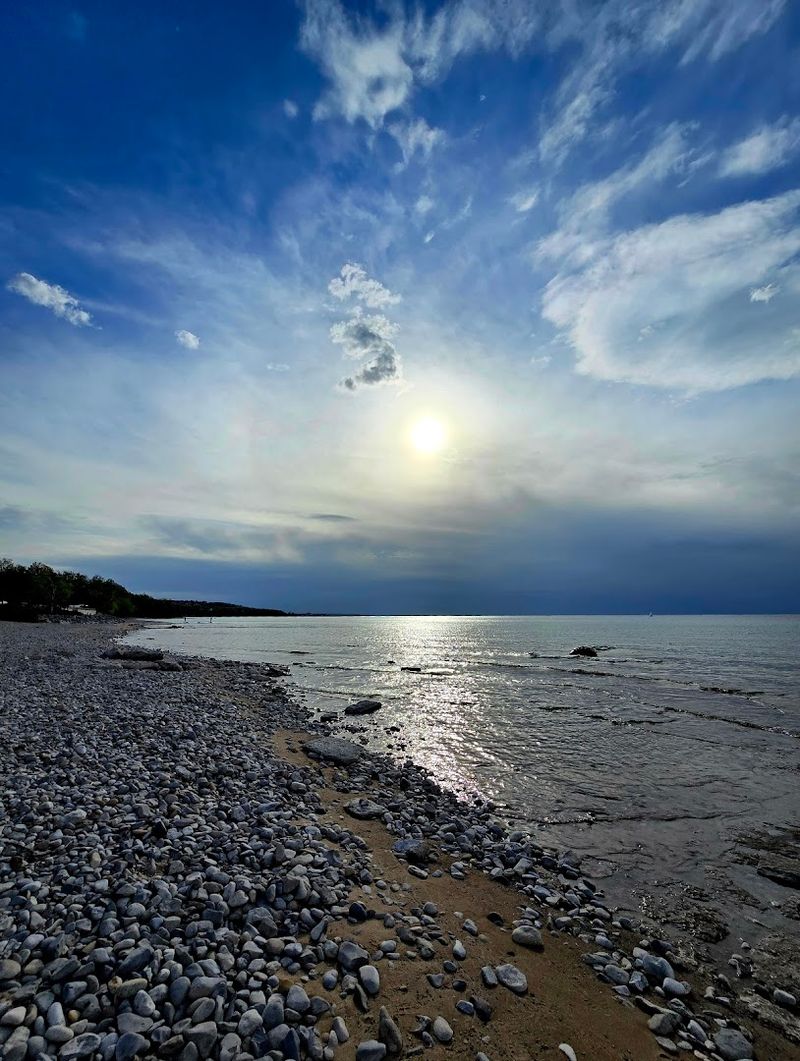
Magnus Park – City Beach puts you close to one of Michigan’s most talked about stone hunting areas, and that alone makes every pass along the waterline more interesting. The key is not assuming the beach will hand over an easy win.
In July, success usually comes from watching how the lake has arranged the stones that day, then working the most active sections with discipline.
Start where the wash zone is thin and transparent enough to reveal pattern under moving water. Petoskey stones can be easier to identify when wet, and the same goes for other textured pieces that dry out into plain gray.
Scan for circular coral cells, but also keep your eyes open for smooth green, cream, and banded stones that stand out from the general mix. A few careful minutes in a good patch beat a long hurried walk.
Because this is an accessible city beach, timing matters. Early morning gives you better light, fewer footprints through the best gravel lines, and calmer conditions for spotting detail.
After wave action, check where small stones pile beside larger ones, since those friction points can trap interesting material. If the beach seems picked over, move farther than casual searchers usually go and inspect the edges of the obvious zones.
Magnus Park rewards method more than myth. Rinse possible finds often, hold them at different angles, and do not trust the first glance on a dry surface.
Even a short visit can produce satisfying results when you focus on pattern, polish, and recently worked shoreline. Bring a modest bag, keep only what regulations allow, and leave yourself time for one last pass at the exact spot where the water keeps repeating the same little deposit line.
8. Point Betsie Lighthouse Beach, Frankfort
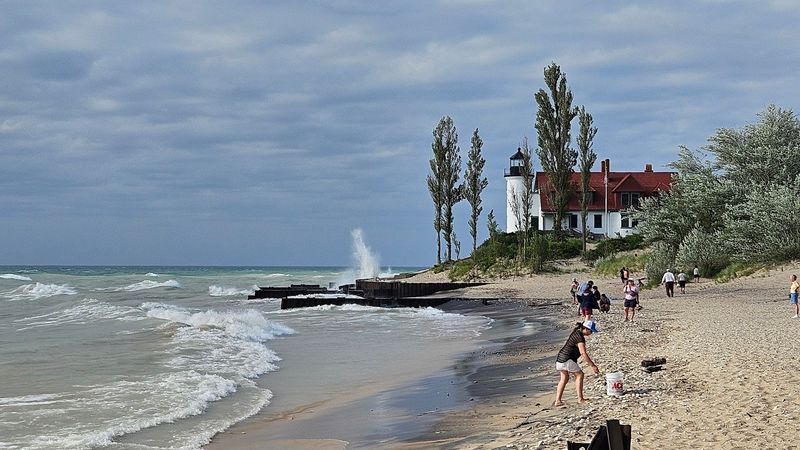
Point Betsie Lighthouse Beach brings a dramatic backdrop, but beachcombers should keep their attention on the ground. Scenic beaches can distract people into strolling instead of searching, which leaves more opportunity for anyone willing to study the wave sorted sections.
In July, this stretch can show interesting mixes of stone and sand, especially after a period of stronger wind or shifting surf.
The shoreline here benefits from a simple strategy: identify texture changes first, then inspect the best transitions closely. Coarser pebbles, darker wet bands, and spots where the beach angle changes can all signal recent movement.
Those are the places where polished pieces, patterned stones, and occasional glassy finds are easier to separate visually from the general spread. A lighthouse view is nice, but your best clue is usually a subtle line in the beach itself.
Point Betsie also rewards checking the same area from more than one direction. Sun glare can hide detail on the first pass and reveal it on the second when your angle changes.
Keep an eye on the swash zone where a thin sheet of water passes over stones and briefly turns the whole beach into a display case. That is often when texture pops and likely candidates announce themselves.
Because this beach can attract visitors, working the margins pays off. Search near the less obvious pebble pockets, along the edges of drift material, and where larger rocks interrupt the smooth runs.
A lightweight container and good water shoes make the process easier without slowing you down. Point Betsie is one of those places where the setting gets the headlines, but the real fun starts when you stop admiring the lighthouse for a minute and start reading the shoreline like a map.
9. Antrim Creek Nature Area & Rex Beach, Ellsworth
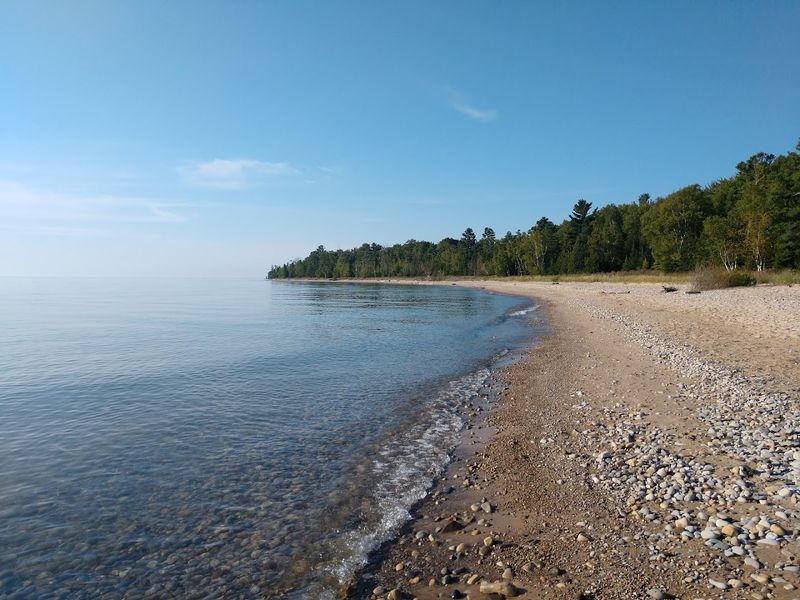
Antrim Creek Nature Area and Rex Beach offer the kind of shoreline where beachcombing blends nicely with a scenic walk, but the search still comes first. This area can present mixed stone bands, clear water, and enough variation to keep your eyes engaged from one stretch to the next.
In July, that combination is ideal for anyone hoping the lake has recently shuffled fresh material into view.
The smartest way to work this beach is in layers. Take a quick visual sweep from higher up, note where darker gravel gathers, then drop to the waterline and inspect the most promising sections slowly.
Places where small stones meet larger rounded rocks are especially useful, because changes in size often mean the water sorted and stalled material there. That natural pause can produce better looking pieces than the smoother, more uniform zones.
This is a strong spot for people who enjoy the full range of finds, not only famous pattern stones. Look for unusual banding, soft color shifts, frosted glass, and pebbles with striking symmetry or polish.
Wetting a candidate is essential, since the nicest details often disappear when the surface dries. Clear shallows can also help you preview what the beach may release after the next round of wave action.
At Antrim Creek and Rex Beach, patience should guide the pace. A short productive section can outperform a long distracted walk, especially if you revisit it from a different angle later.
Morning light often makes patterns easier to read, while cloud cover can reduce harsh glare. Bring a small bag, respect the site, and give extra attention to subtle deposit lines that less focused visitors step over.
Those quiet little bands are often where the shoreline saves its best surprises.
10. Petoskey State Park, Petoskey
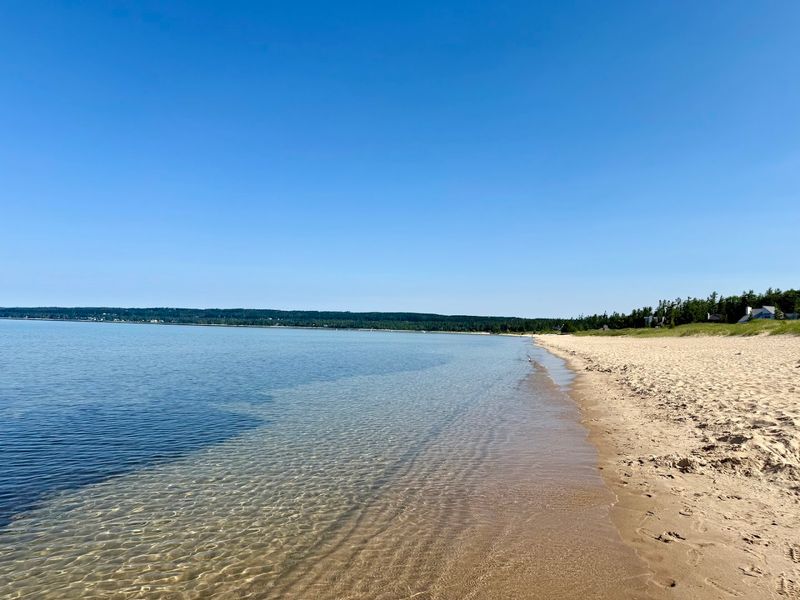
Petoskey State Park enters any July beachcombing conversation with obvious momentum, and for good reason. The name alone raises expectations, but the better approach is to treat it like a shoreline puzzle instead of a guaranteed haul.
Water movement, light, and recent traffic all matter, so your best advantage is reading conditions rather than chasing hype.
Begin with the shallow water if visibility is decent. Petoskey stones and other patterned rocks often reveal themselves much more clearly when wet, and the gentle wash can help separate outlines from the surrounding gravel.
Scan for coral cell patterns, rounded edges, and stones that seem to hold a more complex surface than the plain gray pieces around them. Then compare those finds to the higher strand line where yesterday’s waves may have left additional material.
Because this park is well known, timing is a major part of the strategy. Early hours give you softer light and fewer competing eyes on the same promising patches.
Focus on pebble concentrations rather than broad clean sand, and pay attention when the beach texture changes abruptly underfoot. Those shifts often mark places where the lake sorted materials by size and weight, which can improve your odds of spotting a standout piece.
Petoskey State Park rewards repeated close looks. A stone that seems unremarkable on the first pass can turn into a keeper after a rinse and a second inspection.
Keep your pace steady, crouch when the gravel looks freshly turned, and make one final sweep near the water before heading out. In July, this beach can still deliver a satisfying find, especially for searchers who stay patient, skip the rush, and let the shoreline show where it did its most recent work.
11. Mt. McSauba Recreation Area / North Point Nature Preserve, Charlevoix
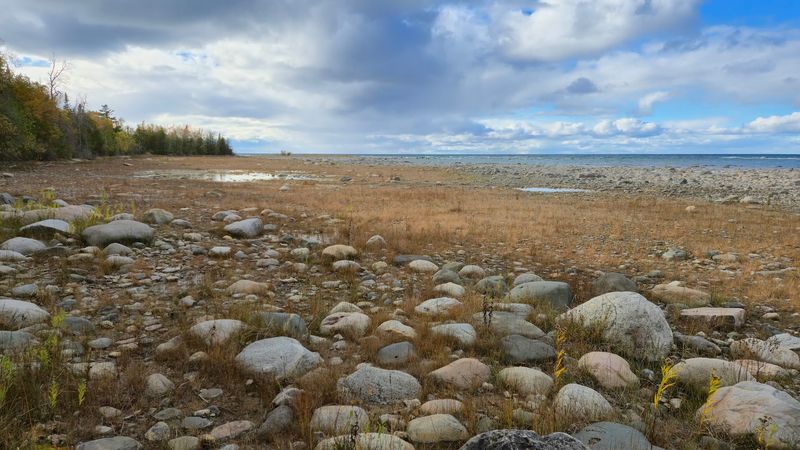
Mt. McSauba Recreation Area and nearby North Point Nature Preserve give beachcombers a nice combination of accessible shoreline and more natural looking sections.
That mix is useful in July, because different parts of the coast can hold different deposits on the same day. One stretch may read sandy and quiet, while another only a short distance away shows fresh pebbles and recently stirred material.
Work this area with a comparison mindset. Instead of settling in immediately, sample several short sections and note where the beach is most textured.
Narrow stone bands, subtle curves in the shoreline, and spots where wave energy appears to have concentrated are worth your time. If one area seems flat and unproductive, move.
The advantage here is variety, so use it.
North Point style stretches often reward careful scanning around coarser material. Larger rocks can act like tiny barriers that slow movement and collect smaller pieces nearby.
That is where interesting pattern stones, smooth colored pebbles, and occasional glass may stand out. Keep a few favorites wet while inspecting them, because surface detail often improves dramatically with water.
Good light helps, but overcast skies can also sharpen contrast by cutting glare.
This is the kind of shoreline where a flexible plan wins. Spend a few minutes at the water’s edge, then check slightly higher lines where earlier waves may have dropped heavier material.
If the nearshore water is clear, look a few feet out for shapes the lake has not yet rolled landward. Mt.
McSauba and North Point are best approached as a two part opportunity: accessible searching when you want quick results, and more observant wandering when you want to squeeze extra potential out of the day.
12. Bayfront Park / Petoskey Breakwall, Petoskey
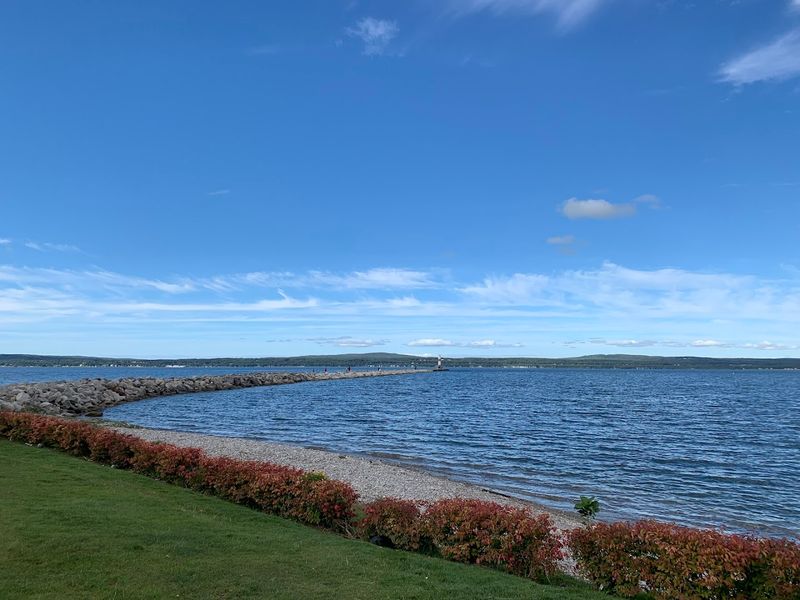
Bayfront Park and the Petoskey Breakwall offer a slightly different beachcombing rhythm than the more open natural beaches nearby. Here, structure matters.
Breakwalls and harbor influenced shorelines can interrupt wave energy, redirect material, and create pockets where interesting stones collect instead of rolling endlessly down the coast. In July, that means you should pay close attention to where the shoreline changes character around built features.
Start by looking for accumulation zones rather than pretty views. Pebble clusters along edges, calmer corners near rock structures, and freshly washed strips beside the main walking areas are all worth checking.
The best finds often come from those in between places people pass without really noticing. If the water is clear, inspect the shallows near the breakwall carefully, because submerged stones may show pattern before they wash onto dry shore.
This area is especially good for short, focused searching sessions. You can cover manageable distances, revisit productive patches, and compare multiple textures without committing to a long hike.
Petoskey stones are always part of the conversation in this region, but a smart searcher keeps an open eye for banded rocks, smooth colorful pebbles, and bits of beach glass as well. Variety often makes the outing better, even when the marquee find stays elusive.
Because Bayfront Park is easy to access, an early or off peak visit can improve your odds. Scan once at standing height to locate the best lines, then go back and work those spots slowly.
Rinse candidates often, watch how the light changes on wet surfaces, and do not ignore the seams where larger rocks meet finer gravel. Around the breakwall, small shifts in wave action can create surprisingly productive little pockets, and those pockets are exactly where July beachcombers should spend their time.
Share this story