No matter how many times you explore Michigan, it always finds a way to catch you off guard. One minute you’re standing on the edge of a towering sand dune, the next you’re chasing a waterfall, wandering through a world-class museum, or looking up at a sky packed with stars.
This state is full of places that feel almost too good to be real, and plenty of them are still overlooked. Whether Michigan is home or just your next getaway, these unforgettable spots deserve a place on your list.
1. Kayak to Turnip Rock near Port Austin
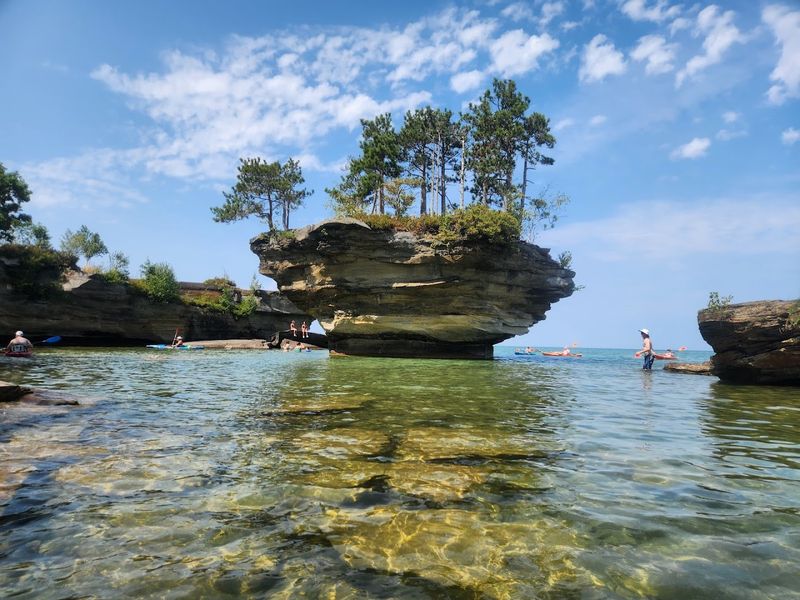
Out on the tip of Michigan’s Thumb, there’s a rock formation so strange-looking it almost seems fake. Turnip Rock earns its name from its narrow base and wide, tree-covered top, jutting right out of Lake Huron like something from a fantasy movie.
You can only reach it by water, which makes the whole trip feel like a mini expedition.
Most people launch kayaks or paddleboards from Port Austin, which sits about three miles from the rock. The paddle is manageable for most skill levels, though you’ll want to check the weather and wave conditions before heading out.
Lake Huron can shift from glassy calm to choppy pretty fast, so a little planning goes a long way.
The route hugs rocky shoreline and passes through stretches of clear, shallow water where you can see the bottom. Bring a waterproof camera because the photo opportunities are genuinely incredible.
Paddling around the base of Turnip Rock and looking up at the twisted trees hanging over the water is one of those moments that sticks with you.
Kayak rentals are available in the Port Austin area if you don’t have your own gear. Guided tours are also a solid option if you want someone familiar with the route to lead the way.
Going earlier in the morning tends to mean calmer water and fewer people sharing the experience with you.
Pack snacks, sunscreen, and plenty of water because you’ll likely spend a few hours out on the lake. There are no facilities at the rock itself, so come prepared.
This is exactly the kind of off-the-beaten-path gem that makes Michigan such a rewarding state to explore slowly and without a rigid schedule.
2. Visit the Motown Museum in Detroit
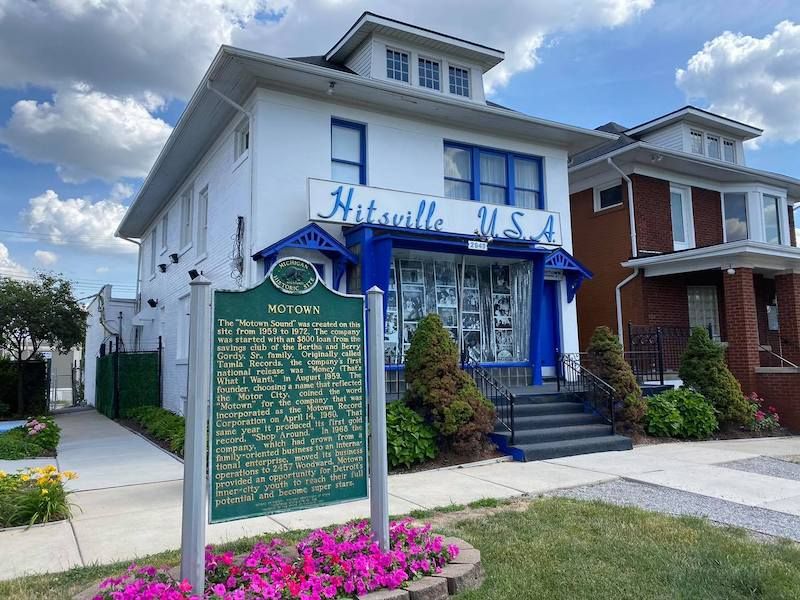
There are buildings that hold history, and then there’s Hitsville U.S.A. — the modest white house on West Grand Boulevard where Berry Gordy launched Motown Records in 1959. Standing in front of it, you might not expect that walls this ordinary once contained the sound that changed American music forever.
But step inside and the feeling hits you immediately.
The Motown Museum gives visitors an up-close look at the original recording Studio A, where artists like Stevie Wonder, Diana Ross, Marvin Gaye, and The Temptations recorded some of the most beloved songs in history. The studio has been preserved almost exactly as it was during the label’s golden era.
Seeing the actual microphones, instruments, and mixing boards is a genuinely emotional experience.
Guided tours walk you through the story of how a Detroit neighborhood became the birthplace of a global sound. The guides bring real passion to every detail, from the cramped recording booth to the upstairs apartment where Gordy once lived.
You’ll leave knowing far more about Motown’s legacy than you walked in with.
The museum expanded its space in recent years, adding new galleries and interactive exhibits that make the history even more accessible. There’s a gift shop worth browsing if you want to bring home something meaningful.
This is one of those cultural landmarks that earns every bit of its reputation.
Plan to spend at least an hour or two here, especially if music history is your thing. The museum is located in Detroit’s New Center neighborhood, and it pairs well with exploring other parts of the city.
Motown didn’t just come from Detroit — it helped define what Detroit means to the world, and this museum makes that connection crystal clear.
3. Hike to Lake of the Clouds in the Porcupine Mountains
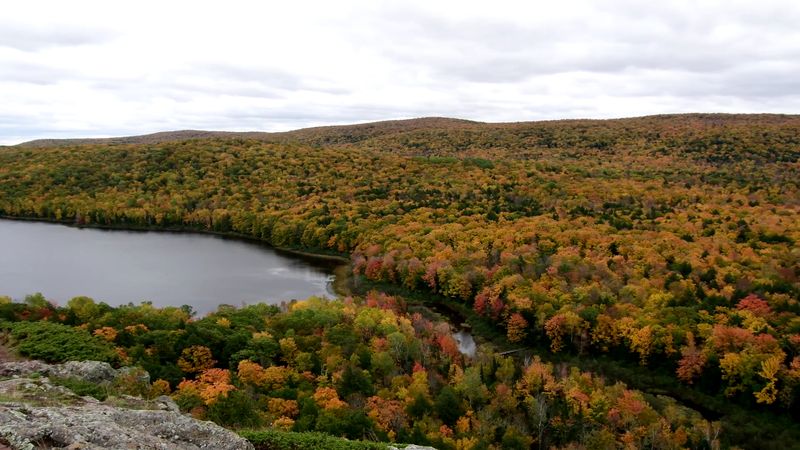
Few views in the Midwest hit as hard as the one waiting at the Lake of the Clouds overlook in the Porcupine Mountains. You hike through old-growth forest, the trees closing in around you, and then suddenly the land opens up and there it is — a long, still lake cradled by forested ridges stretching as far as you can see.
It genuinely takes a second to process.
The Porcupine Mountains Wilderness State Park, affectionately called the Porkies by locals, is one of the largest state parks in the country. It protects some of the last remaining old-growth forests in the Midwest, meaning the trees around you are ancient and the whole ecosystem feels untouched.
The Lake of the Clouds is the park’s crown jewel, and it earns that title every single season.
Fall is especially spectacular here. The hardwoods turn every shade of red, orange, and gold, and the reflection on the water looks almost painted.
Summer brings lush greenery and good hiking conditions, while winter transforms the whole park into a quiet, snow-covered wilderness that cross-country skiers absolutely love.
The overlook itself is accessible via a short walk from the parking area, making it doable even for people who aren’t serious hikers. If you want more, the park has miles of trails ranging from easy to challenging.
Backpacking trips through the interior let you experience the park’s full depth and solitude.
Camping options inside the park range from rustic cabins to backcountry sites. Booking in advance is smart, especially for fall weekends when the overlook draws serious crowds.
Getting there early in the morning rewards you with mist hanging over the water and almost no one else around — a rare kind of quiet that feels genuinely restorative.
4. Walk through Holland’s Tulip Time Festival
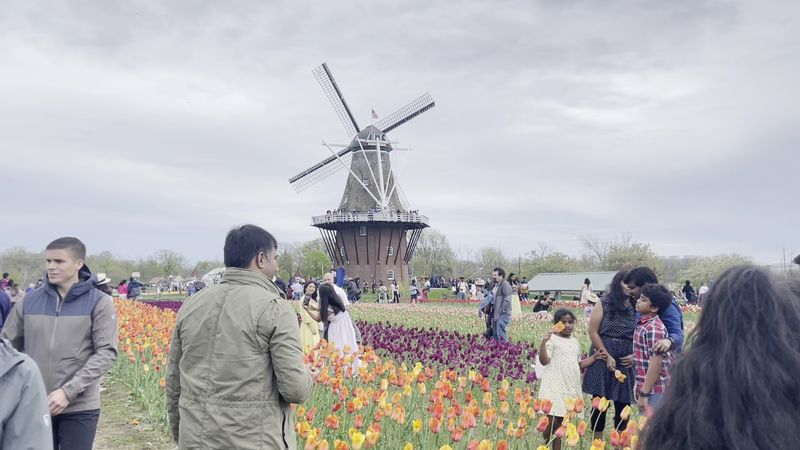
Every May, the city of Holland transforms into something that looks borrowed from the Netherlands. Millions of tulips bloom across the city in synchronized waves of color, and the streets fill with Dutch dancers in traditional costumes, wooden clogs clacking on brick pavement.
The Tulip Time Festival has been running for nearly a century, and it still manages to feel both festive and genuinely charming.
Holland, Michigan was settled largely by Dutch immigrants in the mid-1800s, and the city has held onto that heritage with real pride. The festival celebrates that history through parades, street scrubbing ceremonies, live music, and of course, endless fields of flowers.
Windmill Island Gardens is one of the best spots to take in the tulips alongside a working 18th-century Dutch windmill that was actually imported from the Netherlands.
The main parades draw large crowds, so arriving early and staking out a good viewing spot pays off. The festival typically spans about a week and a half, giving visitors flexibility to choose a less crowded day if the weekend masses aren’t your thing.
Weekday mornings are noticeably quieter and the tulips are just as beautiful.
Beyond the flowers, Holland itself is a lovely small city worth spending time in. The downtown area has good restaurants, independent shops, and a walkable energy that makes lingering feel natural.
Lake Macatawa and the nearby Lake Michigan shoreline add even more reason to extend your stay beyond the festival itself.
Wear comfortable shoes because you’ll be walking a lot. The tulip displays are spread across multiple locations throughout the city, so a little map planning helps you see the best of it.
This is one of those events that sounds touristy but genuinely delivers something warm and memorable once you’re standing in the middle of it.
5. Cross the Mackinac Bridge
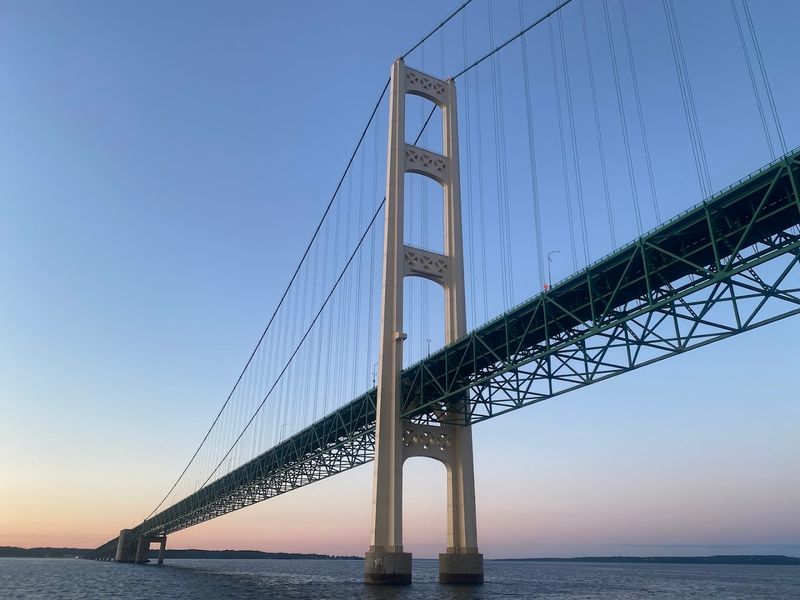
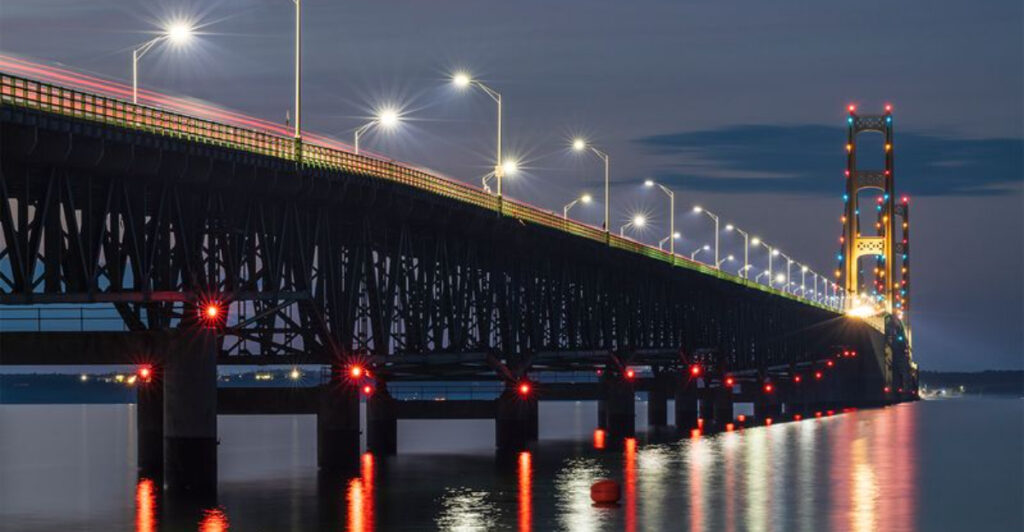
Crossing the Mackinac Bridge for the first time is a Michigan rite of passage that never really gets old. The bridge stretches nearly five miles across the Straits of Mackinac, connecting the Upper and Lower Peninsulas in a way that feels almost cinematic when you’re driving it.
On a clear day, the water below shimmers in every shade of blue, and you can see for miles in both directions.
Known affectionately as the Mighty Mac, this suspension bridge is one of the longest in the Western Hemisphere and has stood since 1957. Engineers designed it to handle the brutal winter conditions of the Straits, including ice, wind, and powerful currents.
Despite its age, the bridge is meticulously maintained and carries millions of vehicles every year without missing a beat.
The drive across takes just a few minutes, but most people slow down instinctively. There’s something about being suspended over open water with the Upper Peninsula spread out ahead of you that demands a moment of appreciation.
On windy days, the bridge can sway slightly — which is completely normal and by design, though it does make first-timers grip the wheel a little tighter.
Every Labor Day, the bridge closes to vehicles for the annual Mackinac Bridge Walk, and thousands of people cross it on foot. It’s one of Michigan’s most beloved traditions and gives you a completely different perspective on the structure’s scale.
The Governor typically leads the walk, which adds a fun, community-celebration feel to the whole event.
Whether you’re heading north for a weekend trip or making the UP your destination, crossing the Mackinac Bridge marks a clear shift in the landscape and pace of Michigan. The moment the trees thicken and the traffic thins on the other side, you’ll understand exactly why people fall hard for the Upper Peninsula.
6. Search for Petoskey stones along Little Traverse Bay
Michigan’s official state stone has a story written right on its surface. The Petoskey stone is actually the fossilized remains of a coral reef that lived in a shallow sea covering Michigan roughly 350 million years ago.
Each stone is covered in a honeycomb pattern of small hexagons, each one the outline of an ancient coral polyp. When the stone is wet, the pattern pops with surprising clarity and detail.
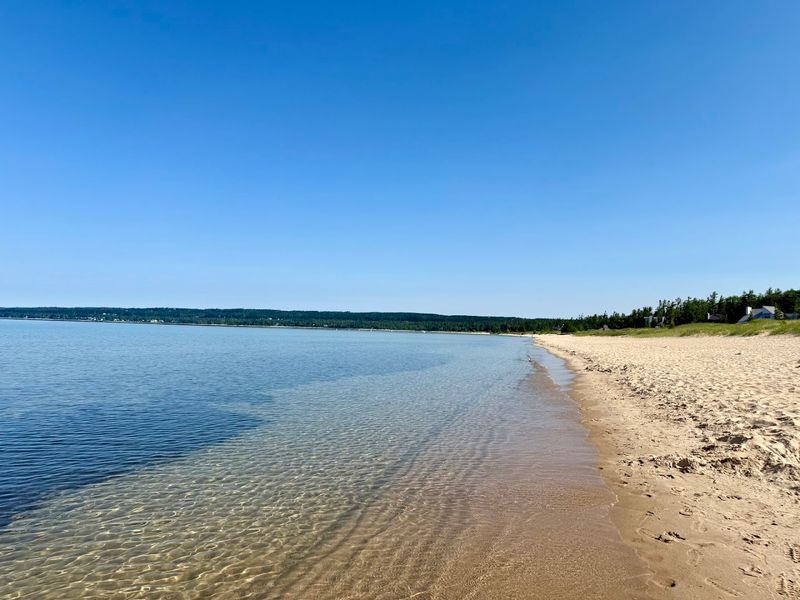
Little Traverse Bay near the town of Petoskey is one of the best-known spots to hunt for these fossils, and the search itself becomes part of the fun. You’ll find yourself bent over the shoreline, scanning gravel and wet rocks, developing an eye for the telltale pattern within an hour.
Kids especially love it — there’s a treasure-hunt quality to the whole thing that keeps everyone moving along the water’s edge.
The stones come in all sizes, from tiny pebbles to palm-sized specimens that make excellent keepsakes. Wet the stone with lake water to see the pattern more clearly before deciding if it’s worth pocketing.
Most hunters carry a small spray bottle to check rocks without having to wade in repeatedly.
Petoskey State Park offers great beach access and is a popular launching point for stone hunters. Magnus Park along the bay is another solid spot, especially because it’s easy to reach and has parking nearby.
Local shops in Petoskey sell polished Petoskey stones if you want a perfect specimen without the hunt, but finding your own carries a different kind of satisfaction.
The town of Petoskey itself is charming and worth exploring after your beach time. The Gaslight District downtown has good food, coffee shops, and galleries.
Combining a morning of fossil hunting with an afternoon in town makes for a well-rounded and genuinely enjoyable day on Little Traverse Bay.
7. Cruise the Soo Locks in Sault Ste. Marie
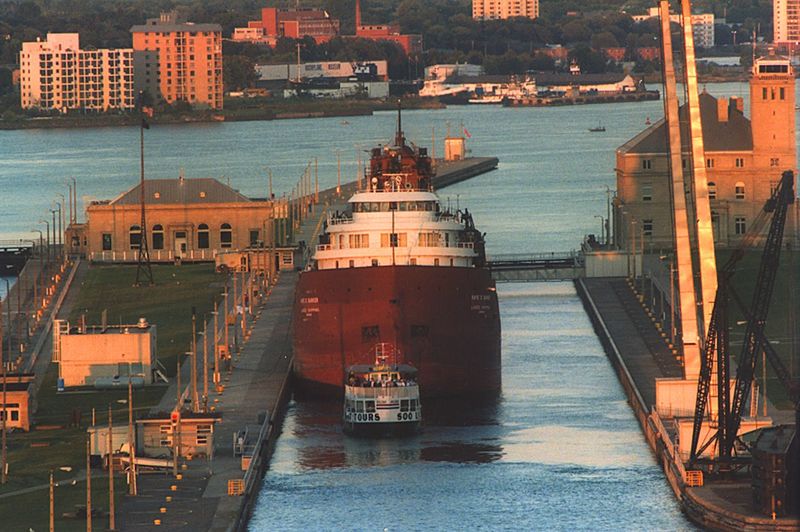
Watching a 1,000-foot freighter get raised or lowered like it’s riding a giant elevator is one of those things that sounds mundane until you’re actually standing there watching it happen. The Soo Locks in Sault Ste.
Marie are an engineering achievement that connects Lake Superior to the lower Great Lakes, overcoming a 21-foot difference in water levels between the two. Ships from all over the world pass through here carrying iron ore, grain, coal, and other cargo.
The locks have been operating in some form since 1855, and the current structures handle an enormous volume of shipping traffic every season. A free viewing area lets you watch the process up close, and the scale of the ships compared to the surrounding landscape is genuinely staggering.
Standing at the railing as a massive vessel slides silently past just a few feet away is a perspective-shifting experience.
Lock tours by boat are available and take you right into the lock chambers as they fill and drain. Being inside the lock while the water rises around you gives you a firsthand feel for how the system actually works.
It’s one of those activities that appeals equally to engineering nerds and casual tourists who just want something different to do.
The Soo Locks Boat Tours depart from downtown Sault Ste. Marie and offer narrated trips that add historical and technical context to what you’re seeing.
The tour also passes under the International Bridge connecting Michigan to Ontario, Canada, which adds a fun international dimension to the trip. Reservations are recommended during peak summer months.
Sault Ste. Marie itself has a laid-back energy and a genuinely interesting history as one of the oldest European settlements in the Midwest.
Plan to spend a full day here between the locks, the waterfront, and the downtown area. It’s the kind of place that rewards curiosity and rewards people willing to slow down and take it all in.
8. Climb the Sleeping Bear Dunes
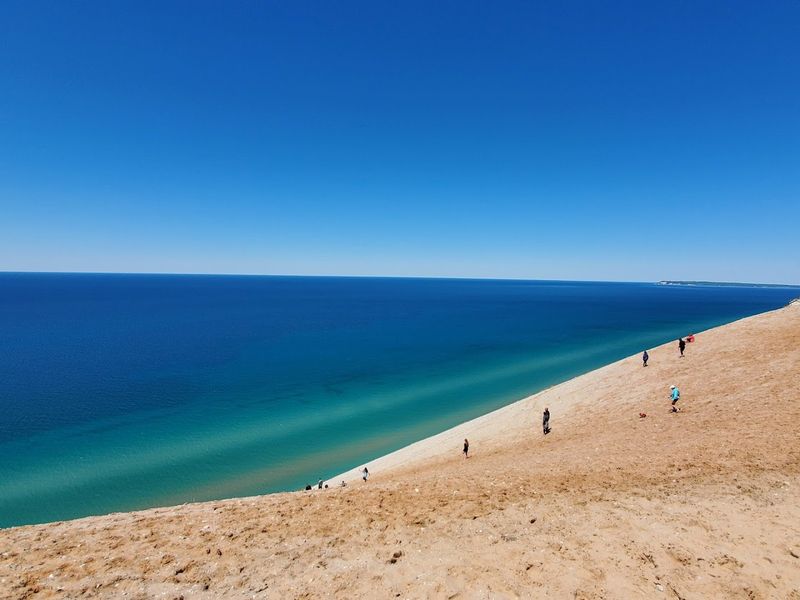
Nothing quite prepares you for the moment you crest a Sleeping Bear dune and find Lake Michigan spread out hundreds of feet below you, so blue it looks almost unreal. The Sleeping Bear Dunes National Lakeshore on the northwest coast of Michigan’s Lower Peninsula contains some of the tallest freshwater sand dunes in the world, and climbing them is equal parts brutal and unforgettable.
The Dune Climb on M-109 is the most popular entry point, offering a steep but accessible path up the face of a massive dune. Getting to the top takes real effort — sand shifts under your feet and the incline is steeper than it looks from the bottom.
But the view from the top, with the forest stretching behind you and the lake glittering ahead, makes every burning step worth it.
The descent back down is its own kind of fun. Most people end up half-running, half-sliding, laughing as they go.
Kids are especially fearless about it, while adults tend to be a little more cautious about their knees. Either way, it’s hard not to grin the entire way down.
The national lakeshore extends well beyond the Dune Climb, with miles of hiking trails, two inland lakes, historic farmsteads, and stunning overlooks. The Pierce Stocking Scenic Drive offers access to some of the most dramatic views without requiring a major hike.
Glen Haven and Glen Arbor nearby are worth a stop for food and local shopping.
Bring plenty of water because the dunes get hot and the climb is more demanding than most people expect. Wearing shoes is strongly recommended — the sand can reach scorching temperatures on summer afternoons.
Visiting in late spring or early fall means cooler temperatures and noticeably smaller crowds, which makes the whole experience feel more personal and less like a theme park.
9. See Charlevoix’s Mushroom Houses
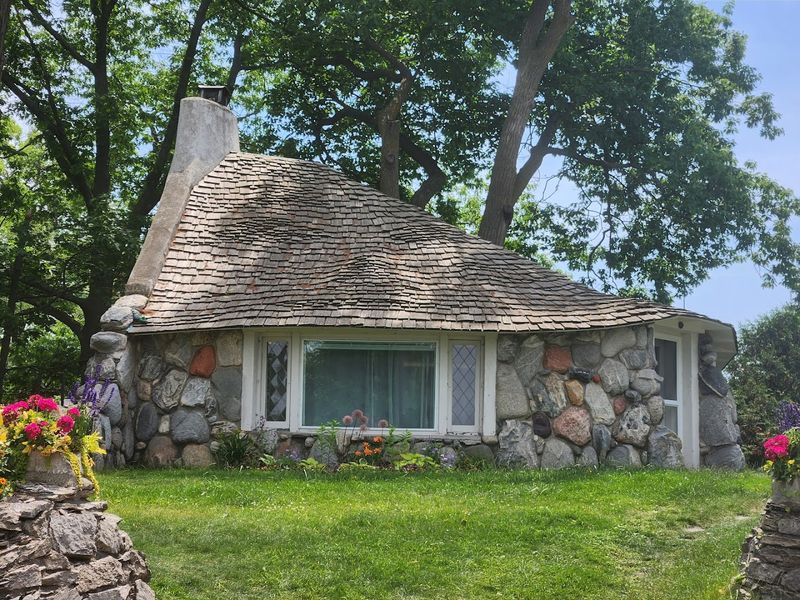
Wandering through a residential neighborhood and suddenly spotting a house that looks like it belongs in a fairy tale is not something you expect in a small Michigan town. But Charlevoix has exactly that — a collection of quirky stone cottages with rounded roofs, organic curves, and an almost cartoonish charm that makes them impossible to walk past without stopping.
Locals call them the Mushroom Houses, and once you see one, you’ll understand why immediately.
Earl Young, a self-taught architect and real estate developer, built these homes throughout Charlevoix from the 1920s into the 1950s. He had no formal architecture training, which might explain why his designs broke every conventional rule so confidently.
Young used locally sourced boulders and fieldstones, favoring irregular shapes and natural materials that made each home feel like it grew out of the ground rather than being built on top of it.
There are roughly 30 of these structures scattered around Charlevoix, with a concentration near the downtown waterfront area. A self-guided walking tour is the best way to find them, and several local resources provide maps to help you hit the main ones.
The homes are all privately owned, so the tour stays on public sidewalks — but the exteriors are absolutely worth the walk.
Charlevoix itself is a genuinely lovely town sitting between Lake Michigan and Lake Charlevoix. The marina, the drawbridge, and the downtown shopping district all add reasons to linger beyond the Mushroom House tour.
Summer brings a festive energy, but the shoulder seasons offer a quieter, more relaxed version of the town that locals tend to prefer.
Pairing a Mushroom House walk with lunch at one of Charlevoix’s waterfront restaurants makes for a near-perfect afternoon. This is one of those Michigan experiences that sounds quirky on paper but delivers something genuinely delightful in person — the kind of story you’ll be telling for years afterward.
10. Float over Kitch-iti-kipi
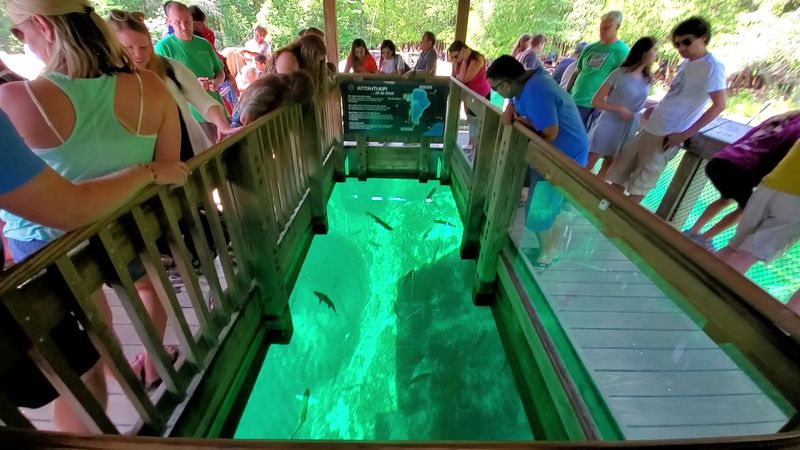
Michigan’s largest natural freshwater spring sits quietly in the Upper Peninsula, and it is one of the most visually stunning things you will ever look down into. Kitch-iti-kipi — sometimes called The Big Spring — is a 200-foot-wide, 40-foot-deep pool of impossibly clear water that pumps out about 10,000 gallons per minute from cracks in the limestone bedrock.
The water stays at a constant 45 degrees year-round, which means it never freezes, even in the depths of a Michigan winter.
Located in Palms Book State Park near Manistique in the Upper Peninsula, the spring is accessed via a self-operated observation raft that visitors pull hand-over-hand across the water using a cable. The raft has a viewing window in the floor, and looking down through it reveals a surreal underwater landscape of swaying aquatic plants, fallen logs, and trout gliding through the turquoise depths.
The color of the water is genuinely hard to describe — somewhere between teal and emerald, lit from within by the sunlight filtering through.
The spring gets its name from an Ojibwe phrase that roughly translates to “mirror of heaven,” which feels completely accurate the moment you see it. The area around the spring is peaceful and forested, with a short walking path that adds a nice natural buffer between the parking area and the water.
It’s the kind of place that inspires quiet rather than noise.
The park itself is small and focused almost entirely on the spring, so visits tend to be a couple of hours rather than a full-day affair. That said, it pairs beautifully with nearby stops like Tahquamenon Falls or the Pictured Rocks area for a fuller Upper Peninsula itinerary.
Weekday visits are noticeably quieter than summer weekends.
There is no swimming allowed in Kitch-iti-kipi, which helps preserve the clarity and ecological balance of the spring. Admission to the state park requires a Recreation Passport.
Bring a jacket regardless of the season because the air around the spring is noticeably cooler than the surrounding forest.
11. Eat Detroit-style pizza and a Coney dog in the Motor City

Detroit has one of the most distinctive food cultures of any American city, and it starts with the pizza. Detroit-style pizza is baked in rectangular steel pans — originally repurposed automotive parts trays — which creates a thick, airy dough with an almost fried, caramelized cheese crust along the edges.
The sauce goes on top of the cheese rather than underneath, and the result is something that shares almost nothing with its New York or Chicago cousins except the name pizza.
Buddy’s Pizza is widely credited as the originator of the style, and their original location on Conant Street is a pilgrimage site for serious pizza fans. Several other Detroit institutions have built their own devoted followings over the decades, and the debate over who does it best is a genuinely passionate local conversation.
Trying a couple of different spots and forming your own opinion is the only reasonable approach.
The Coney dog is the other half of Detroit’s essential food identity. It’s a natural-casing hot dog topped with a beanless meat chili sauce, yellow mustard, and diced white onions, served on a steamed bun.
The style is associated most closely with two legendary downtown diners — American Coney Island and Lafayette Coney Island — which sit literally next door to each other and have been rival institutions for generations.
Both Coney spots are open nearly around the clock, and ordering at the counter while watching the kitchen move at full speed is part of the experience. The portions are generous and the prices are modest, which makes it easy to try both and compare.
Having a Coney dog at 2 a.m. after a night out in Detroit is practically a local tradition.
Combining Detroit-style pizza and a Coney dog into one food-focused afternoon or evening gives you a real taste of what makes this city’s culinary identity so specific and so beloved. These aren’t just meals — they’re cultural artifacts with decades of history behind every bite.
12. Stargaze at a Michigan dark sky preserve
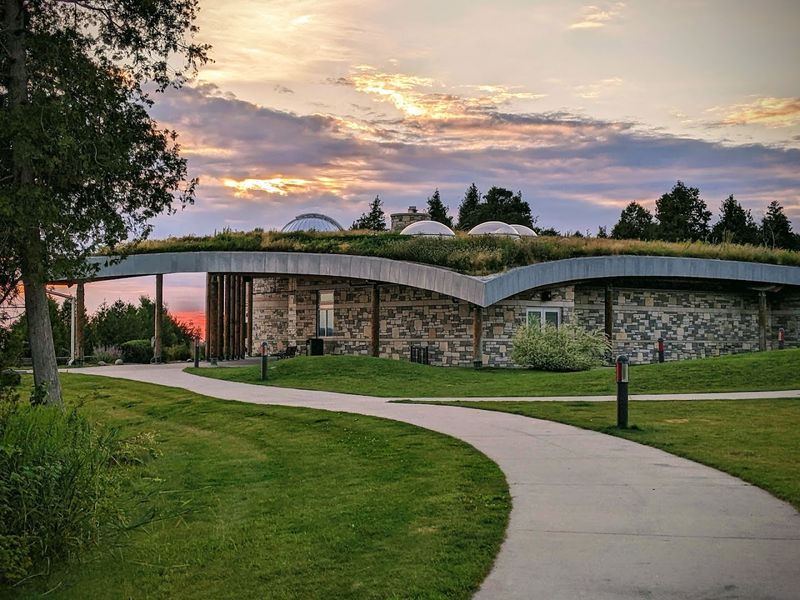
Michigan has more designated dark sky preserves than any other state in the country, which is a fact that surprises most people — including many Michiganders. These are areas where light pollution is actively managed and protected, creating conditions for stargazing that most Americans have never experienced.
Standing under a truly dark sky for the first time, watching the Milky Way stretch overhead like a river of light, is the kind of thing that permanently recalibrates your sense of scale.
The Headlands International Dark Sky Park near Petoskey is one of the most accessible and well-developed preserves in the state. It sits along the northern Lake Michigan shoreline and offers dedicated observation areas, educational programs, and an annual dark sky festival that draws astronomers and casual stargazers alike.
The combination of dark skies and a lakeside horizon makes the views here especially dramatic.
Lake Hudson Recreation Area in southeast Michigan serves as a dark sky preserve for Lower Peninsula residents who don’t want to drive all the way north. Wilderness State Park near Carp Lake and Negwegon State Park on Lake Huron are additional options with strong reputations among the stargazing community.
Each preserve has its own character and access points worth researching before you go.
The best viewing conditions come on moonless nights with clear skies, ideally away from any residual glow on the horizon. Giving your eyes at least 20 to 30 minutes to fully adjust to the darkness makes an enormous difference in what you can see.
Bringing a red-light flashlight instead of a white one helps preserve night vision while navigating.
Apps like SkySafari or Stellarium can help you identify constellations, planets, and satellites in real time. Dressing in layers is essential because temperatures drop significantly after sunset even in summer.
This is one of those low-cost, high-reward Michigan experiences that asks almost nothing of you except showing up and looking up.
13. Kayak beneath Pictured Rocks National Lakeshore
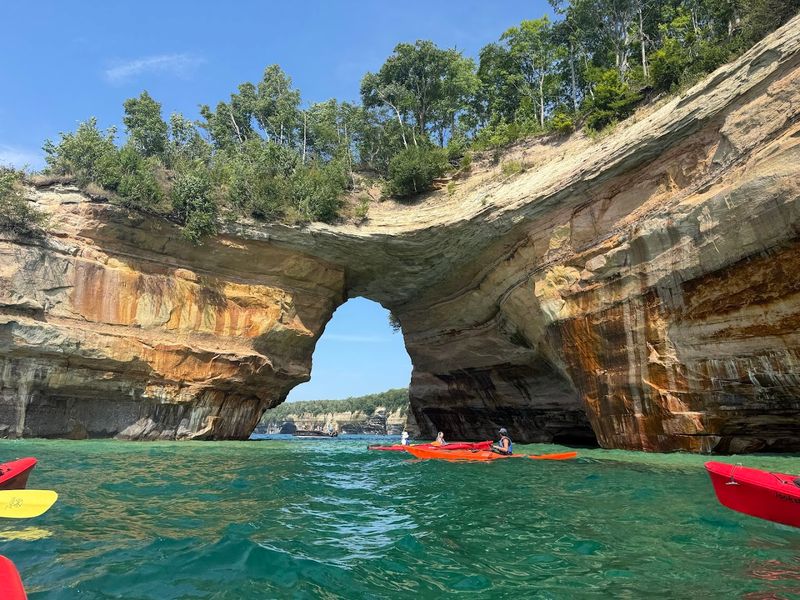
Paddling along the base of the Pictured Rocks cliffs is one of those experiences that belongs on a completely different tier from ordinary outdoor activities. The sandstone bluffs rise up to 200 feet above Lake Superior, streaked with mineral deposits in shades of copper, iron oxide, manganese, and limonite — creating natural murals of red, orange, pink, green, and black that shift in color depending on the light and the moisture on the rock face.
The national lakeshore stretches roughly 42 miles along the Lake Superior shoreline near Munising in the Upper Peninsula. Kayaking gives you access to the sea caves, arches, and narrow passages that boats can’t reach, putting you close enough to the cliffs to touch the stone and hear the water echo inside the caves.
The scale of the formations is hard to grasp until you’re sitting in a kayak at the base of a 150-foot wall of colored rock.
Guided kayak tours from Munising are available for various skill levels, and going with a guide on your first visit is genuinely recommended. Lake Superior is cold, unpredictable, and unforgiving, and local guides know how to read the conditions and navigate safely.
The tours typically cover the most dramatic sections of the lakeshore within a half-day window.
Au Train and Munising are the main gateway towns for Pictured Rocks access. Both have outfitters, lodging, and good food options that make planning a multi-day visit straightforward.
The area is also popular for hiking the North Country Trail, which runs along the top of the cliffs and provides a completely different but equally stunning perspective on the formations.
Visiting in late August or early September tends to offer calmer lake conditions and slightly smaller crowds than peak July. Water temperatures stay cold year-round, so a wetsuit is a smart choice even on warm days.
This stretch of Michigan coastline is genuinely world-class, and paddling it is the best way to understand why.
14. Spend a car-free day on Mackinac Island
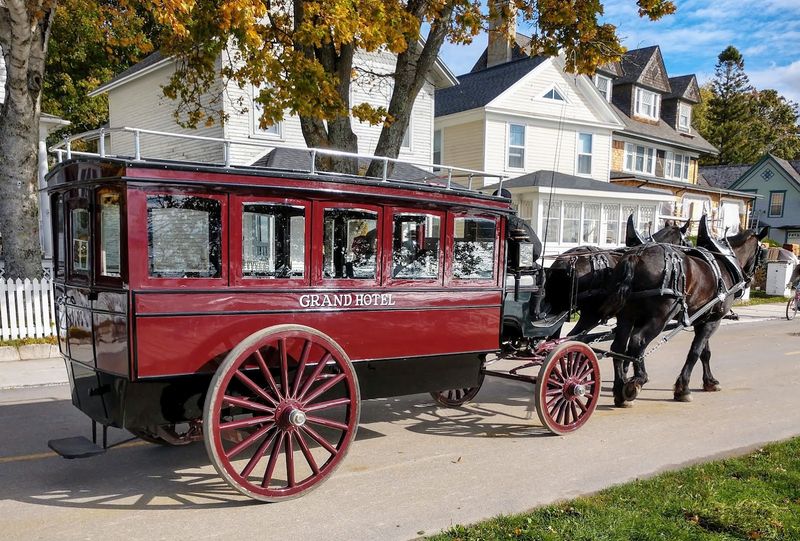
Mackinac Island has been motor vehicle-free since 1898, which means the moment you step off the ferry, you’ve officially left the 21st century behind. The transportation options are horse-drawn carriage, bicycle, or your own two feet — and that simple shift in pace changes everything about how you experience a place.
The clip-clop of hooves replacing engine noise is disorienting at first, and then deeply pleasant.
The island sits in the Straits of Mackinac between Michigan’s two peninsulas and is accessible by ferry from Mackinaw City or St. Ignace. The Victorian-era downtown is packed with fudge shops — Mackinac Island fudge is its own beloved institution — along with restaurants, boutiques, and historic buildings that have been maintained with genuine care.
The smell of fudge being made in open copper kettles drifts down the main street almost constantly.
Fort Mackinac, perched on the bluff above the downtown, offers a well-done living history experience with costumed interpreters, cannon firings, and exhibits covering the island’s role in the fur trade and the War of 1812. The view of the Straits from the fort walls alone is worth the admission price.
The Grand Hotel, with its famously long porch, is another landmark worth seeing even if you’re not staying there.
Renting a bike and circling the island on M-185 — the only state highway in the country without motor vehicles — takes a couple of leisurely hours and delivers continuous views of the water. The interior of the island has additional trails through state park land that most visitors never bother with, which means you can find real solitude just a short ride from the busy waterfront.
Day-trippers are plentiful in summer, so arriving on an early ferry and staying until the last one gives you the best spread of the experience. Spending a night on the island shifts the atmosphere entirely — once the day crowds leave, Mackinac settles into something quieter and more genuinely charming than the bustling midday version most people see.
15. Explore The Henry Ford Museum and Greenfield Village in Dearborn

The Henry Ford in Dearborn is not a car museum — though it has plenty of extraordinary cars. It’s more accurately described as a museum of American innovation, ingenuity, and everyday life, covering everything from the chair Abraham Lincoln was sitting in when he was assassinated to the bus Rosa Parks refused to give up her seat on.
The breadth of what’s preserved here is genuinely staggering, and a single visit barely scratches the surface.
The indoor museum alone could consume a full day without effort. Highlights include the original Wright Brothers’ bicycle shop, Thomas Edison’s Menlo Park laboratory (relocated here from New Jersey), and an extensive collection of vehicles ranging from early automobiles to presidential limousines to a genuine moon buggy.
The curation is thoughtful and the storytelling is strong, which elevates the experience well beyond a simple collection of old stuff.
Greenfield Village, the outdoor living history component, covers 80 acres and contains more than 80 historic structures that Henry Ford personally had moved to Dearborn from their original locations around the country. You can visit the actual farmhouse where Ford grew up, ride in a Model T, watch craftspeople demonstrate historical trades, and take a steam train around the village perimeter.
The scale of what Ford assembled here is almost hard to believe.
Both the museum and the village require separate admission, but combination tickets are available and worth it if you have a full day to spend. The village is seasonal, typically open from spring through early winter.
The museum is open year-round and makes an excellent destination on days when Michigan weather pushes you indoors.
Families with curious kids tend to do especially well here because there’s enough hands-on and interactive content to keep everyone engaged. But solo travelers and couples find just as much to linger over.
Few places in Michigan — or anywhere in the country, honestly — pack this much authentic American history into one address.
16. Wade near the Lower Falls at Tahquamenon Falls State Park
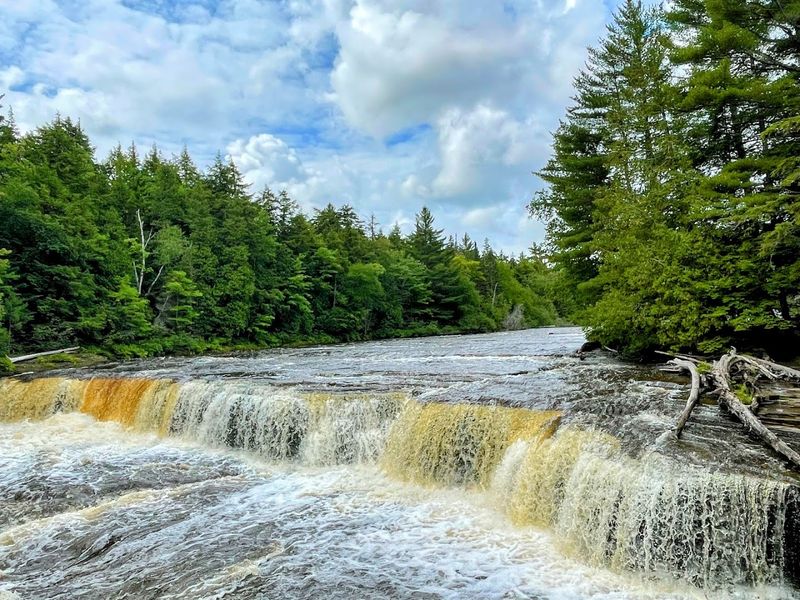
The Upper Falls at Tahquamenon get most of the attention — and fairly so, since they’re among the largest waterfalls east of the Mississippi — but the Lower Falls are where the real fun happens. Located a few miles downstream, the Lower Falls are a series of smaller cascades spread around a small island, and the best way to experience them is to rent a rowboat and paddle right up to the base of the falls.
The amber-colored water, stained naturally by tannins from the cedar swamps upstream, gives everything an otherworldly golden tint.
Wading near the Lower Falls is a highlight for families and anyone willing to get their feet wet. The water is shallow enough in many spots to stand comfortably, and the sensation of standing in tannin-colored water with a waterfall a few feet away is genuinely memorable.
The rowboat rental concession near the lower falls is a beloved part of the experience, and the boats are simple enough for anyone to handle.
The park sits in the eastern Upper Peninsula near Paradise, Michigan, and the drive in through old-growth forest sets the tone perfectly. The trail connecting the upper and lower falls is about four miles round trip and passes through some genuinely beautiful boreal forest.
Doing the full hike and then rewarding yourself with a rowboat session at the lower falls is an excellent way to structure the day.
The park has a restaurant right at the upper falls that serves pasties and cold beer, which feels deeply right after a long hike. Nearby Paradise is a small town with lodging and a few local spots worth checking out.
The whole area has a remote, undiscovered quality that makes it feel more authentic than many more heavily promoted UP destinations.
Fall is particularly spectacular at Tahquamenon, when the surrounding hardwoods turn and the amber water contrasts sharply with the orange and red foliage. Visiting midweek in September or October gets you the full autumn experience with a fraction of the summer crowd.
This is one of those places that earns repeat visits across different seasons.
17. Escape to Isle Royale National Park
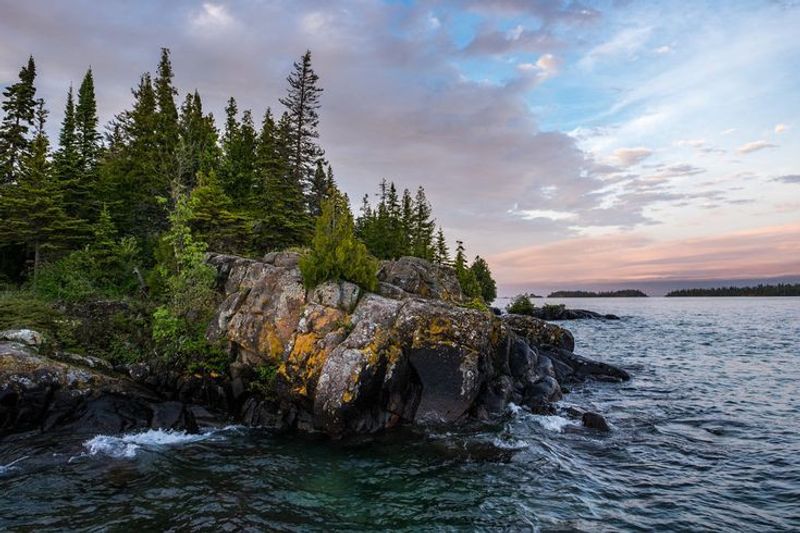
Isle Royale is the least visited national park in the contiguous United States, and that is entirely the point. Getting there requires a ferry ride of several hours across Lake Superior — or a seaplane flight if you want to arrive in style — and there are no roads, no cell service, and no way to drive out if you change your mind.
That combination of remoteness and commitment filters out casual visitors and leaves the island to people who genuinely want to be there.
The island stretches about 45 miles long and 9 miles wide, offering over 160 miles of hiking trails through boreal forest, along rocky ridgelines, and past inland lakes teeming with fish. The wildlife here is extraordinary: moose are commonly spotted, wolves roam the island in small packs, and loons call across the lakes at dusk in a way that sounds like the wilderness is speaking directly to you.
The ecological relationship between the wolf and moose populations on Isle Royale has been studied by scientists for decades and is one of the longest-running predator-prey studies in the world.
Backpacking the island over several days is the most immersive way to experience it. Campgrounds are spaced along the trails at reasonable intervals, and the solitude between them is absolute.
Paddling the island’s interior lakes by canoe or kayak is another option that reveals parts of Isle Royale that even most backpackers never see.
The park is only accessible from mid-April through October, when ferry service from Houghton, Copper Harbor, and Grand Portage, Minnesota operates. Planning well in advance is essential because ferry schedules fill up and the island has limited capacity by design.
Rock Harbor Lodge offers the only indoor accommodation on the island for those who prefer a roof over their heads.
Isle Royale resets something in people. The absence of noise, connectivity, and the usual rhythms of daily life creates a kind of clarity that’s hard to find anywhere else.
It asks more of you than most destinations, and it gives back more in return.
18. Take Brockway Mountain Drive near Copper Harbor
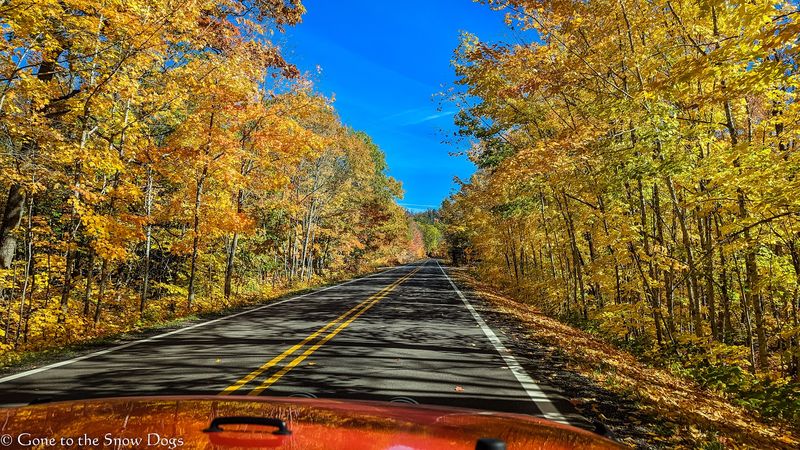
At 735 feet above Lake Superior, the summit of Brockway Mountain offers one of the most commanding views in the entire Midwest. The drive to get there follows a narrow ridgeline road that climbs steadily through the Keweenaw Peninsula’s copper country, delivering increasingly dramatic views with every turn.
By the time you reach the top, the lake spreads out below you in every shade of blue and gray, and the scale of the Upper Peninsula’s wilderness becomes undeniably clear.
Brockway Mountain Drive is the highest paved road between the Rockies and the Alleghenies, a fact that gives the experience some additional bragging rights. The road is about nine miles long and connects Copper Harbor to Eagle River, passing through terrain that feels genuinely remote despite being accessible by car.
The Keweenaw Peninsula itself is one of Michigan’s most historically rich regions, shaped by a 19th-century copper mining boom that once made it one of the wealthiest places in the country.
Spring migration is a particularly special time to make this drive. Brockway Mountain sits along a major raptor migration corridor, and birders gather at the summit each spring to watch hawks, eagles, falcons, and other raptors riding thermals on their way north.
The Brockway Mountain Hawk Watch is a beloved local tradition and draws serious birders from across the region.
Fall colors are equally spectacular, with the hardwoods and conifers of the Keweenaw turning in early October and the lake providing a dramatic blue backdrop to all that warm foliage. The summit has a small gift shop and lookout area that make it easy to linger and take it all in.
Sunset from the top is worth timing your drive around if you can manage it.
Copper Harbor at the base of the mountain is a charming small town with good food, a marina, and access to Fort Wilkins Historic State Park. Combining the mountain drive with a few hours in town makes for a full and satisfying day at the very tip of the Keweenaw.
This corner of Michigan feels like a well-kept secret that deserves far more attention than it gets.
19. Experience ArtPrize in Grand Rapids
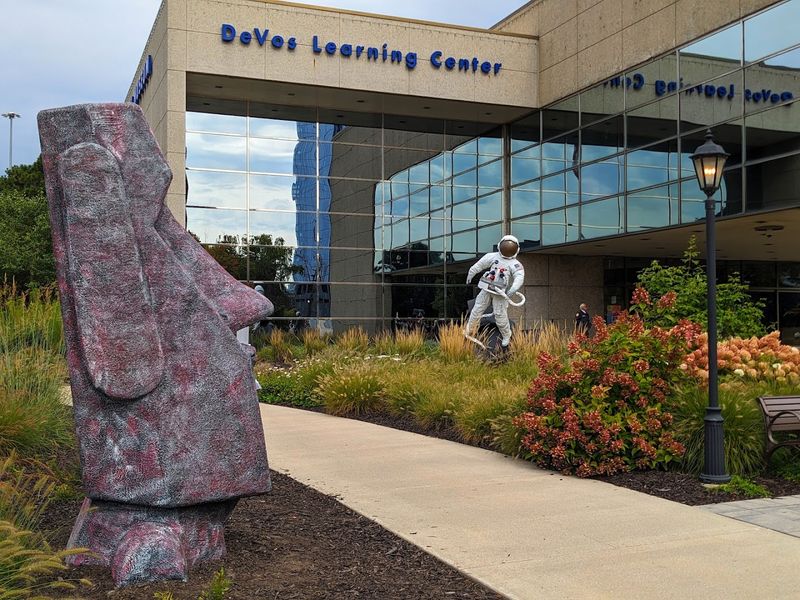
Grand Rapids turns into one of the largest open-air art exhibitions in the world every fall, and the scale of it takes most first-timers completely off guard. ArtPrize spreads hundreds of art installations across the entire downtown area — in galleries, parks, parking lots, bridges, restaurants, hotel lobbies, and along the Grand River — and the public gets to vote on their favorites.
The combination of professional curation and democratic judging creates an energy that’s genuinely unlike any other art event anywhere.
The event typically runs for about three weeks in September and October, drawing hundreds of thousands of visitors from across the country and beyond. Artists from around the world submit work, and the installations range from intimate sculptures you can walk around to massive murals covering entire building facades.
Walking the full exhibition could take days, and most serious attendees spread their visits across multiple trips to see it all properly.
What makes ArtPrize especially interesting is the friction between the public vote and the juried awards. The people’s choice winners and the expert jury selections often diverge dramatically, which generates real conversation about what art is for and who gets to decide what’s good.
That conversation plays out in coffee shops, restaurants, and on social media throughout the event, giving the whole city a charged intellectual energy that’s hard to find elsewhere.
Grand Rapids itself is a city worth knowing beyond the festival. The Frederik Meijer Gardens and Sculpture Park is a world-class attraction that’s open year-round.
The craft beer scene is exceptional, with multiple breweries within easy walking distance of the downtown core. The city has invested heavily in its arts and culture infrastructure, and it shows.
Staying downtown during ArtPrize means you can walk to most of the major installations and catch the evening events and programming that add another layer to the experience. Booking accommodations well in advance is essential because the city fills up fast.
This is one of those events that justifies an entire trip to Michigan on its own.
20. Hunt for shipwrecks at Thunder Bay National Marine Sanctuary near Alpena
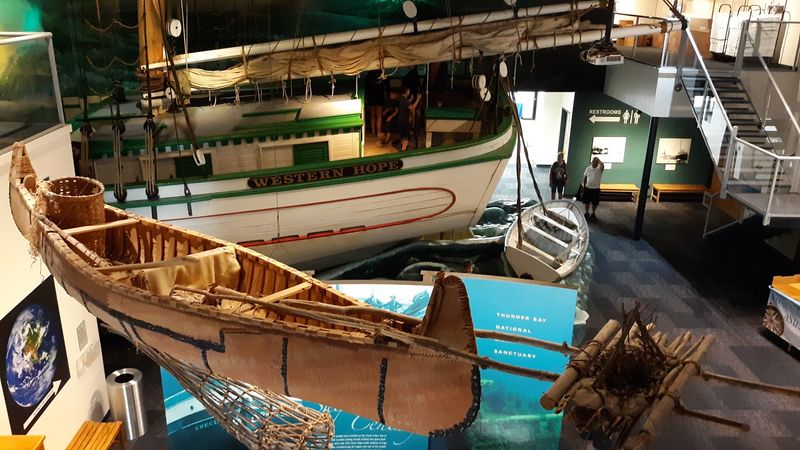
Lake Huron’s Thunder Bay holds one of the most remarkable collections of shipwrecks in the world, and the fact that most people have never heard of it makes it all the more worth seeking out. The sanctuary protects over 100 known shipwrecks in the cold, clear waters off Alpena, preserved by the lake’s freshwater chemistry in extraordinary condition.
Some of these ships have been sitting on the bottom for over 150 years, and they look almost untouched.
The Great Lakes Lore Maritime Museum and the NOAA Thunder Bay National Marine Sanctuary Visitor Center in Alpena are the best starting points for understanding what lies beneath the water. The visitor center has excellent exhibits, underwater cameras providing live feeds from several wrecks, and staff who can help you plan a dive or snorkel trip based on your skill level.
The educational component here is genuinely impressive and makes the experience meaningful even before you get in the water.
Scuba divers consider Thunder Bay one of the top freshwater dive sites in North America. The clarity of the water and the relatively shallow depth of many wrecks make them accessible to intermediate divers, while deeper sites challenge advanced divers with more technical requirements.
Local dive charters operate out of Alpena and provide guided access to specific wrecks with historical context included in the trip.
Non-divers are far from left out. Glass-bottom boat tours offer surface-level views of several wrecks, and the visibility in Lake Huron can be remarkable enough to see considerable detail from above.
Kayaking the bay’s surface while knowing what lies below creates a different kind of appreciation for the depth of history in these waters.
Alpena itself is a small city with a strong maritime identity and a welcoming, unpretentious character. The town has good lodging, solid local restaurants, and easy access to the sanctuary’s various access points.
This corner of Michigan’s Lake Huron coastline is quietly spectacular, and the shipwrecks beneath the surface make it one of the most genuinely unique destinations in the entire Great Lakes region.
Share this story