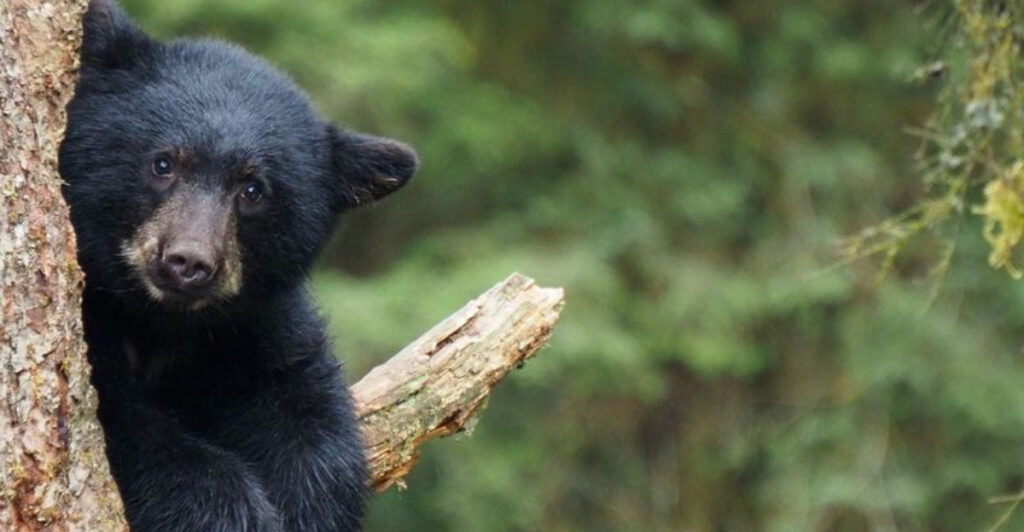
A dark shape moves between two stands of hemlock, pauses beside an overturned log, and disappears before your brain finishes asking whether you really saw it. At Wawayanda State Park, that brief silhouette could very well be a black bear.
This sprawling preserve in the New Jersey Highlands protects more than 34,000 acres of forest, wetlands, lakes, and rocky ridges across Sussex and Passaic counties. Bears have plenty of room to forage here, while visitors have more than 60 miles of marked trails to explore.
A sighting is never promised, and keeping a respectful distance matters far more than getting the perfect photo. Still, few places in the state make you feel this close to genuinely wild New Jersey.
Between Wawayanda Lake, the Appalachian Trail, cedar swamps, and the rugged climb toward Terrace Pond, the park delivers a full day of adventure even if its largest residents remain hidden among the trees.
Wawayanda State Park Is a Wild Corner of Northern New Jersey
About 50 miles northwest of New York City, the office towers, traffic lights, and crowded highways give way to something that feels almost shockingly remote.
Wawayanda State Park stretches through the Highlands near Hewitt, Vernon, and West Milford, preserving a broad patchwork of mountains, hardwood forest, bogs, streams, and secluded ponds.
Its main entrance at 885 Warwick Turnpike places visitors near Wawayanda Lake, but that developed recreation area represents only a small slice of the park. Beyond it, long trails and old woods roads reach sections where another hiker may be the most surprising thing you see for an hour.
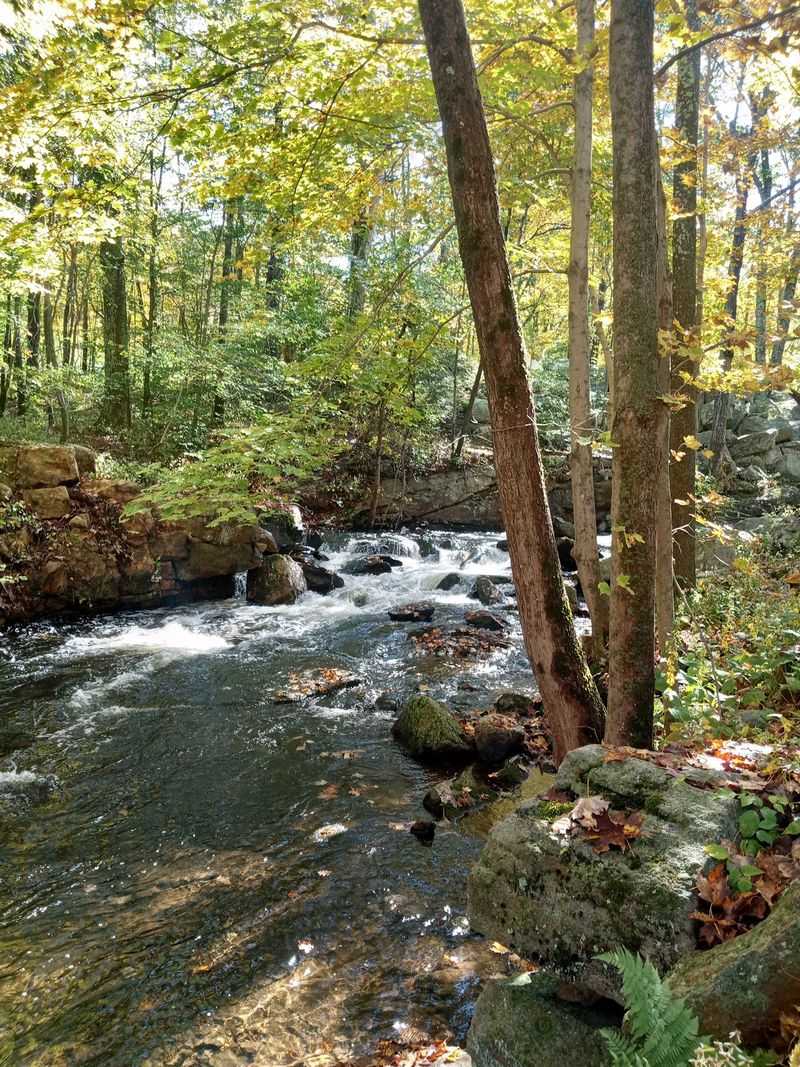
The landscape is part of Wawayanda’s appeal. Instead of neat lawns and paved loops, much of the park has exposed roots, glacial boulders, wet crossings, and ridgelines shaped by ancient rock.
Hemlocks shade cool ravines, while oak and maple forests cover the higher ground. In places, wooden boardwalks carry hikers across wetlands that would otherwise stop them in their tracks.
Those abrupt changes make a walk here feel much bigger than its mileage suggests. Wawayanda became a state park in 1960, though people worked this land long before anyone arrived with hiking boots.
Remnants of old farms, roads, mills, and mining activity still appear around the property. Nature has reclaimed much of that history so thoroughly that a stone wall or abandoned foundation can materialize unexpectedly beneath the leaves.
The park’s scale is what separates it from a typical afternoon green space. Visitors can swim, paddle, fish, mountain bike, ride horses, cross-country ski, or follow the Appalachian Trail through the backcountry.
Black bears are part of that same landscape, not an attraction confined to one viewing area. They move wherever food, cover, and the season take them, which gives every visit an unmistakable edge of wildness.
Thousands of Forested Acres Create Prime Black Bear Habitat
Black bears need more than a few clumps of trees and a quiet picnic area. They thrive where large forests offer thick cover, denning locations, water, and a changing supply of natural foods.
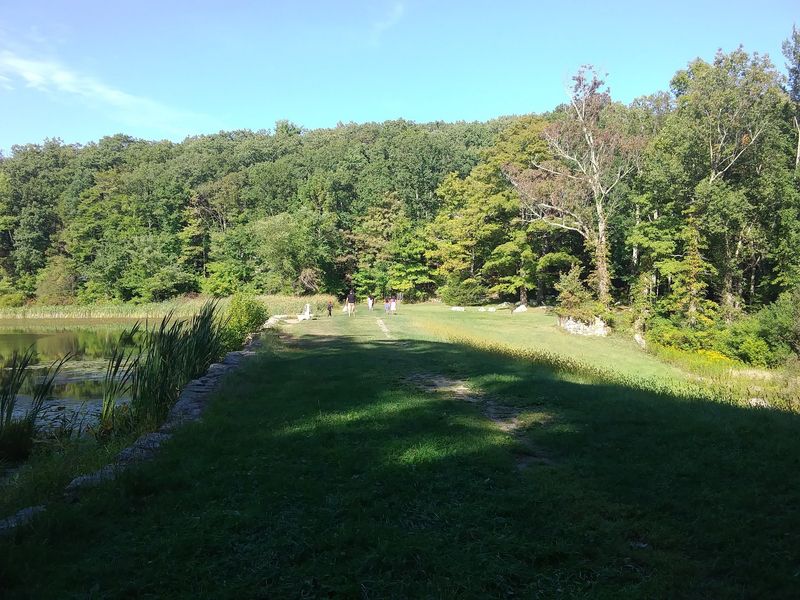
Wawayanda provides all of that across more than 34,000 protected acres, with additional undeveloped land nearby creating room for animals to travel well beyond the park’s boundaries. Spring brings tender vegetation, grasses, roots, insects, and other food sources that help bears recover after winter.
As the year progresses, the menu expands to include berries, cherries, acorns, nuts, and whatever else the forest produces. Wetlands and stream corridors supply water while also serving as natural travel routes.
Rocky slopes, hollow trees, dense brush, and fallen timber offer the kind of sheltered places bears use for resting or denning. That abundance explains why evidence of bears may be easier to find than the animals themselves.
Tracks can appear in soft mud near a wetland. A rotting log may be ripped apart by a bear searching for insects.
Claw marks, scat, bent vegetation, or disturbed stones can all signal recent activity. Spotting those clues is a wildlife experience in its own right, especially when the bear responsible has already melted back into the woods.
Northern New Jersey supports the state’s most established black bear population, and Wawayanda sits squarely within that territory. A healthy adult can cover a considerable area while searching for food, and males may roam especially widely.
Park boundaries mean nothing to them, so sightings remain unpredictable even in excellent habitat. Visitors should also remember that “black bear” describes the species, not necessarily the animal’s exact color.
Most seen in New Jersey are black, but coats can show shades of brown or cinnamon. Size can be deceptive, too, especially when brush hides the legs.
The safest approach is to treat any sighting as a privilege viewed from far away, without attempting to follow, feed, or position the bear for a better photograph.
Quiet Trails Lead Deep Into the Park’s Most Untamed Terrain
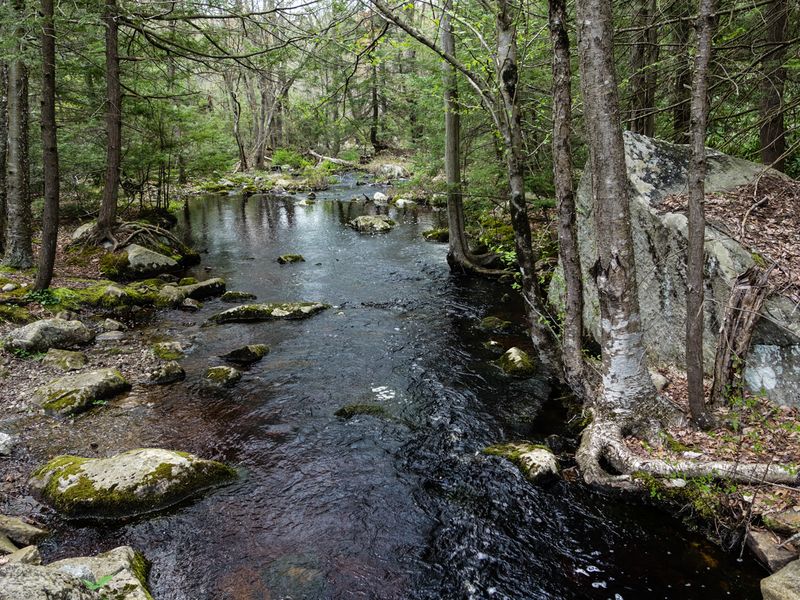
A white blaze on a tree marks one of Wawayanda’s most famous routes. Roughly 20 miles of the Appalachian Trail pass through the park, carrying long-distance hikers and day-trippers across wetlands, wooded slopes, and rocky sections of the Highlands.
It is only one strand in a trail network exceeding 60 miles, but it shows how quickly the park can leave its busier lakefront behind. The routes here vary dramatically.
The Lake Loop keeps hikers closer to Wawayanda Lake and offers a gentler introduction to the property. Old woods roads such as Cherry Ridge Road provide broader footing through the forest, although puddles, rocks, and muddy sections can still slow the pace.
Trails toward Bearfort Mountain and Terrace Pond are a different proposition, with steeper climbs, uneven conglomerate rock, and scrambles that demand sturdy footwear and careful attention. Wildlife watchers do not necessarily improve their odds by choosing the hardest route.
Bears follow food and cover rather than trail ratings. A quiet path beside dense woods, berry-producing shrubs, or a wetland edge may reveal tracks or a distant animal, while a strenuous ridge hike may produce nothing more bear-like than a dark stump.
That uncertainty is part of the experience. Navigation deserves respect in a park this large.
Intersections can connect multiple color-blazed trails and woods roads, making an offline map or printed trail map far more dependable than memory. Cell service can become inconsistent in the backcountry, and rocky ground often turns a short distance into a longer outing than expected.
Hunters also use designated portions of the property during established seasons, so checking current notices and wearing bright colors is sensible. The quieter sections reward an unhurried pace.
Woodpeckers hammer overhead, frogs call from wetlands, and white-tailed deer slip through the understory. Bobcats, coyotes, beavers, bald eagles, and timber rattlesnakes also inhabit this landscape.
A black bear may supply the biggest thrill, but Wawayanda never feels empty while you are waiting.
Early Morning Offers the Best Chance for a Wildlife Sighting
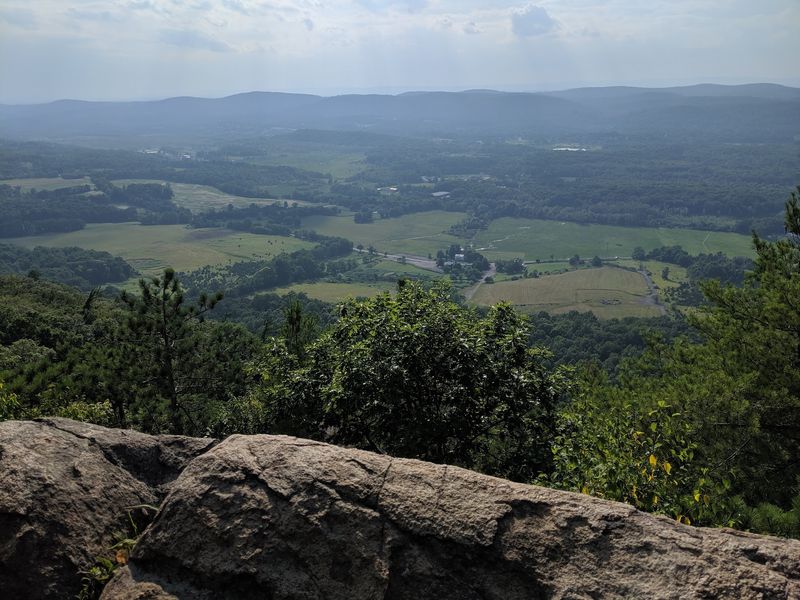
At the beginning of the day, Wawayanda can feel like it has not fully awakened. Mist hangs above the lake, damp leaves soften footsteps, and the parking areas have yet to fill with swimmers and paddlers.
Those cooler, quieter hours can be productive for observing wildlife because black bears are often most active around dawn and dusk, particularly when summer heat makes midday movement less comfortable. An early start does not mean sneaking silently through the forest.
Surprising a bear at close range is the exact opposite of a successful encounter. Normal conversation, an occasional clap near blind turns, or a firm call before entering thick vegetation gives animals time to move away.
Bear bells are not a substitute for paying attention, especially near rushing water or in windy conditions that can mask footsteps and voices. Look ahead rather than only at the ground beneath your boots.
A bear may cross a woods road, forage along a distant opening, or appear briefly at the edge of a wetland. Binoculars provide a much better view without closing the distance.
If an animal has not noticed you, remain quiet and retreat the way you came. If it looks in your direction, give it space instead of testing how long it will tolerate an audience.
Season also influences activity. Bears emerge from dens in spring and begin searching widely for food.
Summer brings berries and other vegetation, while late summer and fall trigger increasingly intense feeding as the animals prepare for winter. Mothers with cubs may be active during daylight, so a smaller bear should never be assumed to be alone.
No one should leave food near a trail or bait a location to improve the odds of a photograph. Feeding teaches bears to associate people with easy meals and can ultimately put both the animal and future visitors at risk.
The best sighting at Wawayanda is spontaneous, distant, and brief enough to leave the bear’s normal behavior unchanged.
Wawayanda Lake and Rocky Ridges Add to the Adventure
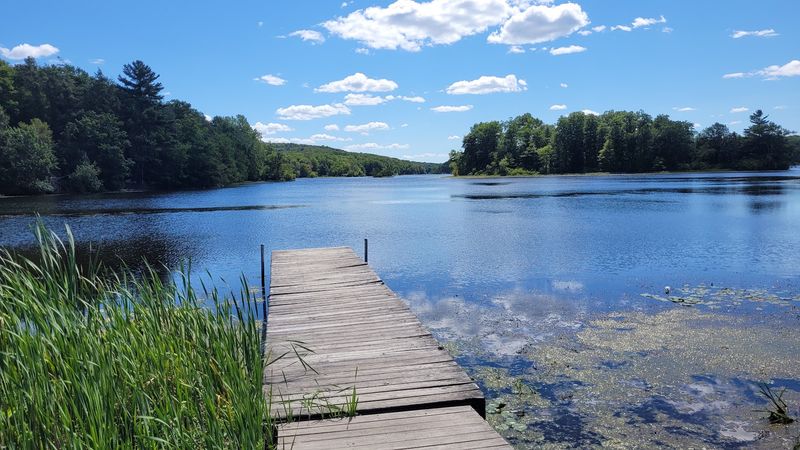
Even without a bear sighting, the park has a rather convincing consolation prize. Wawayanda Lake spreads beneath wooded hills near the main recreation area, creating a calm centerpiece for paddling, fishing, picnicking, and seasonal swimming.
Gasoline-powered motors are prohibited, helping the water retain a quieter character than many large recreational lakes. Canoes, kayaks, and small boats with permitted electric motors can move along coves where the shoreline feels far removed from the beach.
The lake’s swimming area operates only when lifeguards are on duty, generally during the warmer season, and posted conditions can change with staffing, weather, or water quality. Paddlers and anglers have more flexibility, though New Jersey licensing rules apply to freshwater fishing.
Bass, pickerel, perch, and sunfish are among the catches associated with the lake. Bald eagles are sometimes seen above the water, adding another possible wildlife moment that does not involve a 200-pound mammal.
Higher ground delivers a completely different experience. Terrace Pond sits amid bare rock on a ridge in the Bearfort Mountain area, reached by steep, demanding trails rather than a relaxed lakeside stroll.
The surrounding bedrock includes distinctive puddingstone, a conglomerate packed with rounded pebbles and fragments cemented together over immense stretches of geologic time. Wet rock can be slick, and the route includes scrambling that is better suited to prepared hikers than casual walkers.
Elsewhere, the Wawayanda Swamp Natural Area protects an Atlantic white cedar swamp, an increasingly uncommon ecosystem in northern New Jersey. Boardwalks and wetland crossings reveal another side of the park, with dark water, mossy trunks, and dense plant life replacing the open lake and exposed ridge.
These environments sit close together on a map but feel entirely different underfoot. That variety also benefits wildlife by supplying connected sources of food, water, and shelter.
A bear may be the headline, yet the lake, wetlands, and billion-year-old rocks ensure the day never depends on seeing one.
Knowing Bear Safety Basics Makes Every Hike More Enjoyable
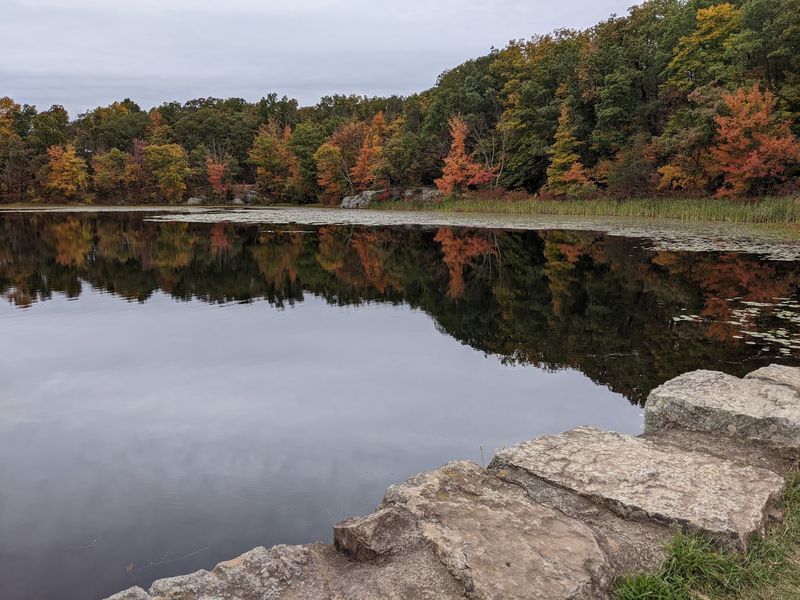
Seeing a black bear from across a clearing can be unforgettable. Meeting one because your sandwich is hanging from an open backpack is memorable for all the wrong reasons.
Food, garbage, scented toiletries, and pet food should remain secured and under control, whether you are stopping for lunch or staying at one of Wawayanda’s group campsites. Never leave scraps behind, even if they appear harmless or biodegradable.
On the trail, stay alert, make your presence known, and keep children close. Dogs should remain on a leash no longer than six feet, both because park rules require control and because an unleashed dog may chase a bear and then bring the frightened animal back toward its owner.
Extra caution is warranted around cubs. Their mother may be close even when she is not immediately visible.
If a bear appears, do not run. Running can trigger a pursuit response, and black bears are faster than people over short distances.
Do not climb a tree either; they are excellent climbers. Face the animal without staring aggressively, speak in a firm voice, make yourself look larger, and back away slowly while leaving the bear a clear escape route.
A bear standing on its hind legs is usually gathering scent and information, not automatically preparing to attack. When a bear approaches, become louder and more assertive.
Wave your arms, shout, and continue creating distance without turning your back. Bear spray can serve as an additional safety tool when it is legal, accessible, and carried by someone who knows how to use it; buried at the bottom of a pack, it is merely extra luggage.
In the extremely rare event of a physical black bear attack, fight back rather than playing dead. Most encounters end with the bear leaving, often before the visitor fully understands what happened.
Respecting its space keeps that moment exactly as it should be: a wild animal crossing its own home while a fortunate hiker watches from a safe distance.
Share this story