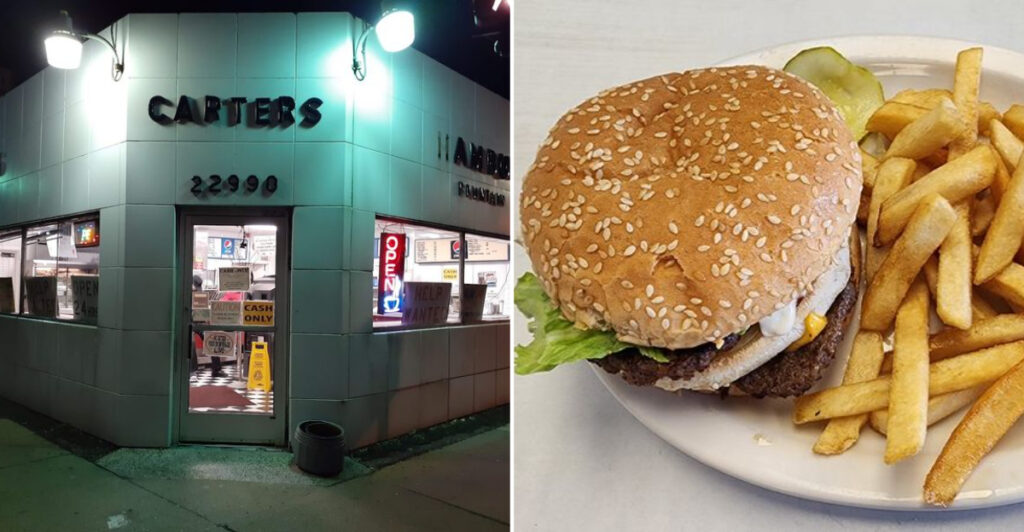
Some burger spots are built for lunch, some for nostalgia, and a rare few are built for whatever hour hunger decides to hit. Carter’s Hamburgers in Dearborn belongs to that last group, serving an old-school counter experience that still pulls people in long after most kitchens have gone dark.
The draw is not polished trendiness – it is the thrill of a place that stays awake, keeps the griddle busy, and looks rooted in a different era. If your idea of comfort includes burgers, shakes, and a diner mood that does not care what time it is, this address earns a closer look.
The Corner That Still Glows After Midnight
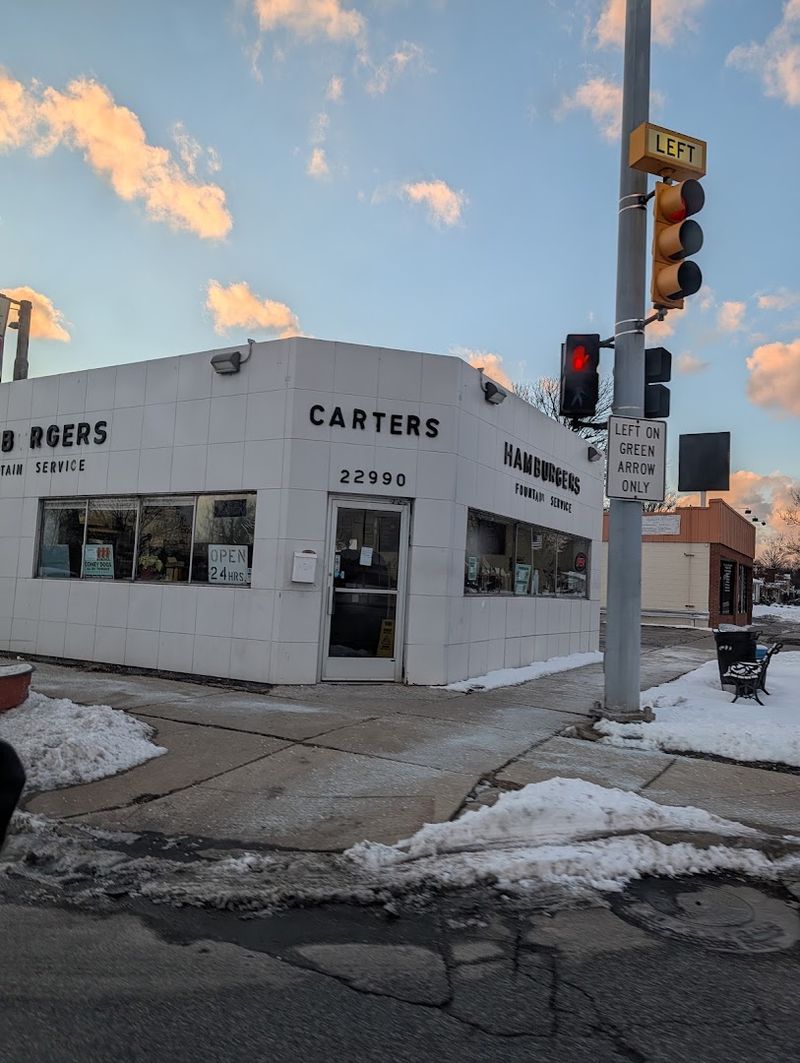
Late at night, when chain drive-thrus start to blur together and the roads around Dearborn quiet down, Carter’s Hamburgers stands out by doing the simplest possible thing: staying open. That round-the-clock promise changes the way the place reads from the street.
It is not just another burger stop on Outer Drive West – it becomes a reliable point of light, the kind of place that answers a craving at 2 p.m. and again at 2 a.m.
The building carries the visual shorthand of an older burger joint, with a compact footprint and a no-fuss look that signals quick meals over drawn-out ceremony. Nothing about it depends on sleek reinvention.
The appeal starts outside, where the setting suggests a neighborhood standby instead of a carefully manufactured retro concept, and that difference matters because Carter’s does not need to pretend it has history baked into the walls.
Inside, the mood leans diner-like and direct. A counter, close quarters, and practical movement between grill, register, and seats create the kind of room where food is the center of gravity.
You are not distracted by oversized design gestures or gimmicks trying to explain the place to you. The rhythm tells the story: orders called, burgers moving, shakes blending, regulars sliding in for a quick bite.
That twenty-four-hour schedule also shapes the crowd. Breakfast seekers, night owls, shift workers, families after practice, and anyone looking for a hot meal without a formal production can all fit the same space.
Few restaurants serve that wide a timeline without becoming impersonal, yet Carter’s strongest identity comes from being available, local, and easy to understand.
For a burger joint, availability is part of flavor. Knowing the griddle is still on gives the place an edge before a single fry hits the basket.
Carter’s begins with that practical advantage, then layers on old-school character one glowing window at a time.
Why the Burger Is the Headliner
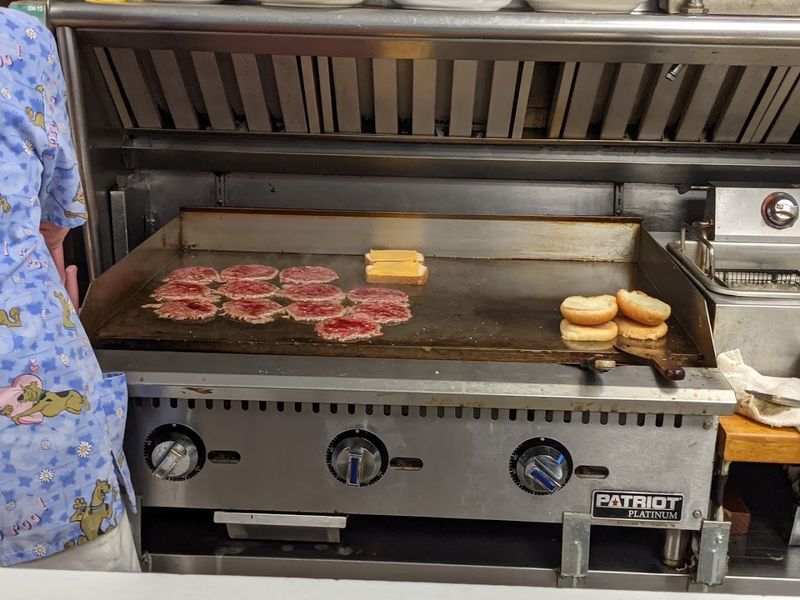
Carter’s is the kind of place where the burger remains the point, not a prop surrounded by oversized trends and novelty toppings. The menu reaches beyond a single sandwich, but the core identity stays planted in old-school burger-joint territory.
You come here expecting a straightforward, griddled meal with familiar textures: soft bun, savory patty, melty cheese, and the satisfying edge that only a busy flat top seems to deliver.
Part of the appeal is scale. These are not towering, engineered burgers built mainly for photos, and that works in Carter’s favor because a classic counter burger should invite a second one without turning into a project.
That practical size also fits the place’s round-the-clock role. A burger at midnight or after an early shift needs to be comforting and quick, not architectural.
Several details keep surfacing when Carter’s food is discussed seriously: fried onions, sliders, double cheeseburgers, and a sense that the burgers hit best when eaten hot and fast. Those clues sketch the style clearly.
This is diner-adjacent food with a greasy-spoon confidence, where balance comes from salt, sear, softness, and speed rather than from chef language or ingredient theater.
Price matters here too. Carter’s has long been part of the conversation for diners looking for a filling meal without a painful total, especially when burger cravings arrive at odd hours.
Even when menu specifics shift, the reputation for accessible comfort remains central to the place’s identity. A burger spot open all day and all night needs that kind of everyday reach.
If you are trying to understand why Carter’s keeps drawing attention, start with the burger itself. It is familiar in the best sense, built for appetite instead of spectacle.
That makes every supporting item important, but it also keeps the spotlight exactly where it belongs: on the griddle.
Shakes, Fries, and the Side of Diner Time Travel
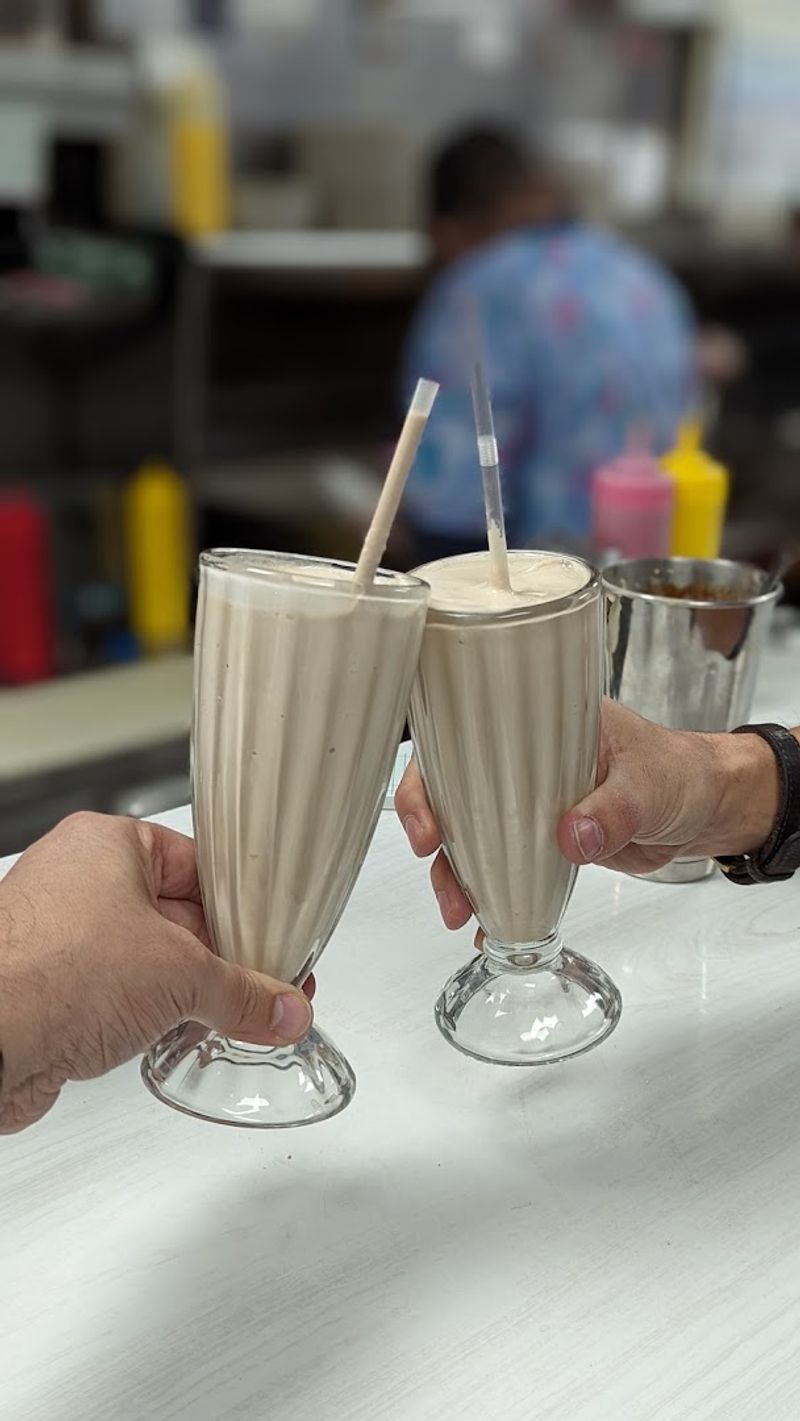
The burger may lead the conversation, but Carter’s gets extra dimension from the side characters that turn a quick stop into a full diner craving. Milkshakes come up often for good reason.
In a place with an old-school reputation, a proper shake is more than dessert – it is part of the mood, the cold counterpoint to hot griddled food and one more link to the kind of burger stand experience that still plays well in Michigan.
Fries, coneys, wings, and breakfast items widen the lane without pulling the restaurant away from its identity. That range matters because a twenty-four-hour place has to serve different appetites at different hours.
One person wants a sack of burgers to go, another wants fries and a drink after work, and someone else is eyeing a shake because a late-night burger run feels incomplete without one.
The room itself reinforces that old-time frame of mind. There is a jukebox element in the mix, a detail that instantly pushes the space closer to diner shorthand even when the execution is more practical than theatrical.
You are reminded that Carter’s is not trying to be a museum piece. It is a working restaurant that borrows charm from continuity, not from perfectly staged nostalgia.
That distinction keeps the supporting menu from feeling random. Shakes make sense here because burgers and shakes belong together.
Fries make sense because they finish the rhythm of an affordable counter meal. Breakfast makes sense because once a restaurant is open every hour, morning food becomes part of the promise rather than an afterthought.
For scanners looking past the headline item, Carter’s holds more than one reason to stop. The extras do not compete with the burgers.
They round out the experience, strengthen the diner identity, and give the place a wider pulse than a one-note late-night joint.
Dearborn, Michigan Nostalgia Without the Costume
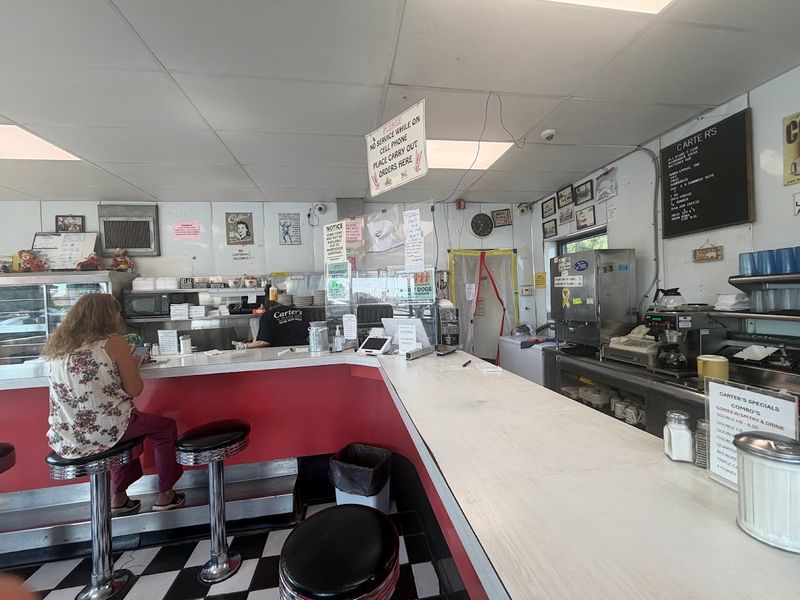
Some restaurants advertise nostalgia with polished chrome, rehearsed throwback graphics, and a soundtrack curated to remind you how nostalgic you are supposed to feel. Carter’s takes a rougher, more lived-in route.
In Dearborn, Michigan, its old-school energy reads less like performance and more like survival, the kind that comes from staying in place, serving regulars, and letting the room carry its own age without overexplaining itself.
That matters because diners can tell the difference between retro styling and an actual neighborhood institution. Carter’s has the visual DNA of a long-running burger joint: compact layout, practical counter service, familiar menu anchors, and a sense that the place developed around function first.
The appeal is not perfection. It is continuity, and continuity often shows up in small details that newer places try very hard to imitate.
The crowd helps define that identity. Families, longtime regulars, late-night eaters, and nearby residents all seem plausible here because the restaurant’s format is broad, not niche.
You can picture someone stopping in after baseball practice just as easily as someone grabbing a quick breakfast or a bag of burgers on the way home. That range gives Carter’s a lived neighborhood presence instead of a destination-only posture.
There is also a certain honesty in the room. The diner language is there, but it is not buffed into parody.
A modern jukebox, straightforward seating, and the constant emphasis on accessible comfort food keep the place grounded in daily use. Even the most nostalgic elements are tied to the practical business of feeding people, not staging a photo set.
That is why Carter’s carries weight beyond a simple burger order. It offers a version of local continuity that still feels active.
In a landscape full of fast concepts and polished reboots, that kind of wear-in-place character gives Dearborn a burger stop with its own stubborn pulse.
How to Order Like You Already Know the Place
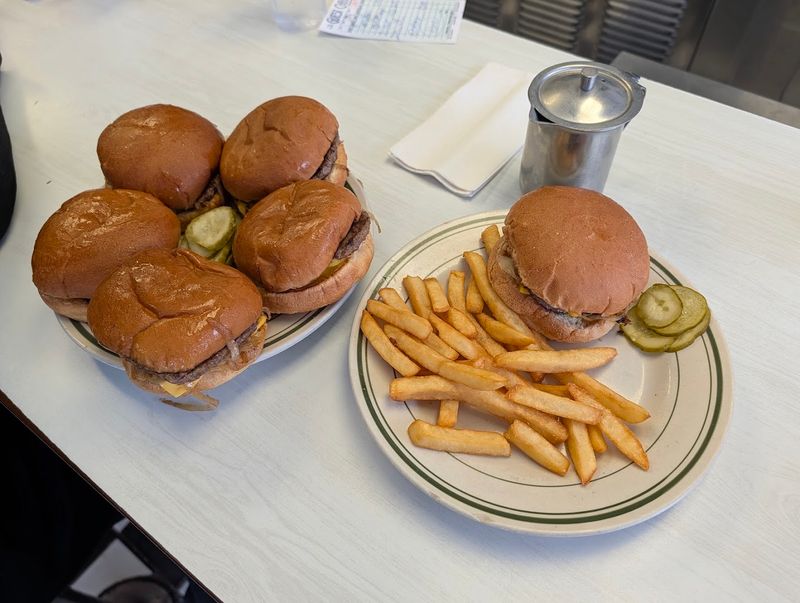
Carter’s works best when approached with the right expectations. This is not a slow, ceremonial meal built around long table chats and elaborate pacing.
It is a practical burger joint with a diner streak, and your smartest move is to lean into that identity. If you arrive ready for straightforward comfort, quick decisions, and a compact space doing steady work, the whole visit tends to make more sense.
Start with the classics. A cheeseburger or double cheeseburger is the cleanest way to understand the place, especially if you pair it with fries and a drink.
If your timing calls for maximum satisfaction, adding a shake pushes the meal into full old-school territory without overcomplicating the order. Carter’s seems strongest when you let it do the food it is known for rather than treating the menu like a test.
There are also a few practical habits worth knowing. Cash readiness is useful here, since Carter’s has been noted as cash only.
That small bit of planning saves friction and fits the restaurant’s old-line style anyway. This is the kind of place where handling the basics ahead of time makes you feel less like a first-timer and more like someone who understands the assignment.
Timing is unusually flexible because the restaurant never closes, but the reason for your stop can shape the experience. A daytime visit may read as a neighborhood lunch or breakfast counter.
A late-night stop shifts the energy toward rescue mission territory, where the open sign matters almost as much as the burger itself. Either way, the sweet spot is keeping the order simple and the expectations aligned.
If you want the cleanest Carter’s experience, think classic, think quick, and think hunger first. This is one of those places where a basic order, placed confidently, can feel like insider knowledge.
The reward is not complexity. It is direct, hot comfort on demand.
Open 24 Hours Changes the Whole Experience
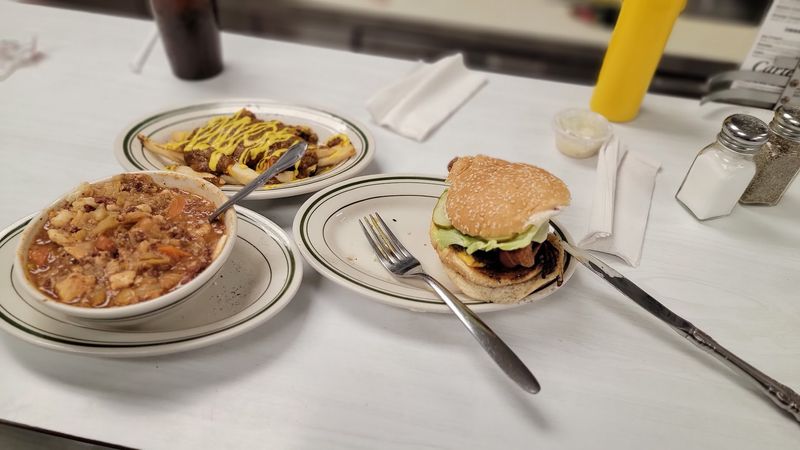
Plenty of restaurants advertise convenience, but very few commit to every hour of every day. Carter’s does, and that constant availability changes more than scheduling.
It affects the restaurant’s role in the neighborhood, the kind of hunger it answers, and the sense of relief attached to it. When most kitchens shut down, a burger place that stays on becomes less of a casual option and more of a dependable utility with personality.
The twenty-four-hour setup means Carter’s is available for entirely different versions of the same craving. Breakfast can land there.
So can a late lunch, a post-practice family stop, a night-shift meal, or an after-midnight burger run when fast food sounds too anonymous. A place serving all those moments has to stay legible and uncomplicated, which may be why Carter’s straightforward menu identity matters so much.
There is also a psychological benefit to knowing the door is open. Even before you order, the place offers a kind of reassurance.
You do not need to race a closing time or wonder whether the kitchen already started shutting down. That removes friction, and in the world of comfort food, less friction often means more loyalty.
Restaurants with nonstop hours also collect a wider social mix than typical meal-period spots. The same counter can see regular daytime traffic and late-night wanderers moving through on entirely different schedules.
That broadens the restaurant’s character. Instead of belonging to one narrow crowd, Carter’s belongs to the hunger gaps in everyone’s day, including the awkward ones most places ignore.
That is why the headline detail is not just trivia. Open twenty-four hours is the framework for the whole experience.
It sharpens the restaurant’s usefulness, deepens its neighborhood identity, and gives every burger a little extra value because the meal is available exactly when you need it, not only when the standard dining clock allows.
Why This Address Still Matters on Outer Drive West
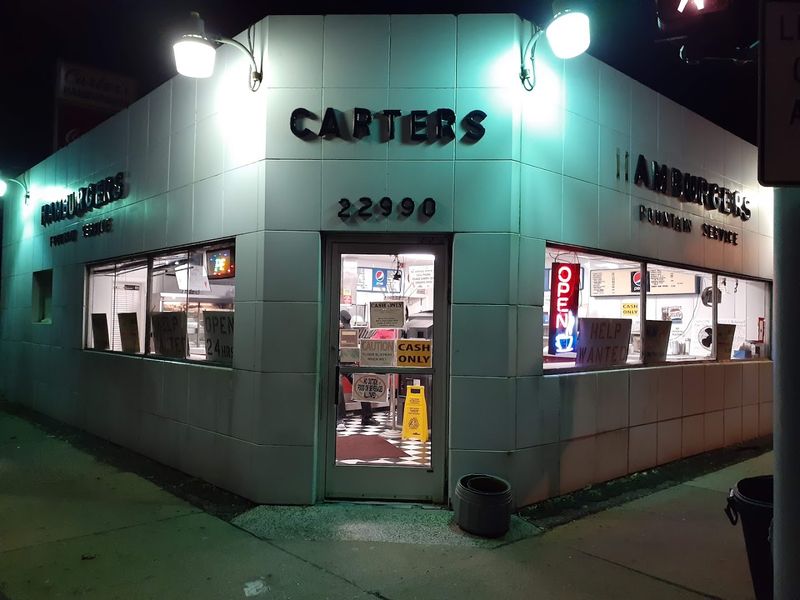
In a region filled with national chains, polished casual concepts, and endless quick-service sameness, Carter’s keeps its identity by being specific to its corner. The address on Outer Drive West is part of the story.
This is not a place lifted out of local context and dropped into a generic commercial strip formula. It reads as a neighborhood burger restaurant first, and that fixed-position familiarity gives it staying power.
Location matters in smaller ways too. A roadside burger joint depends on visibility, habit, and instinctive repeat visits.
Carter’s fits those patterns because it is the kind of place you can pass many times, then finally stop at after smelling the food, needing dinner on a budget, or realizing everything else nearby has either closed or become unappealing. The building’s modest scale makes discovery feel personal rather than heavily marketed.
Its local relevance is strengthened by how many needs it can cover without trying to be everything. Breakfast, burgers, shakes, quick takeout, counter meals, and late-night food all sit within the same compact operation.
That versatility is especially important in a neighborhood setting, where a restaurant survives not just by excelling at one dramatic moment but by remaining useful across ordinary days.
Carter’s also occupies a category that cities quietly need: the independently flavored, familiar burger stop that can absorb both routine and nostalgia. Some diners become memory pieces talked about in the past tense.
Carter’s still functions in the present tense. That distinction gives the address more weight than a simple throwback label ever could.
If you are mapping where local burger culture actually lives, this spot deserves a pin. Not because it shouts the loudest, but because it keeps doing the unflashy work: feeding people at odd hours, holding onto its character, and staying visible in a dining landscape that often rewards sameness over stubborn local identity.
The Real Takeaway for Your Next Burger Run
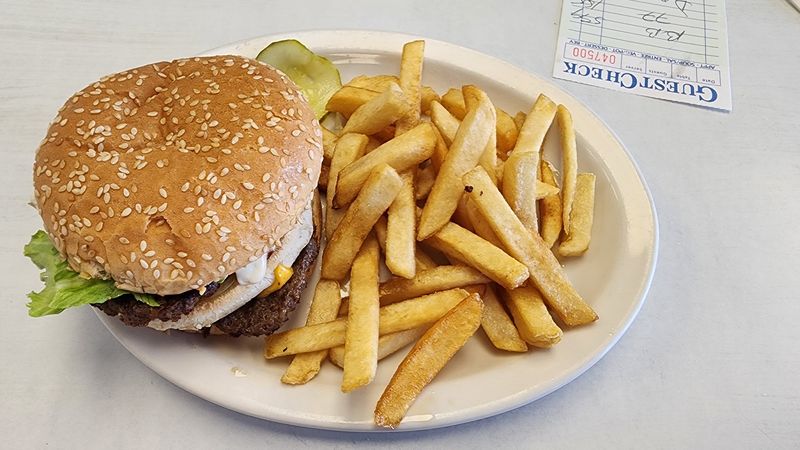
Carter’s Hamburgers stands out for a reason that is easy to miss in a world obsessed with novelty. It offers a burger experience tied to usefulness, continuity, and plain old appetite.
That combination is harder to find than it sounds. Plenty of places make burgers, but not many still pair a recognizable neighborhood identity with twenty-four-hour access and an old-school diner current running underneath the whole meal.
The strongest case for Carter’s is not built on trend language. It is built on specifics: burgers that anchor the menu, shakes that reinforce the classic format, a compact counter-service setup, and a setting that carries visible age rather than manufactured retro polish.
Add in the ability to stop by literally any day or hour, and the place becomes more than an answer to a craving. It becomes part of the local food infrastructure.
That does not mean treating the restaurant like a fantasy time capsule. Carter’s works better when understood as an active, lived-in burger joint that still serves its neighborhood in real time.
The value is in how those older diner signals continue to function: the quick order, the hot food, the familiar combinations, the comfort of knowing the lights are still on when most kitchens have checked out.
For fast scanners looking for the bottom line, here it is. If your ideal burger stop includes nostalgia without costume drama, practical prices, late-night reliability, and a menu rooted in classic American comfort food, Carter’s deserves attention.
You are not chasing a viral stunt or a chef’s thesis on beef. You are chasing the satisfying directness of a burger place that knows its job.
And at this Dearborn address, that job never clocks out. The griddle-centered identity, the neighborhood footing, and the around-the-clock schedule lock together into one clear takeaway: when a real burger craving hits, Carter’s is built to meet it on your time.
Share this story