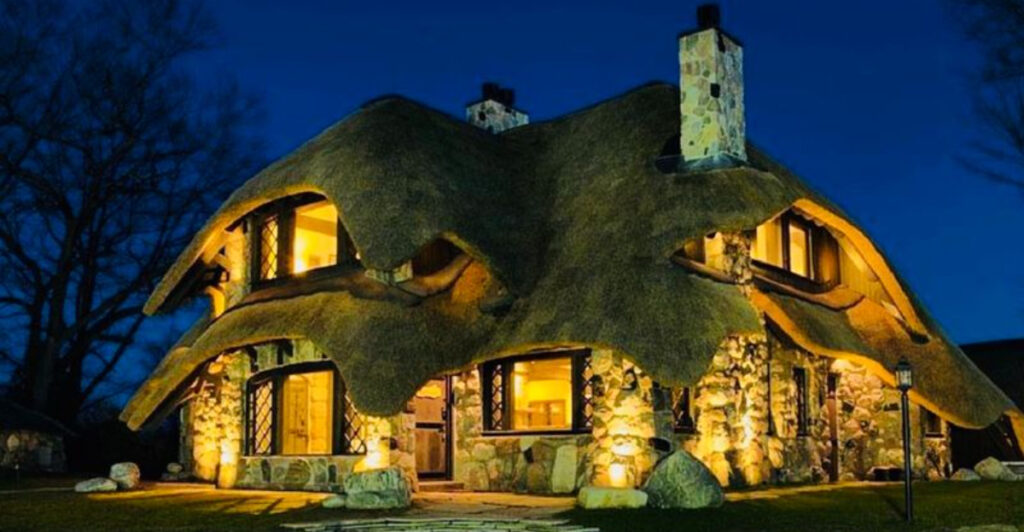
Along the Lake Michigan coast in northern Michigan, Charlevoix is hiding a neighborhood that feels like it wandered out of a fairytale. Earl Young, a self-taught architect and real estate developer, spent decades creating homes that look more storybook than small-town.
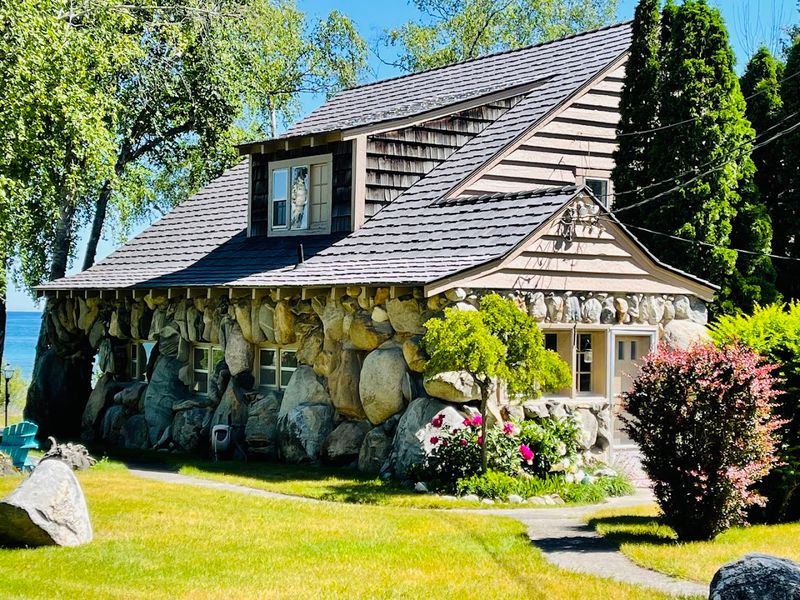
With rooftops that swoop and curl, massive boulders for walls, and doorways that seem too small for giants, these structures have earned the nickname “Mushroom Houses.” Whether you are a lifelong Michigan resident or a first-time visitor, this neighborhood is the kind of place that stops you in your tracks and makes you reach for your camera.
Earl Young’s Vision: The Man Behind the Magic
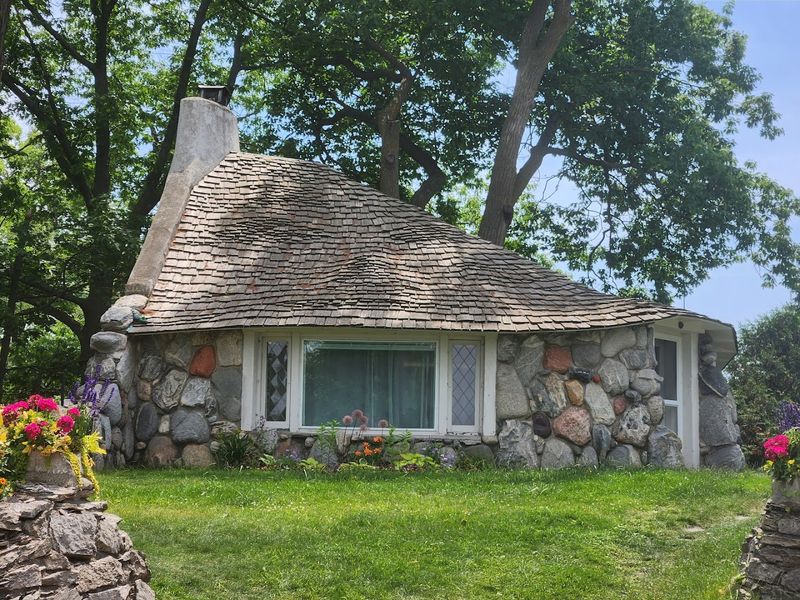
Not every legend comes with a formal degree. Earl Young never studied architecture in a traditional school, yet he built some of the most recognized homes in all of Michigan.
Working primarily between the 1920s and 1960s, Young designed and constructed a series of homes in Charlevoix that defied every conventional rule of residential building.
His philosophy was rooted in something deeply personal — he wanted his homes to feel like they grew out of the earth rather than being placed on top of it. To achieve this, he sourced boulders and fieldstones directly from Michigan farmers’ fields, incorporating them into walls, chimneys, and foundations that look almost geological in nature.
No two stones were the same, and that was entirely the point.
Young believed that homes should have personality, and his buildings absolutely deliver on that promise. Rooflines sweep low and curve upward like the cap of a mushroom.
Doorways are deliberately small and arched, giving each entrance a hobbit-hole charm that delights visitors of all ages.
What makes his story even more compelling is how local it truly is. Young was a Charlevoix native who cared deeply about the character of his town.
He wasn’t building for fame or fortune — he was building because he had a vision that no one else could quite replicate. Many of the homes he created remain privately owned today, which means the best way to appreciate them is from the street or through a guided tour.
His legacy has only grown stronger over the decades. Architecture enthusiasts, tourists, and curious road-trippers make special trips to Charlevoix just to see what one imaginative man managed to create with stones, determination, and an eye unlike any other.
The Iconic Rooflines That Started All the Buzz
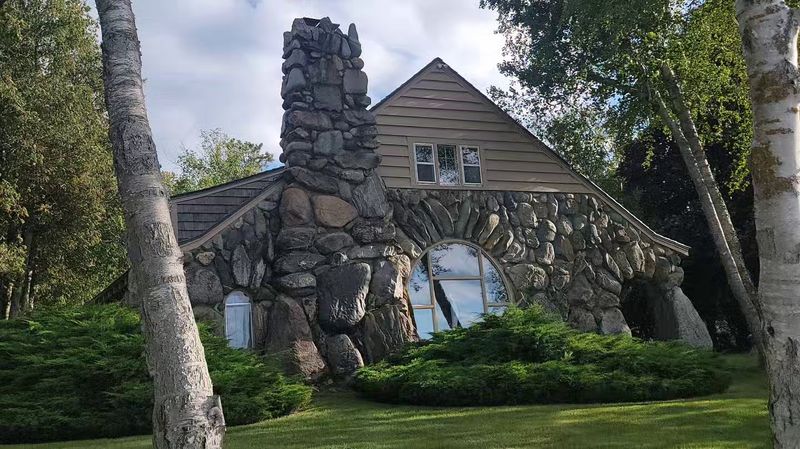
If you’ve ever scrolled past a photo of the Mushroom Houses and done a double-take, the rooflines are almost certainly why. They don’t sit flat or peak sharply the way most American homes do.
Instead, they roll and swell in organic curves, looking almost like thick layers of a mushroom cap frozen mid-growth.
Earl Young achieved this effect through a combination of hand-cut cedar shingles and carefully shaped structural framing. The shingles were layered in a way that creates visible depth and dimension, giving each roof a shaggy, textured appearance that seems to breathe.
From certain angles, you’d swear the roof was made of something living.
The curves weren’t purely cosmetic, either. Young designed the slopes to direct rainwater away from the stone walls efficiently, blending form and function in a way that felt completely natural.
Every angle was intentional, even when it looked effortlessly wild.
What surprises most first-time visitors is just how varied the rooflines are from house to house. Some sweep dramatically low to the ground, nearly brushing the landscaping.
Others arch upward with more height, creating a dramatic silhouette against the northern Michigan sky. No two are identical, which means every stop on a tour brings something genuinely new to look at.
Photographers absolutely love this neighborhood for that reason. The play of light across the textured shingles changes dramatically depending on the time of day and season.
A morning visit in autumn, when the surrounding trees are blazing with color, produces images that look almost too beautiful to be real.
These rooflines are the visual signature of Charlevoix’s most famous neighborhood, and once you see them in person, no photograph truly does them justice.
Boulder Walls That Came Straight From Michigan Farmland
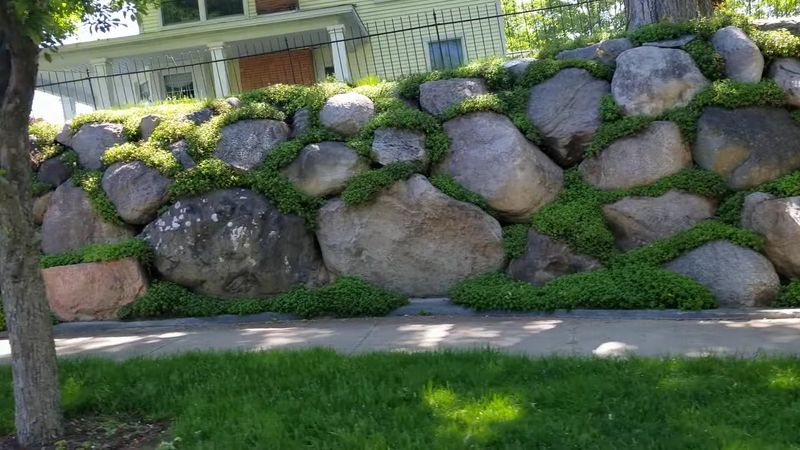
Pick up nearly any rock from a Michigan farmer’s field and you’re holding a piece of glacial history. Earl Young knew this, and he turned that knowledge into architecture.
The massive boulders and fieldstones embedded in the walls of the Mushroom Houses were collected from farms across Michigan, giving each home a foundation that’s literally made from the land it stands on.
Some of these stones are enormous — easily the size of a small car — and watching them stacked and fitted together so precisely is genuinely impressive. Young worked closely with skilled stonemasons who understood how to balance weight, texture, and color to create walls that feel ancient and permanent.
Standing next to one of these homes, you get the sense that it has always been there.
The color variation in the stones adds tremendous visual richness to each structure. Warm tans, deep grays, rusty reds, and cool blues all appear within a single wall, creating a natural mosaic that no paint color could ever replicate.
In sunlight, the surfaces sparkle faintly with embedded minerals, making the homes look almost alive.
Tour guides often point out that the sheer weight of some of these boulders required creative engineering solutions to incorporate into a residential structure. Young’s ability to solve those problems without formal training speaks to his remarkable instincts as a builder.
He was figuring things out as he went, and the results have lasted for decades.
For visitors who appreciate craftsmanship, these walls are worth a long, close look. Run your eyes across the surface of any Mushroom House and you’ll spot stones of wildly different shapes fitted together with surprising precision.
It’s the kind of detail that rewards patience and curiosity in equal measure.
Mushroom House Tours: The Best Way to Experience It All
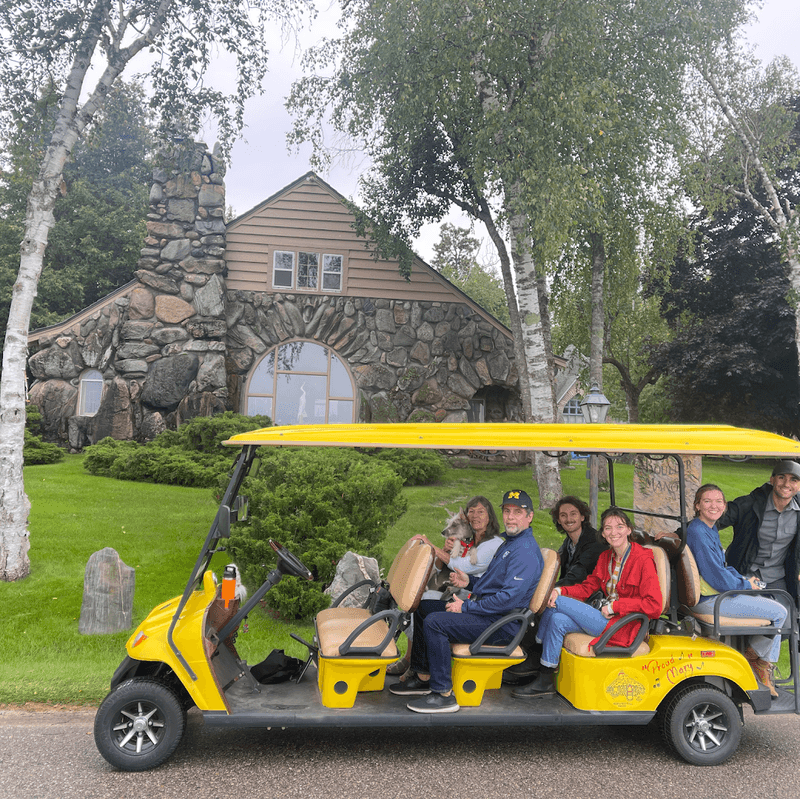
Driving past the Mushroom Houses on your own is one thing — riding through the neighborhood on a guided tour is something else entirely. Mushroom House Tours, located at 106 Park Ave in Charlevoix, offers small-group experiences in open-air GEM electric carts that hold just a handful of guests at a time.
That intimate setup makes a real difference.
Tours run Wednesday through Monday from 10 AM to 3 PM, and booking ahead is strongly recommended. Time slots sell out, especially on weekends during the summer season.
The tours run approximately 45 to 50 minutes and cover around 25 homes built by Earl Young throughout the historic district near the Lake Michigan shoreline.
What sets this tour apart is the quality of the guides. Many of them grew up in Charlevoix and bring genuine personal knowledge to every stop.
Guests consistently rave about how much they learn beyond the architecture itself — guides share stories about the town, the history of the area, and the personalities behind the homes. It’s the kind of local knowledge you simply can’t get from a travel blog or a plaque on the sidewalk.
The tour company has earned a 4.8-star rating from nearly 300 reviews, which speaks for itself. Visitors describe the experience as educational, fun, and surprisingly moving.
One reviewer noted that even after living just 30 minutes away for years and driving past the homes occasionally, the tour completely changed how they understood and appreciated the neighborhood.
Dogs are welcome on tours too — small pups can sit on your lap, and larger dogs can have their own seat with a purchased ticket. That kind of thoughtful, welcoming detail is exactly what makes this local business worth supporting every single time you visit Charlevoix.
Arched Doorways and Tiny Windows That Feel Straight Out of a Fairy Tale
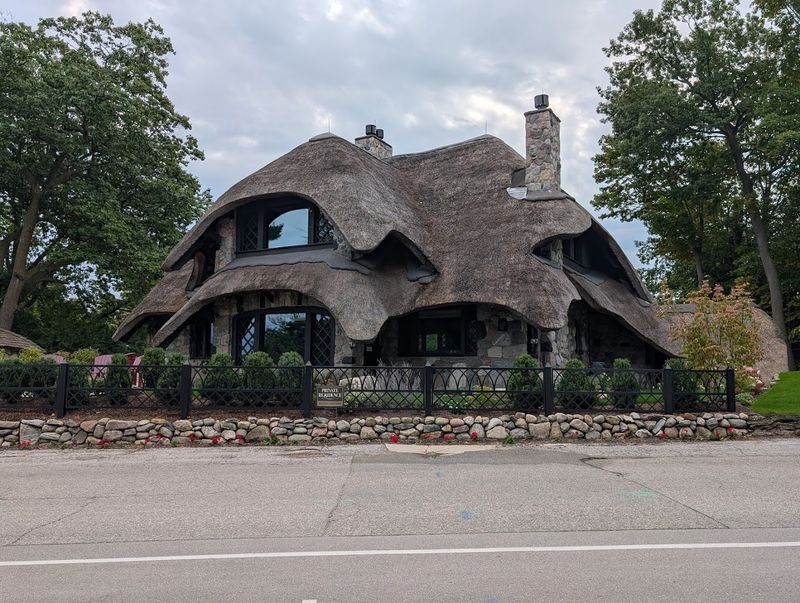
There’s something almost theatrical about walking up to the entrance of a Mushroom House. The doorways are deliberately small and arched, framed in stone, with proportions that make you feel like you’re approaching the home of a woodland creature rather than a Michigan family.
Earl Young designed them that way on purpose, and the effect is completely enchanting.
The windows follow a similar logic. Many are small, rounded, or irregularly placed, tucked into the stonework in spots that seem more intuitive than calculated.
Some peek out from beneath the sweeping roofline at unexpected angles. Others are set deep into thick stone walls, giving them a cave-like quality that filters light in a soft, warm way.
Together, the doors and windows give each Mushroom House a face. Visitors often describe the homes as looking like they’re watching you — which sounds strange until you’re standing in front of one and realize it’s completely true.
The placement of the openings creates expressions that range from curious to sleepy to slightly mischievous.
Interior photos, which tour guides share through a virtual access code, reveal that the whimsy continues inside. Low ceilings, curved walls, and unusual room layouts maintain the storybook atmosphere throughout each home.
Living in one of these houses must feel like inhabiting a piece of art.
For photographers and architecture lovers, the doorways and windows are endlessly photogenic. The interplay between rough stone, rounded forms, and organic landscaping creates compositions that look carefully staged even when captured spontaneously.
Every angle offers something worth framing, and the details reward anyone willing to slow down and really look. These homes don’t shout for attention — they whisper, and the effect is far more powerful.
The Historic District Setting Along Lake Michigan’s Shoreline
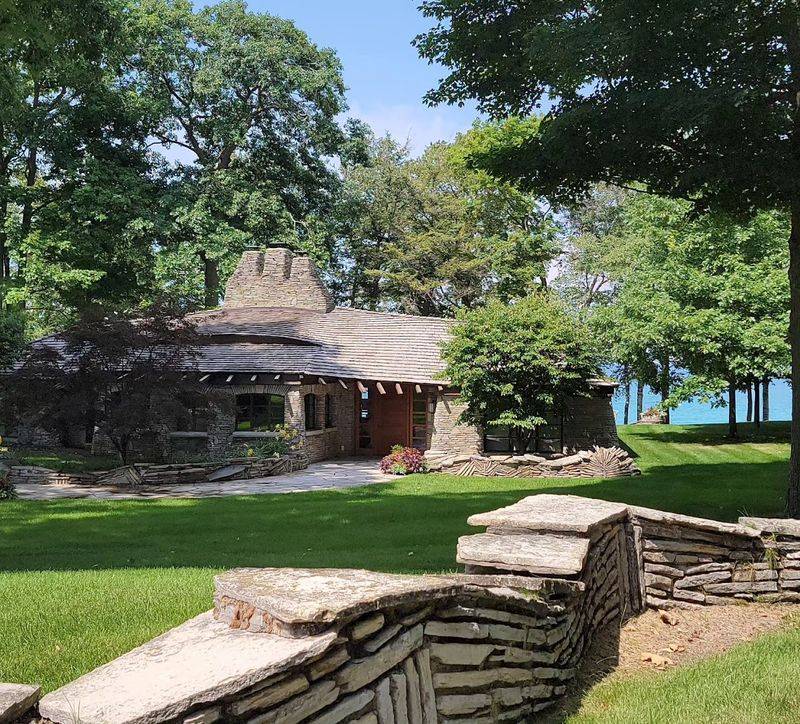
Context matters when you’re talking about architecture, and the setting of the Mushroom Houses couldn’t be more perfectly matched to their character. The homes are clustered in Charlevoix’s historic district, a quiet, tree-lined neighborhood that sits close to the Lake Michigan shoreline.
The combination of natural surroundings and extraordinary architecture creates an atmosphere unlike anything else in the state.
Mature trees arch over the narrow roads, filtering sunlight into shifting patterns across the stone walls. The landscaping around many of the homes is lush and slightly wild, which feels intentional — like the greenery is in on the secret.
Walking or riding through the neighborhood, especially in summer, produces a feeling of total immersion in something genuinely special.
Charlevoix itself is a beloved northern Michigan destination, known for its beautiful waterways, charming downtown, and relaxed summer energy. The Mushroom House neighborhood adds a layer of cultural and architectural significance that elevates the town beyond a typical lakeside getaway.
People who come for the beach often leave talking about the houses instead.
The proximity to Lake Michigan means the light here has a particular quality — soft, reflective, and constantly shifting with the weather. On overcast days, the stone walls take on a moodier, more dramatic appearance.
On bright afternoons, they practically glow. Photographers who visit multiple times often say each trip produces completely different results depending on the conditions.
The neighborhood is accessible by foot or by tour cart, and strolling the streets at your own pace has its own quiet rewards. Many visitors combine a Mushroom House tour with an afternoon exploring downtown Charlevoix, making for a full and satisfying day in one of Michigan’s most underrated towns.
The whole experience feels curated by someone with excellent taste.
Why These Houses Belong on Every Michigan Bucket List
Michigan is full of remarkable places — the Sleeping Bear Dunes, Mackinac Island, the Upper Peninsula’s waterfalls — but the Mushroom Houses of Charlevoix occupy a category entirely their own. They’re not grand in scale or famous for a dramatic natural feature.
Their power comes from something more intimate: the evidence of one person’s extraordinary creative vision, preserved and celebrated decades after it was first realized.
Visitors who make the trip consistently describe a feeling of genuine surprise. Even people who have seen photos beforehand say the real thing is more impressive than expected.
The scale of the boulders, the texture of the rooflines, and the way each home relates to its landscape all come together in a way that photographs can only partially capture. You really do have to stand in front of them to understand what the fuss is about.
The Mushroom House Tours operation makes the experience accessible and memorable for all kinds of travelers. Families with kids, architecture enthusiasts, history buffs, and casual sightseers all find something to love.
The guides tailor their storytelling to the group, which means no two tours feel exactly the same. That personal touch is rare and worth seeking out.
Adding the Mushroom Houses to a northern Michigan road trip is a straightforward decision. Charlevoix sits conveniently between Petoskey and Traverse City, making it an easy and rewarding stop on any route through the region.
The tour itself takes less than an hour, but the impression it leaves lasts considerably longer.
Michigan has plenty of places that are beautiful. It has far fewer that are truly singular.
The Mushroom Houses are singular — the product of one man’s refusal to build anything ordinary, and a neighborhood that proves imagination is the most durable building material of all.
Share this story