Michigan doesn’t have to work very hard to impress. From towering sand dunes and crystal-clear springs to dramatic rocky shorelines that look almost too good to be real, the Great Lakes State is filled with places that make you stop mid-step and just stare.
Whether you’ve lived here your whole life or you’re planning your first Michigan road trip, these 11 scenic spots are the kind that stick with you. Pack your camera, charge your phone, and get ready — the scenery is about to take over.
1. Turnip Rock
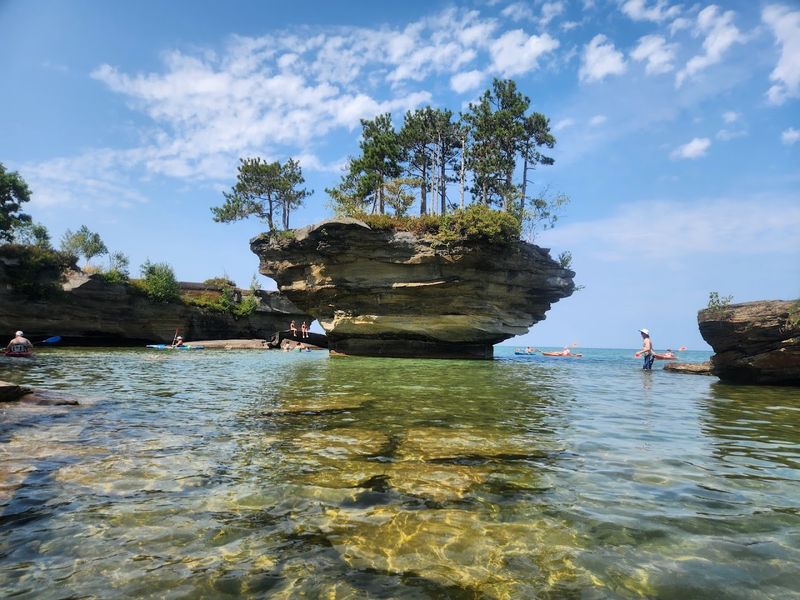
Shaped by thousands of years of wave erosion, Turnip Rock is one of those places that looks almost too strange to be real. Sitting just off the shoreline near Port Austin on the tip of Michigan’s Thumb, this mushroom-shaped rock pillar topped with a cluster of trees juts right out of Lake Huron like nature’s own sculpture.
It’s bizarre, beautiful, and completely unforgettable.
The only way to reach it is by water — which honestly makes the experience even better. Most visitors rent kayaks or paddleboards from nearby outfitters in Port Austin, paddling a few miles along the Lake Huron shoreline to reach the rock.
The route takes you past other interesting rock formations and sea caves, so the journey itself is worth every paddle stroke.
Early morning is prime time to go. The light hits the water at a softer angle, the lake tends to be calmer, and you’re less likely to share the spot with a crowd.
Bring waterproof bags for your gear, sunscreen, and plenty of water — it’s easy to underestimate how much energy paddling takes when you’re busy gawking at the scenery. Guided tours are available if you’d rather let someone else navigate.
Port Austin itself is a charming little town worth exploring before or after your paddle. There are local restaurants, shops, and a relaxed lakeside vibe that fits perfectly with a day of outdoor adventure.
Turnip Rock doesn’t have a beach or a parking lot — it’s not that kind of destination. It rewards the curious and the adventurous, the kind of traveler who’s willing to work a little for the payoff.
And trust us, the payoff here is absolutely worth it.
2. Sugarloaf Mountain Observation Decks
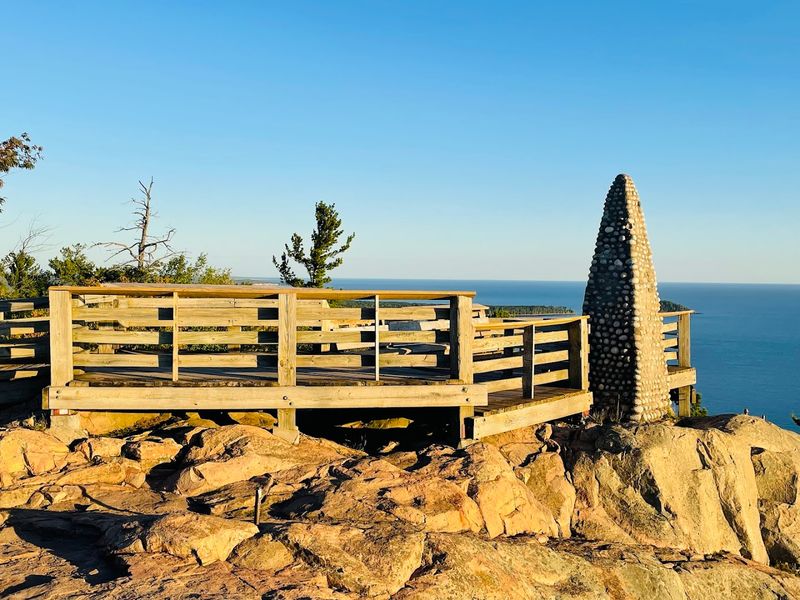
Standing at the top of Sugarloaf Mountain near Marquette in Michigan’s Upper Peninsula feels like someone turned the volume up on everything beautiful. The observation decks at the summit offer sweeping, unobstructed views of Lake Superior stretching endlessly to the horizon, framed by a thick carpet of forest below.
It’s the kind of view that makes you forget what you were stressed about five minutes ago.
Getting to the top requires a hike, but don’t let that scare you off. The trail is relatively short — around half a mile each way — though it does involve some steep sections and wooden staircases near the summit.
Wear sturdy shoes, take your time, and the payoff is absolutely worth the effort. Kids and older adults make this climb regularly, so it’s more accessible than it might sound.
Fall is arguably the best time to visit. The forested hillsides below the summit explode in reds, oranges, and golds, creating a color show that pairs perfectly with the deep blue of Lake Superior in the background.
Summer brings lush green views and longer daylight hours, while winter turns the whole scene into a stark, moody black-and-white landscape that feels almost cinematic.
Marquette itself is one of the UP’s most beloved towns, packed with local restaurants, breweries, and a vibrant arts scene. Pairing a Sugarloaf hike with a full day in Marquette makes for a pretty perfect Upper Peninsula experience.
Parking is available at the trailhead, and there’s no admission fee to hike. Sunrise and sunset visits hit different up here — the light bouncing off Lake Superior at those hours is the kind of thing photographers drive hours to capture, and you’ll understand why the moment you see it.
3. The Mackinac Bridge
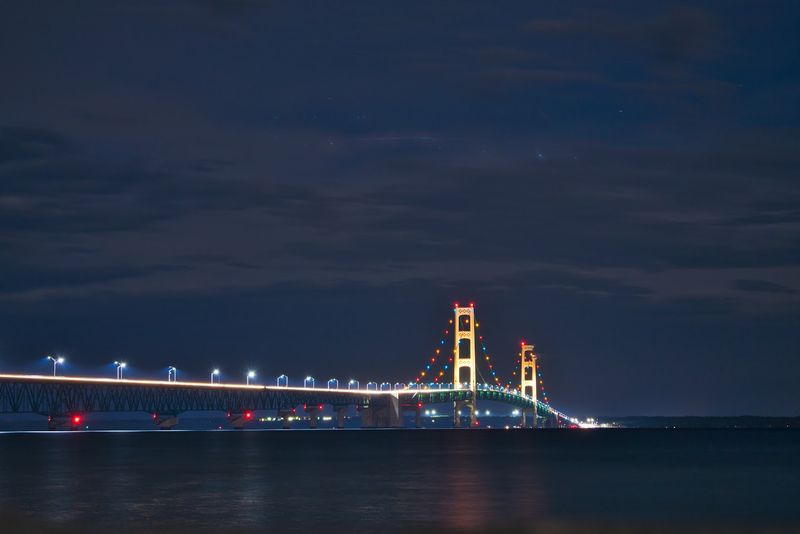
Few engineering feats double as a genuine visual spectacle, but the Mackinac Bridge pulls it off effortlessly. Stretching nearly five miles across the Straits of Mackinac to connect Michigan’s Upper and Lower Peninsulas, “Mighty Mac” is one of the longest suspension bridges in the Western Hemisphere.
The first time you drive across it — especially on a clear day with Lake Michigan on one side and Lake Huron on the other — is something you genuinely don’t forget.
For the best views of the bridge itself, head to Straits State Park on the Upper Peninsula side. The campground there is famous for its unbeatable bridge sightlines, especially at night when the bridge lights up against a dark sky.
Alternatively, the waterfront areas in Mackinaw City on the Lower Peninsula side offer excellent vantage points for photos, particularly in the golden hour before sunset.
Every Labor Day weekend, the bridge closes to vehicle traffic for the annual Mackinac Bridge Walk — a beloved Michigan tradition where thousands of people walk across the span on foot. It’s one of those quirky, only-in-Michigan events that locals genuinely look forward to each year.
The governor traditionally participates, which gives the whole thing a fun community-event energy.
Boat tours departing from Mackinaw City and St. Ignace give you a water-level perspective of the bridge that no road view can match. Seeing those massive towers rising above you from the water is humbling in the best possible way.
Whether you’re crossing it, photographing it from shore, or cruising beneath it, the Mackinac Bridge has a presence that commands attention. It’s not just infrastructure — it’s a genuine Michigan landmark that earns its reputation every single time.
4. Pictured Rocks National Lakeshore
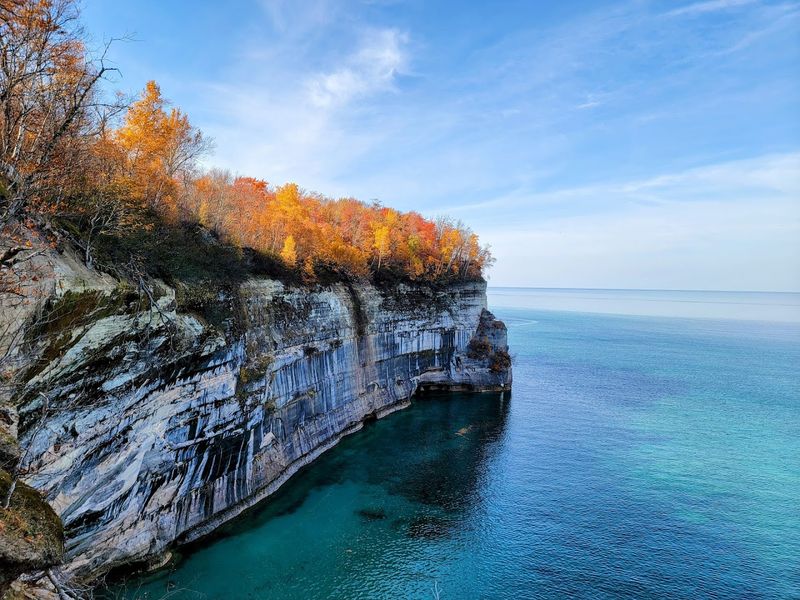
Mineral-streaked sandstone cliffs rising up to 200 feet above the surface of Lake Superior — Pictured Rocks National Lakeshore is one of those places that photos genuinely struggle to do justice. Stretching roughly 42 miles along the Lake Superior shoreline in Michigan’s Upper Peninsula between Munising and Grand Marais, this national lakeshore offers some of the most dramatic coastal scenery anywhere in the Midwest.
The colors painted across the cliffs by iron, copper, and manganese deposits have to be seen in person to be fully appreciated.
Boat tours departing from Munising are the classic way to experience the cliffs up close, gliding past formations with names like Miners Castle, Chapel Rock, and the Grand Portal. Kayaking along the base of the cliffs is another unforgettable option for those comfortable on open water.
Hikers can access the Lakeshore Trail, which runs the length of the park and offers cliff-top views that are breathtaking in their own right.
Winter transforms Pictured Rocks into a completely different kind of wonder. Ice climbers from across the country come to scale the frozen waterfalls that form along the cliffs, and snowshoers explore trails that feel like they belong in a fairy tale.
Each season brings a completely different character to this place, which is part of why people return year after year.
Munising is your base camp for all things Pictured Rocks. The town has grown into a solid hub for outdoor adventure, with outfitters, restaurants, and accommodations catering to visitors.
Timing matters here — boat tour reservations fill up fast in summer, so booking ahead is genuinely important. Pictured Rocks isn’t just a Michigan highlight; it’s a national treasure that happens to be hiding in the Upper Peninsula.
5. Arcadia Overlook / Inspiration Point
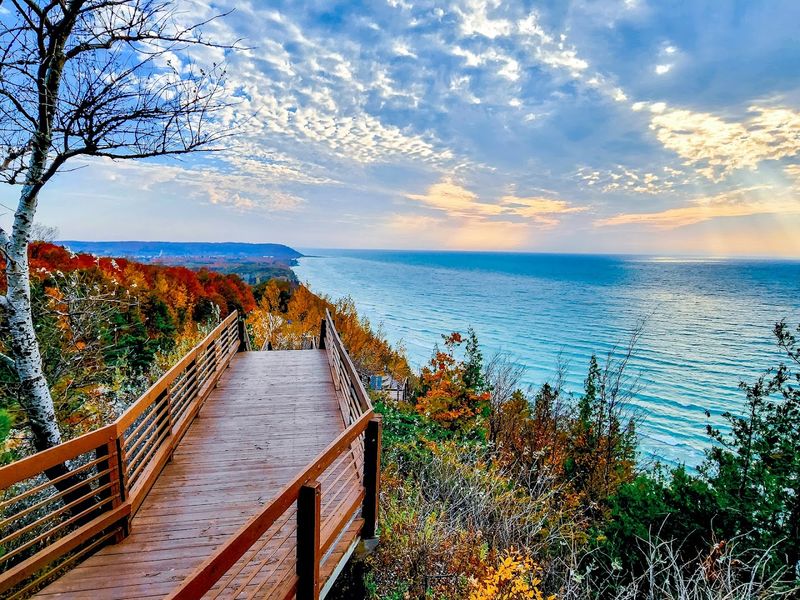
Pull up to the Arcadia Overlook — sometimes called Inspiration Point — and you’ll understand immediately how it earned that second name. Perched high on a bluff above Lake Michigan near the small town of Arcadia in the northwestern Lower Peninsula, this viewpoint delivers one of the most stunning panoramas in the entire state.
The lake stretches out below you in every shade of blue imaginable, flanked by rolling forested hills that seem to go on forever.
The best part? Getting here is ridiculously easy.
There’s a parking area right at the overlook, meaning you can walk a very short distance to reach the viewpoint — no strenuous hike required. That accessibility makes it a great spot for families with young kids, older visitors, or anyone who simply wants the view without the workout.
Of course, if you do want to hike, there are trails in the surrounding area worth exploring.
Sunset at the Arcadia Overlook is genuinely something else. Lake Michigan sunsets are already legendary in Michigan, and having this elevated vantage point means you’re watching the sun sink into the water from above, with the colors spreading across both the sky and the lake surface below.
Locals know about this spot, but it somehow still feels like a secret compared to some of Michigan’s more famous destinations.
Arcadia itself is a tiny, quiet town that doesn’t have a lot of tourist infrastructure — which is actually part of its charm. Nearby Frankfort and Benzonia offer more dining and lodging options if you’re making a longer trip of it.
The Arcadia Overlook fits perfectly into a northern Michigan road trip itinerary, especially if you’re already exploring the Sleeping Bear Dunes area. It’s a short detour with an enormous reward.
6. Kitch-iti-kipi / The Big Spring
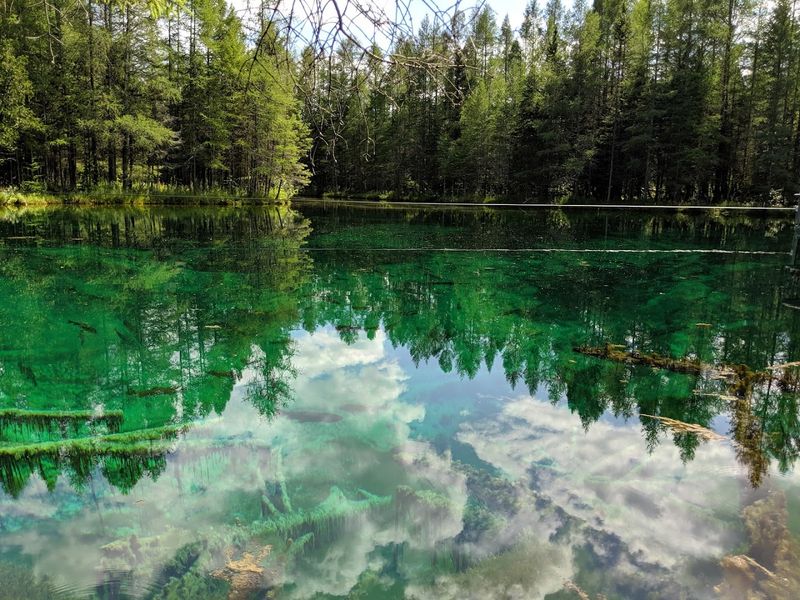
There’s nothing else in Michigan quite like Kitch-iti-kipi, and honestly, there might not be anything else like it in the entire country. Known as “The Big Spring,” this massive natural freshwater spring in Palms Book State Park near Manistique in the Upper Peninsula pumps out around 10,000 gallons of crystal-clear, 45-degree water every single minute.
The result is a pool of impossibly clear turquoise water where you can see massive trout and swaying underwater plants from the surface with startling clarity.
To view the spring, visitors board a self-operated observation raft — a flat wooden platform that you pull across the water using a rope and pulley system. There’s something wonderfully old-fashioned and charming about it.
No motors, no guides, just you and whoever you’re with, slowly pulling yourselves across the spring while peering down through the glass-clear water below. The fish seem completely unbothered by the whole arrangement.
The name “Kitch-iti-kipi” comes from the Ojibwe language, and the spring holds deep cultural significance for Indigenous peoples of the region. Interpretive signage at the park shares some of that history, adding meaningful context to the experience.
The spring maintains its 45-degree temperature year-round, which means it never freezes — making it a genuinely worthwhile winter destination when the surrounding landscape is blanketed in snow.
Admission to Palms Book State Park requires a Michigan Recreation Passport, which is available when you renew your vehicle registration or can be purchased at the park entrance. The spring itself is a short, easy walk from the parking area.
Kitch-iti-kipi tends to be less crowded in the morning on weekdays, so arriving early gives you a quieter, more personal experience with one of Michigan’s most extraordinary natural wonders.
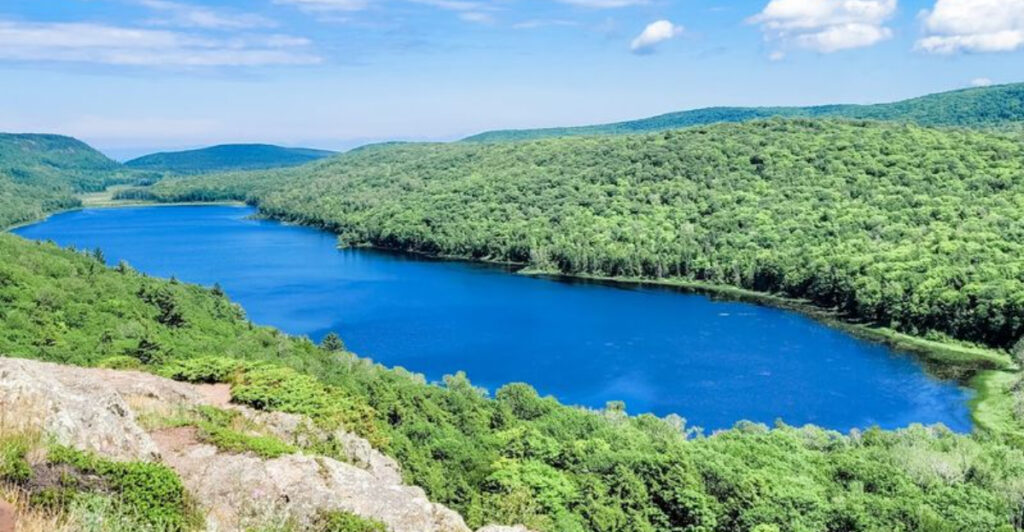
7. Lake of the Clouds Overlook
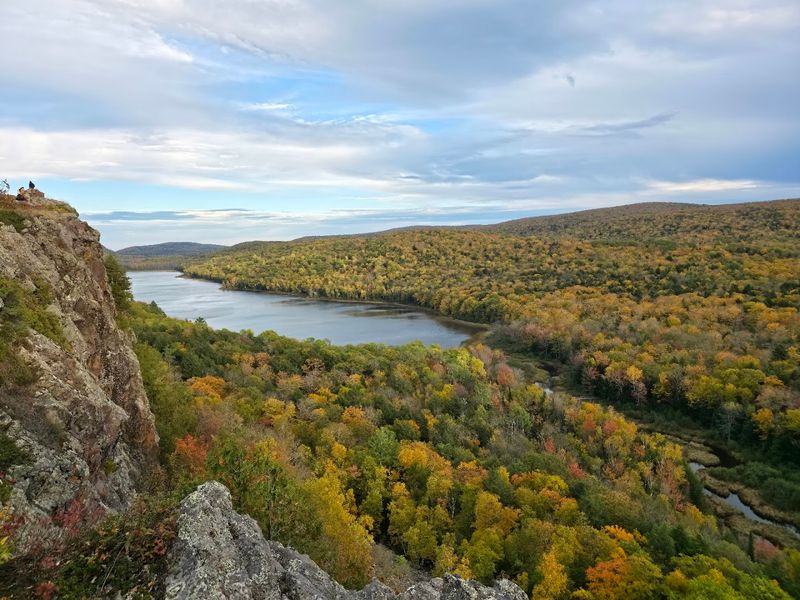
Michigan’s western Upper Peninsula has a wild, remote quality that feels genuinely different from the rest of the state, and nowhere captures that spirit better than the Lake of the Clouds Overlook in Porcupine Mountains Wilderness State Park. From the rocky escarpment above, you look down at a dark, mirror-like lake completely surrounded by one of the largest old-growth forest tracts left in the Midwest.
The scene is moody, majestic, and quietly overwhelming.
The overlook itself is an easy walk from the parking area — maybe five minutes on a paved path. But the view that greets you at the end of that short walk feels like it should require much more effort to earn.
On calm days, the lake reflects the sky and surrounding forest so perfectly that the whole scene looks like a painting. When the clouds are rolling through, the light shifts constantly, making every few minutes feel like a different photograph.
The Porcupine Mountains — affectionately called “the Porkies” by locals — offer far more than just this one overlook. The park has over 90 miles of hiking trails, backcountry cabins, waterfalls, and some of the best fall color in the state.
Serious hikers can reach the Lake of the Clouds via the Lake Superior Trail or the Escarpment Trail, both of which offer jaw-dropping ridge-top views along the way.
The park sits in a remote corner of the UP near Ontonagon, which means you’ll want to plan your visit with lodging booked in advance. Cabins within the park itself are extremely popular and book out months ahead.
Going in late September or early October puts you in the middle of fall color season, when the forest surrounding the lake turns into a tapestry of gold, red, and orange that makes an already stunning view absolutely unforgettable.
8. Sleeping Bear Dunes National Lakeshore
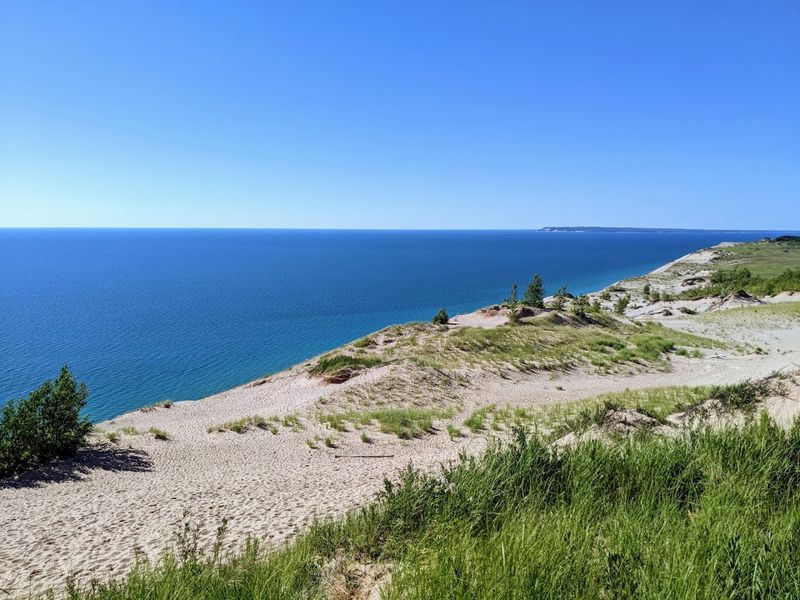
Good Morning America once called Sleeping Bear Dunes National Lakeshore the most beautiful place in America, and Michigan has been quietly smug about it ever since. Located along the northwestern shore of the Lower Peninsula near Empire and Glen Arbor, this national lakeshore features towering sand dunes perched dramatically above Lake Michigan, dense forests, pristine inland lakes, and a stretch of coastline that genuinely earns the word “spectacular.”
The Dune Climb on Pierce Stocking Scenic Drive is the park’s most iconic experience — a steep sandy slope that lures visitors up with the promise of a view. The climb itself is a workout, but reaching the top and suddenly seeing Lake Michigan spread out below you in brilliant blue is a full-stop, speechless moment.
Going back down is much faster and significantly more fun, especially if you let gravity do most of the work.
Pierce Stocking Scenic Drive is a must even if you skip the climb. The seven-mile loop road winds through the park and stops at multiple overlooks, each delivering a slightly different angle on the dunes and the lake.
Lake Michigan Overlook, near the end of the drive, offers one of the most photographed views in the entire state — a steep bluff dropping hundreds of feet to the water below.
Beyond the dunes, Sleeping Bear offers excellent kayaking on the Crystal River, hiking through beech-maple forest, and the scenic Manitou Islands accessible by ferry. The surrounding towns of Glen Arbor, Empire, and Traverse City (just 20 miles away) give you plenty of dining and lodging options.
Summer weekends get crowded, so arriving early or visiting on a weekday gives you a noticeably better experience. This place earns its reputation every single time.
9. Brockway Mountain Drive
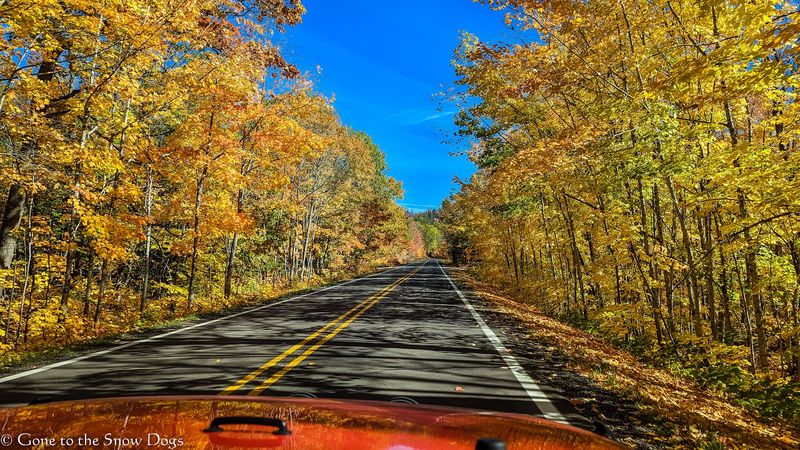
Brockway Mountain Drive near Copper Harbor at the very tip of Michigan’s Keweenaw Peninsula is the kind of road that makes you want to pull over every quarter mile. Stretching about nine miles along a ridge above the surrounding landscape, it’s the highest paved road between the Rockies and the Alleghenies — and the views from the top back that claim up completely.
On a clear day, you can see Isle Royale National Park sitting out in Lake Superior, roughly 50 miles offshore.
The drive itself is the experience. There’s no single summit with a parking lot and a railing — instead, the whole road is the attraction, with overlooks and pullouts scattered along the route that let you stop and take in different perspectives of the surrounding forest, Lake Superior, and the rugged Keweenaw terrain.
Copper Harbor sits below on one side, and the open lake stretches to the horizon on the other.
Raptor watchers know Brockway Mountain as one of the premier hawk-watching spots in the entire Great Lakes region. During spring and fall migration, thousands of broad-winged hawks, sharp-shinned hawks, and other raptors funnel along the ridge, making it a magnet for birders from across the Midwest.
Even if birds aren’t your thing, watching a kettling hawk migration from this vantage point is genuinely spectacular.
Copper Harbor itself is a wonderfully remote little town at the end of US-41 — literally the end of the road. It has a small but dedicated tourism scene built around mountain biking, kayaking, and the ferry to Isle Royale.
Visiting Brockway Mountain Drive at sunrise is a popular local recommendation, and for good reason — the early light over Lake Superior from that ridge is the kind of scene that sticks with you long after you’ve driven home.
10. Arch Rock on Mackinac Island
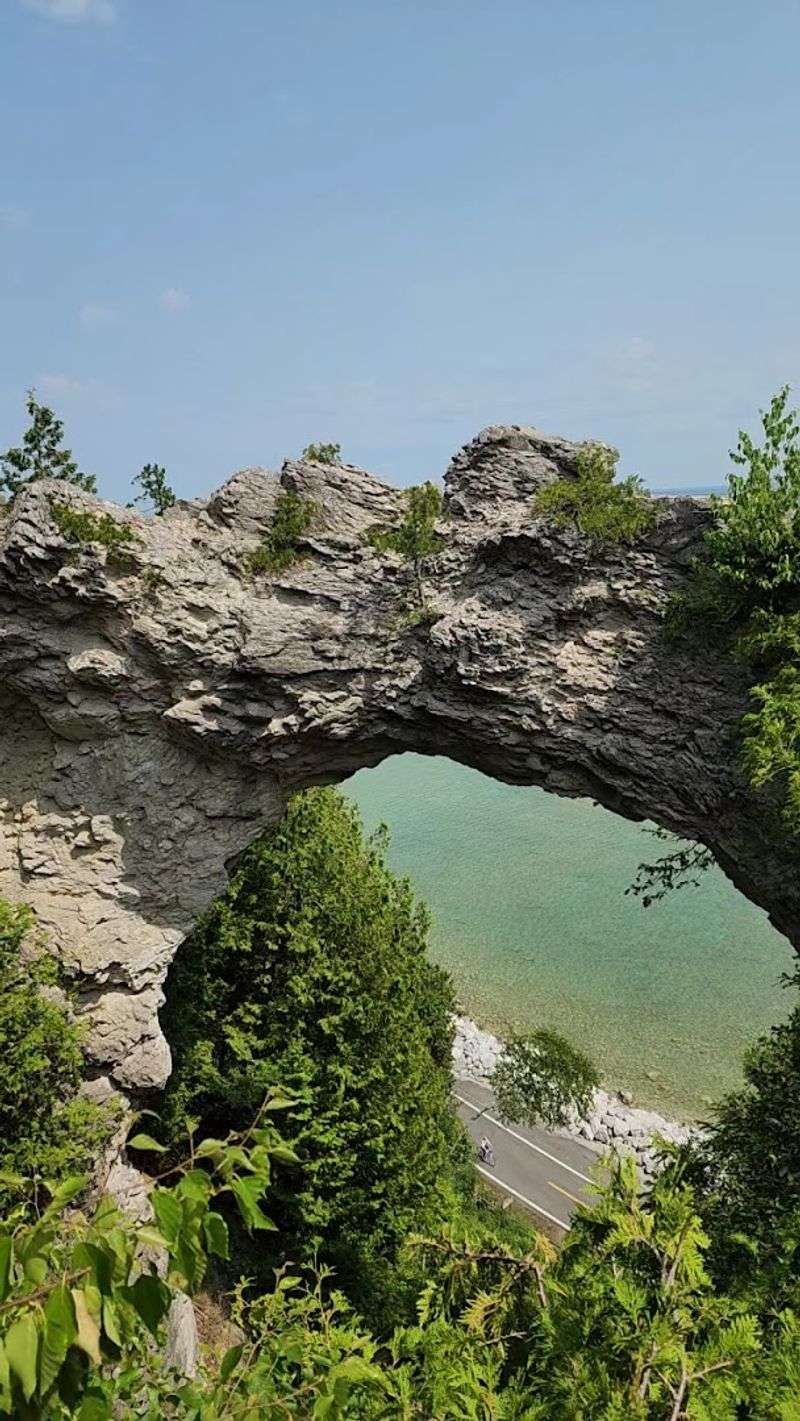
Arch Rock on Mackinac Island is one of those geological formations that stops people mid-conversation. A massive natural limestone arch rising about 146 feet above Lake Huron’s shoreline, it’s been carved by centuries of wind and water into a dramatic curved frame that perfectly showcases the blue water below.
Standing at the top and looking through the arch at the lake stretching out beneath you is a genuinely surreal experience.
Getting to Arch Rock is part of the fun of being on Mackinac Island. Since no cars are allowed on the island, you arrive by ferry from either Mackinaw City or St. Ignace and then explore by foot, bike, or horse-drawn carriage.
The island’s road system is beautifully scenic, and cycling the 8-mile perimeter road to reach Arch Rock from the main village is a classic Mackinac experience that most visitors end up loving.
The arch is accessible via a staircase that drops down from the road above to a viewing platform right at the base of the formation. From there, you look up through the arch at the sky, then turn around to look out at Lake Huron — two completely different perspectives, both worth the trip.
The surrounding area is part of Mackinac Island State Park, which covers most of the island’s interior and offers miles of hiking and biking trails.
Mackinac Island itself is a place unlike anywhere else in Michigan. The absence of cars, the smell of fudge drifting from every other shop on Main Street, the clip-clop of horse hooves on cobblestones — it has a genuinely timeless quality that charms almost everyone who visits.
Arch Rock fits perfectly into a full day of island exploration, and it’s the kind of natural landmark that earns its spot on every Michigan bucket list without any debate.
11. Tahquamenon Falls State Park
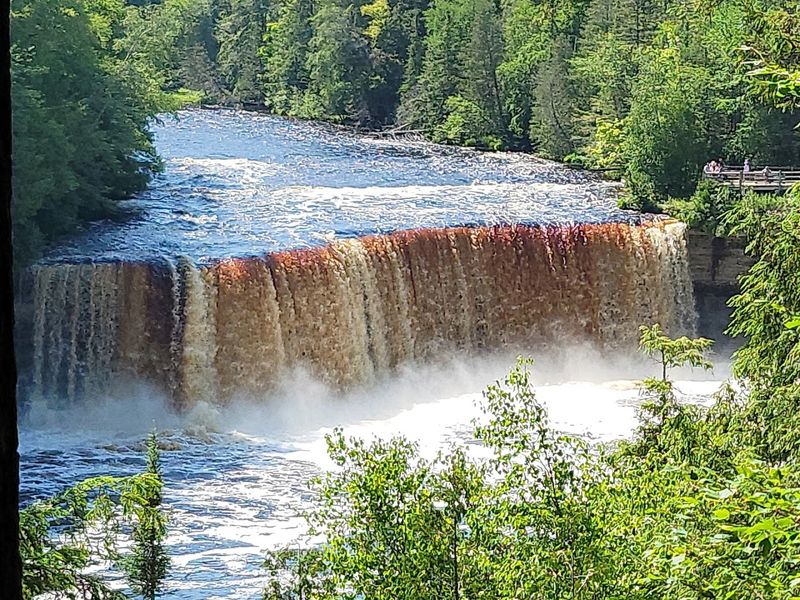
Amber-colored water pouring over a wide rocky ledge in the middle of a dense Upper Peninsula forest — Tahquamenon Falls is one of the most powerful and visually striking waterfalls east of the Mississippi River. Located in Tahquamenon Falls State Park in the eastern UP near Paradise, the Upper Falls drops about 50 feet and spans nearly 200 feet across, making it an imposing sight that earns every superlative thrown at it.
The distinctive tea color of the water comes from tannins leaching from the surrounding cedar swamps — completely natural and oddly beautiful.
The park has two main falls — the Upper Falls and the Lower Falls — connected by about four miles of trail through old-growth forest. The Lower Falls is a series of smaller cascades surrounding a river island, which visitors can reach by renting rowboats from the park concession.
Paddling out to the island and exploring the falls from water level is a highlight that most visitors don’t expect to enjoy as much as they do.
Henry Wadsworth Longfellow mentioned the “rushing Tahquamenaw” in his famous poem “The Song of Hiawatha,” which gives the place a literary weight that adds to its already considerable mystique. Whether or not you’re a poetry person, knowing that this waterfall has been inspiring people for centuries makes standing in front of it feel slightly more significant.
Fall is the peak season for Tahquamenon, when the surrounding forest turns vivid and the amber water contrasts dramatically with the orange and red foliage. Summer is lush and green, with the falls at or near full flow.
The park has excellent facilities including a restaurant, camping, and well-maintained trails. It’s a full-day destination on its own, and most people who visit end up wishing they had stayed longer.
Share this story