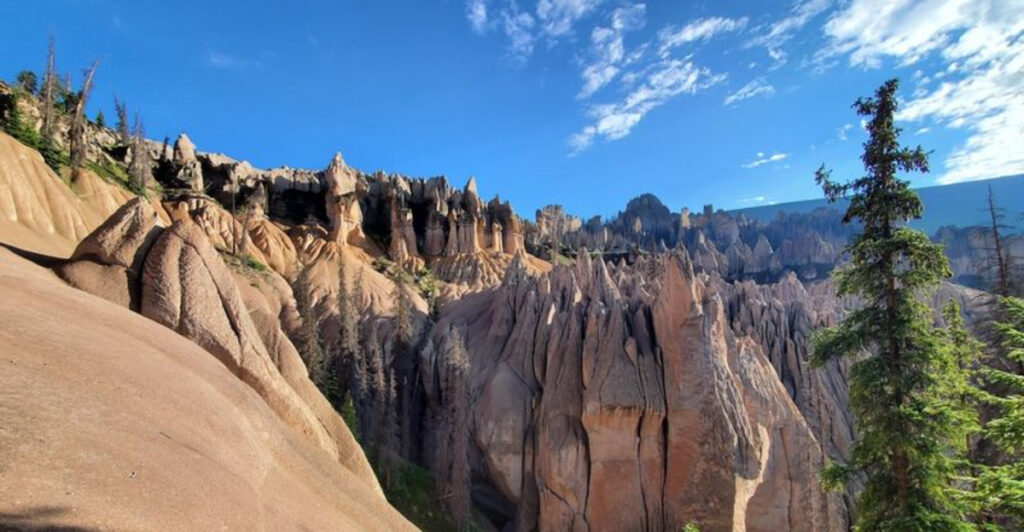
Some of Colorado’s most extraordinary places are also the hardest to reach. Hidden deep within the San Juan Mountains, Wheeler Geological Area rewards adventurous travelers with a surreal landscape of towering volcanic spires, weather-carved rock formations, and pale stone pinnacles that have earned it the unforgettable nickname “The City of Gnomes.”
Its remote location has helped preserve an atmosphere of true wilderness, where silence, dramatic scenery, and unusual geology combine to create an experience unlike anywhere else in the state. Whether you’re an avid hiker, a photographer, or simply someone who enjoys discovering Colorado’s lesser-known wonders, this remarkable destination is worth every mile of the journey.
The Pale Towers That Stop You Cold
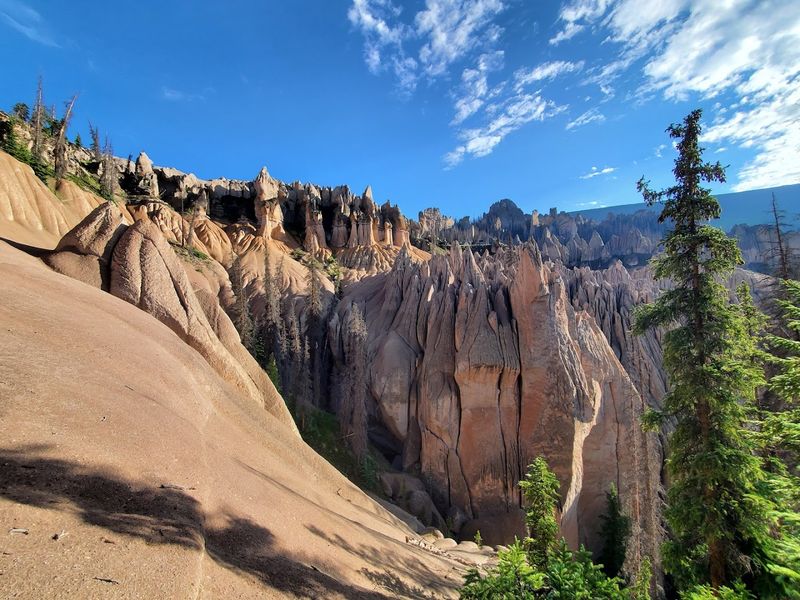
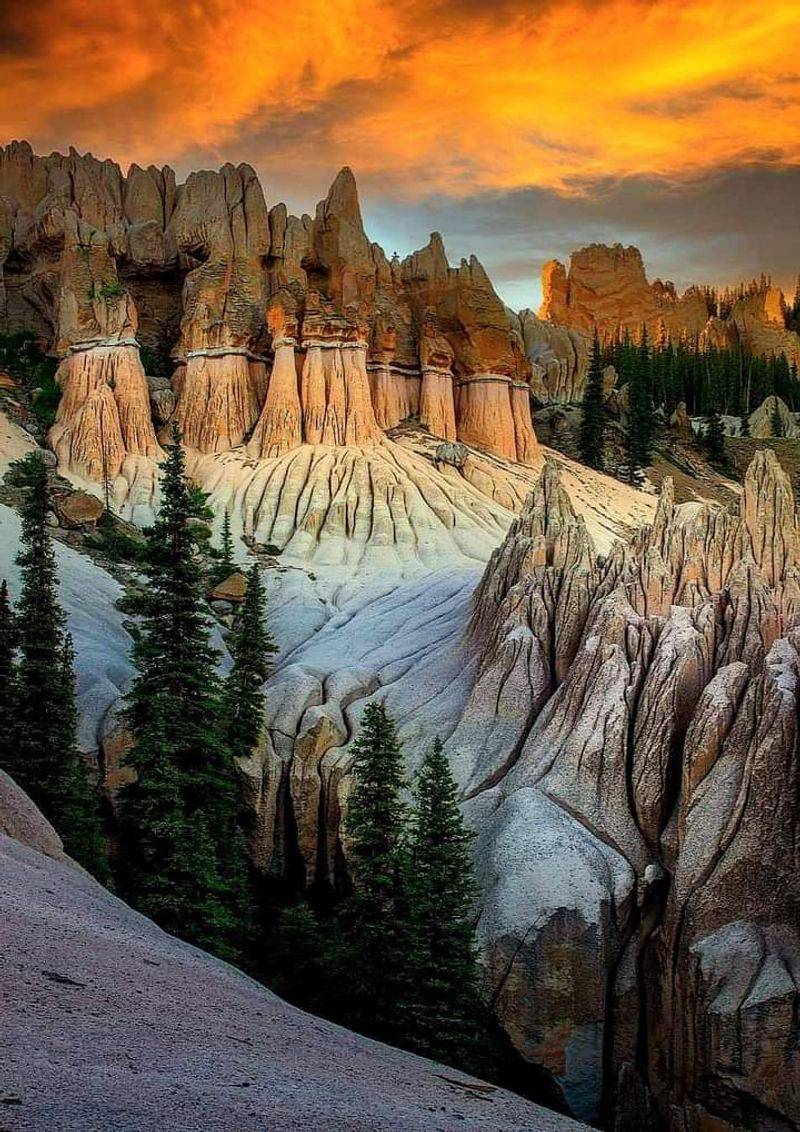
The first look at Wheeler Geological Area does not build slowly. One minute you are in rough, high-country terrain shaped by forest, slopes, and weathered road, and the next you are staring at a cluster of pale rock towers that seem dropped in from another landscape entirely.
Their color is part of the shock. Instead of the darker stone and dense greens many travelers expect around Creede, Wheeler flashes chalky tan, gray, and off-white against the mountain setting.
That contrast is exactly why the formation earns nicknames like the City of Gnomes. The rock rises in narrow fins, squat turrets, and jagged pinnacles that resemble tiny castles, worn monuments, or a skyline built by erosion rather than hands.
Even at a distance, the shapes look busy and architectural. Up close, the surfaces turn crumbly, ribbed, and strangely delicate, with grooves and sharp edges cut by wind, rain, and time.
Colorado has no shortage of dramatic scenery, but Wheeler delivers a very specific kind of surprise. It is not broad and sweeping in the usual alpine way.
It is concentrated, eccentric, and almost theatrical, with the basin acting like a natural stage for these unusual formations. That compact visual punch changes the rhythm of the visit.
Instead of scanning endlessly toward the horizon, your attention locks onto details, silhouettes, openings, and shifting shadows.
Light plays a big role in the effect. Morning and late-day sun carve stronger definition into every spire, while midday brightness can make the pale stone look even more surreal against the darker ground around it.
The whole area reads like a geological oddity hiding in plain sight. Before you know anything about how it formed or how long it took to reach, the rocks already make their case.
Why Colorado’s City of Gnomes Looks So Unusual
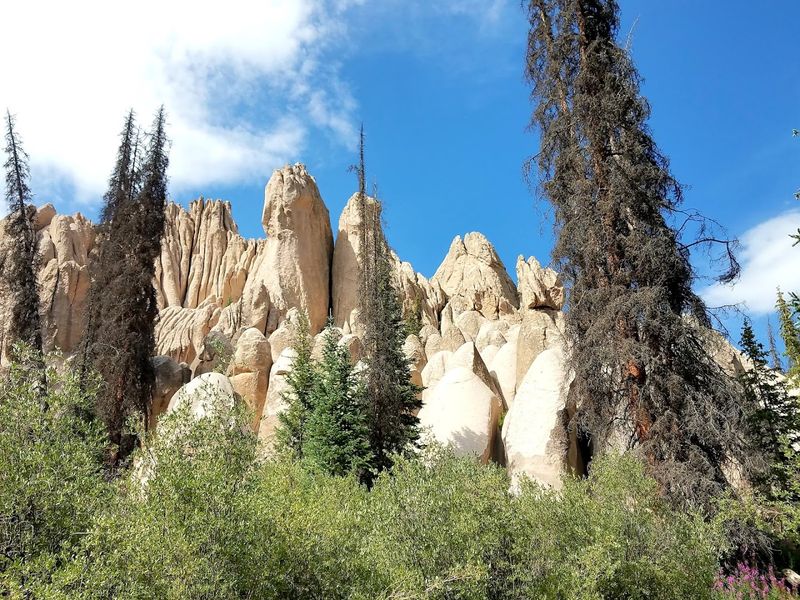
Wheeler Geological Area stands out because the stone behaves differently than the rugged mountain scenery around it. The formations are made from volcanic material, and that origin helps explain their softer, more sculpted appearance.
Instead of reading as solid cliffs or massive peaks, the rock breaks into fluted walls, columns, and pointed tops that look carved with unusual precision. Erosion did the artistry here, but the raw material made that shaping possible.
The area is often described as otherworldly, and the phrase fits best when you focus on texture rather than hype. These are not smooth sandstone arches or polished granite domes.
The faces appear brittle, dusty, and finely chiseled, as if the towers could shed a little history with every hard storm. Tiny ledges, vertical grooves, and uneven crowns create the impression of stone that is both dramatic and vulnerable.
That tension gives Wheeler much of its visual identity. Because the formations rise from a remote basin rather than a roadside overlook, you get to watch the geology reveal itself in stages.
The surrounding landscape primes you for forest and mountain travel, not a compact kingdom of spires. Then the basin opens and the scene starts making geological sense while still resisting easy comparison. It is volcanic country, yes, but filtered through years of weathering into shapes that look almost hand-built.
This is also why the place photographs so well without needing exaggerated angles or effects. The forms already have strong outlines and natural depth.
Shadows settle into grooves, pale ridges catch the light, and even a short walk through the area brings new profiles into view.
Wheeler does not rely on one iconic rock or a single perfect vantage. Its appeal comes from the way the whole formation keeps changing as you move around it.
The Journey In Is Part of the Story
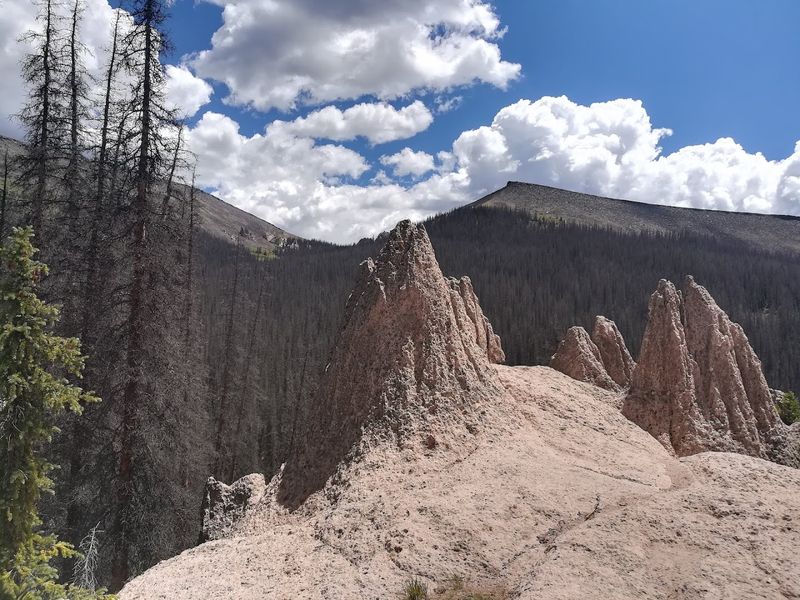
Wheeler is not the kind of place you casually tack onto a road trip between lunch and sunset. Reaching it requires intention, and that changes the mood long before the formations appear.
The route is known for being rough, remote, and better suited to prepared travelers than spontaneous detours. That difficulty is not a side note.
It is one of the reasons the destination still feels wild instead of packaged. Travelers usually approach with either a serious high-clearance plan or a willingness to hike.
Reports from the area consistently point to demanding road conditions, with ruts and mud becoming a bigger factor when weather turns.
The remoteness matters just as much as the rough surface. Cell service should not be assumed, and this is not terrain where casual underplanning feels charming for very long.
Wheeler rewards commitment, but it expects respect on the way in. That effort shapes the psychology of the visit. By the time the basin comes into view, you have already traded convenience for access, and the landscape starts feeling more earned than consumed.
Crowds are not the defining feature here. Distance is. Every mile reinforces that this landmark belongs to a harder-working category of Colorado travel, one where the approach is inseparable from the payoff.
Oddly enough, the challenge also sharpens the scenery. Forested stretches, changing elevation, and rough mountain terrain create a buildup that makes the pale formations look even stranger on arrival.
Wheeler benefits from contrast, and the route provides plenty of it. This is not a place that gives everything away from a parking lot. The story unfolds over time, and the destination lands harder because the road refuses to make it easy.
A Short Walk Opens the Stone Maze
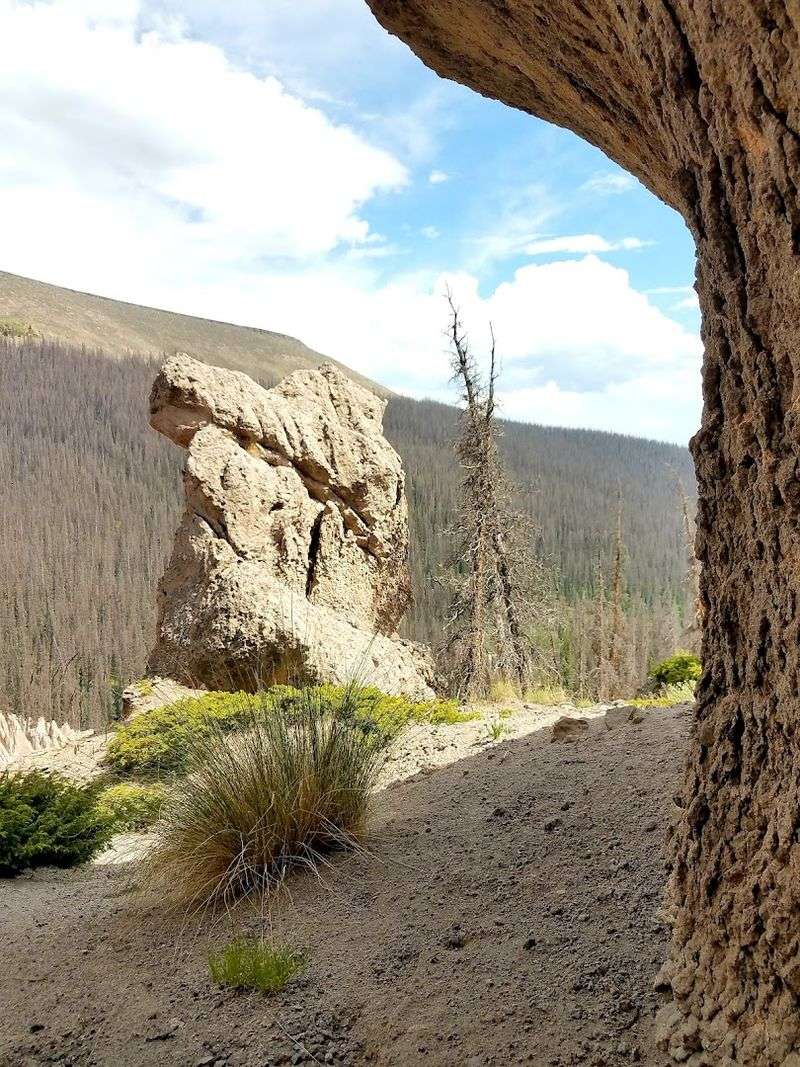
After the long approach, one of Wheeler’s smartest surprises is that the final walk into the formations is relatively short. That shift in scale matters.
The destination asks a lot from your day, then suddenly turns intimate, letting you leave the vehicle or trail behind and step into a tighter landscape of towers, walls, and eroded folds. The basin stops being a distant spectacle and becomes a place you can read at eye level.
This is where the nickname starts working overtime. From nearby, the formations stop looking like a single mass and begin separating into quirky shapes that suggest tiny ramparts, clustered chimneys, and weathered stone rooms.
The terrain invites slow movement, not a rushed photo stop. You naturally pause to compare one spire with the next, follow shadow lines across ridges, and notice how fragile some edges appear against the sky.
The compactness of the area works in its favor. Wheeler does not need endless acreage to feel substantial because the visual complexity is concentrated.
Every few steps can produce a different angle, and even modest elevation changes alter the composition. One side may look like a row of sharpened teeth; another can read like collapsed castle walls.
That constant visual reshuffling keeps the walk active without requiring technical hiking once you are there. Just as important, the close range makes the place feel less like a viewpoint and more like a geological encounter. You are not only admiring the shapes from afar.
You are moving among them, seeing how the pale rock sits against darker soil, sparse vegetation, and mountain sky. Wheeler’s scale is part of its charm. It feels large enough to astonish, yet small enough to explore in a focused, unhurried way.
Remote, High, and Surprisingly Quiet
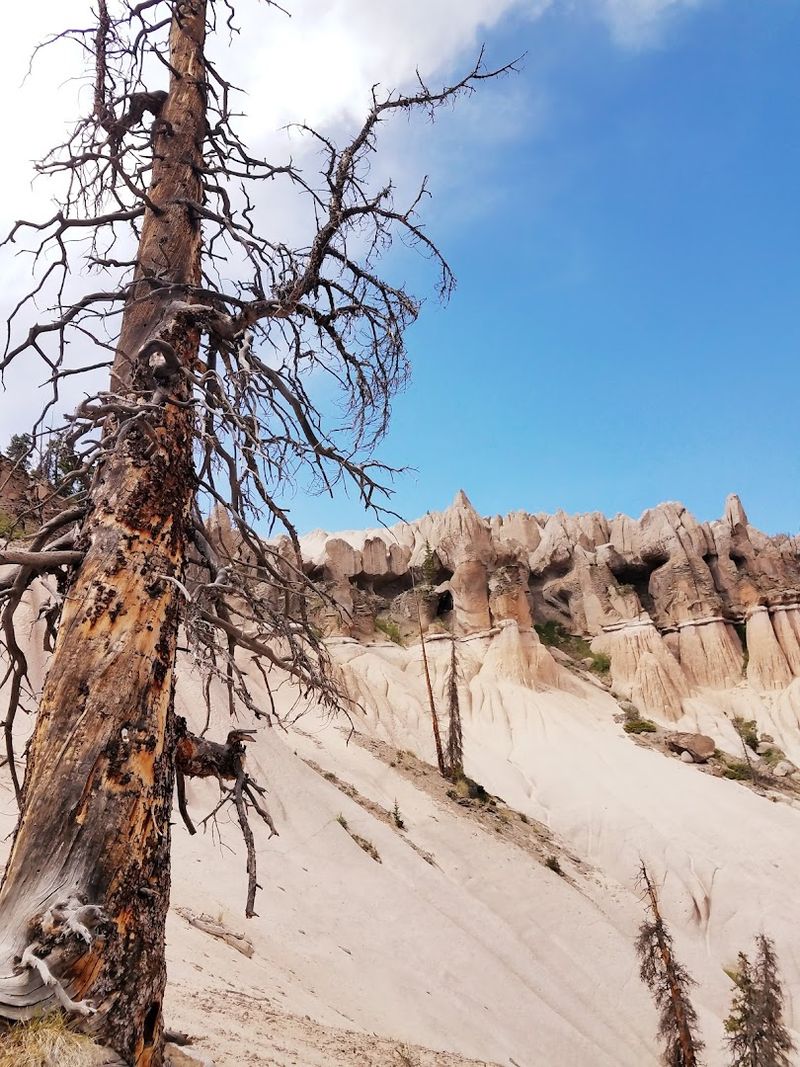
Silence works differently at Wheeler than it does at more accessible scenic stops. In busy mountain areas, quiet usually arrives in brief pockets between passing cars, conversations, or camera clicks.
Here, the remoteness changes that pattern. Once you are near the formations, the setting can feel stripped down to wind, footsteps, and the visual noise of the rocks themselves.
That stillness adds definition to the place without needing any dramatic storytelling. The basin is high, open, and exposed enough to keep you aware of the elements. Sun can feel sharp, clouds can shift quickly, and weather matters more when you are far from services and easy exits.
Sparse vegetation around the formations gives the pale stone even more presence, almost as if the landscape deliberately cleared space for the geology to take center stage. Instead of a lush backdrop softening the scene, Wheeler offers a leaner, harsher frame.
That environmental simplicity is part of why the area feels visually clean. There is not much competing for attention.
The eye moves between sky, ground, mountain edge, and those strange sculpted towers. Even the colors stay relatively restrained, which makes the forms themselves do more work.
You notice outlines, erosion patterns, and subtle shifts in tone rather than a riot of scenery pulling in ten directions at once.
For travelers used to Colorado’s blockbuster overlooks, Wheeler offers a different kind of immersion. It is less about standing at a railing and more about being dropped into a quiet geologic pocket that seems detached from everyday scale.
The distance from town, the lack of easy convenience, and the high-country exposure all contribute to that effect. Wheeler is dramatic, yes, but its strongest move may be how much empty space it leaves around the drama.
Best Timing for a Longer Wheeler Day
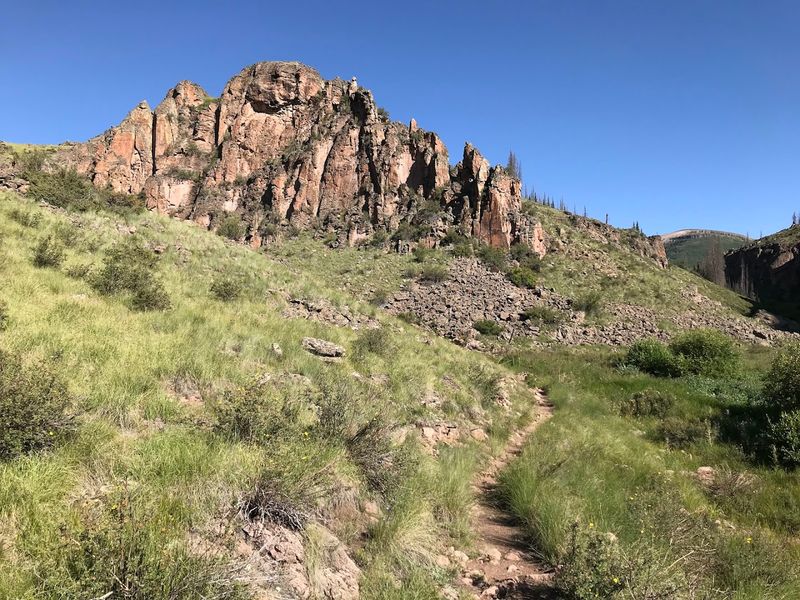
Timing matters at Wheeler because the destination does not fit neatly into a casual half-day outing. The approach can be lengthy, the road conditions can slow progress, and the formations deserve more than a rushed glance before turning around.
That is why early starts make practical sense. A morning departure gives you breathing room for the route, time to explore on foot, and a better margin for changing mountain weather later in the day.
Light is another reason to think carefully about when you arrive. Low sun tends to sharpen every ridge and groove in the pale rock, giving the formations stronger depth and cleaner contrast.
Midday can still be striking, especially with blue sky overhead, but the stone often looks most dimensional when shadows are longer. If photography matters to you, those edge hours can do a lot of work without requiring any special tricks.
Travelers who want the fullest experience often treat Wheeler as an all-day mission rather than a single stop. That pacing allows for the rough access, the short walk into the area, and the simple pleasure of lingering once the towers come into view.
Trying to compress the outing can turn a remarkable landscape into a checklist item, which undersells the place. Wheeler works best when the schedule has room to breathe.
Preparation is part of timing too. Food, water, layers, navigation awareness, and realistic turnaround decisions matter more in a remote setting.
The point is not to dramatize the outing, only to match the plan to the location. Wheeler’s appeal comes partly from how far removed it feels from convenience.
Give the day enough hours, arrive with patience, and the experience unfolds with far less pressure and far more payoff.
Why This Creede Landmark Refuses to Blend In
Wheeler Geological Area stands apart not because it is bigger, easier, or more famous than Colorado’s headline attractions. It stands apart because it is odd in a deeply specific way.
The combination of remote access, pale volcanic formations, compact scale, and high-country setting creates a place that does not blend into the state’s usual visual categories. You are not choosing Wheeler for convenience.
You are choosing it for character. That character starts with the formations themselves, but it does not end there. Plenty of scenic places look impressive in photos and flatten out in person.
Wheeler moves in the opposite direction. A picture can preview the spires, yet it cannot fully capture the contrast between the rough mountain approach and the suddenly delicate-looking stone basin ahead.
The place gains strength from context, and that context has to be traveled through. Creede is surrounded by landscapes with serious drama, so Wheeler’s ability to hold its own says a lot. It does not compete by trying to be grander than the mountains.
Instead, it offers a separate visual language. Small towers, eroded walls, narrow fins, and chalky textures create an experience built on detail and strangeness rather than scale alone.
That difference is exactly why the landmark earns such strong reactions from people willing to make the trip. If your ideal Colorado outing involves paved ease and quick overlooks, Wheeler may not be the match.
If you like destinations with a little friction, a lot of visual payoff, and a story that begins long before the main view, it fits beautifully.
The City of Gnomes nickname may sound playful, but the setting is serious, rugged, and unforgettable. Few places in the state look this unusual, and fewer still make you work for the privilege.
Share this story