Somewhere in the hills of southeastern Oklahoma, a giant slab of sandstone stands under a protective cover, carved with letters that look like they belong in Scandinavia.
Nobody can say for certain who cut them or when.
Some folks point to Viking explorers, while others have their own theories, and the debate has never been settled.
The best part is that the trails leading to this puzzle are free to walk, wind past rock formations and a seasonal waterfall, and welcome families of every hiking level.
Stick around to learn where this mystery sits, what else waits along the paths, and how to plan a day trip that costs almost nothing.
1. A Mystery Tucked Into the Heavener Hills
Oklahoma is not just flat prairie, and one forested ridge near the Arkansas line proves it.
Heavener Runestone Park sits at 18365 Runestone Rd, Heavener, OK 74937, in the southeastern corner of the state.
The town of Heavener lies in LeFlore County, close to the Ouachita country that surprises first-timers with its hills.
The park is built around one remarkable object.
A sandstone slab roughly 10 feet tall carries a line of carved runic characters, the same style of writing once used in Norse lands.
Around that stone, the grounds spread out into hiking trails, picnic pavilions, a playground, a primitive campground, and a small gift shop near the trailhead.
The setup makes it easy to treat the place as a full outing instead of a quick stop.
A family can hike, eat lunch under a pavilion, let the kids burn off energy, and still have time to argue about who carved those letters.
That last part tends to stick with people long after the drive home, and the story behind the stone explains why.
2. Letters Carved by Unknown Hands
Eight characters.
That is roughly all it takes to keep historians, hikers, and curious kids guessing for generations.
The runestone is a massive sandstone slab, about 10 feet tall, with an inscription that resembles ancient Norse runes.
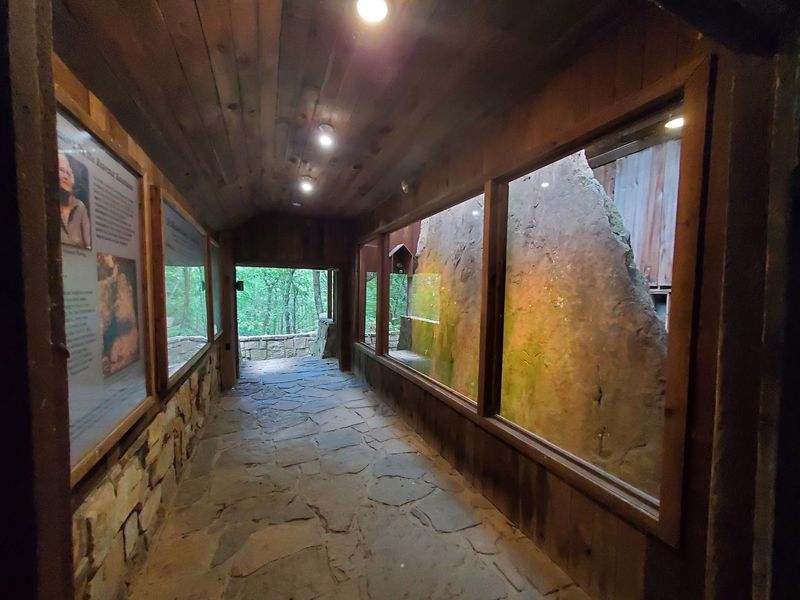
It is well preserved and now sits under cover, which keeps weather from wearing the carving away.
Staff and volunteers are happy to walk through the many theories about its origin.
The Viking connection is the one that gets the most attention, and plenty of guests leave convinced it is the most likely answer.
Others keep an open mind.
Some wonder whether Norse travelers ever made it this far inland at all, which is exactly the kind of question that turns a simple walk into a lively debate.
No single explanation has been proven.
The stone keeps its secret, and that unanswered question is the main reason people drive out of their way to stand in front of it.
Bring that curiosity along, because the park offers a few more clues worth checking out.
3. One Stone Among Several
Here is a fun fact to share on the drive: the Heavener stone is often described as one of five runestones found in Oklahoma.
That detail tends to surprise people who assumed the state had just one odd carving.
It also adds fuel to the theory that someone was moving through this region long ago and leaving marks behind.
The park leans into that bigger picture.
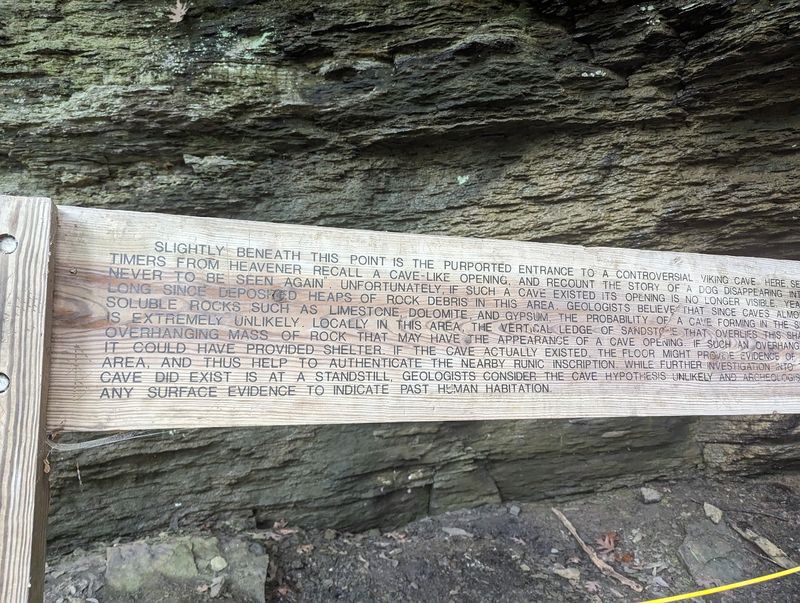
Signs along the grounds share history and context, and there are replicas from other locations so guests can compare carvings side by side.
History buffs tend to linger at these displays.
Reading the signs before reaching the main stone makes the inscription feel less like a random curiosity and more like part of a larger puzzle.
Kids can play detective here too.
Comparing shapes from one replica to another is an easy, hands-on way to get younger hikers interested in the history before the trail gets more rugged.
With the background covered, it is time to talk about the real fun, which is getting there on foot.
4. Three Trails Through the Woods
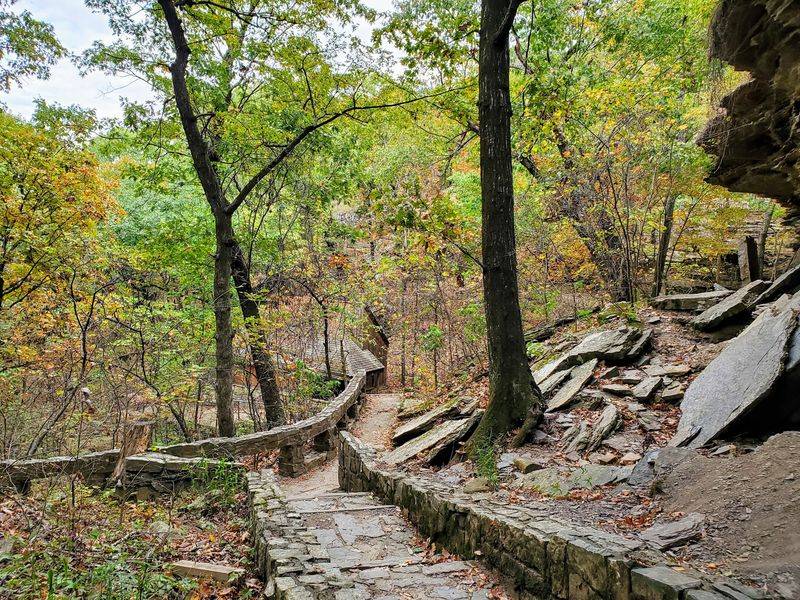
Hiking is the activity people bring up most when they talk about this park, and for good reason.
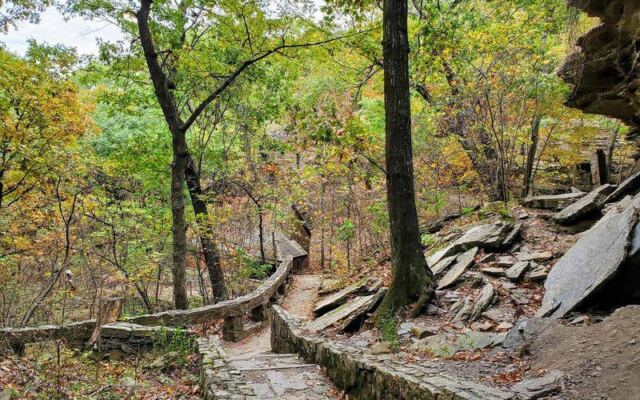
There are three walking trails, and they wind through woods toward the covered stone.
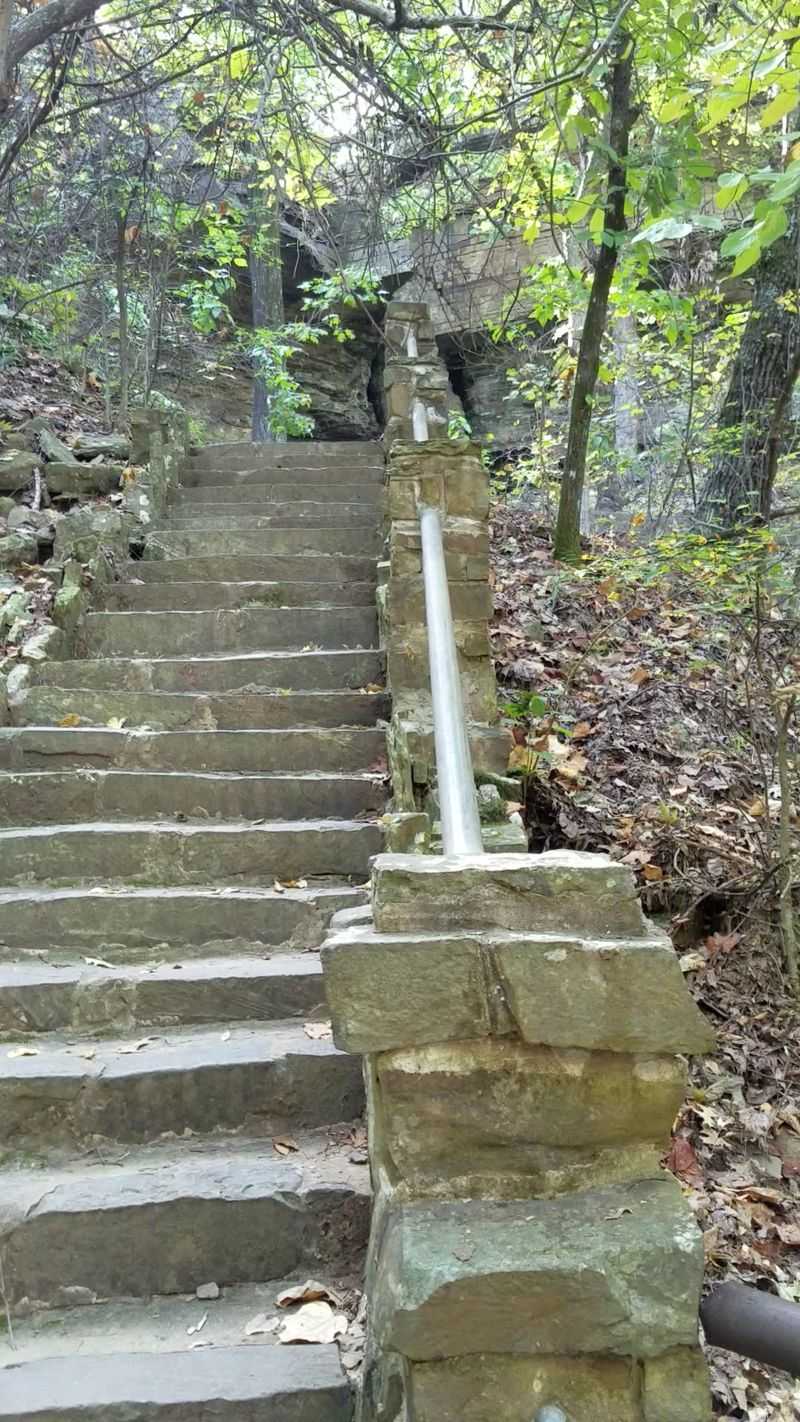
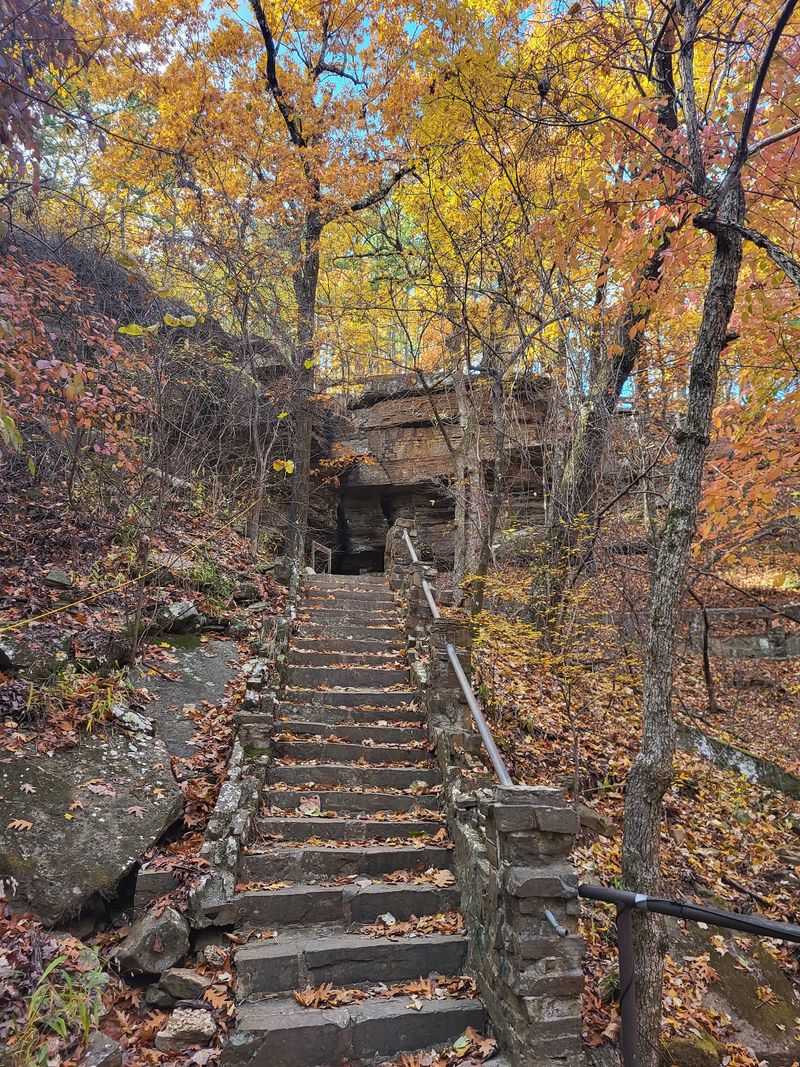
The paths are well maintained and easy to follow, which matters when the terrain dips into rocky ravines.
Difficulty depends on who is asked.
Many families call the main walk easy and not strenuous at all, while others describe moderate sections that are tougher on tired legs.
A safe takeaway is that most people can handle it at a relaxed pace.
Those with knee or mobility concerns should plan for some climbing and descending.
Signage between trails could be clearer, so some hikers end up covering every route by accident.
Most seem glad about that happy mistake, since the extra miles reveal more rock formations and small waterfalls.
Leashed dogs come along on these paths too, adding four-legged trail buddies to the mix.
Speaking of those rock formations, they deserve their own spotlight.
5. Slab Walls and Rocky Hideaways
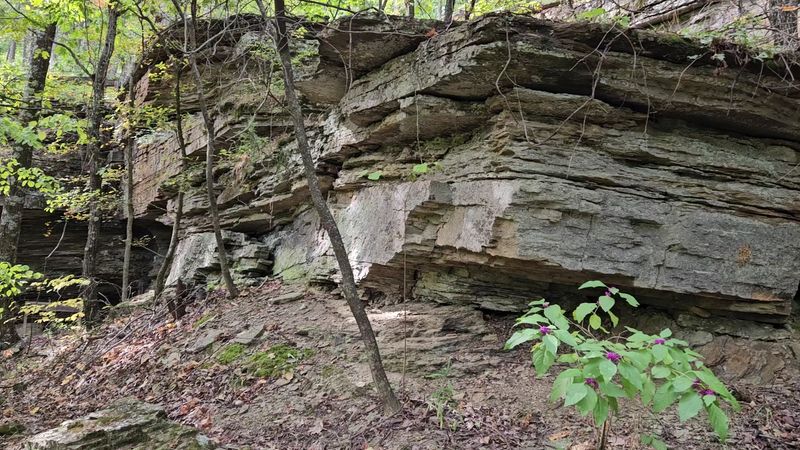
Not every big rock in this park has letters on it, but plenty of them steal attention anyway.
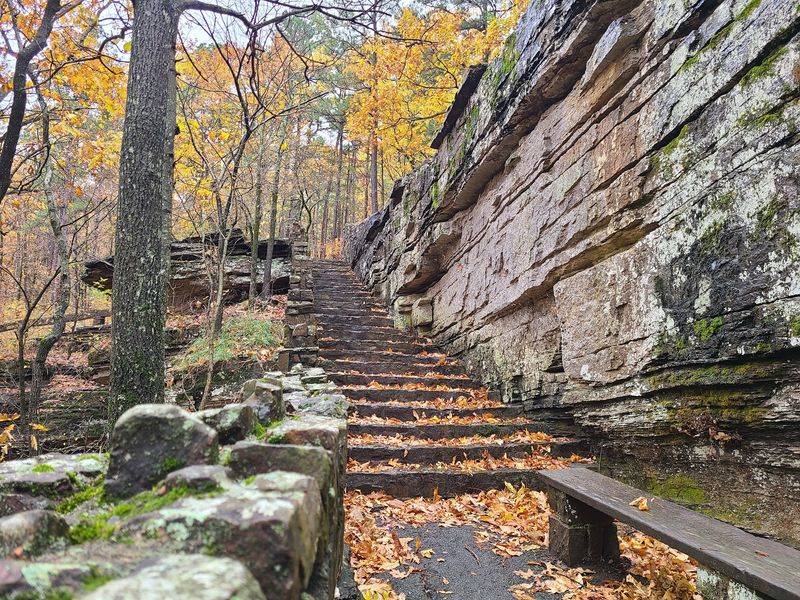
Massive slab walls line portions of the trail.
Small caves and rocky overhangs break up the forest and give the hike a change of scenery.
These spots are a hit with kids, who enjoy climbing down and poking around the formations.
Parents appreciate that the paths around them are easy enough to get in and out of without a major workout.
Photographers find plenty of material here as well.
The slab walls make dramatic backdrops for family shots, and the stone textures look great in pictures from almost any angle.
The formations also hint at why someone might have chosen this ravine for a carving in the first place.
A towering, flat sandstone face practically invites a message.
Of course, rocks this size come with water running between them at certain times of year, and that leads to one of the park’s crowd favorites.
6. The Waterfall That Comes and Goes
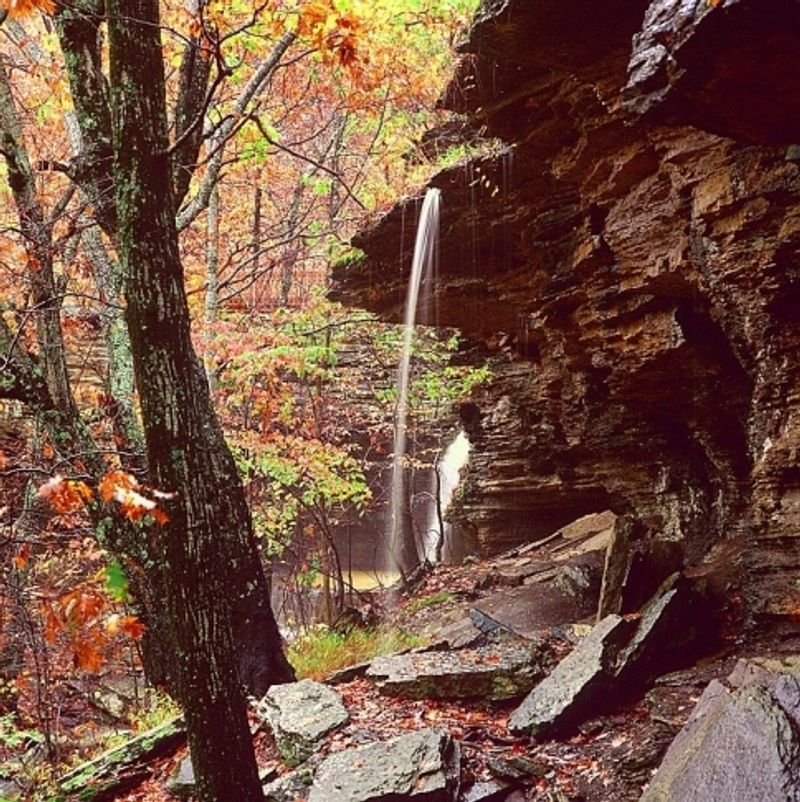
Timing is everything with the waterfall here.
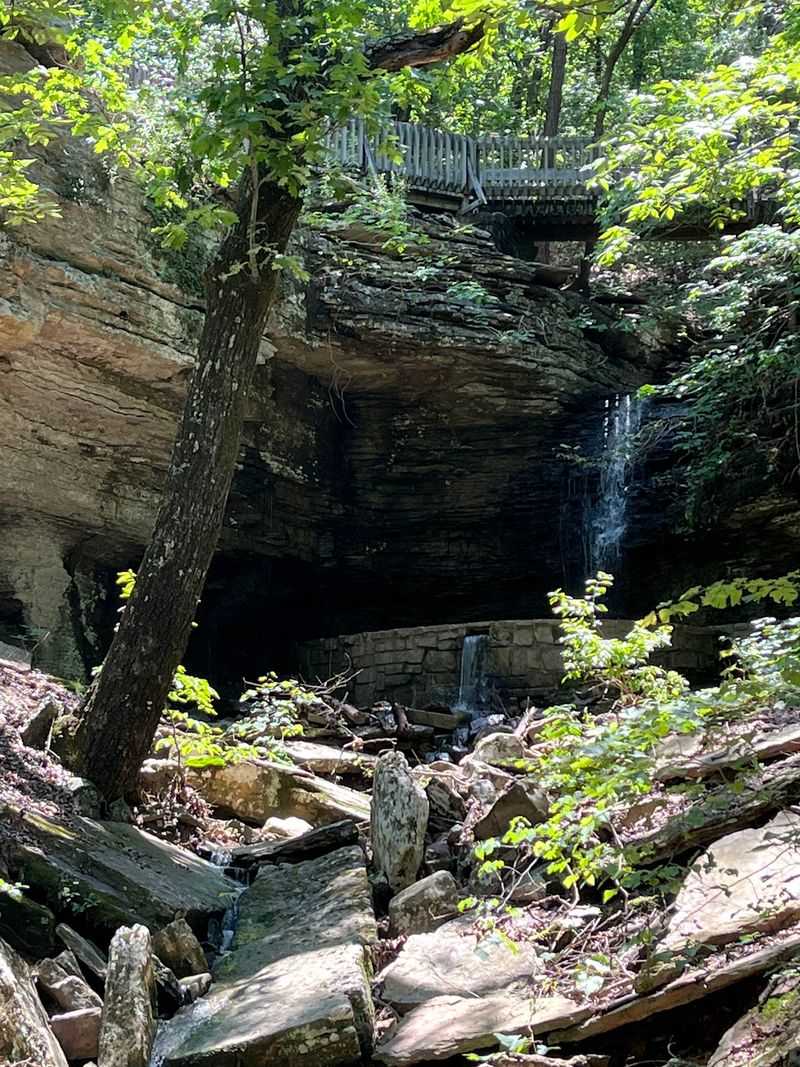
A seasonal waterfall runs through the park, along with smaller cascades scattered along the trails.
When conditions are right, it becomes one of the most talked-about stops on the walk.
It has been flowing even during a frigid winter day of around 20 degrees, and it also runs after light rain.
Wetter stretches of the year give the best odds of catching water moving over the rocks.
Dry spells are a different story.
There is no promise it will be running on any given visit, so it is smart to treat the waterfall as a bonus rather than the main event.
A quick check of recent weather before leaving home can help set expectations.
After a good rain, it is worth building extra time into the hike to linger nearby.
Even without a flow, the rock ledges where water usually tumbles are fun to explore.
The ravine still offers plenty of reasons to slow down.
7. Views From the Upper Overlook
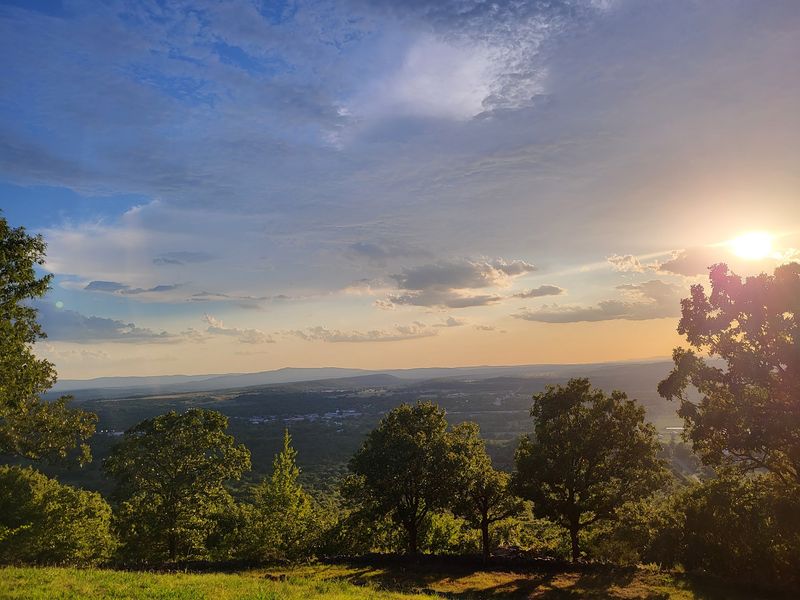
Before heading down into the ravine, take a minute at the top.
The upper parking area doubles as a scenic overlook, and the view across the surrounding forest and hills is a highlight on its own.
Scenery and views rank high among what people mention after a trip.
This is the spot that settles the old argument about Oklahoma being flat.
Rolling, tree-covered ridges stretch out in a way that surprises newcomers from the western half of the state.
The roads leading in are nice and scenic too, so the drive becomes part of the outing instead of just the commute.
Families often use the overlook as a natural first or last stop.
Snap a group photo at the top, hike down to the stone, then come back up for one more look.
Fall is often named as the best season to visit, and it is easy to see how changing leaves would make this view even more photo-worthy.
Spring brings fresh green to the ridges as well.
8. Picnic Pavilions and a Playground
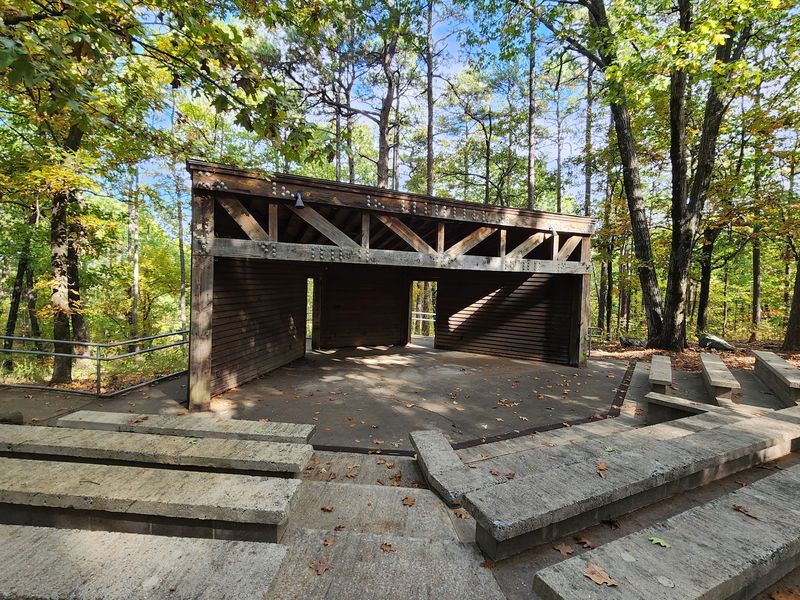
Hungry hikers have options, as long as they pack their own lunch.
The park offers plenty of covered pavilions for picnics.
Fire pits sit nearby, making the grounds a good fit for a long, lazy afternoon.
A small playground keeps younger kids busy while adults rest after the trail.
It is a simple setup, but it turns a history stop into a full family day without extra spending.
There is also an open-air amphitheater on the grounds, adding to the list of amenities.
Restrooms are available too, which parents with little ones will appreciate.
For budget-minded families from Tulsa, Fort Smith, or nearby towns, this combination is hard to beat.
Pack sandwiches, grab a pavilion, and the whole day costs little beyond gas.
Quiet corners around the property invite slower moments as well.
A small meditation bench gives anyone needing a break a calm place to sit.
Those who want to stretch the day even longer can stay overnight.
9. Roughing It at the Campground
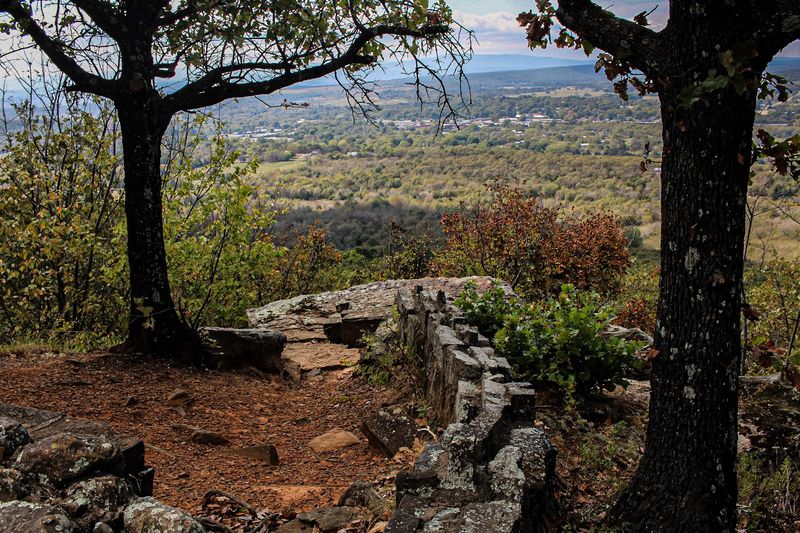
Camping comes up a lot when people talk about this place, and it is the old-school kind.
Campsites are primitive only, with no electricity or water hookups at the sites.
Tent campers fit right in, and there is an RV area as well.
That does not mean zero comfort.
The campground has clean bathrooms and a shower, which makes a night outdoors much easier for families new to camping.
Staying overnight has a clear advantage.
Campers can hit the trails right at opening time, before day-trippers arrive, and enjoy a quieter look at the stone.
Planning ahead matters with primitive sites.
Bring enough water, lighting, and supplies, since hookups are not part of the deal.
Camping fees are not listed in the available information, so calling ahead before the trip is the smart move.
Policies and availability may change, especially around busy weekends.
Whether staying one night or several, campers tend to meet the friendly folks who run the place.
10. Rune Souvenirs at the Trailhead Shop
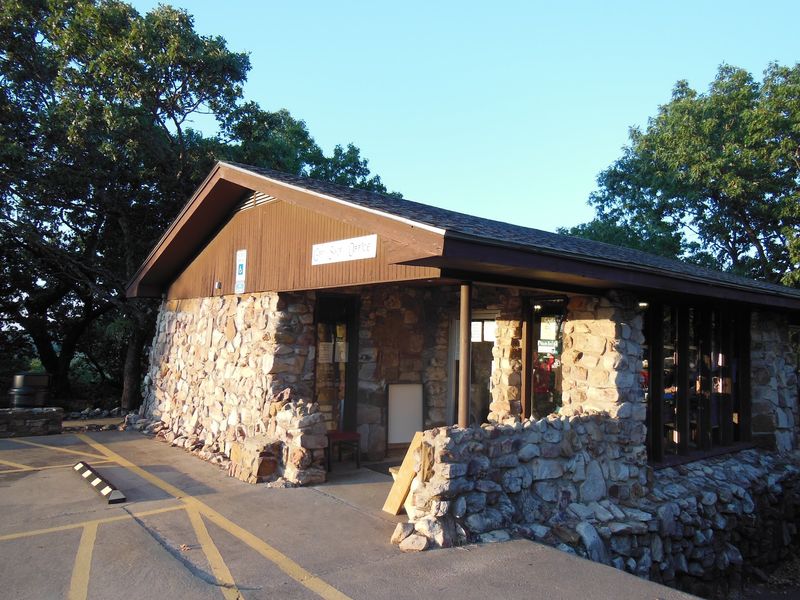
Right at the start of the trailhead, a small gift shop doubles as the park office.
Shelves are stocked with plenty of Norse rune themed items, plus gifts and goodies for kids.
It is a natural place to pick up a keepsake that matches the mystery out on the trail.
Snacks and cold drinks are sold here too, at fair prices.
That is handy for families who underestimated how thirsty a hike can make everyone.
The shop also works as an information stop.
Staff share background on the stone and the area, which makes a great warm-up before hitting the trail.
Shoppers should know the inventory includes a range of decorative pieces, and anyone sensitive to certain symbols may want to browse with a careful eye.
Hours for the shop generally follow park hours, but small operations can vary.
Checking ahead is wise for anyone set on buying something specific.
Beyond souvenirs, the people behind the counter may be the shop’s best feature.
11. Small-Town Hospitality on Duty
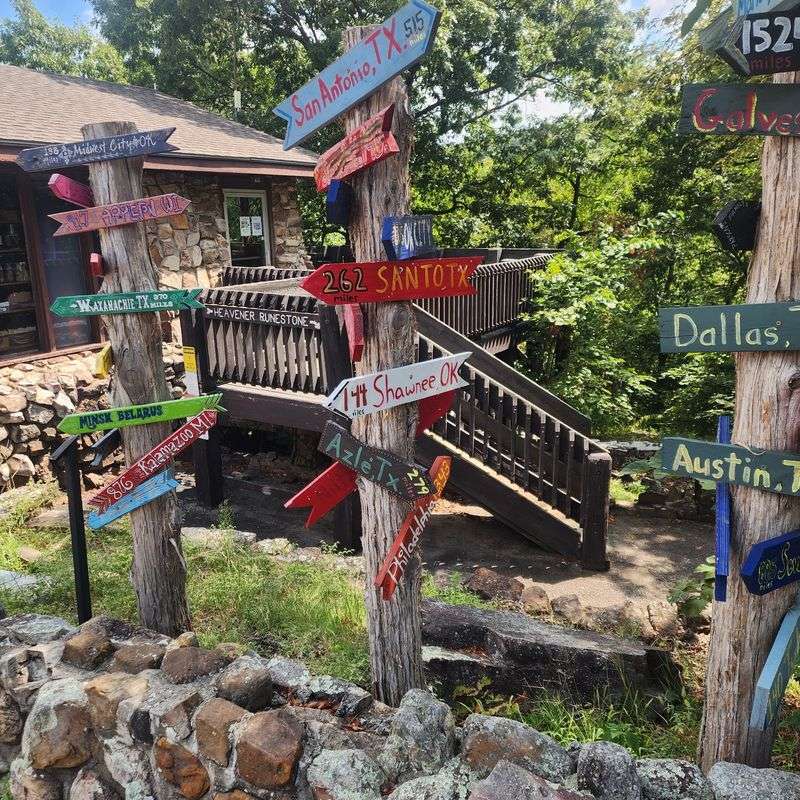
Friendly staff earn nearly as much praise as the stone itself.
The people working the gift shop and grounds are known for being kind, professional, and full of local knowledge.
Many guests end up chatting for a while about the park and its past.
Volunteers help keep things running, and their care shows in the condition of the trails and grounds.
Owner replies to online comments often thank people personally for stopping by.
Stories of extra effort are common.
The caretaker has opened the shop for late arrivals, and locals have stepped in to help travelers with car trouble during busy events.
That kind of help reflects the small-town spirit of Heavener.
It is the sort of welcome that makes a free attraction feel like a personal invitation.
For families who want history explained in plain language, the staff are a resource worth using.
Ask questions, especially about the theories behind the carving.
Their efforts also matter because of how the park is now run.
12. From State Park to Local Keepers
Here is a twist many first-timers do not expect.
Heavener Runestone Park used to be a state park.
State funding was pulled a few years ago, and the site is no longer operated as an Oklahoma state park.
The change did not leave it neglected.
The grounds remain very well kept, the pathways are cared for, and the stone stays protected and preserved.
That upkeep comes from local caretakers and volunteers who clearly value the site.
Their effort keeps the trails open to the public without an admission charge.
For people who grew up visiting, the park still feels familiar.
Families who first came decades ago return with children and grandchildren, finding the place largely unchanged.
That sense of continuity gives the stone extra weight.
Generations have hiked the same paths and puzzled over the same carving.
Supporting the gift shop is one easy way to help keep the park going.
A small purchase goes a long way at a place run on local dedication.
13. Hours, Costs, and Planning the Drive
Good news for budget planners: admission to the trails is free.
The park is open daily from 9 AM to 5 PM, seven days a week.
Hours may change, so a quick call or website check before driving out is a good idea.
Plan for a full outing rather than a quick photo stop.
Allowing plenty of time lets everyone explore the trails, rest at a pavilion, and visit the shop without rushing.
Footwear matters here.
Sturdy shoes help on rocky sections, and the hills can test tired legs on the way back up.
Season choice makes a difference too.
Fall is often called the best time to go, while wetter months improve the waterfall odds, and even cold winter days can be pleasant for hiking.
The park also hosts a Viking festival, which draws bigger crowds and may involve paid parking and shuttles.
Those wanting quiet trails should check event dates first.
With logistics handled, the only question left is whether the trip is worth it.
14. Why the Riddle Is Worth the Road Trip
Some places answer every question.
This one hands out a fresh one with every visit.
With a 4.7-star average across more than a thousand public ratings, the park has earned a strong following.
The blend of history, hiking, and friendly faces explains much of that loyalty.
It works for many types of travelers.
History fans get theories and replicas, hikers get three trails, and families get a playground, pavilions, and free admission.
It also fits the Oklahoma pride story perfectly.
Forested hills, waterfalls, and a mystery carving all sit in a corner of the state many people overlook.
Nobody has proven who carved the stone.
That might be the best part, since every visitor gets to leave with a personal theory.
Pack a lunch, wear good shoes, and head for Heavener.
The runes have waited this long, and they are ready for one more set of curious eyes.
Share this story