Blue Mountain Lake in New York’s Adirondacks is the kind of place that instantly lowers the volume on everyday life. Tucked deep within Hamilton County at the junction of Routes 28, 28N, and 30, this tiny hamlet of fewer than 150 full-time residents offers something increasingly difficult to find: real quiet.
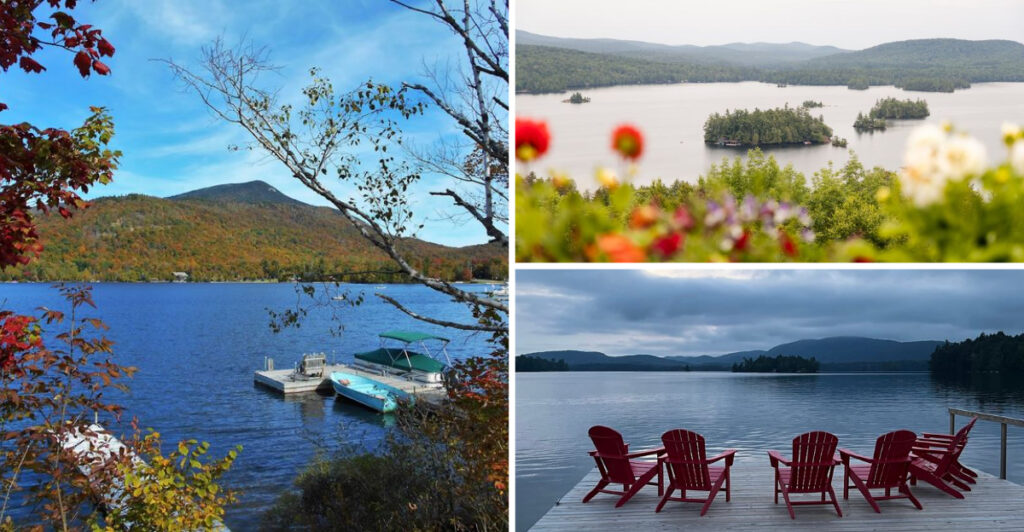
The lake reflects the surrounding forest with near-perfect stillness, while the mountains rising behind it make the entire landscape feel wonderfully removed from the rush of normal routines. Nothing here feels rushed or overcrowded. If your idea of a perfect escape involves calm water, mountain air, and the chance to truly slow down, Blue Mountain Lake quietly delivers exactly that.
Where the Mirror Lake Meets the Mountain Sky
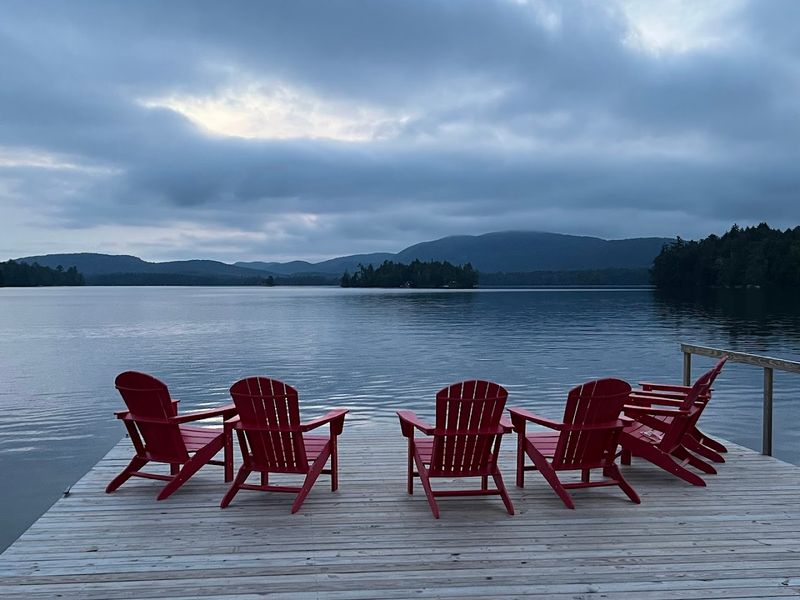
Standing at the water’s edge on a still morning, the surface of Blue Mountain Lake looks less like water and more like a sheet of polished glass.
The reflection of Blue Mountain itself sits perfectly inverted in the lake, doubling the scenery in a way that feels almost unreal. On mornings with no wind and no motorboats, the silence is so complete you can hear a loon call from across the water.
Blue Mountain Lake sits at an elevation of roughly 1,800 feet, which gives the air a crispness that feels different from lower Adirondack valleys.
The lake stretches across approximately 1,200 acres and connects to Eagle Lake and Utowana Lake through natural channels, creating a paddling corridor that serious canoeists have treasured for generations.
These linked waters were part of a historic carry route used by early guides and travelers moving through the interior of the Adirondacks.
The shoreline shifts character depending on where you stand. Some sections are rimmed with smooth granite slabs that slope gently into the water, perfect for sitting and watching the light change.
Other stretches are thick with white birch and spruce pressing right down to the waterline. Late afternoon light hits the western face of Blue Mountain and turns the whole scene amber and gold, which is the moment most photographers have been waiting for all day.
Swimming, fishing, and non-motorized boating are all part of the lake’s rhythm. The water stays cool even in July, fed by streams draining off the surrounding high peaks.
Smallmouth bass and lake trout attract anglers who know this water well. For anyone arriving with no specific plan, simply sitting near the shore and watching the lake breathe through the day is more than enough.
The Adirondack Museum That Changed How People Think About the Region
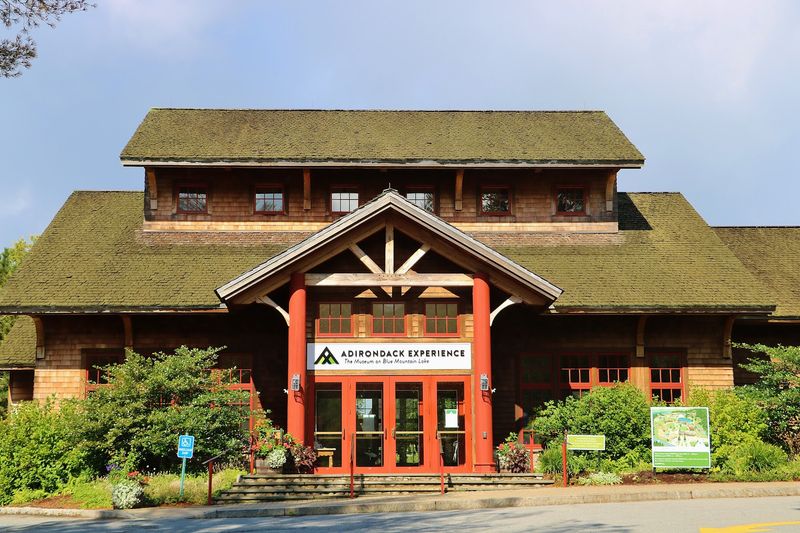
Perched on a hillside overlooking the lake, the Adirondack Experience — formerly known as the Adirondack Museum — is one of the most important regional museums in the northeastern United States.
It covers over 120 acres and includes more than 20 historic buildings, making it far more of an immersive campus than a traditional indoor collection.
The museum tells the story of the Adirondacks through the people who lived, worked, and played here across several centuries.
The exhibits cover everything from the golden age of Great Camp architecture to the working lives of loggers, guides, and iron miners who shaped the region’s economy long before tourism arrived.
Antique wooden boats, hand-built guideboats, and beautifully crafted pack baskets are displayed alongside paintings by artists who made the Adirondacks famous in the 19th century. The collection of Adirondack guideboats alone is considered one of the finest anywhere.
Outdoor exhibits include restored historic structures like a one-room schoolhouse, a logging camp, and a private railroad car that once carried wealthy visitors into the mountains.
Walking between buildings, you get a strong sense of how dramatically this landscape shaped the way people built things, traveled, and organized their lives.
The views from the museum grounds over Blue Mountain Lake are genuinely spectacular and worth the visit on their own terms.
The museum is open seasonally, generally from late May through mid-October. It draws visitors who are curious about Adirondack history as well as families looking for an educational day that does not feel like a lecture.
Children tend to respond strongly to the hands-on elements and the sheer variety of things to see. For first-time visitors to Blue Mountain Lake, this is often the anchor of the entire trip.
Paddling the Historic Carry Route Through Connected Waters
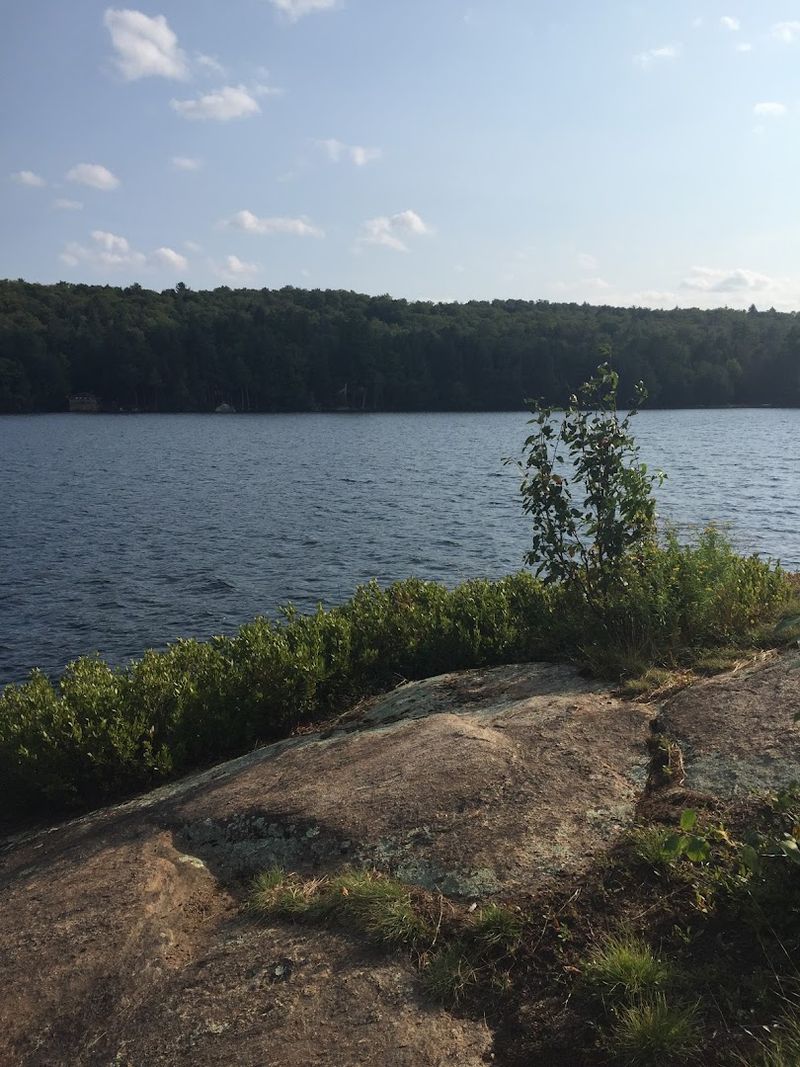
Long before roads crossed this part of the Adirondacks, the lakes and carries were the highways. Blue Mountain Lake connects to Eagle Lake and then to Utowana Lake through two short carries — overland portages where paddlers lift their boats and walk between water bodies.
This route was used by Native Americans, early explorers, and the famous Adirondack guides who escorted wealthy sportsmen through the interior during the late 1800s. Paddling it today puts you in direct contact with that long history.
The carries themselves are short enough that even beginners can manage them without much difficulty. The longest is under a mile of flat walking on a well-worn path through the forest.
Once you reach Eagle Lake, the water opens up into a quieter, more sheltered environment where loons are commonly spotted and the shoreline remains almost entirely undeveloped. The transition from one lake to the next feels like moving through a series of natural rooms.
Canoe and kayak rentals are available near the hamlet during the warmer months, making the route accessible to visitors who arrive without their own gear. The water temperature stays cool through summer, which keeps algae minimal and visibility high.
On a clear day, you can see the bottom in the shallower sections near shore, watching perch and bass move through the underwater grasses.
Early morning is the best time to launch. Mist often sits on the water surface until mid-morning, and the bird activity peaks in those first hours after sunrise.
By midday the lake can develop a light chop from afternoon breezes, which adds a bit of challenge but also keeps the experience from feeling too easy. The full three-lake route can be completed in a relaxed half-day, leaving plenty of afternoon time to explore the hamlet itself.
Blue Mountain Itself: A Summit Worth Every Step in New York’s Adirondacks
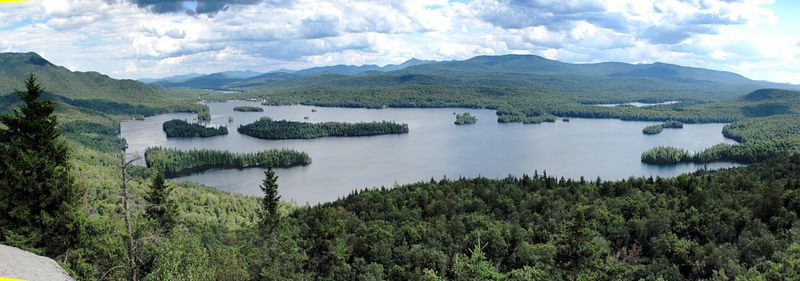
Blue Mountain rises to 3,759 feet above sea level, placing it just below the elite 46 High Peaks but well above the surrounding terrain.
The fire tower at the summit is one of the best-preserved examples in the Adirondacks, and on a clear day the view from the cab extends across a landscape of lakes and ridgelines that stretches in every direction without a single visible rooftop or road.
It is the kind of view that makes the climb feel completely worth it before you even catch your breath. The trail to the summit starts just north of the hamlet on Route 28N and climbs roughly 1,550 feet over about two miles. The path is well-marked and maintained, though it steepens considerably in the upper section.
Most hikers in reasonable shape can reach the top in ninety minutes to two hours. The trail passes through a classic Adirondack forest mix of hardwoods in the lower sections giving way to boreal spruce and fir near the summit.
The fire tower itself was staffed seasonally for much of the 20th century, with observers watching for smoke across the vast forest below. Volunteers now maintain the tower and are often present on weekends to share its history with visitors.
Climbing the tower’s metal stairs adds another thirty feet of elevation and opens up a full 360-degree view that is simply not available from any other vantage point in the area.
Fall foliage season transforms the hike into something extraordinary. The mixed forest below turns red, orange, and yellow in late September and early October, and from the tower the entire visible landscape looks like it has been painted by hand.
Parking at the trailhead fills quickly on autumn weekends, so arriving before 8 a.m. gives you the best chance of a quiet summit experience.
The Hamlet Itself: Small Enough to Walk, Interesting Enough to Linger
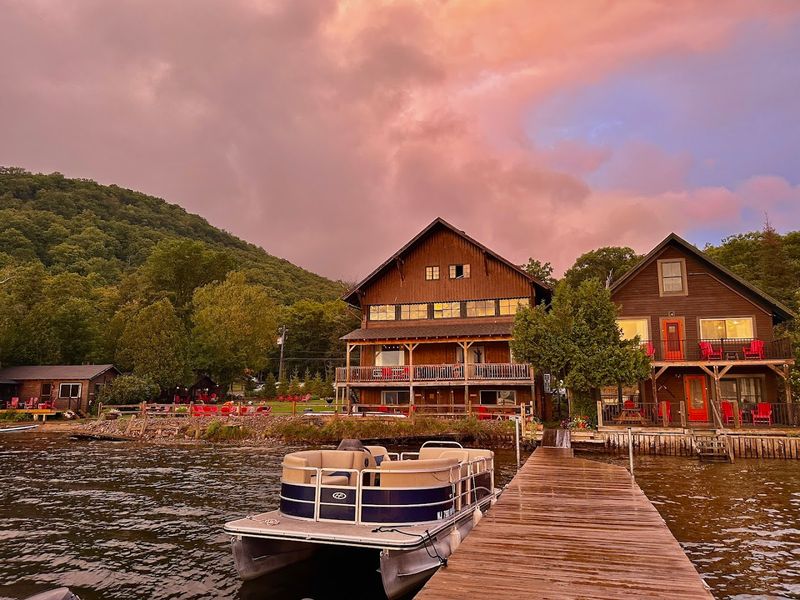
With fewer than 150 year-round residents, Blue Mountain Lake is not trying to be a resort town. There are no chain restaurants, no big-box stores, and no traffic lights.
What exists instead is a small cluster of buildings along the Route 28 corridor that feel genuinely rooted in the landscape — a general store, a handful of lodging options, a couple of places to eat, and a post office that doubles as a community gathering point when the mail arrives.
The pace of the hamlet is its most distinctive quality. People stop to talk in parking lots. Locals know the seasonal visitors by name after a few summers. Dogs wander near porches.
The absence of urgency is not just a feeling — it is structurally built into a place that has resisted commercial development for decades, partly because of its remote location and partly because of strong local values around preserving what makes the area worth visiting in the first place.
A small public beach on the lake gives residents and visitors a shared gathering spot during summer. Picnic tables, a boat launch, and a modest sandy stretch make it a natural afternoon destination for families.
The water here is clean and clear, and the view across the lake toward Blue Mountain is the same one that has appeared in Adirondack paintings for over a century.
Evening in the hamlet is particularly quiet. After dinner, the main road empties out quickly, and the sky above fills with more stars than most people see in a full year of living near cities.
The hamlet sits well outside any significant light pollution zone, which makes even casual stargazing here a genuinely impressive experience. That kind of darkness is increasingly rare and worth treating as its own attraction.
When to Go and How to Make the Most of Each Season
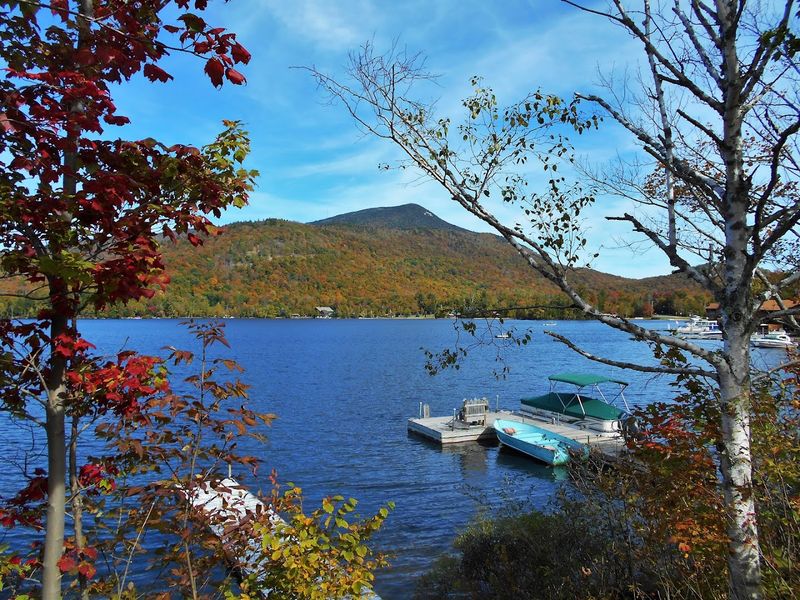
Summer is the obvious choice for most visitors, and for good reason. July and August bring warm enough temperatures for swimming, long enough days for extended paddling trips, and the full operation of seasonal businesses including the Adirondack Experience museum.
The lake is at its most social during these months, with boats on the water and families filling the public beach. Accommodations book up quickly, especially on weekends, so planning ahead by several weeks is strongly recommended.
Fall is arguably the most visually dramatic season. The foliage in Hamilton County tends to peak in late September to early October, and because the area is surrounded by such a large unbroken forest, the color display is proportionally enormous.
Driving Route 28 through the region during peak foliage feels like moving through a landscape painting. Crowds thin considerably after Labor Day, and the cooler temperatures make hiking especially comfortable.
Winter transforms Blue Mountain Lake into something almost completely different. The hamlet quiets to its smallest population, the lake freezes solid enough for ice fishing, and snowmobilers use the extensive trail network that runs through Hamilton County.
Cross-country skiing on unplowed roads and snowshoeing through silent forest are available right from the hamlet’s edge. This is the season for visitors who want isolation and are prepared for cold.
Spring is the least visited season and for practical reasons — mud season makes some roads and trails difficult, and black flies emerge in late May with genuine enthusiasm. That said, the ice-out on the lake is a celebrated local event, and the returning loons and waterfowl make spring birding excellent.
Visitors who come in May get the landscape largely to themselves, which for some people is exactly the point. Each season offers a distinctly different version of the same place.
Why This Particular Crossroads Keeps Drawing People Back Year After Year
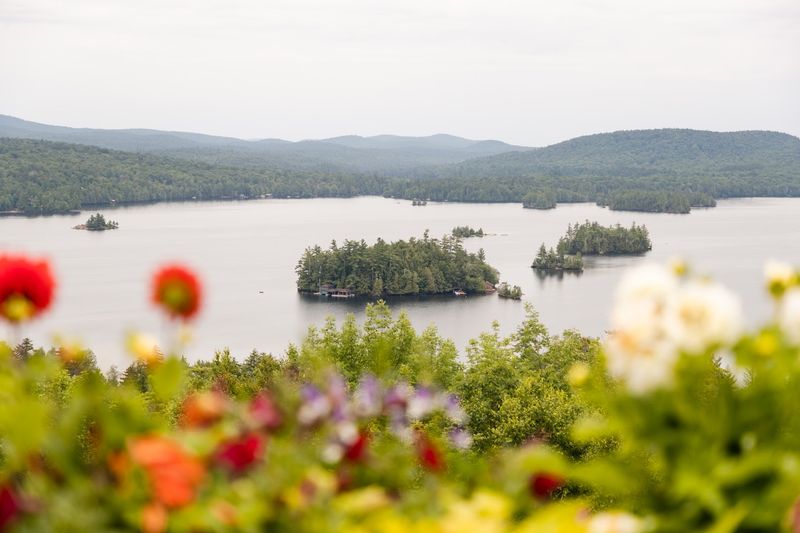
Routes 28, 28N, and 30 converge right at Blue Mountain Lake, making the hamlet a genuine crossroads of the Adirondack interior. Travelers heading toward Old Forge, Long Lake, Speculator, or North Creek all pass through here, which means the hamlet sees far more through-traffic than its tiny population would suggest.
Many people who stop for gas or a sandwich end up staying longer than planned, pulled in by the lake view or a conversation with someone who has been coming here for forty years.
The region around Blue Mountain Lake has been part of the Adirondack Park since the park’s establishment in 1892, and the Forever Wild provisions of the New York State Constitution protect the surrounding state land from development in perpetuity.
This legal protection is part of why the landscape looks essentially the same as it did a century ago. The trees are taller, but the ridgelines, the lake, and the quiet are all intact.
There is a particular kind of traveler who returns to Blue Mountain Lake repeatedly — not because there is always something new to discover, but because the place reliably delivers something that is hard to find elsewhere. A morning on the water without another boat in sight.
A summit view with no cell service and no noise. A dinner conversation with strangers that lasts two hours because nobody has anywhere else to be.
The hamlet does not advertise itself aggressively or chase trends. Its appeal is structural — built into the geography, the legal protections, and the low-key character of the people who choose to live there year-round.
For visitors arriving from busy urban environments, that combination of remoteness, natural beauty, and small-scale community life can feel genuinely calming. Blue Mountain Lake simply lets you stop, and that turns out to be exactly enough.
Share this story