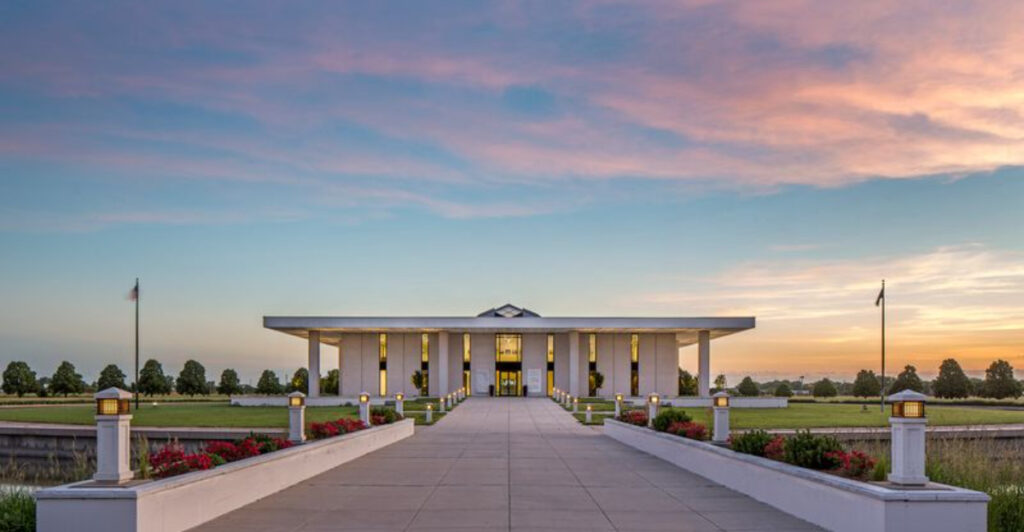
Nebraska might not be the first place that comes to mind when you think about jaw-dropping travel destinations, but this midwestern state is full of surprises that most people never expect to find. Stretching from the rolling prairies of the Great Plains to the dramatic rock formations of the Panhandle, Nebraska hides some of the most fascinating, strange, and unforgettable places in the entire country. Whether you are a history lover, a nature explorer, or just someone who enjoys stumbling onto something completely unexpected, Nebraska has something that will genuinely blow your mind.
The state is home to ancient fossil beds that freeze time millions of years in the past, a town with a population of exactly one person, the largest rail yard on the planet, and geological wonders that look more like they belong on Mars than in the American Midwest. Many travelers pass through Nebraska without stopping, assuming there is nothing worth slowing down for. That assumption could not be more wrong.
From museums that honor the brave pioneers who crossed these plains to aerospace exhibits that stretch your imagination toward the stars, Nebraska rewards the curious traveler in ways that few states can match. The best part is that most of these spots are off the beaten path, meaning you will rarely have to deal with huge crowds or long lines. You get an authentic, unhurried experience that lets you truly connect with what makes each place special. So pack your bags, fuel up the car, and get ready to be genuinely surprised. Nebraska is waiting, and it has plenty of extraordinary stories left to tell.
1. Chimney Rock National Historic Site
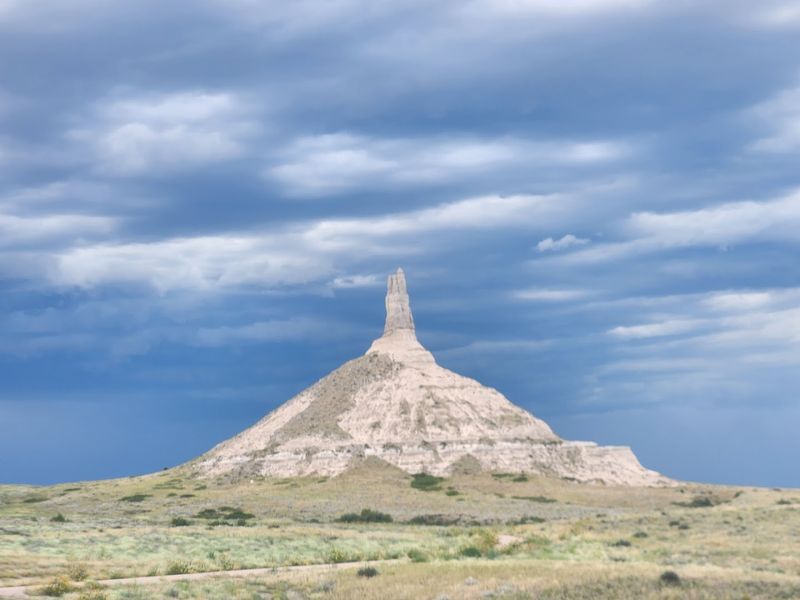
Rising nearly 300 feet above the Nebraska plains, this striking rock spire has been silently watching over the landscape for millions of years.
Chimney Rock was one of the most talked-about landmarks along the Oregon Trail, and pioneers traveling westward in the 1800s wrote about it constantly in their diaries and letters.
For many of them, seeing this towering formation meant they were making real progress on their long, exhausting journey.
Today, visitors can walk the surrounding grounds and take in views that have not changed much since those wagon trains rolled through.
The nearby visitor center does a wonderful job of bringing the pioneer experience to life, with exhibits that include journal excerpts, maps, and artifacts from the trail era.
You really start to feel connected to those brave travelers who used this rock as their landmark in the vast, open wilderness.
The site is located near Bayard in western Nebraska and is managed by the National Park Service.
Sunrise and sunset are especially magical times to visit, when the light turns the rock a warm amber and the sky puts on a show behind it.
Photographers absolutely love this spot for that reason.
What makes Chimney Rock even more special is how accessible it is.
There is no difficult hiking required to enjoy the views, making it a great stop for families with young kids or older travelers.
Nebraska Highway 92 runs right alongside it, so you can pull over and be amazed within minutes.
Whether you are a history buff or just someone who appreciates dramatic natural scenery, this iconic landmark earns every bit of its reputation as one of Nebraska’s most treasured and recognizable places.
2. Ashfall Fossil Beds State Historical Park
About twelve million years ago, a massive volcanic eruption somewhere in present-day Idaho sent a thick cloud of ash drifting eastward across the Great Plains.
When that ash settled over what is now northeastern Nebraska, it buried hundreds of animals alive, preserving them in extraordinary detail.
The result is one of the most remarkable fossil sites anywhere in the world.
Discovered in 1971 by paleontologist Mike Voorhies, Ashfall Fossil Beds is unlike any other fossil park you will ever visit.
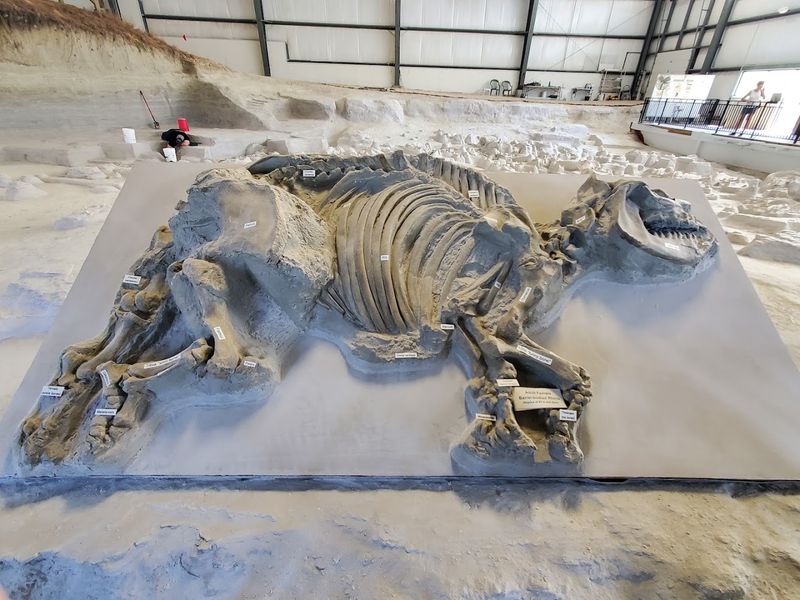
A large building called the Rhino Barn covers the main excavation area, letting visitors walk above and around actual fossils that are still being uncovered by scientists.
You can watch real paleontologists at work during the summer months, chipping away at ancient rock just feet from where you are standing.
The animals found here include ancient rhinoceroses, three-toed horses, camels, and saber-toothed deer, none of which you would expect to find in Nebraska.
Many of the skeletons are articulated, meaning the bones are still in the exact positions where the animals collapsed and died.
That level of preservation is incredibly rare and makes the site scientifically priceless.
Located near Royal, Nebraska, the park is open seasonally and offers a visitor center with additional exhibits explaining the volcanic event and the science behind the discoveries.
Kids are especially captivated by the sheer size of some of the animals and the fact that they can see actual fossils being worked on in real time.
If you have ever wanted to step back millions of years and witness a prehistoric world frozen in place, this park delivers that experience in a way that is both educational and genuinely thrilling.
3. Fort Cody Trading Post
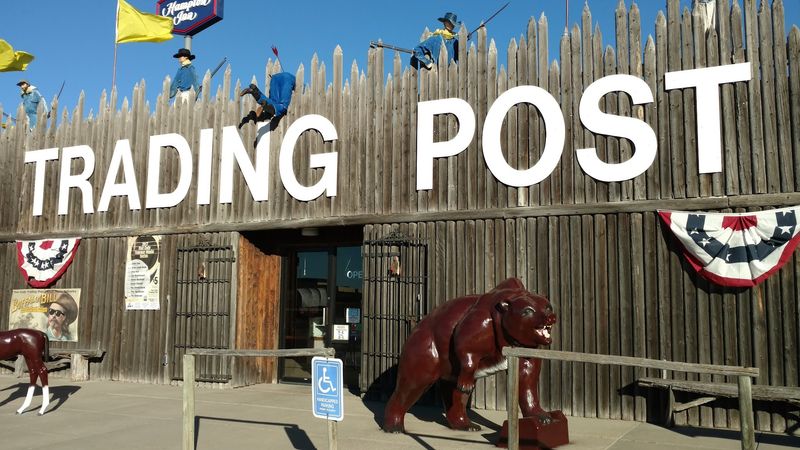
Somewhere between a souvenir shop, a museum, and a full-blown tribute to the Wild West, Fort Cody Trading Post in North Platte, Nebraska, is the kind of roadside stop that you almost drive past and then immediately regret not pulling over for.
Named after the legendary Buffalo Bill Cody, who called North Platte home, this trading post has been charming travelers along Interstate 80 for decades with its oversized personality and genuine western spirit.
Step inside and you are greeted by an enormous collection of western-themed gifts, Native American crafts, turquoise jewelry, cowboy hats, and novelty items that range from practical to hilariously quirky.
The sheer variety of merchandise is staggering, and browsing the shelves feels like a treasure hunt where every corner holds something unexpected.
It is the kind of place where you go in for a postcard and come out with a hand-painted ceramic coyote and a pair of moccasins.
One of the highlights inside is a massive hand-carved miniature Wild West show that took years to build and features hundreds of tiny figurines reenacting scenes from Buffalo Bill’s famous touring spectacle.
It is surprisingly detailed and genuinely impressive, drawing admiring looks from visitors of all ages.
History fans will also appreciate the Buffalo Bill memorabilia scattered throughout the store.
Fort Cody is open year-round and serves as a fun, free-to-browse stop that perfectly captures the spirit of Nebraska’s western heritage.
Whether you are on a cross-country road trip or exploring the state intentionally, this trading post offers a lighthearted, colorful break from the highway that leaves most visitors smiling long after they pull back onto the road.
4. Harold Warp Pioneer Village
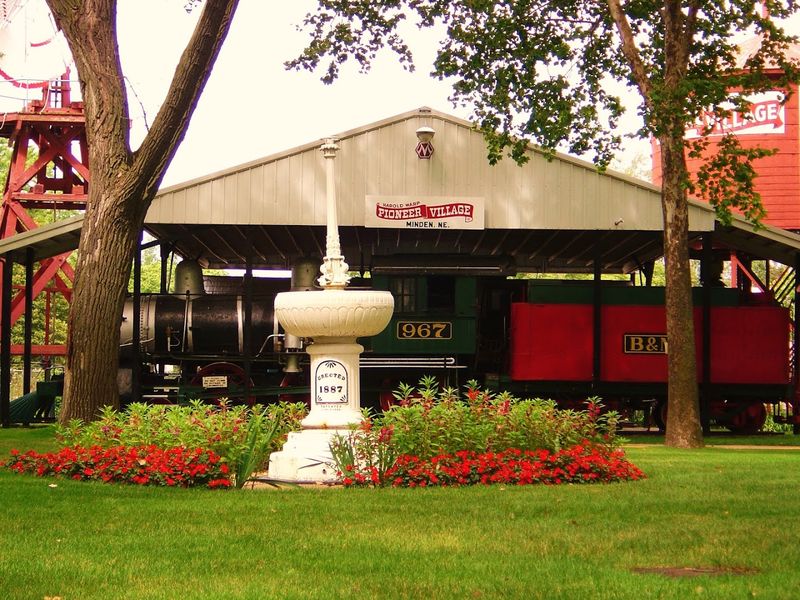
Harold Warp had a simple but ambitious idea: collect everything that shows how American life changed from 1830 onward and put it all in one place.
The result, located in the small town of Minden in south-central Nebraska, is a sprawling complex of more than 50,000 artifacts spread across 26 buildings that cover an astonishing range of American history and ingenuity.
It is the kind of museum that makes you realize just how dramatically everyday life transformed over a century and a half.
The collection includes antique cars, farm machinery, early aircraft, Pony Express memorabilia, horse-drawn carriages, vintage appliances, and entire historic buildings that were relocated to the site.
Walking through Pioneer Village feels like stepping through time, with each building representing a different chapter in America’s story.
You can wander through a one-room schoolhouse, a sod house, a blacksmith shop, and even an early gas station, all preserved with remarkable attention to detail.
Harold Warp himself was a Nebraska-born entrepreneur who made his fortune in the plastics industry and poured that wealth into building this personal tribute to American progress.
His passion for preserving history is evident in every corner of the village.
The sheer scale of the collection is humbling, and most visitors find themselves spending far more time here than they originally planned.
Pioneer Village is open year-round and is genuinely family-friendly, with enough variety to keep kids engaged and enough depth to satisfy serious history enthusiasts.
Admission is very affordable, making it one of the best values in Nebraska tourism.
If you appreciate the craftsmanship, determination, and creativity of earlier generations, this museum will leave you deeply impressed and quietly grateful.
5. Strategic Air Command & Aerospace Museum
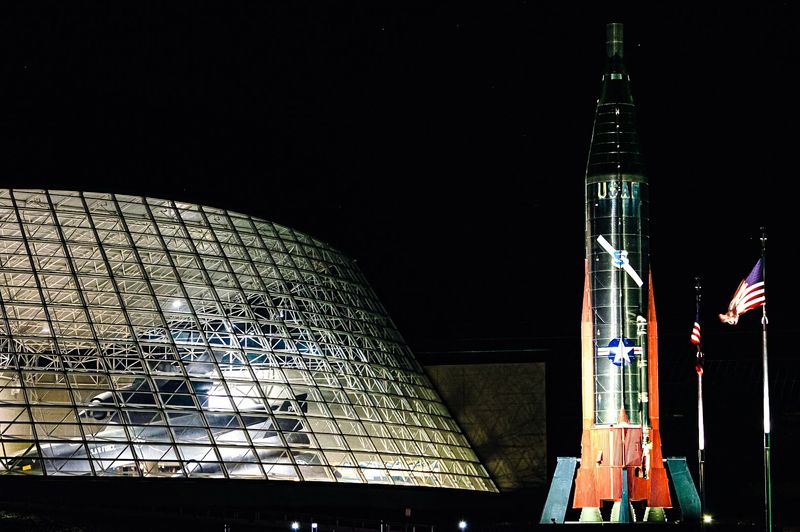
Few museums in the country can match the sheer scale and drama of what awaits inside this extraordinary facility near Ashland, Nebraska.
The Strategic Air Command and Aerospace Museum is home to one of the most impressive collections of military aircraft and aerospace technology in the entire United States, and it delivers an experience that is equal parts awe-inspiring and thought-provoking.
The museum was established to honor the men and women of the Strategic Air Command, the branch of the U.S. military that stood ready during the Cold War era to respond to nuclear threats.
Inside the massive, climate-controlled hangars, you will find more than 30 aircraft and six missiles, including a massive B-52 Stratofortress, a sleek SR-71 Blackbird, and a Cold War-era ICBM that once sat in a silo somewhere beneath the American plains.
Seeing these machines up close is genuinely humbling.
Beyond the hardware, the museum offers exhibits that explain the history of the Cold War, the role of nuclear deterrence, and the incredible bravery of the crews who flew these missions.
Interactive displays make the history accessible to younger visitors, and the museum regularly hosts special events, flight simulators, and traveling exhibitions that keep the experience fresh for repeat visitors.
Located just off Interstate 80, the museum is easy to reach and well worth a dedicated half-day or more.
The gift shop is well-stocked with aviation-themed items, and the on-site cafe makes it easy to refuel before continuing your journey.
Whether you are a military history enthusiast, an aviation geek, or simply someone who appreciates monumental achievements in engineering, this museum is an absolute must-stop in Nebraska.
6. Stuhr Museum of the Prairie Pioneer
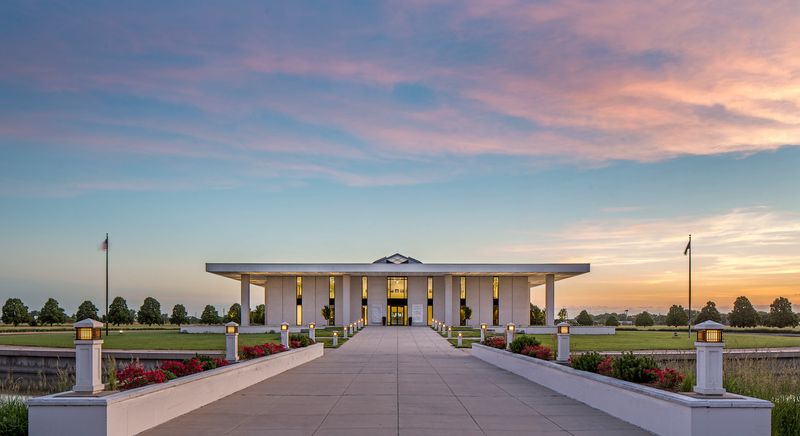
Grand Island, Nebraska, is home to one of the most immersive and thoughtfully designed living history museums in the entire Midwest.
The Stuhr Museum of the Prairie Pioneer brings the world of 1890s Nebraska to vivid life through a remarkable combination of restored buildings, costumed interpreters, and authentic artifacts that place visitors right in the middle of a working pioneer town.
The crown jewel of the museum is Railroad Town, a reconstructed village of more than 60 original buildings that were gathered from across the region and carefully restored.
Walking its wooden sidewalks, you pass a general store, a blacksmith shop, a newspaper office, a church, and dozens of homes that once belonged to real Nebraska families.
During the summer months, costumed interpreters bring the town alive with demonstrations of period crafts, cooking, and daily routines that make history feel genuinely tangible.
The museum also holds a fascinating personal connection to American culture: actor Henry Fonda was born in Grand Island in 1905, and his birth cabin is preserved on the grounds.
That small detail adds a surprising layer of celebrity history to an already rich experience.
The main museum building, designed by renowned architect Edward Durell Stone and set on an island surrounded by a peaceful lake, is itself an architectural gem worth appreciating.
With rotating exhibits, seasonal events, and a commitment to authentic storytelling, Stuhr Museum offers something meaningful for every type of visitor.
Families with kids especially enjoy the hands-on activities and the chance to interact with interpreters in character.
If you want to understand what life on the Nebraska prairie truly looked and felt like more than a century ago, this museum delivers that understanding with warmth and remarkable depth.
7. Agate Fossil Beds National Monument
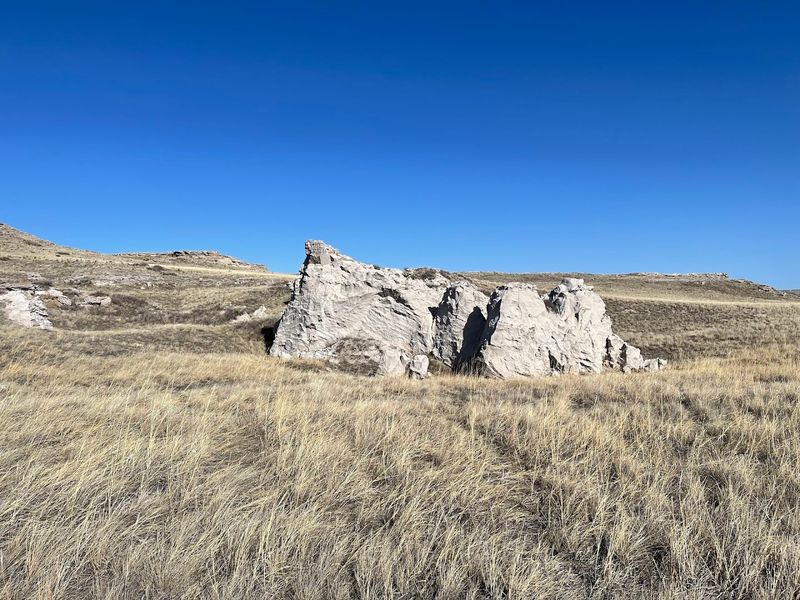
Out in the remote reaches of the Nebraska Panhandle, where the grass rolls in waves and the sky seems to stretch forever, lies one of the most quietly spectacular national monuments in the country.
Agate Fossil Beds preserves a remarkable collection of Miocene-era mammal fossils that date back roughly 19 to 20 million years, offering a window into a prehistoric world that most people never knew existed beneath the plains.
The fossils found here include ancient two-horned rhinoceroses called Menoceras, a bear-like creature known as Moropus, and early ancestors of modern horses and camels.
These animals once lived in vast herds across what is now Nebraska, and their bones were naturally deposited in dense concentrations that made the site a scientific goldmine when it was first discovered in the late 1800s.
The monument’s visitor center displays many of these fossils in excellent condition alongside detailed explanations of the prehistoric environment.
What makes Agate Fossil Beds especially unique is the extraordinary collection of Native American artifacts on display inside the visitor center.
James H.
Cook, the rancher who owned this land and helped bring the fossil site to scientific attention, developed a deep friendship with Lakota Sioux Chief Red Cloud.
Over many years, Red Cloud gifted Cook with hundreds of personal items, and that collection is now preserved here, adding a rich cultural dimension to the monument’s story.
Hiking trails wind through the fossil-rich hills, offering both scenic beauty and interpretive signs that help visitors understand what they are looking at.
The landscape itself is stunning, especially in the early morning when the light is soft and the meadowlarks are singing.
Agate Fossil Beds is the kind of place that rewards slow, attentive visitors who are willing to look closely at the world around them.
8. Monowi – The Smallest Town in America
There are small towns, and then there is Monowi.
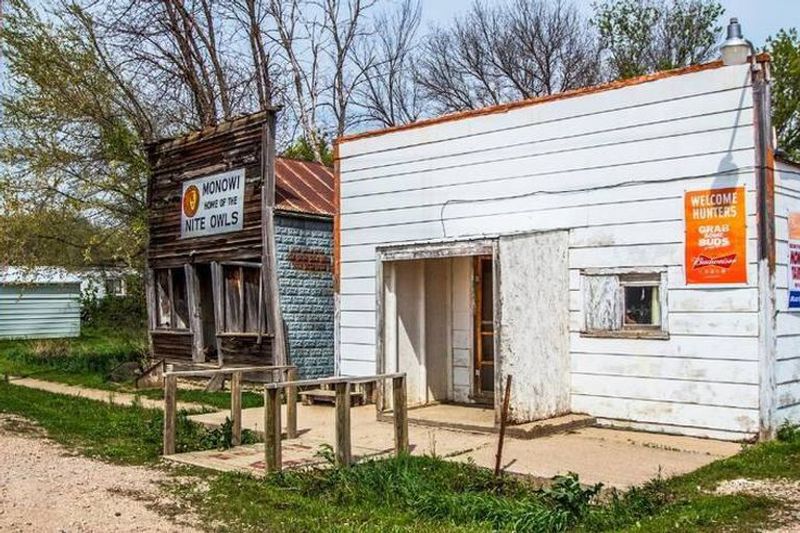
Tucked away in Boyd County in northern Nebraska, this tiny incorporated village holds the extraordinary distinction of being the smallest town in the United States, with an official population of exactly one person.
That person is Elsie Eiler, who serves simultaneously as the town’s mayor, clerk, treasurer, librarian, and bartender, making her arguably the hardest-working public servant in American history.
Elsie and her late husband, Rudy, ran the Monowi Tavern for decades, and after Rudy passed away in 2004, Elsie kept the place going on her own.
She still opens the tavern most days, serving cold beer and warm conversation to the steady stream of curious travelers who make the pilgrimage to this unlikely destination.
Visiting feels less like a tourist attraction and more like dropping in on someone’s living room, which is exactly what makes it so charming.
Rudy was an avid book collector, and before he died he and Elsie built a small library next to the tavern to house his collection of more than 5,000 volumes.
Elsie maintains the library to this day, and it is technically open to any resident who wants to borrow a book, which means the sole patron and the sole librarian are the same person.
That detail is both funny and oddly poignant.
Monowi has been featured in newspapers, documentaries, and travel programs around the world, drawn by the sheer improbability of its existence.
But the real reason to visit is simpler than that.
Elsie Eiler represents a kind of stubborn, good-humored resilience that feels deeply Nebraskan at its core.
Pull up a stool, order a drink, and let her tell you the story of Monowi.
You will not forget it.
9. Bailey Yard – World’s Largest Rail Yard
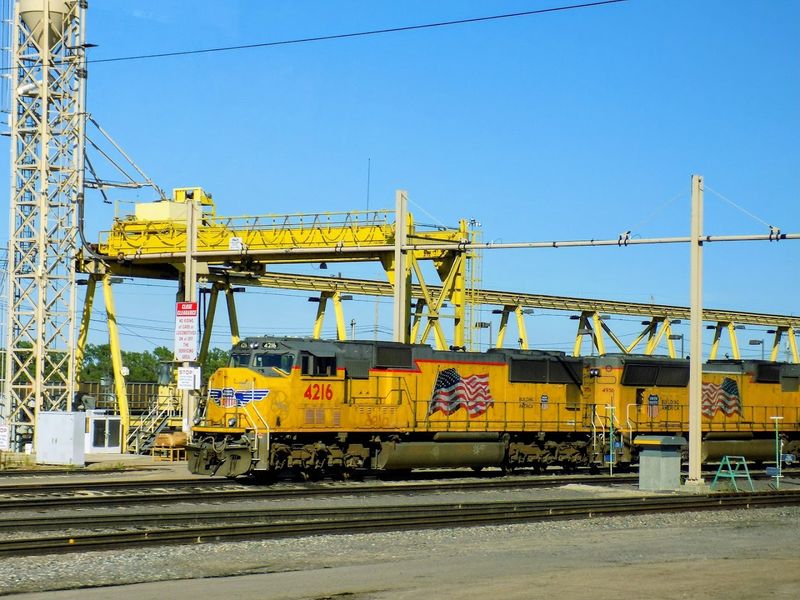
Numbers can be hard to wrap your head around, but try this one: Bailey Yard in North Platte, Nebraska, processes more than 10,000 rail cars every single day, making it the largest rail classification yard on the entire planet.
Operated by Union Pacific, this eight-mile-long, two-mile-wide facility is a marvel of logistics and engineering that most Americans have never heard of, even though it keeps a significant portion of the national economy moving.
The Golden Spike Tower, a seven-story observation facility located right next to the yard, gives visitors an elevated view over the entire operation.
From the top floor, you can watch freight trains being sorted, assembled, and dispatched in a continuous, almost hypnotic flow of movement.
The scale of what you are seeing is genuinely difficult to process at first.
Hundreds of tracks fan out across the landscape in every direction, and the sound of the yard is a constant low rumble of steel and diesel that vibrates in your chest.
The tower also houses exhibits about the history of Union Pacific and the transcontinental railroad, which played an enormous role in shaping Nebraska and the American West.
Interactive displays explain how a classification yard actually works, which is surprisingly fascinating even if you have never given trains a second thought.
The staff is knowledgeable and enthusiastic, happy to point out what is happening in the yard at any given moment.
Admission to Golden Spike Tower is very reasonable, and the experience is one that genuinely surprises visitors who were not sure what to expect.
Rail enthusiasts will be in absolute heaven, but even casual visitors find themselves lingering far longer than planned, hypnotized by the sheer, relentless efficiency of the world’s biggest rail yard operating right in front of them.
10. Toadstool Geologic Park
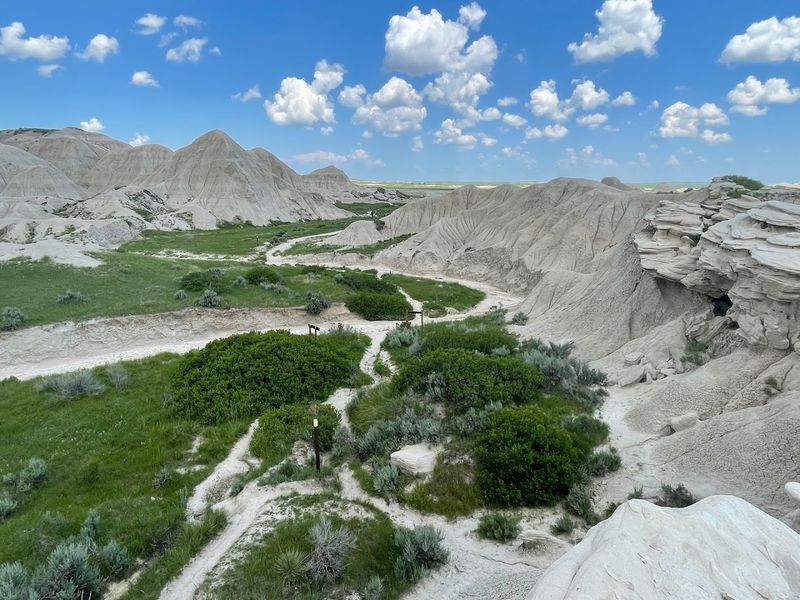
If someone told you there was a place in Nebraska that looks like the surface of another planet, you might be skeptical.
But one visit to Toadstool Geologic Park in the far northwestern corner of the state would change your mind entirely.
This otherworldly stretch of badlands is filled with bizarre, mushroom-shaped rock formations that seem to defy gravity, balanced on narrow pedestals of soft clay while harder capstones protect them from eroding away.
The formations are created by a fascinating geological process.
Softer volcanic ash and clay erode quickly under rain and wind, but wherever a harder rock sits on top, it shields the material beneath it, leaving a column standing while everything around it washes away.
Over thousands of years, these columns developed their distinctive toadstool shape, giving the park its perfectly descriptive name.
The landscape is stark, alien, and genuinely unlike anything else in the Midwest.
A short hiking trail loops through the main formation area, taking visitors past the most dramatic toadstools and offering views across the surrounding badlands that stretch toward the horizon.
The trail is not particularly difficult, but the terrain is uneven and the soil can be slippery when wet, so good footwear is recommended.
Early morning and late afternoon light transform the park into something truly photogenic, with warm colors bouncing off the pale rock formations in ways that feel almost surreal.
Toadstool Geologic Park is managed by the Nebraska National Forests and Grasslands and sits within the Oglala National Grassland near the town of Crawford.
Camping is available nearby for those who want to stay long enough to catch a sunset over the badlands, which locals will tell you is one of the most spectacular sights in all of Nebraska.
Do not miss it.
Share this story