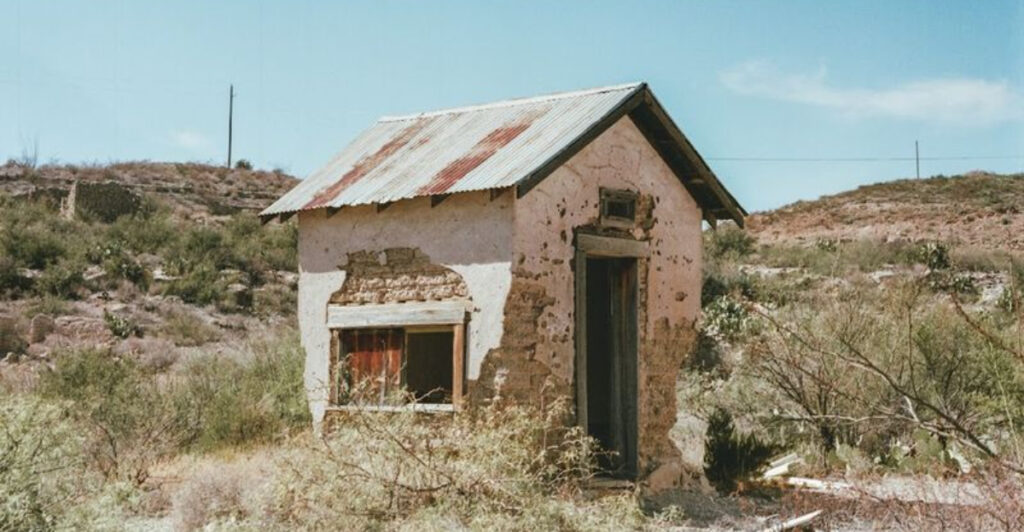
Texas holds more than just wide-open spaces and bustling cities. Scattered across the Lone Star State are remnants of once-thriving communities that now stand silent, their stories etched into crumbling walls and dusty streets. These ghost towns offer a haunting glimpse into the past, where boom-and-bust cycles left entire settlements frozen in time, waiting for curious travelers to uncover their secrets.
1. Terlingua
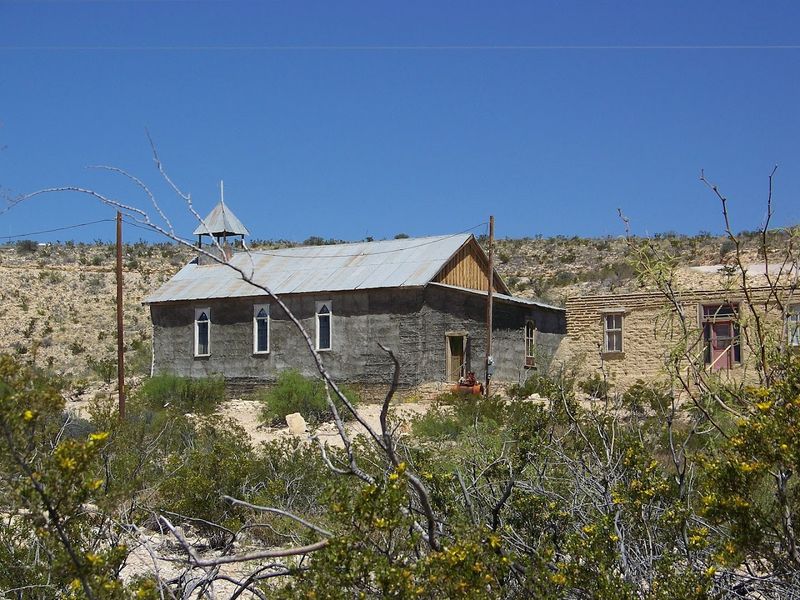
Out in the remote reaches of West Texas, where the Chihuahuan Desert stretches endlessly toward Big Bend, sits a ghost town that refuses to stay completely dead. Terlingua thrived during the early 1900s as a mercury mining hub, with the Chisos Mining Company pulling precious cinnabar ore from the earth. At its peak, nearly 2,000 people called this dusty outpost home, working the mines and building a community in one of the most isolated corners of Texas.
When the mercury market crashed in the 1940s, Terlingua emptied out almost overnight. Workers abandoned their homes, the company store closed its doors, and the desert began reclaiming what humans had built. Today, you can wander through the crumbling ruins of the old mining operations, peek inside the roofless Perry Mansion, and explore the hilltop cemetery where weathered headstones tell stories of hardship and perseverance.
What makes Terlingua especially fascinating is its dual nature. The original ghost town sits preserved in decay, while a small community of artists, river guides, and desert lovers has sprouted up nearby, breathing new life into the area without erasing its haunted past. Every November, thousands descend on Terlingua for the famous chili cook-off, creating a bizarre contrast between partying crowds and silent ruins.
The Perry Store still stands as the town’s most photographed landmark, its stone walls holding strong against decades of wind and sun. Walking through Terlingua feels like stepping between two worlds—one long gone, another stubbornly clinging to existence. The desert silence, broken only by wind whistling through empty windows, creates an atmosphere that’s equal parts eerie and beautiful, making this ghost town an essential stop on any spooky Texas road trip.
2. Shafter
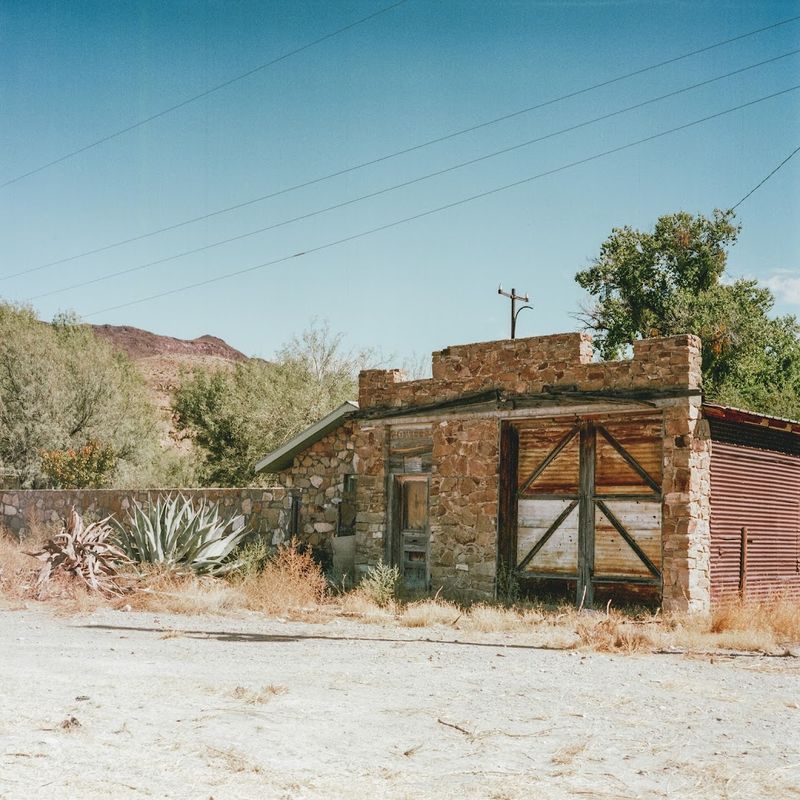
Silver fever gripped this remote corner of Presidio County in the 1880s, transforming barren desert into a bustling mining camp practically overnight. Shafter earned its name from General William Shafter, and for several decades, it lived up to the promise of riches buried beneath Texas soil. The mines here pulled millions of dollars worth of silver from the ground, creating fortunes for some and heartbreak for many more who chased dreams that never materialized.
Unlike some ghost towns that vanished completely, Shafter maintains a skeleton crew of residents who keep watch over the ruins. Adobe structures melt slowly back into the earth, their walls sagging under the weight of time and neglect. The old mining equipment rusts quietly, monuments to an industry that defined this place for generations before abandoning it to the elements.
Walking Shafter’s empty streets reveals layers of history written in architecture and debris. You’ll spot remnants of the company buildings, workers’ quarters, and the infrastructure that once supported hundreds of miners and their families. The town’s isolation adds to its ghostly atmosphere—getting here requires commitment, as paved roads eventually give way to rougher passages that test your vehicle and your determination.
What happened here mirrors countless Western mining towns: the silver ran out, the companies pulled up stakes, and people scattered to find work elsewhere. But Shafter’s story includes a unique twist—periodic attempts at revival kept hope flickering long after most residents had left. Mining operations sputtered back to life several times throughout the 20th century, each revival bringing temporary optimism before reality set in again.
Now the town exists in limbo, neither fully alive nor completely dead, preserved by desert dryness and geographic remoteness.
3. Toyah
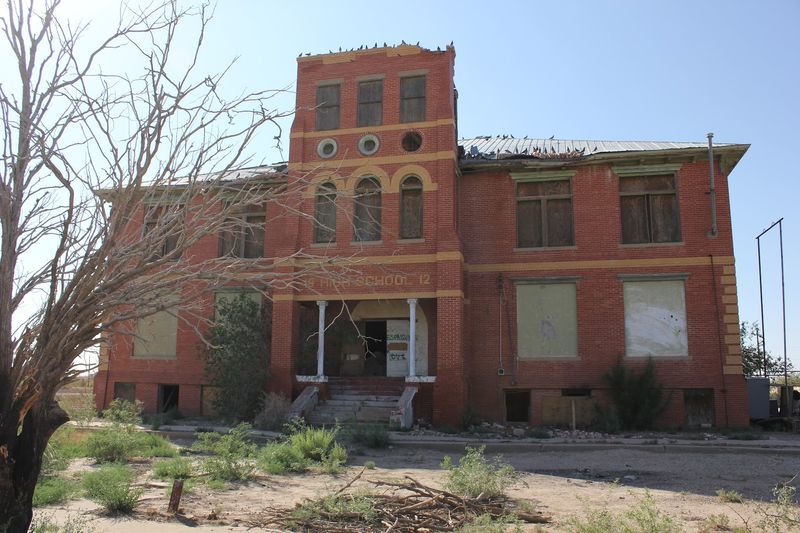
Railroad tracks brought Toyah into existence back in 1881, when the Texas and Pacific Railway needed a water stop on its westward push across the desert. The town grabbed its name from nearby Toyah Creek, and for a while, things looked promising. Ranchers shipped cattle from here, farmers tried coaxing crops from the stubborn soil, and the railroad kept people employed.
At one point, over 3,000 residents called Toyah home, confident they’d built something lasting in the middle of nowhere.
Geography dealt Toyah a cruel hand. When Highway 80 bypassed the town in favor of a route through Pecos, the lifeblood of passing traffic dried up. Businesses that depended on travelers shuttered their windows.
Young people left for opportunities elsewhere. The population dwindled from thousands to hundreds, then to just a handful of holdouts who refused to abandon the place their families had built.
Today’s Toyah exists as a study in gradual abandonment. Some buildings stand empty but intact, their facades fading under relentless sun. Others have collapsed into piles of lumber and memories.
The old downtown area, once bustling with commerce, now hosts more tumbleweeds than customers. Yet a few dozen residents remain, maintaining homes and properties with quiet determination, creating an odd atmosphere where ghost town meets living community.
Exploring Toyah reveals the slow-motion death of small-town Texas. Unlike mining towns that died suddenly when the ore ran out, Toyah faded gradually, bleeding residents year by year as economic realities made staying increasingly difficult. The railroad still runs through, but trains no longer stop.
That simple fact tells you everything about how transportation patterns can make or break a town, leaving behind these haunting reminders of communities that bet everything on being in the right place.
4. Barstow
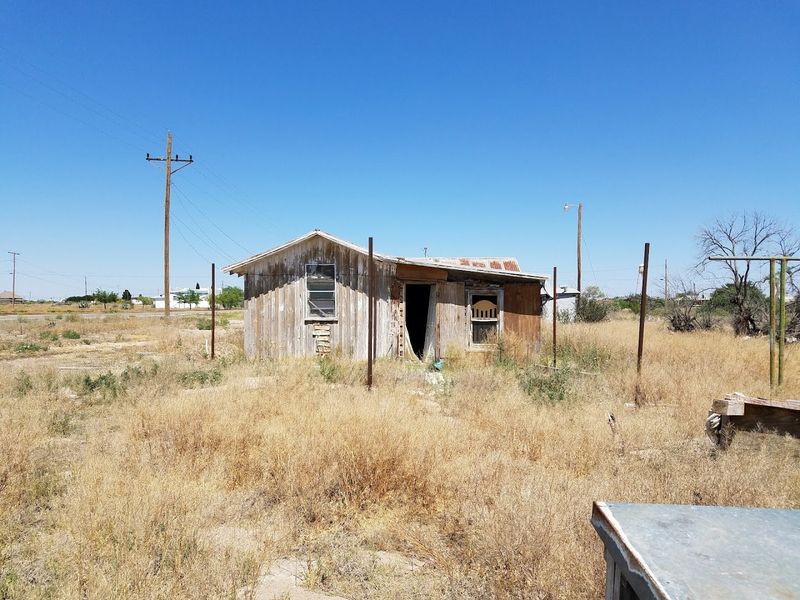
Barstow sprang up along the Pecos Valley Southern Railway in 1891, named after a Texas and Pacific Railway official whose importance has long since faded from memory. Cotton farming and ranching gave the town its economic foundation, while the railroad provided the vital connection to markets that made agriculture viable in this harsh climate. For several decades, Barstow functioned as a legitimate community with schools, churches, businesses, and all the infrastructure that signals permanence.
The town’s decline mirrors a pattern repeated across rural Texas: mechanization reduced the need for farm labor, younger generations sought opportunities in cities, and the automobile made remote locations less relevant. By the 1950s, Barstow had begun its slow fade. Businesses closed one by one.
The school eventually consolidated with neighboring districts. Houses stood empty as families moved away, leaving behind everything they couldn’t carry or sell.
What remains today presents a photographer’s paradise of decay. Old storefronts with faded signs still advertise goods nobody sells anymore. Abandoned homes with caved-in roofs reveal glimpses of lives interrupted—wallpaper peeling in bedrooms, kitchen cabinets hanging open, yards overtaken by desert vegetation.
The grain elevator, once the town’s tallest structure and a symbol of agricultural prosperity, stands as a rusting monument to better days.
A tiny population still clings to Barstow, perhaps a couple dozen people who maintain properties and refuse to let the town die completely. Their presence creates an unsettling contrast—signs of current habitation mixed with overwhelming evidence of abandonment. Driving through feels like witnessing a town in its final chapter, where the outcome seems inevitable but hasn’t quite arrived.
The railroad tracks remain, cutting through town just as they did 130 years ago, but the trains that pass now barely slow down, rushing past this ghost without a second glance.
5. Stiles
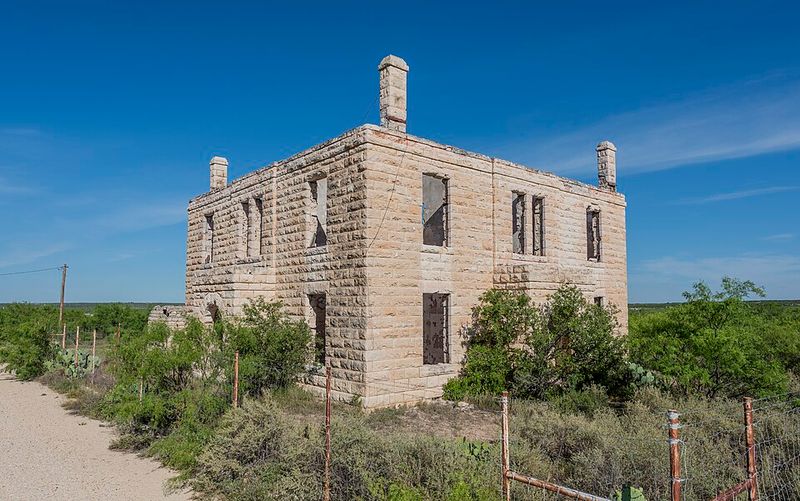
Finding Stiles requires determination and decent directions, as this ghost town hides in Reagan County’s mesquite-dotted landscape without much fanfare. Established in the early 1900s when settlers believed they could tame this semi-arid land through farming and ranching, Stiles represented the eternal optimism of Texas pioneers. The community built a school, established a post office in 1910, and created the social infrastructure necessary for isolated families to feel connected to something larger than their individual struggles.
Reality proved harsher than hope. Farming this land demanded backbreaking work for uncertain returns. Droughts came regularly, testing everyone’s resolve.
The distances between ranches meant loneliness was a constant companion for many families. When economic opportunities improved elsewhere and modern amenities became standard in towns with better access to highways and services, Stiles couldn’t compete. The post office closed in 1955, effectively marking the town’s death certificate.
Visiting Stiles today means encountering scattered ruins barely distinguishable from the surrounding landscape. Stone foundations outline where buildings once stood. A few structures remain partially intact, their weathered boards and rusted metal roofing slowly surrendering to gravity and wind.
The old school building, often the last holdout in dying communities, has long since collapsed, leaving only memories preserved in county records and family photo albums.
What makes Stiles particularly poignant is how completely the land has reclaimed it. Unlike ghost towns with dramatic ruins that announce their presence, Stiles whispers its history to those patient enough to look closely. Shards of pottery, pieces of glass worn smooth by sand and time, the occasional rusted tool—these fragments tell stories of people who bet everything on making a life here.
They lost that bet, but their attempt deserves remembering, even if nature has nearly erased all evidence they ever tried.
6. Sherwood
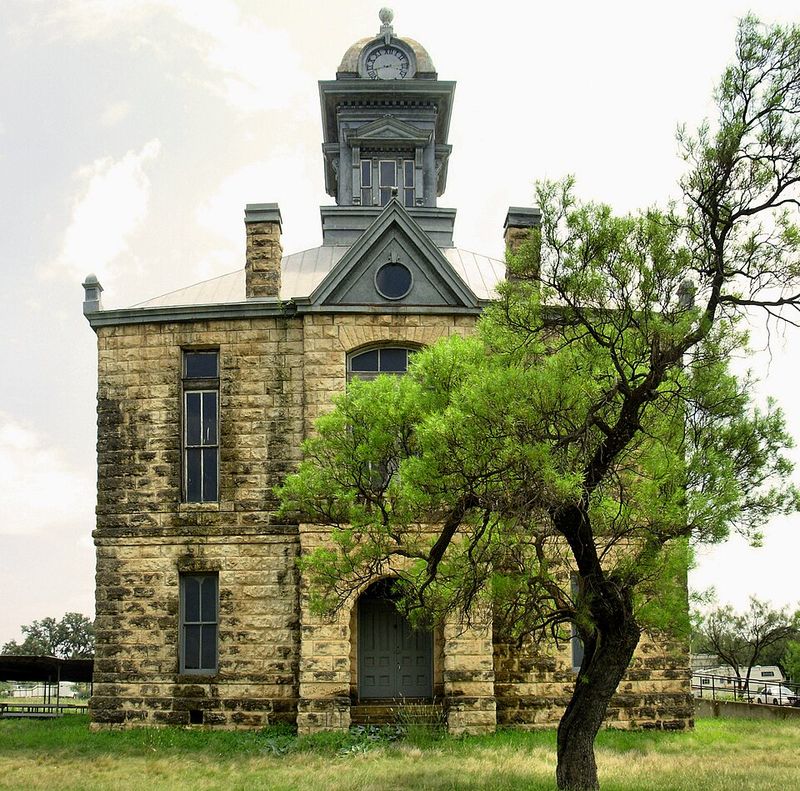
Oil created Sherwood in 1925, and oil killed it just as surely. When wildcatters struck black gold in Irion County, a town materialized almost instantly to house the workers, merchants, and various characters drawn to boomtowns like moths to flame. Within months, Sherwood boasted a population in the hundreds, with businesses catering to every need and want of oil field workers flush with cash.
The energy was electric, the optimism infectious, and nobody questioned whether this prosperity might prove temporary.
Boom-and-bust cycles define oil country, and Sherwood rode that rollercoaster hard. When production from local wells declined and companies shifted operations elsewhere, the town’s reason for existing evaporated. Unlike agricultural communities that fade gradually, oil towns can empty out with startling speed.
Workers follow the jobs, businesses close when customers disappear, and within a few years, thriving settlements become ghost towns. Sherwood experienced this trajectory in fast-forward, going from boom to bust before some buildings had even finished construction.
The ruins here carry a different character than farming communities or mining camps. Oil field architecture tends toward utilitarian—structures built quickly and cheaply to serve immediate needs rather than last generations. What remains of Sherwood reflects this temporary mindset: collapsed houses that were never meant to withstand decades, commercial buildings constructed from whatever materials were handy, infrastructure designed for short-term profit rather than long-term community.
Today, Sherwood exists as scattered debris across empty land, with only the most substantial structures still recognizable as buildings. Mesquite trees grow through foundations. Rusted equipment from the oil fields decorates the landscape like industrial sculpture.
The site requires imagination to visualize as a functioning town, but that’s part of its haunting appeal—evidence of how quickly human ambition can rise and fall, leaving barely a trace behind except for those willing to search.
7. Thurber
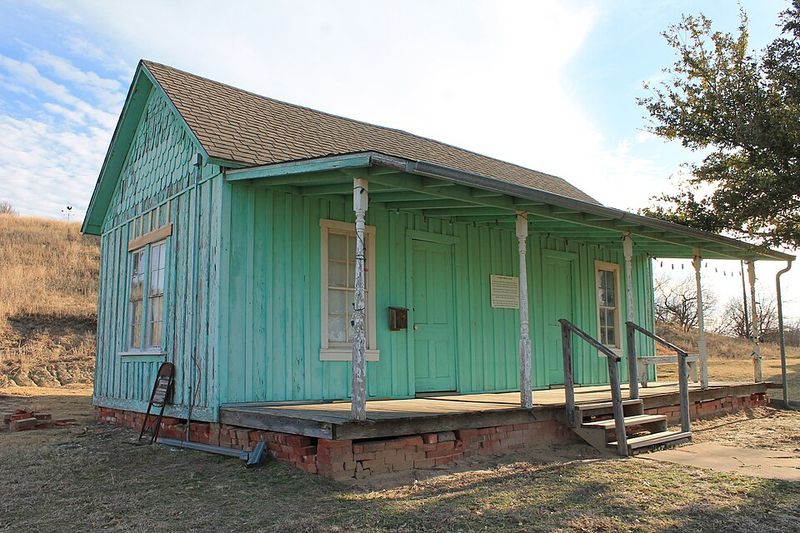
Thurber stands apart from typical Texas ghost towns, and not just because of its fascinating history as a completely unionized company town. At its peak around 1920, this coal mining community housed nearly 10,000 residents, making it one of the largest towns in Texas at the time. The Texas and Pacific Coal Company controlled everything—houses, stores, utilities, even entertainment.
Workers lived entirely within the company’s ecosystem, earning wages that often went right back to company-owned businesses in a closed economic loop.
The town’s diversity distinguished it from many Texas settlements of that era. Immigrant miners from Italy, Poland, Mexico, and a dozen other countries created a multicultural community rare in early 20th-century Texas. They built churches representing different faiths, maintained cultural traditions from their homelands, and somehow forged a functional society despite language barriers and cultural differences.
Thurber proved that people could build something remarkable even under the thumb of corporate control.
When natural gas and oil replaced coal as preferred fuels, Thurber’s fate was sealed. The mines closed in the 1920s, and the company began dismantling the town almost immediately. Houses were sold and moved away.
Buildings were demolished. The population scattered across Texas, taking their stories and memories to new communities. By 1933, Thurber had essentially ceased to exist as a functioning town, though a handful of residents remained among the ruins.
What survives today includes the iconic smokestack, visible from Interstate 20 and serving as a landmark for travelers who rarely know its significance. The old brick plant building has been converted into a restaurant and museum, preserving some of Thurber’s history for curious visitors. Walking the grounds reveals foundations, scattered bricks, and the cemetery where former residents rest.
Thurber’s story resonates because it represents something bigger than just another abandoned town—it’s a reminder of how entire communities can be created and destroyed by corporate decisions and economic forces beyond individual control.
Share this story