Golden may feel like a laid-back foothills town today, but its past includes a surprisingly important chapter in Colorado history. From 1862 to 1867, the community served as the capital of the Colorado Territory, putting it at the center of government years before Denver became the state’s dominant city.
Much has changed since lawmakers gathered here, yet pieces of that era remain woven into a downtown now surrounded by trails, museums, and the rushing waters of Clear Creek. Look beyond Golden’s modern attractions and another story begins to emerge. Exploring that history reveals just how differently Colorado’s map of power once looked.
Mountains Crowding the Main Street
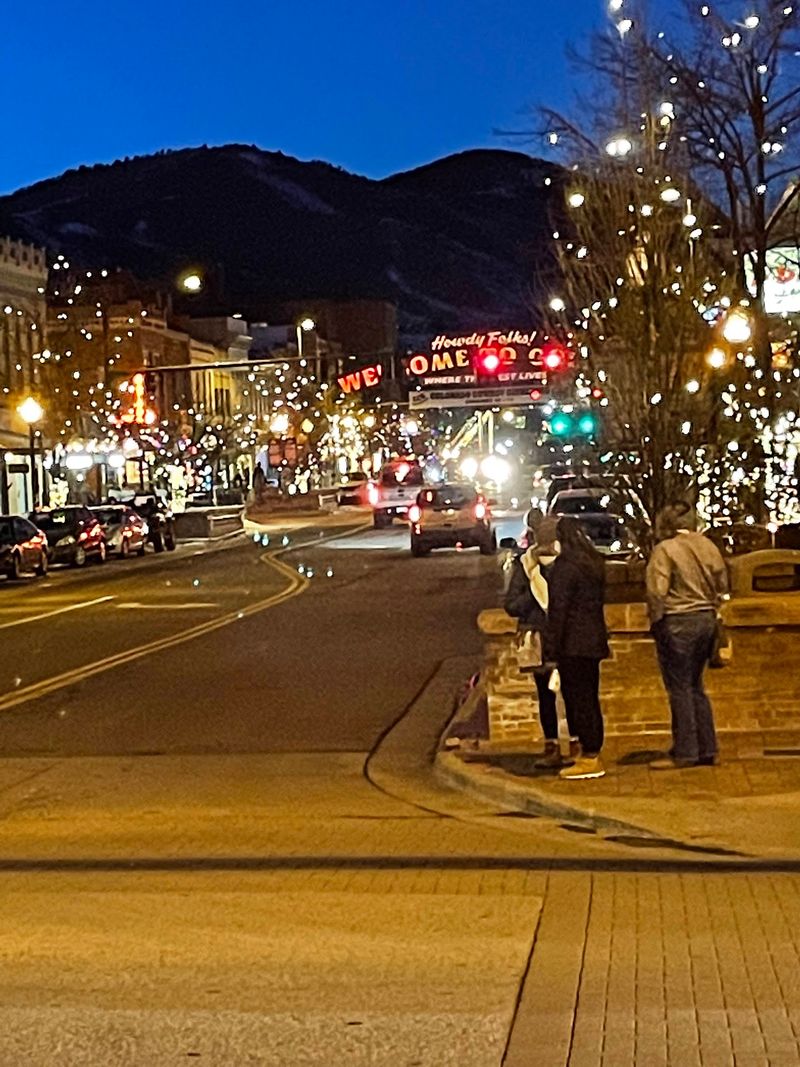
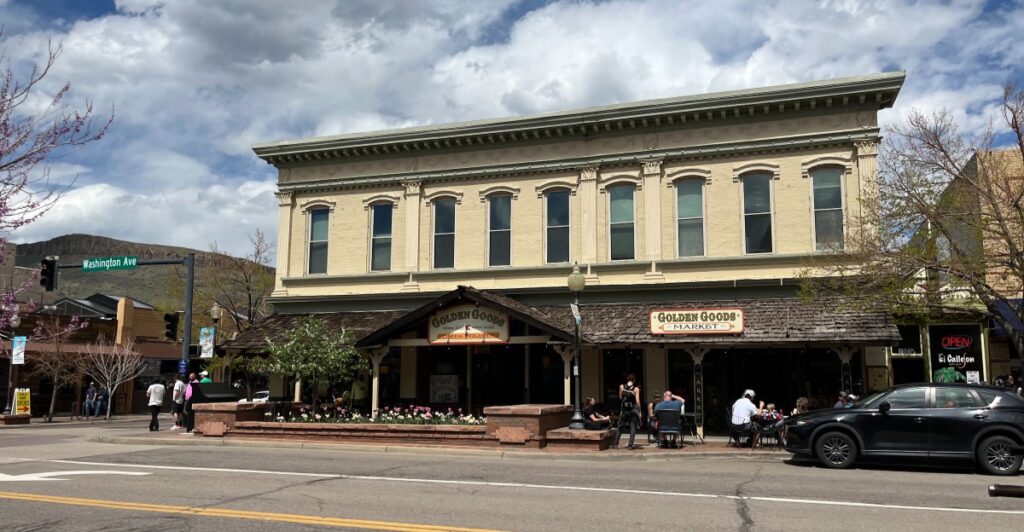
Stand in the middle of Washington Avenue and look up. Lookout Mountain rises on one side, while the flat-topped mesas of North and South Table Mountain box in the other. Few towns in America sit this tightly against the Rockies.
That squeezed-in setting explains a lot about why Golden once mattered so much. Back in the gold rush years, Clear Creek Canyon was a main road into the mining camps higher up. Anyone hauling supplies to places like Central City or Black Hawk passed right through here, so the town became a busy supply stop almost overnight.
The famous arch over Washington Avenue sets the tone. Its bold letters read Welcome to Golden, Where the West Lives, and it has become the town’s most photographed spot. Under it, brick buildings from the late 1800s line the sidewalks, many now holding cafes, outdoor gear shops, and western wear stores.
Walk a few blocks and the scenery keeps changing. Clear Creek splashes under the bridge near the center of town, and on warm days you will hear kids shrieking as they float past in inner tubes. Look toward Lookout Mountain and you may spot the big white M on its slope, a symbol for the Colorado School of Mines.
Early mornings are best for this first look. The light hits the mesas and turns the rock a warm orange, and the sidewalks are quiet enough to actually notice details like old painted signs fading on brick walls. Grab a coffee, pick a bench, and take a slow lap before the crowds arrive.
By midday, the street hums with bikes, strollers, and hikers still dusty from the trail. The mountains stay put, of course, framing every block like a backdrop that refuses to be ignored.
The Five Years Golden Ran Colorado Territory
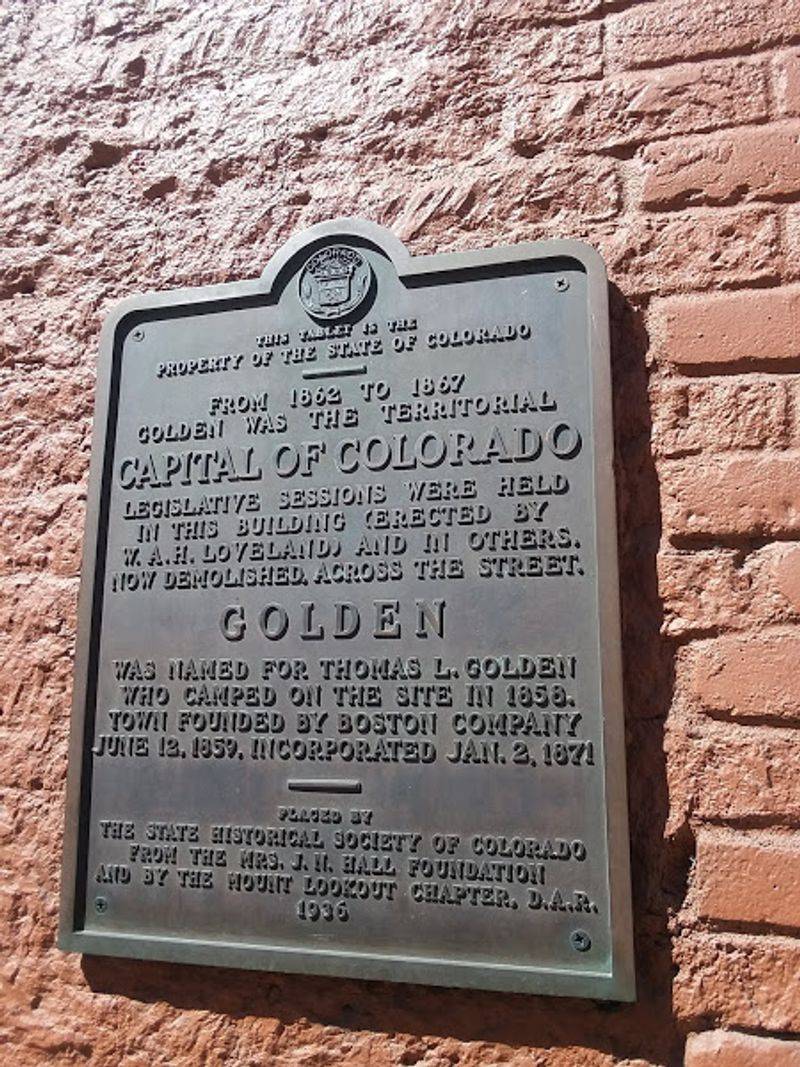
Picture a handful of lawmakers riding into a muddy mining town, ready to write the rules for a brand-new territory. That scene happened in Golden during the 1860s. Congress created the Colorado Territory in 1861, and soon after, Golden became the place where the territorial legislature gathered.
For roughly five years, from 1862 until 1867, Golden held the title of territorial capital. Denver was growing fast just to the east, though, and the two towns were fierce rivals. Golden had the canyon route and the mining traffic. Denver had more people, more money, and growing political muscle.
The rivalry did not end nicely for Golden. In 1867, the capital officially moved to Denver, and it stayed there when Colorado became a state in 1876. Golden did not fade away, but it lost the spotlight it had fought so hard to keep.
Some of the lawmaking happened in a brick building known as the Loveland Block, named after William A. H. Loveland.
He was a Golden businessman and a big booster of the town. He pushed hard for railroads and hoped to make Golden the region’s true center.
Today, a marker downtown points out where territorial business took place. It is easy to walk right past it, so slow down along Washington Avenue and keep an eye out for historical plaques. Reading them is like finding clues in a scavenger hunt.
Here is a fun fact to share at dinner. Many Colorado residents have no idea their state government once met in this small town. Golden still carries a bit of that underdog pride, and you can sense it in how locals talk about their history, often with a grin and a quick jab at Denver.
Trains, Rocks, and Buffalo Bill on the Hill
Steam whistles, glittering crystals, and a famous showman’s grave. Golden packs three very different museums into a short drive, and each one tells a piece of the town’s story.
Start at the Colorado Railroad Museum, northeast of downtown. The grounds are covered with vintage locomotives, cabooses, and passenger cars, many painted in bright reds and greens.
An 1800s-style depot serves as the main building, and inside you will find old tickets, lanterns, and model train layouts that kids can stare at for ages.
Railroads connect straight to Golden’s capital-era dreams. Town leaders like William Loveland believed trains would make Golden the most important place in the region. That plan did not fully work out, but narrow-gauge lines did push up Clear Creek Canyon toward the mines.
On certain days, the museum fires up a train for short rides around the property, so check the schedule before you go.
Next, head to the Colorado School of Mines Geology Museum on campus. Its cases hold sparkling minerals, meteorites, gold samples, and mining tools. There is even a moon rock. Admission has traditionally been free, which makes it an easy stop for families.
Finally, drive up Lookout Mountain Road to the Buffalo Bill Museum and Grave. William F. Cody, the famous Wild West showman, is buried on the mountaintop.
The museum shows off his costumes, posters, and guns, and the view from the overlook stretches across the plains toward Denver.
Pace yourself. Trying to cram all three into one morning can leave you rushed. A smart plan is trains in the morning, minerals after lunch, and Buffalo Bill in the late afternoon when the light over the plains turns soft and hazy.
Clear Creek, Where the Whole Town Goes Outside
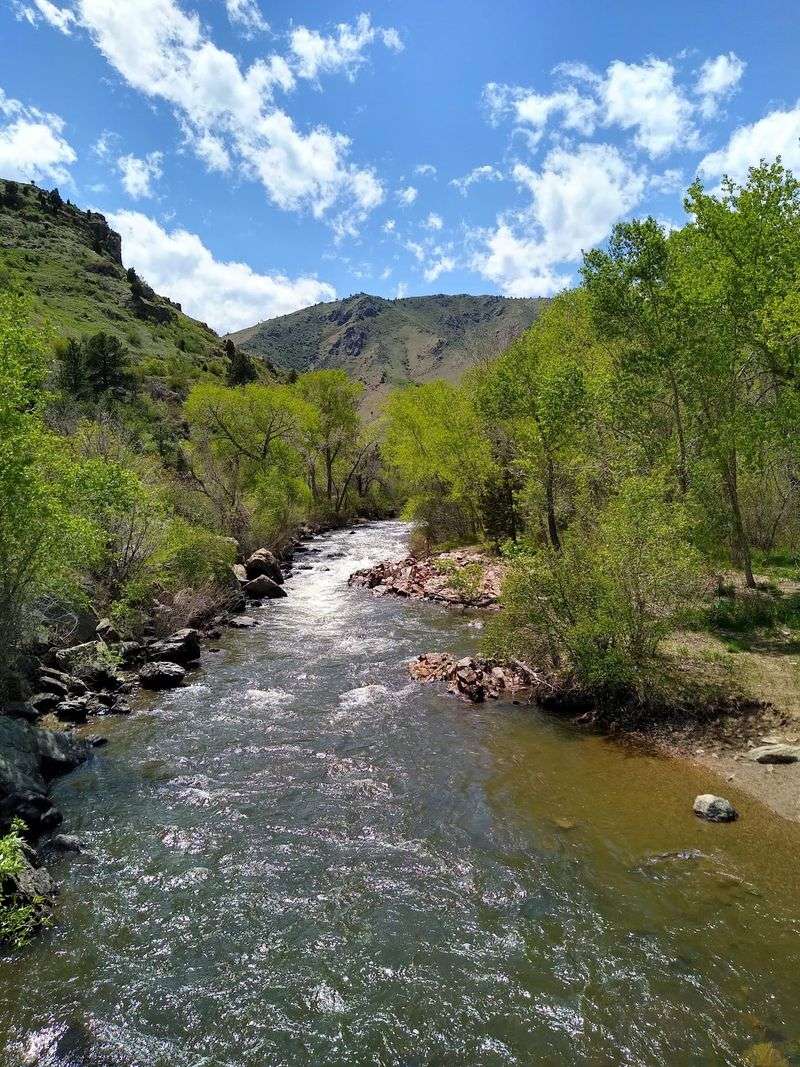
Kayak paddles flash in the sun. A golden retriever leaps into a pool. Somebody on a bike rings a bell and zips past. Welcome to Clear Creek, the watery backbone of Golden.
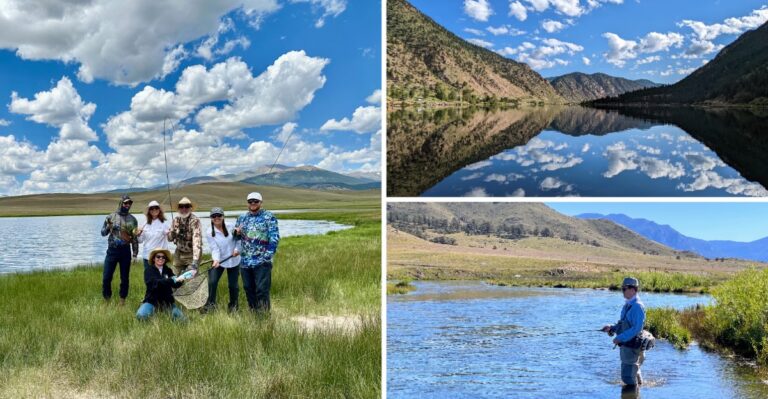
The same creek that once carried gold seekers into the mountains now carries tubers, kayakers, and fishing lines. Clear Creek Trail runs right alongside it, a paved path that links downtown with parks, bridges, and quiet shady corners. Walkers, runners, and cyclists share it all year long.
In the heart of town sits Clear Creek White Water Park. Boulders placed in the creek create drops and waves that kayakers use to practice rolls and tricks. Even if you never climb into a boat, watching from the rocks is great fun, especially in late spring when snowmelt makes the water roar.
Safety comes first here. The creek can be fast and very cold, even in summer. When water is high, tubing is sometimes restricted, and signs near the park will tell you current conditions. Wear shoes that grip slippery rocks, and keep little kids close to shore.
Calmer days bring a different scene. Families spread out picnic blankets under cottonwood trees, and teens skip stones in shallow spots. Anglers wade upstream looking for trout, moving slowly and quietly.
Want a longer outing? Follow the trail west and it leads toward the mouth of Clear Creek Canyon, where the walls grow steep and rocky.
Pack water, sunscreen, and a snack, because the high elevation and dry air can wear you out faster than you might expect. Then circle back into town for ice cream on Washington Avenue.
Best Ways to Explore Golden, Colorado on Foot
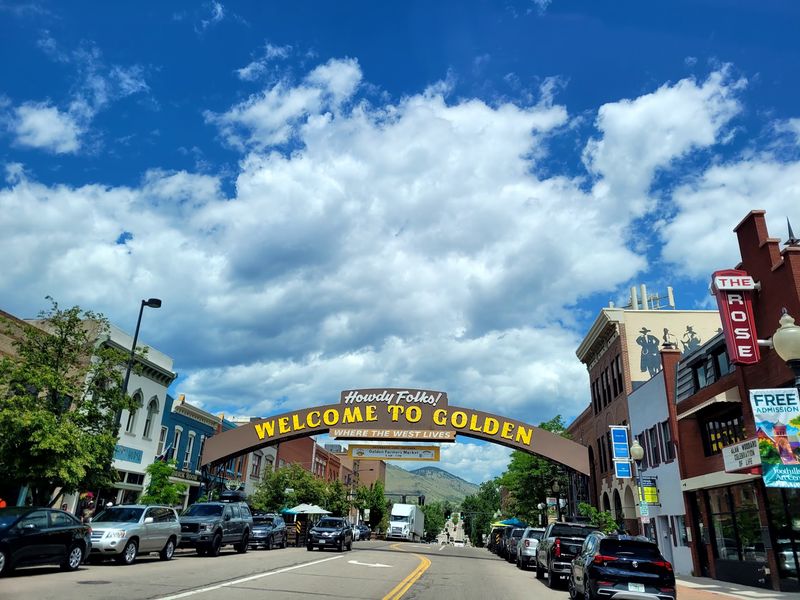
Leave the car parked. Golden’s downtown is compact enough that walking beats driving almost every time, and you will catch far more details at street speed.
A good loop begins at the Golden History Museum and Park, where exhibits explain the town’s gold rush start and its capital years. Outside, you can peek at historic cabins moved there to show how early settlers lived. It sets the stage nicely before you wander.
From there, cross over to Washington Avenue and stroll north under the arch. Pop into shops selling cowboy boots, climbing gear, and local art. Side streets hide small bookstores and cafes that are easy to miss if you stick only to the main drag.
Hungry? Golden has plenty of spots for burgers, tacos, and pastries. Grabbing a to-go lunch and eating by the creek is a local favorite move, especially when patios are packed on weekends.
Beer fans will notice the Coors brewery, one of the biggest in the world, just east of downtown. It has been part of Golden since 1873. Tour availability has changed over the years, so check ahead if a visit is on your list. Families with younger kids might prefer smaller stops.
Biking is another great option. Bike racks dot the downtown sidewalks, and trails connect to parks and neighborhoods. Rentals are available in town, making it easy to pedal between the creek, the campus, and the shops.
For the best finish, walk up toward the Colorado School of Mines campus near sunset. The old stone buildings glow, and the view of the M on Mount Zion catches the last light before the evening chill rolls down from the canyon.
Timing Your Trip Around Crowds and Weather
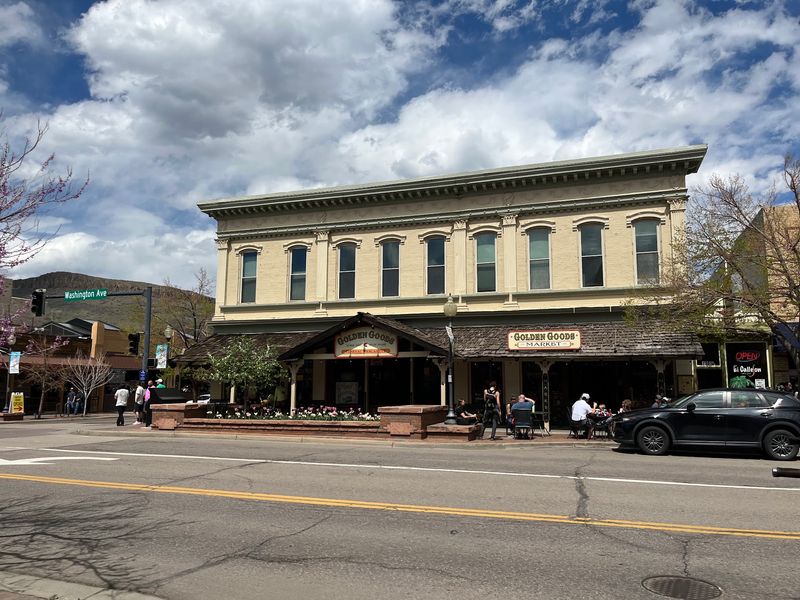
Summer Saturdays can turn Golden into a traffic jam with a creek running through it. Parking lots fill early, the trail gets busy, and lines form at popular lunch spots. A little planning makes a big difference.
Spring brings roaring water from melting snow. Late May and June are prime months for watching kayakers at the whitewater park. Weather swings wildly this time of year, though, so pack a jacket even if the morning looks sunny.
July and August are the busiest months. Afternoon thunderstorms roll over the foothills most days, often with lightning. Plan hikes and creek time for the morning, then head indoors to a museum when clouds start stacking up over Lookout Mountain.
Fall might be the sweet spot. September and October bring crisp air, fewer crowds, and cottonwood trees along Clear Creek that turn bright yellow. Hiking trails on North Table Mountain feel pleasant instead of scorching.
Winter surprises many first-time visitors. Snow falls, but sunny days often melt it quickly in town. The downtown area glows with holiday lights in December, and museums stay cozy and uncrowded.
Golden also hosts community events throughout the year, from summer festivals to holiday celebrations on Washington Avenue. Event days are lively and fun but crowded, so check the town calendar and decide whether you want the party or the peace.
A few quick tips help any season. Golden sits at about 5,675 feet above sea level, so drink more water than usual. Sunscreen matters even in winter because the sun is stronger at altitude.
And Denver is only about 15 miles east, making Golden an easy day trip or a quieter home base for a longer Colorado adventure.
A Former Capital That Chose Character Over Size
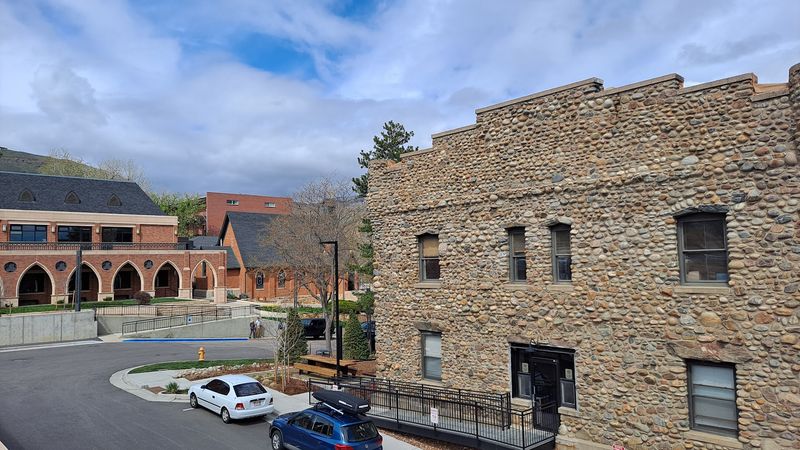
Losing the capital to Denver could have been the end of Golden’s story. Instead, it became the start of a different one.
While Denver grew into a sprawling city of skyscrapers and highways, Golden stayed small. Today it has around 20,000 residents, tucked between mesas and mountains that naturally limit how far it can spread. That geography helped protect the historic downtown from being swallowed by development.
Look at what Golden built with the space it had. The Colorado School of Mines, founded in 1874, became one of the top engineering and science schools in the country. Coors turned into a global brand. Outdoor companies and trail lovers moved in, drawn by climbing walls of rock just minutes from town.
Each of those pieces ties back to the early days. Mining knowledge became a university. A canyon route for wagons became a playground for kayakers. Railroad dreams became a museum packed with polished locomotives.
The capital years left a quieter mark. They show up in plaques, in museum displays, and in local pride. Ask a longtime resident about the Denver rivalry and you might hear a joke or two about who really came first.
For visitors, that mix is the real reward. In a single day you can read about territorial lawmakers, touch a meteorite, watch a kayaker flip in the rapids, and stand at Buffalo Bill’s grave. Few places pack that much variety into so few square miles.
Before heading home, drive up Lookout Mountain one more time. Pull over at a safe overlook and watch the town lights flicker on below, with Denver’s glow spreading far out on the plains.
Share this story