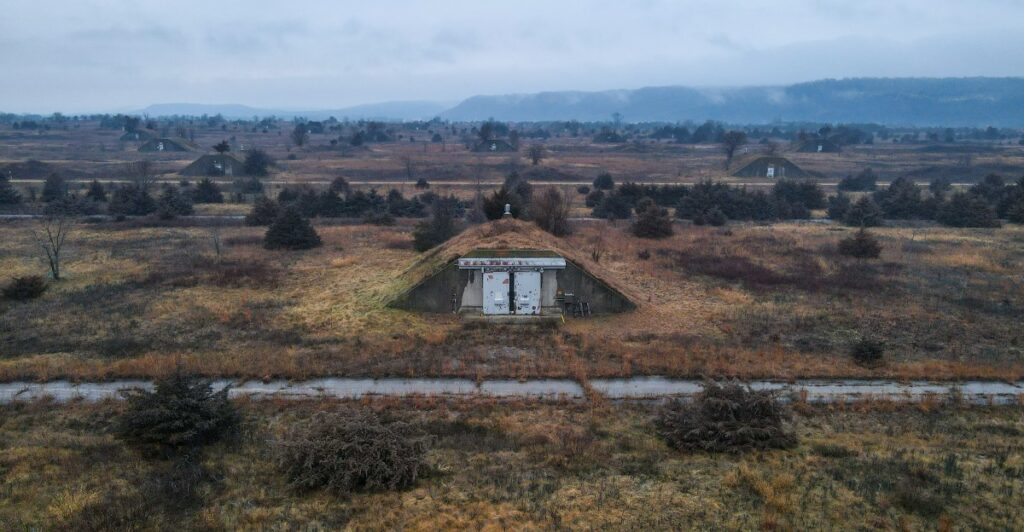
Behind restricted boundaries in northwestern Illinois sits a sprawling reminder of the state’s military past. The former Savanna Army Depot once covered thousands of acres, but decades of closure, demolition, and deterioration have left parts of the property looking dramatically different from their active-duty days.
Aging structures and remnants of military infrastructure now share the landscape with wildlife and reclaimed natural areas, creating an unusual collision of history and change. Much of the former depot is not a place for casual exploration, which only adds to the curiosity surrounding it. What remains tells a fascinating story even from a distance.
A Giant Ghost on the Edge of Savanna
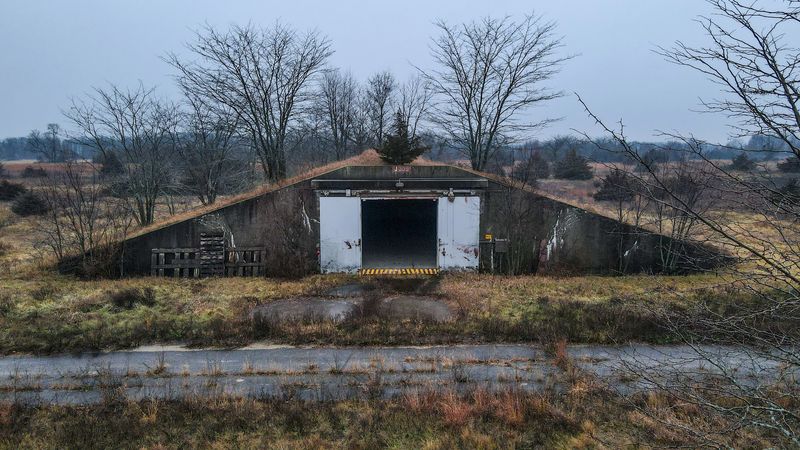
The scale is the first thing that catches attention. US Savanna Army Depot was not a tiny outpost tucked behind a gate, but a huge military property that once handled major defense work across thousands of acres. Even now, with parts removed, sold, or reused, the site still carries the weight of a place built for serious purpose.
Roads stretch farther than many first-time visitors expect, and the land does not reveal itself all at once. Fences, side roads, and gaps between buildings create a patchwork view instead of one big dramatic reveal. That scattered layout adds to the mystery, because every distant roofline hints at more beyond sight.
Older military sites often feel frozen in time, but Savanna presents a more complicated picture. Some structures are gone, some remain standing, and some areas are now part of an industrial park rather than a sealed-off ruin. The result is a landscape that looks half retired and half repurposed.
That contrast matters when people imagine a classic abandoned base. Savanna is not a movie set with open access and endless empty halls. It is a real former depot with active restrictions, changing ownership, and land that serves different roles today.
For anyone trying to understand why the place keeps drawing attention, size is the answer that comes first. Big military spaces leave big marks on the land, and those marks do not disappear quickly. Even after decades of closure and cleanup, the depot still reads as a massive footprint from another era.
Looking across the property, it becomes easier to see why the title fits. Few people realize how large this Illinois depot really was, or how long pieces of it have sat in decline while the rest slowly changed around them.
Concrete, Silence, and the Slow Pull of Decay
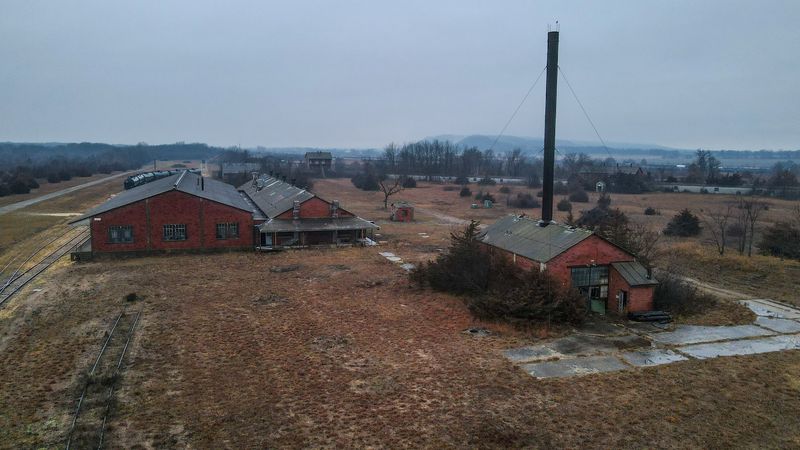
Decay rarely happens in one dramatic moment. At Savanna, it has come in slow stages, with weather, vacancy, demolition, and time all working together across the property. That long process is part of what makes the depot so striking, because it is not a polished historic site or a total ruin, but a place caught somewhere in between.
Concrete slabs, old industrial shells, and aging structures create a tough, worn look that photographs well from a distance. Up close, though, the story is less romantic. Empty spaces usually mean real safety problems, unstable buildings, and restricted access, which is why so much of the area remains closed off.
That can surprise people who arrive hoping for a full urban exploration experience. Much of the depot cannot be freely wandered, and many of the most interesting sections sit behind fences, signs, or private roads. In practical terms, the best approach is to treat the property as a place to observe carefully, not a place to push boundaries.
There is also a disappearing quality to the site now. Reviews and local discussion make clear that many damaged buildings have already been torn down, and more pieces may vanish over time. Anyone interested in the visual story of the depot should understand that each year may show a different version of it.
That shifting condition is one reason the place feels so unusual. Ruin and removal are happening at the same time. One road offers a glimpse of the past, while another leads toward a future shaped by industry, land management, and practical reuse.
Seen that way, the rotting structures are only part of the picture. The larger story is about how a giant military complex fades, piece by piece, without ever fully disappearing all at once.
Where War History Still Hangs in the Air
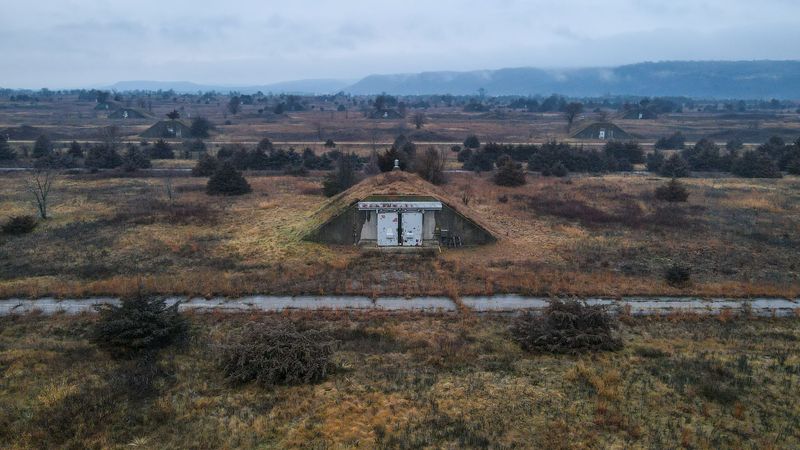
Long before it became a puzzle of fences, trails, and reused land, the Savanna Army Depot played a military role that stretched across much of the twentieth century.
The site began in 1917 and later served as a major place for ammunition storage, distribution, and support during periods that included the World Wars and the Cold War. That history gives the depot meaning far beyond what can be seen from a roadside pull-off.
Military landscapes often look plain to casual drivers. Flat roofs, sturdy walls, broad roads, and utility buildings do not always announce their importance. Yet those basic shapes were built for function, speed, and security, which helps explain why the property spread across such a large area.
Understanding that past changes the way the modern site reads. A weathered structure is not just an old building, and a long empty road is not just leftover pavement. Each piece reflects the logic of a working depot that once handled materials, movement, and strict control on a very large scale.
That background also explains why some visitors feel both fascinated and frustrated. The history is real, but it is not fully packaged for easy touring. Instead of a neatly labeled museum route, there are partial views, distant industrial forms, and a lot of imagination required to connect the dots.
Still, the depot rewards people who show up knowing what they are looking at. Reading a little before visiting, or simply paying attention to layout and scale, makes a huge difference. Suddenly the land starts to tell a story about logistics, wartime pressure, and the kind of infrastructure most people never think about.
Savanna does not preserve history in a tidy way. It presents it in fragments, with enough left behind to suggest just how much once happened here.
Wildlife Now Moves Through the Old Illinois Base
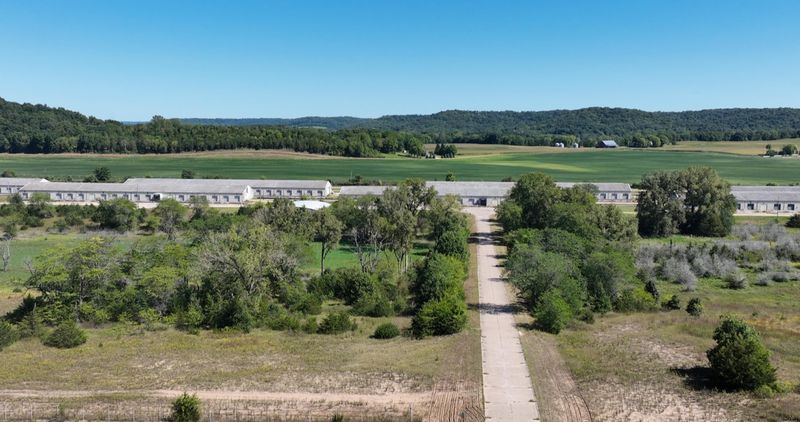
One of the strangest twists at Savanna is that nature has become part of the main story. Land once tied to military use now supports wildlife viewing, open habitat, and a quieter rhythm that clashes with the depot’s old purpose in a fascinating way. Deer, turkeys, and many bird species have all been noted in the area, turning parts of the property into a very different kind of destination.
That shift does not erase the military past, but it changes the mood. Instead of engines, storage activity, and controlled movement, some sections now offer grass, trees, and long pauses where the loudest sound may be wind or birds. It is a reminder that large properties can transform in ways few people expect after closure.
For travelers who are not focused on abandoned structures, this may be the most rewarding angle. Even when access is limited, wildlife can often be seen from approved areas without much effort. A patient visit, especially during calmer hours, can reveal more life than the empty buildings suggest.
The contrast is part of the appeal. Few places combine old military infrastructure with lookout points and habitat in such a visible way. A former defense site can feel harsh on paper, yet parts of Savanna now read almost like a buffer zone where nature has started taking the lead.
Practical expectations help here. The area is not a giant public nature park with endless marked paths, and signs matter. Staying in legal viewing areas keeps the experience safe and respectful while still allowing room to notice the unusual blend of history and wildlife.
That blend gives Savanna one of its strongest hooks. It is not only about what has decayed. It is also about what has returned, feathered and hoofed, across land once shaped for war.
The Best Views Are the Ones You Cannot Rush
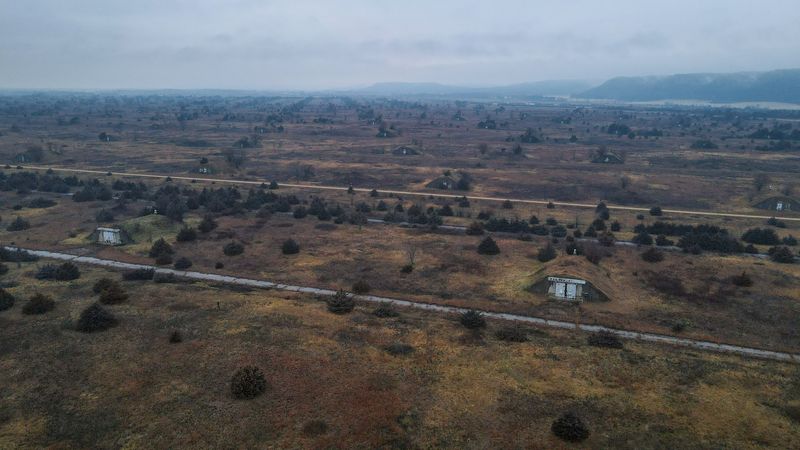
Anyone expecting nonstop access will probably leave disappointed. Savanna works better as a careful viewing experience, where the best moments come from legal overlooks, public routes, and patient observation rather than deep entry into the property. In other words, the smart visit is less about chasing forbidden corners and more about understanding what can actually be seen.
One of the most practical stops is the lookout area tied to the broader depot grounds. It gives a wider sense of the landscape and helps place the former military site within its setting near the Mississippi River. That broader view matters, because the depot was never just a cluster of buildings.
It was a giant land operation with terrain, spacing, and distance built into its function. Some travelers also mention nearby natural features and the shoreline area, including dunes and river scenery in the region.
That mix gives the outing more depth. A visit can shift from industrial history to open views in a short amount of time, which keeps the trip from feeling one-note.
Timing helps a lot. Better light can make far-off structures easier to notice, while quieter hours improve the chances of spotting wildlife. A slow drive, brief stops where allowed, and realistic expectations usually work better than turning the place into a checklist.
It also helps to think visually. Notice how roads angle away, where fences break the view, and how isolated buildings sit on the horizon. Savanna tells its story through distance and fragments.
That is why rushing does not work here. The depot is not a quick attraction with one obvious centerpiece. It is a place to read slowly from the outside, using glimpses, overlooks, and the spaces between them.
Fences Tell the Story as Much as the Buildings
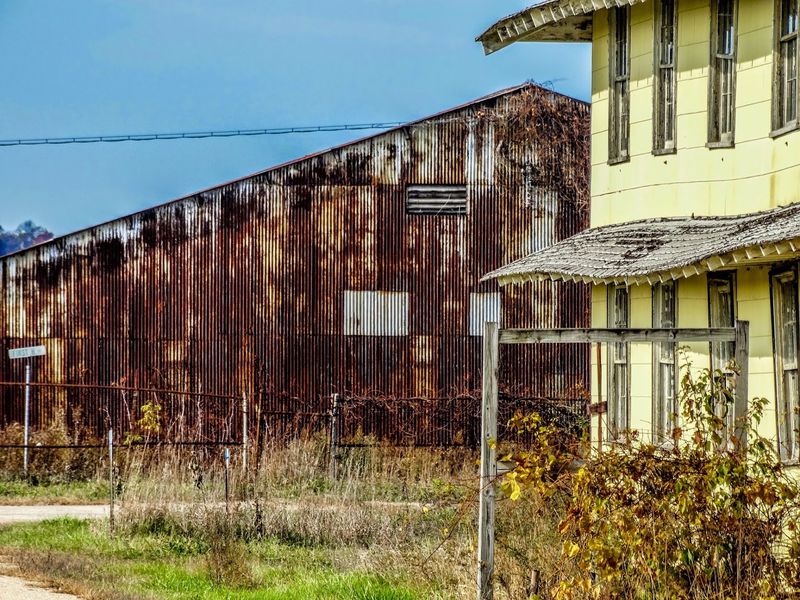
Not every interesting historic place wants to be explored up close, and Savanna makes that plain. Signs, gates, and off-limit zones are a major part of the experience here. Instead of treating those barriers as an annoyance, it makes more sense to read them as part of the site’s present-day reality.
The depot is no longer a single open military base, but a landscape divided among different uses, including industrial property and managed public areas.
That means access can change from road to road, and what appears empty may still be restricted or privately controlled. Confusion often starts when the site looks abandoned but does not function like abandoned land.
That distinction matters for safety and common sense. Former military properties can contain unstable structures, rough terrain, limited services, and areas not meant for casual wandering. Even where the most dramatic buildings seem close enough to approach, legal access remains the key detail.
There is also a social side to the fencing. Visitors sometimes describe the place as unwelcoming because so much of it says keep out. Yet that tension is part of what gives Savanna its unusual identity.
The very features that make it intriguing from a distance are often the same features that require stricter boundaries.
For a better visit, plan around that fact instead of fighting it. Use public pull-offs, designated trails, and lookouts, and do not expect every old road to lead somewhere open. A camera with some zoom can be more useful than hiking shoes on a site like this.
In a strange way, the fences help explain the depot better than a brochure might. They show that Savanna is still in transition, still managed, and still shaped by control even decades after its military chapter closed.
A Base Becoming Something Else
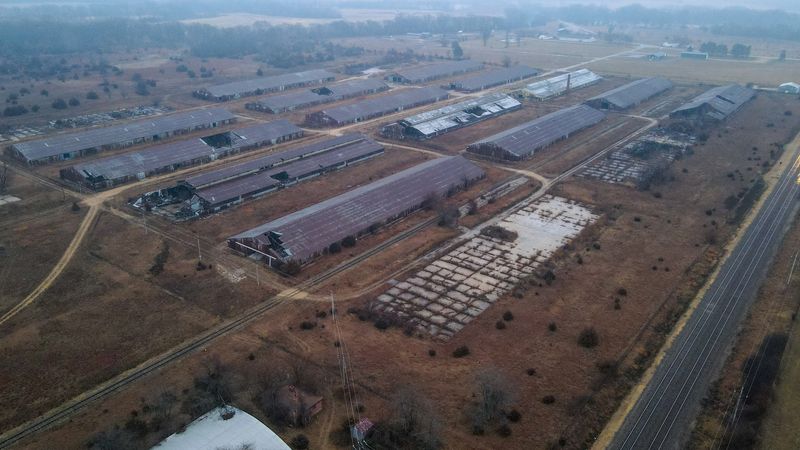
Change is the real headline at Savanna. The depot is often talked about for what remains, but the deeper story is about conversion. Land that once supported military operations is now being split across new roles, including industrial use, conservation, and limited public recreation.
That process can look messy from the outside. Some buildings are sold, some are torn down, some roads change status, and some sections become private or restricted in new ways.
For curious travelers, that creates an odd experience because the place is never entirely past tense. It is still being rewritten.
There is a practical lesson in that. Visiting the former depot with fixed expectations can lead to frustration, especially if the goal is to find a giant untouched ruin. A better mindset is to treat it as a living transition zone where old military infrastructure, modern business activity, and recovering land all overlap.
That overlap gives the site more depth than a simple abandoned-base narrative. It also explains why each account of Savanna can sound slightly different.
Someone focused on history sees one story, someone searching for urban decay sees another, and someone watching birds may barely care about the buildings at all.
Seen together, those views make sense. Few places in Illinois show such a visible handoff from defense use to civilian reuse across such a wide area. The changes are not neat, and they are not always scenic, but they are real.
In the end, Savanna stands out because it has not been preserved as a clean monument or erased into blank land. It exists in a rough middle stage, where crumbling pieces of the past still share ground with whatever comes next. That unfinished character is exactly what makes the depot so hard to forget.