At the northern tip of Michigan’s Lower Peninsula, the Melvin Family Hiking and Biking Trails give riders the kind of flow that makes one loop turn into three. Set off Bennett Road in Cheboygan, this purpose-built trail system blends smooth singletrack, rolling terrain, wooded stretches, and flashes of the Burt and Mullett Lake region into an outdoor escape that feels both approachable and exciting.
Beginners can ease into the rhythm, while more confident riders can chase speed, corners, and technical sections that keep things interesting. It is the kind of Michigan trail system locals return to week after week, not because it is convenient, but because the ride is that good.
Where the Trees Open Up and the Trail Begins
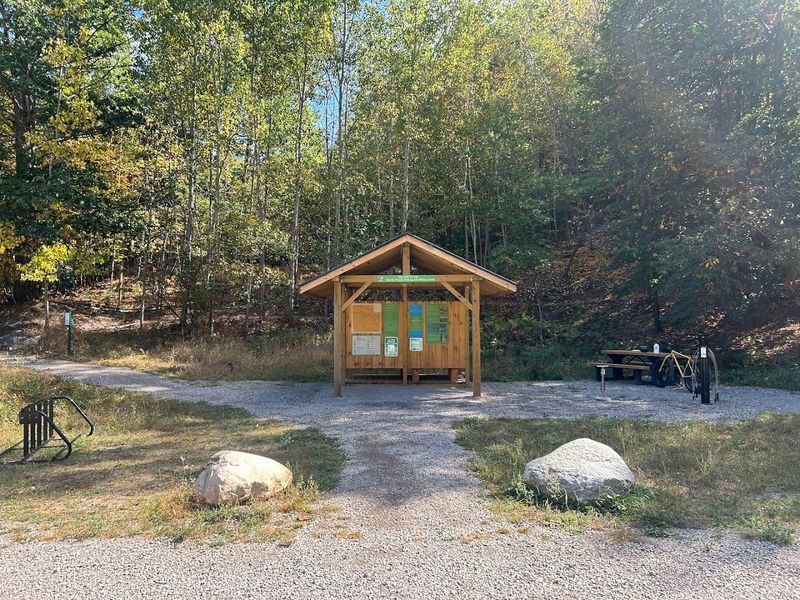
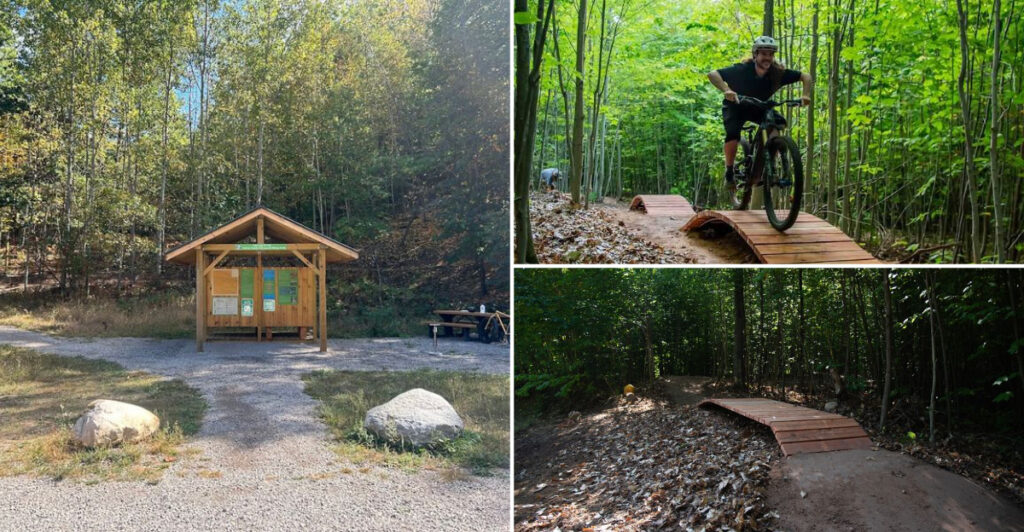
Pulling off Bennett Road and stepping into the Melvin Family trail system, the first thing that registers is how well-organized everything feels. Trailhead signage greets riders with clear maps, marked difficulty indicators, and directional arrows that make orientation fast and intuitive.
For a trail system in a relatively rural stretch of Cheboygan County, the level of infrastructure here is genuinely impressive.
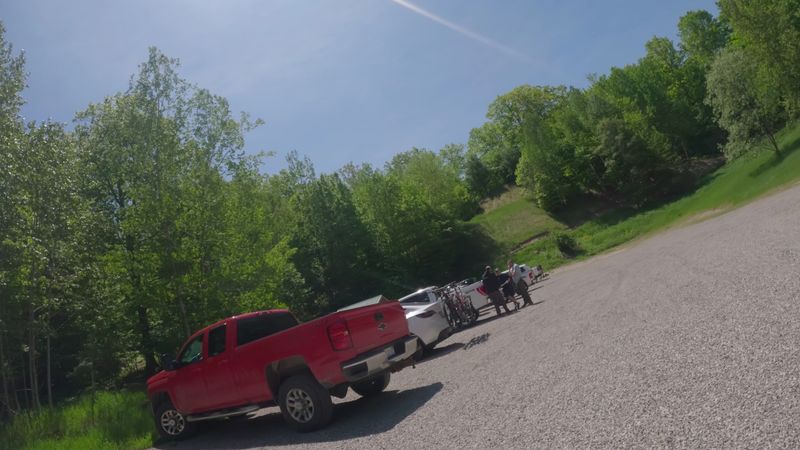
The parking area is straightforward, with enough room for multiple vehicles and trailers. From the moment tires hit dirt, the trail surface reads as intentionally crafted — not just a worn path through the woods, but shaped terrain with purpose.
Berms, gentle rollers, and rooted sections appear early, giving riders an immediate sense of the character ahead.
Northern Michigan forests have a particular texture to them: dense canopy, sandy soil, and the occasional exposed root system that keeps attention sharp. The Melvin trails use that natural landscape as a foundation rather than fighting it.
The result is a trail network that feels native to its environment, not imposed on it.
Trail markers appear at regular intervals throughout the system, which covers a substantial footprint of land. Loops can be combined in different ways, and riders who explore multiple directions on the same visit tend to discover sections that feel almost entirely separate from one another.
That layered quality is part of what keeps the system fresh across repeat visits.
Open 24 hours a day, seven days a week, the access here is unrestricted and welcoming. Early morning rides through filtered Michigan light hit differently than midday spins, and that flexibility to choose your own timing adds real value.
The trailhead itself sets an expectation of quality — and the trails consistently follow through.
Singletrack Flow That Keeps Riders Grinning
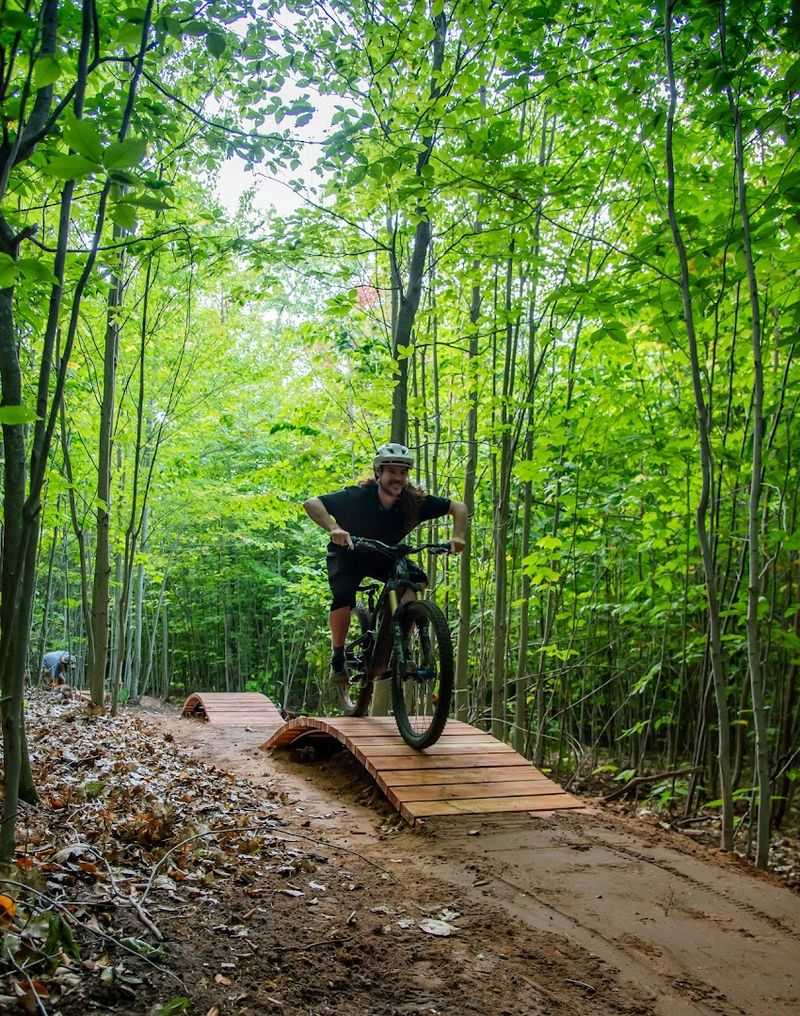
Flow trails have a specific feeling that experienced riders recognize immediately — a rhythm that builds through corners, accelerates out of compressions, and rewards momentum over brute strength. The Melvin Family trails deliver that sensation consistently, particularly on the sections designed for intermediate and advanced riders.
Once you find the rhythm, it’s hard to stop.
The trail builders here clearly understood how terrain and speed interact. Berms are banked at angles that actually work, meaning riders can carry speed through corners without scrubbing it unnecessarily.
Transitions between climbs and descents feel deliberate rather than accidental, giving legs a chance to recover before the next technical challenge arrives.
Signage throughout the system flags hazard zones, one-way sections, and skill-specific features. That attention to rider safety doesn’t sanitize the experience — it just means surprises come from the terrain itself rather than from missing a turn or misreading the trail.
Knowing where you are on the map keeps confidence high and decision-making fast.
The trail complexity scales well across ability levels. Beginner loops introduce new riders to the basic movement patterns of off-road riding without overwhelming them.
More experienced riders can chain together loops that push total mileage toward six miles or beyond, depending on which combinations they choose. That scalability is a major design strength.
Riders who visit regularly — and there are plenty of those in the Burt and Mullett Lake cycling community — tend to experiment with different loop directions and combinations each time. The trail network rewards that kind of exploration.
Sections ridden clockwise feel noticeably different when approached from the opposite direction, which adds replay value that keeps the experience from going stale after a few visits.
Michigan’s Tip of the Mitt Has a Trail System Worth the Drive
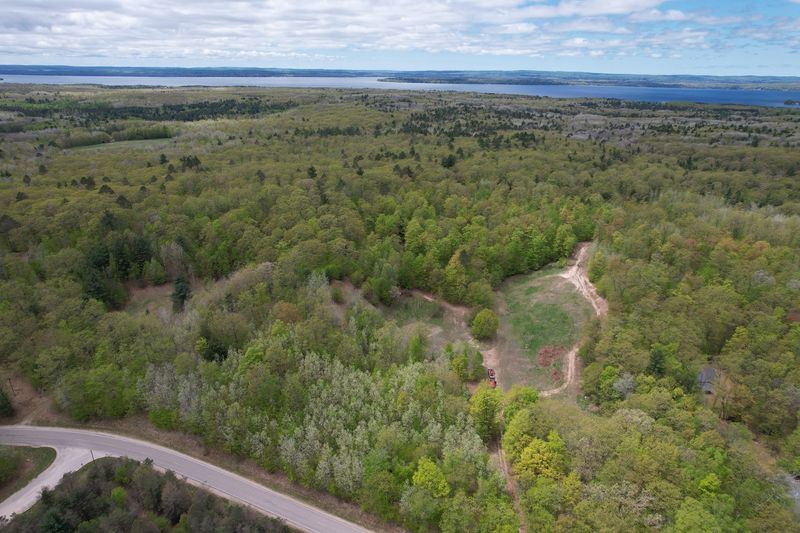
The phrase “Tip of the Mitt” refers to the northernmost section of Michigan’s Lower Peninsula, a region shaped by glacial lakes, dense hardwood forests, and a cycling culture that has grown steadily over recent years. Sitting right in that zone, the Melvin Family trails serve a community that previously had to travel farther south for quality mountain biking terrain.
That gap has been filled convincingly.
Cheboygan County sits between two major lakes — Burt Lake and Mullett Lake — and the surrounding landscape reflects that water-rich geography. Elevation changes in the trail system connect riders to the kinds of views that make northern Michigan worth visiting in the first place.
Forest canopy breaks at certain points, offering glimpses of the broader lake-dotted landscape that defines this part of the state.
For cyclists making the drive up from Traverse City, Petoskey, or even further south, the Melvin trails represent a legitimate destination rather than a convenient local option. Multiple riders have noted that the journey is worth repeating, which says something meaningful about the quality of what awaits on arrival.
Trail systems that earn repeat long-distance visits are doing something right.
The trail network sits on a substantial footprint of conserved land, managed in a way that prioritizes both the riding experience and the ecological character of the property. That conservation ethic shows in how the trails interact with the landscape — routing around sensitive areas, working with natural drainage patterns, and preserving the forest feel that makes northern Michigan so visually compelling.
Seasonal timing matters in this region. Late spring through fall offers the best conditions, with summer and early autumn providing the most reliable trail surfaces and the longest daylight windows for extended rides.
Built for All Levels, Not Just the Brave Ones
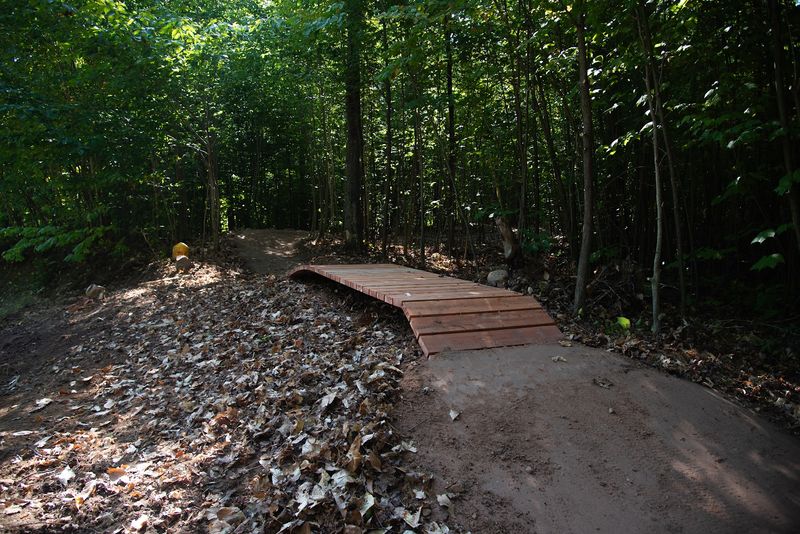
Trail systems that cater exclusively to expert riders leave a lot of potential riders behind. The Melvin Family trails take a different approach, offering a tiered experience that genuinely welcomes riders at multiple skill levels.
That inclusivity isn’t just marketing language — it’s visible in how the trail network is actually designed and signed.
Beginner-friendly sections introduce foundational skills: reading terrain, managing speed on mild descents, and navigating rooted surfaces without panic. These sections are approachable enough that first-timers can build confidence without feeling thrown into the deep end.
One rider scoped out the trails on foot with a dog before returning to ride the beginner loop — and found it both fun and appropriately challenging without being overwhelming.
Intermediate sections raise the stakes with tighter corners, more pronounced rollers, and terrain that rewards proper body positioning. Riders who have outgrown easy trails but aren’t yet comfortable on aggressive descents will find plenty of engaging terrain in this middle zone.
The progression from beginner to intermediate feels natural rather than abrupt.
Advanced sections introduce features that demand technical skill and focused attention. Hazard signs mark spots where speed management and line selection become critical.
Those warning signs aren’t there to discourage — they’re there to ensure riders self-select appropriately and approach technical features with the right mindset. Respecting the signs makes the experience safer and more enjoyable for everyone on the trail.
Hikers also have access to portions of the system, though the network skews heavily toward cycling — roughly ninety percent of the trail mileage is bike-focused. The hiking path exists but requires more navigation effort, particularly for first-time visitors.
Bringing a bike is the clear recommendation for getting the most out of a visit to this trail system.
The Community That Keeps Coming Back Every Week
A trail system earns its reputation one ride at a time, and the Melvin Family trails have clearly built something that resonates beyond casual curiosity. Riders from the surrounding Burt and Mullett Lake area return on a weekly basis — not because there’s nothing else to do, but because the trails keep delivering a quality experience that holds up under repetition.
That kind of loyalty is telling. Weekly riders aren’t just burning calories; they’re choosing this specific system over alternatives because the terrain stays interesting.
Exploring different loop combinations and directions on each visit means the network functions almost like multiple trail systems layered on top of each other. The same physical space reveals different character depending on how it’s approached.
The trail system opened relatively recently and quickly became a valued addition to northern Michigan’s outdoor recreation landscape. Local cyclists who had been riding the same routes for years suddenly had a new option that raised the bar for what trail design in this region could look like.
That shift in expectations has energized the local riding community in a noticeable way.
Conservation organizations played a role in establishing and maintaining the property, which gives the trail system a sense of stewardship that goes beyond typical recreational infrastructure. Knowing that the land itself is protected adds a layer of meaning to every visit — riders are engaging with a place that has been intentionally preserved for long-term public use.
Trail maintenance keeps the system in reliable condition across seasons. Well-maintained trails don’t just look better — they ride better, drain better, and hold up longer under heavy use.
That ongoing care is what separates a trail system that peaks early and fades from one that grows in reputation over time. The Melvin trails appear firmly on the growth trajectory.
Reading the Map, Choosing Your Loop
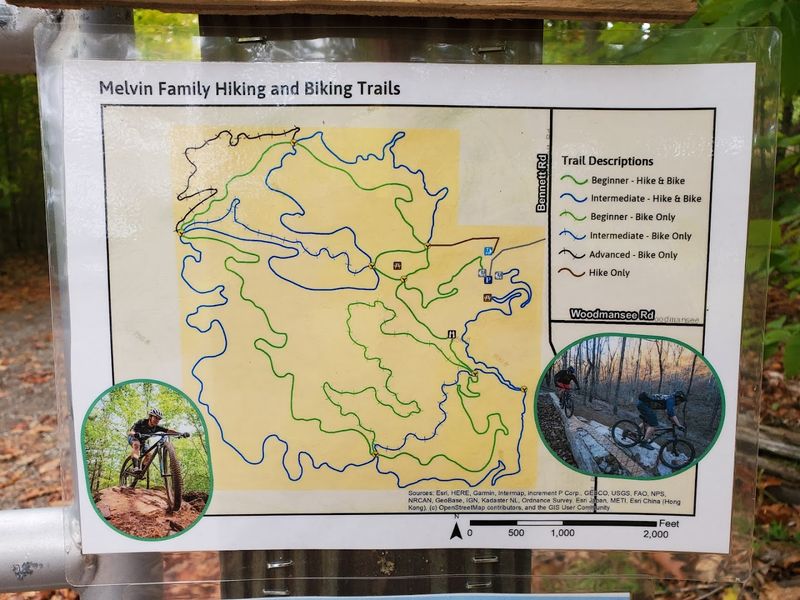
Navigation at the Melvin Family trails is handled through a combination of posted maps at key junctions and trail markers that appear frequently enough to prevent confusion. For most riders, the signage system works well and keeps the experience moving forward without long pauses to figure out direction.
Map kiosks at intersections provide orientation before committing to a new section.
The loop structure gives riders meaningful choices about distance and intensity. Completing two full loops brings total mileage to around six miles, which represents a solid workout without being exhausting for intermediate riders.
Shorter combinations work well for those warming up, cooling down, or simply short on time. The modular design of the network means there’s rarely a reason to cut a visit short due to limited options.
One thing worth noting: some riders have found the map layout slightly confusing when trying to navigate back to the trailhead. Taking a moment at each junction to cross-reference the posted map with your current position helps prevent accidental loops.
The trail markers are reliable, but moving fast through the system without checking in periodically can lead to unexpected extra mileage — which, depending on your perspective, is either a problem or a bonus.
One-way designations on certain sections keep traffic flowing safely and prevent head-on encounters between riders moving in opposite directions. Paying attention to those directional signs matters, especially on narrower stretches where visibility around corners is limited.
The two-way sections allow hikers and bikers to share space, which requires mutual awareness from everyone using the trail.
Planning a visit with a general sense of which loops to prioritize — beginner, intermediate, or advanced — makes the experience feel more intentional. Riders who arrive with a rough plan tend to leave more satisfied than those who wander without direction, even though the trail system is forgiving enough to accommodate both approaches.
Why This Trail System Stands Apart from Flat Forest Walks
Northern Michigan has no shortage of outdoor recreation options, but a significant portion of the region’s hiking and walking trails trend toward the flat and predictable. The Melvin Family trails break from that pattern with terrain that actually challenges riders and keeps attention engaged from start to finish.
That contrast with the surrounding trail landscape is part of what makes this system feel like a discovery.
Elevation change is a key ingredient. Climbs that require genuine effort make descents feel earned, and the Melvin trails deliver both in proportions that keep the experience balanced.
Riders accustomed to flat forest paths describe the experience here as a welcome shift — more physically demanding, more technically interesting, and more satisfying at the end of a session.
The trail surface quality holds up well across different conditions. Sandy northern Michigan soil drains reasonably fast after rain, which means the trails return to rideable condition quicker than clay-heavy systems further south.
That resilience extends the usable season and reduces the frustration of showing up after precipitation and finding the trails wrecked.
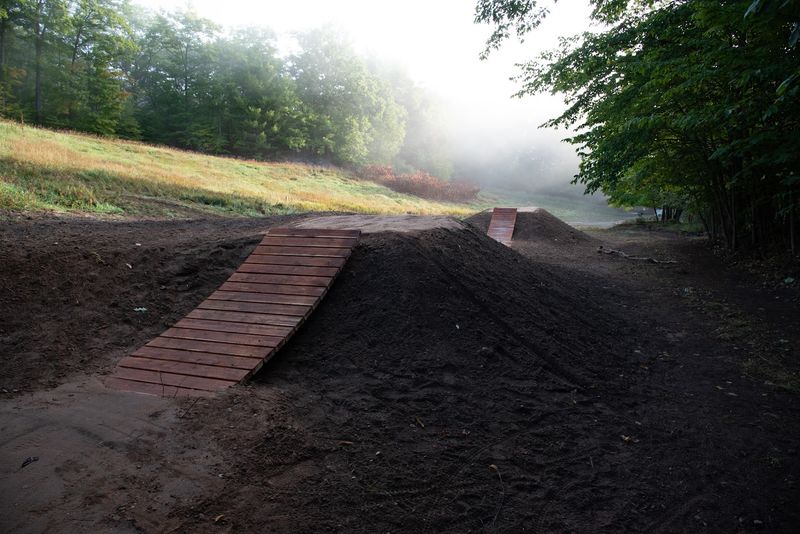
Professionally built trail features — berms, rollers, technical rock sections — signal that skilled trail designers shaped this system with rider experience as the primary goal. That craftsmanship shows in how the terrain flows rather than just exists.
Riders who have spent time on well-designed systems elsewhere will recognize the hallmarks of thoughtful construction immediately upon hitting the first descent.
Located at 3151 Bennett Road in Cheboygan, the Melvin Family Hiking and Biking Trails are open around the clock, every day of the year. For anyone spending time in the Tip of the Mitt region and looking for a trail experience that exceeds expectations, this system delivers exactly that — without overpromising or underdelivering.
Share this story