Unplanned Michigan days often turn into the ones people remember best. One minute, you are following a road you barely noticed on the map; the next, you are wandering a trail, ducking into a bookstore, staring at the water, or finding a small-town stop that suddenly becomes the highlight of the trip.
The state has a way of rewarding loose plans, curious detours, and quick decisions that leave room for surprise. Some of the best outings start with no real agenda and end with a story worth telling.
For anyone ready to grab the keys and let the day unfold, these Michigan places are made for going with the flow.
1. Eastern Market, Detroit
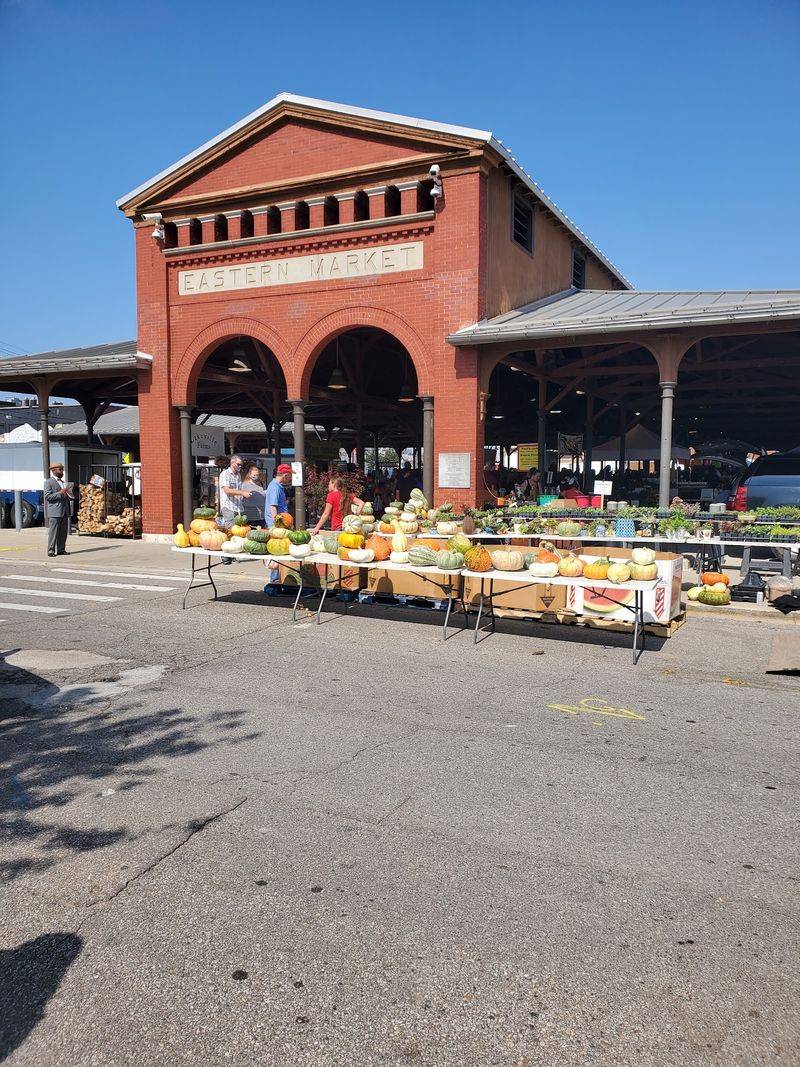
Saturday mornings in Detroit belong to Eastern Market. It is one of the largest historic public markets in the United States, and the energy inside it is something you genuinely cannot manufacture.
Vendors line the sheds with fresh vegetables, handmade goods, flowers, and food from every corner of the culinary world.
You could spend two hours wandering and still miss something. Local farmers set up next to artisan bakers, hot sauce makers, and mushroom growers.
The smell of fresh bread and roasted coffee mingles in the air, and the sounds of vendors calling out their deals make the whole place feel alive in a way that quieter spots simply cannot match.
Eastern Market is not just a place to shop. It is a gathering point where Detroiters from every neighborhood come together each week.
Street murals cover the surrounding buildings, turning the surrounding blocks into an open-air gallery worth exploring on foot. Many of the murals were painted by local and internationally recognized artists, adding serious visual weight to the experience.
Bring cash because many vendors prefer it, and wear comfortable shoes because you will be on your feet longer than you planned. Grab a fresh tamale, a bag of heirloom tomatoes, or a bunch of sunflowers just because you can.
The market runs on Saturdays year-round, with additional market days during warmer months.
If you are visiting Detroit with no plan, Eastern Market is the kind of place that builds the rest of your day around itself. You leave with bags full of good stuff and a better understanding of why this city has such loyal, proud residents who keep showing up week after week.
2. Tahquamenon Falls State Park, Paradise
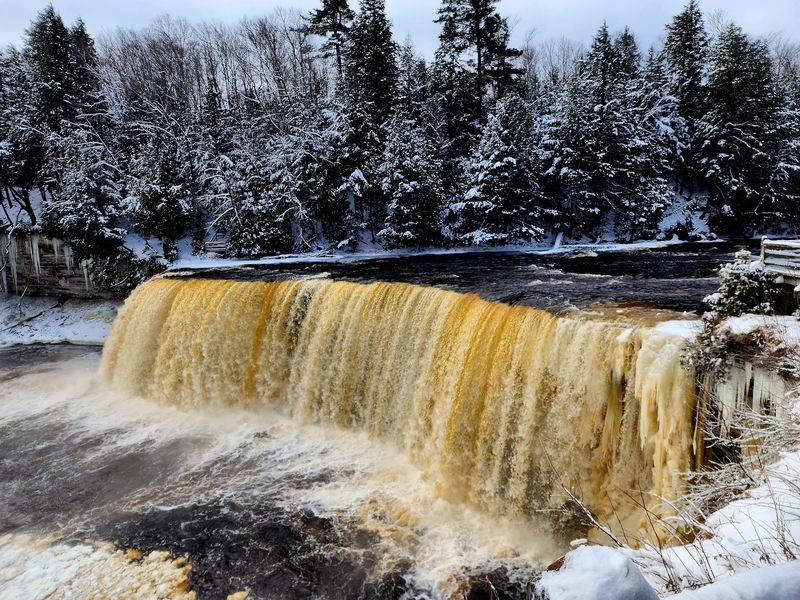
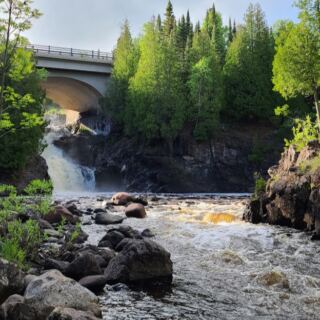
There is a reason people drive hours into the Upper Peninsula just to stand in front of Tahquamenon Falls. The water runs a deep amber color, stained naturally by tannins from the surrounding cedar and spruce forests, and watching it crash over the wide ledge feels more dramatic than most things you can see in the Midwest.
The Upper Falls is one of the largest waterfalls east of the Mississippi River, which puts it in a category that deserves a little more attention than it usually gets outside of Michigan. The Lower Falls, located a couple of miles downstream, offer a different kind of experience.
You can rent a rowboat and paddle out to a small island positioned right between the two falls, which is genuinely one of the cooler things you can do in a Michigan state park.
Trails connect both sets of falls through old-growth forest, and the boardwalks are well-maintained enough to handle without hiking boots if that is all you have on hand. Birch trees and ferns line the paths, and the whole park has a hushed, cathedral-like feeling that slows your pace naturally.
The town of Paradise, which sits nearby, is small but worth a quick stop. A few local spots serve pasties and whitefish, two things you should try while you are in the UP.
The park itself is open year-round, and winter visits offer a completely different atmosphere with frozen formations around the falls.
Tahquamenon Falls State Park sits in a remote corner of the state, but that distance is actually part of the appeal. Getting there requires commitment, and arriving feels like a genuine reward.
No crowd or itinerary can replicate what a spontaneous stop here delivers.
3. John K. King Used & Rare Books, Detroit

Four floors. Nearly one million books.
That is the situation at John K. King Used and Rare Books in Detroit, and if you are the kind of person who loses track of time in a library, consider yourself warned.
The building was once a glove factory, and the industrial bones of the structure give the whole place a character that purpose-built bookstores rarely achieve.
The collection covers everything from vintage paperbacks to first editions, from cookbooks to philosophy, from pulp fiction to academic texts. Sections are labeled, but part of the fun is wandering into a corner of the third floor with no idea what you are looking for and walking out with something you never expected to find.
Staff members are knowledgeable and genuinely love books, which makes asking for help feel worthwhile rather than awkward.
The rare book room, which requires a bit of searching to locate, holds some genuinely impressive finds for collectors. Prices across the store are reasonable, and the sheer volume means there is something for every budget and every interest.
You could spend a full afternoon here without exhausting the inventory.
Parking nearby is not complicated, and the store is located in a neighborhood with a few other interesting spots worth checking out before or after your visit. Bring a tote bag because you will almost certainly leave with more than you planned to buy.
John K. King is one of those Detroit institutions that locals take pride in without overselling it to visitors.
It is not flashy or curated for Instagram. It is just a massive, wonderful, slightly chaotic place where books are taken seriously and browsing is treated as a completely valid way to spend several hours of your life.
4. Sleeping Bear Dunes National Lakeshore, Empire
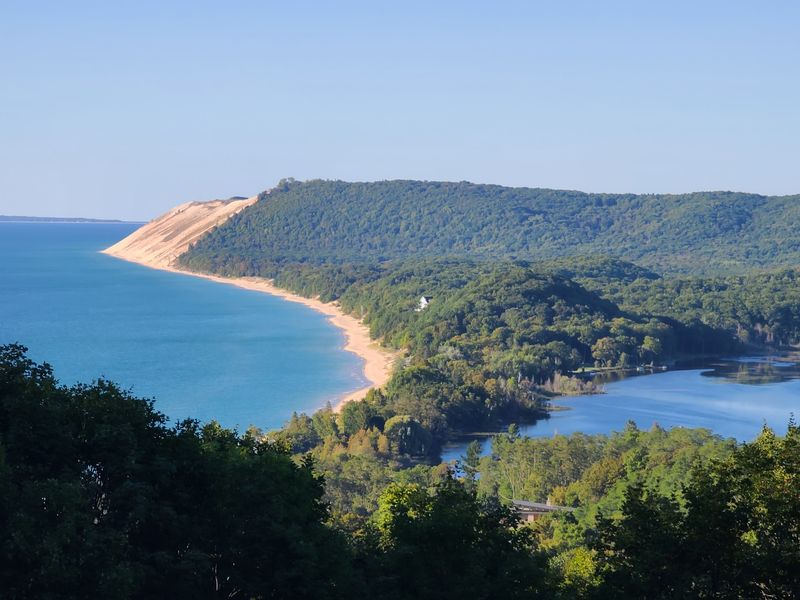
Climbing a sand dune that rises over 400 feet above Lake Michigan is not something you forget quickly. At Sleeping Bear Dunes National Lakeshore, the scale of the landscape is hard to process until you are standing on top of it, looking out at water so blue it almost reads as fake.
The view from the dune climb is one of the most photographed in Michigan for a very good reason.
The park stretches across 35 miles of Lake Michigan shoreline, covering dunes, forests, rivers, and two offshore islands. The Dune Climb is the most popular entry point, but the park rewards exploration beyond that single trail.
Pierce Stocking Scenic Drive takes you through the park by car with designated overlooks, and several hiking trails cut through forests and along bluffs at varying levels of difficulty.
South Manitou Island and North Manitou Island are accessible by ferry from Leland, and both offer camping and hiking in a far more remote setting than the mainland portion of the park. The islands feel genuinely off the grid, which makes them appealing for people who want to push their spontaneous day into something more adventurous.
The town of Empire, which sits at the park’s edge, has a small but lively feel during warmer months. A few restaurants and shops line the main street, and Glen Arbor, just a short drive away, offers more options for food and local shopping.
Sleeping Bear Dunes was voted the most beautiful place in America in a national poll, and while rankings like that are always debatable, anyone who has stood at the edge of those bluffs on a clear afternoon will have a hard time arguing against it. Come early to beat the summer crowds.
5. Torch Lake, Alden Area
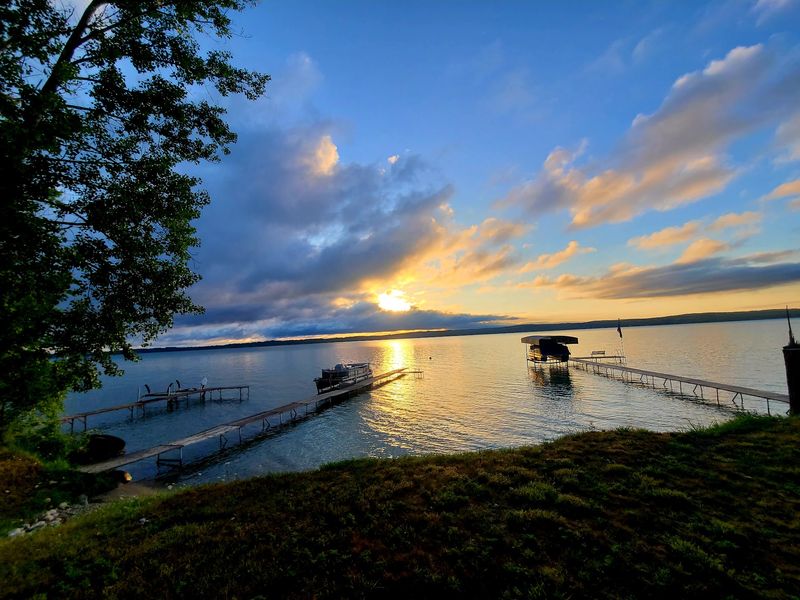
Torch Lake has a color that stops people mid-sentence. The water runs a vivid turquoise that looks more like the Caribbean than the Midwest, and first-time visitors often spend a few seconds just trying to process what they are seeing.
It is the kind of place that makes you understand why people from other states eventually move to Michigan.
At roughly 19 miles long, Torch Lake is the longest inland lake in Michigan and one of the clearest. The sandbar on the southern end is where the action concentrates during summer weekends.
Boats anchor close together, people swim between them, and the whole scene has a relaxed, festive energy that is easy to settle into even if you arrived knowing no one.
Access points around the lake include public boat launches and a few small parks where you can wade in or just sit on the shore. The town of Alden, which sits along the lake’s edge, is small and low-key with a general store feel that suits the pace of a slow summer afternoon.
Elk Rapids, at the lake’s northern end, has more dining options and a charming downtown worth a walk.
Kayaking and paddleboarding are popular ways to explore the lake’s quieter coves, away from the motorboat traffic. Rental outfitters in the area can set you up without much advance planning, which fits perfectly into an unscheduled day.
Torch Lake works best when you have no agenda. Show up, find a spot near the water, and let the afternoon dissolve.
The light on the water in the late afternoon turns the whole surface into something that looks almost too good to be real. That is just Michigan doing what it does.
6. Belle Isle Park, Detroit
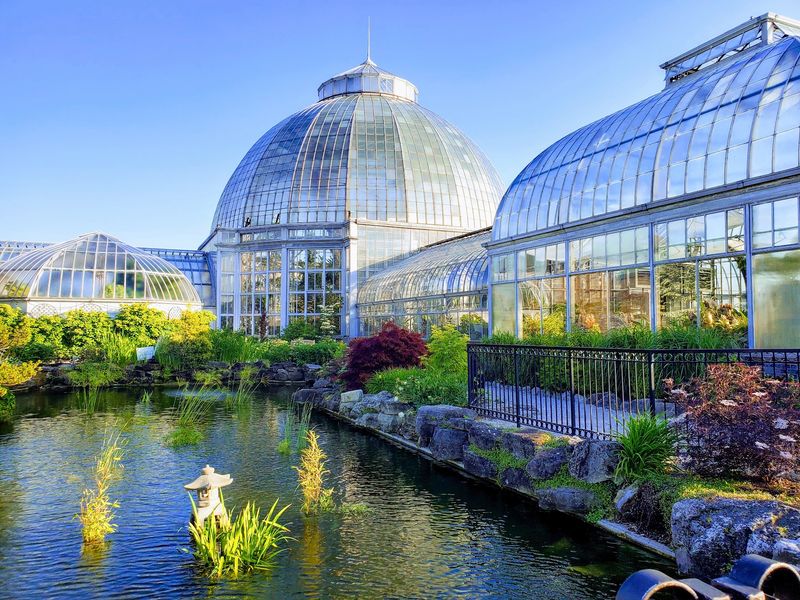
Sitting in the middle of the Detroit River, connected to the city by a single bridge, Belle Isle is one of those places that feels both close to everything and completely removed from it. The 982-acre island park offers a surprising range of things to do for a place that most people assume is just a green space to walk through.
The Anna Scripps Whitcomb Conservatory is one of the oldest continually operating conservatories in the United States, and the tropical plants and orchids inside are worth seeing even if you are not typically drawn to botanical attractions. The Dossin Great Lakes Museum sits on the island too, with exhibits on the history of Great Lakes shipping that are far more engaging than you might expect.
The shoreline loop around the island offers views of the Detroit skyline on one side and Windsor, Canada on the other. Cyclists, joggers, and casual walkers share the road, and the pace of the whole place feels deliberately unhurried.
The beach area draws crowds on hot summer days, and the picnic areas are well-shaded and genuinely pleasant for a midday break.
Wildlife is a consistent presence on Belle Isle. White-tailed deer roam freely across the island, and spotting them near the tree line is not unusual even during busy weekend afternoons.
The island also attracts a wide variety of bird species, making it a quiet favorite for birdwatchers in the metro Detroit area.
Belle Isle became a Michigan State Park in 2014, which brought improvements to facilities and maintenance. A Recreation Passport is required for vehicle access, but it is the same pass that works at all Michigan state parks.
The island rewards slow, curious visits more than rushed ones.
7. Frederik Meijer Gardens & Sculpture Park, Grand Rapids
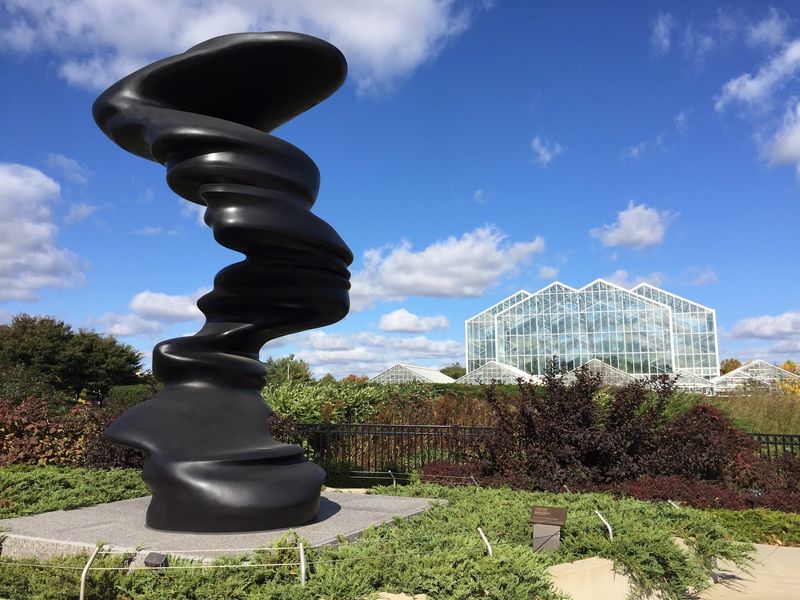
Most people expect a garden. What they actually find at Frederik Meijer Gardens and Sculpture Park in Grand Rapids is something closer to a full afternoon of wandering through art, horticulture, and architecture without any single moment feeling like the main event.
The 158-acre property blends outdoor sculpture with greenhouse spaces in a way that makes the whole visit feel cohesive rather than scattered.
The permanent sculpture collection includes works by major international artists, with pieces placed throughout the grounds in conversation with the surrounding landscape. One of the most recognized works on site is a large bronze horse by artist Nina Akamu, inspired by Leonardo da Vinci’s unfinished monument.
Seeing it for the first time up close is a genuinely arresting experience.
Seasonal exhibitions rotate throughout the year, so the experience changes depending on when you visit. Spring brings a butterfly exhibition inside the tropical conservatory that draws visitors from across the region.
Summer concerts take place on the amphitheater grounds, and the gardens are at their most lush and active during warm months.
The indoor tropical conservatory alone is worth the admission price, especially during Michigan winters when the gray skies outside make the warmth and greenery inside feel like a small miracle. The Japanese garden and the Michigan farm garden offer quieter corners of the property for people who want to slow down and linger.
Frederik Meijer Gardens is the kind of place that works for almost every kind of visitor, from art enthusiasts to families with young kids to people who simply want somewhere beautiful to think. It sits just east of downtown Grand Rapids and is easy to reach without much navigation.
Admission prices are reasonable for the scale of what you get.
8. Betsie Valley Trail, Frankfort To Thompsonville
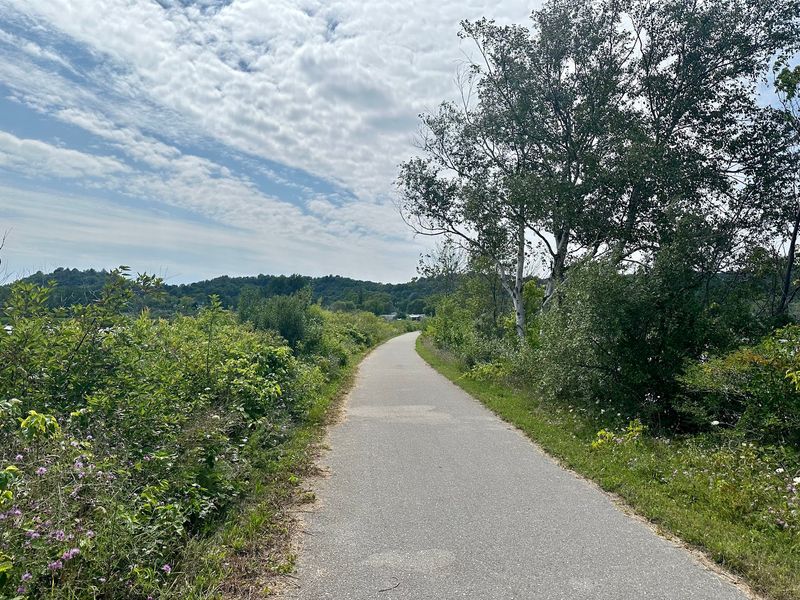
Rail trails in Michigan are plentiful, but the Betsie Valley Trail earns its own conversation. Running roughly 22 miles between the Lake Michigan shore town of Frankfort and the inland village of Thompsonville, the trail passes through a mix of landscapes that keeps the ride or walk consistently interesting from one end to the other.
The trail follows a former railroad corridor, which means the grade stays gentle and manageable for cyclists of most fitness levels. Families with kids, casual riders, and serious cyclists all use it, and the surface is paved for a good portion of the route.
The western end near Frankfort drops you close to Lake Michigan, where the town’s beach and harbor make a natural stopping point before or after your time on the trail.
Inland sections of the trail pass through forests, open farmland, and wetland areas that shift the scenery in ways that make the miles pass without much notice. Fall color along this route is exceptional, and the trail sees noticeably less traffic in autumn than in peak summer, which makes it one of the better spontaneous options for an October day in northern Michigan.
The village of Thompsonville at the eastern end is small and quiet, but the Crystal Mountain Resort sits nearby and offers additional amenities if you want to make a longer day of it. Several trailheads with parking are scattered along the route, so you can pick up the trail at whatever section suits your starting point.
Bike rentals are available in Frankfort if you did not plan ahead. That is really the spirit this trail operates on.
You can show up without much preparation, get on the trail, and find that the whole experience takes care of itself in the best possible way.
9. Mackinac Island, Mackinac Island
No cars. That is the first thing most people learn about Mackinac Island, and it immediately sets the tone for everything else.
Getting around by horse-drawn carriage, bicycle, or foot changes your relationship with time in a way that is hard to describe until you have experienced it. The island operates at its own pace, and visitors tend to fall into that rhythm faster than expected.
The island sits in the Straits of Mackinac between Michigan’s Upper and Lower Peninsulas, accessible by ferry from either Mackinaw City or St. Ignace. The ferry ride itself is a good way to shake off whatever mood you arrived in, with views of the Mackinac Bridge and open water on all sides.
Ferries run frequently during the tourist season, which makes spontaneous visits completely workable.
Fort Mackinac, perched on the bluff above downtown, offers a genuine look at the island’s military and fur trade history. Costumed interpreters, cannon firings, and period demonstrations make it engaging without feeling stiff.
The views of the harbor from the fort’s walls are worth the admission price on their own.
The famous fudge shops along Main Street are not a gimmick. The fudge is actually good, and watching it get made on marble slabs through the shop windows is oddly satisfying.
Pick up a slice of peanut butter chocolate or cinnamon walnut and eat it while you walk. That is the correct approach.
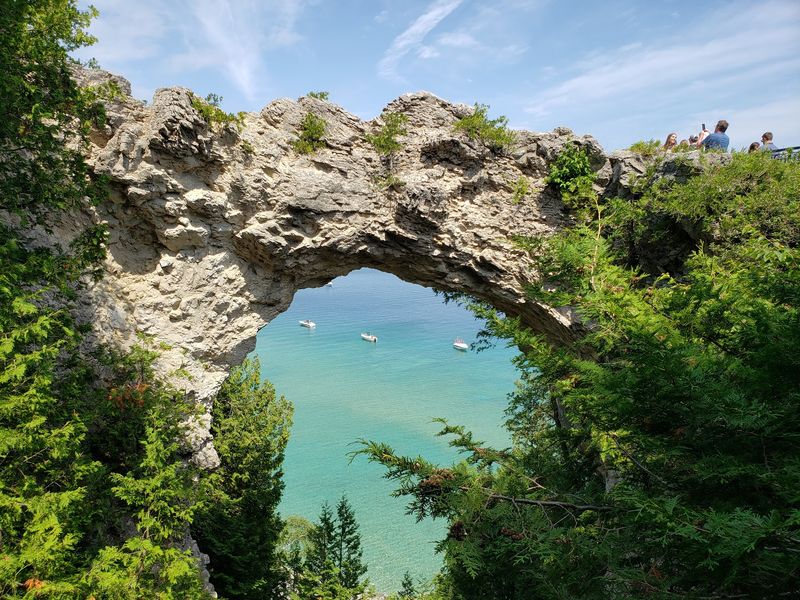
Biking the perimeter road around the island takes about an hour at a relaxed pace and delivers constant views of the water, rock formations, and forested interior. Arch Rock, a natural limestone arch rising above the shoreline, is one of several geological landmarks worth finding along the way.
Mackinac Island rewards slow, curious visitors above all others.
10. Holland State Park, Holland
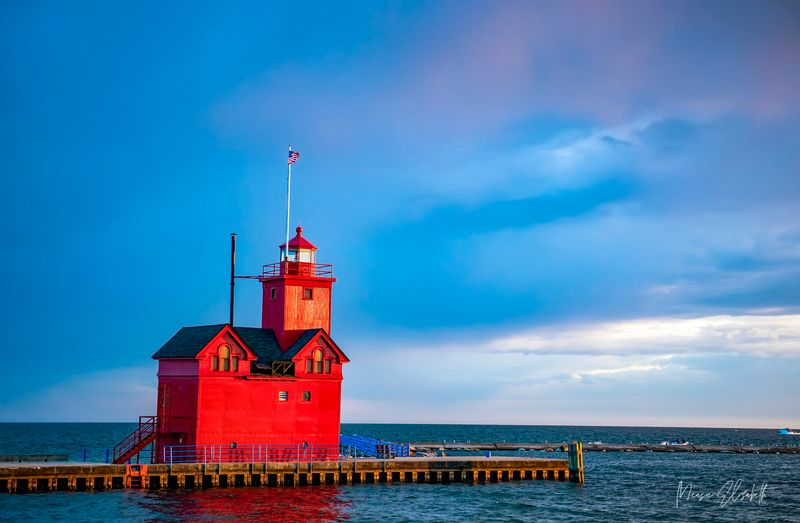
Holland State Park punches well above its size. The park covers a relatively compact footprint compared to some of Michigan’s sprawling wilderness parks, but what it delivers within that space, a wide sandy beach, a famous red lighthouse, and some of the clearest Lake Michigan water in the Lower Peninsula, makes it one of the most visited state parks in Michigan for good reason.
The Big Red lighthouse, formally known as the Holland Harbor South Pierhead Light, sits at the end of the channel connecting Lake Macatawa to Lake Michigan. Walking out along the pier to get close to it is a ritual for first-time visitors and regulars alike.
The lighthouse is painted a vivid red that photographs well in almost any light, and at sunset the whole scene becomes genuinely spectacular.
The beach itself is wide and well-maintained, with soft sand that stays comfortable underfoot even on hot days. Swimming conditions vary with the lake, but on calm days the water near the shore is shallow enough for younger kids and gentle enough for casual swimmers.
Lifeguards are on duty during peak summer months.
Holland as a city is worth exploring beyond the state park. The downtown area is walkable and lined with locally owned shops and restaurants.
The city has a strong Dutch heritage that shows up in architecture, tulip gardens, and an annual tulip festival each May that transforms the city into something worth seeing from a distance.
Parking at Holland State Park fills quickly on summer weekends, so arriving early is always the smarter move. A Michigan Recreation Passport covers your entry.
If you arrive and the lot is full, the city beach on Lake Macatawa is a short drive away and offers a quieter alternative with its own appeal.
11. Detroit Riverwalk, Detroit
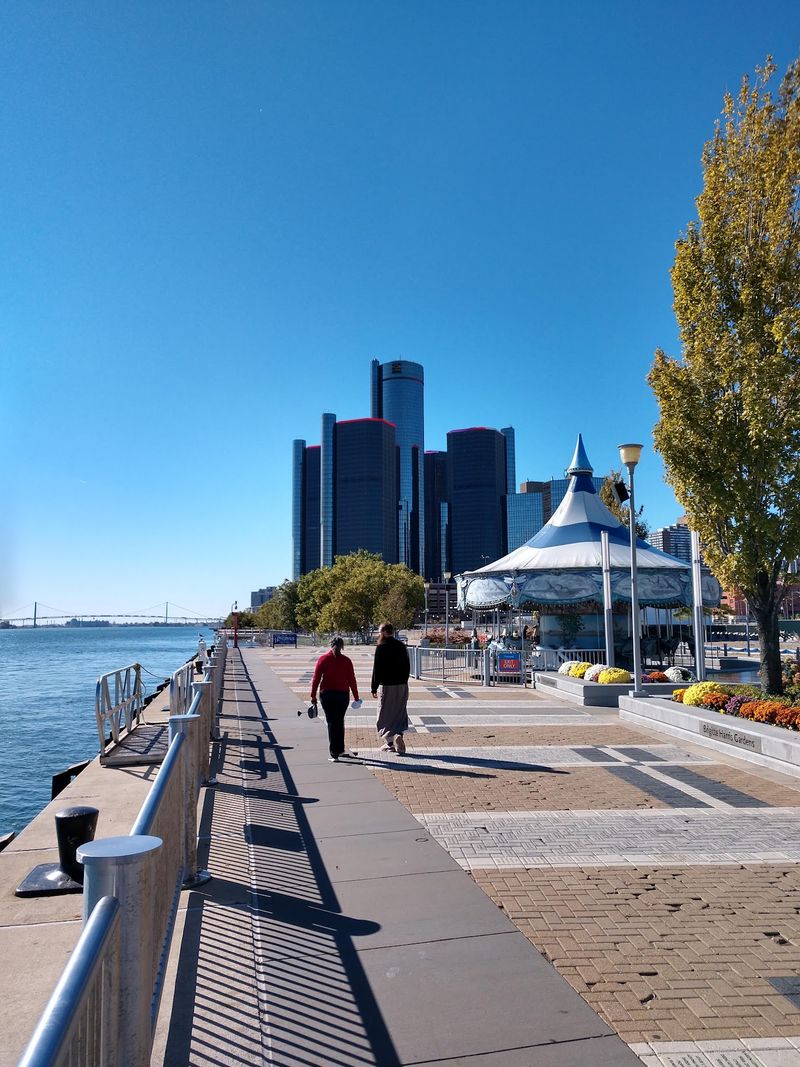
The Detroit Riverwalk stretches over five miles along the city’s waterfront, and walking its full length gives you a version of Detroit that is different from what most people expect. The views across the river to Windsor, Canada are constant companions, and the combination of open water, city skyline, and riverside parks makes the walk feel genuinely energizing rather than just functional.
The Riverwalk connects several distinct sections, each with its own personality. Milliken State Park and Harbor, Rivard Plaza, and Tri-Centennial State Park each offer different reasons to slow down.
There are kayak and paddleboard launch points, shaded seating areas, public art installations, and food vendors scattered throughout the route during warmer months.
Cycling is popular along the Riverwalk, and bike rentals are available nearby if you want to cover more ground faster. Rollerbladers, joggers, and families with strollers all share the path, and the wide design keeps it from feeling crowded even on busy weekend afternoons.
The pace of the Riverwalk is set by whoever is on it at any given moment.
The Dequindre Cut, a greenway trail that runs north from the Riverwalk through the city, connects the waterfront to Eastern Market and several residential neighborhoods. Combining the Riverwalk with a walk up the Dequindre Cut makes for a solid half-day exploration of the city without needing a car.
Sunset on the Riverwalk is worth staying for. The light hits the water in a way that makes the whole scene feel cinematic, and the ambient energy of the city behind you adds to it rather than competing with it.
Detroit’s waterfront has seen serious investment in recent years, and the Riverwalk is one of the clearest examples of what that investment looks like on the ground.
12. Porcupine Mountains Wilderness State Park, Ontonagon Area
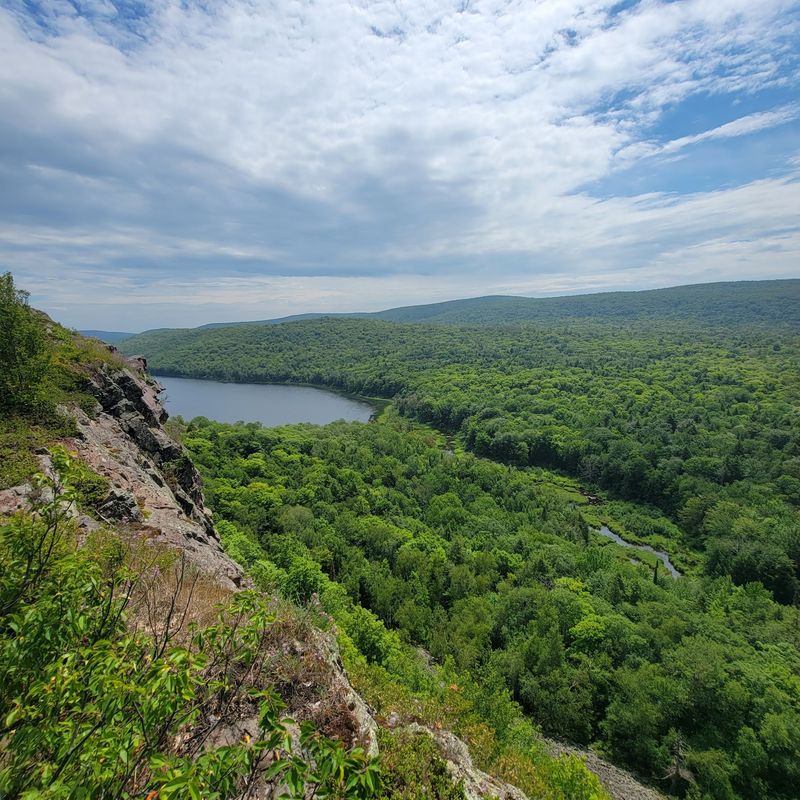
The Porcupine Mountains hold some of the largest old-growth forest remaining in the Midwest, and standing inside it feels genuinely different from being in a younger forest. The trees are enormous, the canopy is dense, and the silence that settles in when you get away from the trailhead is the kind that reminds you what quiet actually sounds like.
The Lake of the Clouds overlook is the most iconic view in the park, and it earns that reputation. Looking out over the cloud-reflecting lake surrounded by miles of unbroken forest is one of those experiences that recalibrates your sense of scale in a way that is hard to find in the Lower Peninsula.
The overlook is accessible by a short walk from a parking area, making it achievable even for visitors without hiking experience.
For people who want to go deeper, the park has over 90 miles of trails ranging from easy riverside paths to challenging ridge routes. Backcountry camping is permitted, and the park offers rustic cabins and modern campsites for those who want to extend their visit beyond a single day.
The Presque Isle River section of the park features a series of waterfalls connected by a loop trail that is one of the most rewarding short hikes in the UP.
Winter transforms the park into a cross-country skiing and snowshoeing destination, with groomed trails and a lodge that operates through the colder months. The Porcupine Mountains are genuinely a four-season park, which is something not every wilderness area in Michigan can claim.
Getting to the Porcupine Mountains takes effort regardless of where you start. That distance filters out casual visitors and leaves behind the kind of crowd that actually appreciates what the park offers. Bring layers, solid footwear, and more water than you think you need.
13. Saugatuck Dunes State Park, Saugatuck
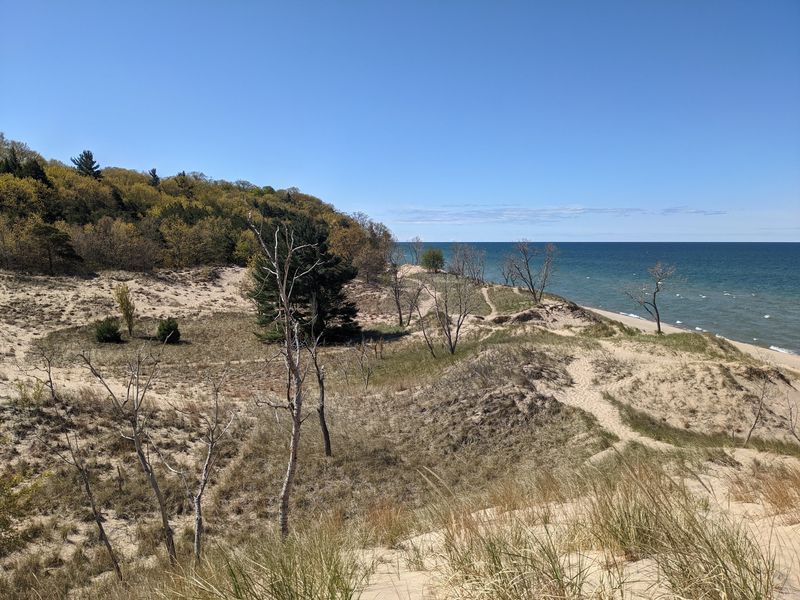
Saugatuck Dunes State Park is the kind of place that rewards people who are willing to earn their beach. Unlike parks where the parking lot drops you directly onto the sand, Saugatuck Dunes requires a trail hike through forested dunes to reach the Lake Michigan shoreline, and that extra effort keeps the beach quieter and the whole experience more satisfying.
The park covers about 1,000 acres of coastal dunes, forests, and wetlands, with roughly 14 miles of trails winding through the terrain. The hike to the beach typically takes between 20 and 40 minutes depending on which trail you take and your pace.
The trail itself is interesting, moving through shaded forest and then climbing open dune faces before the lake comes into view.
When you reach the beach, the payoff is real. The shoreline here is relatively uncrowded compared to more accessible beaches in the area, and the dune formations that frame it give the setting a dramatic, almost cinematic quality.
Swimming is popular when conditions are calm, and the sand is clean and soft.
The nearby town of Saugatuck is one of the most charming small towns on Michigan’s west coast. Art galleries, locally owned restaurants, and a lively downtown make it a natural complement to a day at the park.
Douglas, just across the Kalamazoo River, adds more options for food and browsing without much additional travel.
Saugatuck Dunes works particularly well as an afternoon destination when you have already spent your morning somewhere nearby and want to end the day near water.
The park is less crowded on weekday afternoons and in early September when summer visitors have thinned out but the weather is still warm enough for a comfortable beach visit. Bring water and sunscreen regardless of the season.
14. Pictured Rocks National Lakeshore, Munising
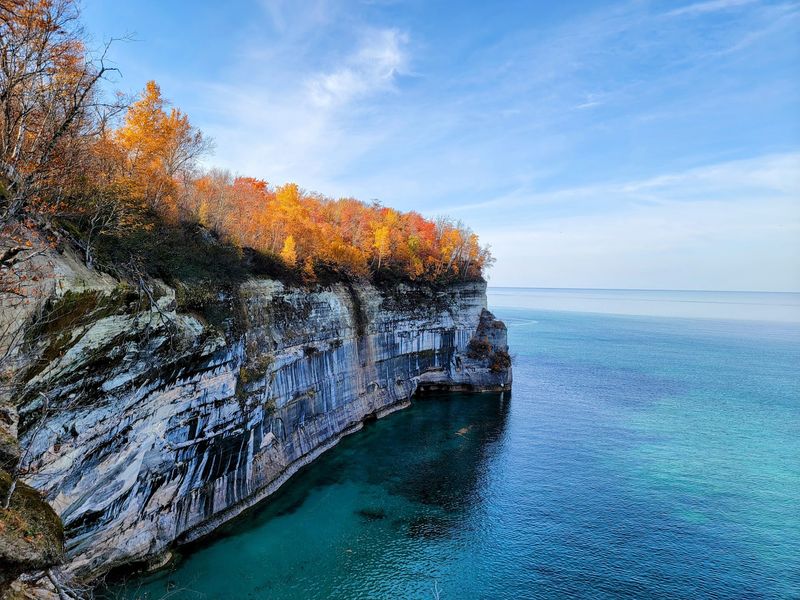
Pictured Rocks gets its name from the mineral-streaked sandstone cliffs that rise up to 200 feet above Lake Superior along a 15-mile stretch of the Upper Peninsula shoreline. Iron, copper, manganese, and limonite have stained the rock faces in shades of red, orange, black, and green, creating patterns that look painted rather than geological.
No filter required, no exaggeration necessary.
Seeing the cliffs from the water is the most popular approach, and boat tours out of Munising run regularly during the warmer months. The tour boats get close enough to the cliff faces to give you a real sense of their scale, and guides explain the geology and history of the formations along the way.
Kayaking along the base of the cliffs is also possible for experienced paddlers, with rental and guided tour options available in Munising.
The Lakeshore Trail runs the full length of the park and can be hiked in sections without committing to the entire route. Chapel Falls, Miners Beach, and Miners Castle are among the most accessible highlights along the trail system, each offering something distinct from the others.
Miners Castle is a rock formation that juts out over the lake and delivers one of the best views in the entire national lakeshore.
Munising itself is a small town with a handful of restaurants and outfitters that cater to park visitors. Tahquamenon Falls is within reasonable driving distance, which makes combining both into a longer Upper Peninsula trip a logical choice for people with a little more time.
Winter visits to Pictured Rocks offer ice caves along the shoreline that form when the cliffs freeze over, attracting visitors willing to hike in across the frozen lake surface. The caves are weather-dependent and not always accessible, but when conditions are right, they are extraordinary. Check local conditions before planning a winter trip.
Share this story