You know a town is doing something right when the main drag looks like it was arranged by a set designer with a weakness for stone facades, ivy, and old inns. Stockton is like that.
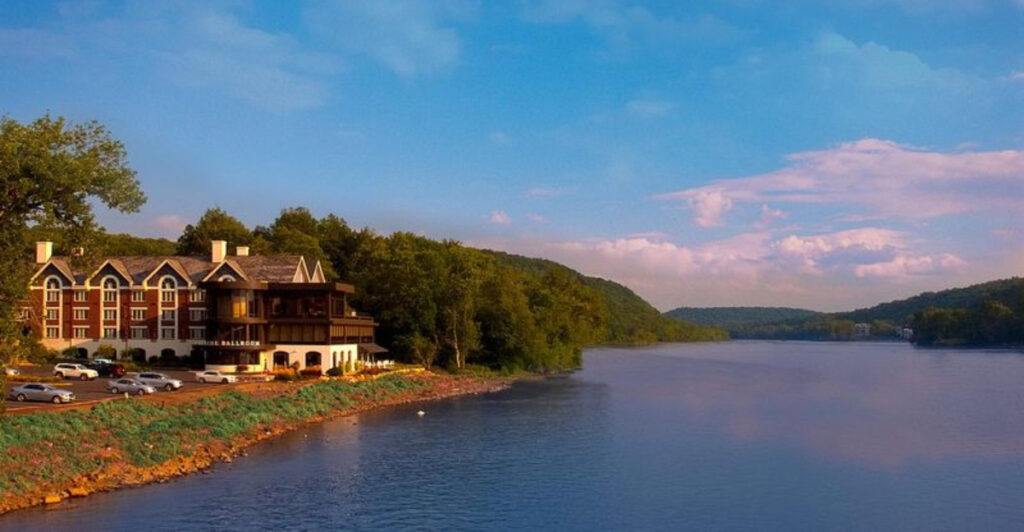
You roll in on Route 29 with the Delaware River glinting beside you, and within minutes New Jersey starts behaving very un-New Jersey. There’s a bridge to Pennsylvania, a market tucked into a historic building, a canal path that begs for an unhurried walk, and an inn whose roots go back to the early 18th century.
Add in the fact that fewer than 500 people live here, and Stockton starts to feel less like a destination built for tourists and more like a secret that somehow stayed intact. It’s tiny, yes, but not in a blink-and-you’ll-miss-it way.
It’s tiny in the best way—compact enough that every building seems to matter and every turn gives you something worth noticing.
Why Stockton Feels More Like an English Village Than a New Jersey River Town
Part of Stockton’s charm is that it never tries too hard. It doesn’t have the polished, over-curated feel that some pretty small towns develop once they realize people are photographing them.
It just happens to sit in a remarkably handsome spot, right on the Delaware River in western Hunterdon County, with a streetscape that still reflects its canal-and-railroad past. The borough was first known as Reading Ferry and later Howell’s Ferry, then Centre Bridge Station, before becoming Stockton in 1851.
That layered history matters because it explains why the town feels so rooted. This wasn’t built as a theme; it grew up around transportation, milling, and river life.
The scale helps too. Stockton covers barely more than half a square mile, and fewer than 500 people live here.
In a place that small, the visual clutter never really gets a chance to take over. There isn’t room for sprawl, so what you notice instead are dignified old buildings, narrow-town pacing, and the kind of quiet that makes you automatically lower your voice.
Even the crossing into Pennsylvania feels old-world. The Centre Bridge over the Delaware gives the town a sense of arrival that modern roadways usually flatten out.
Then there’s the landscape. Stockton sits at the western end of the Amwell Valley, with the Delaware River on one side and the canal corridor threading nearby.
That combination of water, historic architecture, and open land is what nudges the place into English-countryside territory. Not fake-English.
Not postcard-English. More like the kind of village where an old inn, a bend in the river, and a cluster of weathered buildings are enough to create the mood without anyone announcing it.
Stockton’s trick is that it feels composed, but not staged. That’s a rare thing in any state, let alone one better known for parkways and diners.
The Stone Buildings and Quiet Streets That Give Stockton Its Storybook Charm
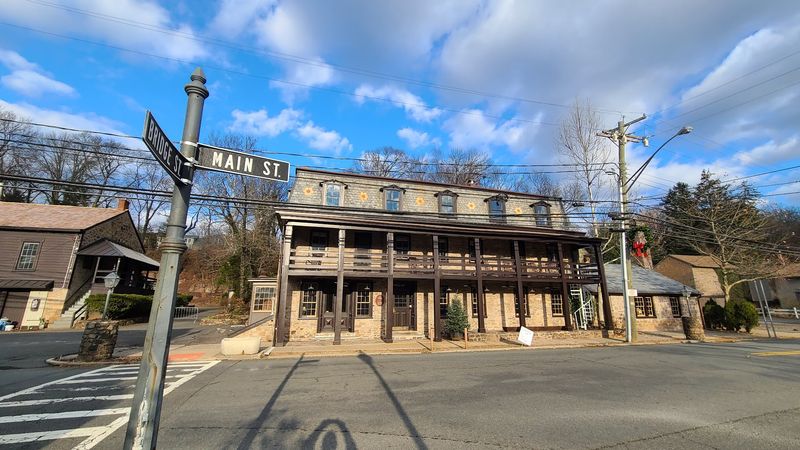
Walk Bridge Street and you start to see why people reach for words like storybook, even if those words usually deserve a timeout. The buildings here have real texture.
Not “historic character” in the vague brochure sense, but actual age, heft, and materials you can read at a glance. Stone walls, old storefronts, simple signs, and a street layout that still reflects early 19th-century planning all work together to create a village center that feels unusually intact.
The Stockton Inn is the visual anchor. It dates back to the early 1700s and has exactly the sort of old-world presence that makes you slow down before you even decide whether you’re hungry.
Today it pairs that history with a restored boutique stay and dining spaces that make the building feel like more than a preserved relic. It still functions as part of everyday town life, which matters.
What keeps Stockton from tipping into preciousness is how lived-in it feels. Across the way, Stockton Market gives the center of town some daily energy.
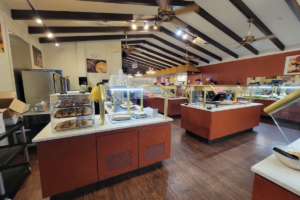
Inside, the mix is appealingly practical rather than overly curated. You can get seafood, pastries, coffee, pizza, crepes, fresh juice, and pantry goods without feeling like you’ve wandered into a place designed solely for weekend browsing.
That contrast is part of what makes Stockton memorable. The architecture gives you the atmosphere, but the working businesses give it pulse.
A pretty street is one thing. A pretty street where you can grab a very good coffee, wander a little farther, and come back for lunch is something else.
Stockton understands that instinctively. It doesn’t need spectacle. It just needs its old stone, its quiet pace, and the confidence to let the details do the work.
A Walk Along the Delaware River Is Part of the Magic Here
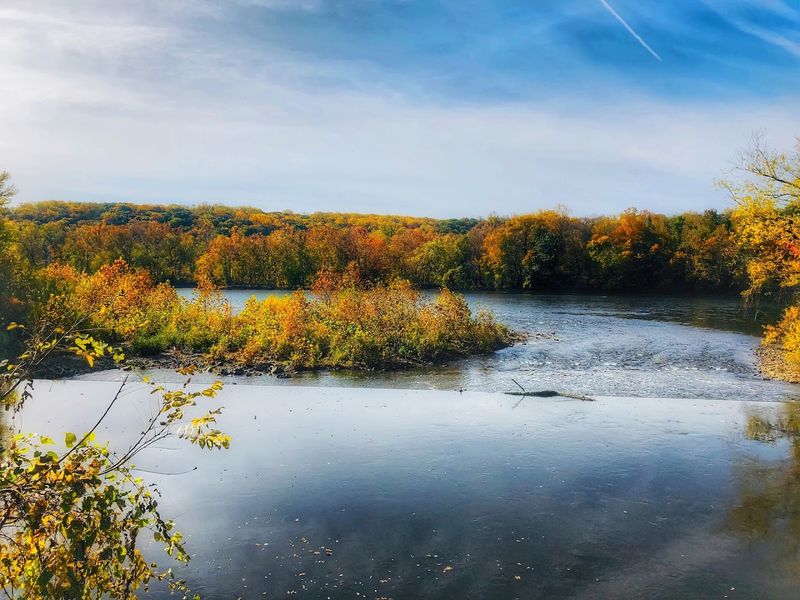
The river is not background scenery in Stockton. It is the whole mood setter.
One minute you’re looking at old buildings and tidy streets, and the next you’re a few steps from water, trees, and the kind of calm that makes your phone feel embarrassingly loud.
Because Stockton sits beside the Delaware and near the Delaware and Raritan Canal corridor, you get two waterside landscapes for the price of one: the broad river itself and the quieter, narrower canal environment that shadows it.
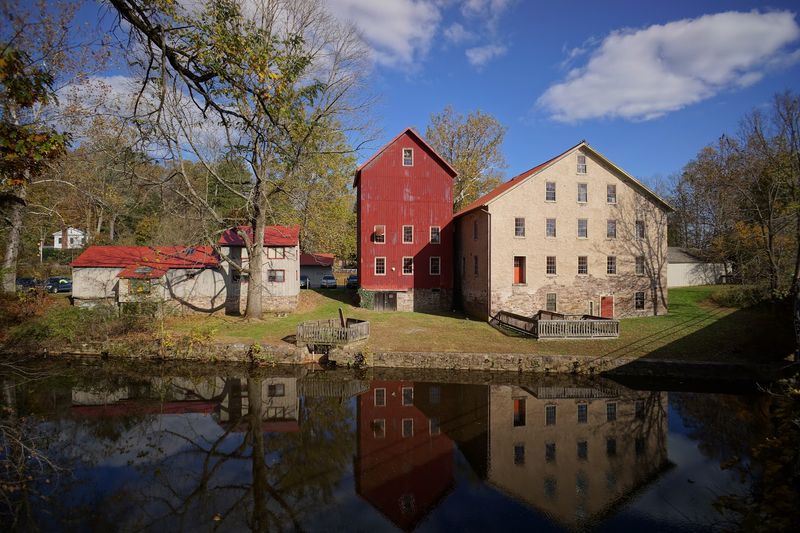
The result is a town where even a short walk feels scenic without requiring a grand hiking plan or performance-level outdoor gear. Prallsville Mills is one of the best places to feel that connection.
The historic complex sits just north of town beside the Delaware River and the canal feeder, and the setting gives Stockton a lot of its visual power. You’re not just near the river; you’re in a place that was shaped by it, economically and physically.
If you want to stretch the walk, the canal trail makes it easy. This is the sort of place where you can wander for ten minutes or keep going long enough to justify lunch as a reward.
Nearby Bulls Island adds more room to roam, and the pedestrian bridge to Pennsylvania only reinforces the feeling that Stockton belongs to a river landscape larger than itself. The best part is that none of this feels manicured into submission.
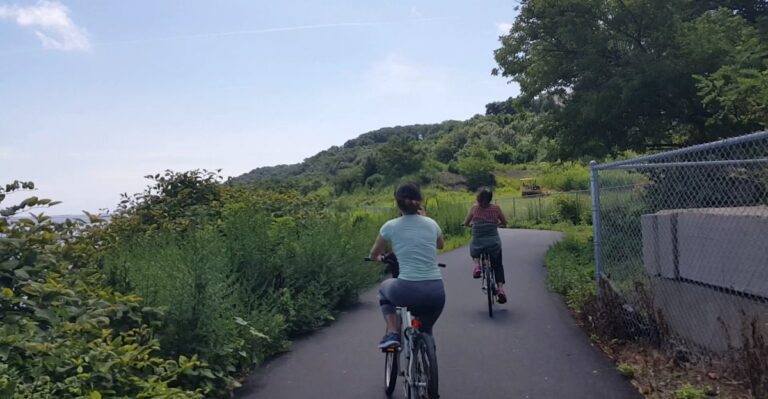
Stockton’s riverfront appeal is gentle. It’s less “look at me” and more “come over here for a second.” You notice the light on the water, the narrow roads, the quiet rhythm of cyclists and walkers on the towpath.
That understatement is exactly why the place lands so well. English-village comparisons usually start with architecture, but in Stockton the river is doing at least half the work.
Historic Landmarks Give This Tiny Borough an Outsized Sense of Place
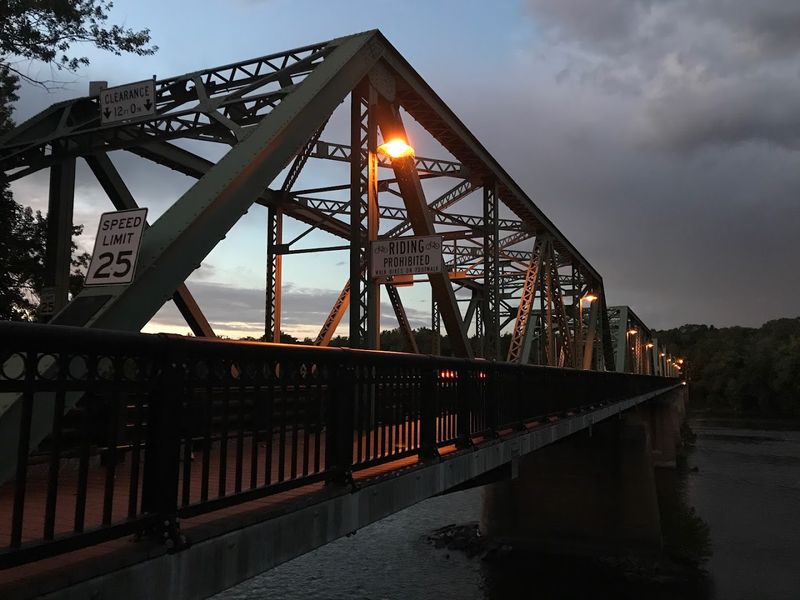
For a borough this small, Stockton has an almost unreasonable amount of history packed into it. That starts with Prallsville Mills, one of the area’s most significant historic sites and a place that makes the town feel far bigger than its footprint suggests.
The complex includes old industrial buildings tied to milling, agriculture, and river commerce, and it preserves the logic of how towns like this once worked. Water, industry, transport, and settlement all come together in one readable landscape.
You don’t have to be a history obsessive to appreciate it. The site gives Stockton a backbone.
The Prall House adds another layer, and together the buildings make it clear that this wasn’t some accidental pretty village that happened to survive. It was a working place with a real economic life, and that history still shows.
The Stockton Inn deserves its own mention here too. Its long history gives the town a central landmark that feels woven into the story rather than placed there for effect.
It has the kind of staying power that immediately changes how you read the street around it. Even the bridge has pedigree.
Crossing from Pennsylvania into Stockton doesn’t feel like entering through anonymous infrastructure. It feels like part of the town’s continuing conversation with the river.
That’s what Stockton does so well. Its landmarks don’t feel scattered or isolated. They work together. In larger places, historic sites can feel like separate attractions.
Here they read as one continuous setting, which is why the town leaves such a strong impression. In Stockton, history is not trapped behind museum glass. It still shapes the way the place looks, moves, and feels.
Weekends in Stockton Are Best Spent Browsing Markets and Slowing Down
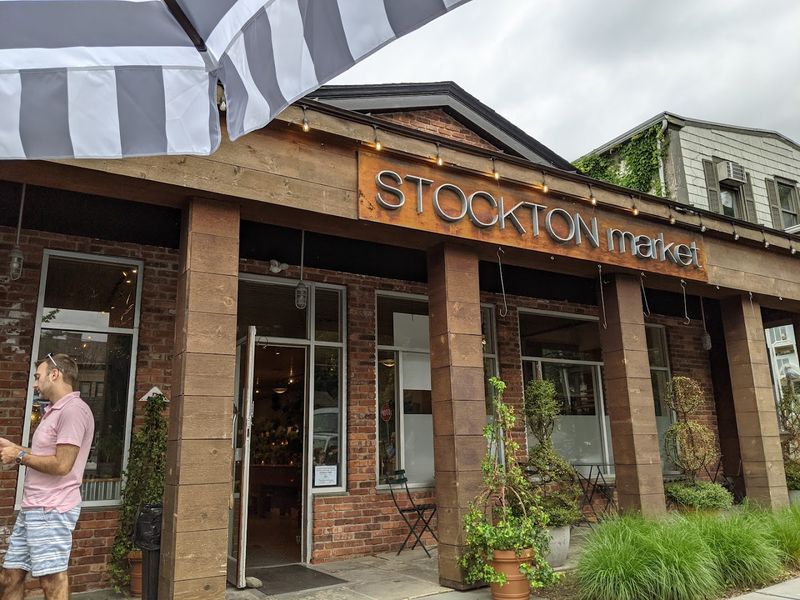
Saturday in Stockton is not for rushing. If you show up with an itinerary packed down to the quarter hour, the town will quietly make you regret your personality.
This is a better place for wandering into Stockton Market, telling yourself you’re just going to look around, and then somehow leaving with pastries, coffee, something locally made, and at least one edible item you had not planned on buying.
The market has become one of the town’s social anchors, and because it’s indoors and operates year-round, it gives Stockton a steady rhythm that goes beyond warm-weather weekends.
The vendor mix feels genuinely useful, not decorative. You can piece together breakfast, lunch, snacks for later, and the sort of impulse purchase that suddenly seems essential once you’re in a good mood.
From there, the ideal weekend pace is pleasantly low-stakes. Pick up coffee. Walk a little. Cross the street and look at the inn. Wander toward the river. Maybe continue north to Prallsville Mills and see what’s happening there.
Stockton doesn’t rely on one headline attraction. The appeal is cumulative. Market, mills, river, old buildings, bridge, repeat. And when you do want a more formal meal, the town can handle that too.
The inn gives Stockton some real culinary credibility, which is slightly absurd in the best way for a borough with one blink-and-it’s-over main street. That combination is what makes the town fun.
It behaves like a sleepy river village until it suddenly hands you a meal or a market stop that feels unusually good. Stockton never overwhelms you with options, but the ones it does offer are nicely chosen.
That turns a casual weekend stop into the kind of day that feels fuller than it should.
This Hidden Hunterdon County Gem Makes an Ideal Day Trip or Romantic Escape
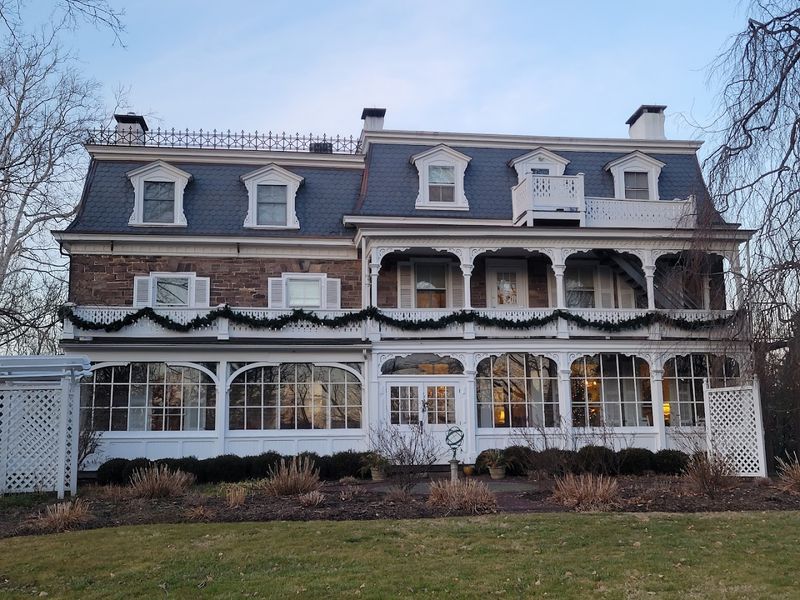
Some places are better as quick visits, and some are better once you let them keep you overnight. Stockton can do both.
As a day trip, it works because everything that matters is close together. You can arrive late morning, browse the market, walk the river or canal trail, loop through Prallsville Mills, have dinner, and leave feeling like you actually went somewhere distinct instead of just running errands in a prettier ZIP code.
Because Stockton sits just upriver from Lambertville and across from Bucks County, it also slips neatly into a bigger Delaware River day without getting lost in the bustle of its better-known neighbors. As a romantic escape, though, Stockton really starts showing off.
The inn leans into exactly the sort of details that make one-night getaways feel more cinematic than practical: old architecture, a beautifully restored setting, river views nearby, and the persuasive argument that early nights and slow mornings are not signs of boring adulthood but signs of excellent judgment.
That is also why the English-countryside comparison doesn’t feel ridiculous.
Not because Stockton literally resembles some exact village in the Cotswolds, but because it delivers the same pleasures people usually mean when they say that: old stone, short distances, a dignified inn, water nearby, and a pace that makes lunch feel like an event and a walk feel like enough.
Stockton has the architecture, yes, but it also has restraint. It knows when to stop. In the end, that may be the town’s best quality.
It doesn’t overwhelm you with things to do. It gives you just enough—good food, meaningful history, handsome buildings, river air, and quiet streets—and trusts that you’ll understand the appeal on your own. Usually, it turns out, you do.
Share this story