
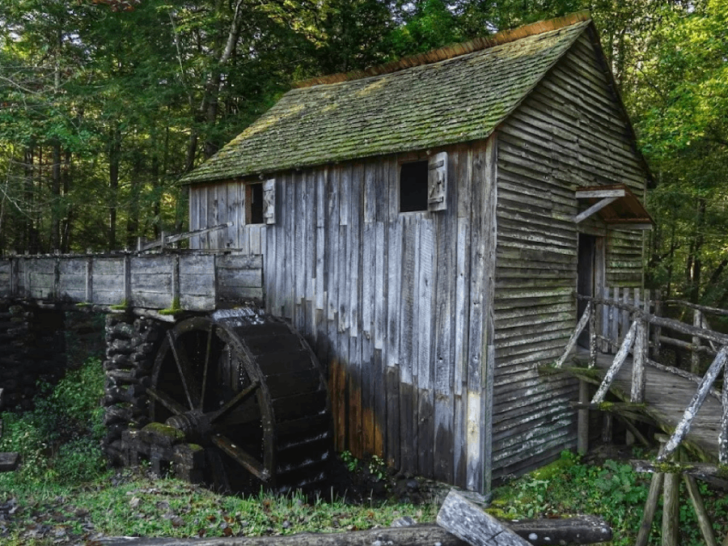
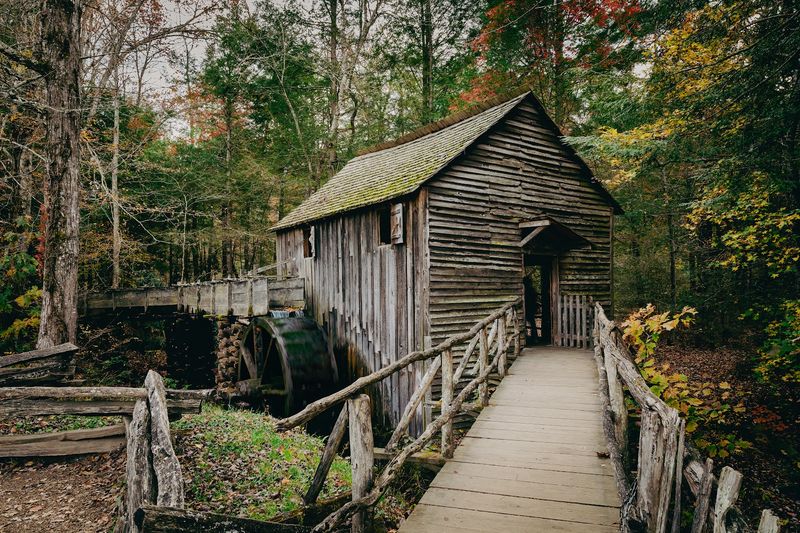
Deep in the heart of the Great Smoky Mountains, a remarkable piece of American history continues to turn with the flow of mountain water. The Cable Mill in Cades Cove has been grinding corn and wheat for more than 150 years, offering visitors a rare glimpse into pioneer life. Built in the 1870s by one of the valley’s most prosperous settlers, this water-powered grist mill still operates just as it did when wagons lined up along the dusty road.
Today, it stands as one of the most beloved stops along the scenic Cades Cove Loop, where history, nature, and mountain beauty come together in one unforgettable place.
A Step Back in Time in Tennessee’s Smoky Mountains
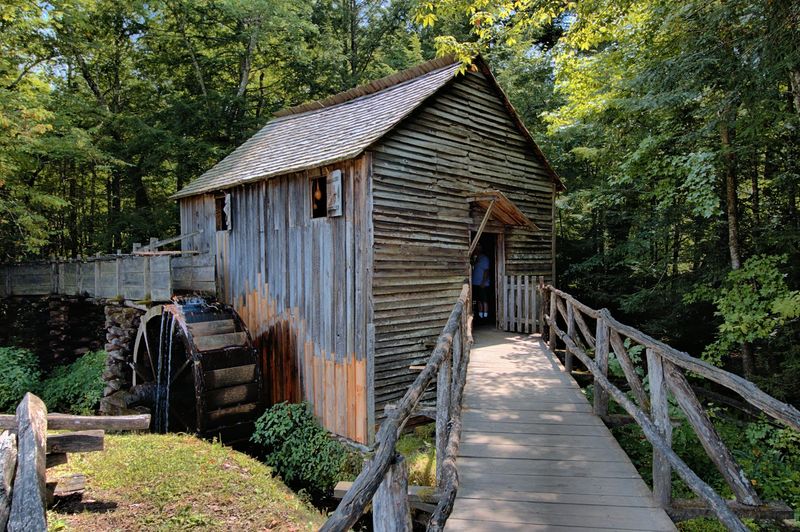
Nestled along the eleven-mile Cades Cove Loop Road, the Cable Mill area welcomes visitors into a world frozen in time. Towering trees frame weathered wooden structures while a crystal-clear mountain stream flows steadily past. The sound of rushing water fills the air, just as it did when settlers first arrived in this fertile valley.
This isn’t just another roadside attraction. The mill sits at the heart of a preserved homestead that tells the story of Appalachian pioneers who carved out lives in these mountains. Visitors park in a spacious lot and follow a short, easy path to the mill and surrounding buildings.
The setting is so peaceful and picturesque that photographers and nature lovers consider it one of the most beautiful spots in the entire national park.
Built in the 1870s — And Still Running Today
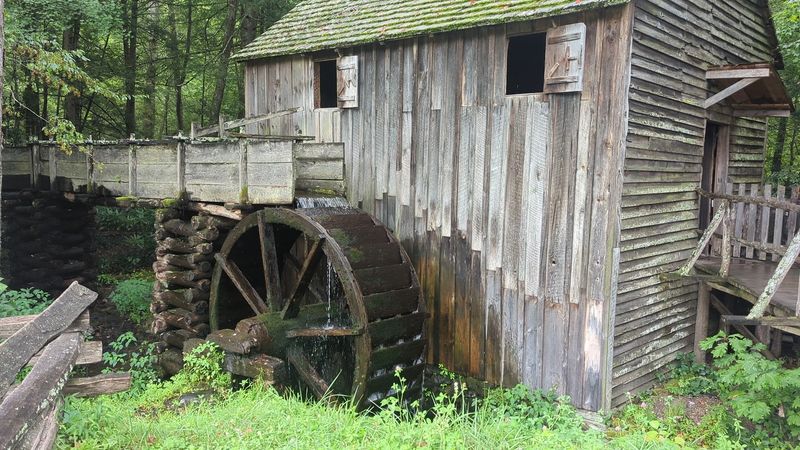
John Cable, one of Cades Cove’s wealthiest landowners, constructed this impressive mill in the early 1870s. He chose a strategic location where a strong creek could power the massive waterwheel year-round. Cable’s investment paid off handsomely as neighbors from miles around brought their corn and wheat to be ground into meal and flour.
What makes this mill truly special is that it hasn’t been turned into a static museum piece. During warmer months, park volunteers demonstrate the grinding process using the original equipment. The wooden gears still mesh together, the millstones still turn, and fresh cornmeal still pours from the spout.
You can even purchase bags of stone-ground cornmeal at the nearby visitor center, made right here using techniques unchanged for generations.
How the Water-Powered Mill Still Works
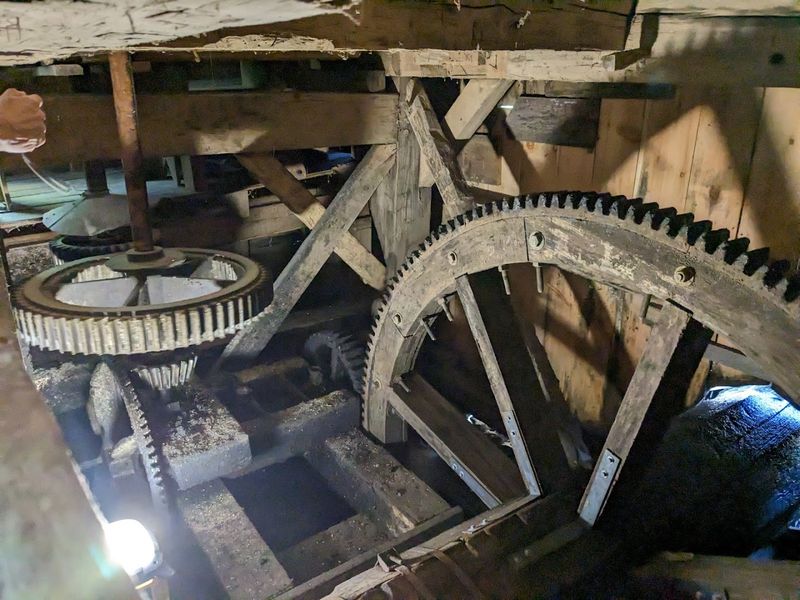
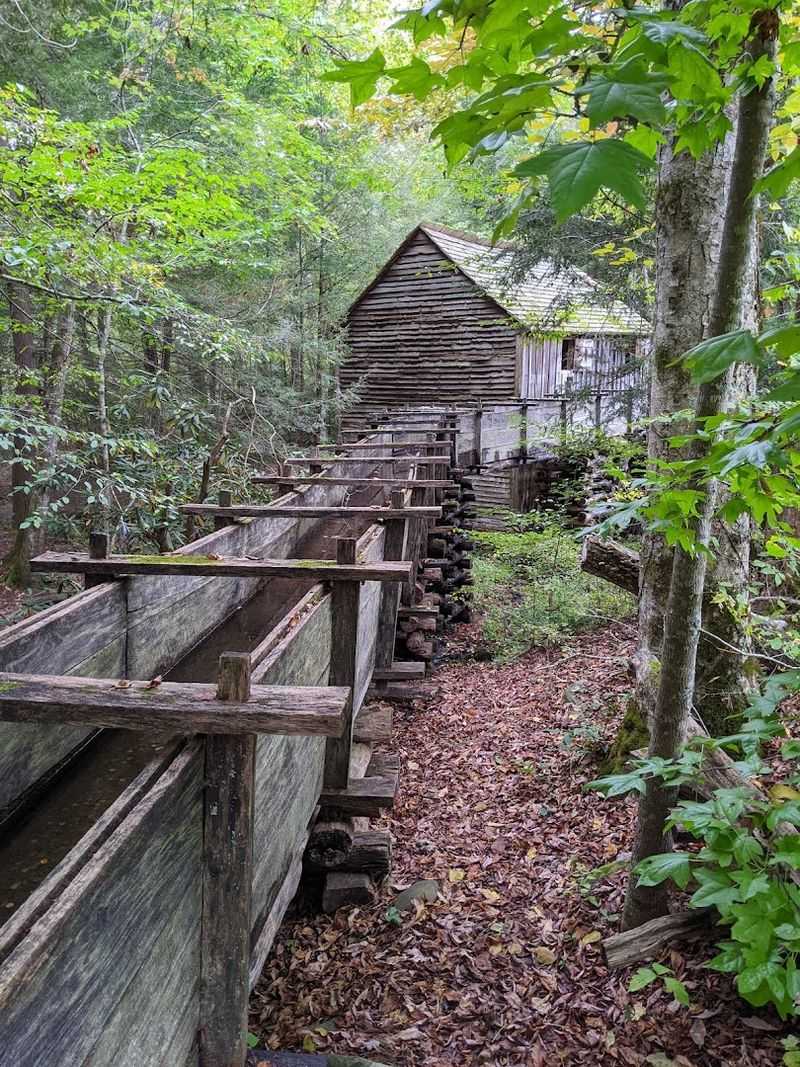
Engineering brilliance from the 1800s comes alive when you watch the waterwheel begin its slow, steady rotation. A hand-dug canal diverts creek water from upstream, channeling it along a wooden flume that directs the flow over the wheel. The force of falling water pushes against the wheel’s wooden paddles, creating rotational energy that powers everything inside.
Inside the mill, a system of wooden gears and shafts transfers this power to two massive millstones. The upper stone rotates while the lower one stays fixed. Grain pours through a hole in the top stone, gets crushed between the stones, and emerges as fine meal or flour.
The entire process requires no electricity, no motors, just gravity, water, and clever design.
Explore the Historic Homestead
The mill is just the beginning of what you’ll discover here. A cluster of authentic log structures surrounds the mill, each telling its own story about frontier survival. The massive cantilever barn showcases Appalachian building genius with its distinctive overhanging upper level that required no nails in its construction.
Walking beneath those hand-hewn beams feels like entering a wooden cathedral.
The blacksmith shop still contains tools and a forge where metalworkers once shaped everything from horseshoes to door hinges. Nearby, a sturdy smokehouse reminds visitors how families preserved meat before refrigeration. Several other outbuildings, including corn cribs and storage sheds, complete the picture of a working 19th-century farmstead.
Take your time wandering between buildings. Each structure was carefully moved here from other Cades Cove locations to create this living history exhibit. The craftsmanship in every log, every joint, and every wooden peg demonstrates the skill these mountain people possessed.
Life in Cades Cove in the 1800s
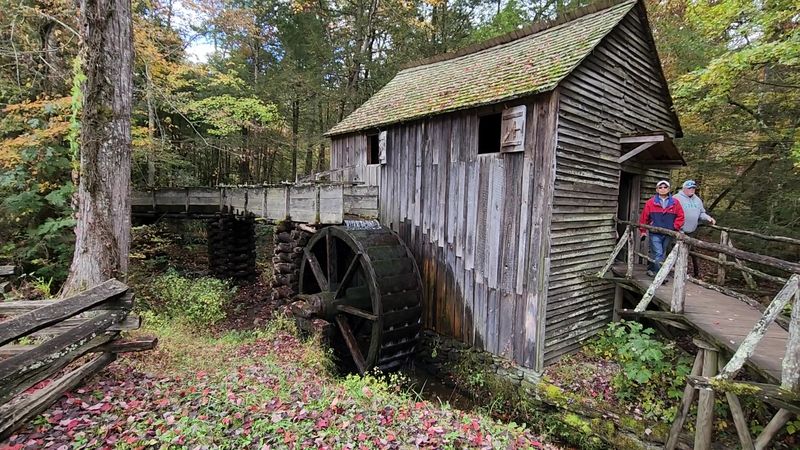
Picture a dusty autumn morning in 1880. Farmers guide wagons loaded with sacks of freshly harvested corn down the valley road toward Cable’s Mill. Women exchange news and recipes while waiting their turn. Children play along the creek banks, and the rhythmic thump of the mill becomes the valley’s heartbeat.
The grist mill served as more than just a place to grind grain. It functioned as a social hub where isolated mountain families connected with their community. Men discussed weather and crops, arranged trades, and shared information about the outside world.
The miller himself held an important position, trusted to take a fair portion as payment and to maintain the complicated machinery.
Cades Cove once supported a thriving community of over 600 residents. They built churches, schools, and businesses in this protected valley. Standing here today, you can almost hear the echoes of their voices and wagon wheels.
Wildlife, Scenic Views, and the Cades Cove Loop
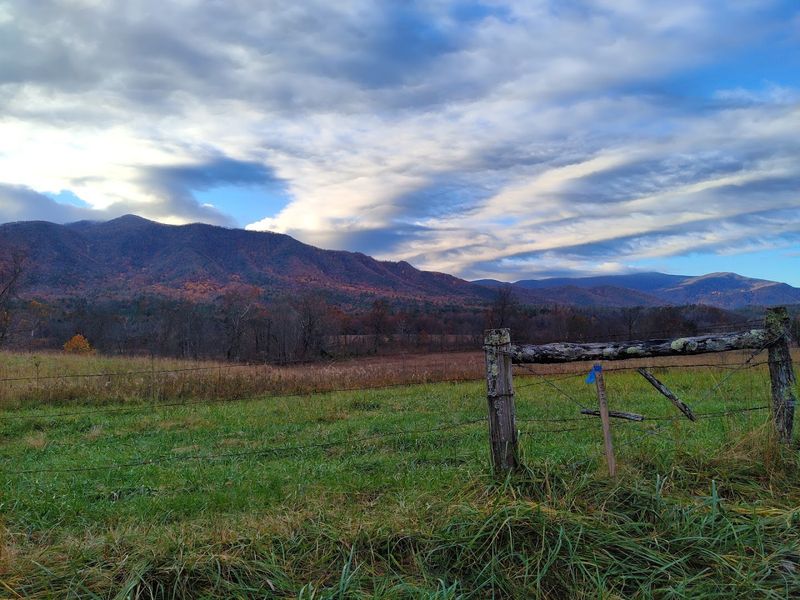
The eleven-mile loop road that brings you to Cable Mill ranks among America’s most spectacular scenic drives. Open valleys framed by ancient mountains create breathtaking vistas at every turn. Morning fog often fills the cove like a ghostly lake, while afternoon sun illuminates the surrounding peaks in golden light.
Wildlife viewing here is extraordinary. White-tailed deer graze peacefully in the meadows, often allowing cars to pass within yards. Black bears frequently wander across the road or forage near the forest edge, especially during berry season.
Wild turkeys, coyotes, and groundhogs make regular appearances. Photographers arrive before dawn hoping to capture bears in the misty fields.
The one-way loop requires two to four hours, depending on traffic and how often you stop. Wednesdays and Saturdays before 10 AM are reserved for bicycles and pedestrians only, offering a quieter experience. Every season brings different beauty to this remarkable valley.
Planning Your Visit to the Cades Cove Grist Mill
Cable Mill sits roughly halfway around the Cades Cove Loop at the Cable Mill area near the visitor center. A large parking lot accommodates dozens of vehicles, though it fills quickly during peak seasons. Arrive before 9 AM or after 3 PM for the best chance at easy parking and smaller crowds.
Remember that all vehicles stopping for more than 15 minutes in the park need a parking pass, available at entrance stations.
The mill demonstrates grinding operations seasonally, typically from late spring through fall when volunteers are available. Even when not operating, the mill and surrounding buildings remain open for exploration.