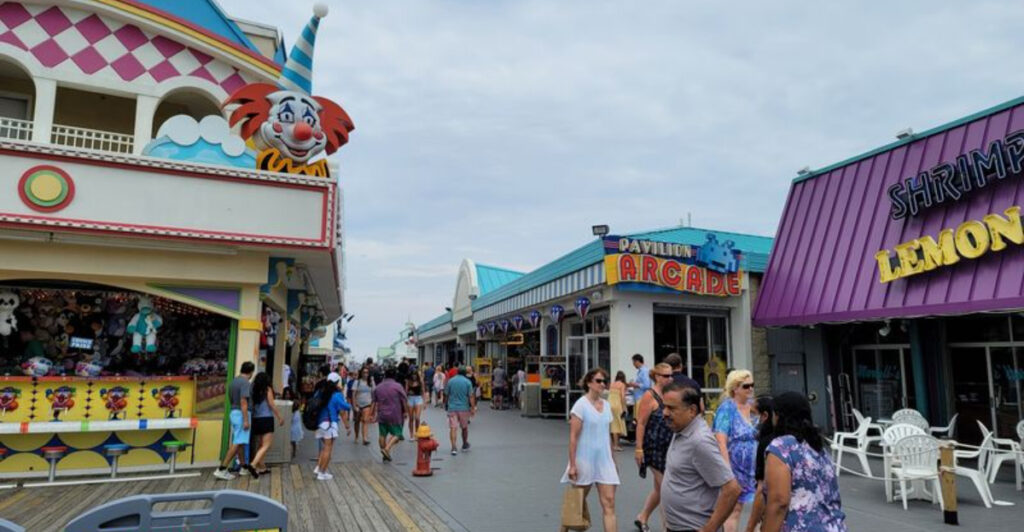
By lunchtime on a July Saturday, the smell of boardwalk pizza is competing with salt air, the arcade bells are firing nonstop, and a stuffed animal the size of a kindergartner is blocking pedestrian traffic. Down on Ocean Avenue, drivers creep past packed lots while children in bathing suits press their faces against car windows.
This is Point Pleasant Beach at full summer volume. The little Ocean County borough has everything families want from the Jersey Shore: a broad beach, amusement rides, an aquarium, old-fashioned games, fishing boats, and enough fried food to make dinner unnecessary.
That winning formula has also become its biggest problem. Crowds swallow the boardwalk, home prices have climbed past seven figures, and residents increasingly organize their lives around the visitor calendar.
Point Pleasant Beach remains one of New Jersey’s most dependable beach towns, but popularity has changed the experience. The place locals love is still here. Finding it now requires better timing.
Point Pleasant Beach Was Once the Jersey Shore’s Family Secret
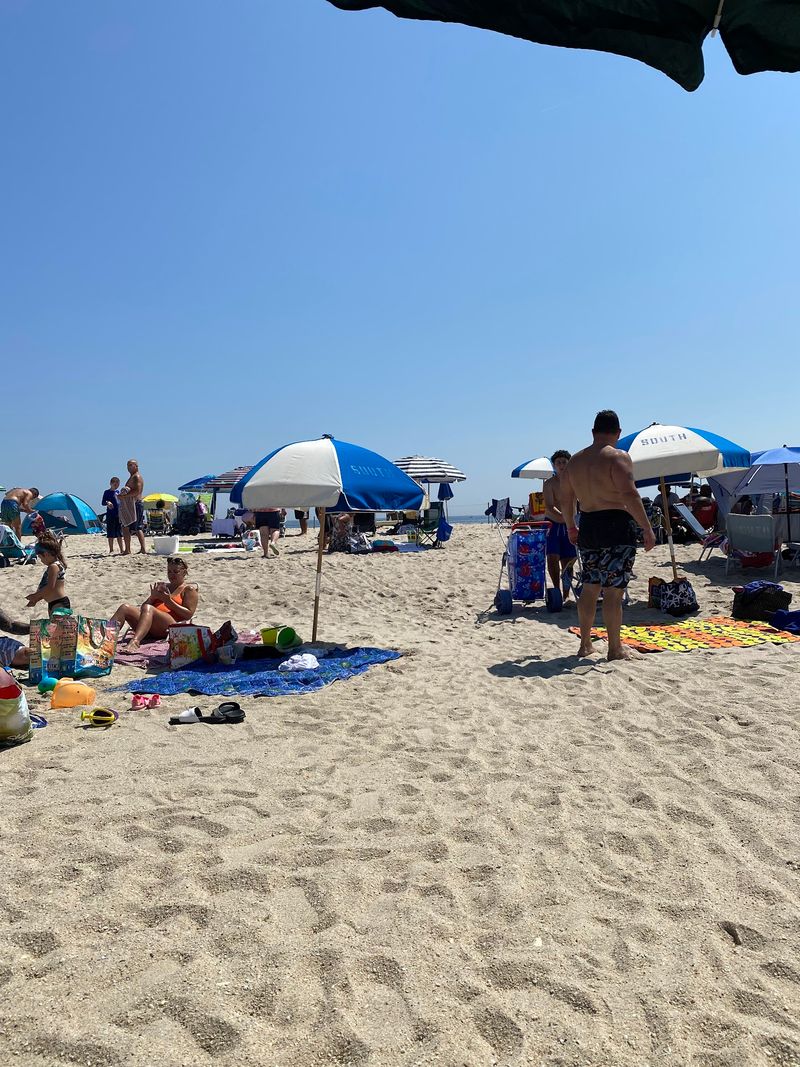
Point Pleasant Beach has attracted summer visitors since the 1870s, but it did not begin as the nonstop entertainment zone people know today. The first boardwalk appeared in 1890, when the borough was developing into a modest seaside resort served by rail.
Vacationers came for ocean air, grand hotels, and an escape from increasingly crowded cities. The pace was slower, the entertainment simpler, and nobody needed a strategy for finding parking before breakfast.
Jenkinson’s changed the equation. In 1928, Charles Jenkinson opened an oceanfront pavilion with a candy shop, soda fountain, refreshment stand, swimming pool, and novelty store.
The operation expanded over the decades, eventually adding amusement rides, arcades, miniature golf, nightlife, and Jenkinson’s Aquarium. What began as one seaside pavilion grew into the attraction most visitors now associate with the entire town.
Even as the boardwalk became busier, Point Pleasant Beach maintained the feel of a family place rather than a party town. Parents who had visited as children returned with their own kids.
Grandparents knew which pizza window they preferred, which arcade had the best games, and where to stand when the fireworks began. Away from Ocean Avenue, the borough remained a compact year-round community of residential streets, churches, schools, fishing businesses, and shops along Arnold Avenue.
The Manasquan Inlet added another layer of local character. Commercial fishing boats and recreational vessels moved between the river and Atlantic while anglers lined the rocks hoping for striped bass, bluefish, or fluke.
That combination made Point Pleasant Beach special. It offered the excitement of a classic boardwalk without feeling completely detached from a working Shore town.
For years, families treated it as their reliable corner of the coast. The trouble with being reliable, affordable, and easy to reach is that eventually everyone reaches the same conclusion.
The Boardwalk No Longer Feels Like a Local Hangout
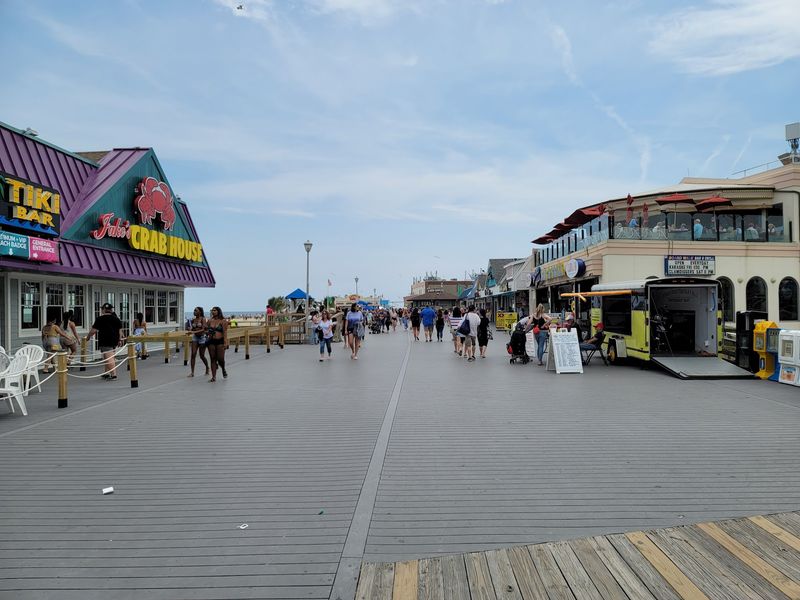
Stand near Jenkinson’s Aquarium on a warm evening and nearly every version of a Jersey Shore vacation will pass within five minutes. A toddler carries a dripping soft-serve cone.
Teenagers compare prizes from the Frog Bog. Parents negotiate one final ride before bedtime.
Someone is eating a slice of pizza while walking, a skill New Jersey children apparently learn before cursive. The scene is cheerful, familiar, and extraordinarily crowded.
Point Pleasant Beach’s boardwalk packs a remarkable amount of entertainment into a relatively short stretch. Jenkinson’s offers amusement rides, arcades, batting cages, miniature golf, games, food stands, bars, an aquarium, and scheduled events ranging from fireworks to movies on the beach.
The aquarium alone charges $19 for adults and $13 for children ages 3 through 11, making it a popular rainy-day alternative when every family has abandoned the sand at once. On peak nights, however, the boardwalk becomes a slow-moving river of people.
Strollers, beach wagons, groups of teenagers, and visitors stopping abruptly to inspect prize displays all compete for the same walking space. Lines spill across the planks, tables disappear quickly, and the noise from rides, games, music, and crowds blends into one continuous summer soundtrack.
Locals who once walked over for an evening cone or a quick lap increasingly choose early mornings, weekdays, or the shoulder season. Bicycle access reflects that quieter rhythm: bikes are generally permitted on the boardwalk only between 5 and 9 a.m.
The problem is not that visitors are using the boardwalk. Tourism supports jobs, businesses, and the attractions that make Point Pleasant Beach recognizable.
The frustration comes when residents feel they must leave their own neighborhood to escape it. By mid-July, a casual boardwalk stroll is no longer casual.
It is an event requiring timing, patience, and a firm rule about how many giant plush bananas one family truly needs.
Parking and Traffic Have Turned Summer Visits Into a Struggle
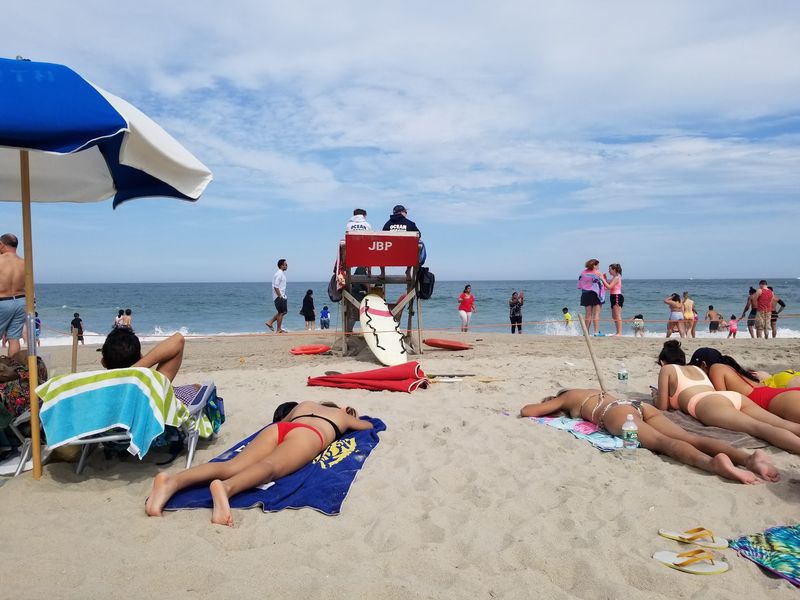
The first ride of the day often begins several blocks from Jenkinson’s, inside a hot car moving at roughly the speed of a distracted seagull. Drivers scan both sides of Ocean Avenue, circle residential streets, compare private lot prices, and perform sudden U-turns when somebody appears to be reaching for car keys.
One open space can produce more excitement than the amusement park. Geography deserves part of the blame.
Point Pleasant Beach covers less than two square miles, with the Atlantic to the east, the Manasquan River to the north, and a limited number of roads feeding the waterfront. Route 35 carries a heavy share of local and visitor traffic.
Arnold Avenue connects the beach area with downtown and the NJ Transit station. During a sunny weekend, those routes must handle beachgoers, boardwalk visitors, restaurant customers, anglers, hotel guests, delivery vehicles, and residents trying to complete ordinary errands.
Parking options include municipal spaces, metered areas, private lots, and limited free street parking, but demand can overwhelm all of them. The closer a space is to the boardwalk, the faster it disappears and the more it may cost.
Visitors who arrive after lunch often face a choice between paying a premium or parking farther inland and walking with chairs, umbrellas, towels, and at least one child who suddenly cannot carry anything.
The Point Pleasant Beach station offers service on NJ Transit’s North Jersey Coast Line, and the walk from the station to the boardwalk is roughly a mile.
That is manageable for concertgoers or older children, though less charming with a loaded beach wagon. Locals adapt by running errands early, avoiding Ocean Avenue during peak hours, and learning the event calendar.
Fireworks, promotional ride nights, and perfect beach weather can combine into the traffic equivalent of a three-car pileup. Point Pleasant Beach is not difficult to navigate because it is poorly located.
It is difficult because too many people are trying to reach the same few blocks at the same time.
Rising Prices Are Changing Who Can Afford to Stay
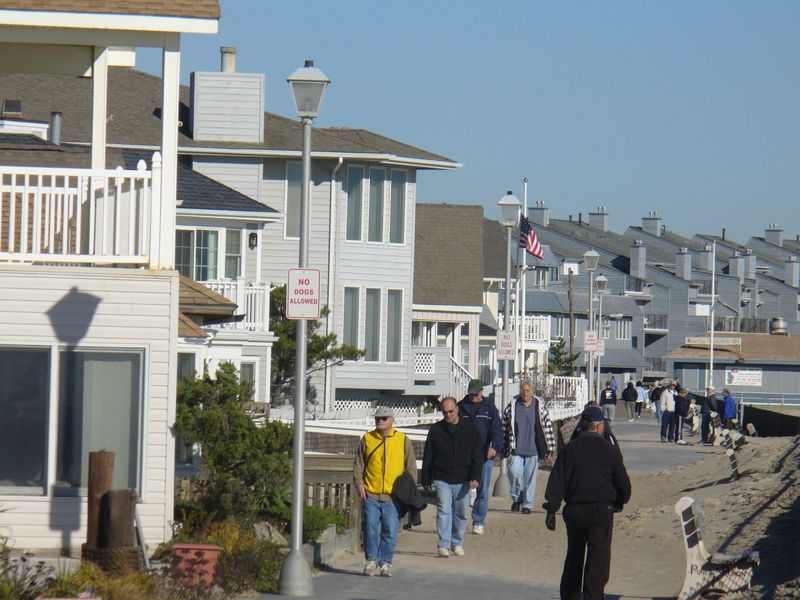
A small beach cottage in Point Pleasant Beach is no longer automatically a modest purchase. By 2026, the borough’s average home value had climbed to approximately $1.12 million, an eye-catching number even by northern Jersey Shore standards.
Buyers are not simply paying for bedrooms and bathrooms. They are paying for proximity to the ocean, the boardwalk, the train, downtown businesses, and one of the region’s strongest seasonal rental markets.
That demand changes the town block by block. Older bungalows are renovated, expanded, elevated, or replaced by larger homes designed to maximize rental income and ocean access.
A property that once housed a year-round family may become a premium weekly rental filled by a new group every Saturday. The borough regulates short-term rentals, including permits and seasonal restrictions, but the financial incentive remains powerful.
Visitors notice rising costs long before they study real estate listings. A Point Pleasant Beach day can include parking, beach admission, food, arcade credits, ride expenses, miniature golf, and aquarium tickets.
Multiply that by a family of four, and an old-fashioned Shore outing starts behaving like a miniature vacation budget. Staying overnight adds another layer, especially during July and August, when well-located rooms and rental houses command their strongest rates.
The greatest pressure falls on year-round residents who do not own valuable property. Renters compete with seasonal demand.
Younger locals struggle to buy in the town where they grew up. Boardwalk employees, restaurant workers, teachers, and first responders may live farther away and commute into a borough whose daily economy depends on them.
Rising property values can strengthen the tax base and reward longtime homeowners, particularly those preparing to retire or sell. They can also hollow out the community if ordinary households are steadily replaced by investment properties and occasional residents.
Point Pleasant Beach built its reputation as an accessible family destination. When both visiting and living there become luxury purchases, that identity becomes harder to maintain.
New Development Is Pushing Out the Town’s Old-School Character
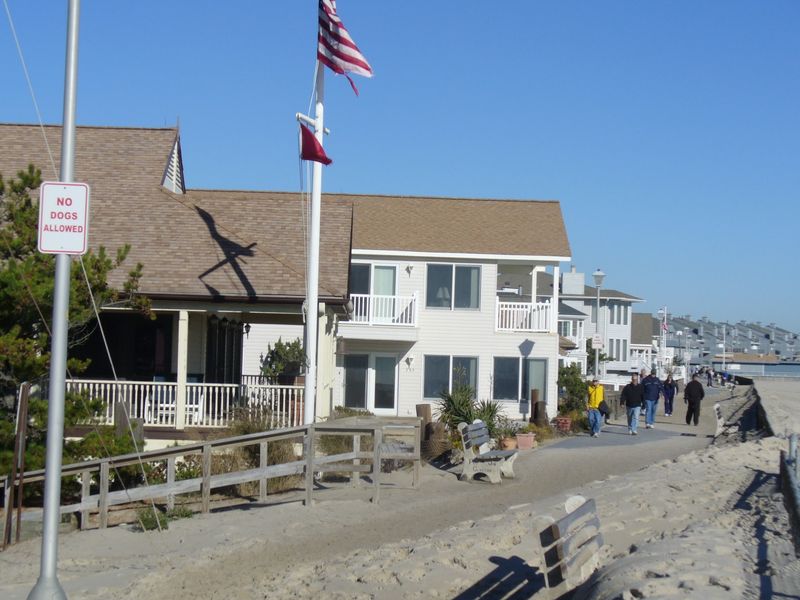
Point Pleasant Beach has never pretended to be untouched by commerce. The boardwalk exists to sell rides, games, food, and entertainment, and locals are not shocked when a new attraction arrives with bright lights.
Still, there is a difference between a living Shore town with businesses and a tourism machine that treats every square foot as another chance to sell an experience. Jenkinson’s is the clearest example of both the town’s strength and its vulnerability.
The company operates much of the boardwalk’s entertainment, including the beach, amusement park, aquarium, arcades, miniature golf, food outlets, and event programming. That concentration creates a consistent family experience, but it also means one brand heavily shapes how outsiders understand Point Pleasant Beach.
The boardwalk can feel less like a collection of independent operators and more like a single sprawling attraction. It continues to evolve.
Jenkinson’s has announced Maelstrom, a new indoor attraction expected in 2027, while existing rides and facilities receive regular updates. New entertainment keeps families coming back, particularly when weather disrupts beach plans.
Yet each polished addition can move the boardwalk another step away from the slightly battered, unpredictable place longtime visitors remember. The same tension appears on residential streets.
Small cottages are replaced by tall, wide homes built to modern flood standards and vacation-rental expectations. Necessary elevation after Superstorm Sandy changed the physical appearance of many Shore neighborhoods, but market demand has also encouraged bigger construction.
Front porches, compact yards, and mismatched beach houses increasingly share blocks with imposing new properties that use nearly every allowable inch.
Downtown Arnold Avenue still offers independent restaurants, bakeries, shops, and neighborhood services, while the commercial fishing fleet around the inlet keeps part of the borough firmly connected to working waterfront traditions.
Those pieces prevent Point Pleasant Beach from becoming an amusement park with a mailing address. The concern is cumulative.
One large house, upgraded attraction, or replaced storefront does not erase local character. Enough of them can make the town feel designed primarily for visitors who arrive, spend, and leave.
Locals Wonder Whether Point Pleasant Beach Can Find Its Balance
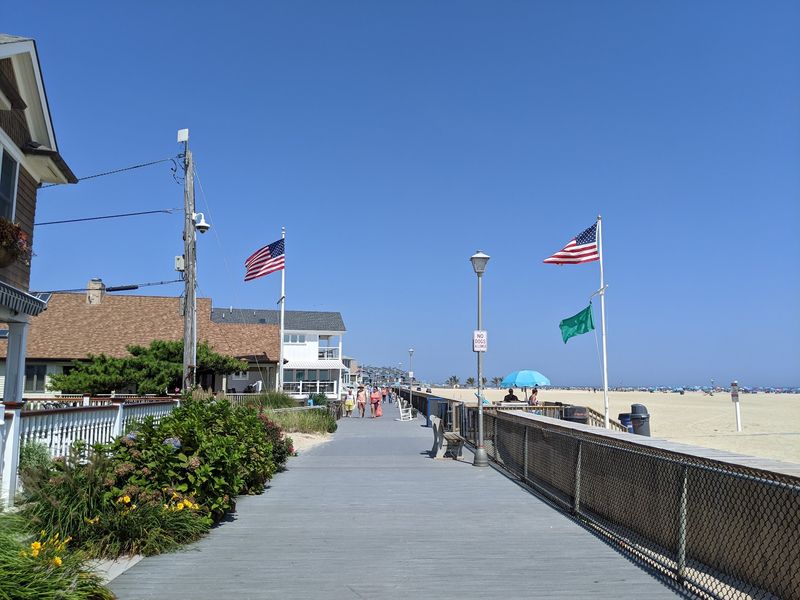
The real Point Pleasant Beach appears at 7 a.m., before the rides start and the arcades begin chiming. Joggers move along the boardwalk, fishing boats pass through the Manasquan Inlet, and employees unlock shops while gulls inspect the previous night’s mistakes.
A few hours later, the tourism economy takes over. Both versions are authentic, but locals increasingly worry that one is swallowing the other.
Balancing them is complicated because popularity pays many of the borough’s bills. Boardwalk crowds support seasonal jobs, restaurants, hotels, rental owners, charter boats, shops, and municipal services.
Families return because Point Pleasant Beach delivers exactly what they expect. A child can see penguins at the aquarium, ride a miniature train, win a stuffed dinosaur, play mini golf, and watch fireworks without moving the car.
Few Shore towns offer that much concentrated entertainment. Residents, however, need more than a successful summer.
They need manageable traffic, protected residential streets, sensible rental enforcement, year-round businesses, and housing that does not require a millionaire’s budget. They also need some portion of the town to remain ordinary.
A functioning community requires hardware stores, schools, lunch counters, quiet blocks, and neighbors who recognize one another after Labor Day. Local appreciation events, resident programs, downtown activities, and off-season traditions help preserve that sense of ownership.
So do the inlet, commercial fishing industry, independent Arnold Avenue businesses, and community organizations that exist beyond the boardwalk’s glow. Point Pleasant Beach does not need to choose between visitors and residents.
It needs limits that keep one group from overwhelming the other. That may mean better traffic planning, firm short-term rental rules, careful zoning, and more attention to how large projects alter neighborhood scale.
Success gave the borough a stable place in generations of family memories. The next challenge is ensuring that Point Pleasant Beach remains a hometown, not merely a product people purchase one summer week at a time.
Share this story