Michigan is hiding some of the most movie-worthy small towns in the entire country, and honestly, it’s about time someone said it out loud. From candy-colored storefronts to lakefront sunsets that look almost too good to be real, these places feel like they were built for a feel-good film.
Hallmark has been missing out on some serious magic right here in the Great Lakes State. Get ready to fall in love with 16 Michigan towns that could absolutely steal the spotlight on any holiday movie screen.
1. Leland
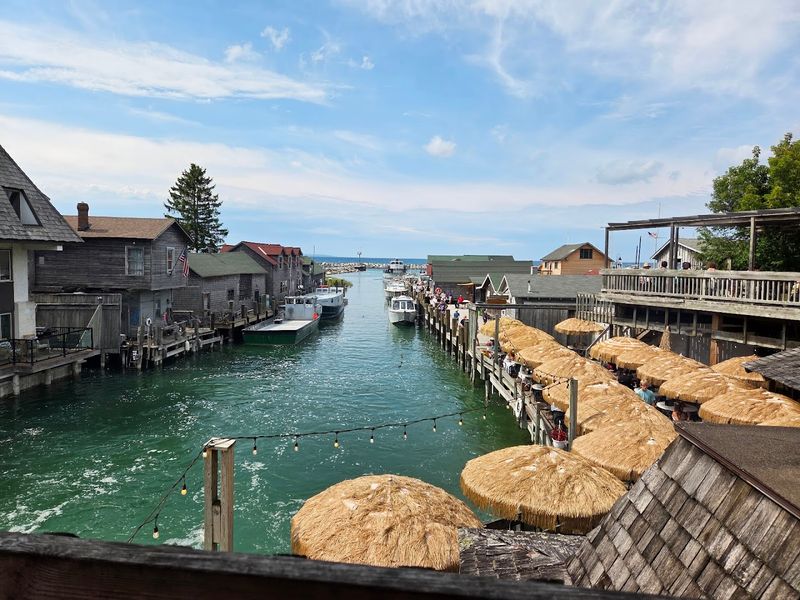
There is something almost unreal about Leland. Tucked along the Leland River where it meets Lake Michigan, this tiny town carries a quiet kind of magic that feels like it belongs on a movie poster.
The area known as Fishtown — a cluster of weathered cedar shanties right on the docks — looks like it has barely changed in over a hundred years, and that is exactly the point.
Fishtown is genuinely one of Michigan’s most iconic landmarks. Fishing boats still come and go, fresh fish is sold right from the docks, and the smell of smoked whitefish drifts through the air like a welcome home.
It is the kind of detail a Hallmark set designer would dream up but could never fully recreate.
Downtown Leland is small but full of character. Independent shops, cozy restaurants, and art galleries line the streets without a chain store in sight.
The whole place has a handcrafted, unhurried feel that makes you want to slow down and actually look around.
In the fall, the surrounding countryside turns into a patchwork of gold and red, with Sleeping Bear Dunes National Lakeshore just a short drive away. The scenery practically writes its own script.
Whether you are sipping coffee on a dock at sunrise or watching the boats come in at dusk, Leland delivers that warm, chest-filling feeling that every good Hallmark movie chases.
For a town with a population of just a few hundred people, Leland punches well above its weight in charm, beauty, and story potential. Any screenwriter worth their salt would have a field day here.
2. Pentwater
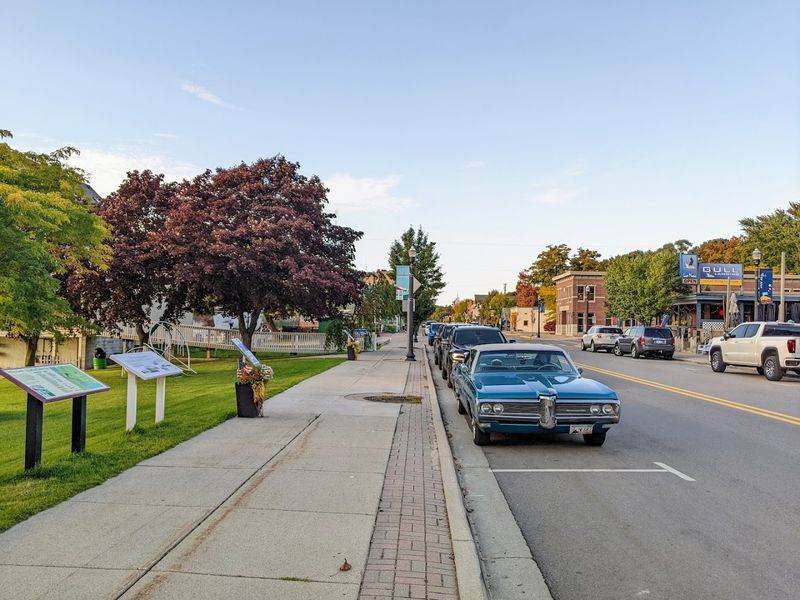
Pentwater is the kind of town that makes you pull over and park the car before you have even planned to stop. Sitting just off Lake Michigan between Ludington and Muskegon, this little village has a downtown that feels almost too perfectly charming to be accidental.
Flower baskets hang from every lamppost, the sidewalks are clean and wide, and nearly every building looks freshly painted in colors that pop.
The town wraps around Pentwater Lake, a calm inland lake connected to Lake Michigan by a narrow channel. Boats drift in and out all summer long, and the marina area has that golden-hour glow that cinematographers absolutely love.
Watching the sun drop behind the dunes from the pier is the kind of scene that needs zero editing.
Village Green Park sits right in the heart of downtown and serves as the town’s natural gathering spot. Concerts, festivals, and community events fill the schedule from Memorial Day through Labor Day.
The energy is friendly and festive without ever feeling overcrowded or touristy in a bad way.
Local shops and restaurants keep things interesting without trying too hard. You can find handmade jewelry, vintage finds, fresh-baked goods, and great lake fish all within a couple of blocks.
The pace is slow on purpose, and nobody seems to mind one bit.
Pentwater also has a strong arts scene for its size, with galleries and creative spaces scattered throughout town. Artists have been drawn here for generations, and you can feel that creative spirit in the details — the murals, the window displays, the general sense that someone cared deeply about how everything looks.
Hallmark could film an entire franchise here and never run out of backdrops.
3. Marshall
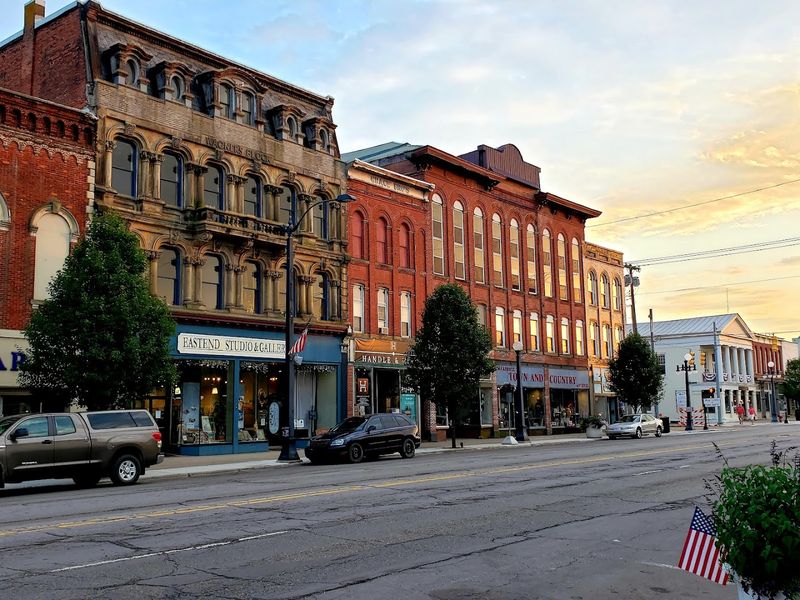
Marshall might be the most underrated town in all of Michigan, and that is saying something in a state full of hidden gems. Located in Calhoun County along Interstate 94, Marshall is famous among architecture lovers for having one of the largest collections of 19th-century homes in the entire Midwest.
Walking through its neighborhoods feels less like a stroll and more like stepping directly into a history book.
The downtown square is anchored by the Fountain of Eternal Contentment — yes, that is actually its name — and surrounded by beautifully preserved storefronts that have been standing since the 1800s. The whole area has a dignified, old-money charm that feels timeless rather than stuffy.
It is exactly the kind of setting where a Hallmark lead character would run a cozy bakery or a family-owned bookshop.
Marshall was once in serious contention to become Michigan’s state capital, and the town has never quite let go of that almost-greatness. That sense of quiet pride shows up everywhere, from the carefully maintained historic buildings to the local pride events that draw visitors from across the state.
The annual Historic Home Tour is a beloved tradition that opens dozens of private homes to the public every September.
The food scene here is better than you would expect for a town this size. Locally owned restaurants and cafes dot the downtown, and the general vibe is warm and welcoming without being self-conscious about it.
Marshall feels like a town that knows exactly who it is.
If Hallmark ever wanted to film a story about a big-city lawyer who rediscovers her roots in a small town, Marshall would be the first call. The setting practically writes the character arc on its own.
4. Rochester
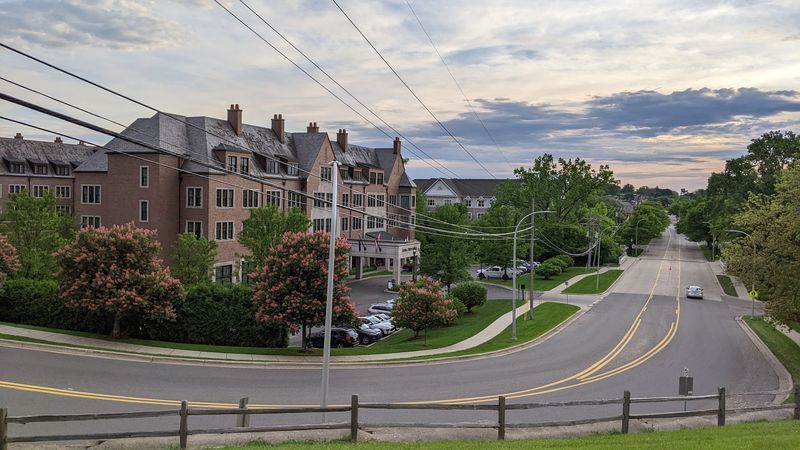
Rochester pulls off something genuinely rare: it manages to feel like a big-city destination while still holding onto every bit of its small-town soul. Sitting just north of Detroit in Oakland County, this city of around 13,000 people has a downtown that hums with energy year-round.
The streets are lined with locally owned boutiques, excellent restaurants, and coffee shops that actually have personality.
Paint Creek Trail runs right through the heart of Rochester, offering miles of paved path along a scenic creek corridor. In the fall, the trail turns into a tunnel of orange and yellow leaves that honestly looks like it was designed by a film crew.
Cyclists, joggers, and families with strollers share the path in a way that feels genuinely communal and alive.
Downtown Rochester goes all out for the holidays in a way that would make any Hallmark producer’s jaw drop. The annual Street of Lights festival transforms the main drag into a glowing winter wonderland with thousands of lights, outdoor ice skating, and live music filling the cold air.
It is the kind of event that makes people believe in the magic of small-town winters all over again.
Rochester is also home to Oakland University, which adds a steady creative energy to the town. Art galleries, live performances, and cultural events are woven into the fabric of everyday life here.
The mix of academic spirit and neighborhood warmth gives Rochester a depth that many small towns simply do not have.
The town’s mix of historic charm and modern energy is its secret weapon. Rochester never feels frozen in time, but it also never loses sight of what made it special in the first place.
That balance is incredibly hard to find — and incredibly easy to film.
5. Northville
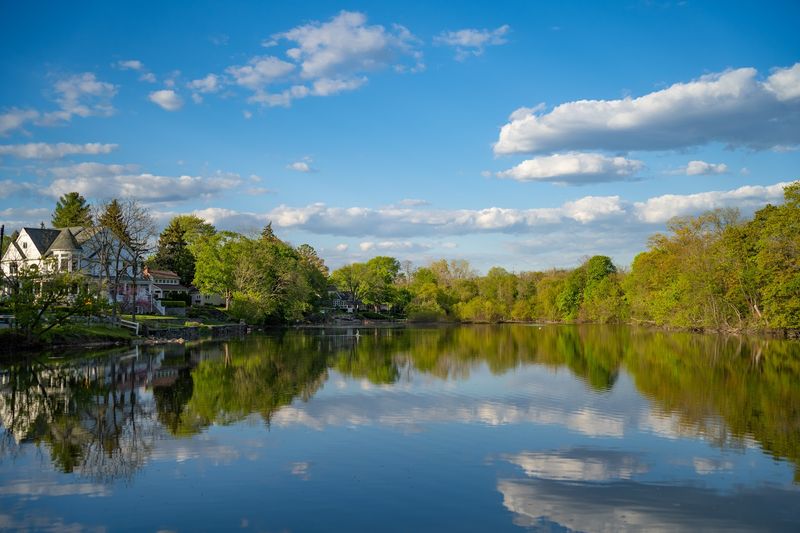
Northville is the kind of place that makes you wonder why you have not been coming here your whole life. Tucked into the northwest corner of metro Detroit, this small city manages to feel completely removed from the suburban sprawl surrounding it.
The downtown is anchored by a historic clock tower, and the brick-paved streets are lined with independent shops, wine bars, and restaurants that draw visitors from all over the region.
The town square hosts outdoor events practically every weekend from spring through fall. Farmers markets, art fairs, car shows, and live music performances cycle through the calendar with impressive regularity.
There is always something happening in Northville, but the vibe never tips over into chaotic — it stays warm and neighborly no matter the crowd size.
Mill Race Village is one of Northville’s most beloved spots, a collection of historic buildings preserved and maintained as a living museum along the river. The old grist mill, the cider mill, and the schoolhouse sit together in a peaceful green setting that feels genuinely removed from the modern world.
It is the kind of location that makes film location scouts stop and take notes.
Northville’s residential streets are just as impressive as its downtown. Victorian homes, tree-lined sidewalks, and well-kept gardens create a neighborhood aesthetic that feels curated but never fake.
This is a town where people clearly take pride in where they live, and it shows in every detail.
Holiday season in Northville is absolutely something else. The town decorates with an enthusiasm that borders on competitive, and the result is a downtown that glows from November through January.
If Hallmark needs a ready-made winter wonderland, Northville is already dressed for the part and waiting for its close-up.
6. Manistee
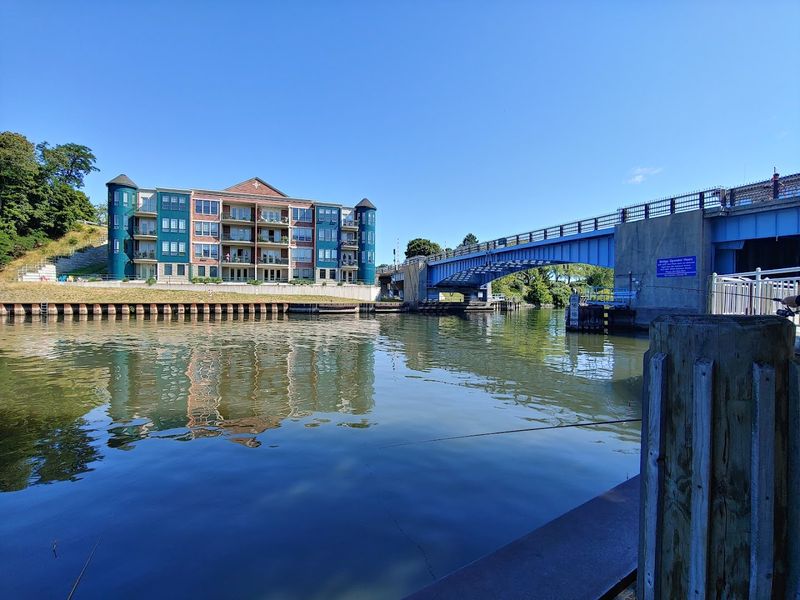
Manistee earned its nickname as the “Victorian Port City” fair and square. Sitting on the eastern shore of Lake Michigan about halfway up the Lower Peninsula, this town of around 6,000 people has a downtown that looks like it was flash-frozen in the late 1800s and carefully thawed out for modern visitors to enjoy.
The concentration of preserved Victorian architecture here is genuinely remarkable and almost unmatched in the entire state.
The downtown commercial district along River Street is a treasure chest of ornate brick facades, decorative cornices, and original storefront windows that have survived more than a century of Michigan winters. Walking this stretch on a quiet morning, with the Manistee River just a block away, feels cinematic in the most effortless way.
No set dressing required.
The Manistee Riverwalk connects downtown to the lakefront and marina, offering a scenic path lined with benches, public art, and sweeping water views. In the summer, sailboats dot the marina and families picnic along the riverbanks.
The whole scene has a leisurely, sun-drenched quality that makes time feel optional.
Manistee also has a strong cultural identity rooted in its logging and port history. The Manistee County Historical Museum does an excellent job of telling that story, and the town’s annual Victorian Sleighbell Parade each December is one of the most beloved holiday traditions in northern Michigan.
Crowds line the streets to watch horse-drawn sleighs and costumed carolers pass through the gaslit downtown.
That parade alone would make a perfect Hallmark opening scene. The combination of authentic history, stunning architecture, and genuine community spirit gives Manistee a depth of character that most towns spend decades trying to manufacture.
Here, it just comes naturally.
7. St. Joseph
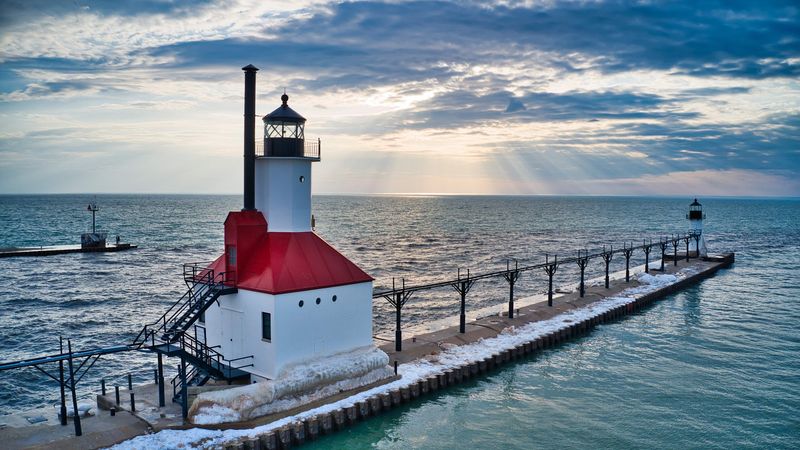
St. Joseph sits on a bluff above Lake Michigan in the southwestern corner of the state, and the views from up there are the kind that make people go quiet for a moment. The historic lighthouse at the end of the north pier is one of Michigan’s most photographed landmarks, and on a clear day, the Chicago skyline is actually visible across the water.
That detail alone sounds like something a screenwriter made up.
Downtown St. Joseph — locals call it “St. Joe” — is a compact, walkable grid of galleries, restaurants, boutiques, and wine shops that has been drawing visitors for generations. The arts scene here is unusually strong for a town this size.
The Krasl Art Center sits right on the bluff with panoramic lake views, and the Sculpture Walk along the main street changes its outdoor installations annually, keeping the streetscape fresh and interesting.
The beach culture in St. Joe is real and central to town identity. Silver Beach, just below the downtown bluff, is wide, sandy, and genuinely beautiful.
A restored carousel and a splash pad make it a family destination, but the beach never loses its romantic edge at golden hour when the light turns the water into something from a painting.
St. Joseph also has a lively food and wine culture, thanks in part to its proximity to the Lakeshore wine country of southwest Michigan. Farm-to-table dining and local wine pairings are standard here, not a trend.
The town attracts a sophisticated crowd without ever becoming pretentious about it.
There is a breezy confidence to St. Joe that is hard to define but easy to feel. It is a town that knows it has something special and chooses to share it generously rather than hoard it.
Hallmark would be lucky to call it a filming location.
8. Holland
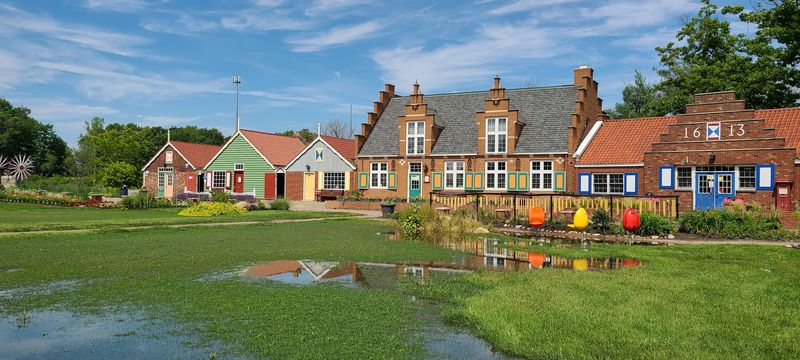
Holland, Michigan, commits to its Dutch heritage with an enthusiasm that is genuinely infectious. Every May, the town transforms into a sea of color during the Tulip Time Festival, when millions of tulips bloom across the city and Dutch-costumed dancers perform in the streets.
It is one of the most attended festivals in the entire Midwest, drawing hundreds of thousands of visitors who come specifically to walk through fields of flowers. And yes, it is every bit as beautiful as it sounds.
Windmill Island Gardens is the centerpiece of Holland’s Dutch identity. The authentic 1761 Dutch windmill — named De Zwaan, meaning “The Swan” — was imported from the Netherlands and is the only operating Dutch windmill in the United States.
Surrounded by manicured gardens, canals, and tulip beds, the island is a picture-perfect slice of old-world Europe dropped into the heart of Michigan.
Beyond the flowers and windmills, Holland has a genuinely thriving downtown. Eighth Street is lined with independent shops, bakeries, coffee roasters, and restaurants that reflect both the town’s heritage and its modern energy.
Holland also has a growing craft beer scene and a strong arts community anchored by Hope College, which hosts performances and exhibitions throughout the year.
Lake Macatawa connects Holland to Lake Michigan, and Tunnel Park — with its famous tunnel through the dunes to the beach — is one of the most unique beach access points anywhere in the state. The combination of lake life, cultural festivals, and a beautifully preserved downtown gives Holland a versatility that most towns cannot match.
A Hallmark film set in Holland during tulip season would essentially write itself. The visuals are already there, the community spirit is undeniable, and the story potential is endless.
Holland is not just charming — it is full-on cinematic.
9. Cheboygan
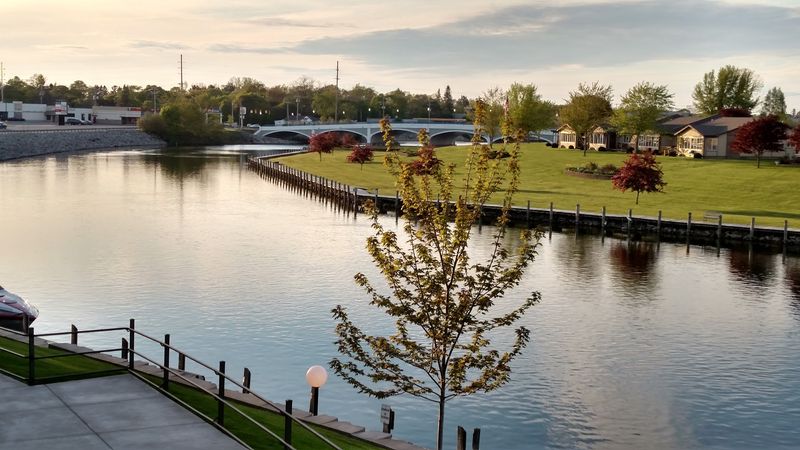
Cheboygan is the kind of town that rewards the people who actually bother to find it. Sitting at the northern tip of the Lower Peninsula where the Cheboygan River meets Lake Huron, this small city of around 4,500 people operates with a quiet confidence that comes from knowing exactly what it has.
The river, the lakes, the forests, the history — Cheboygan does not need to shout about any of it.
The Cheboygan Opera House is the town’s crown jewel and one of the most beautifully restored historic theaters in the entire state. Built in 1877 and meticulously preserved, the opera house hosts live performances year-round and serves as a gathering point for the whole community.
Walking into that building for the first time is a genuine wow moment — the kind that a camera could capture perfectly.
The town sits at the head of the Inland Waterway, a chain of lakes and rivers that stretches 38 miles to Crooked Lake near Petoskey. Boaters, kayakers, and anglers use this route all summer long, and the waterfront area in Cheboygan has a relaxed, unhurried energy that feels like a true escape from modern-day stress.
Watching a boat drift down the river from a downtown bench is a simple pleasure that never gets old.
Cheboygan has a working-town feel that many northern Michigan communities have lost as tourism dollars have reshaped their identities. There are still hardware stores, diners, and family-owned businesses here that serve the people who actually live here year-round.
That authenticity is rare and genuinely appealing.
A Hallmark film set in Cheboygan could lean into that authentic, unpolished charm — a story about a city transplant discovering a slower, richer way of life. The town would not need a single prop to make that story believable.
10. Ludington
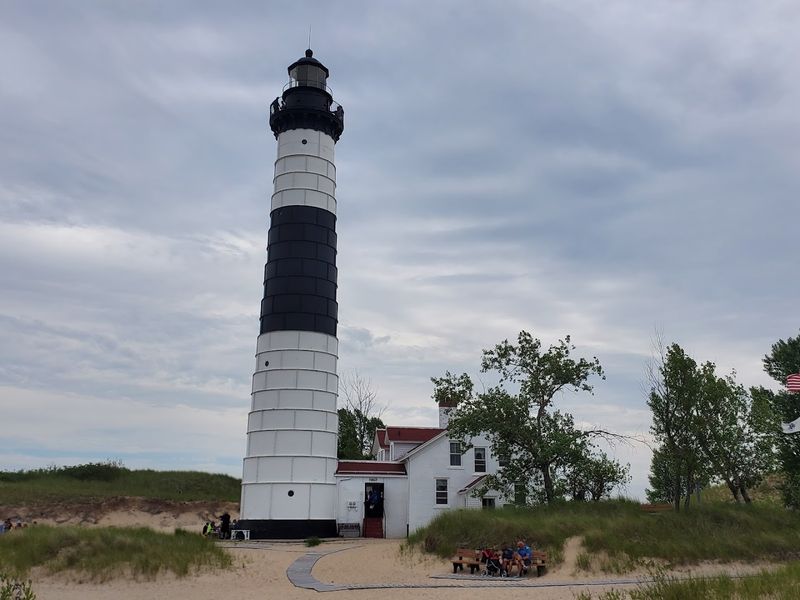
Ludington has a lighthouse that looks like it belongs on a postcard, a state park that stretches for miles along Lake Michigan, and a downtown that somehow manages to be both laid-back and full of life at the same time. It is the kind of place where you arrive for a weekend and start mentally calculating how long it would take to move here permanently.
The appeal is immediate and completely understandable.
The Big Sable Point Lighthouse, accessible only by a 1.8-mile trail through the dunes, is one of Michigan’s most iconic structures. Black-and-white striped and standing 112 feet tall, it rises above the dune grass like something from a storybook.
The hike to reach it is part of the experience — by the time you get there, the setting feels earned.
Downtown Ludington has invested heavily in its own revitalization over the past decade, and the results are evident. Independent restaurants, craft breweries, art galleries, and specialty shops fill the blocks between the marina and the main commercial strip.
The town also hosts the SS Badger, the only coal-fired steamship still operating on the Great Lakes, which makes a daily crossing to Manitowoc, Wisconsin. Watching that massive ship pull away from the dock is an unexpectedly moving experience.
The Ludington State Park is consistently ranked among the best state parks in the entire country. Dunes, forests, inland lakes, and miles of Lake Michigan shoreline all exist within the park’s boundaries.
Sunrise over the dunes here is the kind of visual that makes professional photographers put their cameras down and just look.
Ludington has everything a Hallmark location scout could possibly want: natural beauty, historic character, community warmth, and the kind of golden light that makes every shot look effortless. It is ready for its moment.
11. Frankenmuth
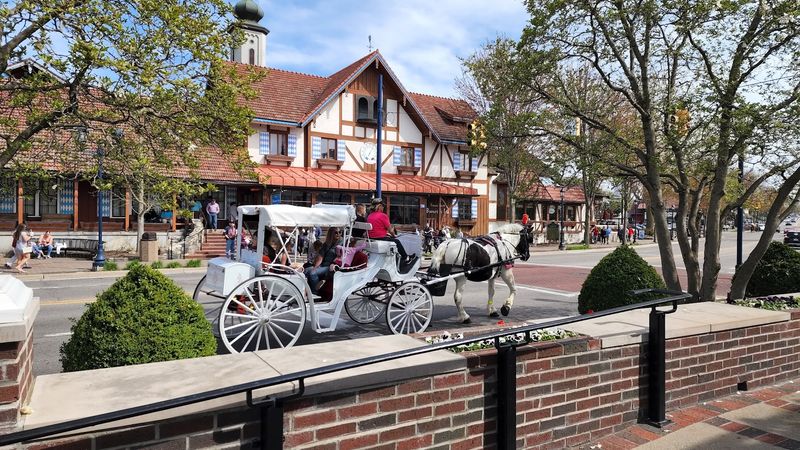
Frankenmuth plays by its own rules, and those rules involve year-round Christmas decorations, Bavarian architecture, and enough chicken dinners to feed a small army. Known affectionately as “Michigan’s Little Bavaria,” this town of around 5,000 people draws nearly three million visitors a year — a number that sounds impossible until you actually visit and understand the appeal firsthand.
The town was settled by German Lutheran immigrants in 1845, and that heritage is woven into every brick, roofline, and glockenspiel performance you encounter. The buildings along Main Street feature half-timbered facades, carved wooden details, and flower boxes overflowing with blooms in the warmer months.
The aesthetic is consistent, deliberate, and genuinely delightful rather than kitschy — a balance that is much harder to achieve than it looks.
Bronner’s Christmas Wonderland is the undisputed star attraction. Billing itself as the world’s largest Christmas store, Bronner’s covers 320,000 square feet and sells ornaments, lights, and decorations from countries around the globe.
The exterior is outlined with 100,000 lights year-round. Walking through Bronner’s in July feels surreal and wonderful in equal measure.
The Bavarian Inn and Zehnder’s restaurants have been serving their famous all-you-can-eat chicken dinners since the 1950s, and the lines outside both establishments on a weekend afternoon tell you everything you need to know about how good the food is. Frankenmuth takes its culinary traditions as seriously as its architectural ones.
A Hallmark film here would practically direct itself — a big-city event planner arrives to organize Frankenmuth’s Christmas festival and ends up finding more than just a good story. The town is tailor-made for that kind of warmth, wonder, and inevitable happy ending.
Frankenmuth does not just look like a Hallmark set; it actually feels like one.
12. Charlevoix
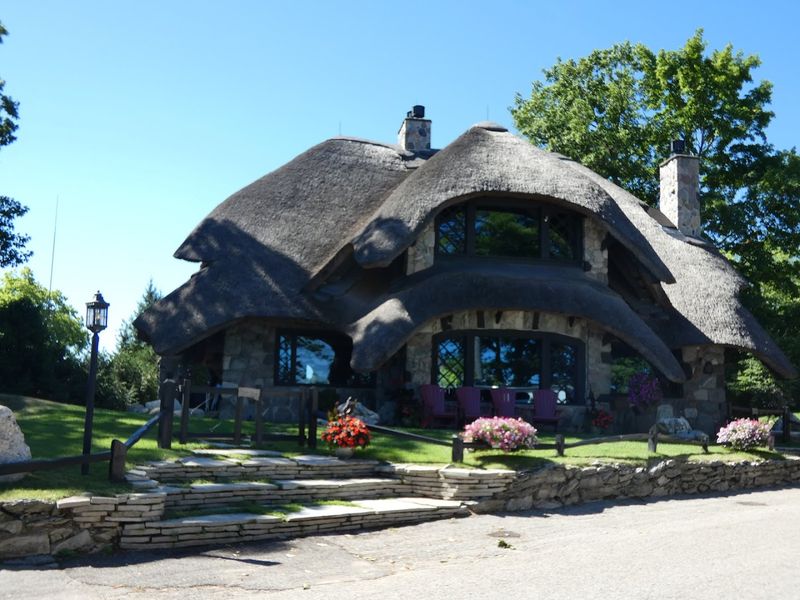
Charlevoix is where Lake Michigan, Round Lake, and Lake Charlevoix all meet in one impossibly scenic convergence — and the town that grew up around that meeting point looks like it was designed specifically to make people fall in love with Michigan. The waterfront is spectacular, the downtown is vibrant, and the famous Mushroom Houses scattered through the residential neighborhoods add a fairy-tale quality that is unlike anything else in the state.
Those Mushroom Houses deserve their own paragraph. Built by local builder Earl Young in the mid-20th century, these hobbit-hole-style homes with their organic shapes, boulder foundations, and undulating rooflines look like they grew out of the earth rather than being constructed.
There are more than two dozen of them throughout Charlevoix, and walking past them on a misty morning is a genuinely enchanting experience that photographs absolutely beautifully.
Bridge Street, Charlevoix’s main commercial corridor, is packed with upscale boutiques, excellent restaurants, wine bars, and galleries that cater to the town’s well-heeled summer crowd without losing the welcoming feel that makes locals proud. The drawbridge at the center of town opens regularly to let boats pass through from Round Lake to Lake Michigan, and stopping to watch that ritual is a Charlevoix rite of passage.
Charlevoix’s Venetian Festival each summer fills the harbor with decorated boats, live music, and fireworks that reflect off the water in spectacular fashion. The town also serves as a gateway to Beaver Island, Michigan’s largest freshwater island, accessible by ferry from the marina.
That kind of adventure-on-the-doorstep energy adds another layer to Charlevoix’s already impressive appeal.
Few Michigan towns offer this much beauty, personality, and visual variety in such a compact package. Charlevoix is not just Hallmark-worthy — it is genuinely one of the most beautiful small towns in America.
13. Petoskey
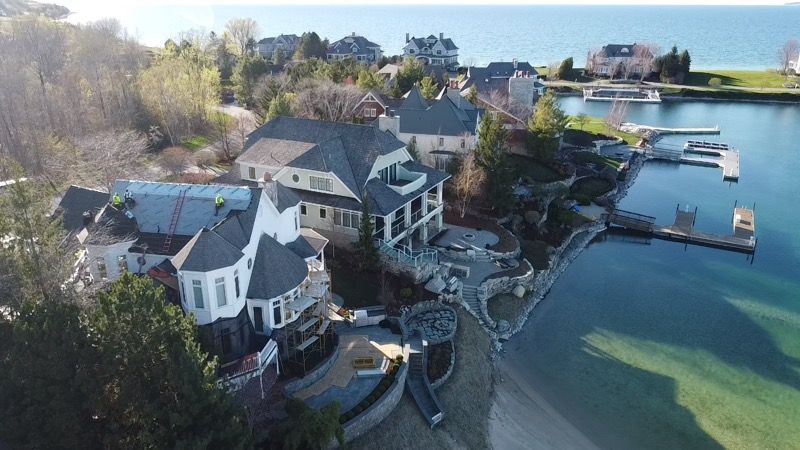
Petoskey carries itself with a quiet elegance that comes from more than a century of being exactly what it is: one of northern Michigan’s finest small cities. The Gaslight District downtown is the kind of commercial area that urban planners study and try to replicate.
Beautifully preserved Victorian brick buildings house independent bookstores, jewelry shops, art galleries, wine bars, and farm-to-table restaurants that would hold their own in any major city.
The town sits on Little Traverse Bay, and the waterfront park and boardwalk offer sweeping views of the bay and the hills beyond. Ernest Hemingway spent summers of his youth in the Petoskey area, and the town has embraced that literary connection with a warmth that feels genuine rather than exploitative.
The Little Traverse History Museum tells the full story of the region with real depth and care.
Petoskey stones — fossilized coral found along the shoreline — are the town’s unofficial mascot and a beloved local tradition. Hunting for them along the rocky beaches of Little Traverse Bay is a pastime that families have passed down through generations.
Finding a good one feels like a small, personal victory, and the stones are beautiful polished up and set in jewelry sold throughout the Gaslight District.
The surrounding region offers some of the best skiing, hiking, and cycling in the Midwest, and Petoskey serves as a natural base for all of it. Boyne Mountain and Nub’s Nob are both nearby, making the town a genuine four-season destination rather than just a summer stop.
The energy shifts with the seasons but never disappears entirely.
Petoskey has the kind of civic pride that shows up in the details — the clean sidewalks, the thoughtful storefront displays, the genuine friendliness of the people you meet. A Hallmark film set here would feel aspirational in the best possible way.
14. Harbor Springs
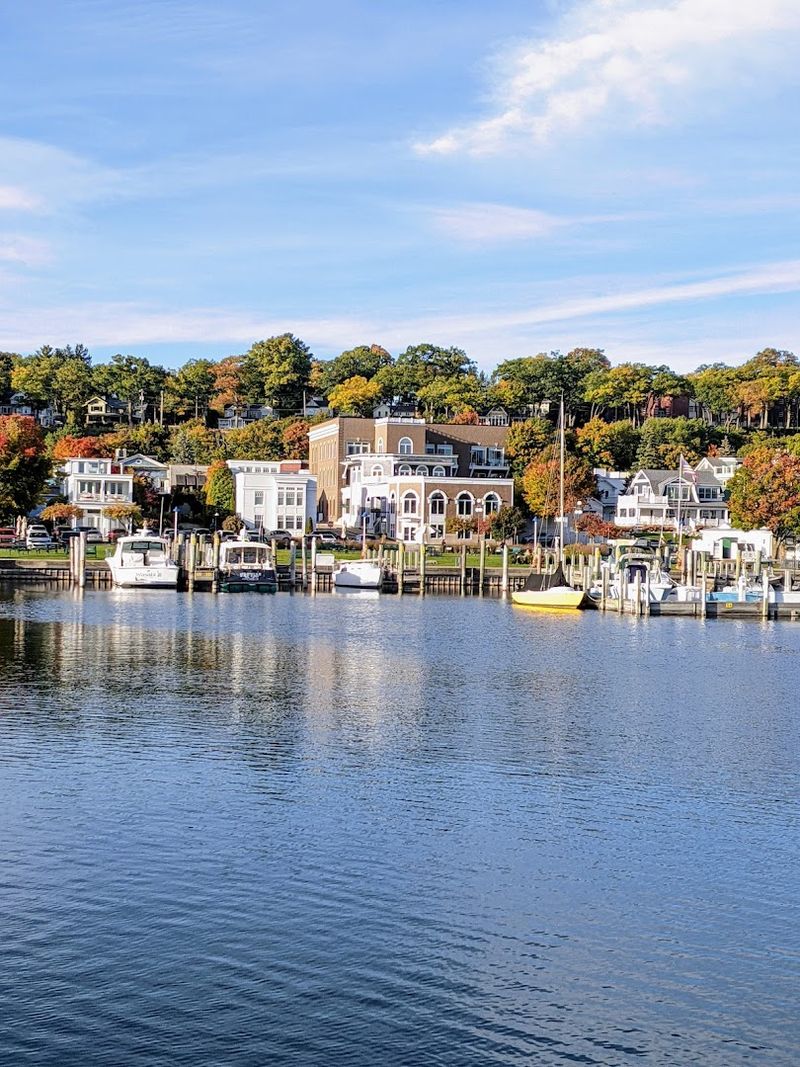
Harbor Springs has a reputation as one of Michigan’s most refined small towns, and one afternoon walking its streets confirms that reputation is well-earned. Sitting on the north shore of Little Traverse Bay just across the water from Petoskey, Harbor Springs combines natural beauty with a sophisticated, arts-forward community culture that feels effortlessly put together.
The kind of town where the coffee is excellent and the conversation is even better.
The marina is the visual heart of Harbor Springs. Sailboats and yachts line the docks in summer, and the surrounding bluffs — covered in dense hardwood forest — create a natural amphitheater effect that makes the harbor look even more dramatic than it already is.
At sunset, the whole scene turns amber and rose in a way that makes even amateur photographers look talented.
Main Street is short but remarkably well-curated. High-quality galleries, clothing boutiques, and specialty food shops occupy beautifully maintained historic buildings.
The Handicraft Shop, one of Michigan’s oldest continuously operating retail stores, sells traditional Native American art and crafts and has been a Harbor Springs institution since 1906. That kind of history adds real texture to a town that could easily coast on looks alone.
Harbor Springs also has a strong connection to the Odawa people, whose presence in this region predates European settlement by centuries. That cultural layer gives the town a richness that goes well beyond its surface appeal.
The annual Blissfest Music Festival, held nearby each summer, draws folk, roots, and world music fans from across the country.
Hallmark typically gravitates toward towns with a strong sense of community identity, and Harbor Springs has that in abundance. The combination of natural grandeur, cultural depth, and refined small-town living makes it one of Michigan’s most compelling stories waiting to be told on screen.
15. Saugatuck
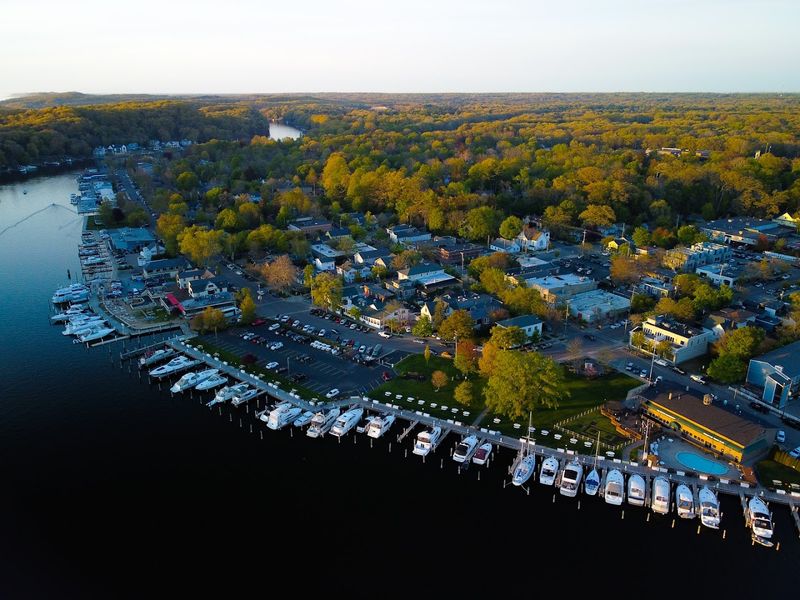
Saugatuck has been called the “Art Coast of Michigan” for decades, and the title fits like a perfectly tailored coat. This small village on the Kalamazoo River near Lake Michigan has attracted artists, writers, and creative types since the early 20th century, and that creative DNA is visible in every gallery window, every mural, and every thoughtfully designed storefront along Butler Street.
The whole town feels like a living, breathing art installation.
The gallery scene here is genuinely impressive for a town of around 900 people. Dozens of galleries showcase everything from fine art paintings to ceramics, sculpture, and photography.
The Ox-Bow School of Art, affiliated with the School of the Art Institute of Chicago, has been operating on the edge of town since 1910 and continues to draw serious artists from across the country for summer residencies and workshops.
Saugatuck’s physical setting is equally compelling. The Kalamazoo River winds through town before emptying into Lake Michigan, and the surrounding dunes — including the beloved Mount Baldhead — offer panoramic views that stretch for miles.
The chain ferry that crosses the river to Oval Beach is one of the last hand-cranked chain ferries in the country, and the beach on the other side is consistently ranked among the best freshwater beaches in the world.
The restaurant scene punches well above its weight class. Farm-to-table menus, waterfront dining, and creative cocktail bars draw foodies from Chicago and Detroit alike.
The town also has a famously welcoming and inclusive community culture that makes everyone feel at home regardless of background.
For a Hallmark film, Saugatuck offers a rare combination of visual artistry, romantic setting, and genuine community warmth. It is the kind of town where a love story does not just feel possible — it feels inevitable.
16. South Haven
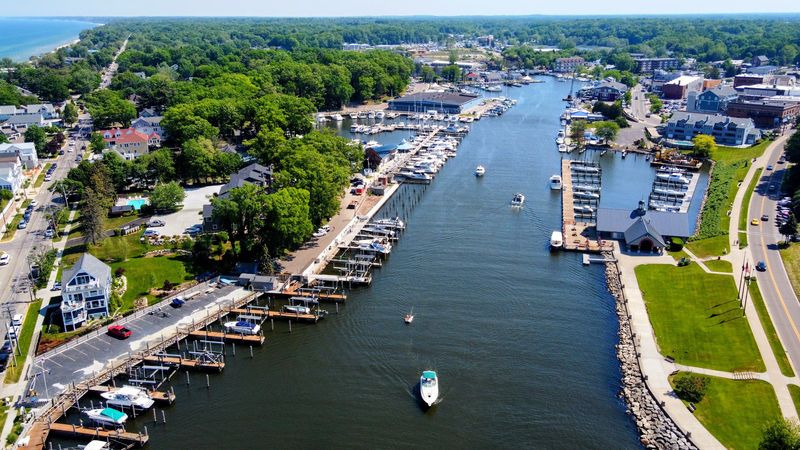
South Haven’s lighthouse is red. Brilliantly, boldly, unmistakably red — standing at the end of a long pier that stretches into Lake Michigan like a runway pointing toward the horizon.
That lighthouse has been photographed millions of times, and it somehow manages to look fresh and stunning in every single one of them. It is South Haven’s most recognizable symbol, and it captures the town’s personality perfectly: bold, warm, and impossible to ignore.
The town sits at the mouth of the Black River where it meets Lake Michigan, and the combination of river, harbor, and open lake gives South Haven a waterfront energy that feels layered and alive. The harbor is busy with charter fishing boats, kayakers, and pleasure crafts throughout the summer season.
Watching the fishing boats come in with their catch in the early morning is a ritual that connects the town to its working roots in a meaningful way.
Downtown South Haven is compact but full of personality. Phoenix Street and the surrounding blocks are lined with independent shops, bakeries, fudge shops, and restaurants that cater to summer visitors without losing their local character.
The blueberry farms surrounding the town — South Haven sits in Michigan’s premier blueberry-growing region — supply local restaurants and farmstands with fresh fruit all summer long, and the National Blueberry Festival each August is a genuinely fun community celebration.
The beaches on either side of the pier are wide, sandy, and beautiful in a way that makes you understand why Chicago families have been making the drive across Lake Michigan for generations. South Haven has a loyal, multigenerational fan base that returns every summer like clockwork.
Put a Hallmark film here in late August, when the light is golden and the blueberries are ripe, and you have got yourself a ready-made summer romance that audiences would watch on repeat.
Share this story