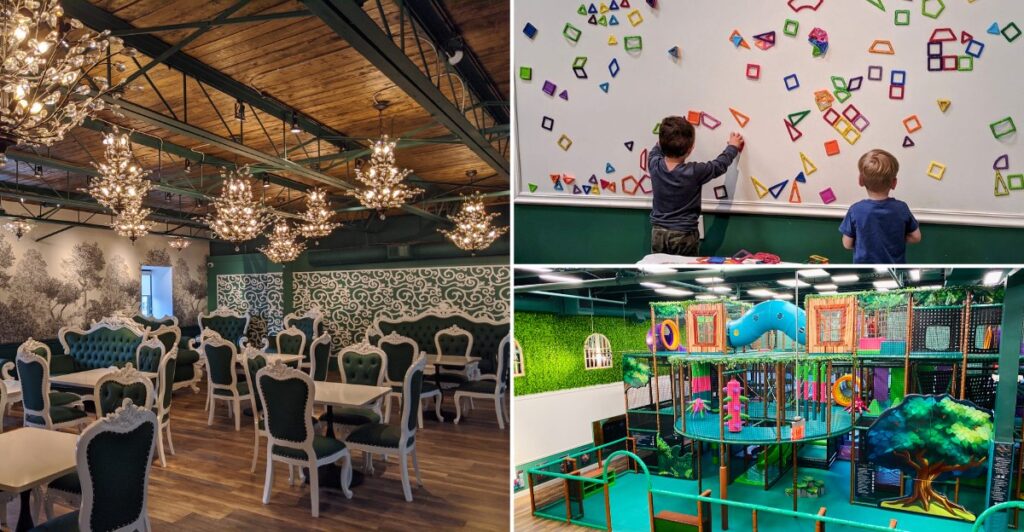
A rainy day does not have to mean a restless day at home. Kidcadia Play Café in Dearborn gives kids room to climb, slide, draw, and explore indoors.
Its large play structure and separate spaces for younger children make it easier to plan an outing for a family with different ages. Add a café and places to sit, and a short play stop can turn into a long afternoon.
A Forest of Play Along Michigan Avenue
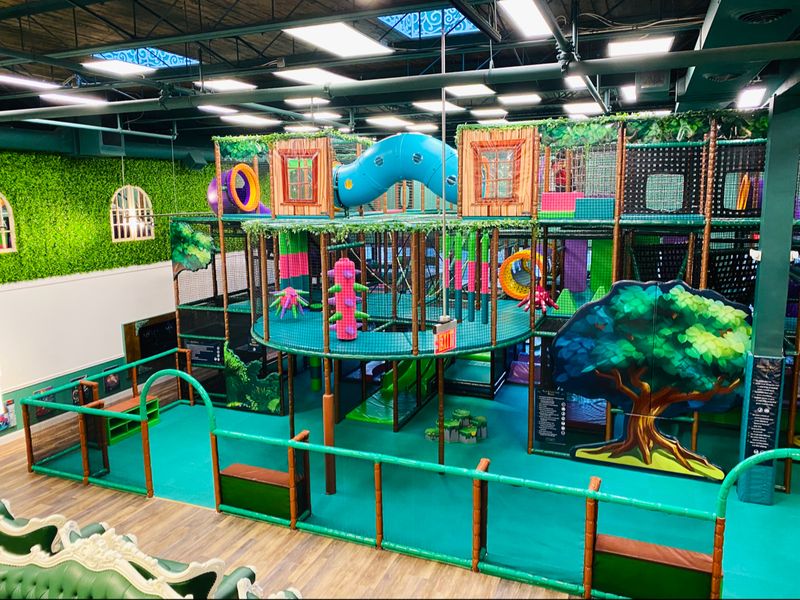
A forest indoors? That is the first fun surprise at Kidcadia Play Café.
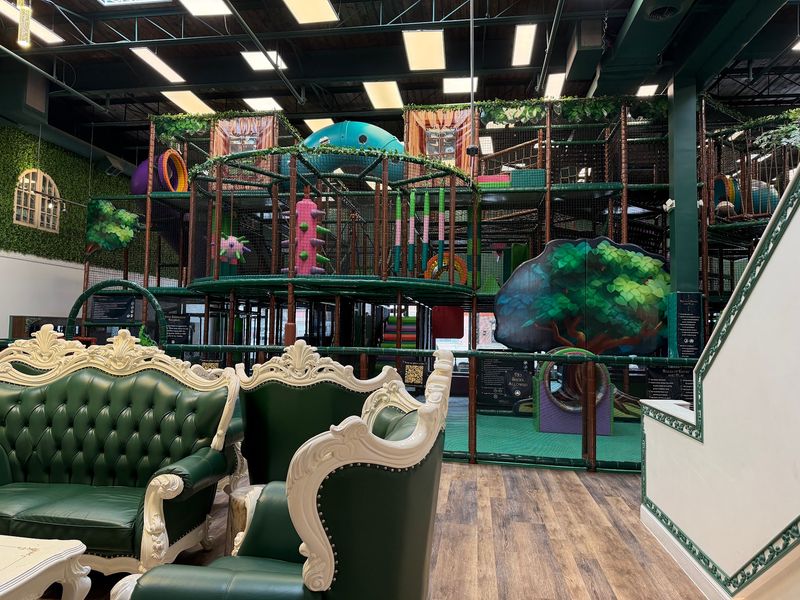
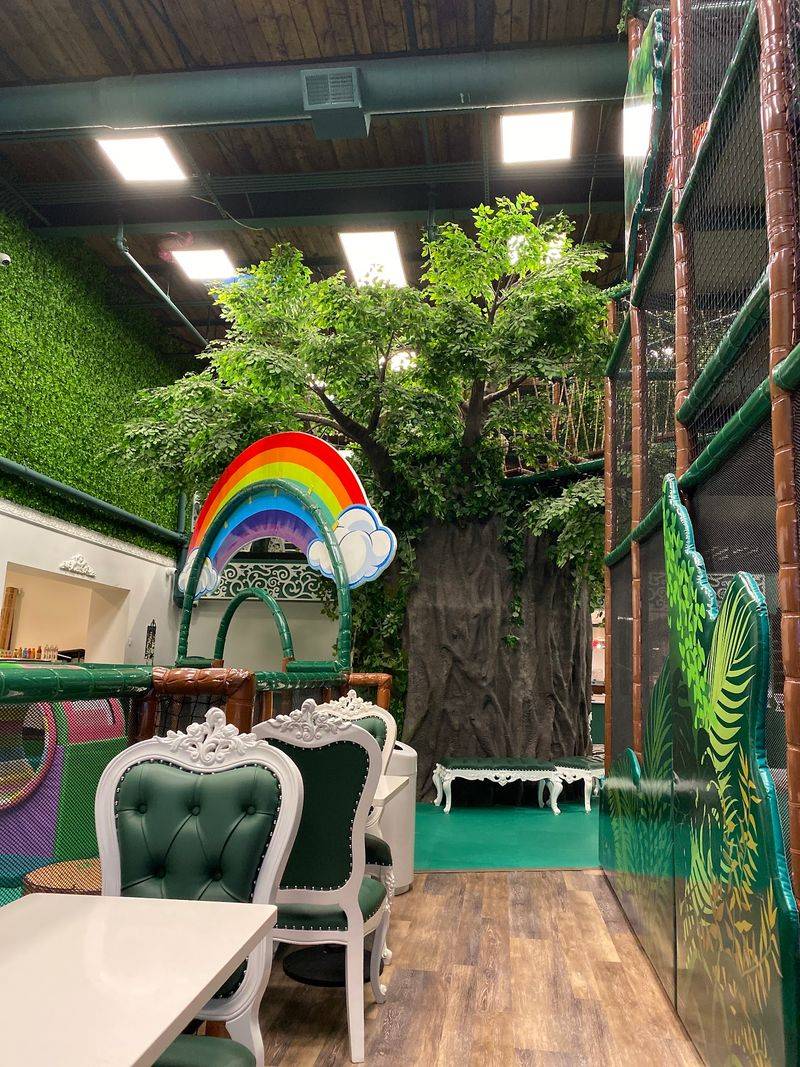
The Dearborn playground uses a woodland theme around its large play structure, with canopies and tunnels that give kids more to look at than a plain row of slides. You can stand back for a moment and help your child spot a route before the climbing begins.
Its size is useful, not just impressive. A child who wants to move can head toward the main structure, while a younger sibling may be happier starting in a smaller play space.
Finding those areas early helps everyone settle in without a rush. It also gives your family an easy meeting point when someone needs a drink or a break.
The entrance deserves attention before play starts. Take a minute to see where the gates, seating, café, and restrooms are.
Explain to older kids where they should come if they need you. Even in an indoor playground, a simple plan saves time when a child disappears around a tunnel and pops out somewhere else.
Kidcadia sits on Michigan Avenue in Dearborn, a convenient street to recognize when you are planning the drive. Parking and the entrance are behind the building, so do not be surprised if the front does not look like the place to stop.
Give yourself a little extra time on a first visit to find the correct way in.
Once inside, let the playground unfold at your child’s pace. Some kids will race toward the tallest part they can reach.
Others may study the routes or watch another child go first. Neither approach needs fixing.
The layout gives them choices, and those choices are a big part of why a visit can fill more than a quick hour.
Three Levels for the Big Climbers
Up one level, through a tunnel, then down a slide: the main playscape gives active kids a route they can change each time. The structure has three levels, so climbing is part of the fun rather than a short step before one big ride down.
A child might spend one round looking for a slide and the next finding a new way across.
Start by walking around the outside together. Point out where the structure begins, where slides end, and which areas seem comfortable for your child’s age and ability.
If your child is unsure, one familiar loop is plenty for a first try. Confidence can grow after they learn where a tunnel leads.
For energetic kids, the many routes offer a useful kind of challenge. They have to pause, pick a direction, and make room for others.
Those small decisions turn a climbing session into more than exercise. Encourage your child to let someone pass in a tight spot and to check that a slide is clear before going down.
The structure also rewards a sensible pace. Children may be excited enough to sprint straight back upstairs after every slide, but a water break can keep the outing comfortable.
Choose a place to reconnect before they head in again. If you are watching more than one child, agree on where each one is allowed to play.
No parent needs to map every passage before the first climb. The joy here is seeing a child work out a path, emerge with a grin, and immediately try another.
Stay close enough to supervise, especially when the playground is busy. Then leave room for the little discoveries that make the main playscape the center of the visit.
Small Explorers Have Their Own Starting Point
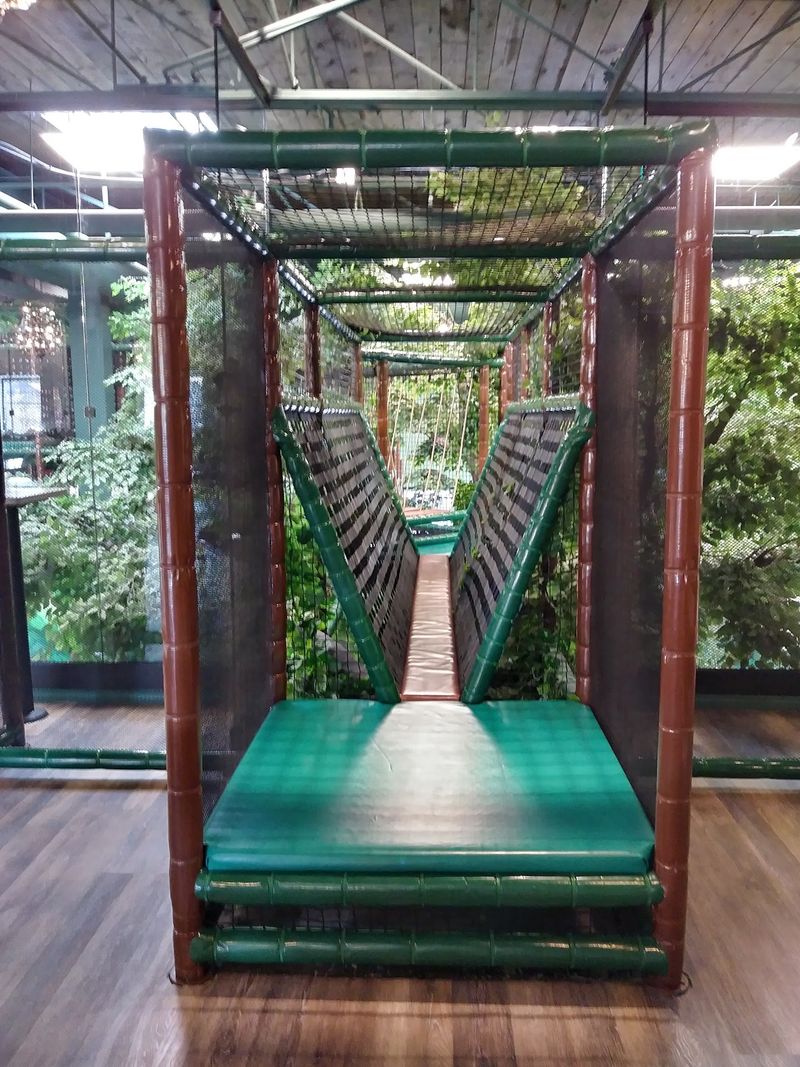
Little legs do not need a three-level climb to have a good day. Kidcadia has a designated toddler area, giving younger children a place to begin while bigger kids use the main playscape.
Small slides and nearby activities make it possible to explore without being swept into the pace of an older child’s game.
If your toddler is new to indoor playgrounds, spend the first few minutes together in this area. Let them look, touch, and choose where to go.
A small slide may be the main event for one child, while another is more interested in walking between activities. Following that curiosity can make the visit smoother than urging them toward the largest equipment.
Families with children of different ages will want a supervision plan. The toddler space and big structure serve different needs, but an adult still needs to know where each child is.
If you have another grown-up with you, dividing watching duties can help. When you are alone, set clear boundaries with the older child before play begins.
Take a look at the room before putting down a bag or settling into a seat. Choose a spot that supports the kind of supervision your children need, rather than assuming every chair has a view of every corner.
Busy periods can change how easy it is to keep track of a quick-moving child.
The separate area gives younger kids an important choice: they can take part in the outing without having to keep up with a school-age sibling. Leave time for repeat trips down a little slide.
To a toddler, doing the same thing five times may be the most exciting part of the whole day.
The Coloring Table Changes the Tempo
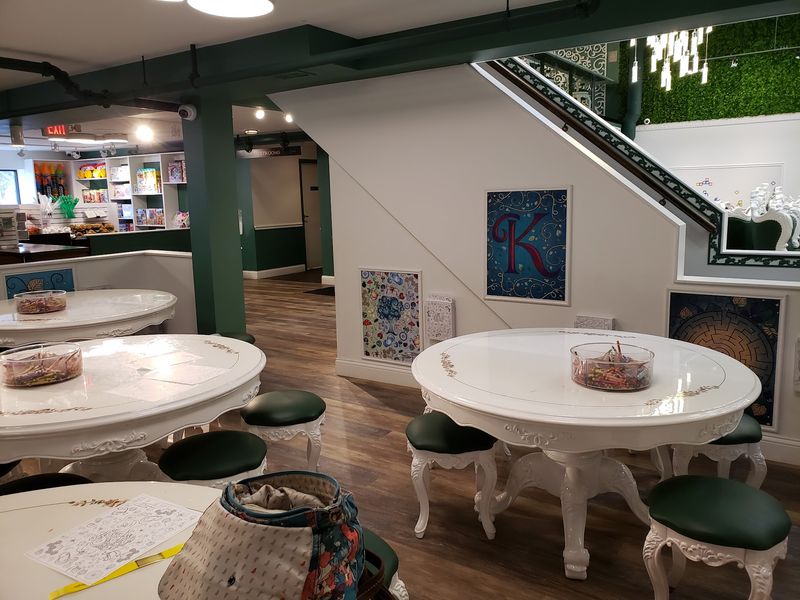
Not every good playground minute has to be loud. Kidcadia’s coloring area offers a change of pace when climbing starts to lose its shine.
With crayons and picture sheets, a child can trade tunnels for a table without ending the outing. That is handy when you can see their energy dipping, but they are not ready to leave.
Try treating the coloring space as a pause, not a final stop. A few quiet minutes can help a child decide whether they want another turn on the slides or a snack.
For younger kids, it also gives busy hands a simple task while a sibling finishes a longer round in the main structure.
Activities around the outside of the play area add more ways to explore. Wall-mounted boards let children stop and investigate without joining a climbing route.
Point one out if your child wants to play but feels unsure about heading into the taller structure. They can take part in the room’s activity at their own speed.
Keep the transition easy. Before leaving a drawing behind, ask your child if they want to finish it or come back later.
If several children are sharing supplies, help them make space for the next artist. Small moments like that can prevent a simple break from becoming a hurried scramble.
For a long visit, varied activities are more useful than a nonstop climb. A child can move from a slide to a wall activity, spend time coloring, then decide what comes next.
You do not have to plan each switch. Just notice when the pace needs to change.
Sometimes the best way to enjoy a large playground is to sit down and color a little tree.
A Café Break Without Leaving the Fun
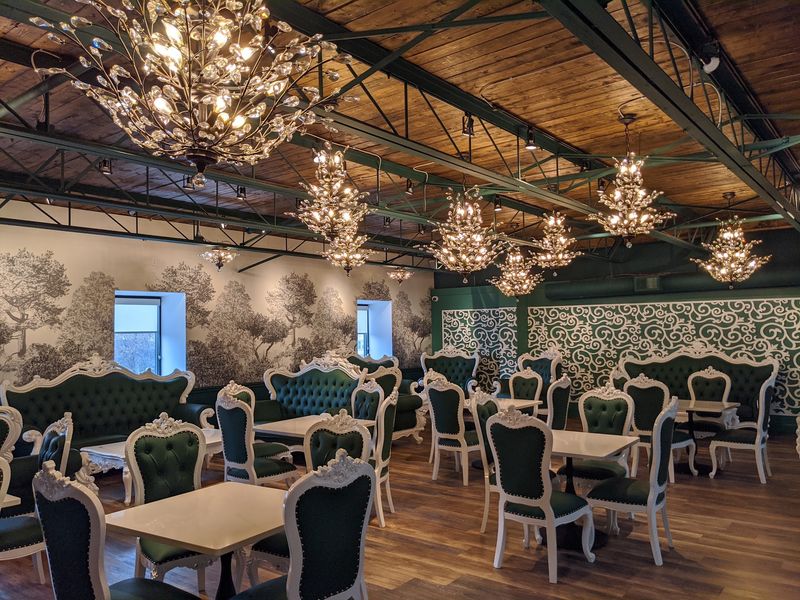
Play can work up an appetite faster than a car ride home can solve it. Kidcadia has a café serving food and drinks, so families can pause for a meal without turning their outing into two separate trips.
Coffee and other drinks give adults an option of their own while children take a break from the structure.
Plan food around your child’s usual rhythm. If lunch tends to arrive suddenly, order before everyone is too hungry to wait comfortably.
A snack or drink break between play sessions can be easier than asking an exhausted child to sit through a full meal at the very end. Give little ones time to cool down before they eat.
Seating is part of the appeal, with chairs and couches downstairs and a dining area upstairs. The upstairs space is useful when your group wants to sit together, but it may not be your first choice if you need a close view of a young child at play.
Pick your seat based on supervision needs, not just comfort.
Keep meals in the eating areas and check the current rules on outside food when you arrive. If your child has an allergy, speak with staff about food policies and take a careful look at the play area yourself.
Rules and day-to-day conditions can differ, so a quick conversation is more useful than making assumptions.
The café does not have to become the whole plan. It simply makes a longer visit easier to manage: kids can stop, eat, and choose whether they have another round of play left in them.
If you are arranging a meetup with another family, a shared table also gives everyone a clear place to find one another between trips through the playground.
The Dearborn Details That Save Time
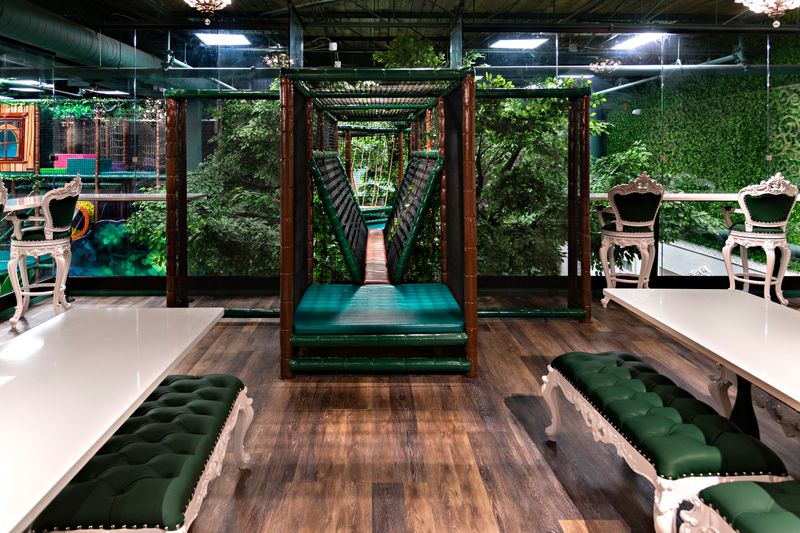
The one detail most likely to slow down a first visit is outside the playground: finding the entrance. Kidcadia is on Michigan Avenue, but its main entrance and parking are behind the building.
Watch for a way around to the rear rather than expecting to walk straight in from the roadside. A few extra minutes in your plan can spare a confusing first lap.
Once you arrive, make socks part of the check-in routine. Pack a spare pair for a child who forgets or spills something on theirs.
It is also smart to confirm the current admission price, play-session rules, and any required waiver before you set out. Details can change, and knowing them ahead of time makes arrival easier.
Posted hours are 9 a.m. to 9 p.m. every day, though checking hours for the day of your visit is wise. An early start may suit a younger child who does best before lunch.
A later visit could work better after school, but the room’s pace may be different. Choose the time your child has the energy to enjoy.
Inside, note where the bathrooms and diaper-changing space are before someone needs them in a hurry. Families with babies can also ask staff about a lactation room.
Those details are less exciting than a slide, yet they can make a long outing far more comfortable.
Do not build your schedule around an assumed all-day admission. Reports about play limits differ, so ask about the policy that applies when you go.
The playground may have enough activities to occupy a child for hours, but your ticket and your child’s stamina set the real timetable. Start with a flexible plan and let the visit find its own length.
How to Make One Visit Last
A long Kidcadia visit works best when it has a few chapters. Start with a look around, let your child choose a play area, and save a food or coloring break for later.
That simple order gives the day room to grow without asking a child to stay excited about the same activity for hours.
Watch how your child plays, not just how long they have been there. A kid who is making up new routes through the structure may be ready for another round.
A kid who is standing at the bottom of a slide looking tired might need water and a seat. Leaving time for a calm pause can make the next stretch more enjoyable.
If you are meeting family or friends, agree on a spot to regroup. The upstairs dining area can work for eating together, while seating closer to the play area may be better when adults need to keep watch.
Choose one adult to stay focused on a younger child if the rest of the group moves between spaces.
Birthday celebrations are another way families use Kidcadia, and the venue has a party room. If that is your plan, ask about the current package and timing rather than assuming an ordinary play visit works the same way.
For a casual outing, you can keep things simpler: socks, a clear supervision plan, and a break before anyone gets worn out.
The strongest reason to come is the range of play in one building. A tall climbing structure suits kids who want movement, while little slides, wall activities, and coloring give others a different way to join in.
Add a meal, and the trip can stretch well beyond a quick slide session. When it is time to go, you may still need to promise one last trip through the tunnel.
Share this story