A bicycle leans outside a corner café, two neighbors finish a conversation in the middle of the sidewalk, and the loudest sound for several blocks is water slipping over an old mill dam. That version of New Jersey exists—and you do not have to drive far to find it.
Beyond the traffic circles, crowded boardwalks, and packed commuter corridors are small towns where historic houses still frame Main Street, shopkeepers have time to chat, and an afternoon can unfold without an itinerary. Some sit beside the Delaware River or Barnegat Bay.
Others are surrounded by horse farms, orchards, forests, or salt marshes. A few have polished shopping districts, while others offer little more than a beautiful road and a compelling reason to keep walking.
What connects them is an easy rhythm that encourages lingering. Grab a coffee, follow the quietest street, and see where the day takes you in these 17 charming New Jersey towns.
1. Frenchtown
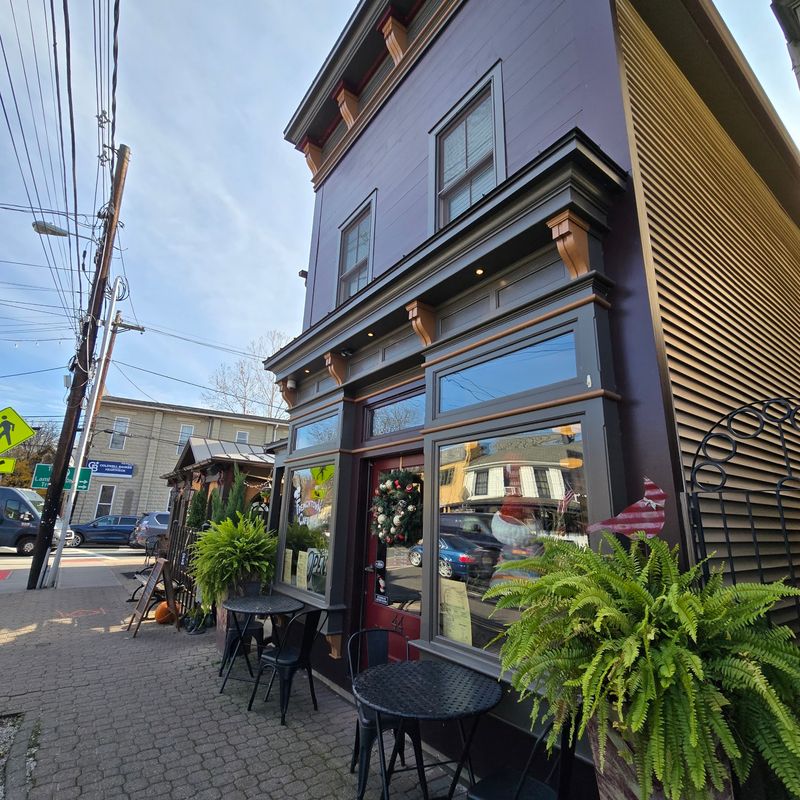
The Delaware River sets the pace here, rolling past town with no apparent interest in anyone’s schedule. Bridge Street runs straight toward the water, lined with colorful storefronts, galleries, cafés, and independent shops that reward people who browse without a plan.
You can start with an espresso and pastry at Early Bird Espresso & Mercantile, hunt for art and unusual home goods, then wander across the bridge for a wide-open river view. ArtYard gives this tiny Hunterdon County town an unexpectedly ambitious cultural side, presenting exhibitions, performances, films, and community programs in a striking contemporary building.
When fresh air sounds better than another shop, follow the Delaware and Raritan Canal towpath or ride the quiet roads beyond downtown, where old farmhouses and wooded hills replace storefronts. Lunch can be casual at Frenchtown Café or waterside at The Bridge Café, while FiNNBAR offers a more polished meal in a historic setting.
Parking is generally easier a block or two away from Bridge Street, especially on sunny weekends. The town is popular enough to feel cheerful but small enough that familiar faces keep reappearing.
By late afternoon, you may recognize the same dog, the same cyclist, and the same couple debating which bakery treat to split. That is Frenchtown in miniature: creative, neighborly, and entirely comfortable with taking its time.
2. Califon
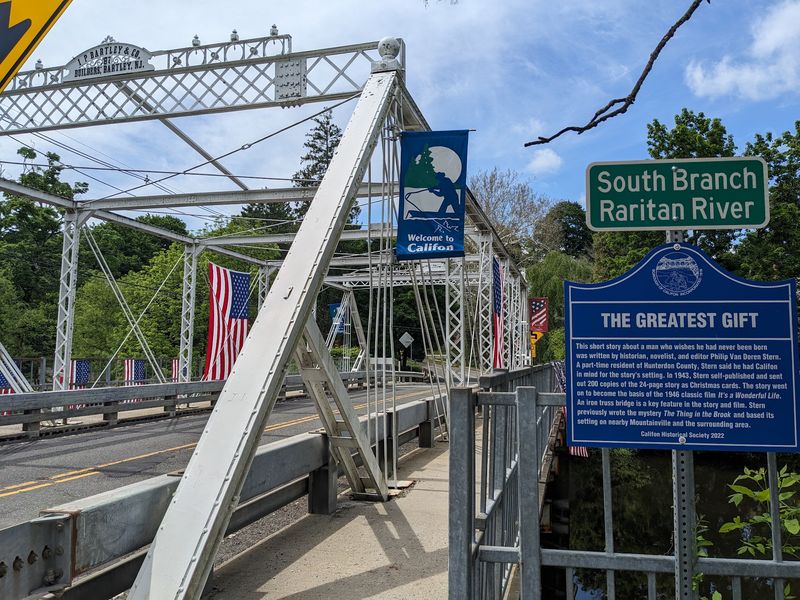
A candy-striped Victorian footbridge crossing the South Branch of the Raritan River tells you almost everything you need to know about this little Hunterdon County borough. It is practical, historic, slightly whimsical, and photogenic without making a fuss about it.
Califon grew around mills and the railroad, but today its appeal lies in how little separates the village center from the surrounding countryside. Old homes gather along quiet streets, the river slips through town, and wooded hills rise just beyond the last storefront.
The Columbia Trail provides the easiest way to settle into the local rhythm. This flat, crushed-stone path follows a former railroad corridor through forests, fields, and farmland, making it ideal for an easy walk or bike ride rather than an ambitious expedition.
Pick up coffee or something portable in town before heading out, then give yourself permission to turn around whenever you feel like it. Nearby Ken Lockwood Gorge adds tumbling water, rocky banks, and one of the prettiest stretches of river scenery in the area, though its rough access road rewards cautious driving.
Califon does not offer a packed schedule or a long restaurant row, and that is precisely the charm. This is a place for bridge photos, riverside pauses, and aimless country drives.
Come in autumn for brilliant foliage, or visit on a cool spring morning when the trail is quiet and the river seems to have the whole town to itself.
3. Hopewell
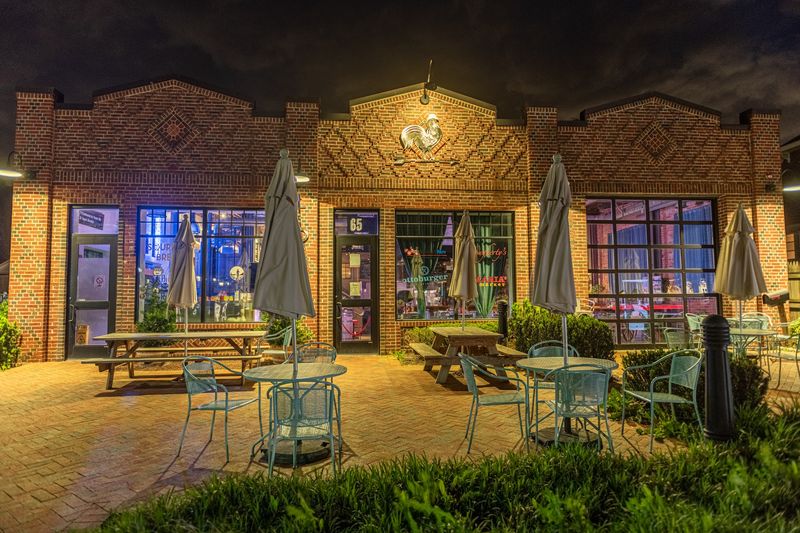
Breakfast has a way of becoming an all-morning event in this Mercer County borough. The tables fill, coffee cups are refreshed, and nobody appears especially eager to surrender a sunny window seat.
Hopewell’s walkable center stretches along Broad Street, where independent businesses occupy old storefronts and Victorian houses begin just beyond the commercial blocks. The result feels like an actual hometown rather than a downtown assembled for visitors.
The Bear and the Books is a delightful stop for children’s and young-adult titles, while Hopewell Antiques and the Tomato Factory offer enough furniture, pottery, collectibles, and odd little discoveries to derail the rest of your schedule.
Gallery 14 brings rotating photography exhibitions into the mix, and several boutiques carry handmade gifts, clothing, and work by independent makers.
For lunch, The Blue Bottle Café remains a favorite for thoughtfully prepared seasonal dishes, while Nomad Pizza turns out blistered pies from its wood-fired oven in a converted red barn. Reservations are smart for dinner, particularly on weekends.
Beyond downtown, the surrounding Sourland landscape offers preserves, winding roads, and wooded trails without requiring a long drive. Hopewell feels polished, but never precious.
Children still stop at the library, locals run into one another at the pharmacy, and shop owners are likely to explain exactly who made the item you are holding. It is small-town life with very good food and a surprisingly deep talent for browsing.
4. Cranbury
The bench beside Brainerd Lake may be the best seat in town. From there, the water reflects mature trees and historic homes while ducks conduct their business with more urgency than anyone else nearby.
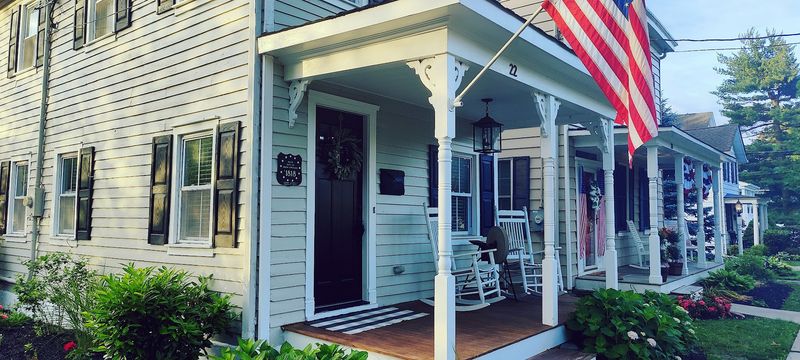
Cranbury’s Main Street belongs to one of New Jersey’s best-preserved historic districts, with architecture spanning several centuries and sidewalks made for unhurried wandering. The Cranbury Museum and nearby History Center help put those buildings into context, though their limited schedules make it wise to check hours before visiting.
Even without a formal tour, the village offers plenty to notice: tidy gardens, old churches, carefully maintained façades, and houses that seem to carry an entire family history behind each front door. Teddy’s Restaurant is a comfortable choice for breakfast or lunch, the sort of local place where pancakes and omelets make more sense than culinary theatrics.
For a longer meal, the Cranbury Inn connects multiple historic structures and has welcomed travelers in one form or another for generations. The town’s position near major highways makes its quiet especially surprising.
A few minutes away, trucks and commuters hurry along Route 130; in the village, people walk around a lake and discuss where to buy pie. Street parking can be limited during events, but the center is compact once you find a spot.
Cranbury works best when treated not as a list of attractions, but as an invitation to walk slowly and pay attention.
5. Allentown
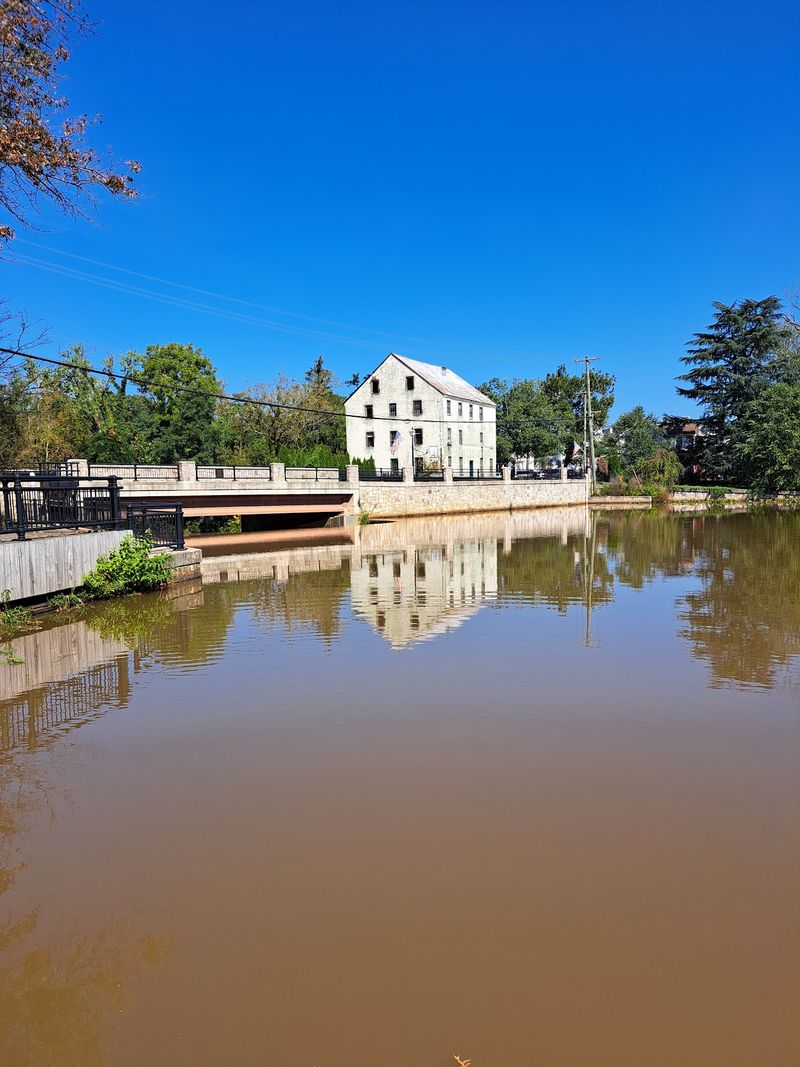
Cherry blossoms arch over Main Street each spring, but the old mill beside the pond remains the town’s signature view in every season.
Allentown is surrounded by Monmouth County farmland, giving its historic center a distinct sense of arrival: fields and country roads suddenly give way to centuries-old houses, small shops, and a downtown that can be explored on foot.
More than 200 homes in the historic district appear on state and national registers, and many predate the Civil War. Still, this is no frozen museum village.
Locals pick up lunch, children head toward the park, and merchants arrange seasonal displays outside their doors. Woody’s Towne Café handles the breakfast-and-burger side of the day, while La Piazza offers Italian comfort food when a quick stop turns into dinner.
Save time for shopping, particularly if antiques, handmade gifts, or vintage pieces are your weakness. Heritage Park provides room to stretch out afterward, with walking paths, open lawns, and access to Doctors Creek.
The millpond itself is a natural place to pause, especially when autumn colors gather in the water. Main Street parking fills during festivals and pleasant weekends, so use a municipal lot or take the first reasonable space you see.
Allentown does not require a complicated plan. Walk the historic blocks, buy something you did not know you needed, and let the old mill persuade you to stay for one more photograph.
6. Blairstown
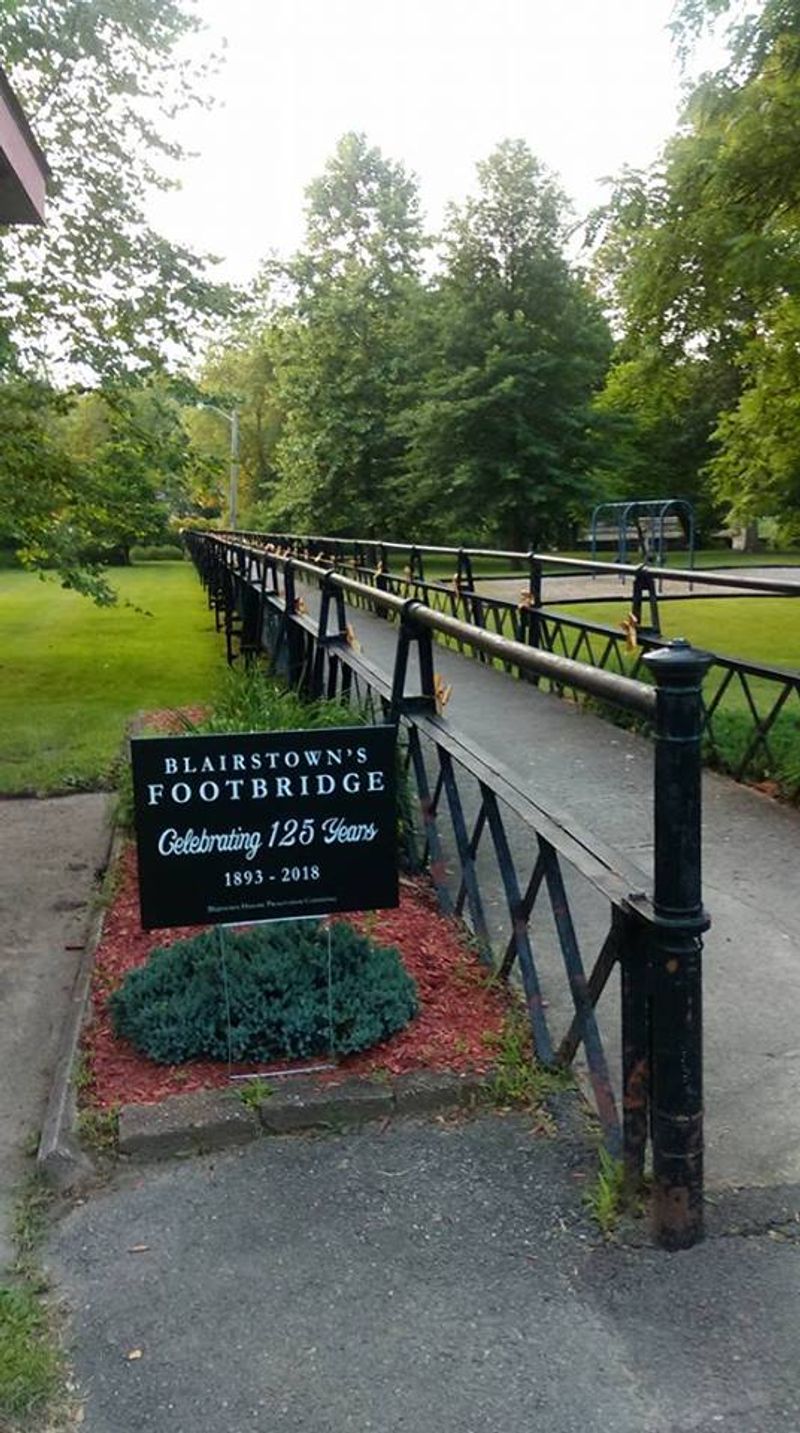
Movie fans may recognize the stone building and metal footbridge near the center of town, but Blairstown has far more staying power than its brief appearance in a famous horror film. The Paulins Kill winds through this Warren County community, slipping beneath the historic footbridge and adding a gentle soundtrack to a downtown framed by hills.
Blair Academy’s handsome campus rises above the village, lending the area impressive stone architecture without overwhelming its rural character. Start near Main Street and walk toward the bridge, then browse the local shops before stopping at Gourmet Gallery for coffee, sandwiches, baked goods, or whatever looks best in the case.
Blairstown Diner is the nostalgic choice, particularly for anyone making a playful pilgrimage connected to the town’s cinematic history. For a quieter detour, the nearby Paulinskill Valley Trail follows an abandoned railroad line through woods and farmland, welcoming walkers, cyclists, and horseback riders.
Footwear matters after rain, when sections can become muddy. The town grows busier during fall foliage season and the annual Friday the 13th festivities, but ordinary weekdays reveal its most appealing personality.
You will see students crossing between buildings, anglers searching for a promising spot, and locals greeting one another outside businesses that have anchored the community for years. Blairstown feels sturdy and lived-in, with enough history to explore and enough surrounding wilderness to make the rest of New Jersey seem much farther away.
7. Belvidere
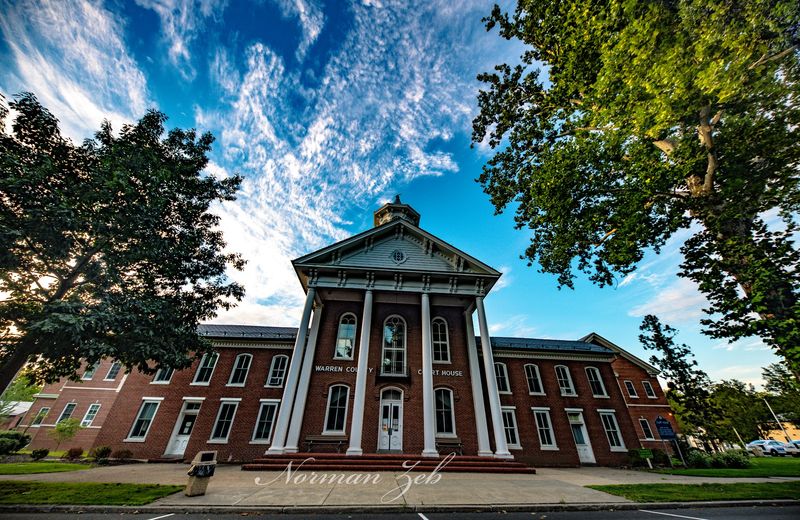
Four porches, a courthouse cupola, and a canopy of old trees can turn a simple walk around Garret D. Wall Park into an hour-long architectural tour.
Belvidere sits where the Pequest River meets the Delaware, and its position as the Warren County seat gave this small town an unusually dignified collection of civic buildings, churches, and grand nineteenth-century homes. The historic district is wonderfully walkable, especially along Market Street and the blocks surrounding the courthouse square.
Rather than rushing from one designated attraction to another, look for gingerbread trim, iron fences, broad verandas, and small details that reveal how much pride residents take in their houses.
King’s Gambit Coffee Co. roasts its own beans and provides a comfortable starting point, while Uncle Buck’s Diner covers the classic eggs, sandwiches, and daily-special territory.
Nearby orchards add another reason to linger. Mackey’s Orchard is known for fruit, baked goods, and homemade ice cream, with seasonal picking available at select times.
Belvidere Heritage Day transforms the town with history demonstrations and community events, but quieter weekends have their own reward: ample space, easier parking, and the sense that the park belongs mostly to you. This is not a polished resort town, and it does not need to be.
Belvidere’s charm comes from functioning much as it always has—a courthouse town, a river town, and a place where front porches remain part of everyday life.
8. Chester
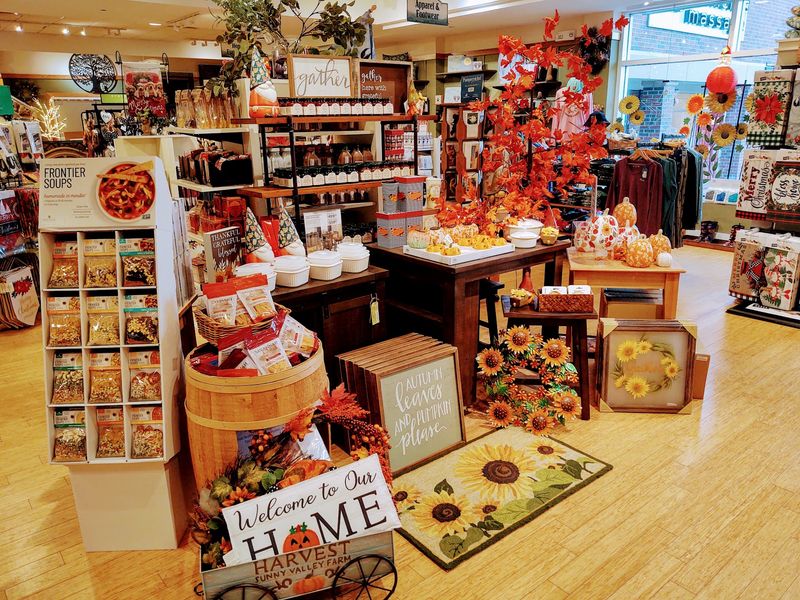
The smell of warm cider doughnuts has ruined many sensible lunch plans in Chester, and nobody seems particularly sorry about it. This Morris County borough combines an early American streetscape with a serious appetite for shopping.
Main Street and the surrounding lanes hold dozens of boutiques, antique dealers, craft shops, galleries, confectioners, and restaurants inside buildings that rarely resemble one another. That visual variety keeps a short walk interesting: a clapboard storefront gives way to an old brick building, which leads to a garden path or a shop filled with handmade candles.
The town can be busy during fall weekends and major craft fairs, but arrive early and the morning still feels pleasantly unhurried. Fresco Mexican serves tacos, burritos, and generously flavored plates, while Benito’s Trattoria is a dependable choice for a longer Italian meal.
No visit is complete without exploring the surrounding farm country. Alstede Farms brings produce, animals, seasonal picking, and those dangerous cider doughnuts; Hacklebarney Farm Cider Mill is another autumn favorite.
When you need a break from shopping bags and baked goods, nearby Hacklebarney State Park offers shaded trails beside the Black River. Chester’s secret is balance.
It can fill an afternoon with things to buy and eat, yet the old buildings, farm roads, and wooded parks prevent it from feeling like a conventional shopping destination. Just do yourself a favor and bring a tote bag—and perhaps a doughnut strategy.
9. Mendham
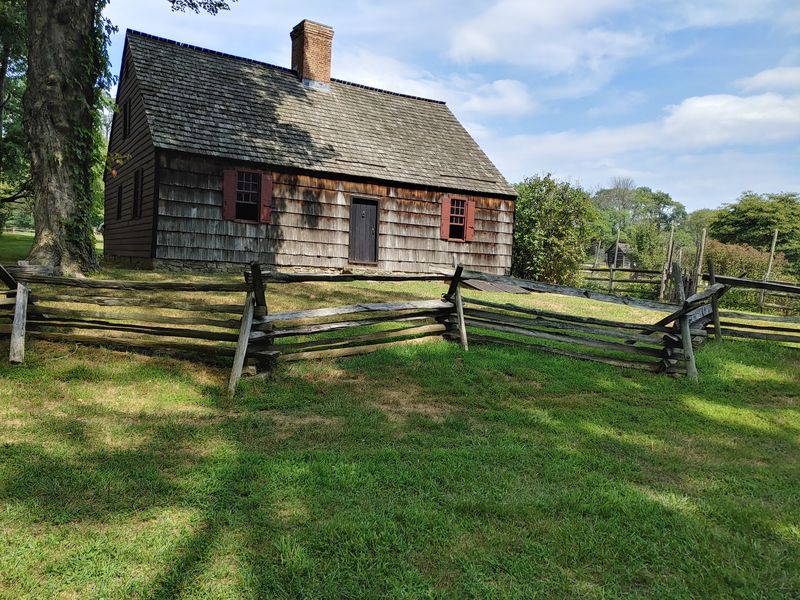
A tavern has stood near the main crossroads since the eighteenth century, back when travelers needed food, shelter, and a place to rest their horses along the Washington Turnpike.
The Black Horse Tavern remains Mendham’s most recognizable gathering place, and its long history fits a borough that has preserved more than 100 contributing buildings within its historic district.
White churches, Federal-style homes, stone walls, and the brick Phoenix House give the center a quietly distinguished look. This is not a town with endless storefronts or a tourist checklist.
Its appeal emerges on a slow drive, a walk along the village streets, or a meal that stretches comfortably into the evening. The Black Horse Tavern is the natural choice for American classics in a setting tied closely to local history; check current hours and reserve ahead for dinner.
Mendham also provides easy access to some beautiful countryside. India Brook Park has playing fields and walking areas, while the nearby Schiff Nature Preserve offers miles of forest trails across hundreds of protected acres.
The borough is especially attractive in autumn, when old trees frame the historic buildings in red and gold, though winter gives the village an equally handsome, almost austere character. Mendham feels established rather than staged.
Its landmarks still serve the community, its residential streets remain genuinely residential, and the surrounding horse country keeps development at arm’s length. Come expecting subtle pleasures, not spectacle, and the town makes perfect sense.
10. Spring Lake
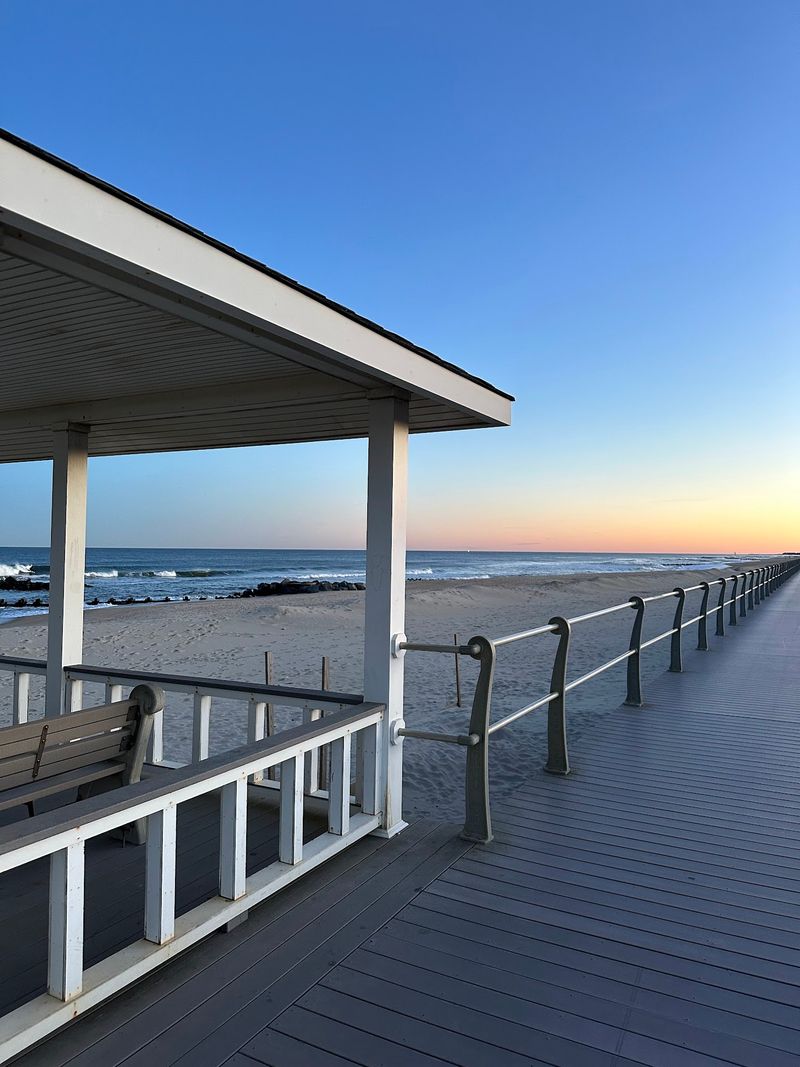
At sunrise, the boardwalk belongs to runners, seabirds, and people carrying coffee with both hands against the ocean breeze. There are no amusement rides competing for attention, no arcades flashing behind the dunes, and no food stands sending the smell of fryer oil down the beach.
Spring Lake prefers its shoreline quiet. The nearly two-mile boardwalk is made for a long walk, with grand homes on one side and an uninterrupted Atlantic horizon on the other.
Several blocks inland, the lake at Divine Park offers a second waterfront, complete with footbridges, leafy paths, and resident swans that know they are being photographed. Third Avenue forms the compact downtown, where boutiques, cafés, and specialty shops make browsing easy.
The Scone Pony is the essential bakery stop; arrive early if you want the widest choice of scones, cookies, and cakes. Driftwood provides coffee, while Whispers handles special-occasion dining in a Victorian setting near the lake.
Summer beach access requires a badge during guarded hours, but the boardwalk remains free, and street parking is generally free as well. Spring Lake’s elegance could feel formal, yet the town softens around the edges in the morning, when bicycles lean against fences and sandy children trail behind their parents.
Visit off-season for the purest version of its calm, when the ocean is dramatic, the sidewalks are open, and nobody is counting how long you spend watching the swans.
11. Ocean Grove
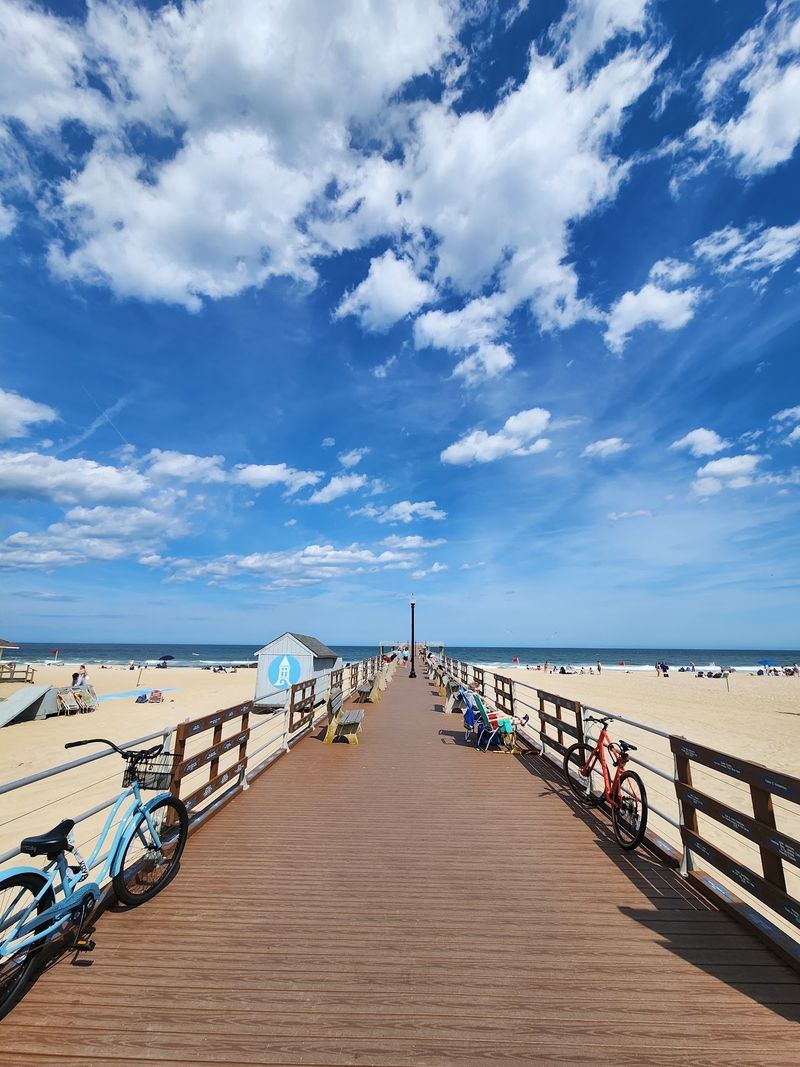
Canvas tents with wooden porches stand shoulder to shoulder around a massive nineteenth-century auditorium, just a few blocks from the Atlantic. It is one of the most wonderfully unexpected scenes on the Jersey Shore.
Ocean Grove began as a Methodist camp meeting community in 1869, and that history continues to shape its architecture and its unusually gentle pace.
The Great Auditorium anchors town with concerts, worship services, and one of the country’s largest pipe organs, while the surrounding Tent City returns each summer with more than 100 seasonal structures.
Main Avenue leads from the auditorium toward the ocean, passing cafés, galleries, boutiques, and Victorian inns crowded with turrets and wraparound porches. The Starving Artist at Day’s is a cheerful breakfast or lunch stop with an old-fashioned ice cream counter next door.
SeaGrass offers seafood and contemporary American dishes for dinner, and Cheese on Main can supply a wedge, crackers, and picnic extras for the beach. Ocean Grove is dry, so restaurants do not serve alcohol, an important detail if you are planning an evening meal.
Parking becomes competitive in summer because there are no municipal meters or dedicated visitor lots; arriving before midmorning saves considerable circling. Once the car is settled, nearly everything is walkable.
The boardwalk is simple, the beach is broad, and evenings tend to end with porch conversations rather than nightclub lines. Asbury Park is right next door, but Ocean Grove happily keeps its own quieter rhythm.
12. Island Heights
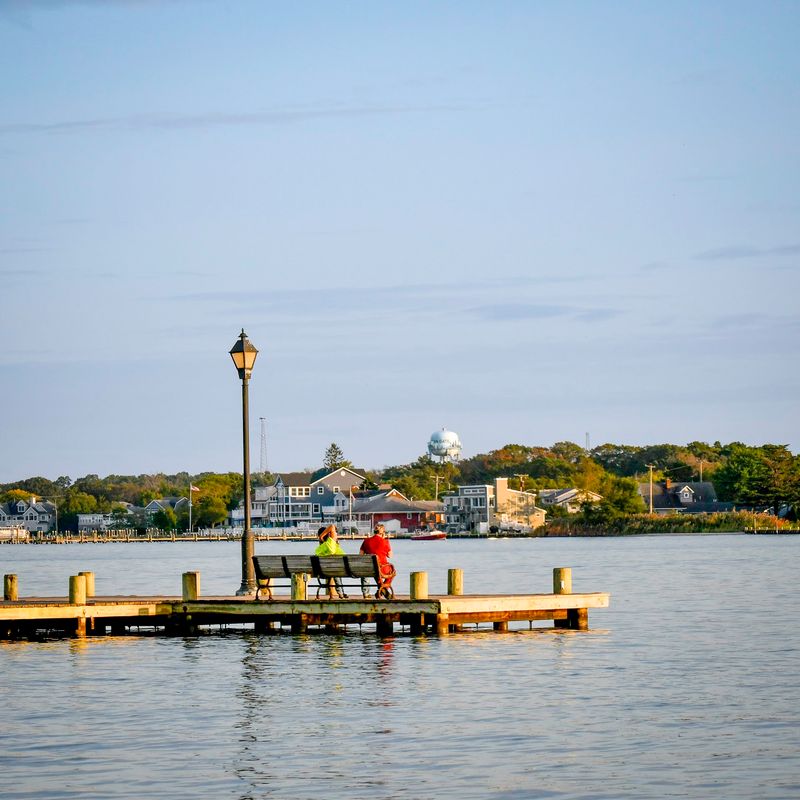
Sailboats tilt in the breeze below a wooden boardwalk that follows the high bank of the Toms River. Benches face the water, modest docks reach into the current, and the opposite shoreline sits far enough away to make the river feel enormous.
Island Heights is one of Ocean County’s smallest boroughs, yet its elevation and river views give it a surprisingly expansive quality. The boardwalk at River Avenue is the main event and asks nothing more strenuous than a stroll.
Continue onto the residential streets to find Victorian cottages, old churches, shaded gardens, and homes built when the town attracted Methodist camp meetings and summer visitors. The John F.
Peto Studio Museum reveals another side of local history. Peto, an American still-life painter, worked in the house and studio during the late nineteenth and early twentieth centuries; tours and opening hours are limited, so check ahead.
For something sweet, Mueller’s Bakery is a beloved nearby stop in Bay Head rather than within the borough, while local dining choices around Island Heights itself are modest. Many visitors pair the walk with lunch in neighboring Toms River.
That scarcity of commercial bustle is part of what protects the town’s calm. Street parking is usually manageable outside community events, and sunset is especially rewarding as the light spreads across the river.
Island Heights does not demand an entire day. It offers something rarer: a beautiful hour that feels much longer.
13. Riverton
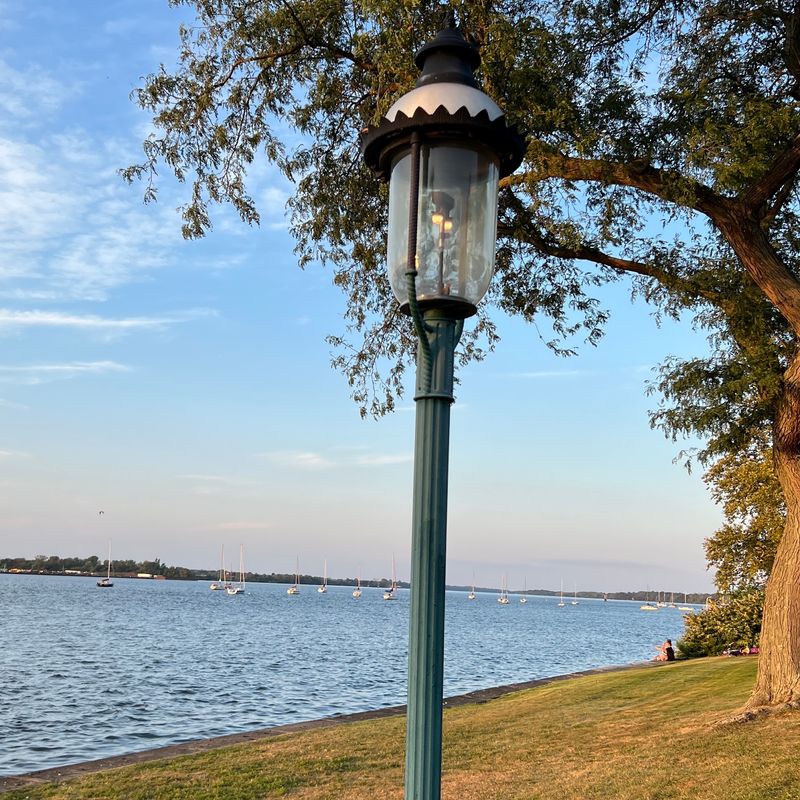
Gas lamps still line portions of the streets, giving evening walks through this Delaware River borough a warm glow that modern fixtures simply cannot imitate.
Riverton was founded in the mid-nineteenth century as a planned summer community for Philadelphia families, and its broad lawns, handsome porches, and tree-lined blocks retain that leisurely intention.
Begin near the river, where the Riverton Yacht Club extends over the water from one of the oldest active yacht-club sites in the country. The pier itself is private, but the surrounding views and riverfront streets are worth the walk.
From there, wander inland past Victorian, Italianate, and Queen Anne homes toward the small commercial district. The Riverton Free Library occupies a charming Victorian house and feels exactly right for a town that values continuity.
Local dining is low-key; The New Leaf Tea Room offers afternoon tea in a historic setting, while nearby cafés and restaurants in Palmyra and Cinnaminson broaden the choices. Reservations are essential for tea service.
Riverton’s River LINE station makes it unusually easy to visit without a car, and the borough is compact enough to explore on foot. Summer brings the town’s fiercely traditional Fourth of July celebration, complete with community events that seem to involve nearly everyone.
On an ordinary day, however, its pleasures are quieter: sailboats on the river, neighbors gardening, and porch after porch suggesting that sitting down for a while might be the smartest plan.
14. Mullica Hill
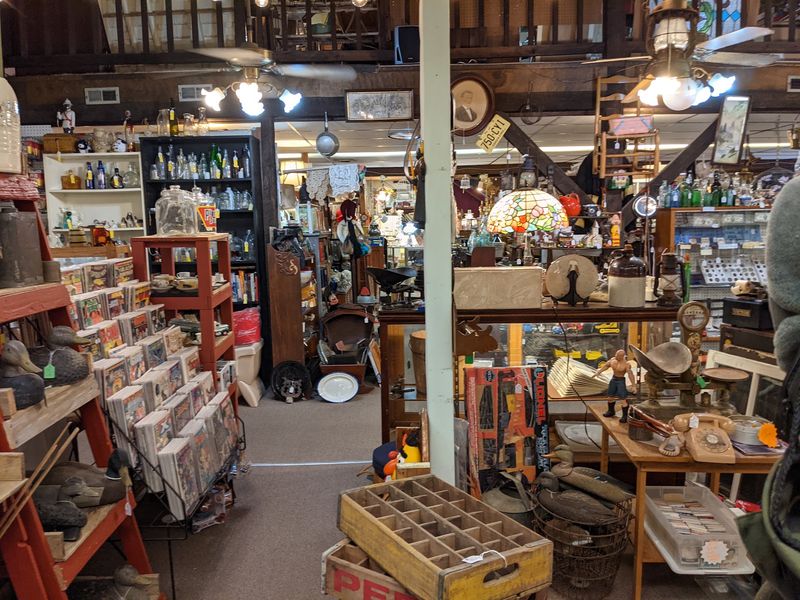
A barbecue restaurant and a multi-floor antique mall share an eighteenth-century gristmill at the busiest corner in the village. That combination—good food, old buildings, and plenty to rummage through—captures Mullica Hill nicely.
The historic center runs for less than a mile along Main Street, where centuries-old houses have become antique shops, boutiques, cafés, and restaurants without losing their architectural personality. The Old Mill Antique Mall has been attracting treasure hunters for decades, while The Yellow Garage brings dozens of dealers into a former bus terminal.
Give both shops more time than you think they need; “just one room” is an unreliable promise here. When hunger interrupts the hunt, 322 BBQ serves smoked meats and burgers inside the mill complex.
Blueplate takes a more seasonal approach in a cozy converted house, and La Mademoiselle Macaron provides a colorful reward for anyone who still has room. Several historic landmarks—including the Friends Meeting House, Old Town Hall, and former Eagle Hotel—are easy to see on a self-guided walk.
Main Street parking can tighten on weekends, but public spaces are available, and the village’s compact layout makes moving the car unnecessary. Farm stands and orchards surrounding town add peaches, apples, cider, and pumpkins to the equation depending on the season.
Mullica Hill feels active without being rushed: a place where a chipped cabinet, a plate of brisket, and a 200-year-old building can all compete successfully for your attention.
15. Swedesboro
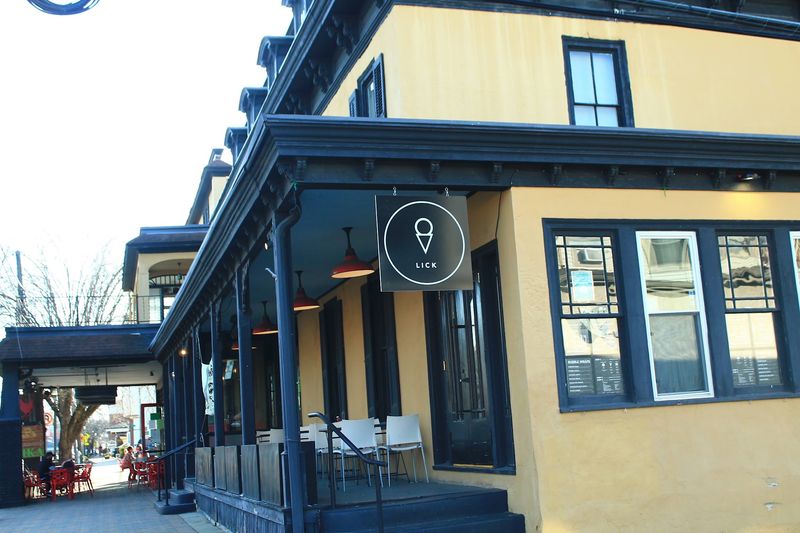
The name on the map is your first hint that this Gloucester County borough has a story unlike most New Jersey towns. Swedish and Finnish settlers arrived in the region during the seventeenth century, and traces of that history remain around town.
Trinity Episcopal “Old Swedes” Church, founded in 1703, stands among the borough’s most important landmarks, while the nearby Van Leer–Mortenson Log Cabin preserves an even earlier style of construction. These sites give Swedesboro real historical weight, but the downtown is not trapped in the past.
Kings Highway holds restaurants, small businesses, and community gathering places within a few walkable blocks. The Red Hen is a popular choice for polished American cooking, while Vesuvio Ristorante serves the kind of Italian menu that works equally well for family dinner or date night.
For something casual, Botto’s Italian Market nearby is known for sandwiches, prepared foods, and meats. Locke Avenue Park offers green space when younger travelers need to run around.
Swedesboro’s annual calendar—from outdoor movies to Swedesboro Day and the Christmas parade—reveals how strongly residents participate in town life. Events bring crowds, but on a regular afternoon the borough remains relaxed and approachable.
It is close to Interstate 295 and the New Jersey Turnpike, yet the historic center feels separated from that highway energy. Come for lunch, walk off the meal among the old buildings, and leave understanding why locals speak about their small borough with such obvious pride.
16. Greenwich
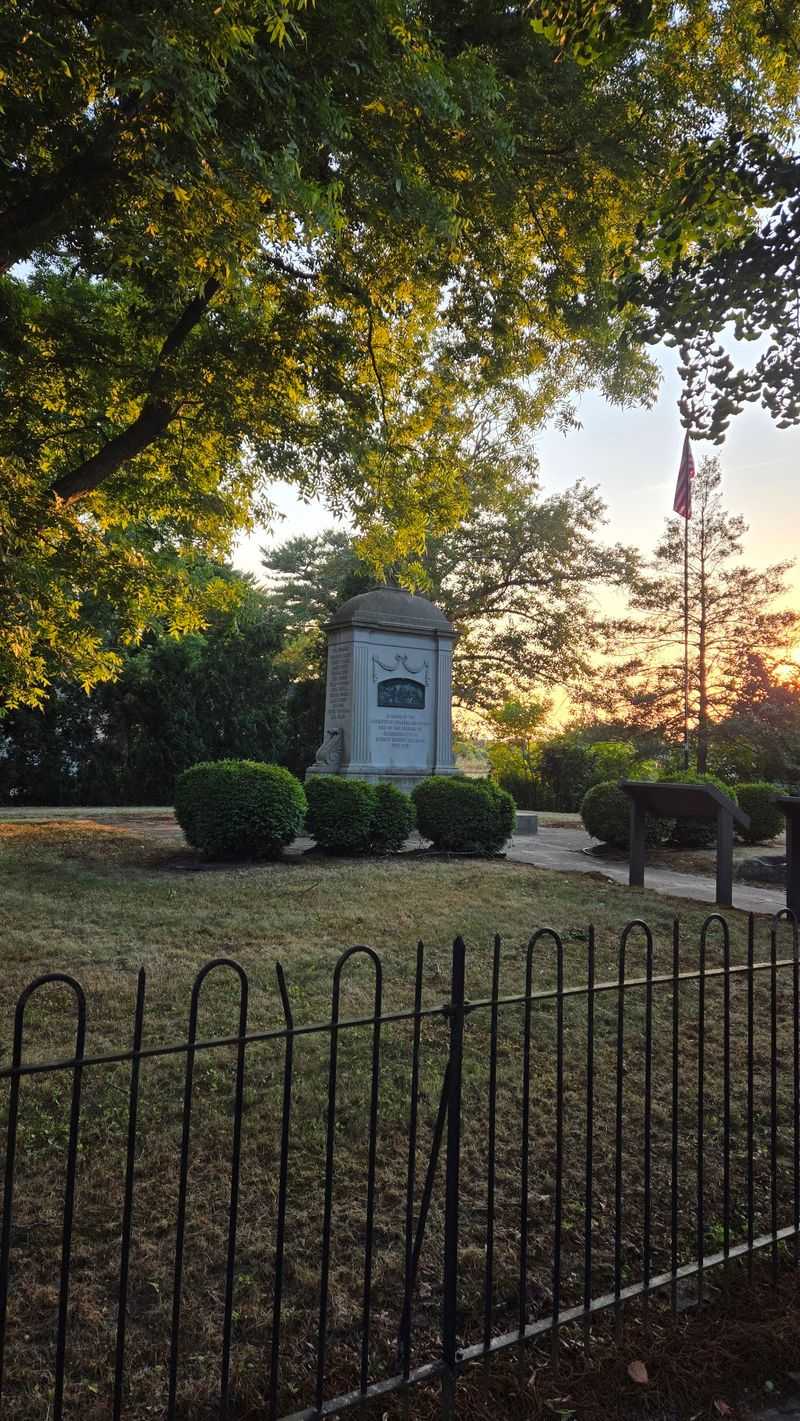
There are moments on Ye Greate Street when the twenty-first century seems to lose its grip. Ancient trees shade a remarkably intact collection of eighteenth- and nineteenth-century houses, traffic is scarce, and farm fields press close to the village.
Greenwich sits along the Cohansey River in Cumberland County, far from New Jersey’s busiest corridors. Its quiet is not curated; it comes from geography, preservation, and a population small enough that silence still has room to settle.
The Gibbon House, built around 1730, serves as the Cumberland County Historical Society’s museum and contains period rooms, regional artifacts, textiles, and furnishings. Nearby attractions include the Prehistory Museum, the John DuBois Maritime Museum, and the tiny Potter’s Tavern, where a revolutionary newspaper was printed.
Hours are limited and often seasonal, so confirm access before making the drive. Greenwich also holds an unusual Revolutionary-era story: residents burned a shipment of British tea here in 1774, an act commemorated by a monument on Ye Greate Street.
Dining options within the village are extremely limited, making this a good place to bring a picnic or combine with a stop elsewhere in Cumberland County. That lack of commerce keeps the experience focused on the landscape and history.
Walk respectfully, since most historic buildings are private homes, and allow time for the country roads along the Cohansey. Greenwich offers no bustle to escape into—only old houses, broad fields, and deep, restorative quiet.
17. Cape May Point
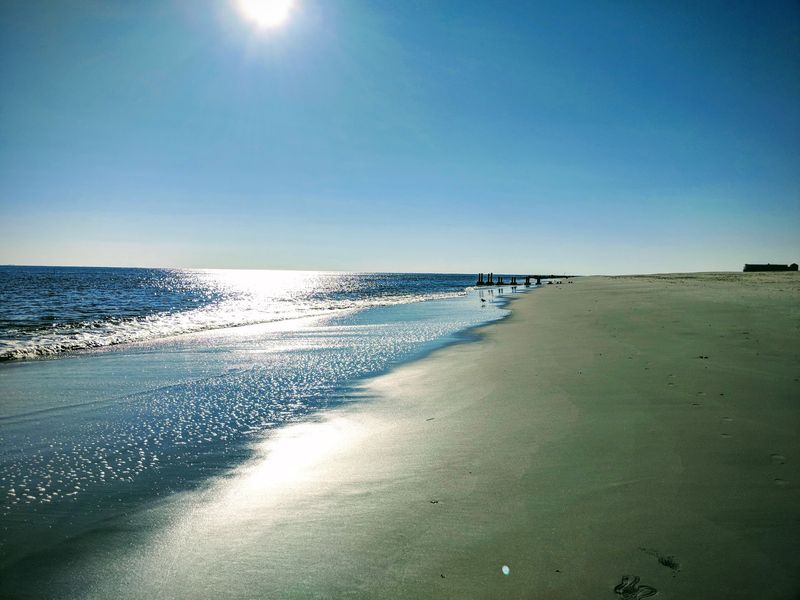
At the southern tip of New Jersey, migrating hawks circle above the lighthouse while monarch butterflies pause in seaside gardens before continuing across the Delaware Bay. Cape May Point sits directly on one of North America’s great migration routes, making its slow pace feel connected to rhythms much larger than a summer vacation calendar.
The borough is tiny and residential, with cottage-lined streets, protected dunes, and none of the shopping bustle found in neighboring Cape May. Cape May Point State Park is the essential first stop.
Climb the 199 steps of the lighthouse for a sweeping coastal view, then follow the park’s flat trails past ponds, marshes, and bird-watching platforms. The Cape May Bird Observatory operates a nearby research and education center and offers walks and programs for beginners as well as serious birders.
Sunset Beach, just outside the borough, is the place to search for smooth quartz “Cape May diamonds” and watch the evening flag ceremony in season. Food choices in the Point are limited, although The Red Store has long been associated with the village and should be checked for current service before visiting.
Bringing water and a snack is the safer plan. Parking at the state park is free, but residential restrictions near beach access points deserve attention.
Cape May Point is not simply Cape May with fewer people. It has its own wild, watchful character—a town where the day’s biggest event may be a falcon overhead or the sun dropping cleanly into the bay.
Share this story