Maryland holds more than a map full of water and winding roads. It holds moods, stories, and light that lingers longer than sunset, especially where the Chesapeake Bay breathes against old stone and iron.
If you have ever watched a lantern glow in fog and felt your imagination stretch toward the horizon, you already know why these lighthouses feel like art. They are not just landmarks, they are quiet performances of resilience and beauty that invite you to slow down, step closer, and let the Bay’s salt air do the rest.
1. Thomas Point Shoal Lighthouse (Annapolis)
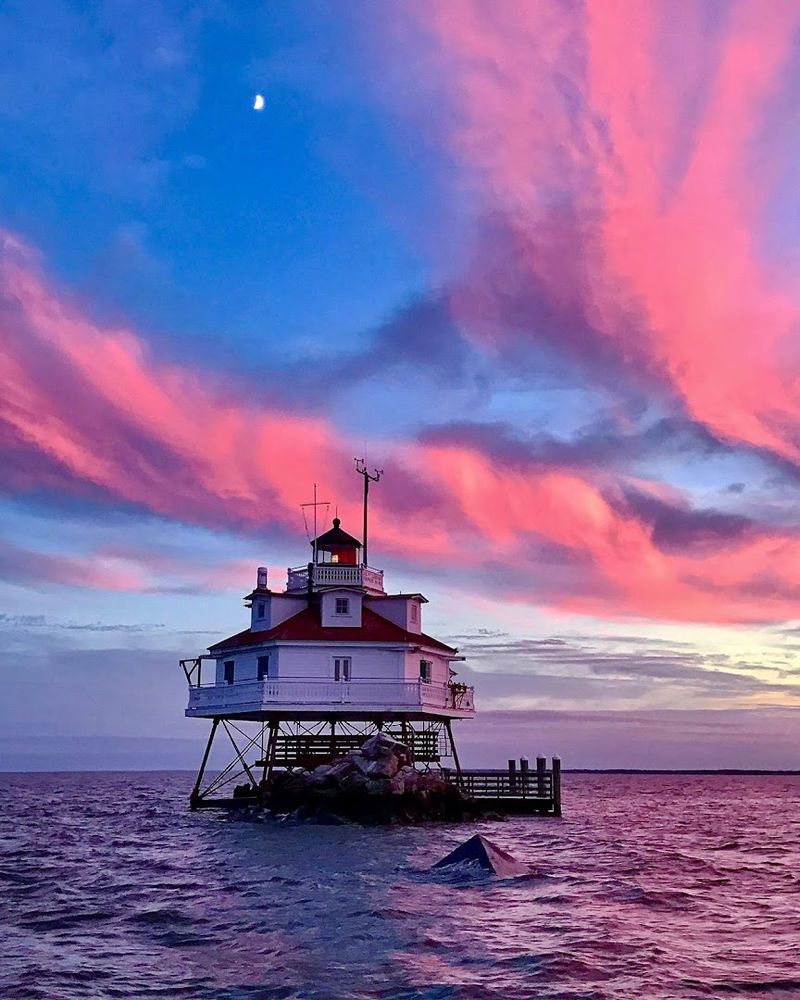
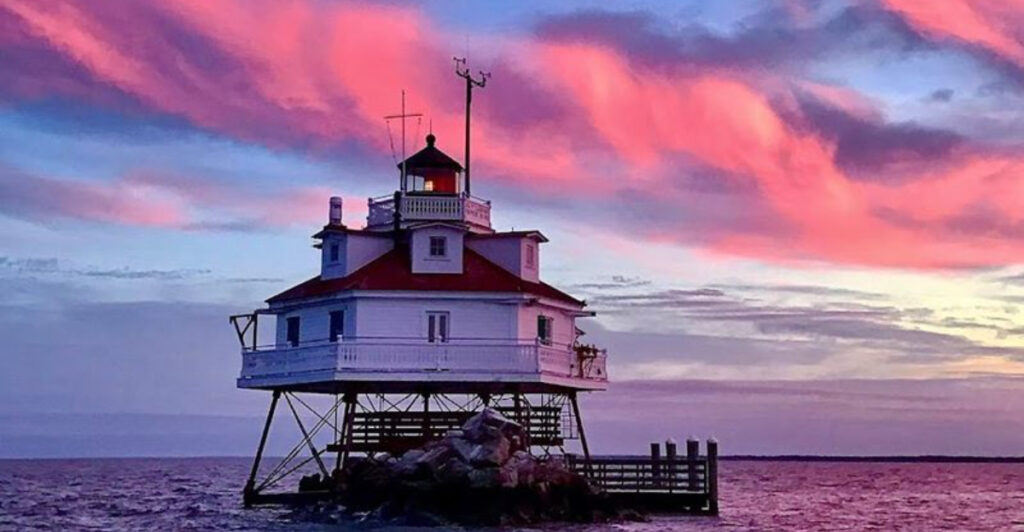
Out on the water, a delicate silhouette holds its ground against wind and tide.
You can feel the years in the cross bracing and the red roof, the way a steady light becomes a kind of heartbeat for the bay.
Getting there by boat makes the scene feel earned, like arriving to a private gallery floating on the surface.
What catches you first is the geometry.
The octagonal house sits on spidery legs, and every line seems to have a purpose.
Even the ladder and railings read like brushstrokes, practical details casting thin shadows that move when clouds skim the sun.
Listen to the lap of water on iron.
It is a gentle percussion that turns time into rhythm, and you start to notice how color changes minute to minute.
White brightens to ivory, then warms toward honey as a low sun finds the seams in the roof and the caps of the pilings.
Stand long enough and you sense how Annapolis lives behind you, full of bells and rigging, while this station keeps its own quiet.
I like to trace the horizon with my eyes until the lighthouse feels centered and everything else becomes frame.
When the light finally clicks on, that first glow is not a beacon so much as a hush that invites you to breathe.
2. Turkey Point Lighthouse (North East)
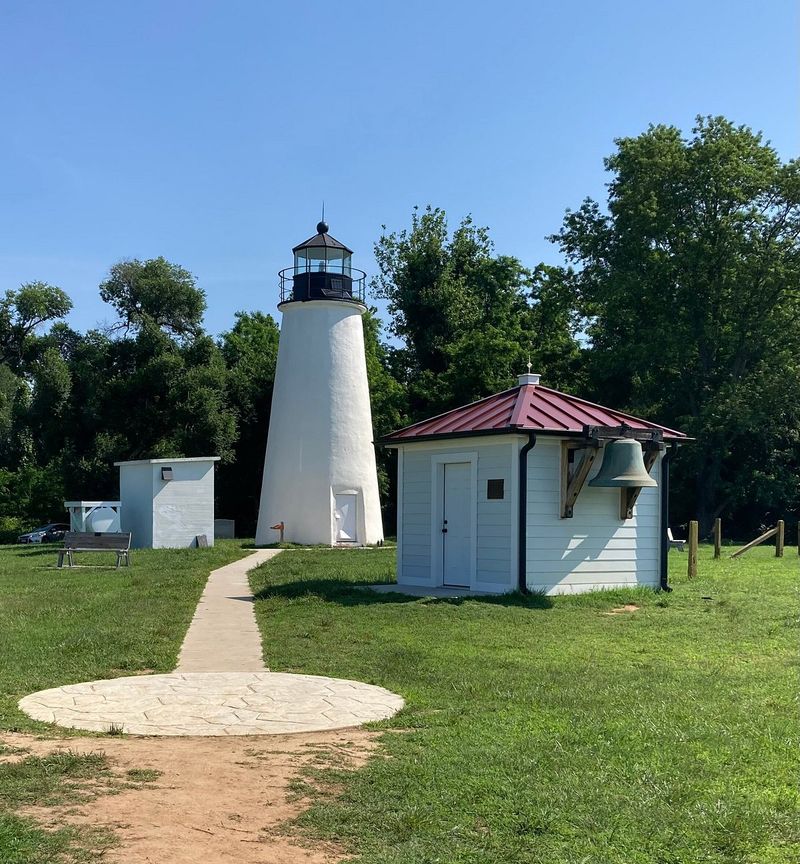
High on the bluff, the air feels cleaner and the world stretches in soft blue layers.
The trail brings you into the light slowly, through trees that part like curtains before a small white tower.
You do not need much else here, just sky, wind, and the curve of water below.
From the edge, the Chesapeake draws a long S that pulls your gaze toward North East and back again.
I like how the tower’s simple cone trims the view without stealing it.
The lantern room glints, a little jewel box that has outlasted storms and countless dawns.
Bring a thermos and patience.
Watch ospreys draw bright hooks across the horizon, then listen for the soft scrape of grass as the breeze switches direction.
Every sound is small but specific, and together they tune you toward the lighthouse like a chord settling into harmony.
Sunrise is the secret.
Colors stack like watercolor washes, and the tower seems to drink the warmth while the cliff still holds night.
Stand close and you feel its quiet authority, a guidepost that does not need to shout.
When you turn to leave, you carry a clean line in your mind, the kind artists chase when they want a scene to feel inevitable and kind.
3. Cove Point Lighthouse (Lusby)
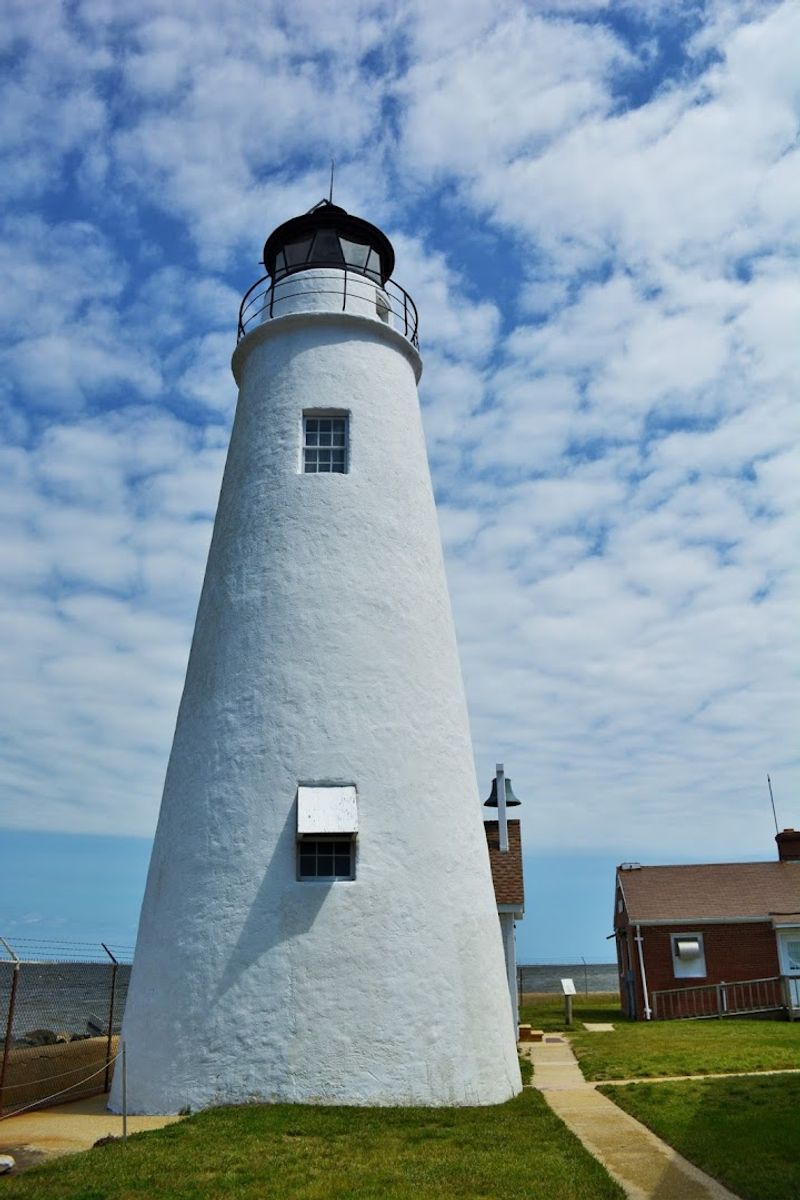
There is something spare and elegant about this point, like a clean page waiting for ink.
The tower and keeper’s house sit with a confident calm, their whites and reds set against a narrow beach and a soft horizon.
On quieter days, the low hiss of waves becomes a metronome for wandering thoughts.
Walk the fence line and you start noticing details.
Window trim holds a thin shadow, brick chimneys rise like careful punctuation, and the lantern room frames the sky in a tight circle.
It all feels deliberate, the way good design makes you relax without trying.
I like to arrive when the clouds are high and bright.
That flat light smooths the palette into gentle grays and blues, letting texture do the talking.
Sand takes on fine ripples, grass edges turn crisp, and the tower’s curve catches a whisper of sheen that changes as you move.
If you stand back toward the water, the composition clicks.
House, tower, shoreline, horizon, all arranged like a sentence you could read out loud.
You can almost hear distant ships trading stories across the bay.
Leaving, you feel organized in the best way, as if the lighthouse lent you its quiet structure and asked nothing in return but a promise to notice more.
4. Concord Point Lighthouse (Havre de Grace)
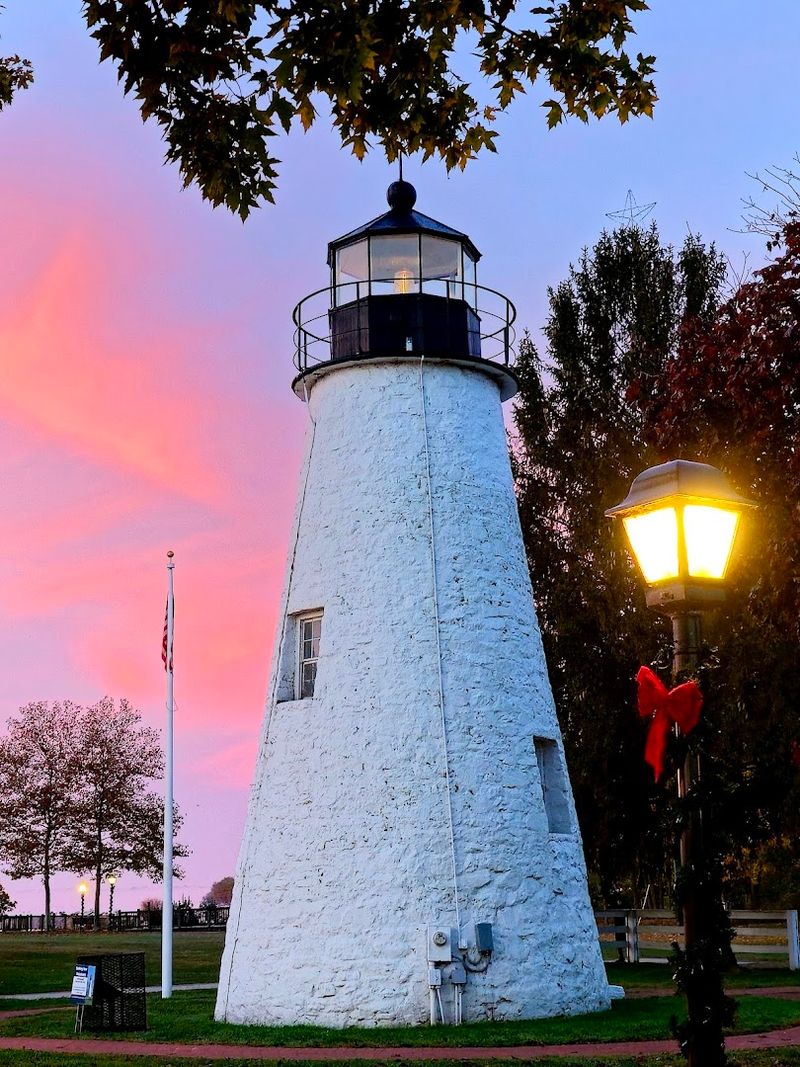
Where river meets bay, the light feels soft around the edges and time slackens.
A compact stone tower stands by the promenade like a neighbor you greet every evening.
It is approachable, photogenic, and part of the daily rhythm in Havre de Grace.
I love how the setting invites lingering.
Benches face slow water, ducks sketch ripples, and the lighthouse becomes a quiet anchor for families, runners, and painters hunting color.
As the sky blushes, the stones pick up warmth, then slip back to cool gray with the first stars.
Bring a camera but remember to look without it.
The geometry is simple and strong, and the scene composes itself if you let it.
River, tower, lampposts, a slice of boardwalk, each element slots into place until the frame breathes.
On clear evenings, you can watch the light mature from gold to lavender.
The tower answers by holding steady, small but certain.
It is not the tallest or the loudest, and that is the charm.
You leave feeling like you visited a friend who knows how to listen, and the walk back through town keeps that gentle mood going with brick facades, ice cream, and the hush of water never far away.
5. Drum Point Lighthouse (Solomons)
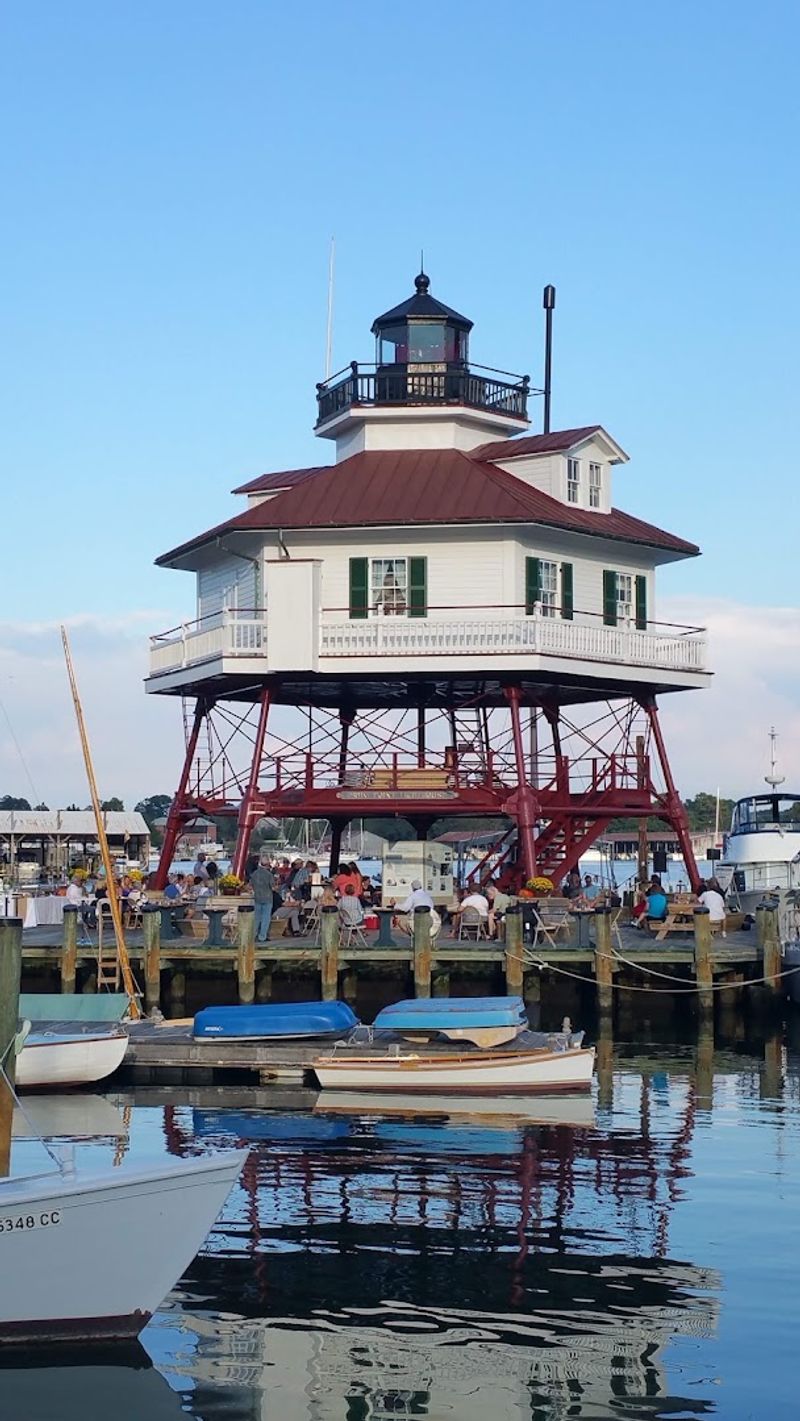
Set like a storybook cottage on stilts, this beauty greets you at the Calvert Marine Museum with bright confidence.
The red roof flashes against white walls, and the ironwork below looks both delicate and unshakeable.
It is the kind of structure that makes kids point and adults reach for superlatives.
Step inside and you feel the practical poetry of keeper life.
Tight stairways, polished lantern gear, and windows that frame the bay like paintings.
Every room suggests a rhythm of tending, mending, and watching the weather roll over Solomons.
What I enjoy most is the feeling of suspension.
Water slides under the latticework, and shadows crisscross the pilings like graphite sketches that redraw themselves with the sun.
From the deck, boats glide past as if the lighthouse is still quietly on duty, measuring the afternoon in glints and wakes.
Stay long enough to track the color shift.
The roof deepens, the whites warm, and the metal takes on an amber edge.
You come away with a sense that utility can be graceful and that endurance wears a friendly face here.
On the walk back through the museum grounds, that mix of craft and care lingers, and the bay air turns every breath into a small reminder to keep light where you can.
6. Piney Point Lighthouse (Piney Point)
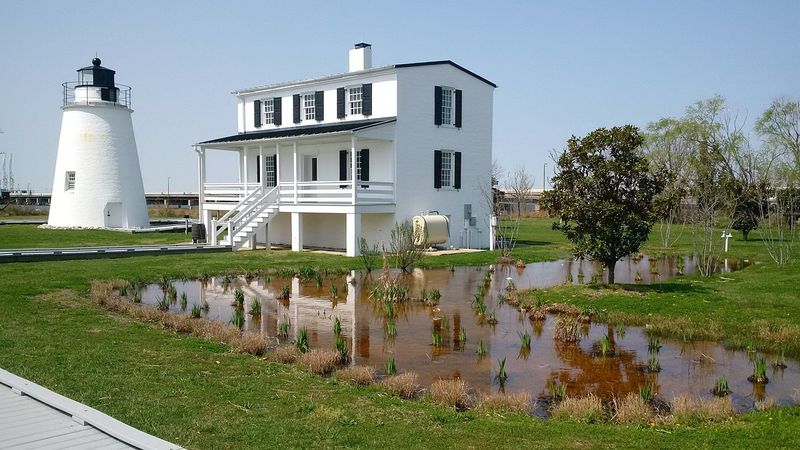
Downriver, the pace loosens and the light takes its time.
A stout white tower keeps company with tidy quarters and a lawn dotted with maritime relics.
It feels like a small campus of memory, open and generous, with the Potomac stretching into a silver lane.
Walk the path and you collect textures.
Shell crunch underfoot, soft grass along the edges, and painted wood that wears its years with pride.
The lantern room is modest, but its presence carries quietly across the grounds.
I like to pause near the shoreline and let the river decide the soundtrack.
Sometimes there is a breeze that flicks flags and sets halyards clicking.
Other days, everything hushes and reflections sharpen until the lighthouse and sky trade places in the water.
There is history here, but it never feels fussy.
Exhibits offer context, then step aside so the setting can speak.
You leave with a pocketful of gentle moments, the kind you replay later when life speeds up again.
The drive out is part of the allure, too, a ribbon of road that narrows your focus until the first glimpse of white tower opens the day like a fresh page.
7. Seven Foot Knoll Lighthouse (Baltimore)
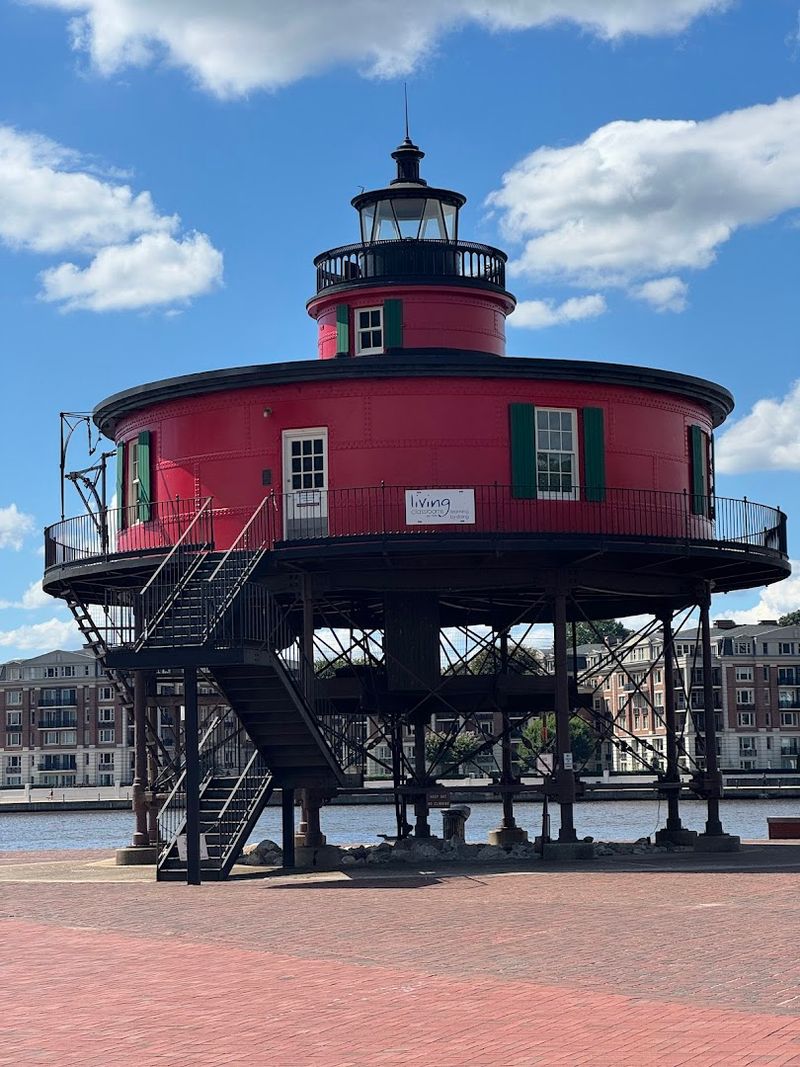
Right in the Inner Harbor, a bright red circle of history stands with city steel at its back.
The roundhouse shape feels playful, almost modern, yet its iron legs and lantern tell a tougher story.
Among glass towers and busy walkways, the lighthouse becomes a cheerful elder with great posture.
Step up and the city fades a notch.
Inside, displays track storms, keepers, and the grit it took to mark a shoal with steady light.
Windows catch reflections from the water below, riffing the skyline into softer, bendy shapes.
I love the urban theater here.
Water taxis slide past, gulls improvise, and the lighthouse holds center while everything else keeps moving.
As evening comes, the red deepens, and the harbor’s reflections turn into ribbons that stitch light across the basin.
There is a friendly defiance in this structure.
It says that utility can be joyful and that a working harbor can still make room for wonder.
You walk away with the city in your pocket, tuned by a pulse that feels older than traffic and newer than your next plan.
It is Baltimore distilled, salty, honest, and just a little bit flashy where it counts.
8. Hooper Strait Lighthouse (St. Michaels)
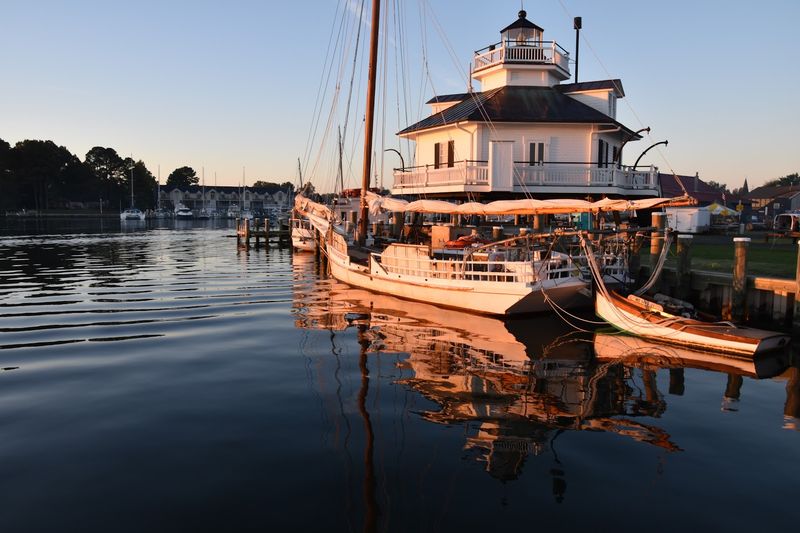
In St. Michaels, the maritime museum opens like a small village, and this lighthouse feels like its heart.
The cottage style makes it instantly welcoming, a home perched above the water with crisp railings and an honest red roof.
It is easy to picture a keeper stepping out with coffee, scanning the bay for weather and work.
Touring the rooms, you feel the close weave of craft and daily life.
Tools line up with purpose, charts wait on tables, and windows slice the horizon into neat panels.
Everything is scaled to human hands, which makes the light itself seem even larger.
I like the way the docks cradle the building.
Boats come and go, adding motion to a structure built for steadiness.
When sun lowers, the siding glows and shadows draw fine lines along the braces, turning the undercarriage into lace.
Give yourself time to sit on a bench and just look.
The setting invites conversation, sketching, or quiet.
You leave grateful for the folks who saved and moved it here, because the place teaches without lecturing.
It proves that usefulness can be beautiful, and that the bay’s stories land best when you can touch the rail and count the waves.
9. Point Lookout Lighthouse (Scotland)
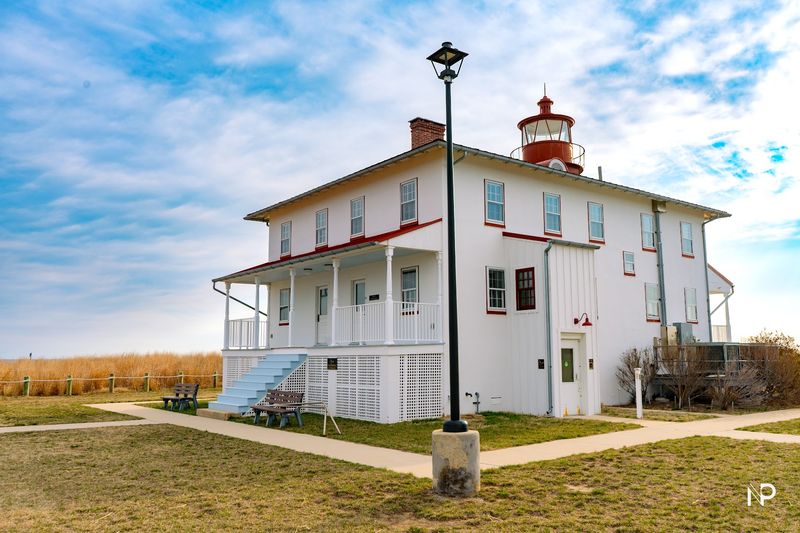
At the tip where waters meet, the weather writes the script.
Fog can roll in and swallow edges, or a blue sweep can open all the way to tomorrow.
The lighthouse sits low and long, part dwelling, part guardian, holding a seam between bay and river.
Stories cling here.
Civil War history threads through, and some locals trade ghost tales with a shrug that feels half joking, half true.
Whether or not you believe, the place holds a tone that makes footsteps quieter and glances longer.
I like arriving early when the grass still keeps the night’s cool.
Waves whisper a steady line while gulls argue overhead.
The house wears its age plainly, and the twin lights feel like thoughtful eyebrows over patient eyes.
When weather breaks, the shift can be dramatic.
A sudden sun lifts colors, and the whole scene brightens like a stage when the curtain rises.
You leave with a layered memory, equal parts breeze, history, and the feeling that edges are where stories sharpen.
On the drive back up the peninsula, every mile seems to exhale, and you realize the lighthouse taught you how to look at meeting places with more care.
10. Baltimore Harbor Light (Chesapeake Bay)
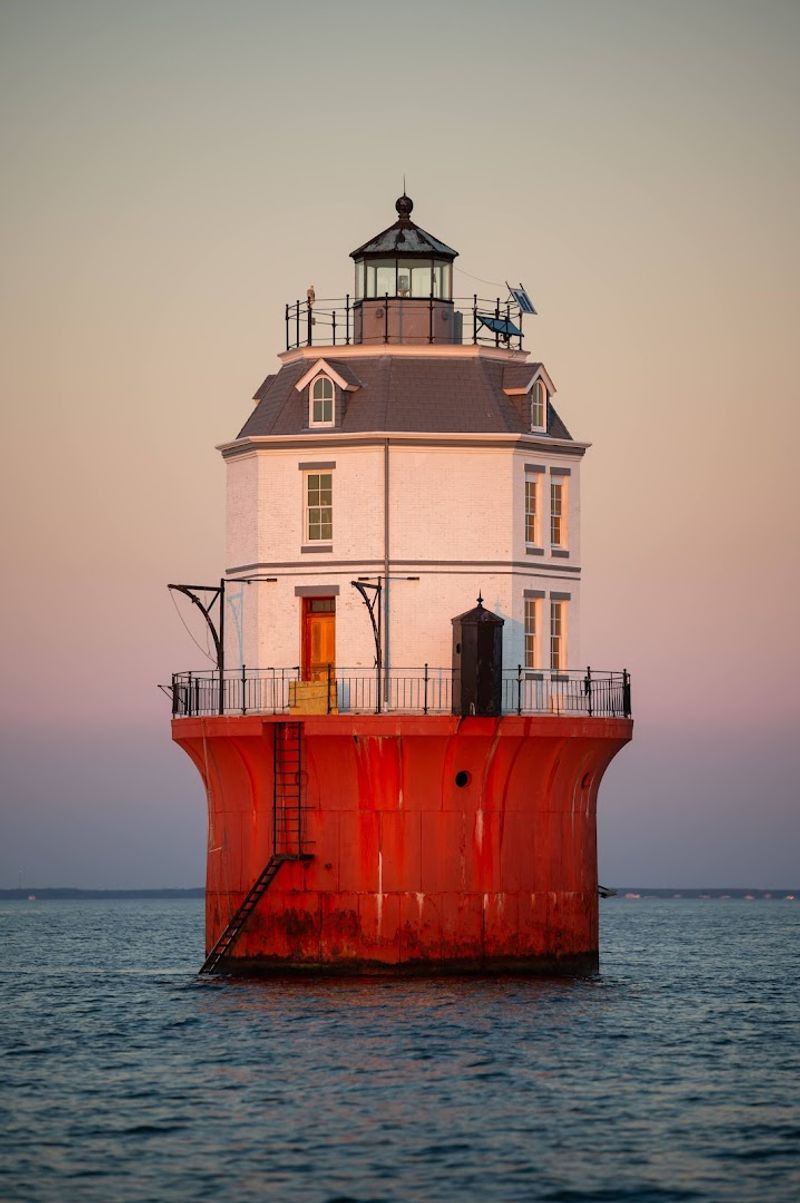
Far from shore, a sturdy cylinder lifts a lantern into open air and asks you to consider simplicity.
No lawns, no docks, just water and sky and a vertical promise.
The approach by boat slows the mind until the lighthouse arrives like a period at the end of a long sentence.
Up close, details emerge.
Riveted plates, portholes that blink with sunlight, and a deck that circles like a slow thought.
The paint carries weather like a badge, and the tower hums with the low confidence of work done well.
I like to drift a little downwind and watch reflections fracture and mend.
The lighthouse seems to float between versions of itself, one crisp, one watercolor, both honest.
On quiet mornings, the only sound is hull against chop and the soft tick of rigging.
This is minimalism you can feel.
A single form holds its purpose while the bay writes light all around it.
You leave with a sharpened sense of scale and a respect for the people who kept this post through winter and storm.
Back on shore, every crowded street looks different, trimmed by the memory of a lone tower that makes space for clarity.
Share this story