Michigan is packed with stunning natural spots, but you don’t always have to fight for a parking spot or share your view with a hundred strangers. Tucked between the well-known tourist traps are quiet corners that locals treasure and visitors somehow keep missing.
From glassy spring waters to ancient forests and towering sand dunes, these nine places offer something rare: genuine peace. Pack a snack, silence your notifications, and get ready to explore Michigan’s most underrated escapes.
1. Fernwood Botanical Garden and Nature Preserve — Niles
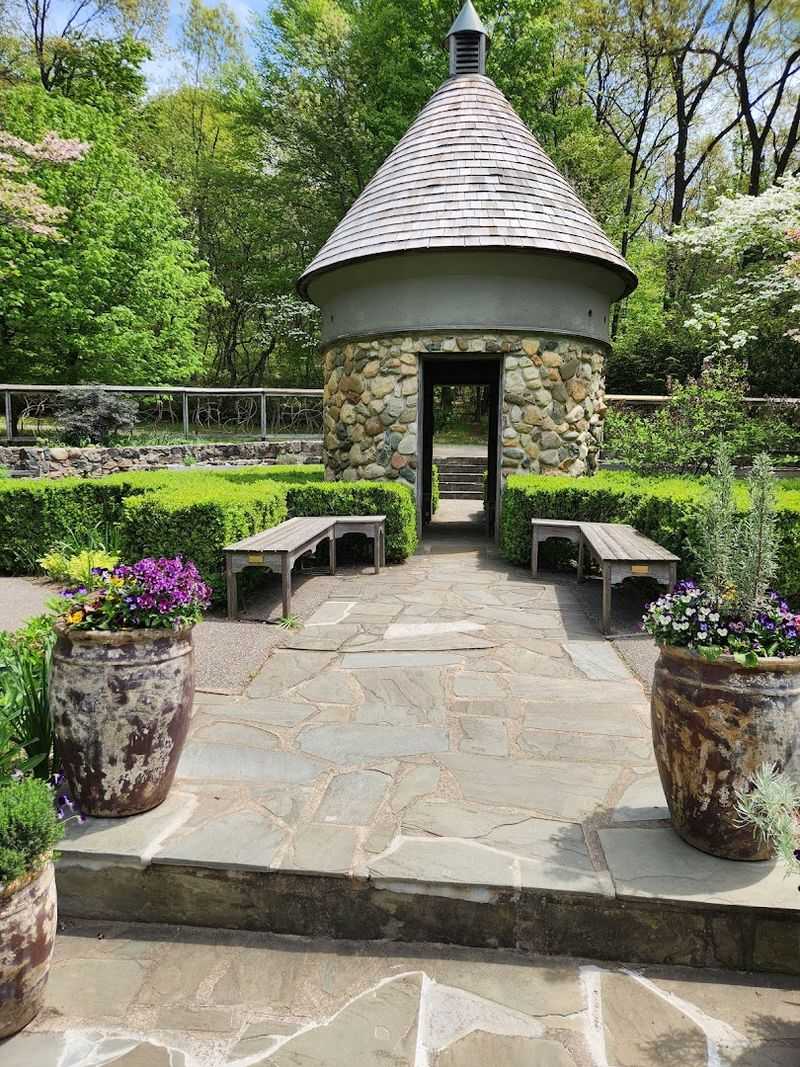
Some gardens feel like they were designed by someone who truly loved plants — not just collected them. Fernwood Botanical Garden and Nature Preserve in Niles, tucked into southwest Michigan near the Indiana border, is exactly that kind of place.
It sits on over 100 acres of rolling terrain along the St. Joseph River, blending formal garden spaces with wild, untouched natural areas in a way that feels completely effortless.
Visitors often show up expecting a small flower garden and leave genuinely stunned. The native plant collections here are exceptional, featuring tallgrass prairie restorations, a fern garden that feels almost prehistoric, and woodland trails that weave through quiet stands of mature trees.
Every turn reveals something new, whether it’s a sculpture hidden in the undergrowth or a meadow full of buzzing pollinators.
What makes Fernwood stand out from flashier Michigan destinations is its unhurried atmosphere. On most weekday mornings, you might have entire stretches of trail completely to yourself.
Families, photographers, and nature journalers all find something worth lingering over here.
The visitor center is welcoming without being overwhelming, and the staff genuinely know their plants. Special programming throughout the year includes guided walks, art workshops, and seasonal events that connect visitors more deeply to the landscape.
Kids especially love the interactive natural areas where exploration is encouraged rather than restricted.
Fernwood also operates a working farm on-site, which adds an agricultural layer to the experience that most botanical gardens skip entirely. Whether you spend 90 minutes or a full afternoon here, you’ll leave feeling like you discovered something most Michigan visitors never find.
That feeling alone makes the detour completely worthwhile.
2. Negwegon State Park — Harrisville / Alpena area
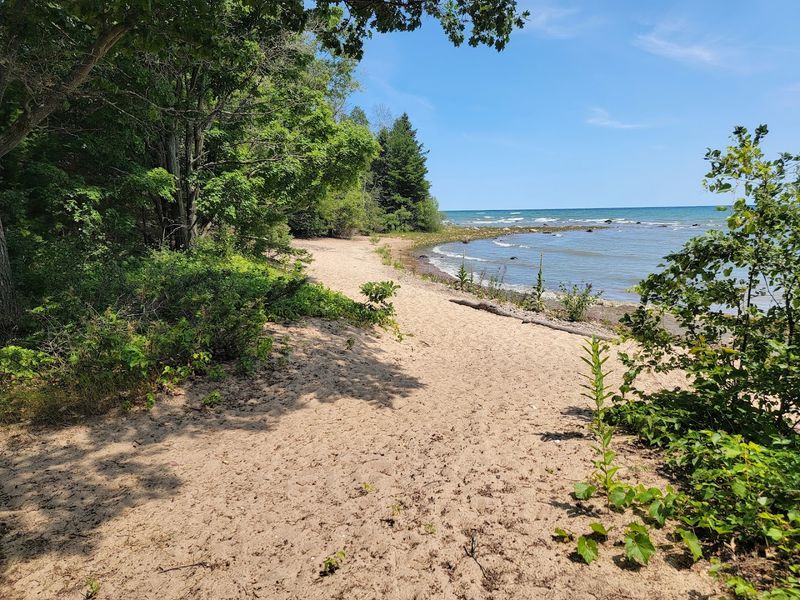
Getting to Negwegon State Park requires driving down a long, unpaved road that most people take one look at and turn around from — which is exactly why this place stays so wonderfully quiet. Located along Lake Huron between Harrisville and Alpena, Negwegon is one of Michigan’s least-visited state parks despite offering some of the most pristine Great Lakes shoreline you’ll ever walk.
The park has no campground with hookups, no concession stand, and no playground equipment. What it does have is miles of undeveloped Lake Huron beach, clear turquoise water that rivals anything you’d see in a travel magazine, and a network of foot trails through coastal forest that feel genuinely remote.
Bringing your own water and snacks is essential because there are no amenities waiting at the end of that dirt road.
Hikers can follow trails that hug the shoreline and dip into cedar swamps, where the light filters through the canopy in a way that makes everything look slightly magical. Birdwatchers consider Negwegon a serious destination, particularly during migration season when the park’s isolated coastal position makes it a natural stopover for dozens of species.
The beach itself is the kind that makes you want to sit down and stare at the water for an hour without checking your phone. The stones are smooth and colorful, the waves are calm on most days, and the horizon stretches out with nothing interrupting it.
Swimmers find the water cold but refreshing, especially in summer when the sun warms the sandy shallows.
Negwegon rewards the visitors willing to make the extra effort to reach it. If solitude on a wild Great Lakes shore sounds appealing, this park belongs at the top of your list.
3. Kitch-iti-kipi at Palms Book State Park — near Manistique
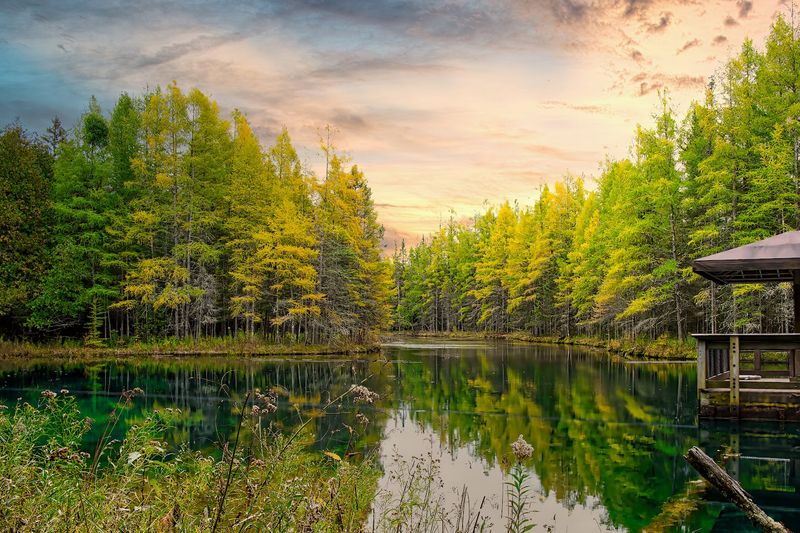
Michigan’s biggest freshwater spring has a name that’s fun to say out loud and even more fun to see in person. Kitch-iti-kipi — sometimes called the Big Spring — sits inside Palms Book State Park near Manistique in the Upper Peninsula, and it is genuinely one of the most visually striking natural features in the entire state.
The spring pumps out millions of gallons of crystal-clear, 45-degree water every single day, creating a pool that looks almost impossibly vivid from above.
The way visitors experience Kitch-iti-kipi is part of what makes it so memorable. A self-operated observation raft lets you pull yourself across the spring using a hand-operated cable, looking straight down through water so clear it barely seems real.
Beneath you, ancient submerged logs rest on the sandy bottom, trout drift through shafts of light, and bubbles erupt from the spring vents below like something out of a nature documentary.
Even on busy summer weekends, the spring itself absorbs visitors without ever feeling truly crowded. The pool is large enough that everyone gets a clear, unobstructed view, and the surrounding park stays quiet and shaded.
Families with young kids find the raft ride thrilling, while adults tend to stand at the railing in near-silence, genuinely awed by what they’re looking at.
The surrounding area around Manistique offers great complementary stops, including nearby Seney National Wildlife Refuge and the scenic drive along US-2 along Lake Michigan’s northern shoreline. Kitch-iti-kipi is a short visit — most people spend 30 to 60 minutes — but it’s the kind of short visit that stays with you for years afterward.
Bring a jacket even in summer. That water is cold enough to make you catch your breath just standing nearby.
4. Hartwick Pines State Park — Grayling
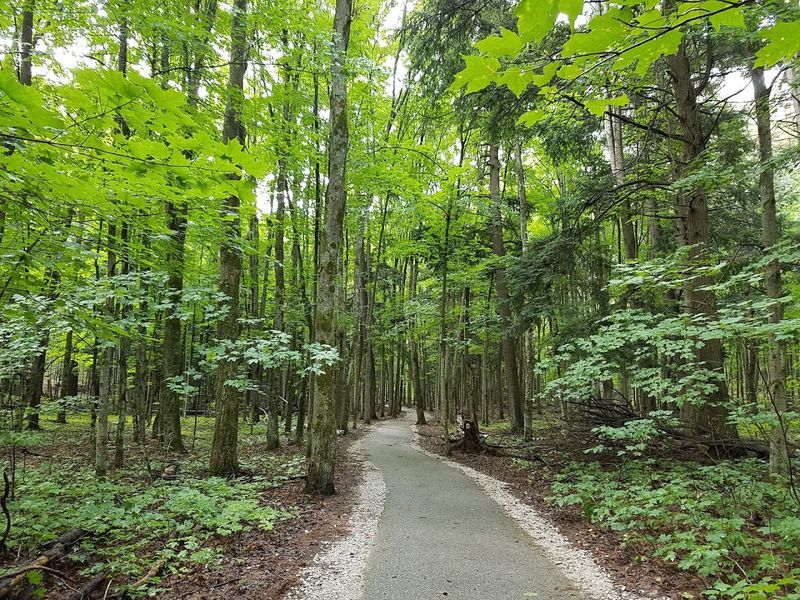
Standing beneath a 300-year-old white pine is a humbling experience. Hartwick Pines State Park near Grayling protects one of the last remaining old-growth pine forests in Michigan’s Lower Peninsula — a living reminder of what much of the state looked like before the logging era cleared nearly everything.
Walking the old-growth loop trail here feels less like a hike and more like stepping into a different century entirely.
The trees are enormous. Some of the white pines in the protected grove reach heights of over 100 feet with trunks so wide that two adults can’t wrap their arms around them.
The forest floor beneath them is soft with decades of accumulated needles, and the air carries that distinct cool, resinous scent that only comes from a genuinely old forest. It’s the kind of place where people instinctively lower their voices.
Beyond the old-growth grove, the park offers over 9,000 acres of more typical northern Michigan forest with additional trails, a scenic river, and excellent wildlife viewing opportunities. White-tailed deer are commonly spotted throughout the park, and the Au Sable River corridor within the park draws fly fishermen who appreciate its cold, clear flows.
The Michigan Forest Visitor Center at Hartwick Pines does an outstanding job of explaining the state’s logging history without feeling like a lecture. The exhibits are engaging enough to hold the attention of kids who would otherwise rather be outside, which is a genuine achievement.
The historic logging camp on-site adds a tangible, walk-through element to the story.
Fall is an extraordinary time to visit when the understory maples ignite in orange and red beneath the towering dark pines. Hartwick Pines doesn’t shout for attention, but it absolutely earns it every single season.
5. Green Point Dunes Nature Preserve — Arcadia
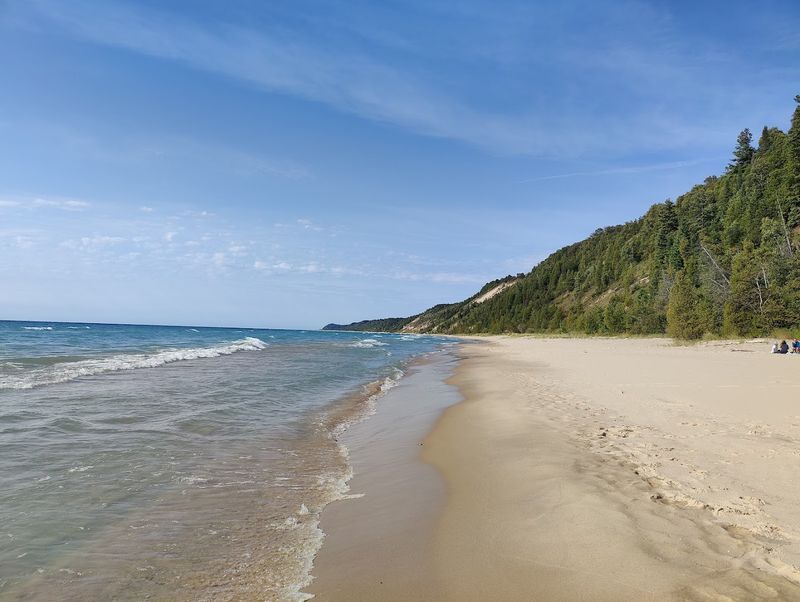
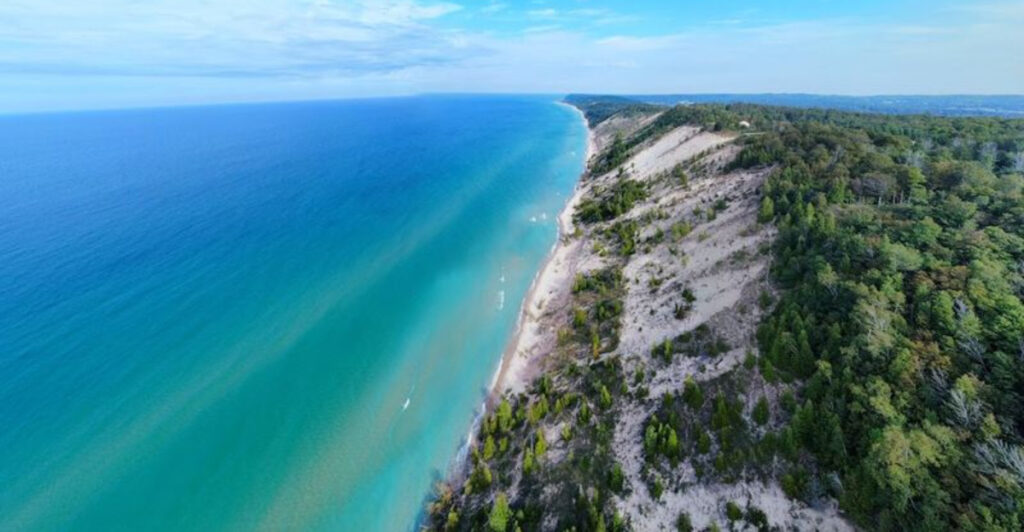
Most people driving through Arcadia on M-22 don’t realize they’re passing one of the most rewarding short hikes on the entire west Michigan coast. Green Point Dunes Nature Preserve, managed by the Land Conservancy of West Michigan, offers dramatic Lake Michigan overlooks from high dune ridges without the massive crowds that descend on Sleeping Bear Dunes just up the road.
It’s the kind of place that rewards the travelers who pay attention to the smaller signs.
The trail climbs steeply through forested dune terrain before emerging onto open sandy ridges with panoramic views of Lake Michigan stretching to the horizon. On a clear day, the color of the water shifts from pale green near the shore to deep blue further out, and the contrast against the white sand and blue sky is genuinely breathtaking.
Photographers tend to linger here for a long time, and it’s easy to understand why.
The preserve covers several hundred acres and includes a mix of dune habitats, hardwood forest, and wetland areas that support a surprising variety of wildlife. Wildflowers bloom along the trail edges in late spring, and the fall color display through the dune forest is particularly vibrant thanks to the mix of maples and birches in the understory.
Parking is limited to a small roadside pull-off, which naturally keeps the crowds manageable even during peak summer weekends. Sturdy footwear is recommended because the sandy slopes can be slippery on the way back down.
Bringing water is smart since there are no facilities on-site.
Green Point Dunes sits on the same M-22 corridor that draws millions of visitors annually, yet somehow it stays refreshingly quiet. That’s a Michigan miracle worth taking advantage of while it lasts.
6. Seven Lakes State Park — Holly
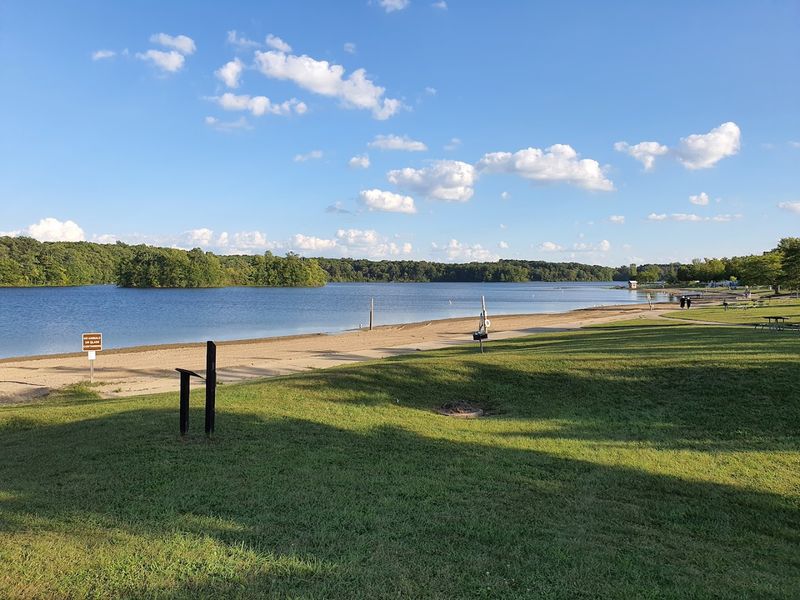
About an hour north of Detroit, Seven Lakes State Park in Holly manages to feel like it’s a world away from the suburban sprawl surrounding it. Named for the seven interconnected lakes within its boundaries, this park punches well above its weight in terms of what it delivers per acre.
The water here is clean, the trails are well-maintained, and on a weekday morning, the whole place feels like your personal backyard.
Swimming, kayaking, and fishing are the main draws during summer months. The designated swim beach is sandy and gently sloping, making it comfortable for younger kids and casual swimmers who don’t want to deal with rocky entries.
Anglers find the lakes well-stocked, and the quiet coves accessible by kayak or canoe offer excellent fishing away from the busier shoreline areas.
The trail system winds through a mix of upland forest, wetland edges, and open meadow areas that support a healthy diversity of birds and wildlife. Mountain bikers use several of the trails, and the park has made genuine efforts to maintain separate pathways for hikers and cyclists so both groups can enjoy their visit without conflict.
Cross-country skiing and snowshoeing bring visitors back in winter when the landscape transforms into something entirely different.
Seven Lakes is genuinely underappreciated given its proximity to one of Michigan’s most densely populated regions. Families who discover it tend to become regulars, returning throughout the year as the park shifts through the seasons.
The campground fills on summer weekends but rarely reaches the pressure levels of more famous Michigan parks.
For southeast Michigan residents looking for a quick natural escape that doesn’t require a four-hour drive, Seven Lakes quietly delivers more than most people expect from a park this close to the city.
7. Dow Gardens and Whiting Forest — Midland

There’s a treetop walkway in Midland, Michigan that stretches nearly a mile through the forest canopy, and somehow it still doesn’t get the national attention it deserves. Whiting Forest, connected to the beloved Dow Gardens, gives visitors an elevated perspective on the natural world that most people only get to experience in places like the Pacific Northwest or New Zealand.
The fact that it’s sitting in mid-Michigan is a pleasant surprise every single time.
Dow Gardens itself has been a Midland treasure for over a century, originally developed by Herbert Henry Dow as the personal garden of his family estate. Today it spans over 100 acres of meticulously maintained garden spaces, including a children’s garden, a vegetable garden, a rose collection, and extensive perennial borders that peak at different times throughout the growing season.
Spring brings tulips and flowering trees, summer delivers bold color throughout, and fall turns the whole property into a warm patchwork of golden and amber tones.
The addition of Whiting Forest elevated the experience significantly. The canopy walk rises up to 40 feet above the forest floor at its highest point, offering views through the treetops that change completely with the seasons.
In summer, the canopy is dense and green and full of birdsong. In fall, it becomes an aerial tour through blazing color that makes the admission fee feel like an absolute bargain.
Midland itself is a pleasant small city with a strong arts culture and good dining options, making Dow Gardens a natural centerpiece for a full day trip rather than just a quick stop. The gardens are well-staffed and thoughtfully maintained, which shows in every corner of the property.
First-time visitors almost always say the same thing on the way out: they had no idea this existed in Michigan.
8. Ocqueoc Falls — Millersburg
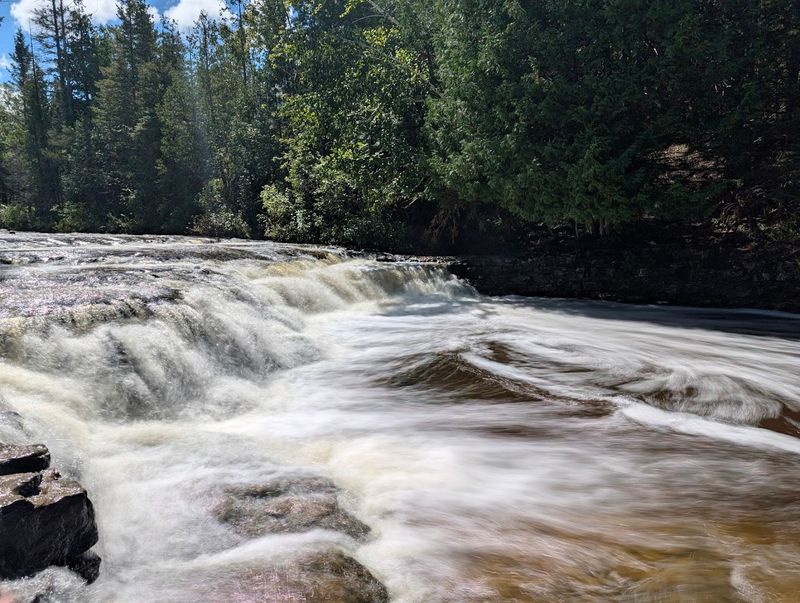
Ocqueoc Falls holds the distinction of being the largest waterfall in Michigan’s Lower Peninsula, which sounds impressive until you realize that most Michiganders have never heard of it. That’s not a criticism — it’s actually the best possible recommendation.
Located near Millersburg in Presque Isle County, Ocqueoc Falls sits at the end of a short, easy trail and delivers a genuinely satisfying waterfall experience without requiring any serious hiking commitment.
The falls cascade over a series of wide, flat limestone ledges, spreading the Ocqueoc River into a broad, shallow curtain of white water that’s beautiful to photograph and surprisingly fun to wade through. The water is cold and clear, the footing on the limestone is firm, and on warm summer days, families regularly set up in the shallows for an impromptu afternoon of splashing around.
It has the relaxed energy of a swimming hole more than a formal tourist attraction.
A loop trail connects the falls to a small campground and continues through the surrounding forest, offering a pleasant extension for hikers who want more than just the waterfall itself. The trail passes through northern hardwood forest with some nice stretches along the river where the water runs quietly between mossy banks and overhanging cedars.
Spring wildflowers are particularly abundant along the riverbanks.
The campground at Ocqueoc Falls is small and low-key, with a loyal following of repeat visitors who appreciate its simplicity. No electricity, no frills — just a quiet northern Michigan forest setting with the sound of moving water nearby.
That combination is harder to find than it sounds.
Presque Isle County as a whole is dramatically undervisited for how beautiful it is, and Ocqueoc Falls makes a perfect anchor for a longer exploration of the region’s lakes, forests, and shoreline.
9. Isle Royale National Park — Lake Superior / Houghton gateway
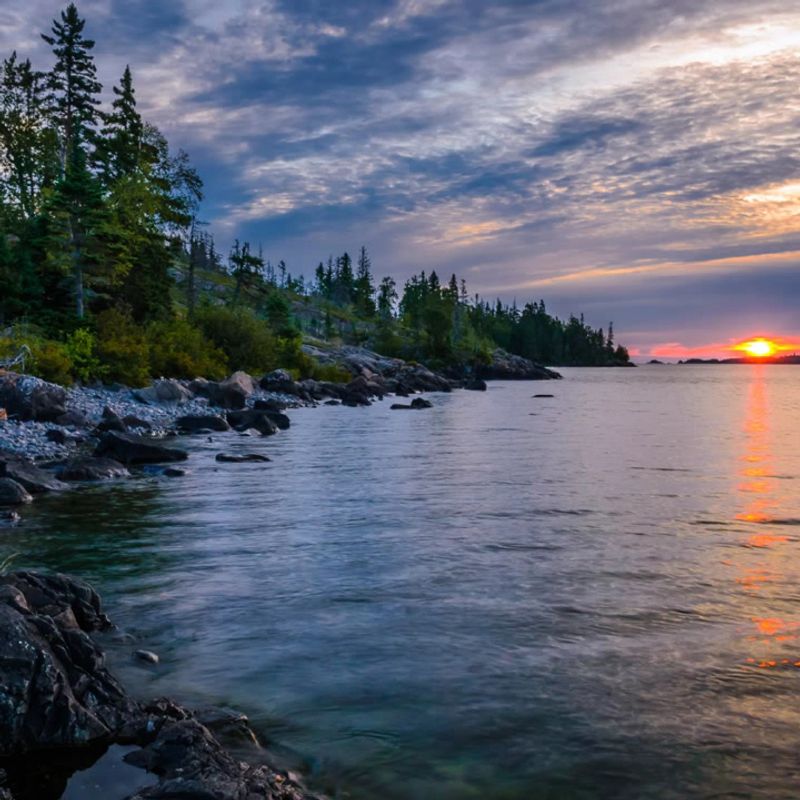
Isle Royale is the least-visited national park in the contiguous United States, and that fact alone tells you something important about the kind of experience waiting for those willing to make the journey. Accessible only by ferry or floatplane from Houghton or Copper Harbor, this remote island wilderness in Lake Superior receives fewer annual visitors than many city parks.
The effort required to get here is a feature, not a bug — it filters out the casual and rewards the committed.
The island has no roads, no cars, and no cell service. What it does have is over 165 miles of hiking trails through boreal forest, a wolf and moose population that represents one of the longest-running predator-prey studies in the world, crystalline inland lakes, and a silence so complete that first-time visitors sometimes find it disorienting.
The stars at night are extraordinary. The wildlife sightings are frequent and close.
Kayakers and canoeists find Isle Royale’s sheltered island chains and coves exceptional paddling territory, with backcountry campsites accessible only by water adding an extra layer of adventure. The shipwrecks in the surrounding Lake Superior waters attract scuba divers from across the country, offering some of the best cold-water wreck diving in the Great Lakes.
Planning matters here more than at almost any other Michigan destination. The ferry schedule is limited, the park closes completely in winter, and backcountry permits require advance thought during peak summer weeks.
But the logistics are manageable, and the payoff is a wilderness experience that feels genuinely unlike anywhere else in the Midwest.
People who visit Isle Royale once almost always start planning their return trip on the boat ride home. It has that effect on people — stubborn, beautiful, and completely unforgettable.
Share this story