Michigan is full of surprises, and its buildings are no exception. From tiny towns to big cities, the state is home to some of the most jaw-dropping, head-scratching structures you will ever lay eyes on.
Whether shaped like a pickle barrel, inspired by Hawaiian royalty, or built from thousands of glass bottles, these buildings tell stories that no ordinary structure ever could. Get ready to see Michigan in a whole new way.
1. Honolulu House Museum (Marshall)
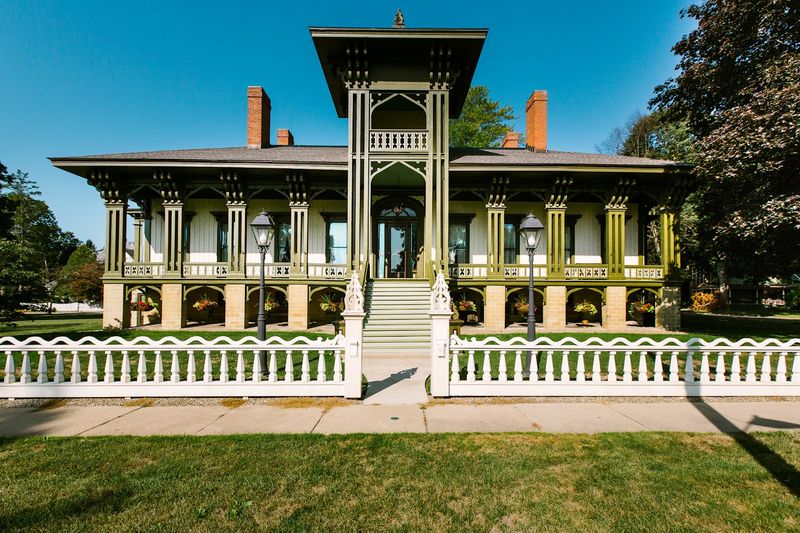
Back in 1860, a former U.S. Consul to Hawaii named Abner Pratt returned to Marshall, Michigan with one very specific goal: to recreate the tropical paradise he had left behind.
The result was the Honolulu House, a jaw-dropping mashup of Italianate and Hawaiian architectural styles that looks completely out of place in a small Midwestern town — and that is exactly what makes it so unforgettable.
The building features a wide, wrap-around veranda, a flat roof, and decorative brackets that feel more like something you would find on a Pacific island than in southern Michigan. Inside, the original painted murals and ornate plasterwork are just as dramatic as the exterior.
Pratt reportedly refused to give up his tropical lifestyle, even going so far as to wear a white linen suit and walk around with a palm leaf fan during Michigan winters.
Today, the Honolulu House operates as a museum managed by the Marshall Historical Society. Visitors can tour the interior and get a real sense of how wildly ambitious — and wonderfully bizarre — Pratt’s vision truly was.
Marshall itself is a gem of a town, packed with preserved 19th-century architecture, so the Honolulu House fits right in as the quirkiest crown jewel of the bunch.
Whether you are a history lover, an architecture nerd, or just someone who appreciates a good story, this place delivers. It is one of those rare spots where you feel like you have stumbled onto something the rest of the world somehow missed.
Plan a weekend trip to Marshall and make this your first stop — you will not regret it.
2. Bottle House Museum (Kaleva)
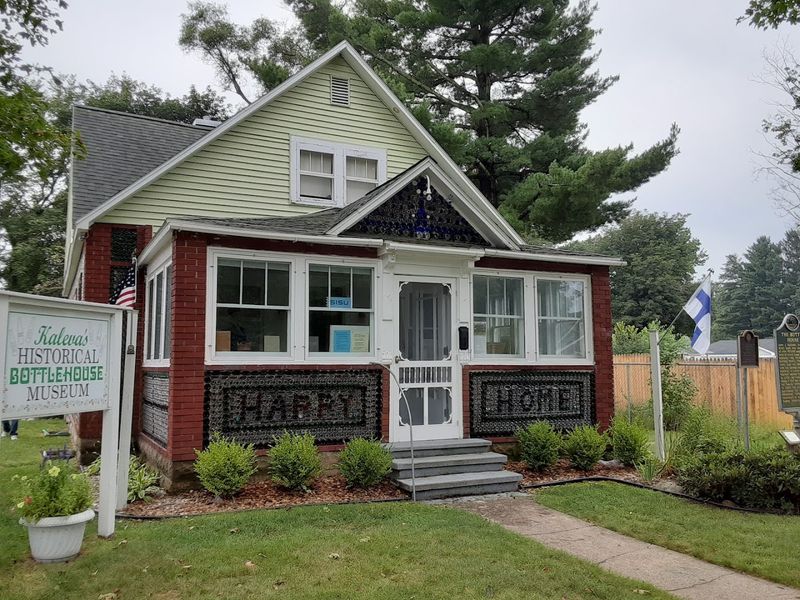
Somewhere in the tiny village of Kaleva, population just a few hundred, sits one of the most inventive buildings in all of Michigan. The Bottle House was constructed in 1941 by John Makinen, a Finnish immigrant who decided to build his home using over 60,000 glass bottles collected from a local bottling company.
What sounds like a wild art project turned out to be a genuinely sturdy and visually stunning structure that has stood for over 80 years.
Makinen arranged the bottles in careful patterns within the walls, creating a mosaic-like effect that catches the light in unexpected ways. The bottles included old soda, medicine, and liquor containers — basically whatever he could get his hands on.
It was a practical solution born from necessity, but the end result feels more like a folk art masterpiece than a recycled construction project.
The house is now a museum run by the Kaleva Historical Society, and visiting it feels like stepping into a completely different world. The interior is just as fascinating as the outside, with displays about Makinen’s life and the Finnish immigrant community that shaped this corner of Mason County.
The whole experience is surprisingly moving, especially when you realize one man built this largely on his own.
Kaleva is not exactly on the main tourist trail, which makes finding this place feel like a real discovery. It sits near the Manistee National Forest and the Betsie River corridor, so you can easily pair a visit with outdoor adventures.
If you are road-tripping through northern lower Michigan and skipping Kaleva, you are genuinely missing one of the state’s most original hidden treasures.
3. The Grand Castle Apartment Homes (Grandville)
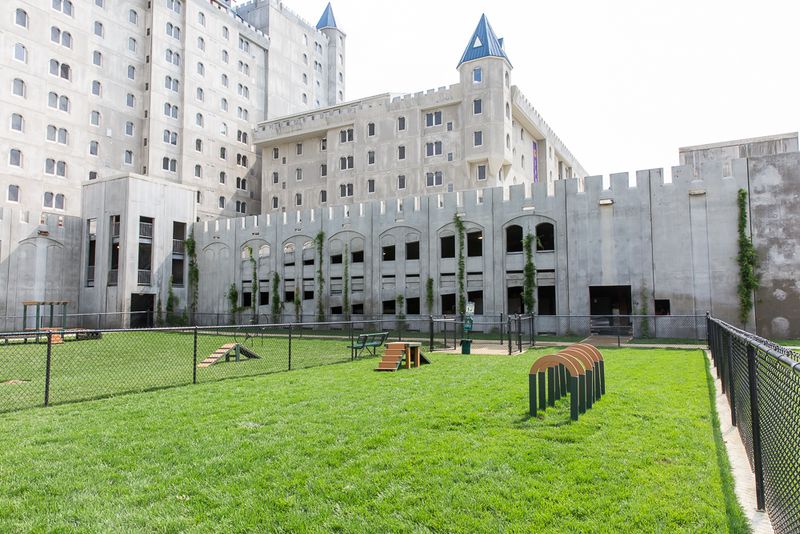
Most apartment complexes look like, well, apartment complexes. The Grand Castle in Grandville decided that was not good enough.
This residential development was built to look like a full-on medieval European fortress, complete with towers, turrets, crenellated rooflines, and stone-style facades that make you feel like you accidentally wandered into a fantasy novel rather than a suburb of Grand Rapids.
The complex stretches across a large property and the castle aesthetic is remarkably committed — this is not just a decorative archway slapped onto an ordinary building. The architectural details are layered throughout, from the exterior stonework to the tower structures that anchor the corners of the property.
It is the kind of place where you fully expect a drawbridge to appear at any moment.
What makes The Grand Castle genuinely interesting is the contrast between its dramatic visual identity and its completely normal function as a place where everyday people live. Residents go to work, walk their dogs, and check their mail — all within the walls of what looks like a castle lifted straight from the English countryside.
That collision between the fantastical and the mundane is what gives this place its strange, irresistible charm.
Grand Rapids-area residents have largely grown used to it, but first-time visitors do a serious double take when driving past. It has become something of an unofficial landmark for the western Michigan community.
Architecture enthusiasts who appreciate maximalist design choices will find it fascinating, and honestly, anyone who has ever daydreamed about living in a castle should at least make the drive past. It is weird, it is bold, and it is entirely Michigan — proof that even suburban housing can swing for the fences.
4. Temple Beth El (Bloomfield Hills/Bloomfield Township)
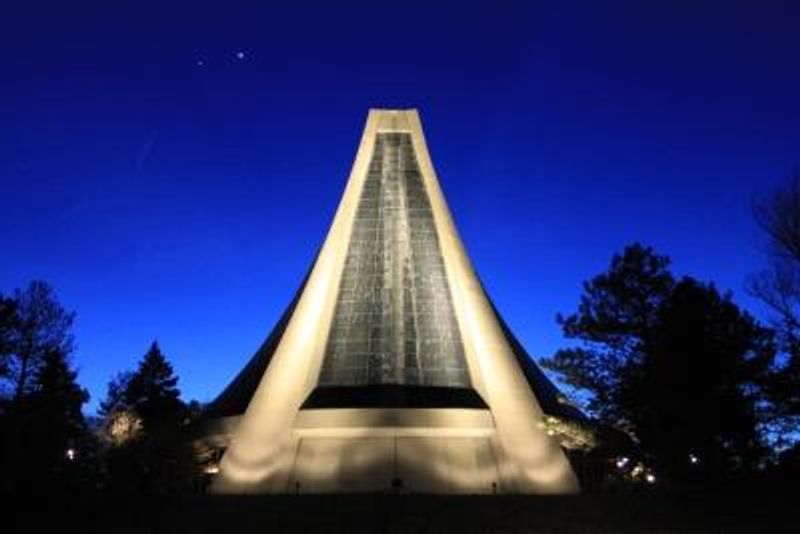
Designed by Minoru Yamasaki — the same architect responsible for the original World Trade Center towers in New York — Temple Beth El in Bloomfield Township is a building that commands serious attention. Completed in 1974, it blends modernist structural principles with delicate Gothic-inspired ornamentation in a way that feels both ancient and strikingly futuristic at the same time.
The exterior is defined by slender white concrete forms that rise dramatically and taper into pointed arches, giving the building an almost lace-like quality from a distance. A reflecting pool at the entrance adds a contemplative, almost otherworldly atmosphere before you even step inside.
Yamasaki had a gift for making concrete feel soft, and this building is one of his finest examples of that ability.
Inside, the sanctuary is flooded with natural light filtered through intricate stained glass and geometric screens. The effect is genuinely breathtaking — the kind of space that makes you stop talking and just look.
It is not unusual for visitors who are not members of the congregation to make a special trip just to experience the architecture firsthand.
Michigan has a surprisingly rich collection of significant 20th-century architecture, and Temple Beth El belongs in any serious conversation about the state’s greatest buildings. It sits in an affluent suburban setting that might not scream architectural pilgrimage, but do not let that fool you.
This is world-class design hiding in plain sight in Oakland County. For anyone who cares about what buildings can make people feel, Temple Beth El is an experience that lingers long after you have driven back home.
5. Charlevoix Mushroom Houses (Charlevoix)
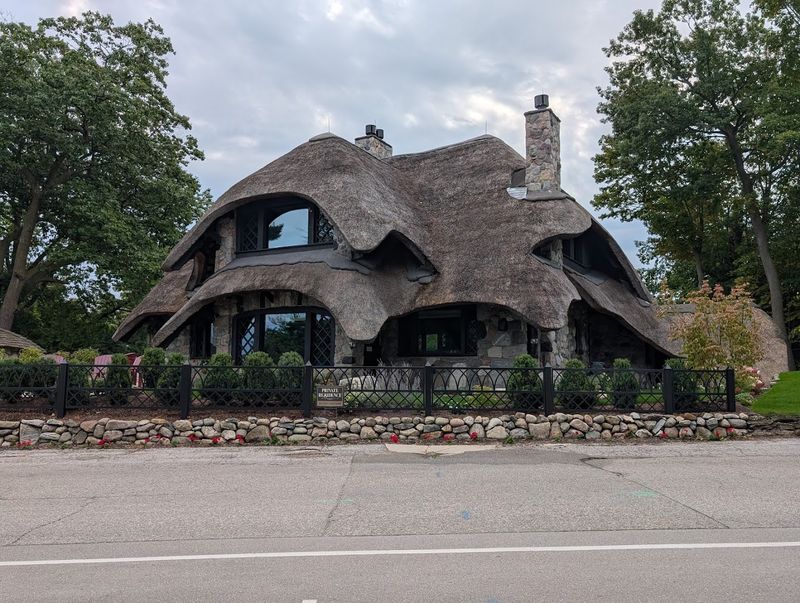
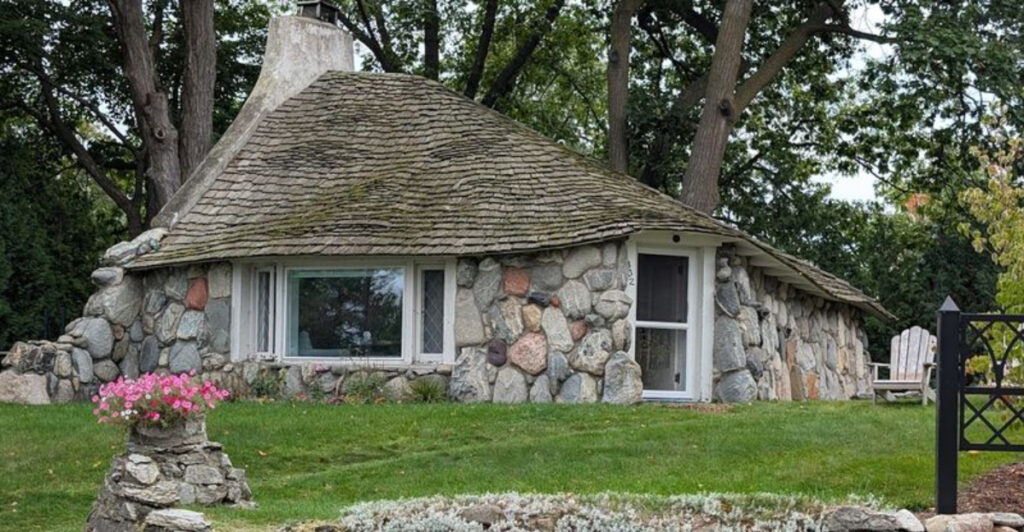
If a fairy tale had a zip code, it would probably be Charlevoix, Michigan. Scattered throughout this charming northern Michigan town are about 30 structures known as the Mushroom Houses, built between the 1920s and 1950s by a self-taught builder named Earl Young.
With no formal architectural training, Young created homes that look like they grew straight out of the earth — and that is not an accident.
Young sourced massive boulders from local fields and Lake Michigan beaches, shaping his buildings around them rather than forcing the stones to conform to a traditional design. The rooflines ripple and wave like something melting in slow motion.
Doorways are small and arched. Chimneys bulge with rounded stones.
Every single house feels like it was designed specifically for woodland creatures with very good taste.
The neighborhood where most of the Mushroom Houses stand is entirely walkable, and locals have grown accustomed to curious visitors strolling past with cameras. The houses are still privately owned, so you cannot go inside, but the exteriors are absolutely worth the trip on their own.
Charlevoix is already a beloved destination for its waterfront and dining scene, and the Mushroom Houses give it a layer of weirdness that sets it apart from every other resort town in the state.
Young reportedly worked without blueprints, trusting his instincts and adjusting as he went. That spontaneous, deeply personal approach to building is exactly what gives the houses their unmistakable energy.
No two are identical, and each one rewards a slow, close look. Charlevoix in summer is already magical — add the Mushroom Houses to your itinerary and the whole trip levels up in the best possible way.
6. Pickle Barrel House Museum (Grand Marais)
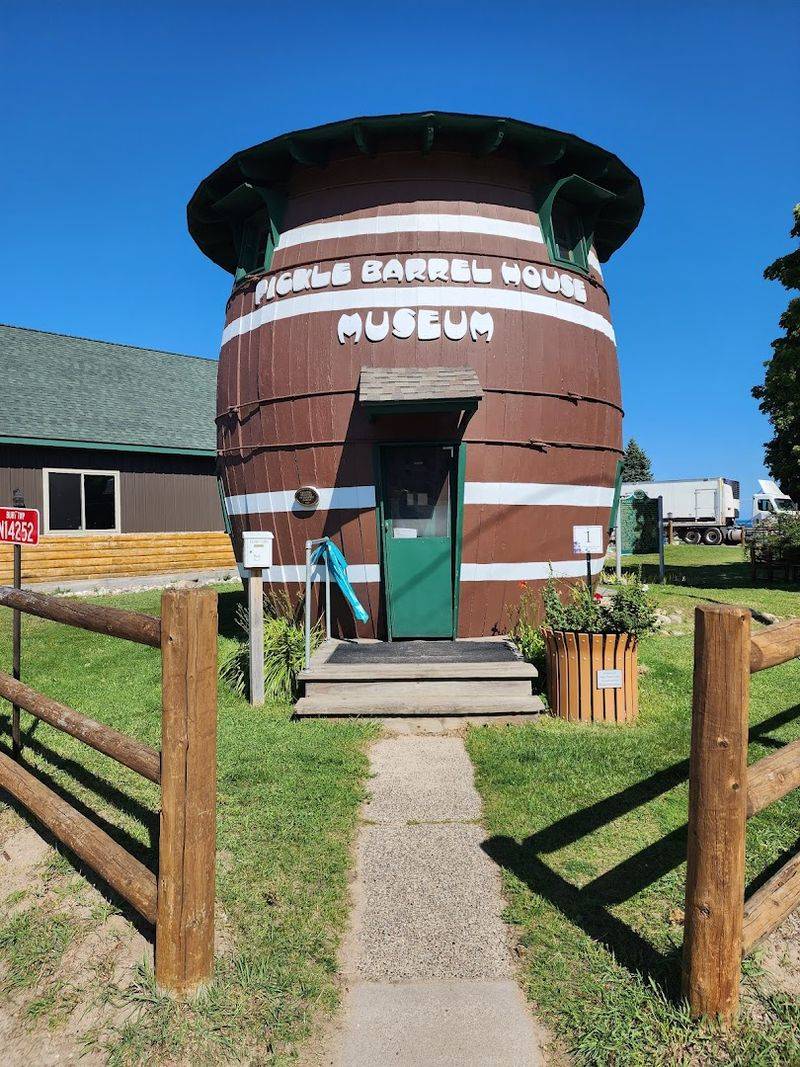
Two giant pickle barrels walked into the Upper Peninsula and became a house. That is essentially the origin story of the Pickle Barrel House in Grand Marais, one of the most delightfully absurd structures in Michigan history.
Built in 1926 by cartoonist William Donahey — the creator of the beloved “Teenie Weenies” comic strip — the cottage was designed to look exactly like a pair of oversized pickle barrels stacked and connected together.
Donahey used the cabin as a summer retreat, and it is easy to imagine the whimsical, playful mind behind the Teenie Weenies feeling right at home in a building shaped like a condiment container. The structure is small, cozy, and almost impossibly charming, sitting in a wooded setting near Lake Superior that feels completely removed from the rest of the world.
It is the kind of place that makes you want to slow down and stay awhile.
The house is now preserved as a museum and listed on the National Register of Historic Places, which means a pickle barrel cottage has officially achieved landmark status — and honestly, it deserves every bit of that recognition. The interior has been restored to reflect its 1920s character, giving visitors a genuine glimpse into Donahey’s creative world.
Guided tours are available during the summer season.
Grand Marais itself is a remote and ruggedly beautiful UP destination, beloved by hikers, kayakers, and anyone who appreciates being genuinely off the beaten path. Adding the Pickle Barrel House to a Pictured Rocks National Lakeshore trip makes for one of the most memorable Michigan adventure combinations imaginable.
Weird, historic, and completely one-of-a-kind — this little barrel house earns its place on any Michigan road trip list.
7. Eli and Edythe Broad Art Museum (East Lansing)
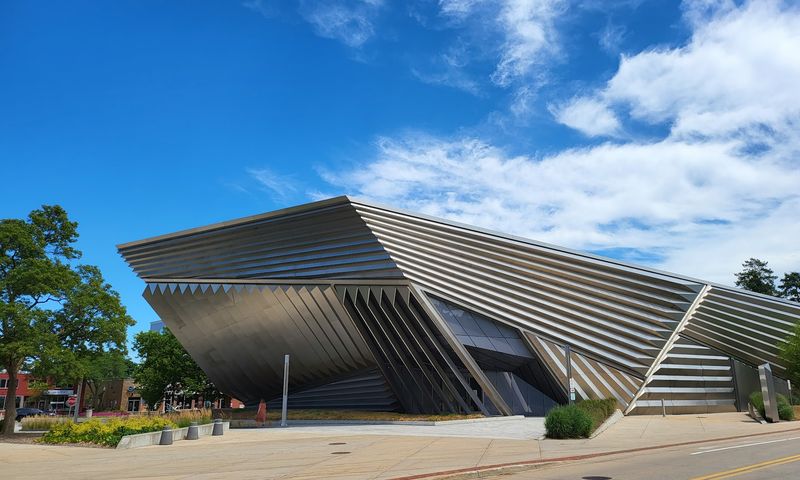
Zaha Hadid did not do subtle. The late Iraqi-British architect was famous for designs that looked like the laws of physics had politely been asked to step aside, and the Eli and Edythe Broad Art Museum at Michigan State University is a perfect example of her unapologetic vision.
Opened in 2012, the building looks like a crumpled sheet of stainless steel and glass that somehow landed on the MSU campus and decided to stay.
The facade is all sharp angles, slanted planes, and reflective metallic surfaces that shift in appearance depending on the time of day and the angle from which you approach. There is no single “correct” view of this building — it reveals something different from every direction.
That restless, dynamic quality is intentional; Hadid wanted the structure to feel alive and in motion even while standing perfectly still.
Inside, the galleries are just as unconventional as the shell that contains them. Sloping floors, unexpected ceiling heights, and walls that lean and tilt create an environment where the architecture itself becomes part of the artistic experience.
The museum houses an impressive permanent collection and regularly hosts major traveling exhibitions, making it a genuine cultural destination rather than just an architectural showpiece.
For Michigan State students, the Broad is a daily reminder that world-class design exists right in their backyard. For everyone else, it is a compelling reason to visit East Lansing even when there is no football game on the schedule.
Hadid passed away in 2016, and buildings like the Broad serve as lasting proof of just how far outside the conventional box she was willing to go. It is bold, strange, and absolutely worth seeing in person.
Share this story