Michigan has a way of completely transforming itself when spring rolls around, and honestly, it never gets old. From vibrant tulip fields stretching as far as the eye can see to thundering waterfalls finally freed from winter ice, the state puts on quite a show.
Whether you are a lifelong Michigander or just passing through, these spots will make you fall hard for everything the Great Lakes State has to offer. Pack a light jacket, charge your camera, and get ready for a spring road trip you will be talking about all year long.
1. Dow Gardens
Some gardens feel like they were designed for postcards, and Dow Gardens in Midland is exactly that kind of place. Opened in 1899 as the personal garden of Herbert H.
Dow, founder of the Dow Chemical Company, this sprawling 110-acre space has grown into one of Michigan’s most celebrated horticultural destinations. Spring is when the whole property practically glows.
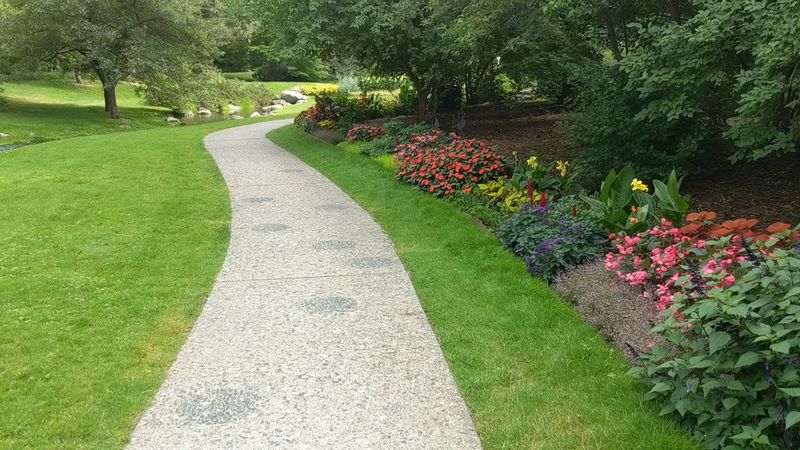
Tulips, daffodils, and flowering trees burst into color across every corner of the grounds. The winding paths feel almost meditative, pulling you deeper into sections dedicated to children’s gardens, nature-inspired sculptures, and carefully curated plantings.
You never quite know what you will round the corner to find, and that sense of discovery keeps every visit feeling fresh.
Families with kids will appreciate the Whiting Forest canopy walk, which connects to Dow Gardens and lets you experience the treetops from a whole new angle. It is genuinely one of the coolest features at any botanical attraction in the Midwest.
Spring light filtering through new leaves up there is something you have to see to believe.
General admission is affordable, and the gardens are open year-round, but spring crowds come for good reason. Weekday mornings offer the quietest experience if you prefer to wander without bumping elbows with fellow visitors.
Midland itself is a charming small city worth exploring before or after your garden visit.
Photographers especially love the early May window when multiple bloom cycles overlap, layering colors in a way that feels almost theatrical. Bring comfortable walking shoes because you will want to cover every inch.
Dow Gardens earns its reputation as one of Michigan’s finest spring escapes without breaking a sweat.
2. Windmill Island Gardens
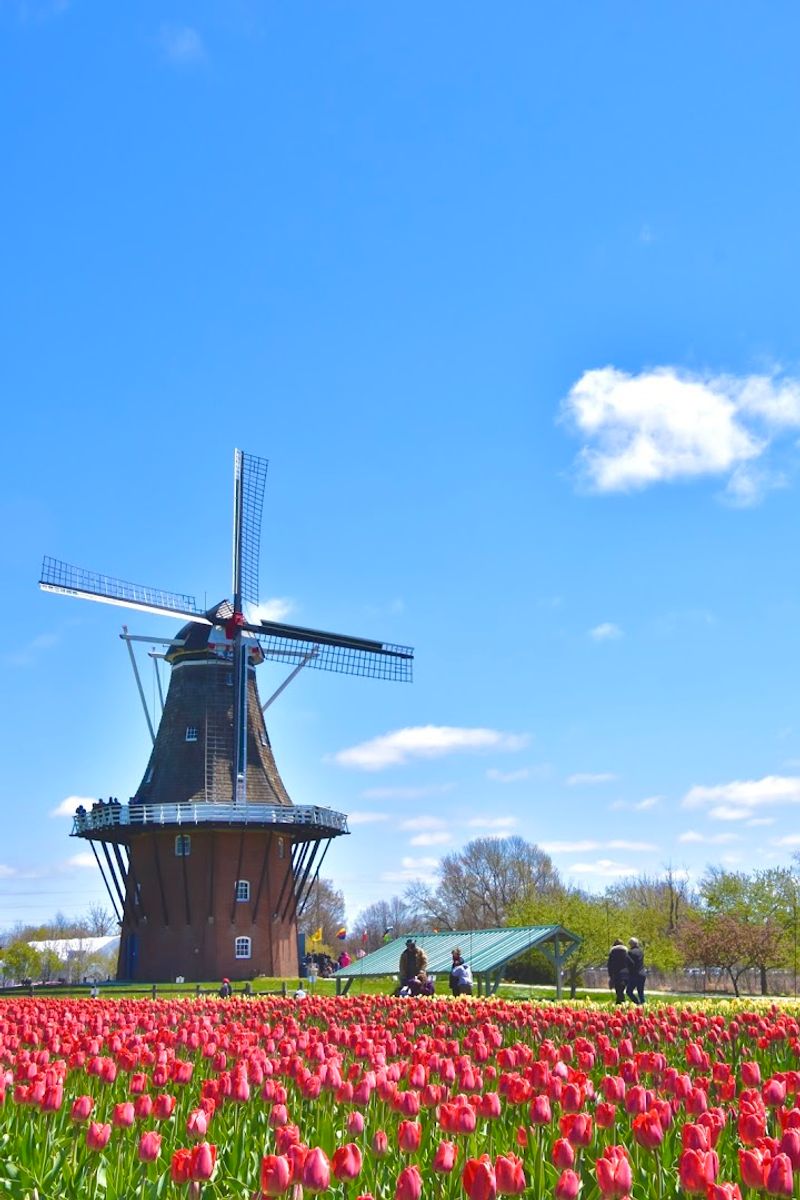
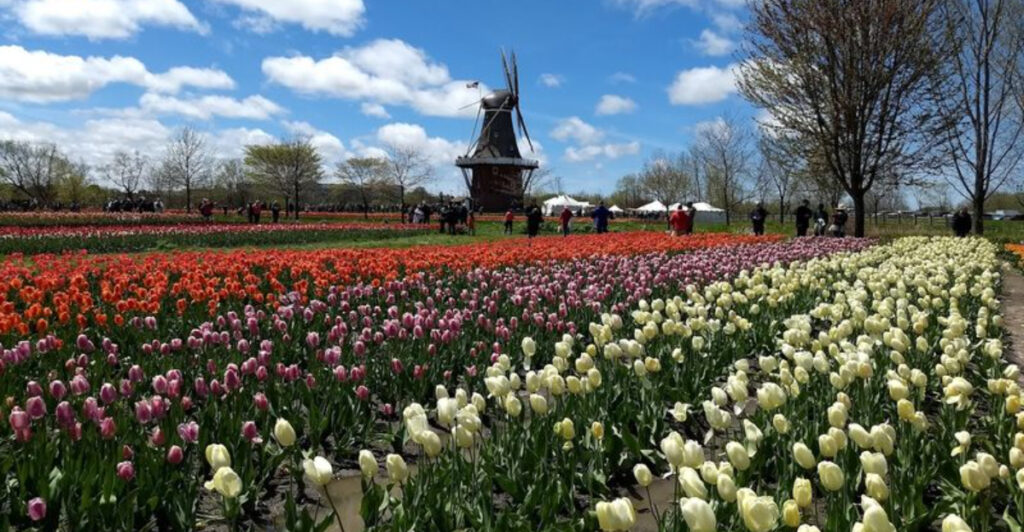
Standing at the edge of a tulip field with a 250-year-old authentic Dutch windmill towering behind you is a surreal experience that Holland, Michigan pulls off with complete sincerity. Windmill Island Gardens is home to De Zwaan, the only operating Dutch windmill permitted to be exported from the Netherlands, and it anchors one of the most visually striking spring destinations in the entire Midwest.
The gardens surrounding the windmill are planted with tens of thousands of tulips that bloom in waves throughout April and May. Vivid reds, purples, yellows, and pinks carpet the grounds in a display that honestly makes people stop mid-sentence just to stare.
Combine that with the canals, drawbridge, and Dutch-style architecture, and you start wondering if you accidentally stepped onto a movie set.
Admission to Windmill Island Gardens is separate from the Tulip Time Festival, though the two experiences complement each other perfectly if you plan a visit during the festival week in May. The gardens open seasonally, so checking current hours before your trip is a smart move.
Arriving early in the morning gives you the best light for photos and thinner crowds before tour buses roll in.
Kids love the carousel and the open green spaces where they can run freely between the flower beds. Adults tend to linger near the windmill itself, which still grinds flour on select days.
Watching it spin against a clear spring sky is oddly satisfying in a way that is hard to explain until you experience it firsthand.
Holland locals are genuinely proud of this place, and that community energy comes through in how well the gardens are maintained. Every detail feels intentional, from the plantings to the pathways.
It is a destination that rewards slow, unhurried exploration.
3. Tahquamenon Falls State Park
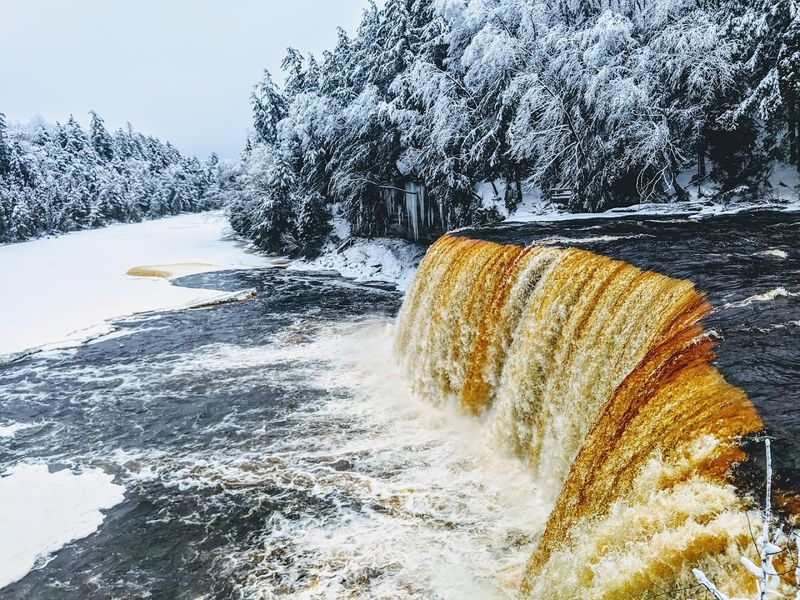
Few things in Michigan hit as hard as seeing Tahquamenon Falls in full spring flood. The Upper Falls rank among the largest waterfalls east of the Mississippi River, and when snowmelt pours into the Tahquamenon River each spring, the amber-tinted water roars over the edge with a power that you feel in your chest.
The distinctive tea color comes from tannins leaching from surrounding cedar swamps, giving the falls an almost otherworldly look.
Located in the eastern Upper Peninsula near Paradise, Michigan, Tahquamenon Falls State Park is a year-round destination, but spring transforms it into something especially dramatic. Trails along the riverbank become lush and green almost overnight, and the forest canopy fills in with fresh new growth that frames every overlook view beautifully.
Wildlife activity picks up considerably, making it a rewarding spot for birdwatchers and nature photographers.
The park features both Upper and Lower Falls, connected by a roughly four-mile trail through old-growth forest. The Lower Falls offer a unique option to rent a rowboat and paddle right up to the cascades, which is an experience unlike anything else in Michigan.
Spring water levels make the Lower Falls particularly impressive and energetic during April and May.
Camping within the park is available and fills up quickly once warmer weather arrives, so booking ahead is strongly recommended. The small town of Paradise nearby has basic amenities and a couple of local spots worth stopping into.
Cell service is limited out here, so downloading offline maps before your trip saves unnecessary frustration.
Tahquamenon is the kind of place that reminds you just how wild and beautiful Michigan’s Upper Peninsula truly is. The scale of the falls is humbling in the best possible way, and spring is when that humbling feeling hits hardest.
4. Nichols Arboretum — W.E. Upjohn Peony Garden
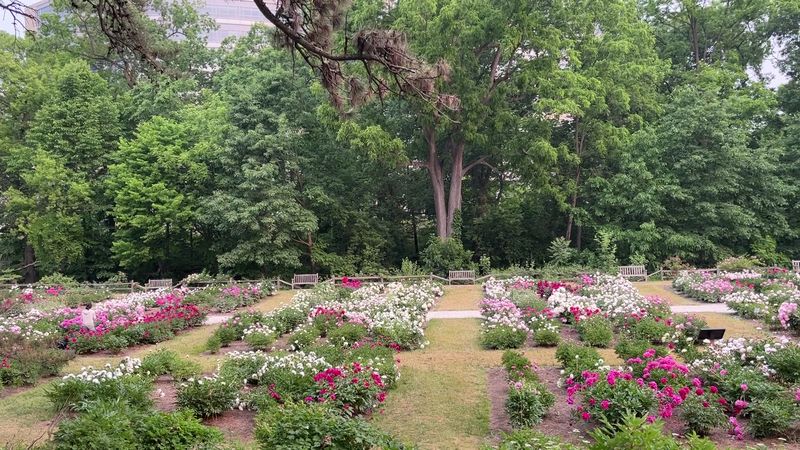
Tucked into the bluffs above the Huron River on the University of Michigan campus in Ann Arbor, Nichols Arboretum is a 123-acre living laboratory that most people outside the area have never heard of. That is genuinely a shame, because the W.E.
Upjohn Peony Garden alone makes the arboretum worth putting on your spring bucket list. With over 250 varieties of peonies, many of them dating back to the early 1900s, this garden is a living archive of horticultural history.
Peak bloom typically arrives in late May and early June, when the air around the garden becomes heavily fragrant and the colors shift from soft blush pinks to deep magenta and ivory. Visiting during peak bloom is a full sensory experience that photographs cannot fully capture.
The garden sits within a larger arboretum that includes native plant collections, woodland trails, and sweeping river valley views.
Admission to Nichols Arboretum is free, which makes it one of the best deals in Michigan for spring outdoor experiences. University students use the trails year-round, but spring weekends draw a broader crowd of families, couples, and garden enthusiasts from across the region.
Parking near the arboretum can be tight on busy weekends, so arriving early or using nearby campus lots helps considerably.
The trail network winds through diverse plant communities that shift dramatically between spring and summer, rewarding repeat visitors throughout the season. Benches are scattered throughout, encouraging the kind of slow, contemplative visit that modern life rarely allows.
Bring a book and a snack and plan to stay longer than you originally intended.
Ann Arbor itself adds tremendous value to the trip, with excellent coffee shops, restaurants, and bookstores within easy walking distance. The arboretum and the city together make for a near-perfect spring day.
5. Holland State Park
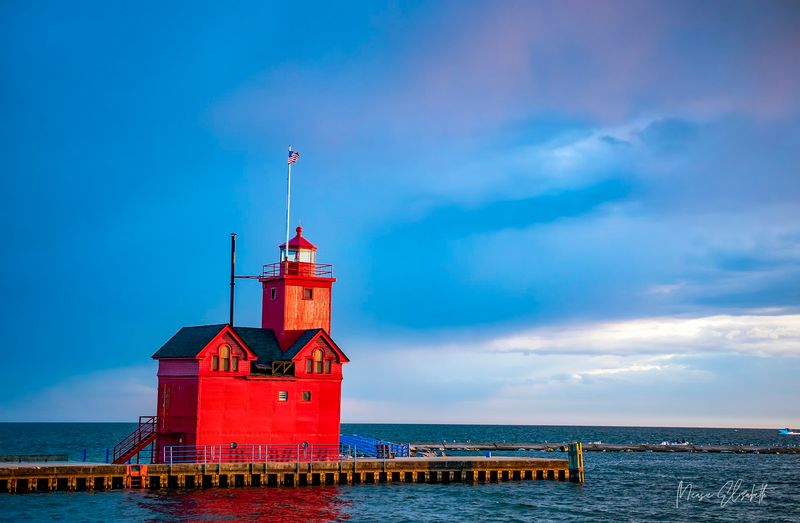
Holland State Park earns its reputation as one of Michigan’s most visited state parks almost entirely on the strength of its setting. The park sits right where Lake Michigan meets the Black River channel, and the combination of a wide sandy beach, calm inland lake access, and the iconic Big Red lighthouse creates a visual package that is genuinely hard to beat.
Spring brings a quieter, more personal version of this landscape before summer crowds arrive in full force.
April and May at Holland State Park feel almost like having the place to yourself compared to July. The lake water is still cold enough to keep swimmers away, but the shoreline is stunning for long walks, kite flying, and watching dramatic spring storms roll in off Lake Michigan.
Those spring storms, by the way, are absolutely worth experiencing from the safety of the beach — the light and energy during a passing storm system is unforgettable.
Camping at the park is enormously popular and reservations open months in advance, so planning ahead is essential if you want to stay overnight. Day-use visitors pay a standard state park entry fee, which is very reasonable for what you get.
The campground sits close enough to downtown Holland that a quick drive for dinner or the Tulip Time Festival is easy to pull off.
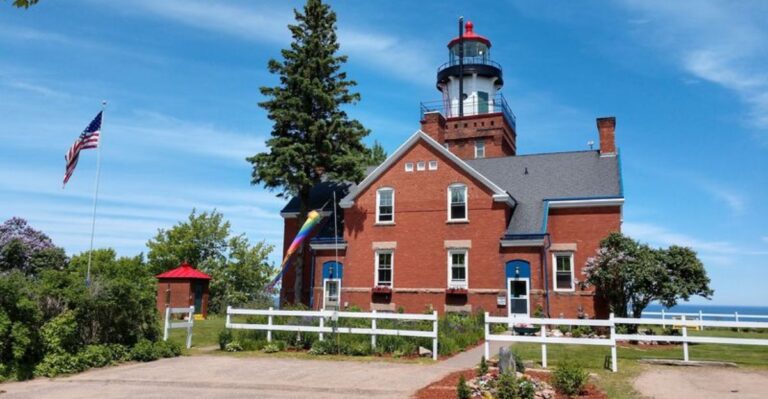
The lighthouse itself, officially named the Holland Harbor South Pierhead Light, has been a symbol of the region for generations. Walking out along the pier toward it during spring, with waves splashing against the concrete and seagulls overhead, feels like a moment ripped straight from a Michigan postcard.
Sunset from this pier in May is something locals treasure and visitors rarely forget.
Holland State Park rewards visitors who show up without rigid expectations and simply let the lake set the agenda for the day.
6. Tulip Time Festival
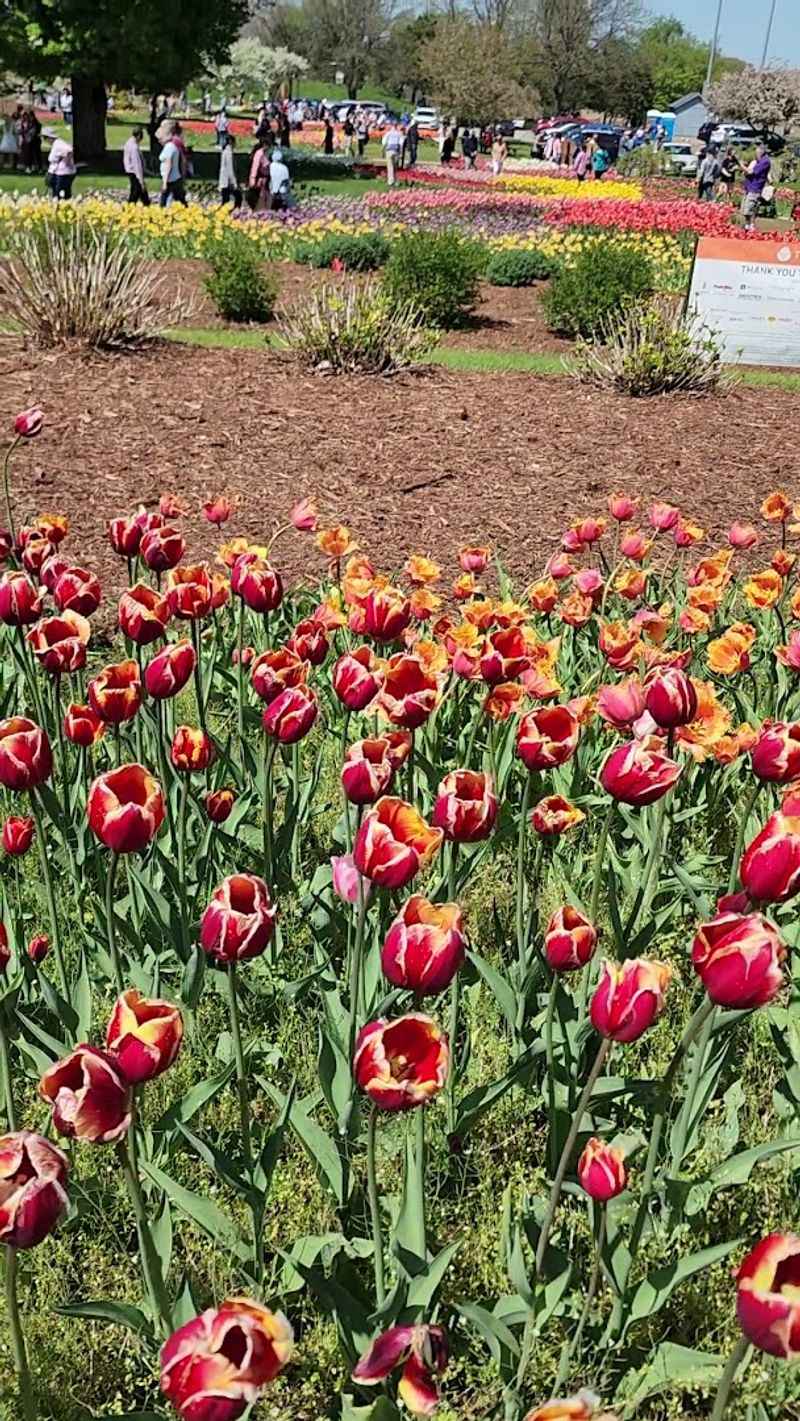
Every May, the city of Holland transforms into something that feels borrowed from the Dutch countryside, and the Tulip Time Festival is the reason why. Running for over 90 years, this annual celebration draws hundreds of thousands of visitors to experience more than four and a half million tulips blooming across the city’s parks, medians, and gardens.
It is one of the top floral festivals in the entire United States, and it earns that status every single year.
The festival spans multiple days and packs in a genuinely impressive lineup of events, including Dutch folk dancing performances, a parade, live music, street markets, and guided garden tours. The Volksparade, featuring participants in traditional Dutch costumes, is a crowd favorite and a photo opportunity that feels surprisingly authentic given how far we are from Amsterdam.
Kids and adults both get swept up in the energy without any effort required.
Navigating the festival smartly means arriving early on weekday mornings when the tulip fields are at their most photogenic and the streets are calmer. Weekends during peak bloom can get extremely congested, and parking becomes a creative exercise in patience.
Using park-and-ride options and shuttle services the festival organizes makes the whole experience significantly smoother.
Local businesses lean fully into the celebration, with restaurants offering Dutch-themed specials and shops stocking up on windmill and tulip souvenirs that range from kitschy to genuinely beautiful. The food scene in Holland has improved considerably in recent years, so eating well during the festival is easier than it used to be.
Tulip Time is one of those Michigan events that people assume they will attend someday and then keep putting off. Stop delaying — book a hotel room early and commit to it.
You will leave wondering why you waited so long.
7. Pictured Rocks National Lakeshore
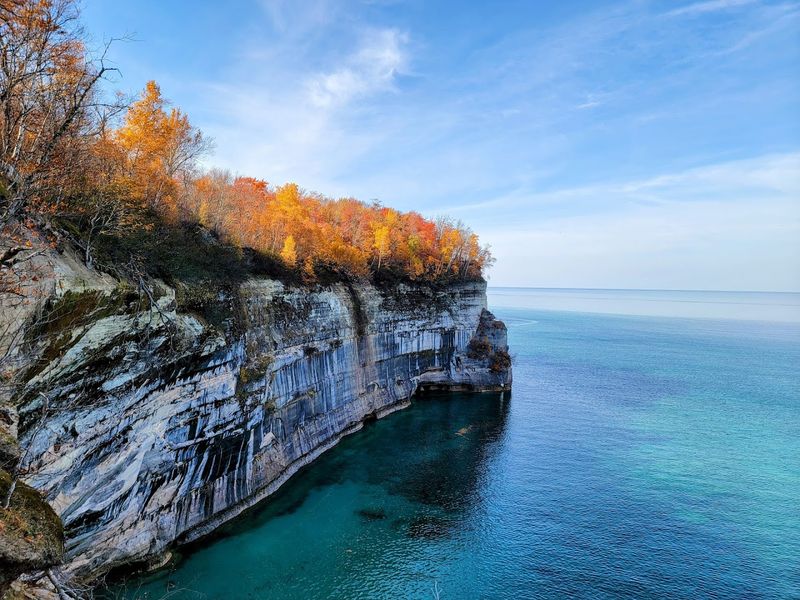
There is nothing quite like standing at the edge of Lake Superior and staring up at sandstone cliffs streaked in copper, iron, and manganese that have been painting themselves for thousands of years. Pictured Rocks National Lakeshore stretches for 42 miles along the southern shore of Lake Superior in Michigan’s Upper Peninsula, and spring is when the crowds are thinnest and the landscape feels most raw and alive.
The cliffs rise up to 200 feet above the water and carry colors that shift depending on light conditions throughout the day.
Kayaking along the base of the cliffs is the most exhilarating way to experience Pictured Rocks, and several outfitters in Munising offer guided spring tours once lake conditions are safe. Seeing the arches, caves, and colorful rock faces from water level gives you a completely different perspective than any trail can provide.
Spring paddling trips fill up fast, so booking well in advance is strongly advised.
Hikers have plenty to work with too, since the North Country Trail runs the full length of the lakeshore and connects to dozens of trailheads with varying difficulty levels. Chapel Falls and Miners Beach are consistently popular starting points for day hikers who want dramatic payoffs without committing to a multi-day backpacking trip.
Waterfalls in the park run especially strong during spring snowmelt, adding extra drama to every hike.
The town of Munising serves as the main gateway and offers lodging, gear rentals, and good food options that have expanded noticeably in recent years. Arriving midweek and staying at least two nights gives you enough time to cover the highlights without feeling rushed.
Cell service is spotty throughout much of the park, so downloading trail maps ahead of time is a practical necessity rather than an optional step.
8. Veldheer Tulip Gardens
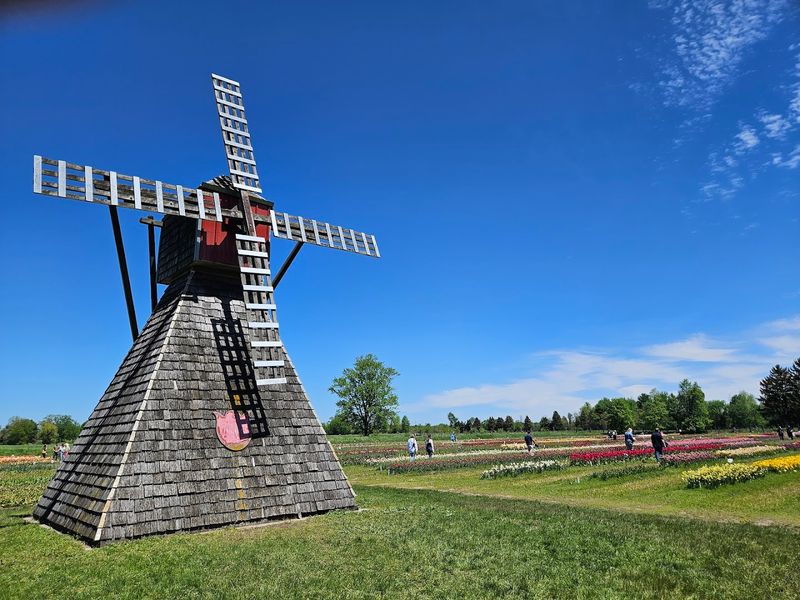
Veldheer Tulip Gardens has been growing tulips in Holland, Michigan since 1950, and the family operation has become something of a living institution in West Michigan. Unlike many tulip attractions that are primarily ornamental, Veldheer is a working tulip farm where the flowers you are admiring are also being grown for bulb sales and commercial purposes.
That practical reality gives the place an authenticity that purely decorative gardens sometimes lack.
The fields at Veldheer stretch out in long, color-blocked rows that are almost hypnotically satisfying to walk alongside. Spring bloom season typically runs from late April through mid-May, though exact timing shifts with weather patterns each year.
The farm also grows daffodils and hyacinths earlier in the season, meaning there is something worth seeing even before the tulips hit full stride.
On-site, you will find a gift shop stocked with tulip bulbs, Dutch gifts, and wooden shoes that range from decorative to fully functional. The adjacent DeKlomp Wooden Shoe and Delftware Factory lets visitors watch artisans carve wooden shoes and paint traditional Delftware pottery, adding a cultural layer that makes the stop feel more substantial than a simple flower walk.
It is a surprisingly engaging experience even for people who came purely for the tulips.
Veldheer sits just a few minutes from Windmill Island Gardens and the heart of downtown Holland, making it easy to combine multiple stops into a single spring day. Admission is free to walk the grounds, which is a refreshingly generous policy that keeps the farm accessible to everyone.
Purchasing bulbs to bring home and plant in your own garden is one of the most satisfying souvenirs you can leave with.
The farm’s long history and family ownership give it a warmth that commercial attractions rarely replicate. Come for the color, stay for the story behind it.
9. Kensington Metropark
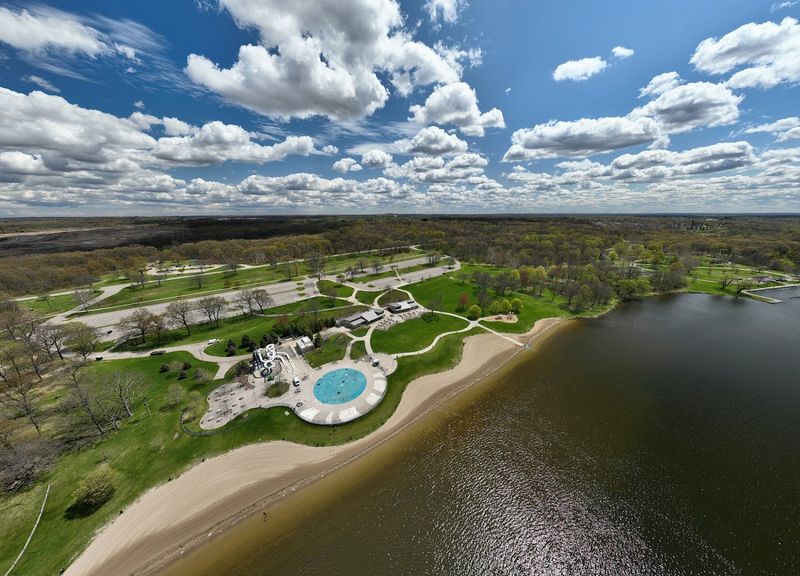
Located about 30 miles northwest of Detroit, Kensington Metropark is one of those places that Southeast Michigan residents have a deep, almost protective affection for. The park covers over 4,000 acres centered around Kent Lake, and spring turns the entire property into a layered showcase of wildflowers, migrating birds, and newly leafed-out forest that rewards every kind of outdoor visitor.
It is the kind of park that quietly earns its place on your regular rotation.
The Farm Center is a highlight that often surprises first-time visitors, especially families with younger kids. Spring brings baby animals, farm demonstrations, and an educational energy that keeps children genuinely engaged rather than simply tolerating an outdoor trip.
Watching lambs and calves in their first weeks of life is the kind of experience that sticks with kids long after the drive home.
Birding at Kensington during spring migration is seriously underrated. The park sits along migratory flyways and hosts impressive warbler activity during May, drawing birders with binoculars and long lens cameras from across the region.
Even casual nature lovers who could not name a single warbler species tend to notice and appreciate the unusual level of bird activity happening around them.
Boating, fishing, and kayaking on Kent Lake are all available once spring conditions allow, and the calm inland water is far more approachable for families than Lake Michigan or the larger Great Lakes. Rental equipment is available on-site, which removes a major logistical barrier for visitors who do not own their own gear.
The trail network is extensive enough that you can easily spend a full day exploring without retracing your steps.
Kensington Metropark proves that you do not need to drive hours north for a restorative spring nature experience. Sometimes the best destination is closer than you think.
10. Sleeping Bear Dunes National Lakeshore
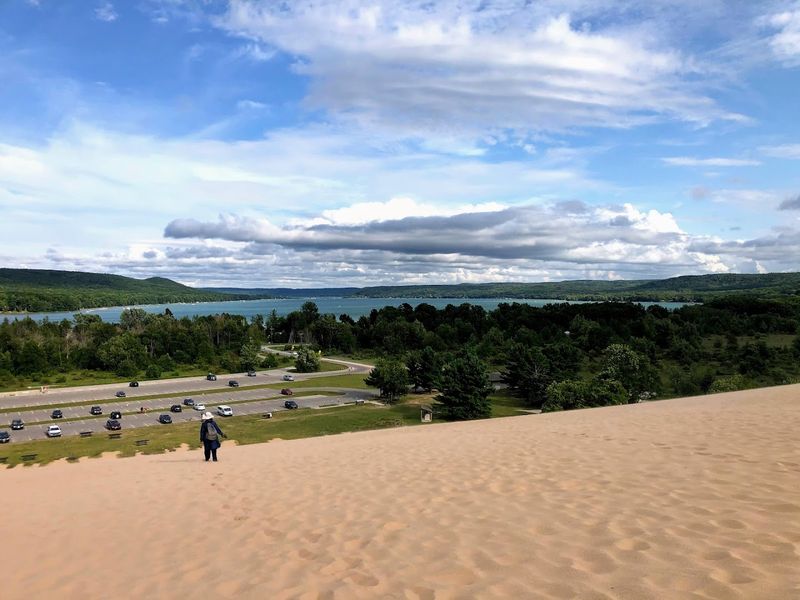
Sleeping Bear Dunes National Lakeshore was once voted the most beautiful place in America by viewers of Good Morning America, and while rankings like that are always subjective, standing at the top of the dune overlook and staring down at the impossibly blue-green water of Lake Michigan makes it very hard to argue with the crowd. Spring is a particularly magical window to visit because the tourist volume is manageable, the air is crisp, and the contrast between snow-dusted dune edges and clear lake water is visually stunning.
The Dune Climb is the park’s most iconic activity and is accessible year-round, but spring brings a different energy to it. Climbing the steep sand face with cool air in your lungs and few other people around feels more like an adventure than a tourist activity.
The views from the top stretch across Glen Lake and deep into the forest below in a way that justifies every labored step of the ascent.
Beyond the famous dunes, the park encompasses two Manitou Islands, inland lakes, historic farms, and over 100 miles of hiking trails. Pierce Stocking Scenic Drive, a 7.4-mile loop through the park’s most dramatic landscapes, reopens in spring and offers overlooks that photographers have been obsessing over for decades.
The drive is leisurely enough to complete with young kids without anyone losing patience.
The nearby towns of Glen Arbor and Empire are small but packed with character, offering excellent bakeries, galleries, and locally owned shops that feel nothing like chain tourist traps. Empire is also home to the park’s visitor center, which is a helpful first stop for maps and current trail conditions.
Sleeping Bear rewards visitors who slow down and stay curious, because every trail seems to reveal something unexpected.
11. Mackinac Island — Spring Opening Season
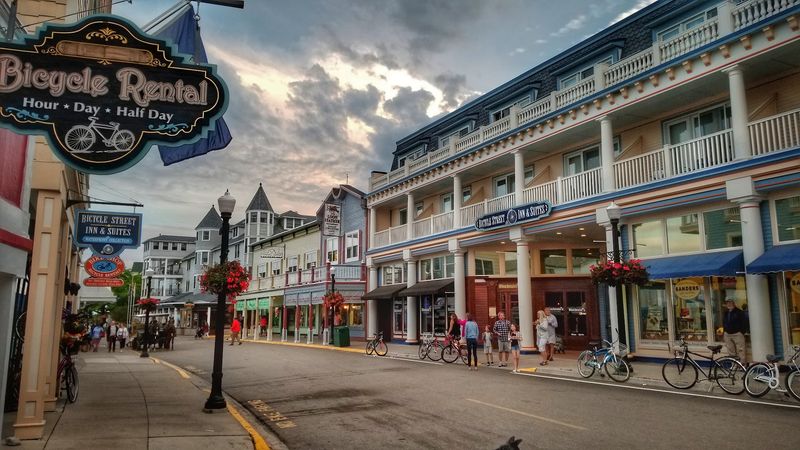
Mackinac Island in spring is a completely different experience from the packed summer version most people know. The island officially reopens each spring after a quiet winter, and those first weeks carry a kind of electric anticipation that is hard to describe unless you have been there for it.
Shops throw open their doors, fudge shops fire up their copper kettles, and the clip-clop of horse-drawn carriages returns to streets that have been silent since fall.
No motor vehicles are allowed on Mackinac Island, which means getting around is done entirely by foot, bicycle, or horse-drawn carriage. That policy, which has been in place for over a century, gives the island a pace that feels genuinely removed from modern life.
Renting a bicycle and circling the island’s 8-mile perimeter road in spring, with cool lake air and views of the Mackinac Bridge in the distance, is one of Michigan’s great simple pleasures.
The lilac trees on Mackinac Island are legendary, and the annual Lilac Festival in early June marks one of the most beloved community celebrations in the state. The island is covered in lilac bushes that bloom in purple, white, and pink, filling entire neighborhoods with fragrance that hits you the moment you step off the ferry.
Timing a visit around peak lilac bloom is absolutely worth the planning effort it requires.
Fort Mackinac, perched on a bluff above the town, offers spring programming that includes historical reenactments and guided tours that bring the island’s 18th-century military history to life. The Grand Hotel opens for the season in spring and welcomes day visitors for a fee, allowing access to its famous 660-foot porch and immaculate grounds.
Mackinac Island in spring feels like catching a beloved place in a quiet, honest moment before the rest of the world shows up.
12. Matthaei Botanical Gardens
Matthaei Botanical Gardens sits on the eastern edge of Ann Arbor and operates as part of the University of Michigan, though it functions very much as a community resource that anyone can enjoy. The 300-acre property blends formal garden spaces with natural habitats, including restored prairie, woodland wildflower areas, and a wetland ecosystem that comes alive in spectacular fashion each spring.
It is a destination that rewards curiosity and slow walking in equal measure.
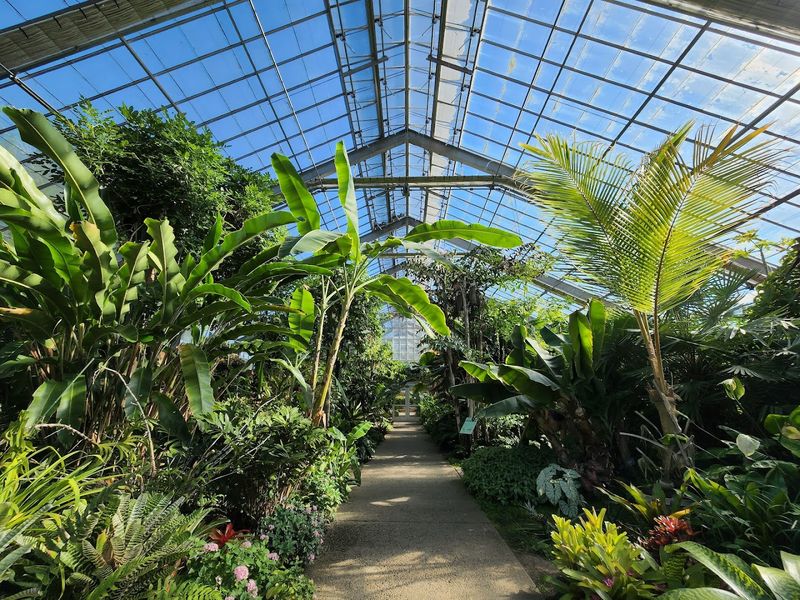
The Conservatory at Matthaei houses tropical, warm temperate, and arid plant collections that provide a lush contrast to Michigan’s spring shoulder season weather. On a chilly April morning, stepping into the warm, humid tropical house feels like a small miracle.
The conservatory is open year-round and is especially appreciated by visitors who arrive before outdoor blooms reach their peak.
Spring wildflower season in the woodland sections of Matthaei is a genuine highlight that local naturalists look forward to every year. Trillium, trout lily, Virginia bluebells, and bloodroot create ephemeral carpets of color across the forest floor that are only present for a brief window each spring.
Missing that window feels like a minor tragedy once you have experienced it, which is why regulars start checking bloom reports obsessively by mid-April.
Admission to the outdoor gardens is free, while the conservatory has a small suggested donation. The gardens also host educational programming, guided walks, and community events throughout spring that add social energy to what might otherwise be a solitary nature experience.
Families, photographers, and students all find their own reasons to keep coming back.
Matthaei pairs beautifully with a visit to Nichols Arboretum, since both are managed by the university and are only a short drive apart. Ann Arbor’s vibrant food scene makes rounding out the day with a great meal an easy and satisfying conclusion.
13. Frederik Meijer Gardens & Sculpture Park
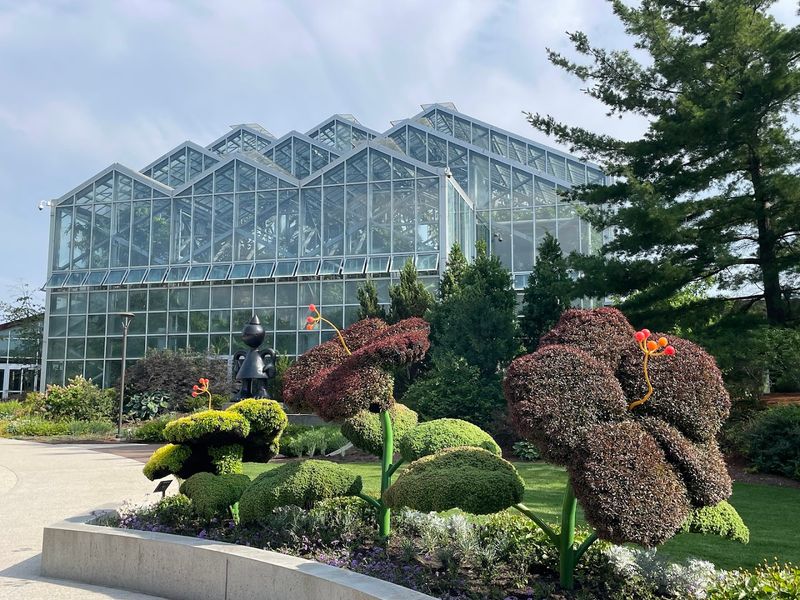
Walking through Frederik Meijer Gardens and Sculpture Park in Grand Rapids feels like someone merged a world-class art museum with a botanical garden and then set the whole thing outdoors under a Michigan sky. The 158-acre property houses an internationally significant sculpture collection alongside meticulously maintained gardens that shift in character and color with every season.
Spring is when the outdoor spaces reclaim their full visual power after months of dormancy.
The Michigan Wonders of the World Garden, the Japanese Garden, and the English Perennial Garden all hit their spring stride between April and June, layering textures and colors in ways that make every turn along the paths feel intentional and surprising. Sculptures by artists including Auguste Rodin, Mark di Suvero, and Deborah Butterfield are positioned throughout the landscape in dialogue with their natural surroundings.
Seeing a massive bronze sculpture framed by flowering cherry trees is the kind of image that stays with you.
Inside, the conservatory houses one of the most impressive tropical and arid plant collections in the Midwest, including a dedicated butterfly garden that becomes especially enchanting during spring programming. The annual Butterflies Are Blooming exhibit runs through the spring season and fills the conservatory with hundreds of free-flying tropical butterflies.
Children lose their minds for it in the best possible way, and adults are not far behind.
Admission is reasonably priced given the scale and quality of what the gardens offer, and membership options make frequent visits financially smart for West Michigan families. The on-site cafe offers solid food options for a mid-visit break without requiring you to leave the property.
Evening events during spring, including outdoor concerts and garden parties, extend the experience well beyond standard daytime hours.
Frederik Meijer Gardens consistently ranks among Michigan’s most visited cultural attractions, and every spring visit makes clear why that reputation is completely justified.
Share this story