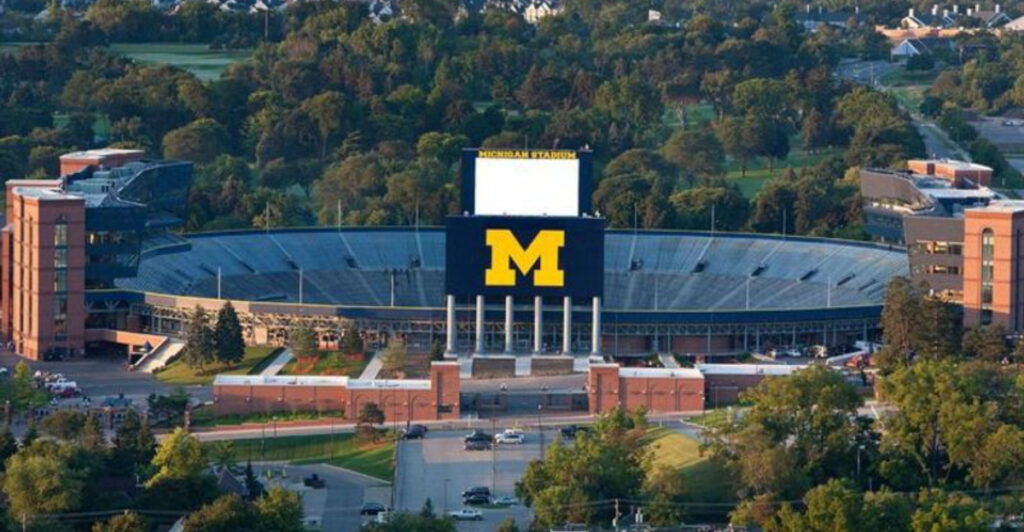
The Big House earns its nickname the moment the stadium opens up beneath your feet. Tucked into the residential streets of Ann Arbor, Michigan Stadium can seem almost understated from the outside, but everything changes once you step through the gates and the massive bowl drops into view.
More than 110,000 seats wrap around a field that has carried Michigan football history since 1927, turning game days into something louder, bigger, and more emotional than a simple sporting event. It is the kind of place where the scale hits first, the noise follows, and your chest tightens before the ball is even snapped.
A Stadium That Swallows You Whole The Moment You Step Inside
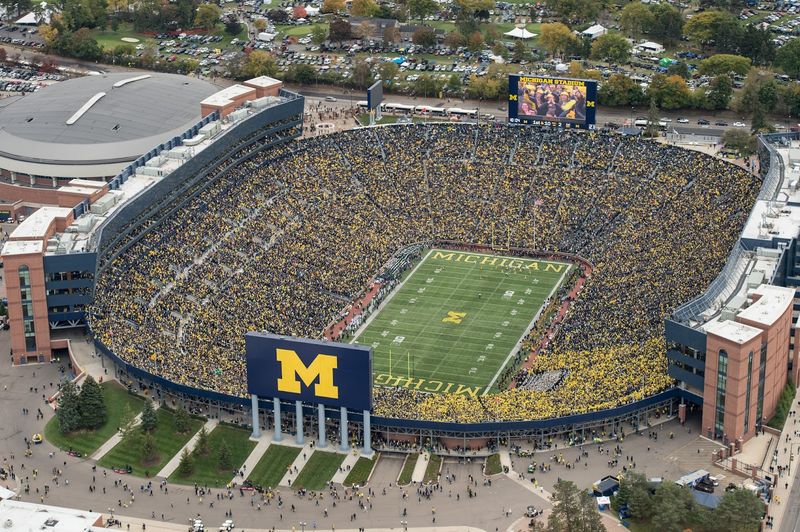
Nothing prepares you for the drop. From the outside, Michigan Stadium sits low into the ground — a design choice made when it was built in 1927 that keeps it from towering over the Ann Arbor skyline.
But the second you pass through the tunnel and the full interior opens up around you, the scale hits hard. The bowl stretches downward and outward in every direction, and the sheer number of seats stacked above and below creates a visual effect that genuinely stops people mid-step.
The stadium was built by excavating deep into the earth, which is why so much of the structure sits below street level. That sunken bowl design is what makes the sightlines so clean.
No matter where you sit, the field sits at a natural angle that keeps every play visible without craning your neck or squinting past obstructions.
Over the decades, expansions have pushed capacity past 107,000 and eventually to its current figure north of 110,000. The two massive video scoreboards installed in 2010 transformed the fan experience dramatically, giving every corner of the stadium real-time replays and close-up views that the original design could never have anticipated.
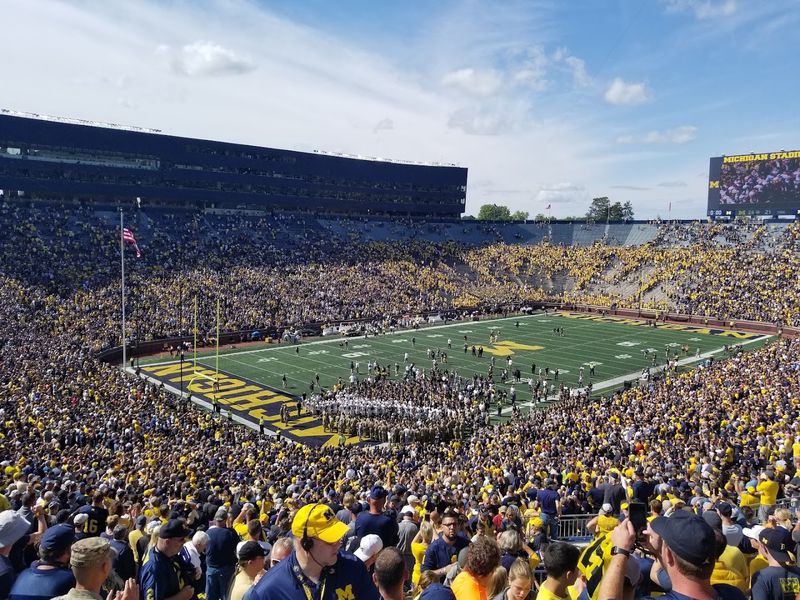
The bowl shape also does something unexpected with sound. When the crowd surges on a big third down, the noise collects and bounces back down toward the field in waves.
It does not always register as the loudest stadium in college football, but during a pivotal moment, the acoustic pressure is real and physical.
First-timers tend to stand at the top of their section for a solid minute before sitting down. The sight of that much green turf framed by that much seating, under a wide Michigan sky, is the kind of visual that simply does not translate on a television screen.
Game-Day Ann Arbor Transforms Into Something Unrecognizable By 9 AM
Ann Arbor on a normal Saturday is a college town doing college town things — coffee shops, bookstores, students moving between buildings. Then a home game arrives and the entire city shifts gears overnight.
By mid-morning, the streets surrounding the stadium are packed with folding chairs, grills putting out smoke, and maize and blue as far as the eye can see. The transformation is one of the most complete in college football.
Tailgating near Michigan Stadium spreads across multiple zones. The golf course directly across from the stadium on South Main Street becomes one of the most popular spots, drawing thousands of fans who park there and set up for hours before kickoff.
Parking in that lot runs steep — often into the $70 to $85 range depending on the game — but its proximity to the gates makes it a consistent choice for fans who want a short walk and a long pregame.
The neighborhoods and side streets surrounding the stadium fill up with independent tailgates, university-affiliated tents, and alumni gatherings that have been running for decades. Some groups have claimed the same patch of grass for thirty-plus years.
The social fabric of game day in Ann Arbor is genuinely layered — there are first-timers taking photos next to longtime season-ticket holders who could walk the route to their seats with their eyes closed.
Food options extend well beyond the stadium itself. South Main Street and the surrounding blocks offer bars and restaurants that fill to capacity hours before kickoff.
Getting a table without a reservation on game day is an optimistic move at best.
The energy peaks roughly forty-five minutes before kickoff when the Michigan Marching Band begins its pregame march. That moment signals to everyone still outside that the real show is about to begin.
The Tunnel Walk That Every Michigan Fan Talks About
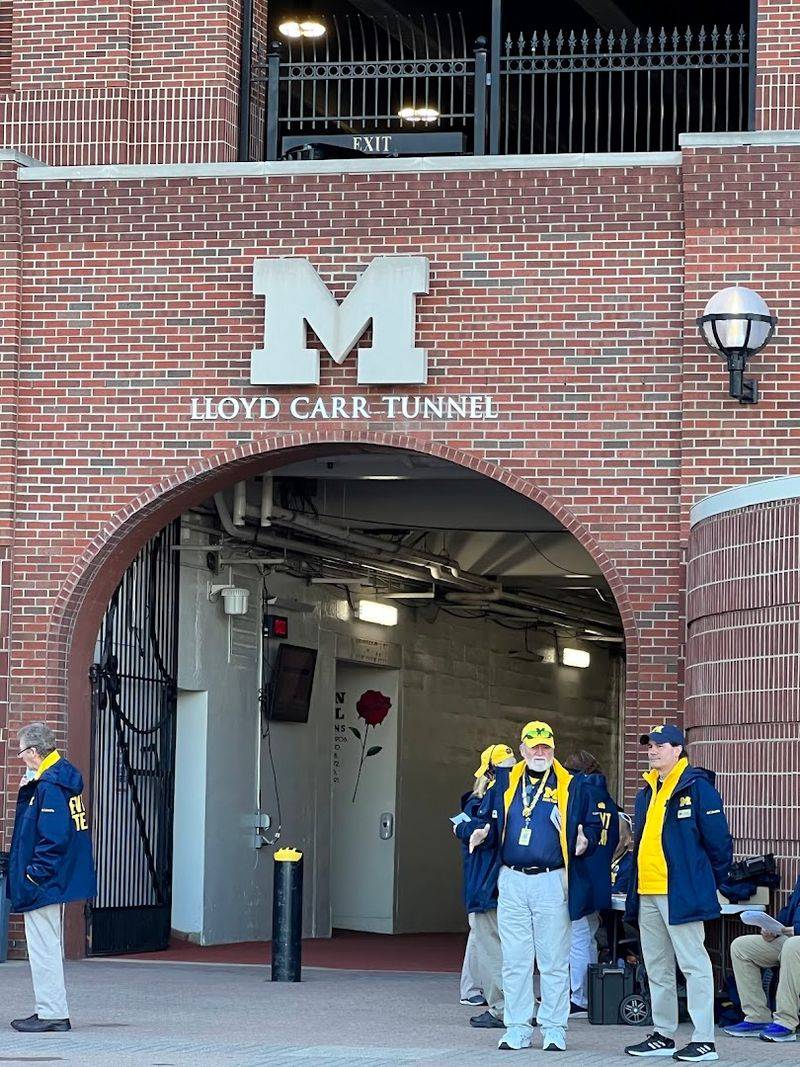
College football has produced a lot of iconic pregame rituals, but the tunnel walk at Michigan Stadium carries a weight that goes beyond pageantry. Players emerge from a narrow corridor beneath the stands and run out onto the field while over 100,000 people erupt above them.
Stadium tours let visitors walk that same tunnel, and even without a crowd, the enclosed concrete space gives you an immediate sense of what it must feel like to sprint through it on a fall Saturday afternoon.
The tour experience at Michigan Stadium is one of the more thorough offerings in college football. Groups move through the locker room — a space designed with both function and intimidation in mind — before heading down to field level.
Standing on the actual turf with the seating bowl rising in every direction is a perspective that photographs rarely capture accurately. The scale reads completely differently from ground level than it does from the upper deck.
History lines the walls throughout the stadium’s interior spaces. The program’s connections to Heisman Trophy winners, national championships, and generations of NFL players are woven into displays and architectural details throughout the building.
For anyone interested in the deeper story of college football, spending time inside the non-public areas during a tour fills in gaps that a regular game-day visit simply cannot.
Staff members leading tours tend to be knowledgeable and genuinely enthusiastic about the material. Questions about specific eras, players, or game moments are handled with the kind of detail that suggests real familiarity rather than a rehearsed script.
Walking the tunnel is the moment most tour participants remember longest. The combination of the physical space, the history attached to it, and the mental image of players charging through it toward 110,000 people creates a strong impression that stays with you well after the tour ends.
How Michigan’s Largest Stadium Handles 110,000 People Without Falling Apart
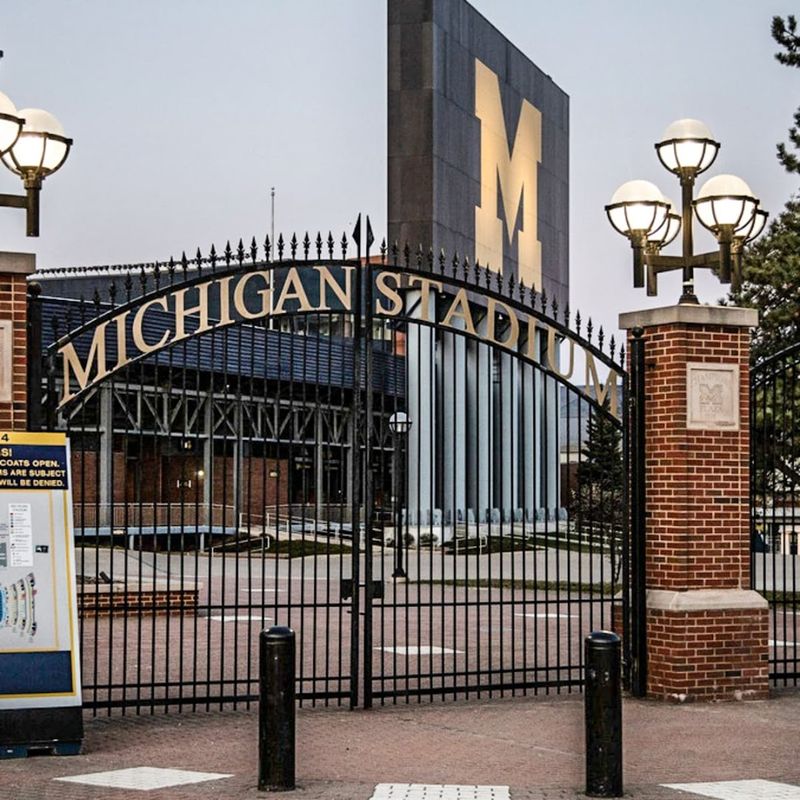
Moving 110,000 people in and out of any structure is a logistical challenge that most venues never have to solve. Michigan Stadium has been refining its approach for nearly a century, and on a typical game day, the operation runs with a steadiness that surprises people expecting chaos.
Entry lines move. Concession stands wrap around the outer concourse rather than clustering in one area, which distributes crowd flow and keeps any single point from backing up completely.
The concourse layout is one of the stadium’s practical strengths. Food and beverage stations, restrooms, and merchandise areas are positioned along the exterior walkways that ring the seating bowl.
That circular flow means fans can keep moving rather than stopping and stacking in bottlenecks. The tradeoff is distance — in a stadium this size, walking from one end of the concourse to the other takes real time, so arriving with a plan for where to grab food before kickoff is smarter than improvising.
Michigan Stadium operates as a cashless venue, which has become standard across major college football programs. Cards and mobile payment options are accepted across concessions and merchandise.
Fans who forget this detail at the gate occasionally need a moment to adjust, but ATM access exists in the surrounding area for those who need it.
Seating navigation is handled by stadium staff positioned throughout the sections. Ushers guide fans to their rows efficiently, and the steep grade of the seating bowl actually helps with orientation — sections are easier to read visually than in flatter venues.
The one honest tradeoff is seat comfort. Rows are narrow and the space between rows is tight.
Fans over six feet tall or those sitting in middle-of-row positions will spend time negotiating legroom. That density is the direct cost of building a stadium designed to hold the largest crowds in college football.
Built in 1927 — And Still the Largest College Football Stadium in the Country
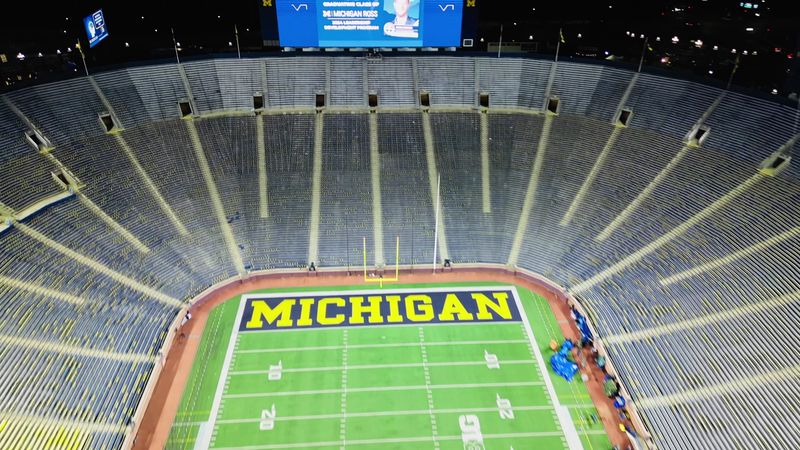
Michigan Stadium opened on October 1, 1927, with a capacity of 72,000. That number already made it one of the largest sports venues in the United States at the time.
The original design by architect Bernard Green used a bowl structure excavated below ground level — a practical decision driven by budget constraints that accidentally produced one of the most distinctive stadium profiles in American sports. The structure has been expanded multiple times since, each addition pushing the official capacity higher.
By the early 2000s, Michigan Stadium had crossed the 107,000 threshold. A major renovation completed around 2010 added premium seating, suite levels, and the two large video boards that now anchor each end zone.
That renovation modernized the fan experience significantly while preserving the fundamental character of the bowl. The project also brought the stadium into compliance with updated accessibility standards — a necessary update for a structure of that age.
The record for the largest crowd ever at Michigan Stadium has been set and reset multiple times over the decades. Official capacity figures and actual attendance records sometimes differ, with certain high-profile games drawing announced figures that pushed past 115,000 when standing room and field-level positions were included.
The program takes its status as the largest stadium in the country seriously, and that distinction has been a consistent part of its identity for decades.
Interestingly, the stadium’s sunken design means it does not dominate the Ann Arbor skyline the way you might expect for a structure of its size. Approaching on South Main Street, the exterior walls give little indication of the scale waiting inside.
That gap between exterior impression and interior reality is part of what makes the first view from inside the gates so genuinely striking.
The 1927 construction date puts Michigan Stadium in rare company among active major sports venues still operating at elite capacity.
Beyond Football — When the Big House Becomes a Concert Venue or Graduation Stage
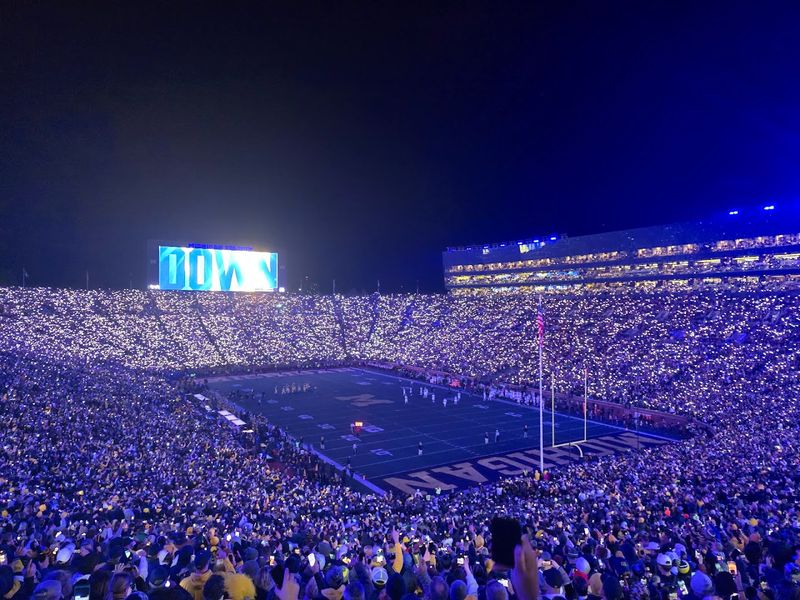
College football fills Michigan Stadium on fall Saturdays, but the calendar extends well beyond the season. The stadium has hosted some of the largest non-football events in the history of live entertainment, and its capacity makes it an attractive destination for events that need to accommodate truly massive crowds.
In August 2024, Zach Bryan performed a concert at Michigan Stadium alongside John Mayer, drawing a crowd that became the largest ticketed music event in recorded history at the time. The bowl that normally holds football fans was packed wall to wall with concertgoers, and the production scale matched the venue’s ambition.
University of Michigan commencement ceremonies are held at Michigan Stadium each spring, giving graduating students the experience of receiving their degrees on the same field where the Wolverines play. For a May graduation, the stadium offers a backdrop that few universities can match.
The event draws families from across the country, and the logistical operation — managing tens of thousands of attendees across a ceremony format — runs on the same infrastructure that handles football crowds.
The stadium’s versatility as an event space reflects a broader institutional strategy. Running a facility of this size is expensive, and maximizing its use across the calendar year makes financial and practical sense.
Security presence at large non-football events has been consistently noted as thorough, with law enforcement positioned throughout the stadium and surrounding intersections during high-attendance shows.
Concession infrastructure wraps fully around the outer concourse, which proved particularly effective during the Zach Bryan concert. Unlike a purpose-built music venue where food and drink access can bottleneck quickly, the stadium’s circular concourse design kept lines manageable even at maximum capacity.
Events outside football season give the Big House a different energy — looser, slightly less tribal — but the scale remains just as overwhelming.
Practical Tips That Make Your First Visit to the Big House Actually Enjoyable
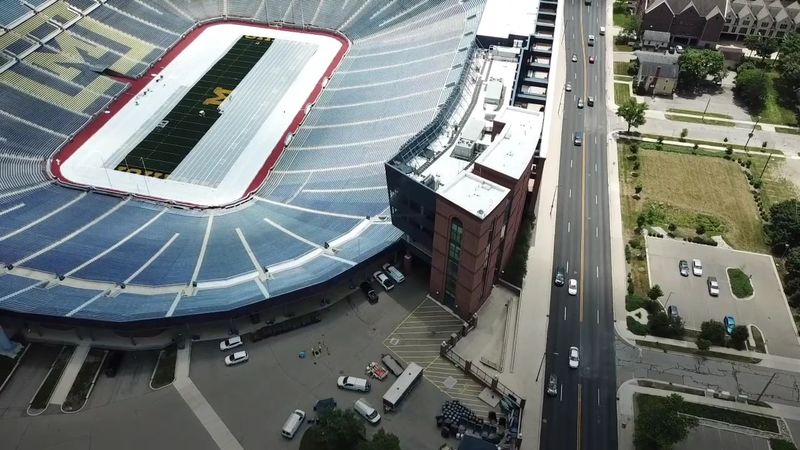
Showing up at Michigan Stadium without a plan is the fastest way to spend your first quarter still trying to find your seat. The stadium sits at 1201 S Main Street in Ann Arbor, and while the address is straightforward, the surrounding street grid fills up with pedestrian and vehicle traffic hours before kickoff.
Arriving at least ninety minutes early puts you ahead of the worst congestion and gives you time to explore the concourse before the crowd reaches full density.
Parking decisions matter more here than at most venues. The golf course lot directly across South Main Street is the most convenient option and consistently draws the highest prices — often $70 to $85 for high-demand games.
Cheaper lots exist farther from the stadium, and many fans choose to park several blocks away and walk in. The walk from more distant lots takes fifteen to twenty minutes but saves money and sometimes moves faster than vehicles trying to exit premium lots after the game.
The stadium is cashless, so having a card or mobile payment ready before you reach any concession stand saves time. Food and drink options run across the full outer concourse, and the circular layout means you are rarely more than a short walk from a stand.
Plan your concession run for early in the first quarter rather than halftime, when lines spike sharply.
Seat comfort is worth addressing honestly. Rows are narrow and legroom between rows is tight.
Wearing low-profile footwear and dressing in layers for fall weather makes the experience noticeably more comfortable. Maize and blue gear is not required, but wearing opposing team colors in the heart of the Michigan sections is an experience that comes with its own unpredictable social dimension.
Tours run separately from game days and offer access to the locker room, tunnel, and field that regular tickets do not include.
Share this story