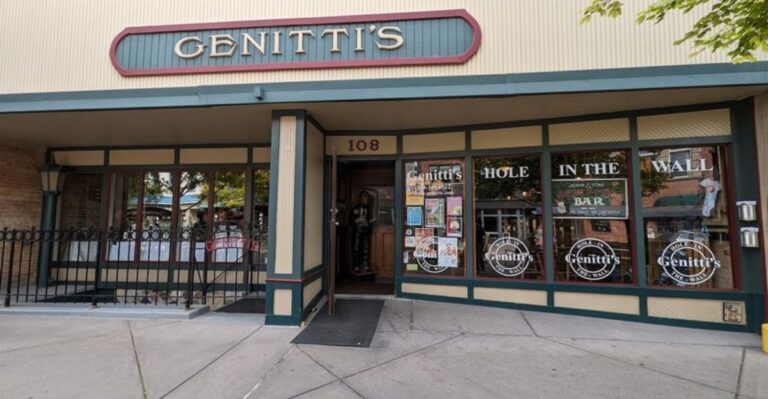
Some places are designed to entertain, while others are built to make you look twice — and the Anatomy of Death Museum in Mt. Clemens, Michigan does both.
Set along Cass Avenue, this unusual museum pulls visitors into a world filled with bones, antique embalming tools, funeral carriages, and real human remains, creating an experience that is as educational as it is unforgettable. This is not your average weekend outing — it is a rare, carefully curated look at the history of death, medicine, and the rituals humans have created around mortality.
Whether you are a history enthusiast, a fan of the macabre, or just someone searching for something completely unlike anything else in Michigan, this museum delivers.
A Room Full of Things You Never Expected to See
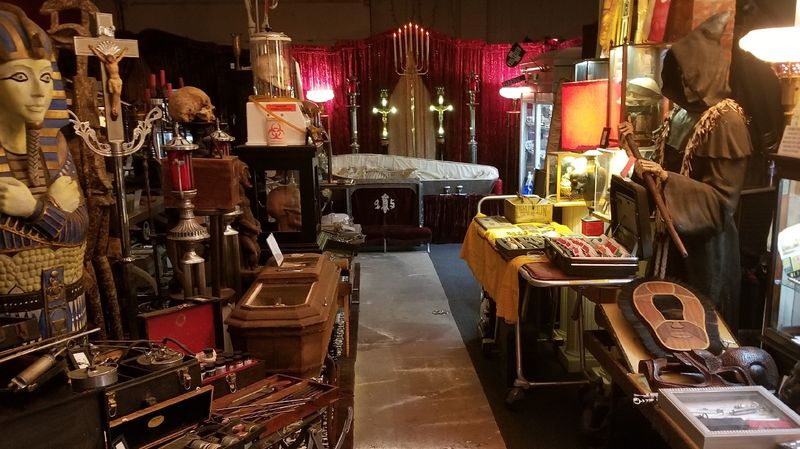
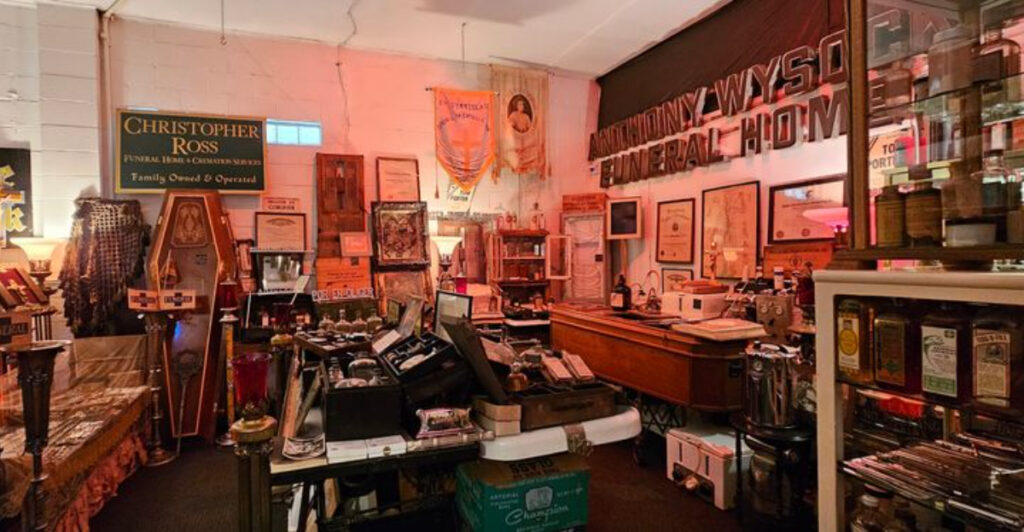
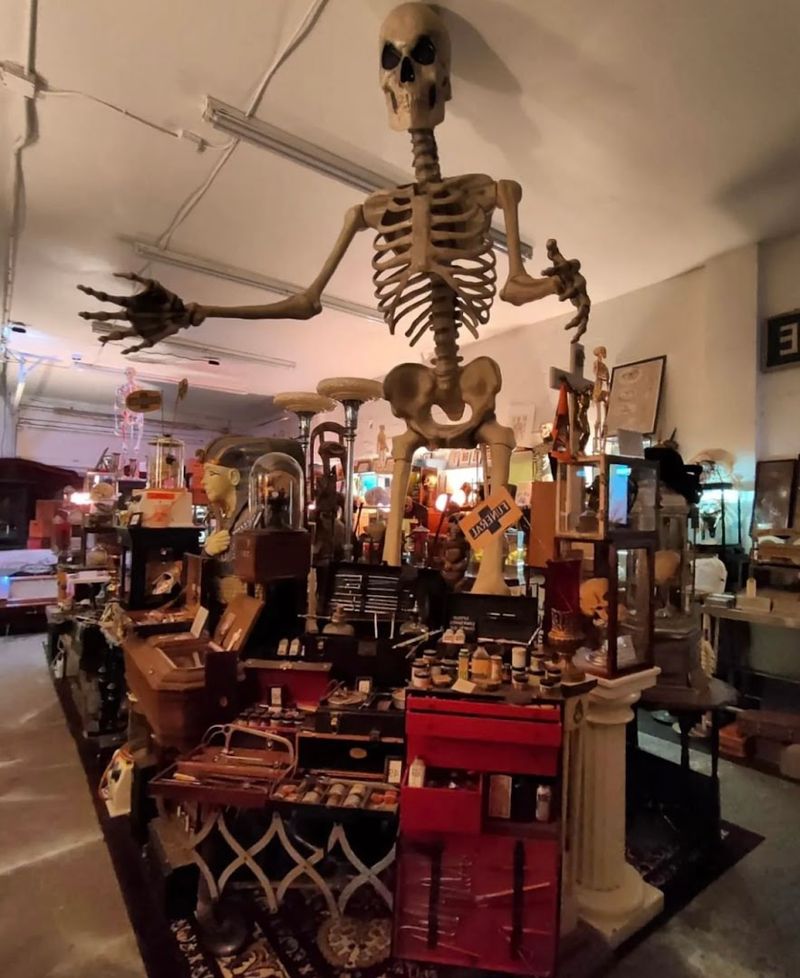
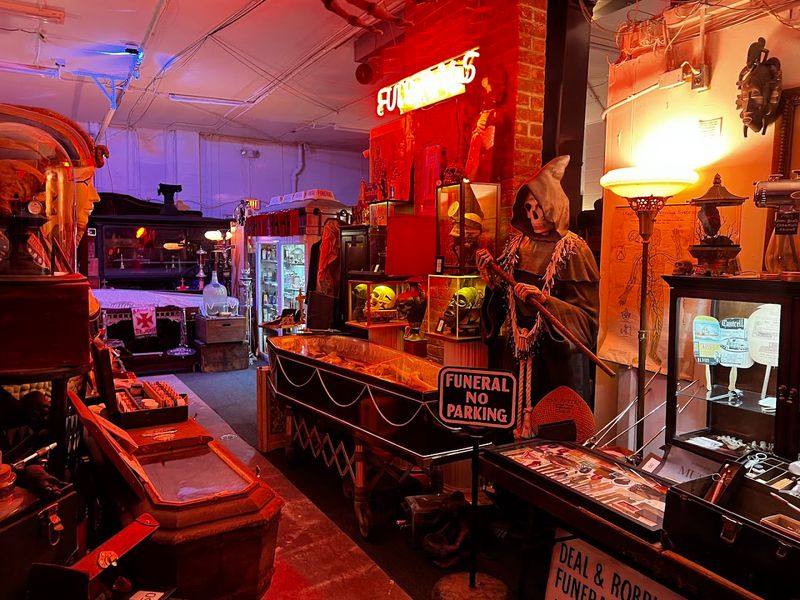
Walking into the Anatomy of Death Museum feels like stumbling into a very specific kind of collector’s dream — one where every shelf, corner, and display case holds something that makes you stop and stare. The sheer density of the collection is one of the first things that hits you.
There is no empty wall space here, no padding to make the room feel bigger than it is. Every inch serves a purpose.
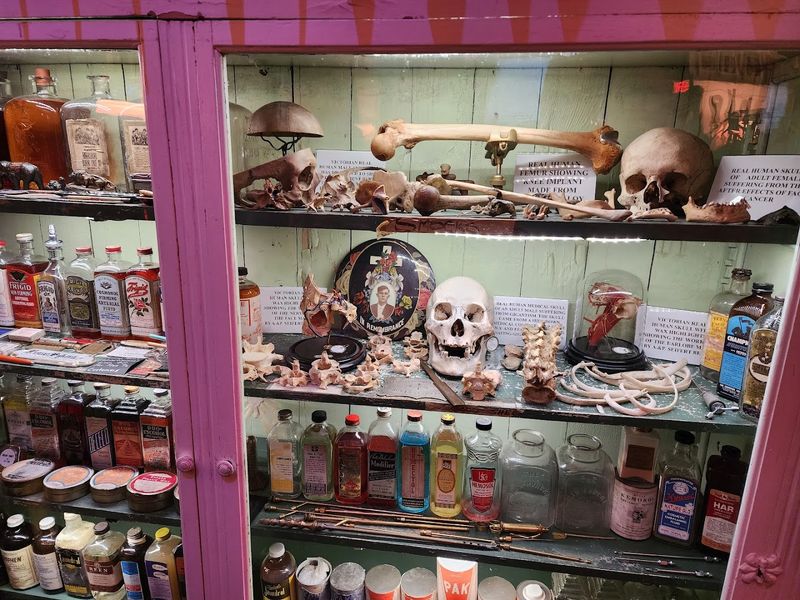
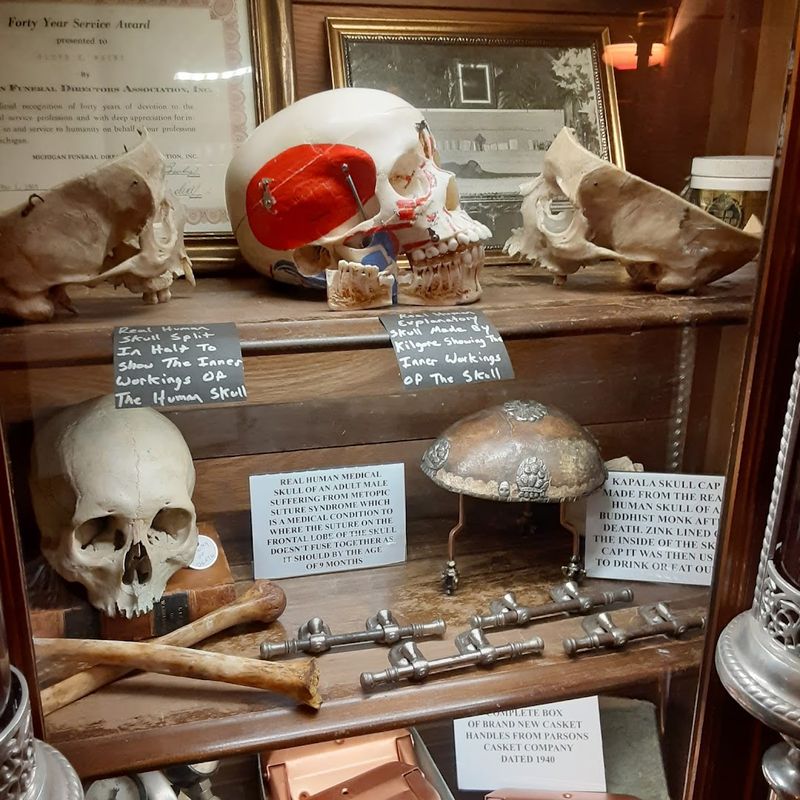
Autopsy tools from different eras sit alongside antique embalming kits once used by doctors in the 1800s. Skulls and bones are arranged with care, each one labeled in handwritten notes that match the overall mood of the space perfectly.
Glass jars hold preserved specimens that range from medically curious to genuinely startling. A real human finger in a jar is just one example of the kind of artifacts that make first-time visitors go completely quiet.
Two televisions run actual autopsy footage on a loop in the corner — not for shock value, but as part of the educational experience. The owner, Todd, has built this collection over a lifetime, and that personal investment shows in how everything is presented.
Nothing here feels thrown together or random.
The displays are cohesive, clean, and thoughtfully organized, which is honestly surprising given how much is packed into the space. Handwritten labels accompany most pieces, giving context and history that you would not find in a typical museum setting.
That personal touch transforms what could have been a chaotic collection into something that genuinely teaches you things. People who visit often say they learned more here than they expected, and left with a completely different perspective on the history of medicine and mortality.
The Man Behind the Collection: Todd’s Lifelong Obsession
Every great collection has a story behind it, and at the Anatomy of Death Museum, that story belongs to Todd. He is the owner, curator, collector, and — depending on when you visit — your tour guide.
People who have met him consistently describe the same experience: a guy who is down-to-earth, genuinely enthusiastic about his subject matter, and completely willing to share the history behind what he has spent years assembling.
Todd has been building this collection for much of his life, and the breadth of what he has gathered reflects that dedication. Funeral carriages, antique medical equipment, bones from around the world, handcrafted oddities, and rare historical pieces all make up a collection that even professional funeral industry workers have found impressive.
One visitor who described themselves as a funeral professional noted being shocked by the sheer volume of funerary history represented in a single space.
What makes Todd stand out even more is how he treats his guests. Private tours have been given to visitors who traveled nine or more hours specifically to see the museum.
He shares personal stories about how individual pieces came into his possession, and those stories add a layer of meaning to the artifacts that no printed placard could replicate. His generosity with his time and knowledge has left a strong impression on people who visit.
The museum also does charity work for the local community, which adds another dimension to what Todd has built here. This is not just a personal passion project — it is a place that gives back.
That combination of genuine expertise, personal warmth, and community investment makes the Anatomy of Death Museum something far more layered than a simple collection of strange things.
Funeral Carriages, Caskets, and a Monster Truck Hearse
Not every museum has a monster truck hearse parked outside. The Anatomy of Death Museum does, and it sets the tone before you even step through the front door.
That vehicle alone is worth pausing at for a few minutes — it is the kind of thing you photograph immediately and then spend the rest of the day trying to explain to people who were not there.
Inside, the large funeral artifacts continue to impress. Antique horse-drawn carriages used for transporting caskets are among the most visually striking pieces in the collection.
These are not replicas. They are original pieces with history behind them, and their size and presence in the museum space creates a powerful contrast with the smaller, more intimate items displayed nearby.
Standing next to one of these carriages gives you a very real sense of how differently death was handled in earlier centuries.
Caskets from various time periods are also part of the collection, giving visitors a chance to see how funeral practices evolved over time. The craftsmanship on some of the older pieces is remarkable — these were objects made with serious care and intention, reflecting the cultural weight placed on the rituals surrounding death.
Seeing them up close, rather than in a photograph, changes how you think about them.
The combination of outdoor and indoor large-scale artifacts makes the Anatomy of Death Museum feel like a full experience rather than just a room of curiosities. From the monster truck hearse in the parking lot to the funeral carriages inside, there is a consistent thread of history running through everything.
It rewards visitors who take their time and look closely at each piece rather than rushing through.
Michigan’s Most Concentrated Collection of Medical History
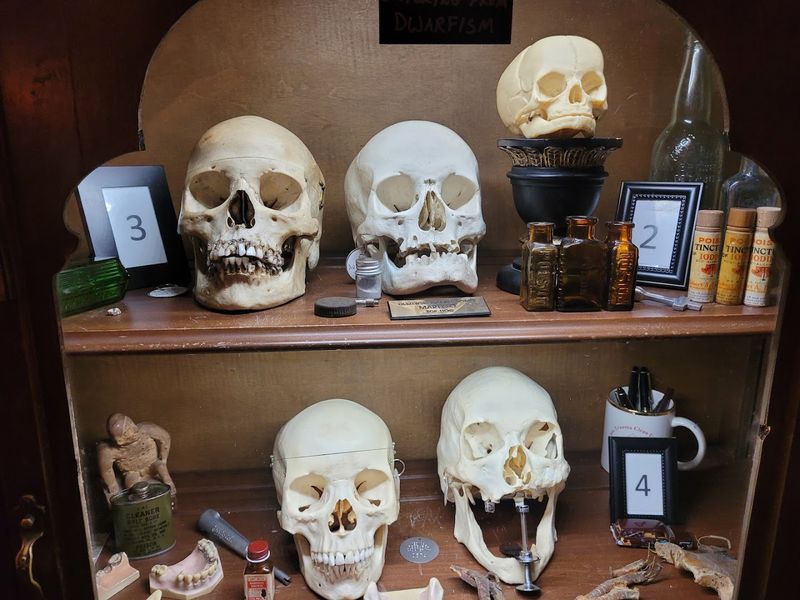
Michigan has no shortage of museums, but nothing else in the state comes close to what the Anatomy of Death Museum has assembled in terms of medical and mortuary history. The collection of embalming equipment alone spans well over a century, with tools and kits that document how the practice evolved from rough, experimental procedures into the more standardized methods used today.
Seeing these instruments laid out and labeled makes the history of medicine feel immediate in a way that textbooks rarely manage.
Autopsy tools from different eras are displayed with context that explains their use and the time period they came from. For anyone with an interest in medical history, forensic science, or the development of modern medicine, this section of the museum is genuinely riveting.
The handwritten labels that accompany many of the pieces add a personal, almost diary-like quality to the experience — as if Todd himself is narrating the history directly to you.
Birth tables for babies, antique surgical instruments, and equipment that bridges the gap between early medicine and modern practice all share space here. The museum does not shy away from the difficult realities of historical medical procedures.
Instead, it presents them honestly, with enough context to make the information educational rather than simply disturbing.
Visitors with professional backgrounds in medicine or funeral services have noted being genuinely surprised by what is on display. That reaction says something important about the depth of the collection.
This is not a curated highlight reel of well-known artifacts — it is a comprehensive, deeply researched assemblage of medical and mortuary history that holds its own against far larger institutions. The scale of what has been gathered here, in a modest space in Mt.
Clemens, is quietly extraordinary.
The Gift Shop That Matches the Museum’s Energy Perfectly
Most museum gift shops are an afterthought — a rack of postcards and a few branded magnets near the exit. The storefront at the Anatomy of Death Museum operates on a completely different philosophy.
It is stocked, organized, and genuinely interesting in its own right, with items that range from natural curiosities to handcrafted art pieces to things that are simply hard to find anywhere else.
Bones, bugs mounted in frames, skulls, and preserved natural specimens sit alongside jewelry, rings, and necklaces. There are large ornate pieces created by artists, as well as smaller affordable items that make the shop accessible to visitors with different budgets.
Old VHS tapes and ouija boards add a layer of vintage nostalgia to the selection, and T-shirts let you take a piece of the museum’s identity home with you.
The shop is described by visitors as well-stocked and reasonably priced, which is not always the case at specialty shops with this kind of niche focus. Todd or his staff often take a few minutes to point out items based on what a particular visitor seems drawn to, making the shopping experience feel more like a conversation than a transaction.
That personal attention extends the overall warmth of the museum into the retail space.
For anyone who collects unusual or macabre items, the shop alone could justify the trip. The inventory changes regularly, so repeat visitors often find new pieces worth adding to their own collections.
Whether you are looking for something decorative, educational, or just genuinely weird, the selection tends to deliver. It rounds out the museum visit in a way that feels natural rather than commercial, keeping the spirit of the whole place consistent from entrance to exit.
How to Get the Most Out of Your Visit
The Anatomy of Death Museum rewards slow visitors. This is not a place to power through in twenty minutes.
The collection is dense, the labels are detailed, and many of the artifacts have stories attached to them that take a moment to absorb. Budget at least an hour, and more if you plan to spend time in the gift shop or chat with the staff.
A self-guided tour booklet is available, which makes the experience interactive rather than passive. Working through it prompts you to look more carefully at specific pieces and adds a layer of engagement that casual browsing alone does not provide.
For people who enjoy structured learning, the booklet is a genuinely useful tool. For those who prefer to wander, the museum works just as well without it — the handwritten labels throughout the space do a solid job of keeping visitors oriented and informed.
If Todd is on-site during your visit, do not miss the chance to talk with him. His knowledge of individual pieces goes well beyond what any label could capture, and his willingness to share those stories makes a significant difference in how much you take away from the experience.
Some visitors have been offered private tours, which provide an even deeper look at the collection and its history.
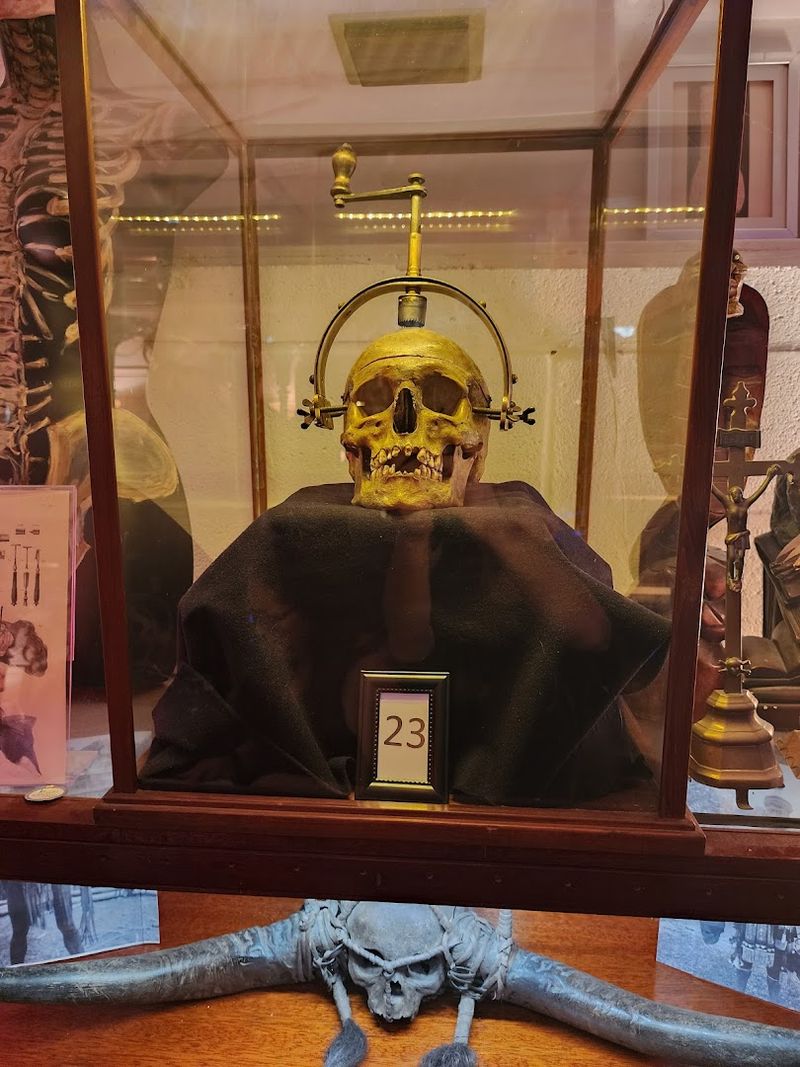
Photography is encouraged throughout the museum, which is a detail worth knowing before you go. There are genuinely striking visual compositions available at almost every turn, from the arrangement of skulls on shelves to the dramatic scale of the funeral carriages.
Arriving early in the open window — the museum opens at noon Thursday through Sunday — gives you the best chance of having the space to yourself before it gets busier on weekends, particularly Saturdays when hours extend to 8 PM.
What the $10 Admission Gets You That You Cannot Find Elsewhere
Ten dollars is the price of admission to the museum area at the Anatomy of Death Museum, and it is one of the more straightforward value propositions in Michigan’s independent museum scene. For context, people have driven from California, Ohio, and beyond specifically to visit this place — and most of them describe the entry fee as an afterthought compared to what they experienced inside.
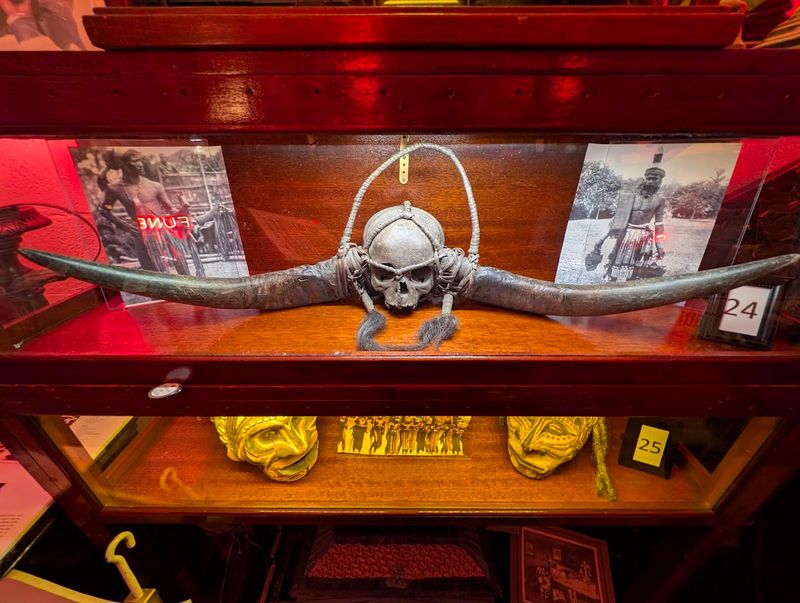
What that ten dollars buys is access to a collection that includes real human remains, antique embalming equipment, bones and skulls from around the world, funeral carriages, medical tools dating back to the 1800s, and a rotating selection of oddities that changes with enough regularity to make repeat visits worthwhile. The density of the collection means that a single visit rarely covers everything — most people find new details on a second or third trip that they completely missed the first time.
The tour booklet included with admission adds educational structure to the visit, making it suitable for curious adults and older teenagers who have a genuine interest in history, medicine, or the cultural practices surrounding death. The museum does not present its subject matter in a gory or sensationalized way.
The framing is consistently educational, even when the artifacts themselves are confronting.
For anyone who has spent money on theme park tickets, escape rooms, or other entertainment experiences, ten dollars for something this unique and substantive is a genuinely good deal. The fact that the attached gift shop requires no additional admission means you can browse and shop without feeling like every step costs something extra.
The overall experience — museum, booklet, gift shop, and the chance to meet Todd — adds up to far more than the entry price suggests.
Why People Drive Hours to Reach This Spot in Mt. Clemens
Mt. Clemens is not typically the first name that comes up when people list Michigan’s must-visit destinations.
But the Anatomy of Death Museum has changed that calculation for a specific and growing group of travelers. People have made the trip from Ohio, California, and beyond, logging hours behind the wheel for a museum that charges ten dollars and sits on a quiet stretch of Cass Avenue.
The draw is not just the collection itself — though that is clearly the main event. Part of what pulls people back is the atmosphere Todd has created around the experience.
The museum feels personal in a way that large institutions rarely manage. Every piece was chosen deliberately, placed intentionally, and labeled with care.
That level of individual investment is something visitors pick up on quickly, and it makes the space feel alive rather than static.
Word has spread through communities that follow unusual museums, roadside attractions, and macabre history. People who visit often bring others on subsequent trips, treating it as an introduction to a world they want to share.
The museum has also developed a connection with Mortuary Manor in Toledo, Ohio, giving visitors in the region a natural two-stop itinerary that covers a lot of ground in the death history and oddities space.
The museum is open Thursday through Sunday, with Saturday hours running until 8 PM — making it an easy addition to a weekend road trip from Detroit or the surrounding suburbs. The address is 292 Cass Ave in Mt.
Clemens, and parking is right there in the lot, where the monster truck hearse keeps watch. For anyone with even a passing curiosity about the history of death, medicine, and the strange beauty of things most people never think about, this is a genuinely compelling reason to point the car toward Macomb County.
Share this story