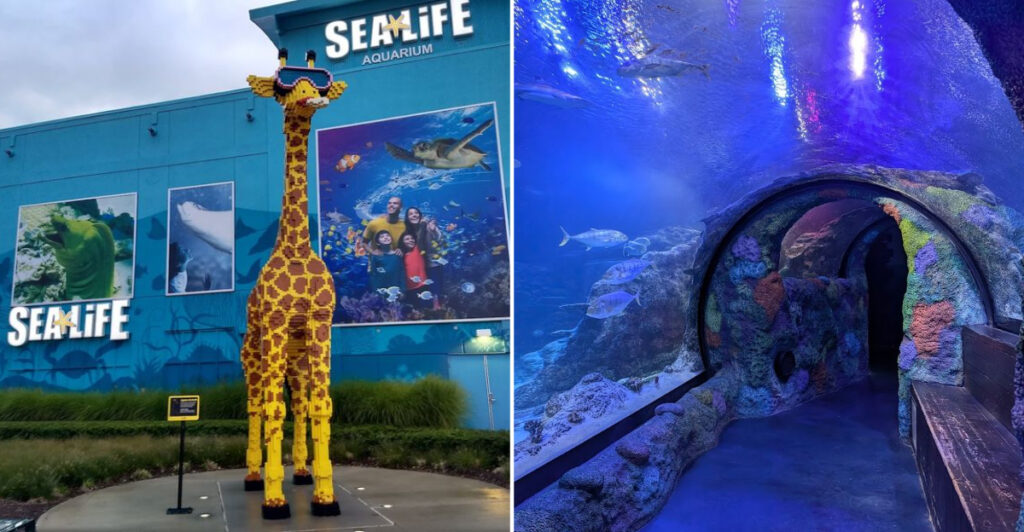
Inside Great Lakes Crossing Outlets in Auburn Hills, Michigan, SEA LIFE Michigan Aquarium turns a mall stop into something far more memorable than anyone expects. At first, it is easy to assume the experience will be small, but once you step inside, the glowing tanks, colorful sea creatures, interactive displays, and fully enclosed underwater tunnel quickly prove otherwise.
Sharks, rays, jellyfish, seahorses, and tropical fish bring a surprising amount of wonder to the space, making it feel immersive without being overwhelming. Whether you are planning a family day, a low-pressure date, or a Michigan outing that feels different from the usual routine, SEA LIFE Michigan Aquarium delivers the kind of underwater escape that catches visitors off guard in the best way.
The Walk-Through Underwater Tunnel That Changes Everything
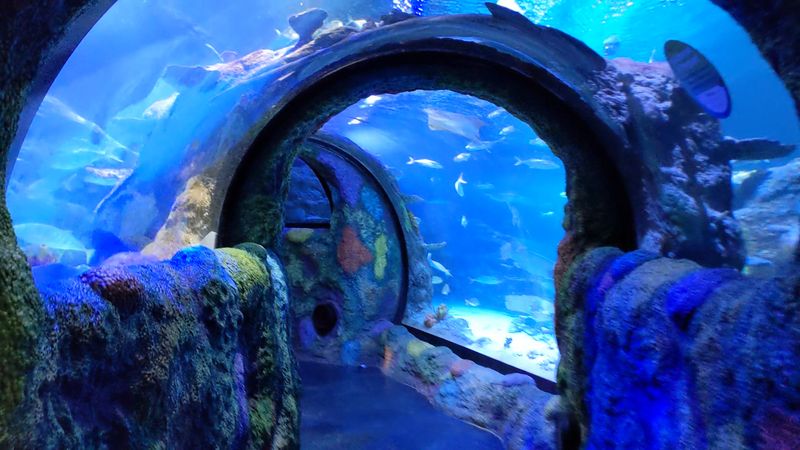
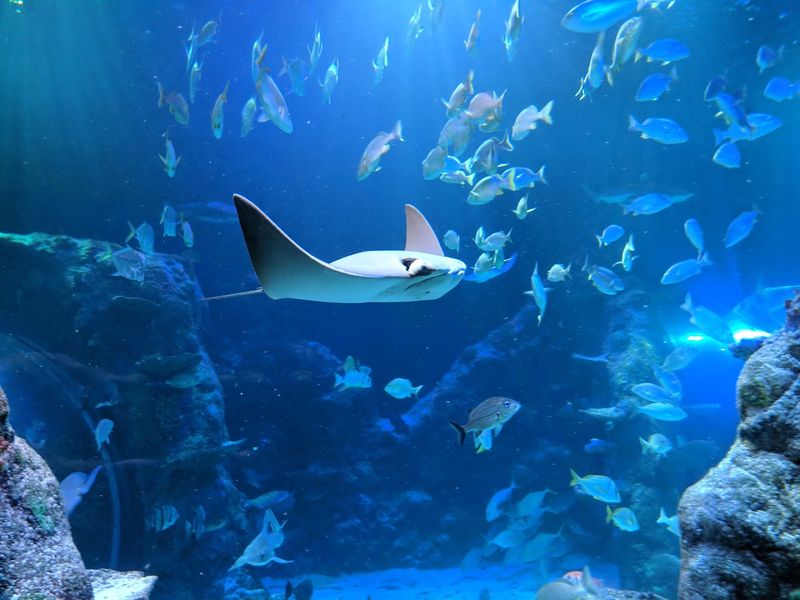
Standing inside a tunnel while sharks glide directly overhead is not something most people expect to experience in a shopping mall in Auburn Hills, Michigan. Yet that’s exactly what greets visitors at SEA LIFE Michigan Aquarium’s signature walk-through underwater tunnel — a fully enclosed, 360-degree acrylic passage that puts marine life at eye level, above your head, and on every side at once.
The tunnel is the architectural centerpiece of the entire aquarium. Rays sweep past with effortless, wing-like motion.
Nurse sharks cruise slowly through the water in long, unhurried arcs. Smaller fish dart through in flashes of silver and orange, weaving between the larger animals with zero concern for personal space.
What makes this feature genuinely impressive is the scale of the surrounding tank. The water volume is large enough that the animals don’t feel crowded or on display in the way smaller tank exhibits sometimes do.
The lighting shifts subtly, casting the kind of blue-green glow that makes everything feel deeper and more expansive than it actually is.
Kids tend to stop mid-tunnel and just stare upward. Adults do the same, just with slightly more self-awareness about it.
There’s no rush to move through — the tunnel is wide enough to pause, look around, and let the experience settle in properly.
Florence, a nurse shark known by name among regular visitors, is often spotted cruising through this section. Staff members stationed nearby are quick to point her out and share details about her behavior and background.
That combination of spectacle and education is exactly what makes the tunnel more than just a photo opportunity — it’s the moment the aquarium stops feeling like an exhibit and starts feeling like an environment.
Florence the Nurse Shark and the Animals With Actual Personalities
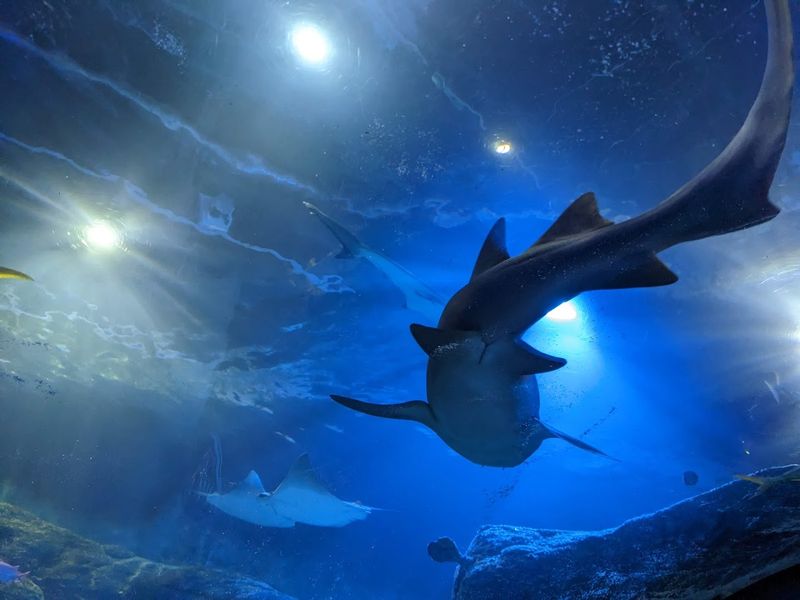
Not every aquarium has animals that visitors ask about by name, but SEA LIFE Michigan does. Florence the nurse shark has developed a following among repeat visitors — people who come back specifically to check on her and point her out to friends who haven’t been before.
That kind of connection between a specific animal and the public is rare, and it says something about how the staff here presents and talks about the creatures in their care.
Nurse sharks are bottom-dwelling animals, built low and wide, with broad pectoral fins and a slow, deliberate swimming style. Florence moves through the main tank with a calm authority that draws attention without demanding it.
She’s not flashy, but she’s consistently present, and staff members are genuinely enthusiastic when visitors ask about her.
Beyond Florence, the stingrays in the touch pool section are another standout. These animals actively approach the edge of the open tank, skimming along the shallow water with a curiosity that feels deliberate.
Watching a ray glide toward your outstretched hand is a strange and memorable experience — the texture is smooth and cool, nothing like what most people imagine before touching one for the first time.
The aquarium also cares for rescued animals, and staff members share those backstories when asked. Knowing that a particular fish or invertebrate has a history beyond the tank adds a layer of meaning to the visit that pure spectacle alone can’t provide.
Benson the sea turtle is another crowd favorite, though availability can vary by visit. Regular visitors sometimes plan trips around checking in on specific animals, which is a strong sign that the individual personalities here are part of what keeps people returning to this Auburn Hills location.
The Touch Pool Experience Kids Cannot Stop Talking About
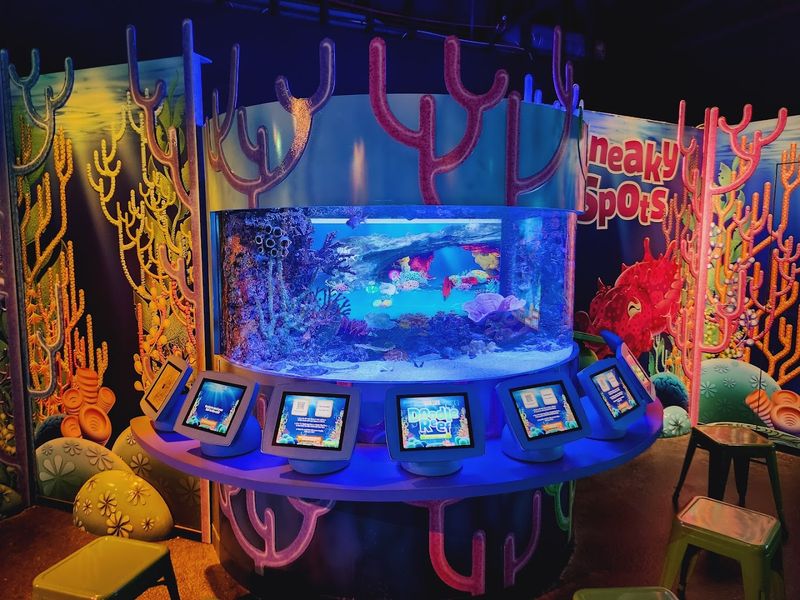
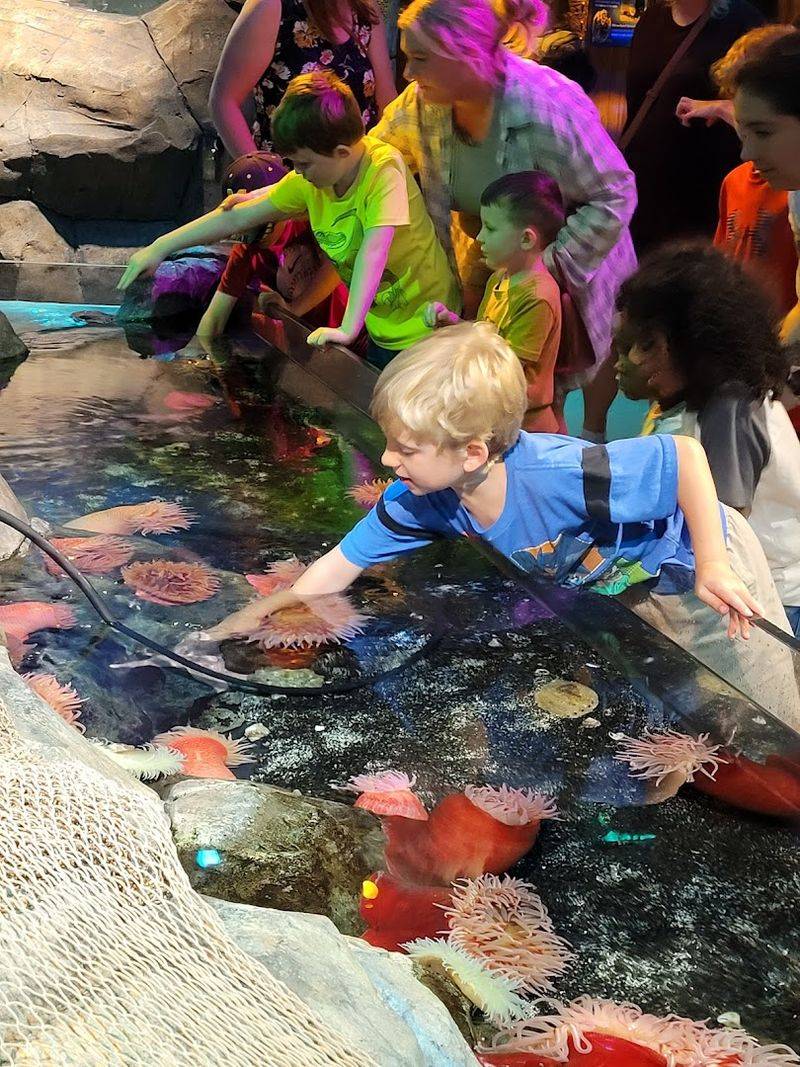
Hands-on exhibits at aquariums are common enough, but the touch pool at SEA LIFE Michigan earns its reputation by offering direct contact with animals that most people have only ever seen through glass. Sea anemones, baby starfish, sea urchins, and stingrays are all accessible in the shallow open tanks — no barriers, no restrictions beyond basic handling guidelines from the staff stationed nearby.
The experience is tactile in a way that photographs simply can’t replicate. Anemones have a soft, slightly sticky grip when you place a finger near their tentacles.
Starfish feel surprisingly firm and textured. Stingrays, tails safely trimmed and personalities surprisingly forward, skim the water’s surface in shallow arcs and seem genuinely unbothered by the attention.
Staff members at the touch pool are actively engaged, not just supervising. They offer facts about each animal, explain how to approach them correctly, and answer questions with the kind of casual knowledge that makes the interaction feel less like a scripted tour and more like a conversation with someone who actually cares about the subject.
For younger children, this section tends to be a highlight that gets referenced long after the visit ends. A three-year-old seeing a starfish up close for the first time — actually holding one in their hands — processes that differently than watching it through an exhibit panel.
The tactile memory sticks in a way that passive observation often doesn’t.
It’s worth noting that the touch pool is occasionally closed due to maintenance or external issues like water supply disruptions, so checking ahead before a visit is a smart move. When it’s fully operational, though, it consistently ranks as one of the most talked-about moments of the entire aquarium experience.
Moon Jellyfish, Dim Lighting, and the Aquarium’s Most Calming Corner
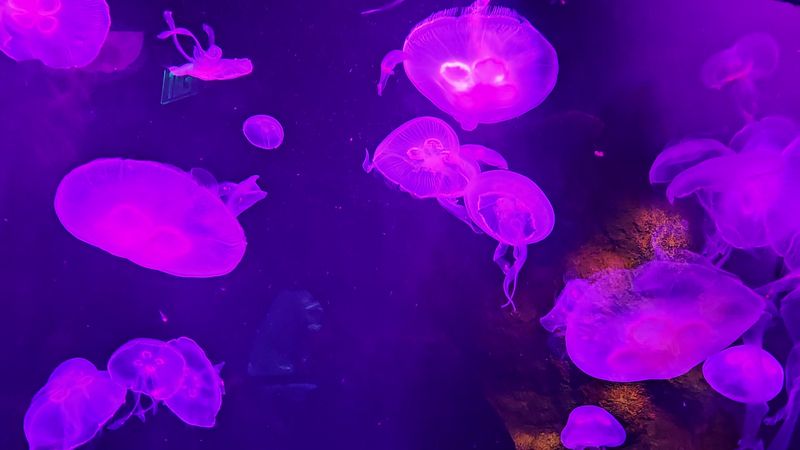
There’s a section of SEA LIFE Michigan where the noise and energy of the main exhibits quietly drops away. The jellyfish tanks are responsible for this shift.
Moon jellyfish float in cylindrical tanks backlit with shifting blue and violet light, their translucent bells pulsing in slow, hypnotic rhythms that are almost impossible to look away from.
Moon jellyfish are deceptively simple animals — no brain, no heart, no bones — but watching them move creates an effect closer to meditation than education. The lighting design in this section amplifies that quality deliberately.
The glow from the tanks casts soft color across the surrounding walls, and the ambient sound level drops noticeably compared to other parts of the aquarium.
Adults tend to linger here longer than they expect to. Families with younger kids sometimes use this section as a natural pause point — a place to collect energy before continuing through the rest of the exhibits.
The pacing shift feels intentional, and it works well as a structural element of the overall visit.
The visual contrast between the jellyfish tanks and the high-activity areas elsewhere in the aquarium is striking. After passing through the underwater tunnel and the busy touch pool section, arriving at the jellyfish exhibit feels like stepping into a different register entirely.
The colors, the quiet, and the slow movement create a sensory experience that stands apart from everything else on offer.
For anyone who finds crowded, loud environments draining, this corner of the aquarium provides genuine relief without requiring you to leave the building. It’s a small design detail that improves the overall experience considerably — proof that a well-placed exhibit can do more than display an animal; it can change the entire mood of a visit.
The Scavenger Hunt, Stamp Cards, and Smart Ways to Explore Every Exhibit
SEA LIFE Michigan gives visitors a stamp card at the entrance that turns the entire aquarium into a structured scavenger hunt. Stamp stations are positioned throughout the exhibits, and collecting all the stamps requires actually moving through each section rather than skipping ahead to the most popular spots.
It’s a simple mechanic, but it works remarkably well at keeping younger visitors engaged from start to finish.
Completing the full card earns a small prize at the end — nothing extravagant, but meaningful enough that kids treat the mission seriously. The process also slows down the natural tendency to rush through exhibits, which means families end up spending more time in front of tanks they might have otherwise walked past quickly.
The scavenger hunt structure pairs well with the educational signage posted throughout the aquarium. Each tank and exhibit area includes species information, behavioral notes, and conservation context.
The signage is written accessibly — clear enough for children to read independently, detailed enough that adults find it informative rather than basic.
Staff members stationed throughout the aquarium add another layer to the experience. They’re knowledgeable without being lecture-heavy, and they seem comfortable admitting when they don’t have an answer rather than improvising.
That honesty comes across as refreshing, especially in an educational setting where the temptation to perform expertise can sometimes override accuracy.
First-time visitors occasionally miss the stamp card offer at the entrance, so it’s worth asking about it specifically when arriving. Some visitors have noted that clearer direction at the start of the visit would improve the flow, particularly for groups who didn’t realize the scavenger hunt was available until they were already halfway through the exhibits. Arriving with that awareness makes a real difference.
Planning Your Visit to SEA LIFE Michigan in Auburn Hills the Right Way
SEA LIFE Michigan Aquarium sits inside Great Lakes Crossing Outlets at 4316 Baldwin Rd in Auburn Hills, which means parking is straightforward and the surrounding area offers plenty of options for extending a day out. The aquarium shares the mall with Legoland Discovery Center, and combination tickets are available for visitors who want to make a full day of it — a popular choice for families with kids in the four-to-ten age range.
Standard operating hours run from 10 AM to 5 PM Monday through Friday, with extended hours until 6 PM on Saturdays and Sundays. Weekday visits, particularly in the late morning or early afternoon, tend to be noticeably quieter.
One visitor noted arriving about an hour before closing on a Saturday and having nearly the entire aquarium to themselves — a dramatically different experience from peak weekend afternoon crowds.
Tickets purchased online in advance are consistently cheaper than buying at the door, sometimes by a meaningful margin. Military veterans receive a discount with valid ID, which is worth knowing before purchasing.
Pricing for a single adult ticket runs around $26, though promotional rates and membership options can bring that cost down for repeat visitors.
Memberships are available and make financial sense quickly for families who plan to visit more than twice in a year. Several regular visitors reference coming back frequently enough that the annual membership pays for itself within a few trips.
The aquarium’s compact size means a typical visit runs between 60 and 90 minutes, though families with young children who engage fully with the touch pool and scavenger hunt often stretch that to two hours comfortably. Building in extra time rather than rushing the experience is the smarter approach, especially on a first visit when everything is new.
What Actually Makes This Aquarium Stand Out From the Crowd
Plenty of aquariums offer fish tanks and educational panels. SEA LIFE Michigan does those things too, but the combination of its walk-through tunnel, hands-on touch pool, named resident animals, and thoughtfully designed lighting creates an experience that feels more cohesive than its square footage might suggest.
The aquarium doesn’t try to be a sprawling natural history museum — it commits to doing a specific set of things extremely well.
The Animal Crossing collaboration mentioned by some visitors reflects a broader effort to stay culturally relevant and appeal to younger audiences beyond the traditional aquarium format. That kind of programming keeps the experience from feeling static between visits, which matters for a location that depends partly on repeat traffic from local families and membership holders.
The gift shop, while compact, carries a solid range of ocean-themed items — plush animals, jewelry, and accessories that lean toward the personal rather than generic souvenir territory. It functions as a natural endpoint to the visit rather than a mandatory retail gauntlet, which keeps the overall tone from feeling transactional.
The play area at the end of the walk-through route gives younger children a physical outlet after spending time moving carefully through exhibit spaces. It’s a practical addition that parents appreciate more than they might initially expect, especially with toddlers who have been asked to be gentle around tanks for an hour.
Ratings across thousands of reviews settle consistently around 4.3 stars, which for a paid attraction in a mall setting is genuinely strong. The complaints that do appear — size, occasional heat, specific exhibits being temporarily unavailable — are honest and fair, but they don’t undercut the overall picture.
For a Michigan family looking for an afternoon that delivers more than expected, SEA LIFE Auburn Hills holds up.
Share this story