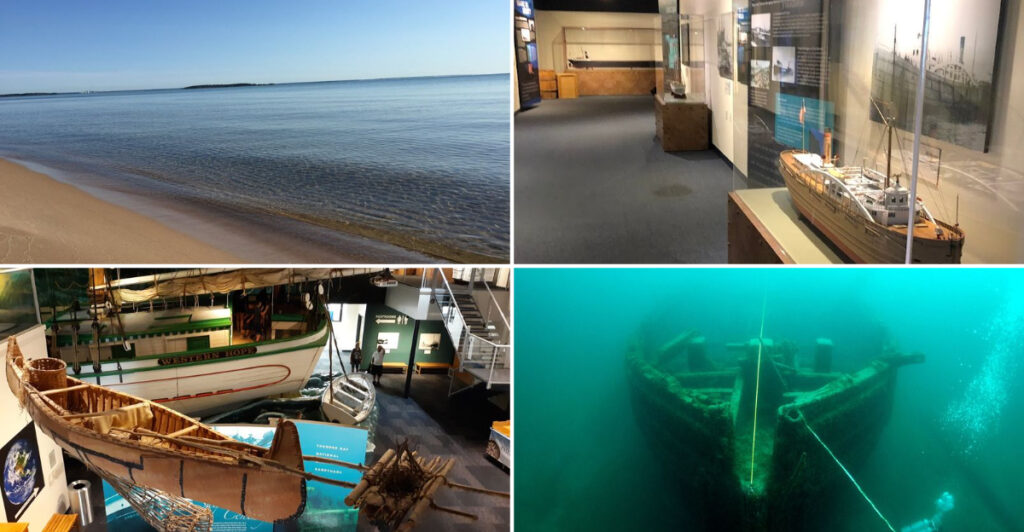
Beneath the cold, clear waters of Lake Huron near Alpena, Michigan, more than 200 shipwrecks lie frozen in time like an underwater ghost town nobody ever evacuated. Thunder Bay National Marine Sanctuary preserves this extraordinary collection of sunken vessels, spanning centuries of Great Lakes maritime history.
The sanctuary’s visitor center on Fletcher Street pulls back the curtain on these submerged stories before you ever touch the water. Whether you’re a diver, a history lover, or just someone who finds shipwrecks irresistible, this place delivers something genuinely rare.
Where the Lake Swallowed Ships Whole
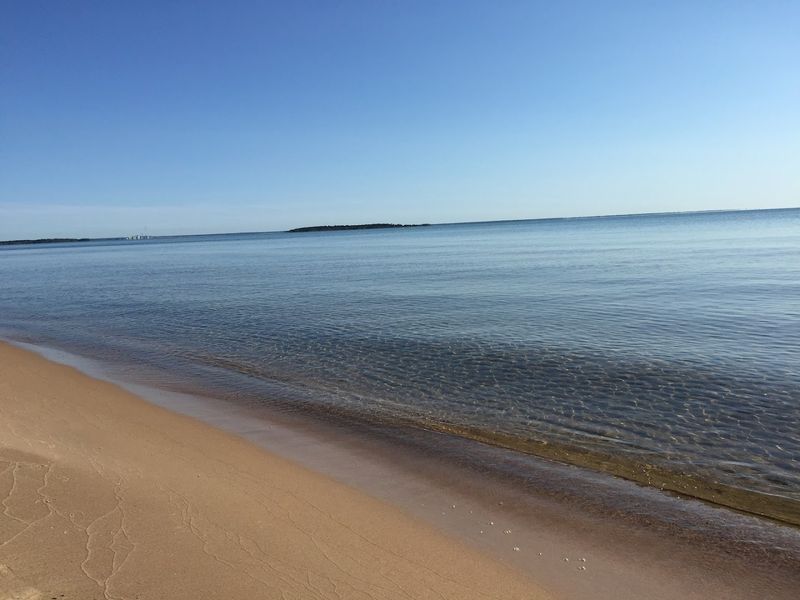
Lake Huron doesn’t look dangerous from shore. The water near Alpena can run so clear that sunlight cuts straight to the bottom in shallow areas, making it easy to forget you’re standing beside one of the most treacherous stretches of freshwater in North America.
Thunder Bay earned its reputation the hard way, through centuries of violent storms, rocky shoals, and navigational hazards that sent ships spiraling to the bottom.
The sanctuary protects approximately 200 known shipwrecks spread across 4,300 square miles of Lake Huron. These aren’t scattered randomly.
The wrecks cluster in predictable patterns shaped by old shipping lanes, sudden weather shifts, and the geography of the bay itself. Some sit in just a few feet of water, visible by snorkel.
Others rest at depths exceeding 200 feet, accessible only to experienced technical divers.
The wrecks span from wooden sailing vessels of the 1800s to steel-hulled steamers from the early twentieth century. Each one marks a specific moment when weather, mechanical failure, or human error ended a voyage permanently.
The sanctuary’s mission is to protect those moments exactly as the lake preserved them, without excavation, without disturbance, without removing a single artifact from the lakebed.
Standing at the sanctuary’s visitor center in Alpena, you can study maps showing exactly where each wreck sits. The density of markers across Thunder Bay is quietly staggering.
This stretch of Michigan coastline wasn’t just unlucky. It sat at the intersection of major commercial routes during the industrial expansion of the Great Lakes, which meant heavy traffic through notoriously unpredictable water.
The lake collected ships the way a drain collects leaves, steadily, inevitably, and without mercy.
Inside the Great Lakes Maritime Heritage Center
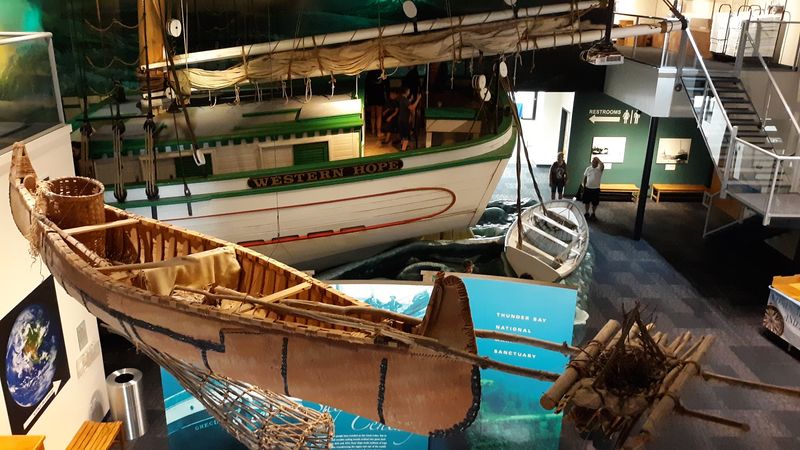
Free admission at a museum this good feels like finding a twenty-dollar bill in an old jacket. The Great Lakes Maritime Heritage Center, which serves as the visitor center for Thunder Bay National Marine Sanctuary, charges nothing at the door and delivers an experience that punches well above its weight.
The building sits at 500 W. Fletcher Street in Alpena, and it’s the best possible starting point before anyone heads out on the water.
Walk through the entrance and you’re immediately confronted by a full-scale replica of a ship’s bow, complete with audio that simulates a violent Lake Huron storm. Lightning flickers through the portholes, the hull groans under imagined pressure, and the ambient sound wraps around you completely.
It’s a visceral, theatrical introduction that reframes every exhibit that follows. You stop thinking about shipwrecks as historical footnotes and start understanding them as catastrophic, terrifying events.
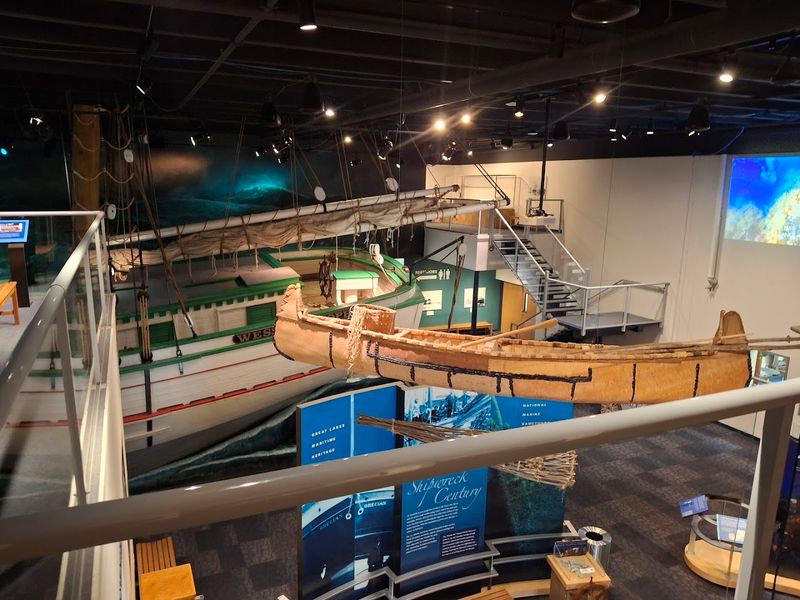
The interior spreads across multiple rooms filled with actual artifacts recovered before preservation laws tightened. Anchors, navigation instruments, ship’s wheels, cargo remnants, and personal belongings recovered from wrecks line the cases and fill the walls.
One particularly effective display area features drawers that visitors can pull open to reveal additional artifacts and documentation, rewarding curiosity with extra layers of detail.
Theater screenings run throughout the day, covering different wrecks and diving expeditions in documentary format. The screens are large, the production quality is solid, and the subject matter keeps even restless kids locked in.
Interactive stations let younger visitors handle replicas, match artifacts to their vessels, and explore the lake’s geography through touchscreen maps. The staff is knowledgeable and genuinely enthusiastic about the sanctuary’s work, which makes casual questions turn into surprisingly deep conversations about Great Lakes history and conservation.
The Shipwrecks You Can Actually See Up Close in Michigan
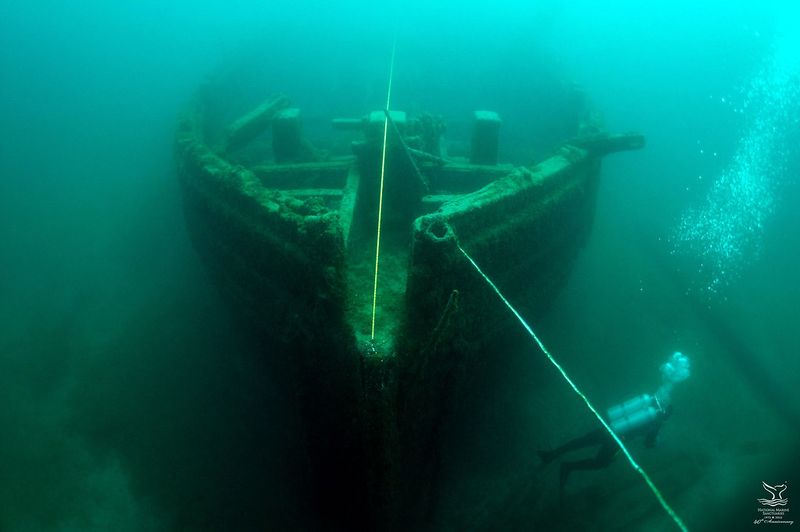
Michigan’s Thunder Bay sanctuary isn’t just something you read about behind glass. The wrecks are accessible, and the sanctuary actively encourages people to get out on the water and experience them directly.
Snorkeling, kayaking, and scuba diving all serve as legitimate ways to reach ships that have been sitting undisturbed on the lakebed for over a century.
The Thunder Bay Underwater Preserve covers the same general area as the sanctuary and includes wrecks at a huge range of depths. Shallow-water wrecks like the wooden schooner Defiance sit close enough to the surface that snorkelers can peer down at the hull without any special equipment.
The visibility in Thunder Bay on a calm day can stretch to 30 feet or more, which means you don’t need perfect conditions to see something extraordinary.
For certified divers, the options expand dramatically. The Isaac M.
Scott, a steel steamer that sank during the legendary Great Lakes Storm of 1913, rests at significant depth and offers one of the most dramatic dives in the entire Great Lakes system. The storm that claimed her also sank eleven other vessels across the lakes in a single weekend, making November 1913 one of the darkest chapters in Great Lakes maritime history.
Exploring the Scott means swimming through actual wreckage from that event.
Dive charters operate out of Alpena during the warmer months, and the sanctuary’s visitor center maintains updated information on current conditions and access points. Kayakers can paddle directly over some shallow wrecks, looking down through the hull outlines while staying completely dry.
The sanctuary has marked several sites with buoys, making navigation straightforward even for first-time visitors to the area. You don’t need to be an expert to make contact with this underwater world.
The 1913 Storm That Changed Everything
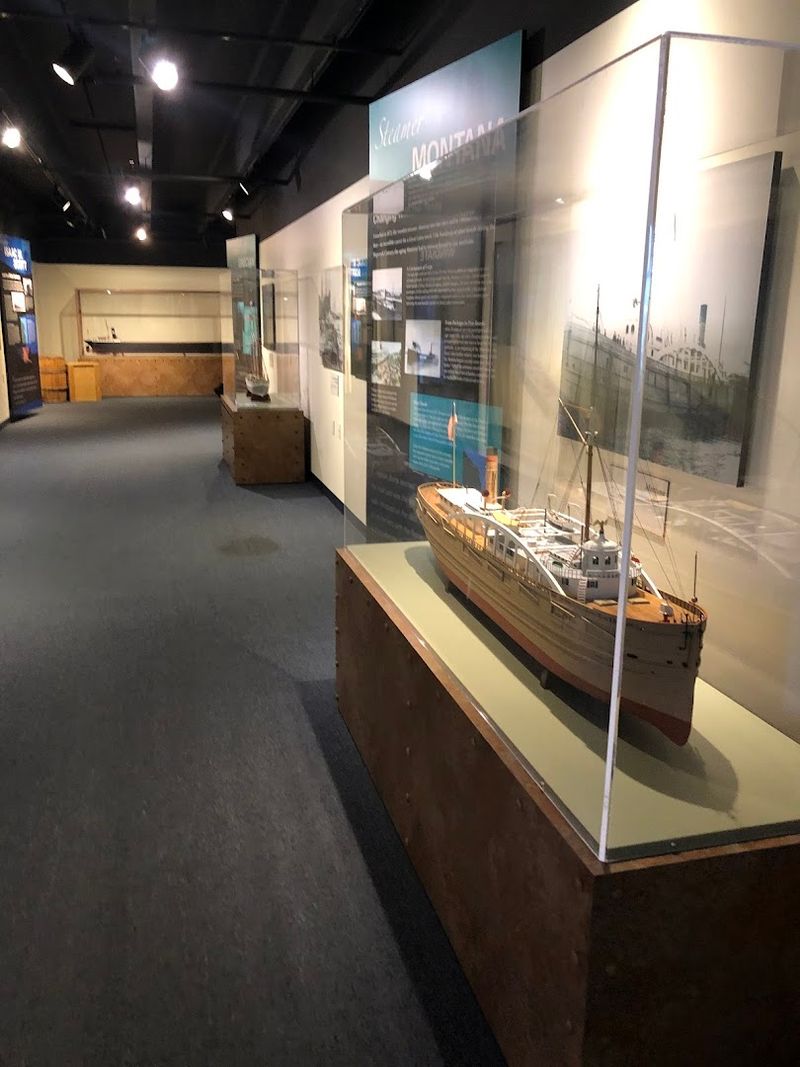
Few weather events in American history match the sheer destructive power of the Great Lakes Storm of November 1913. Meteorologists now classify it as a once-in-a-century event, a perfect collision of two major storm systems that produced hurricane-force winds, blizzard conditions, and waves reaching 35 feet across the open lakes.
Lake Huron took the worst of it. Eight ships sank on Huron alone during that single November weekend, and hundreds of sailors lost their lives.
Thunder Bay became a graveyard during that storm and in the decades surrounding it. The sanctuary’s collection includes vessels from multiple eras, but the 1913 wrecks carry a particular weight.
They represent a moment when the confidence of industrial-era shipping collided directly with the indifference of nature. Steel hulls and powerful engines weren’t enough.
The lake didn’t care about tonnage ratings or scheduled arrivals.
The visitor center dedicates significant exhibit space to the 1913 storm, using photographs, personal accounts, and recovered artifacts to reconstruct those days in detail. Newspaper front pages from the period are displayed alongside cargo manifests and crew lists, humanizing the statistics in a way that pure numbers never could.
Reading the names of ships and the towns their crew members came from turns an abstract historical event into something much more personal.
What makes this history land differently at Thunder Bay is the physical proximity to the evidence. The ships discussed in those exhibits aren’t in a distant archive or at the bottom of an ocean nobody visits.
They’re right outside, a short boat ride from the dock. The storm of 1913 isn’t a chapter in a textbook here.
It’s a geographic fact you can swim over on a clear summer afternoon, which changes how you absorb every word of the story.
Planning Your Visit to Alpena Without Missing a Thing
Alpena sits on the northeastern Michigan coast roughly four hours north of Detroit, positioned along US-23 where the highway hugs the Lake Huron shoreline. The drive up from the south passes through some genuinely beautiful stretches of Michigan coastline, and the approach to Alpena through the forest and lakeside terrain sets the mood perfectly before you even reach the sanctuary.
The Great Lakes Maritime Heritage Center is open every day of the week from 8 AM to 5 PM, which gives visitors a solid window to explore without rushing. Admission is free, supported by donations and the sanctuary’s store rather than ticket revenue.
That funding model keeps access open to everyone, which matters for a place this educational. Budget at least two to three hours inside the center if you want to engage with the exhibits properly rather than just passing through.
Booking glass-bottom boat tours in advance is strongly recommended. Tour slots fill up quickly during summer months, and walk-up availability is unreliable, especially on Mondays when departures are more limited.
Checking availability and reserving online before your trip eliminates the frustration of arriving ready to go and finding everything sold out. The tours offer a completely different perspective from the museum experience, putting you directly over the wrecks with a view through the hull.
Alpena itself has enough surrounding attractions to fill an entire day beyond the sanctuary. The Besser Museum and Planetarium sits nearby, and the downtown area offers local restaurants and shops within easy walking distance.
Summer weekends bring additional events to the area, and the 4th of July celebration near the waterfront draws large crowds. Arriving mid-week during summer gives you the best balance of good weather, manageable crowds, and full access to all sanctuary programming.
The Tunnel, the Touchscreens, and the Kids Who Never Got Bored
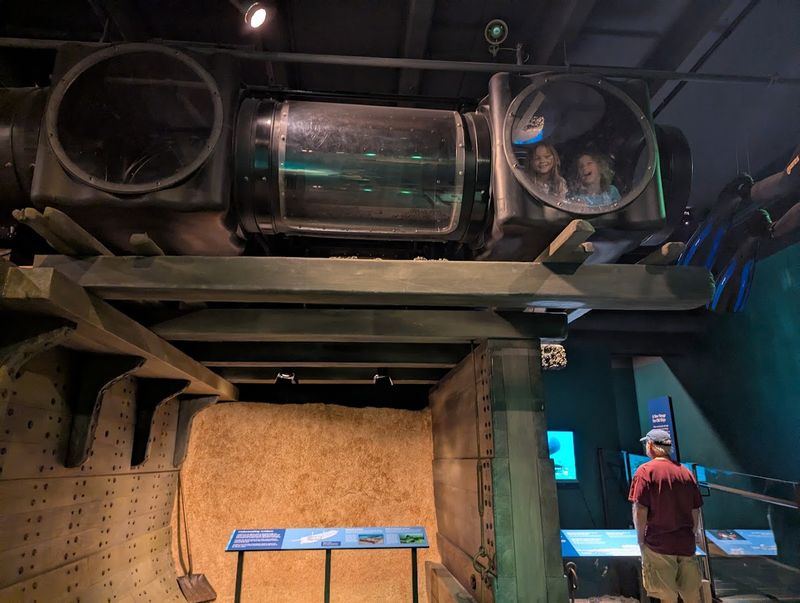
Keeping kids engaged at a history museum is genuinely hard. Most children have a patience threshold that runs out somewhere between the third informational panel and the fourth glass case of similar-looking objects.
The Great Lakes Maritime Heritage Center seems to understand this problem deeply, because the place is built in a way that keeps younger visitors physically and mentally active throughout.
A walk-through tunnel is one of the standout features for families. Kids can move through it independently, experiencing the enclosed, slightly disorienting sensation of being surrounded by the underwater environment the sanctuary protects.
It’s the kind of feature that doesn’t photograph particularly well but absolutely works in person, translating an abstract concept into a spatial experience children can actually feel.
Touchscreen stations scattered throughout the exhibits let visitors interact with maps of the lakebed, pull up information on specific wrecks, and explore the sanctuary’s research timeline at their own pace. Unlike static displays, these stations allow kids to direct their own curiosity rather than following a predetermined path.
The result is that different children often end up engaged with completely different aspects of the same exhibit, which reduces the boredom that comes from everyone waiting for the slowest reader in the group.
Drawers built into certain display cases hide additional artifacts and documents, rewarding visitors who take the time to look beyond the obvious. It’s a small design decision with a big payoff in terms of engagement.
Children who discover the drawers almost always pull open every single one, which means they’re absorbing far more content than a passive walk-through would produce. The theater screenings add another layer of variety, giving families a natural rest point mid-visit while still delivering strong educational content through documentary-style films about the sanctuary’s wrecks and research.
Why This Underwater Archive Stands Apart From Every Other Maritime Museum
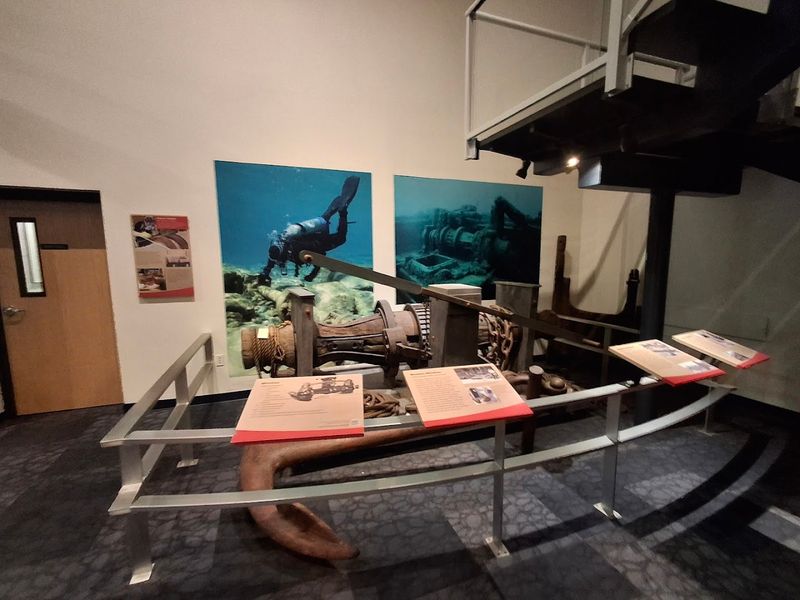
Plenty of maritime museums display anchors and navigation charts behind velvet ropes. Thunder Bay National Marine Sanctuary does something fundamentally different.
The wrecks it documents aren’t reconstructed, relocated, or represented through scale models. They’re sitting exactly where they sank, in the same lake visible from the parking lot, preserved under federal protection as a living archive that divers and snorkelers can access on any given summer afternoon.
That directness between the story and the evidence is rare. Most historical preservation creates distance, moving objects into controlled environments where they’re safe but separated from their original context.
The sanctuary inverts that logic entirely. The context is the preservation.
The wrecks stay in the lake because the lake is what gives them meaning, and removing them would strip away the very thing that makes them significant.
NOAA manages the sanctuary as part of the National Marine Sanctuary system, bringing research capacity, conservation standards, and mapping technology that continuously expands what’s known about the Thunder Bay collection. New wrecks are still being discovered.
The lakebed survey is ongoing, and each new find adds another layer to a story that’s been building since the first commercial vessels crossed these waters in the 1800s.
The free admission model reinforces the sanctuary’s educational mission in a practical way. A family that might skip a paid attraction will stop at a free one, which means the sanctuary reaches audiences that a typical museum wouldn’t.
That reach matters for a place whose core message is about preserving the Great Lakes, protecting water quality, and understanding the human history embedded in these waters. Thunder Bay doesn’t ask you to be a diver or a history scholar to find value here. It just asks you to show up, and then it handles the rest from there.
Share this story