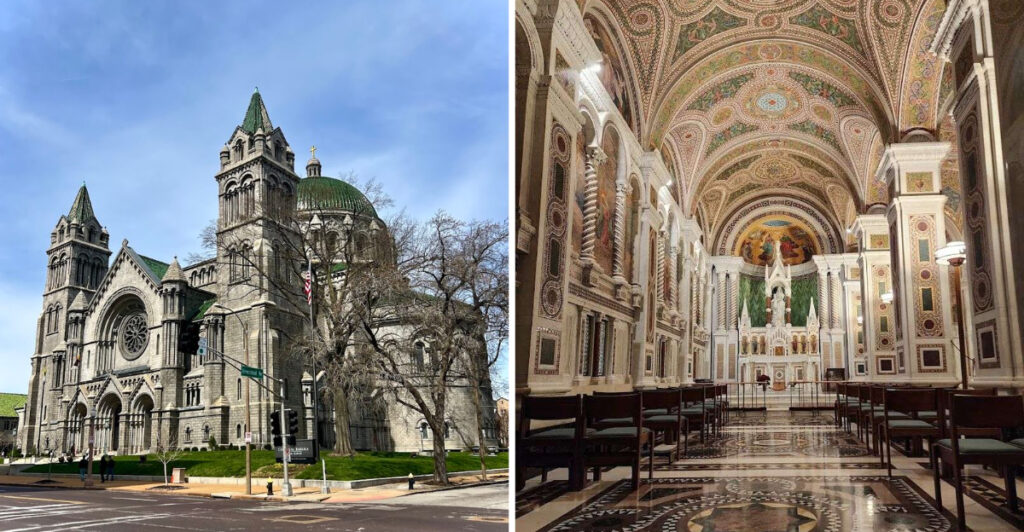
The Cathedral Basilica of St. Louis is the kind of landmark that immediately changes the pace of your day. From the outside, the massive domes and stately architecture already make an impression, but the real shock comes once you step through the doors.
Inside, walls and ceilings explode with intricate mosaics, rich color, and detail so overwhelming your eyes hardly know where to settle first. What starts as a quick stop often turns into a slow, quiet wander filled with constant double takes. Whether you love architecture, sacred art, or unforgettable city landmarks, this St. Louis masterpiece leaves the kind of impression that stays with you long afterward.
The Dome That Changes the Whole Block
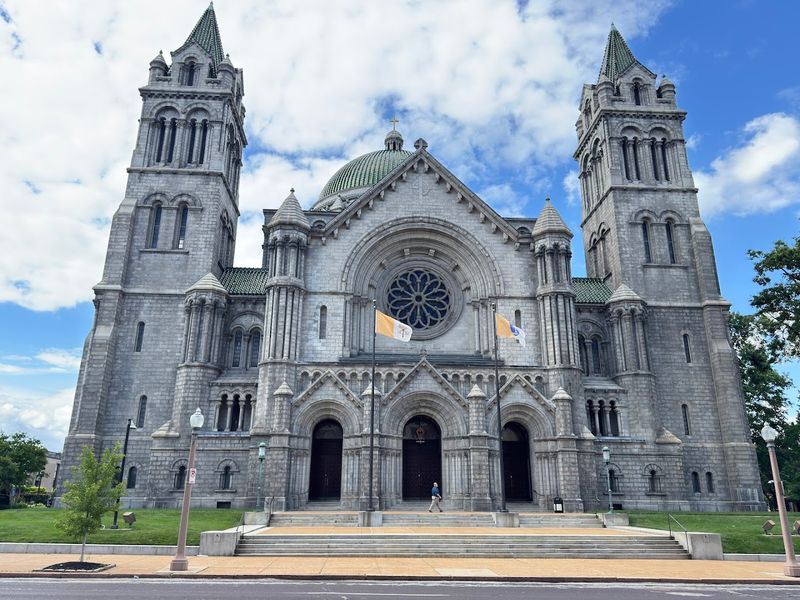
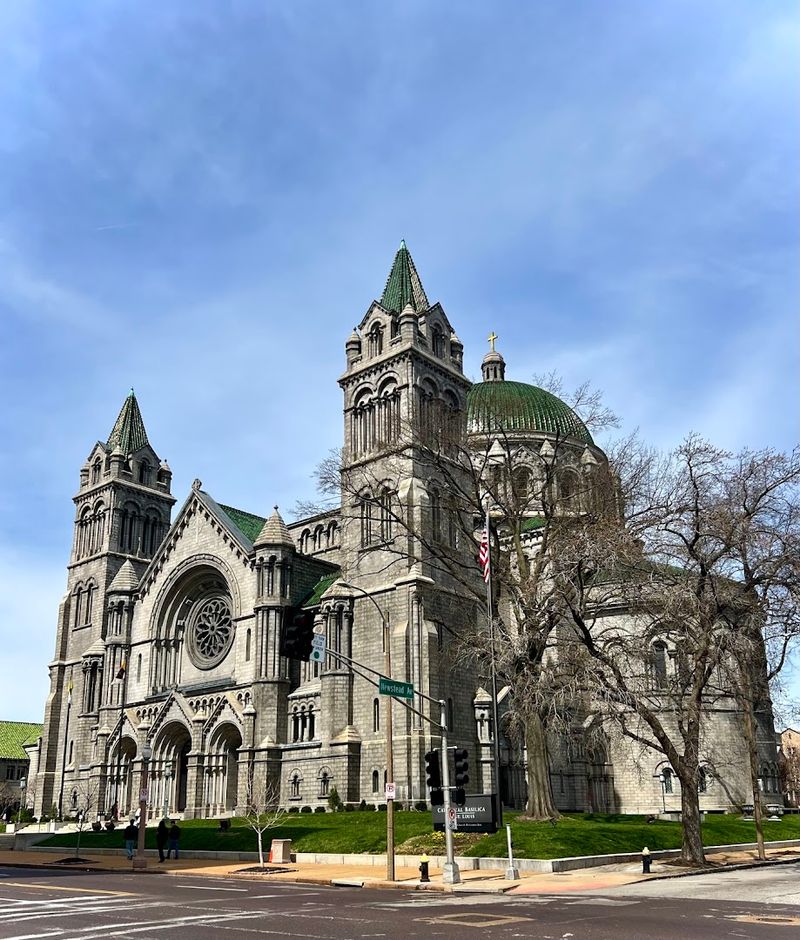
Long before you step inside, the Cathedral Basilica of St. Louis announces itself with unusual confidence. The green-tiled dome rises above the Central West End skyline in a way that makes nearby buildings look suddenly modest, while the pale stone exterior gives the whole structure a composed, formal presence.
Standing on Lindell Boulevard, you get a striking mix of scale and restraint, because the building looks monumental without turning fussy or overloaded from the street.
That balance is part of the appeal. The lines are clean enough to read from a distance, but the closer you get, the more the details start revealing themselves through arches, carved stonework, heavy doors, and the careful rhythm of towers and windows.
It is the kind of facade that rewards both a quick glance from the sidewalk and a slower lap around the grounds if you want to appreciate how the massing, symmetry, and dome all work together.
The setting helps, too. Trees, open sky, and the broad avenue give the cathedral room to breathe, so you can actually take in the building instead of seeing it squeezed into a tighter urban block.
In Missouri, where many visitors might expect great riverfront sights or baseball landmarks to dominate the memory list, this church makes a powerful case for architecture taking the lead.
If you want the best exterior moment, arrive with a little time to spare and approach slowly instead of rushing inside. Walk across the front, pause near the steps, and look upward until the dome, towers, and roofline lock into one frame.
That first outside impression matters, because it sets you up for the scale shift that happens the second the interior opens in front of you.
Inside, the Gold Starts Taking Over
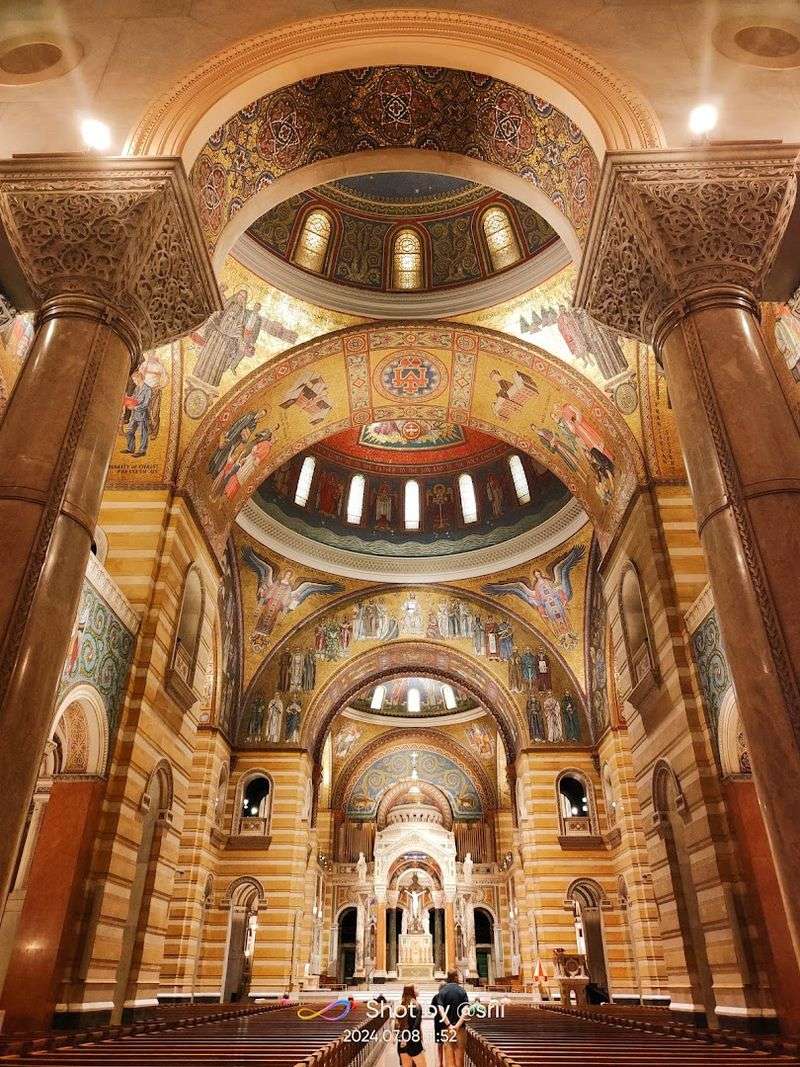
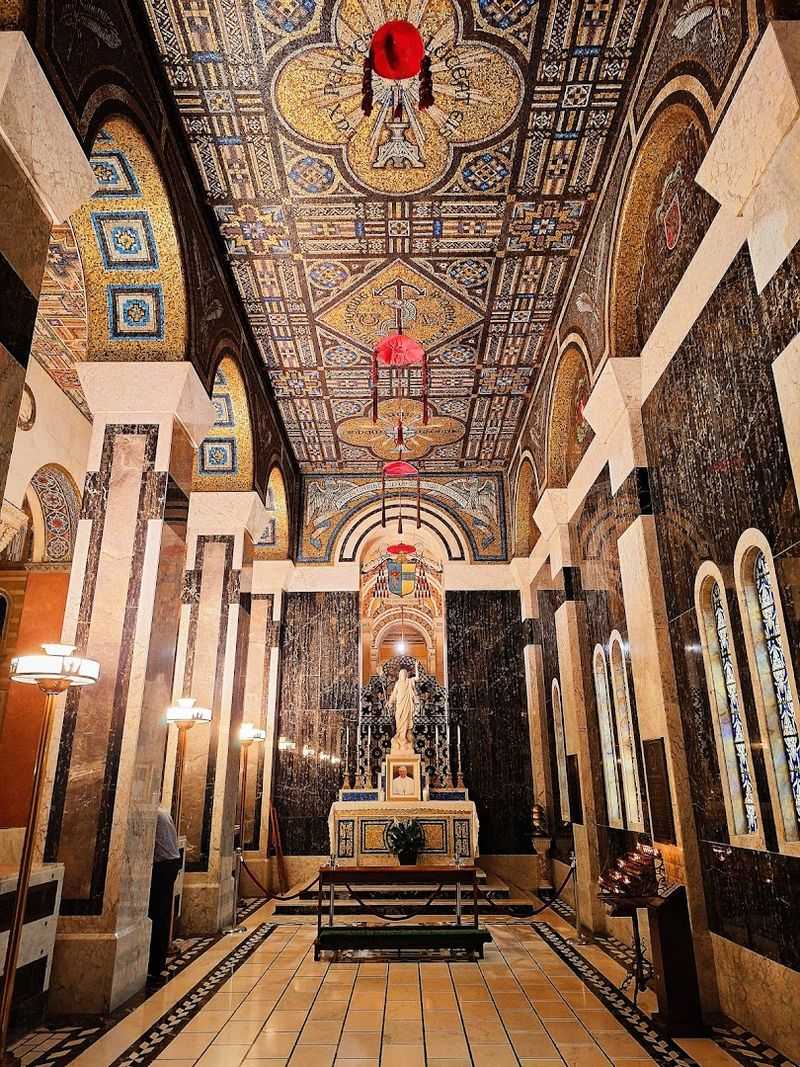
The real shock arrives indoors. You move from a dignified exterior into an interior that glows with gold, blue, deep red, and soft stone tones, and the effect is immediate because nearly every surface seems alive with pattern, image, and shimmer.
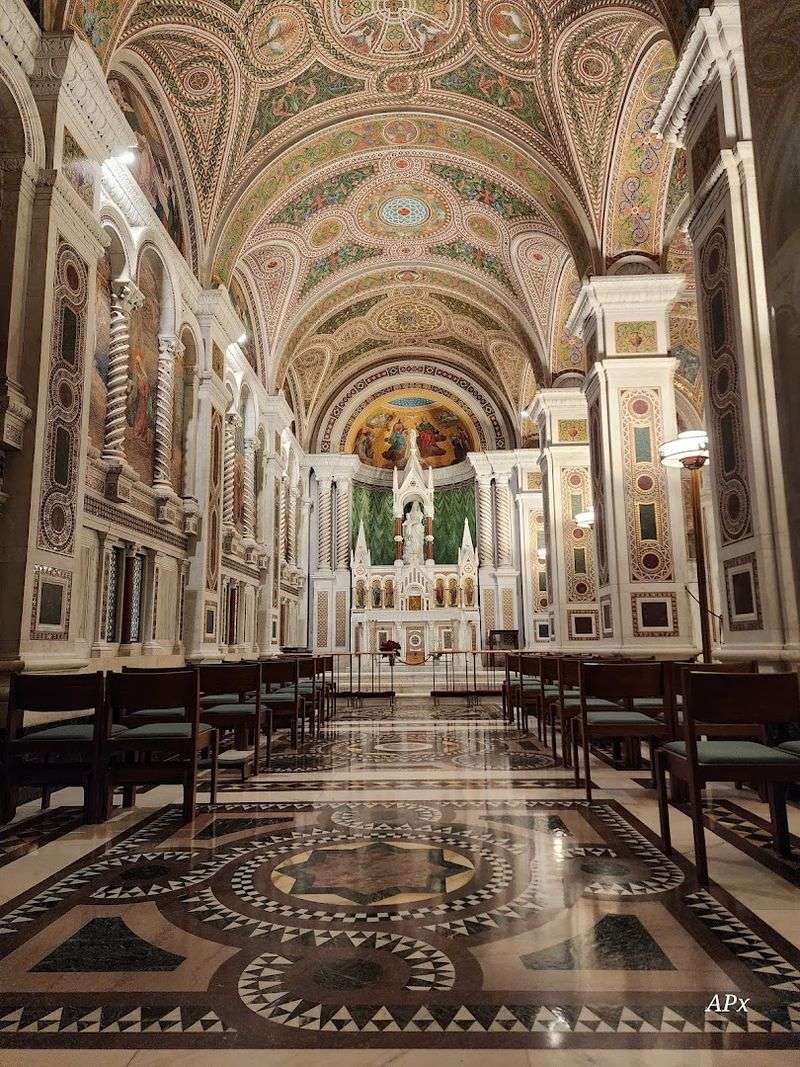
Instead of one dramatic focal point doing all the work, the cathedral surrounds you with detail in every direction, pulling your attention upward to domes, outward to arches, and back down to polished floors and marble accents.
The mosaics are the headline feature, and for good reason. They cover the interior with an astonishing density that changes constantly depending on where you stand, because distant walls read like large, unified scenes while closer views break into countless tiny pieces of glass and color.
That double experience is one of the building’s great pleasures: from far away the art feels grand and narrative, and from near range it becomes intensely handmade.
Light plays a huge role in how the space lands on you. As daylight moves through the cathedral, gold surfaces catch and release brightness differently across ceilings, side chapels, and curved architectural lines, creating a living texture rather than a flat decorative blanket.
Even visitors who arrive mainly for architecture often end up slowing down because the interior keeps offering new visual layers after the first burst of surprise wears off.
This is also where pacing matters. Resist the urge to snap a few photos and move on, because the room opens best when you let your eyes adjust and scan methodically from floor to ceiling.
Give yourself ten quiet minutes in one spot, and you start noticing how color, scale, and craftsmanship combine into an interior that is not merely ornate, but carefully orchestrated.
Where to Look When Your Eyes Don’t Know Where to Land
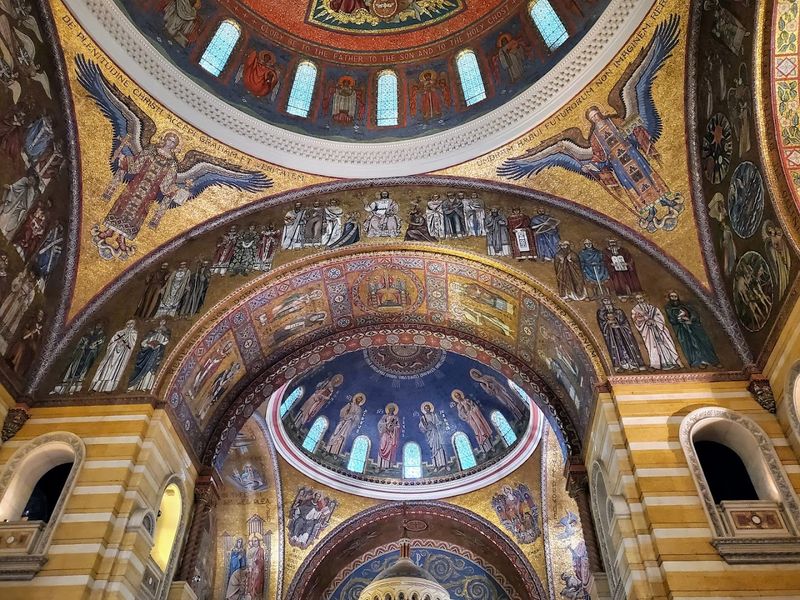
This is not a place to experience only from the center aisle. Once the initial sweep of the nave settles in, the smartest move is to start looking sideways and upward in smaller sections, because the cathedral is packed with details that can disappear inside the bigger visual spectacle.
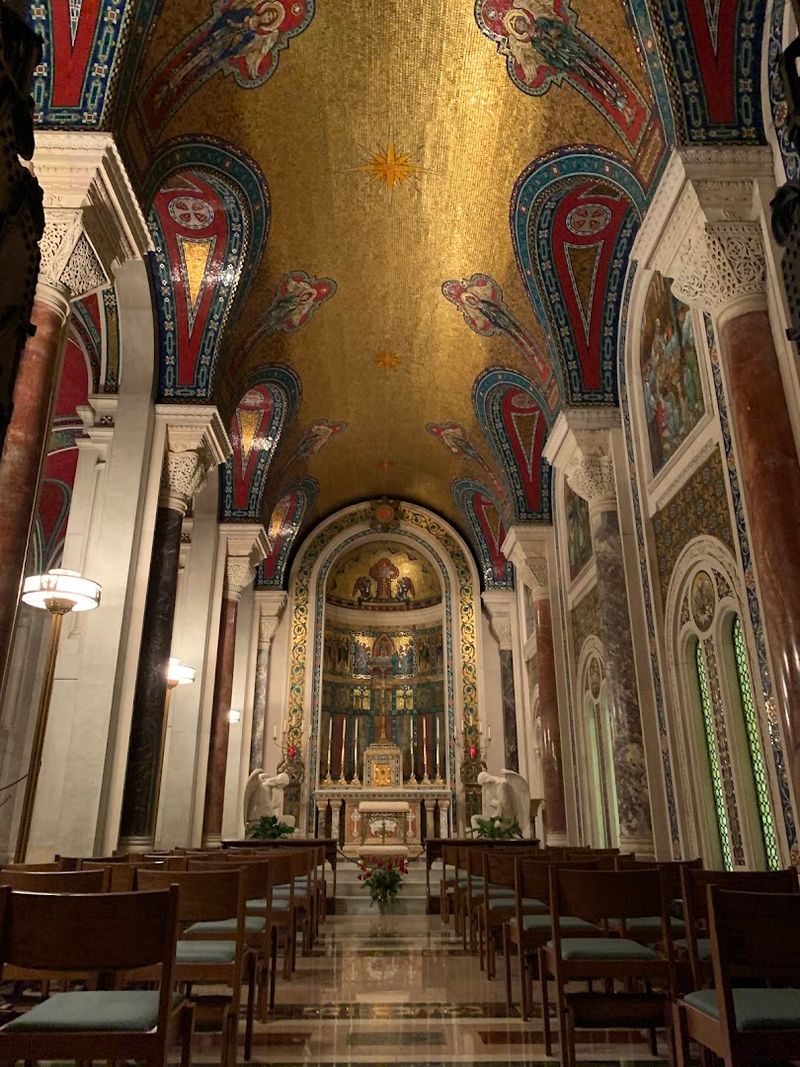
Side chapels, patterned ceilings, sculptural elements, inscriptions, and ornamental borders all build a richer visit when you stop treating the room as one giant image and start reading it in pieces.
The arches deserve extra time. Their curves frame mosaic work in a way that keeps your eyes moving from one scene to another, and the surrounding marble adds structure so the decoration never turns visually chaotic.
Small shifts in position matter here: a few steps to the left can change the way a chapel opens up, and moving closer to a column can suddenly reveal how much texture has been built into surfaces that looked smooth from across the room.
If you enjoy craftsmanship, pay attention to transitions. Notice how the cathedral handles the edges where wall meets ceiling, where image gives way to geometry, or where a devotional area becomes more intimate than the main sanctuary.
Those moments show discipline as much as beauty, and they keep the interior from reading as a single wash of gold.
There is also a practical payoff to slowing down. By focusing on sections instead of trying to absorb everything at once, you avoid visual overload and leave with clearer memories of specific features rather than one general impression of grandeur.
A good visit here is not a race to see every corner. It is a series of small discoveries that gradually add up to one of the most visually layered interiors in St. Louis.
The St. Louis Soundtrack: Quiet, Choirs, and the Organ
For all the visual richness, one of the most memorable parts of the Cathedral Basilica of St. Louis is sound. In a building this large, silence has weight, and even a soft shuffle across the floor seems to travel farther than expected.
That acoustic character gives the cathedral a different personality depending on when you visit, whether the space is nearly still, filled with spoken prayer, or carrying organ music that seems to come from every surface at once.
That matters because this is not only a building to look at. It is an active cathedral, and the interior was built to hold ceremony, song, and moments of collective attention on a scale that ordinary churches cannot match.
When music is present, especially choral singing or organ accompaniment, the architecture suddenly explains itself in another language, with height, curvature, and stone helping shape the sound into something rounded and immersive rather than thin or directional.
If your timing lines up with a service or musical program, expect a very different experience than a midday walkthrough. The visual majesty remains, but the space becomes more dynamic and less museum-like, with sound connecting distant parts of the interior and making the cathedral’s volume easier to understand physically.
Even people who arrive mainly for sightseeing often remember the acoustics just as vividly as the mosaics.
If you prefer a quieter visit, earlier or less crowded periods can be ideal because they let you notice the building’s softer auditory texture. You hear the room breathe a little, and that can be just as affecting as a full musical moment.
Either way, the cathedral works on more than one sense, which is exactly why it leaves such a strong impression compared with places that rely only on visual drama.
More Than a Missouri Landmark: A Working Cathedral With Local Roots
It would be easy to file the Cathedral Basilica of St. Louis under architecture stop, photo stop, or major church to tour, but that misses a central part of its identity. This is not a preserved shell standing apart from daily life.
It is a working cathedral that continues to host worship, sacraments, prayer, music, and the steady rhythm of local religious life, which gives the building a lived-in seriousness that visitors can sense even during a casual walk-through.
That active role changes how you read the space. The pews, confessionals, side altars, devotional areas, and ceremonial layout are not decorative leftovers from another era.
They still serve their intended purpose, and that practical continuity gives the grandeur real grounding. Instead of feeling like a monumental room designed only to impress, the cathedral comes across as a place where beauty and use were meant to support one another over time.
In St. Louis, that local connection also matters because the cathedral is woven into important life events for many residents. Weddings, holy days, weekday Masses, choir programs, and major diocesan gatherings all give the building a civic and spiritual presence larger than a one-time sightseeing destination.
Visitors may arrive for art, but the sense of ongoing community often becomes part of the memory because the cathedral never reads as static.
That combination of public accessibility and active religious purpose is one reason the visit stays interesting even if you are not Catholic. You are seeing a major work of architecture, but you are also stepping into a place that continues to function exactly as intended.
That ongoing role gives the cathedral a different kind of presence than a purely historic landmark. Visitors are not only seeing remarkable architecture — they are stepping into a place that continues to function as part of everyday life in St. Louis.
The Best Way To Experience The Cathedral
If you want the strongest visit, a little planning goes a long way. The Cathedral Basilica of St. Louis is open daily from morning through late afternoon, which makes it fairly easy to fit into a St. Louis itinerary, but the experience changes depending on timing, crowd levels, and your reason for going.
A purely visual visit works best when you give yourself enough margin to slow down, while a service-centered visit calls for arriving earlier, dressing respectfully, and expecting a different pace.
Parking and approach are worth thinking about before you show up. There is parking behind the cathedral and additional street options nearby, but major services and special occasions can make spaces tighter than you might expect, especially if you are aiming for a convenient entrance.
Arriving early removes pressure and gives you the bonus of seeing the grounds and facade without rushing straight indoors.
Once inside, the biggest practical mistake is trying to cover everything too quickly. This is a place where visual fatigue is real, because there is so much detail that your attention can blur if you sprint from one side to the other.
A better strategy is simple: sit for a few minutes, let the room settle, then explore in loops rather than one nonstop circuit.
If tours are available during your visit, they can add useful context, especially for understanding iconography, architectural choices, and the scope of the mosaic program. If not, you can still have an excellent self-guided experience by moving deliberately and keeping your phone use secondary to actual looking.
Missouri has plenty of headline attractions, but this is one of the few where patience directly improves the payoff.
Why This Cathedral Stays With You
Some beautiful places are memorable because they are photogenic. Others stand out because they are historically important, surprisingly large, or tied to a major city landmark district.
The Cathedral Basilica of St. Louis stands apart because it succeeds on all those levels at once while also delivering a rare sense of visual completeness. Exterior, interior, craftsmanship, sound, function, and setting all reinforce one another instead of competing for attention.
That coherence is the reason the cathedral leaves such a strong afterimage. You do not walk away remembering only one ceiling, one chapel, or one dramatic angle.
You remember the whole sequence: the dome appearing over the street, the first gold-lit view inside, the density of mosaic work, the hush of the nave, and the feeling that every surface was considered as part of a larger design. Very few buildings manage that kind of consistency without becoming overwhelming or theatrical.
It also helps that the cathedral gives different kinds of visitors different entry points. Architecture fans can study form and materials.
Art lovers can spend their time tracing mosaic scenes and patterns. Travelers with a spiritual interest can sit quietly and absorb the room as a sacred place rather than a sightseeing stop.
Even someone who simply wandered in out of curiosity can leave with the sense of having encountered one of the most distinctive interiors in the country.
If you are building a short list of places in St. Louis that truly justify slowing down, put this near the top. The Cathedral Basilica is not memorable because it is famous.
It is memorable because the experience is unusually complete, unusually detailed, and unusually hard to compress into a few snapshots. That is the clearest sign of a landmark that deserves its reputation.
Share this story