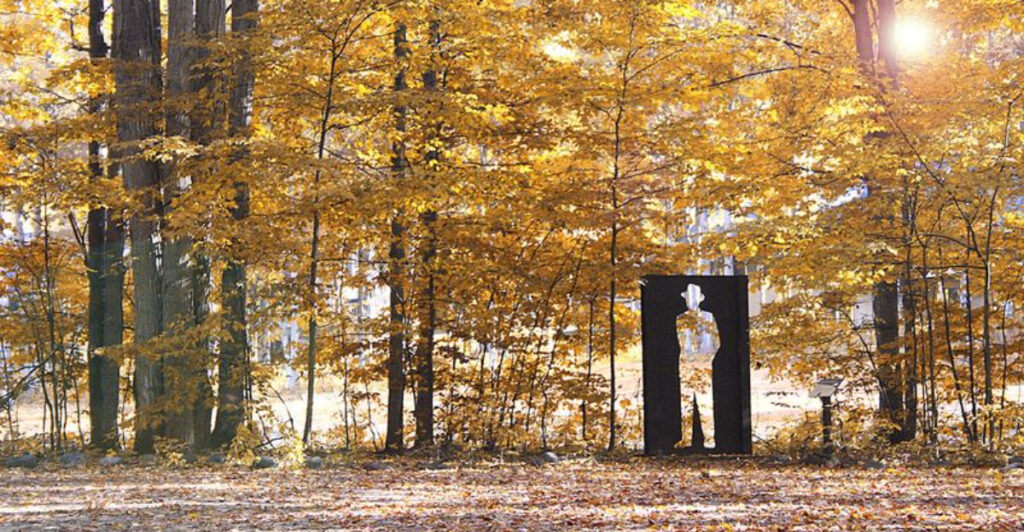
Tucked into the wooded hills near Crystal Mountain resort in Thompsonville, Michigan Legacy Art Park is one of those places that genuinely surprises you. Over 50 large-scale sculptures line winding forest trails, each one rooted in Michigan history, ecology, and Native American heritage.
The park stretches across rolling, forested acreage where art and nature share equal billing. Whether you show up in snowshoes during winter or hiking boots in fall, the experience hits differently every single time.
A Forest Gallery Unlike Any Museum You Have Visited
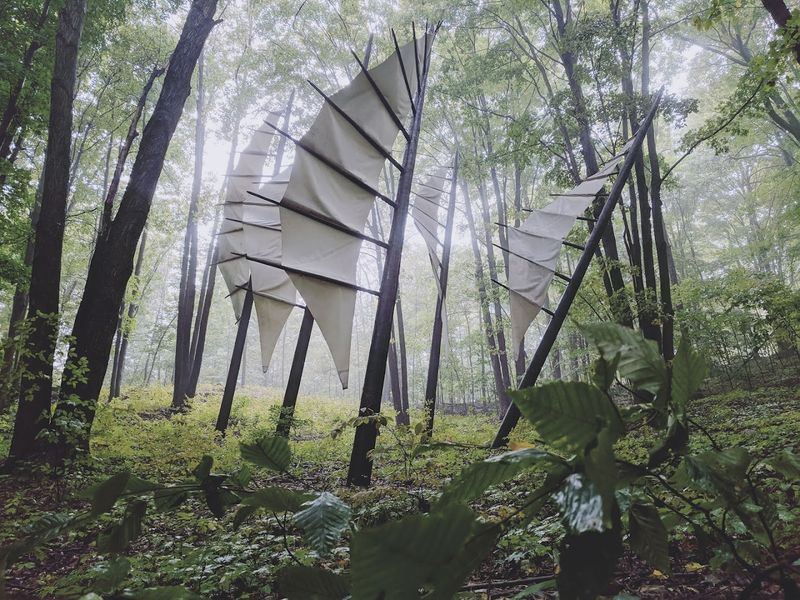
Walking into Michigan Legacy Art Park feels less like entering an exhibit and more like stepping into a living landscape that happens to have extraordinary things growing out of it. The sculptures do not sit on pedestals behind velvet ropes.
They rise from the earth, lean against trees, and anchor themselves into hillsides as though they have always belonged there.
The park holds more than 50 works spread across several miles of forested trails near Crystal Mountain in Thompsonville. Each piece connects to a theme — Michigan history, Indigenous culture, the natural environment, or the industries that shaped the Great Lakes region.
That thematic thread gives the whole experience a sense of purpose that a random art walk simply cannot replicate.
Visitors who wander in expecting a casual stroll often come out an hour later talking about specific pieces they cannot stop thinking about. The scale of some installations is genuinely jaw-dropping.
Towering wooden structures, carved stone forms, and intricate metalwork appear around trail bends without warning.
The outdoor setting means weather becomes part of the experience. Rain softens the light filtering through the canopy.
Snow blankets the sculptures in ways that change their silhouettes entirely. One visitor described hiking through in the rain during fall foliage season and being completely absorbed for a full hour without noticing the weather at all.
The trails are well maintained but honestly hilly. Steep climbs and descents are part of the deal, and the park does warn visitors upfront.
Bring water, wear solid shoes, and budget more time than you think you need. Two miles of art-studded forest trail moves slower than two miles of ordinary walking, and that is exactly the point.
The Stockade Labyrinth: One Structure That Stops People Cold
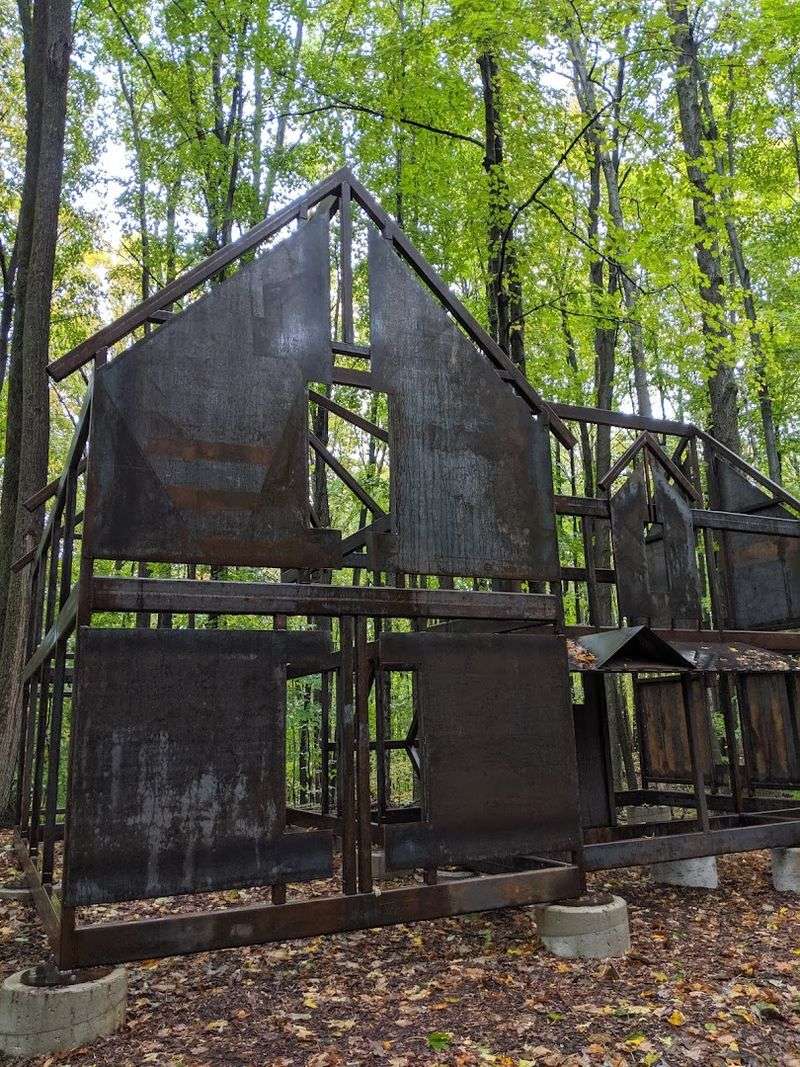
Of all the installations at Michigan Legacy Art Park, the Stockade Labyrinth consistently earns the longest pauses and the most photographs. It is a large enclosed structure built from vertical timber, forming a series of narrow passageways that wind inward like a puzzle.
Standing inside it, surrounded by towering wooden walls and filtered forest light, the feeling is genuinely transportive.
People have described the interior as resembling a pre-colonial settlement or a scene from a period film. The construction is deliberate and dense, blocking out the surrounding forest so completely that you lose your spatial bearings in the best possible way.
It is three-dimensional in a way that photographs struggle to capture — something that black-and-white images hint at but cannot fully communicate.
The labyrinth connects thematically to Michigan’s early history and the complex relationships between Indigenous peoples and European settlers. That historical weight gives the structure an emotional resonance beyond its impressive scale.
It is not decorative. It asks something of the person walking through it.
Kids tend to love it for entirely different reasons. The enclosed pathways feel like an adventure, and younger visitors run the interior passages with pure delight.
That range of responses — contemplative for adults, thrilling for children — is part of what makes the piece so effective as public art.
The structure holds up impressively against the elements, though like all outdoor installations at the park, it carries the natural wear of Michigan winters and wet springs. That weathering adds texture and character rather than diminishing the work.
Arriving early in the morning, when mist still hangs between the trees, turns a visit to the labyrinth into something close to cinematic. Plan around it if you can.
Sculptures Rooted in Michigan History and Indigenous Heritage
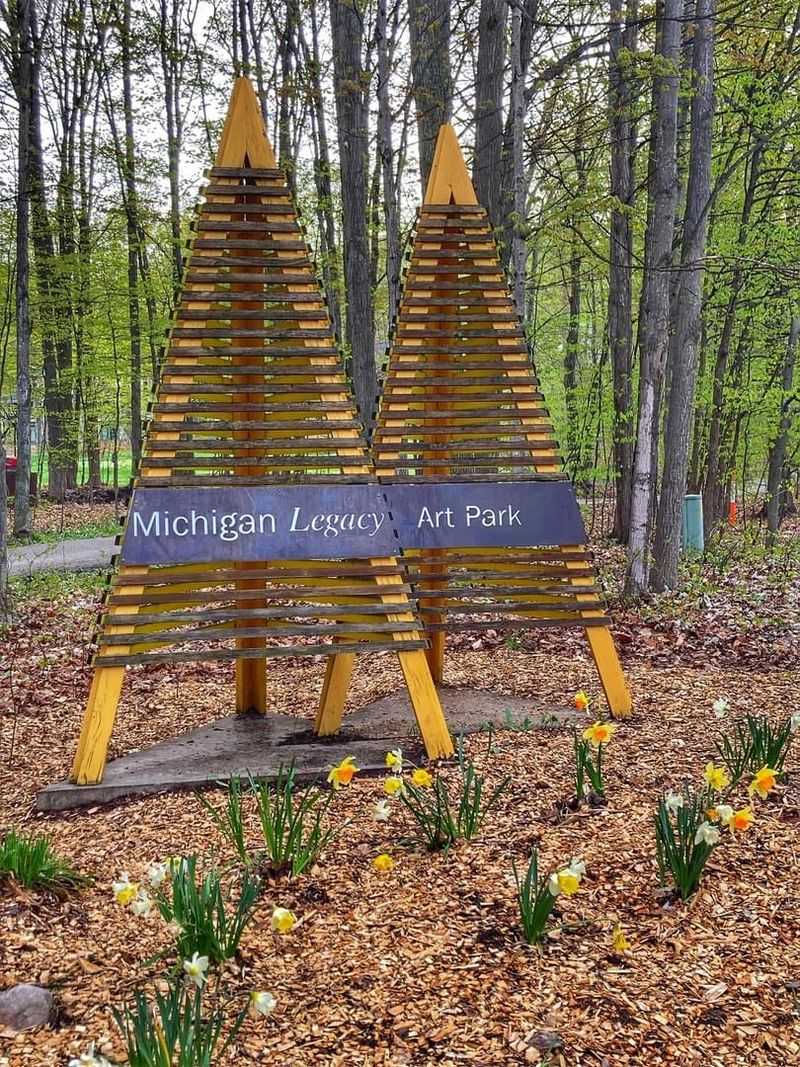
The art at Michigan Legacy Art Park is not random. Every piece connects to a larger story about the land, the people who lived on it, and the forces that shaped modern Michigan.
Indigenous history runs through a significant portion of the collection, with works that reference Anishinaabe culture, Great Lakes ecology, and the long timeline of human presence in this part of the country.
Some sculptures reference the logging industry that once dominated northern Michigan, an industry that stripped entire forests and reshaped the economy and landscape of the region. Seeing those themes rendered in large-scale outdoor art — on the actual forested land that was once harvested — creates a layer of meaning that indoor exhibitions rarely achieve.
Other pieces address the natural world directly: water, birds, seasons, and the relationship between human communities and the ecosystems they depend on. The variety keeps the trail from feeling one-note.
Around one bend you might encounter something meditative and quiet. Around the next, something bold and confrontational.
The park functions as a living archive in that sense. It preserves stories and perspectives that do not always make it into conventional history books, using art as the medium rather than text.
For students and families, that approach opens conversations that a museum display might not spark as naturally.
Local schools have collaborated with the park over the years, with children participating in art projects that connect them to the collection’s themes. That community investment shows in how the park is maintained and how the mission continues to grow.
The art is not just installed and forgotten — it remains part of an active cultural conversation rooted in northern Michigan’s particular history and landscape.
What Hiking the Trails Actually Feels Like on Your Body
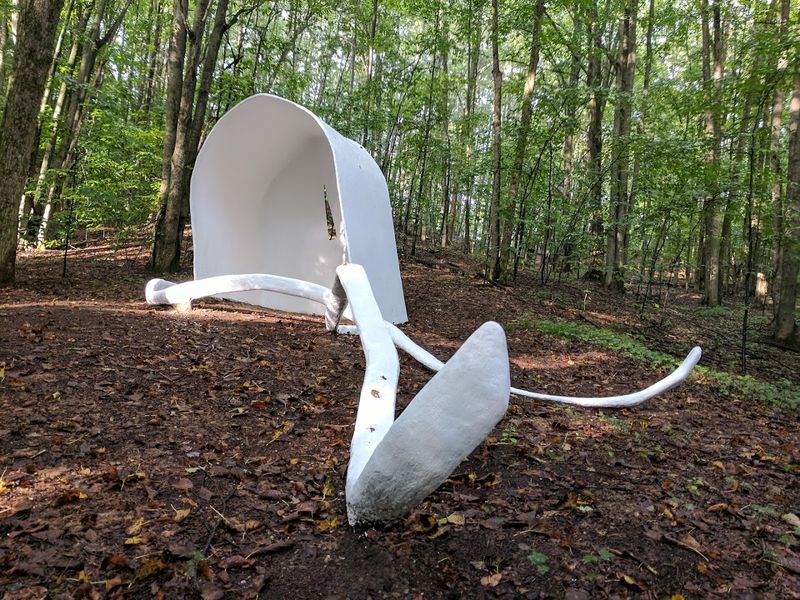
Nobody should walk into Michigan Legacy Art Park expecting a flat, easy stroll. The trails roll through genuine hill country, with climbs steep enough to make your calves work and descents that require attention to footing.
Tree roots cross the path in multiple spots, and after rain, some sections get slick. The park posts fair warnings at the trailhead, and those warnings are worth reading.
The full loop runs roughly two miles, though the actual distance covered feels longer because of the elevation changes and the natural tendency to stop frequently. Most visitors spend between one and two hours on the trails depending on pace and how long they linger at individual sculptures.
An hour is a reasonable baseline for someone who moves at a moderate pace and stops to look properly.
Footwear matters more here than at a typical park. Sneakers work on dry days, but hiking boots with ankle support make the experience noticeably more comfortable, especially on the steeper sections.
Bringing water is not optional — there is no refreshment stop on the trail itself, and the physical effort adds up faster than expected.
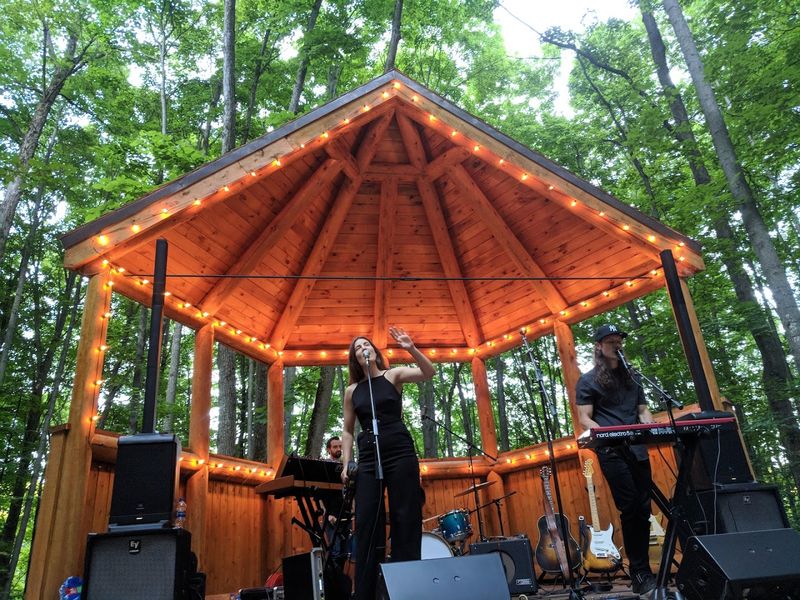
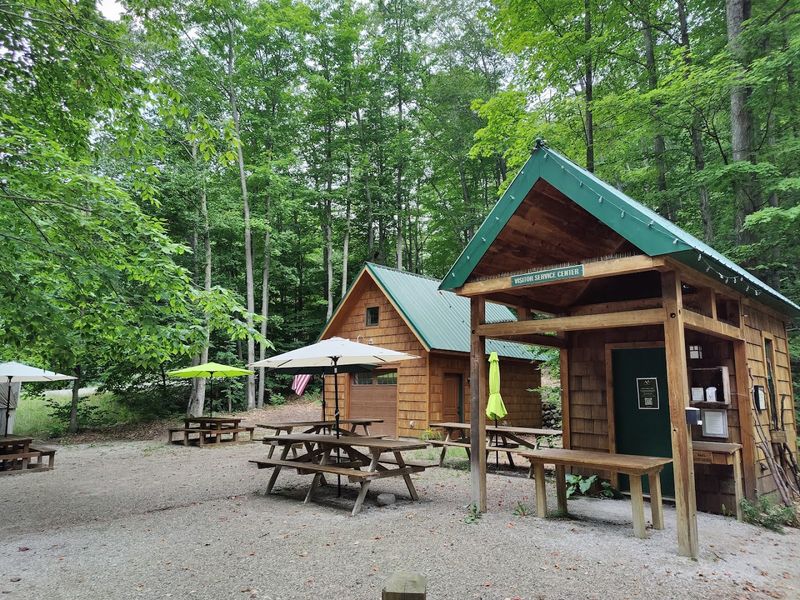
Outhouses are available at the trailhead and at an education center about ten minutes into the trail, which is a practical detail worth knowing before you head in. The education center also sits near a small amphitheater, a quiet open space that offers a natural rest point before continuing deeper into the forest.
In winter, the experience shifts considerably. Snowshoers and visitors with microspikes can access much of the park when snow covers the ground, though some sections close to accommodate cross-country skiing.
Soft, deep snow makes the trail more physically demanding but adds a hushed, isolated quality to the whole outing that summer visits simply cannot match.
Northern Michigan Seasons Transform the Park Into Four Different Places
Visiting Michigan Legacy Art Park in October is a completely different experience from visiting in January, and both differ sharply from a July afternoon. The park does not just tolerate seasonal change — it benefits from it in ways that make repeat visits genuinely worthwhile rather than redundant.
Fall is the season most people describe first. The combination of turning leaves, cooler air, and large-scale sculptures creates a visual atmosphere that photographers and casual visitors alike find hard to leave.
The colors shift the mood of individual pieces — a rusted metal form against orange maple leaves reads entirely differently than the same sculpture against a snow-covered hillside in February.
Winter brings its own rewards. Snowshoers who make the effort to visit between December and March encounter the park in near-total quiet.
The sculptures take on different silhouettes under snow loads, and the absence of foliage opens sightlines through the forest that summer visitors never see. Some trails close for cross-country skiing, so checking current conditions before arrival saves confusion at the trailhead.
Spring softens the landscape but also muddies the trails. Visitors who come during the melt season should expect wet conditions underfoot and dress accordingly.
The payoff is emerging wildflowers and the sound of snowmelt running through the forest, which pairs unexpectedly well with the park’s more meditative sculptures.
Summer draws families and resort guests from Crystal Mountain, which sits adjacent to the park. The canopy fills in completely by June, providing shade that makes midday visits comfortable even on warm days.
Morning hours are quieter and the light through the trees is at its best before noon. Each season offers a legitimate reason to return, which explains why so many visitors come back year after year.
Getting In, Paying Up, and Finding Your Way Around
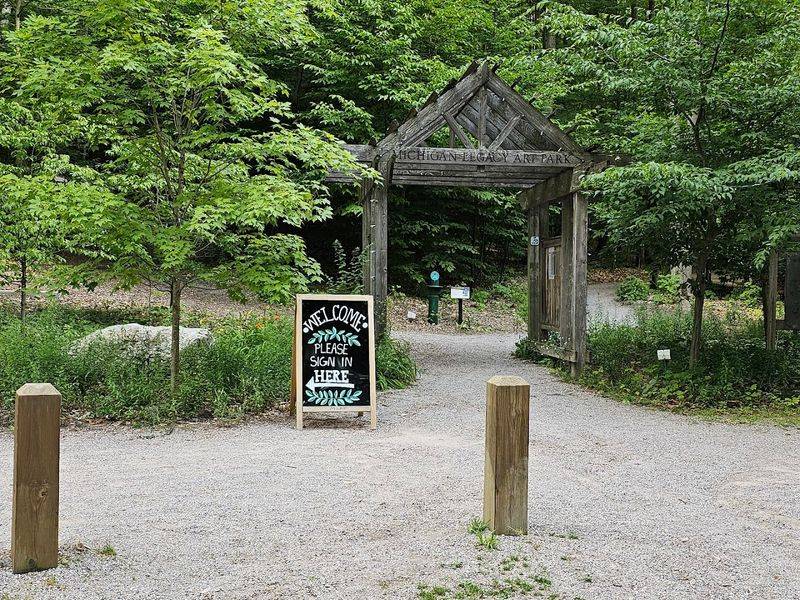
Admission to Michigan Legacy Art Park runs on a donation model rather than a fixed ticket price. The standard ask is ten dollars per person, with a reduced rate available for guests staying at Crystal Mountain resort.
Payment happens at a visitor information kiosk near the trailhead, where a QR code makes card payments straightforward. Cash works too, dropped into a collection box at the trail entrance.
The park sits at 12500 Crystal Mountain Drive in Thompsonville, southwest of Traverse City by about 45 minutes. For anyone already staying at Crystal Mountain, access is essentially walking distance.
For day visitors making a dedicated trip, the drive through northwestern Michigan’s back roads is pleasant in its own right, passing farmland and second-growth forest before the resort area comes into view.
Parking is limited in the immediate trailhead area. On busy weekends or during special events at the resort, finding a spot can take a few extra minutes, but most visitors report that it is not a serious problem under ordinary circumstances.
Arriving earlier in the day sidesteps any congestion and gives you the trails in quieter conditions.
The park operates daily from 7 AM to 9 PM year-round, which means early morning visits before the resort fills up are entirely possible. That window — first light through a forest full of large-scale sculpture — is one of the more underrated experiences the park offers.
Weekday mornings are especially uncrowded.
A small free library sits along the trail, a detail that loyal visitors often mention. The tradition of bringing a book to leave and taking one in return has become a small but genuine community ritual.
It is a minor thing, but it reflects the park’s overall character — thoughtful, community-minded, and a little unexpected at every turn.
Why This Spot Stands Apart From Every Other Outdoor Art Walk in the Midwest
Outdoor sculpture parks exist in several Midwest states, but Michigan Legacy Art Park occupies a specific category that most of them do not. The combination of genuine wilderness terrain, historically grounded artwork, and the sheer number of pieces — more than 50 — spread across forested acreage creates a density of experience that manicured sculpture gardens rarely deliver.
The hilly, rooted, sometimes unpredictable trail conditions are not a drawback. They are part of what makes the park feel earned.
You work for each sculpture, and that physical investment changes how you receive the art. A piece encountered after a steep climb and a careful descent through muddy switchbacks registers differently than something spotted from a paved path.
The thematic coherence also separates this park from collections that feel assembled rather than curated. Michigan history, Indigenous culture, the natural environment, and the human relationship to the land form a consistent through-line.
Individual pieces are interesting on their own, but the cumulative effect of walking the full trail is something closer to a sustained argument about place and belonging.
Children respond to the park in ways that are hard to manufacture. The scale of the installations, the fort-like quality of the Stockade Labyrinth, and the general sense of discovery around each trail bend produce genuine excitement in younger visitors.
Parents consistently mention it as one of the few outdoor destinations where kids stay fully engaged without prompting.
For anyone passing through northern Michigan — whether staying at Crystal Mountain or just making the drive from Traverse City — skipping the park because it seems like an add-on would be a real mistake. The hour or two spent on those trails tends to become the part of the trip people talk about longest after they get home.
Share this story