Some pizza places come and go, but Cloverleaf Bar and Restaurant on Gratiot Avenue in Eastpointe, Michigan has been holding it down since 1946. Long before Detroit-style pizza became a national trend, this family-owned spot was already perfecting the square, crispy-edged, deep-dish pie that the whole city would come to love.
Sitting at a 4.4-star rating with over 2,500 reviews, Cloverleaf is not just a restaurant — it is a living piece of Michigan food history. If you have never made the trip out to Eastpointe, this is the kind of place that makes the drive worth every mile.
Where Detroit-Style Pizza Actually Began
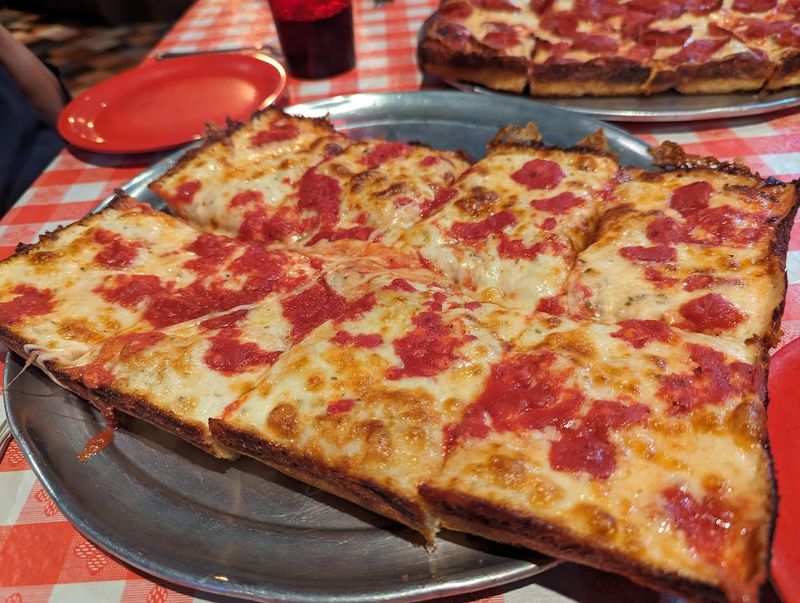
Before the food blogs, before the national chains started copying the format, and long before Detroit-style pizza earned its own Wikipedia page, Cloverleaf was already baking it in rectangular steel pans. The restaurant traces its roots back to 1946, making it one of the earliest documented originators of the style that now carries an entire city’s name.
That is not a marketing claim — it is a timeline backed by decades of community loyalty on Gratiot Avenue.
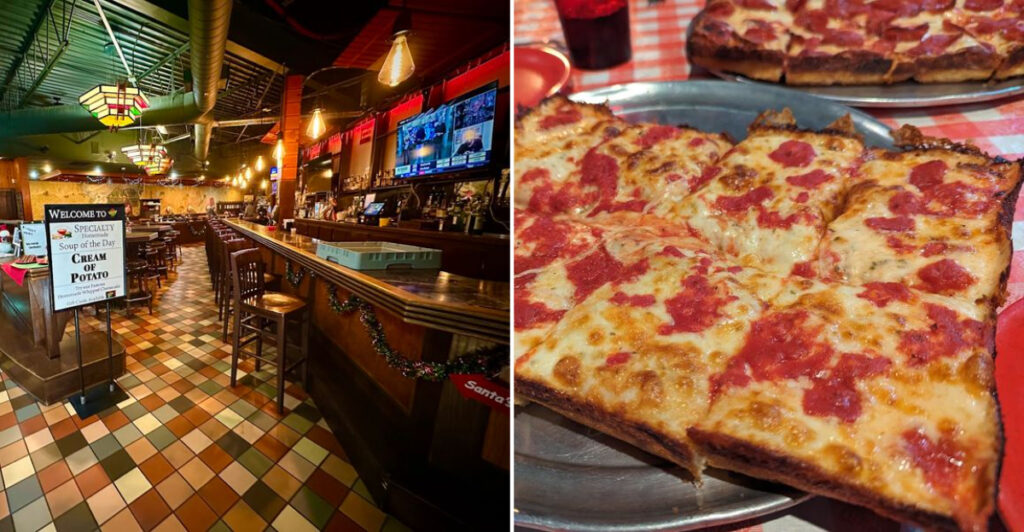
Detroit-style pizza is defined by a few very specific things: a thick, airy dough that crisps up hard on the bottom and edges from the seasoned pan, cheese that gets pushed all the way to the sides so it caramelizes against the steel, and sauce that often goes on top rather than underneath. Cloverleaf follows this formula with the kind of confidence that only comes from doing something the same right way for generations.
The crust develops a golden-brown crunch around the perimeter that snaps when you bite through it.
What makes the origin story matter beyond nostalgia is that you can actually taste the institutional knowledge in every slice. The dough has a chew and a lift that takes years of repetition to develop consistently.
The cheese-to-edge ratio is dialed in. The sauce carries a brightness that balances the richness of the crust without overwhelming it.
Plenty of newer spots have tried to replicate this style across Michigan and beyond, but there is a measurable difference between learning a technique and having lived it for over six decades. Cloverleaf is the living proof of that difference, and Gratiot Avenue is exactly where that proof sits.
The Crust That Converts Skeptics on the First Bite
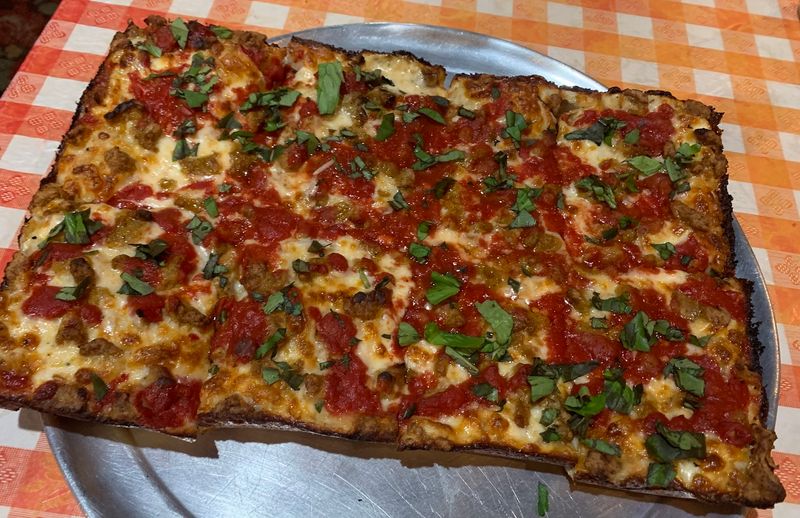
Not everyone walks into Cloverleaf already sold on Detroit-style pizza. Some arrive expecting something closer to Chicago deep dish, others assume it is just a thicker version of New York-style.
Then the pan lands on the table and the crust does the convincing on its own. The bottom is deeply golden — nearly lacquered — from direct contact with the seasoned steel pan, and the edges have that signature caramelized cheese crust that crunches audibly when you press into it.
The interior of the dough is the real surprise for first-timers. It is soft and pillowy in a way that contrasts sharply with the crispy exterior, almost like a focaccia that decided to become a pizza.
That contrast is not accidental — it is the result of a hydration level and proofing process that Cloverleaf has refined over decades. The dough has enough structure to hold up toppings without going soggy, but enough tenderness that it pulls apart cleanly without resistance.
Old-style pepperoni is a popular topping choice here, and for good reason. The smaller, cupped pepperoni curls up during baking and collects a little pool of its own oil, crisping at the edges while staying chewy in the center.
Jalapeños and black olives are another combination worth trying for those who want heat and brine cutting through the richness of the cheese. The toppings are loaded generously rather than scattered sparingly, which means every square gets an even distribution from corner to corner.
At a mid-range price point, the value per slice is genuinely hard to argue with. The crust alone justifies the visit, but the full package is what turns first-time diners into regulars who come back for years.
Crunchy Bread, Meatballs, and the Starters Worth Ordering
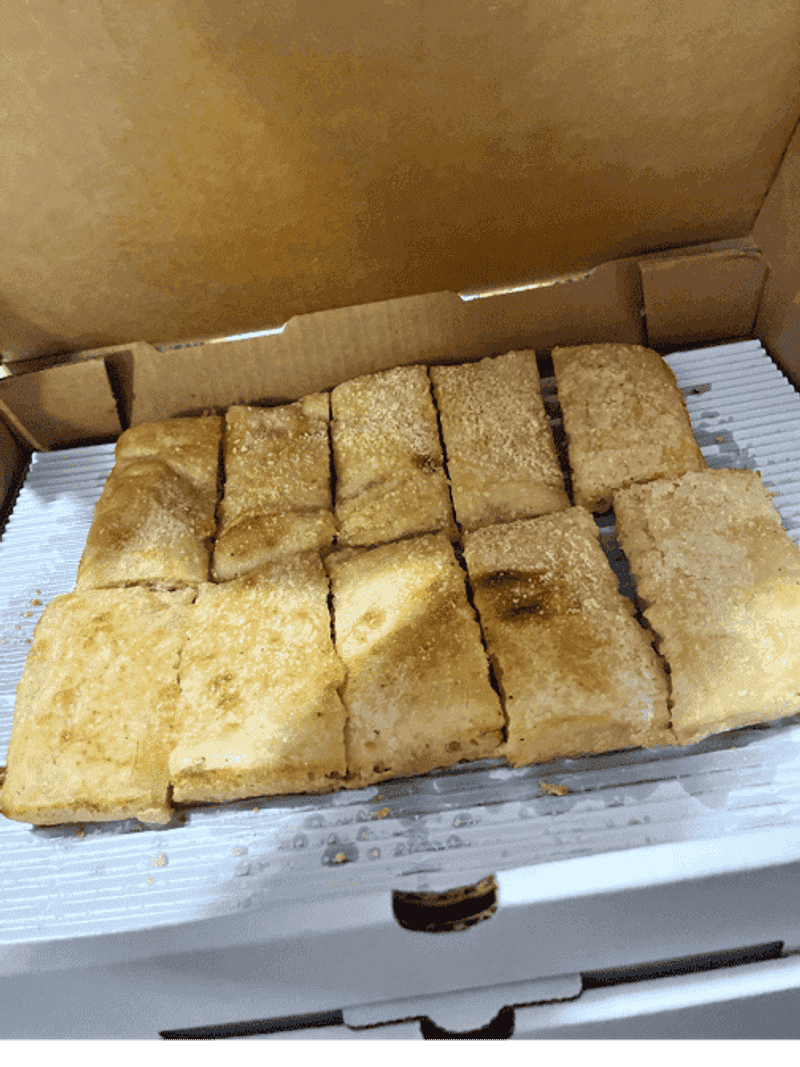
The pizza gets most of the attention at Cloverleaf, but the appetizers have quietly built their own following over the years. The crunchy bread — a pizza dough base stretched out and baked with garlic butter, sugar, and Parmesan — sounds unusual until you try it.
Sweet, crispy, soft in the middle, and completely unlike anything you would find at a chain restaurant, it arrives in a basket and tends to disappear faster than expected. It is the kind of bread that makes you rethink what bread can be.
The meatballs are a different story entirely — hearty, dense, and deeply savory with a seasoning profile that leans into Italian-American comfort food without apology. They arrive tender enough to cut with a fork but substantial enough to feel like a genuine first course rather than an afterthought.
The sweet bread and the meatballs together give the table something to work through while the pizza bakes, which is a smart move given that Detroit-style pies need proper oven time to develop that crust correctly.
Cheese sticks round out the starter lineup and pair well with the ranch dressing, which has developed its own small fan base among regulars. The bread basket experience alone has brought people back to Cloverleaf even on visits when the pizza was not the primary goal.
For a restaurant that has been operating since the 1940s, the ability to keep appetizers feeling fresh and worthwhile rather than generic is a real achievement. The whipped cheesecake, served as a dessert, has also earned consistent praise for its texture and lightness — a smooth finish to a meal that tends to run rich and satisfying from start to end.
Decades on Gratiot: Michigan’s Longest-Running Pizza Legacy
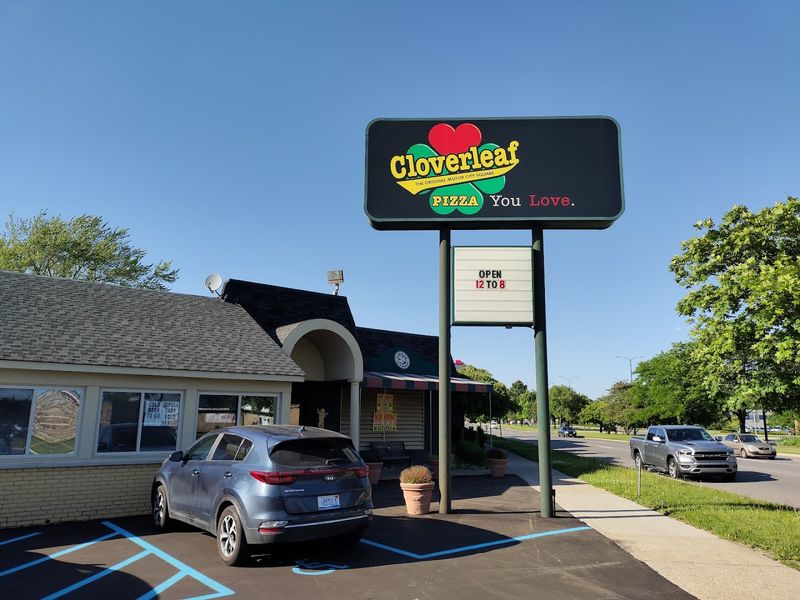
Gratiot Avenue is one of those roads that tells the story of Metro Detroit in layers — old storefronts, family businesses, and the kind of neighborhood anchors that survive because the community keeps showing up for them. Cloverleaf sits on this stretch in Eastpointe in a building that does not announce itself dramatically from the outside.
The facade is modest, the location is practical, and none of that matters once you step through the door and spot the giant neon cloverleaf hanging from the ceiling.
Inside, the walls carry the weight of the restaurant’s history in a way that feels earned rather than staged. Antique black-and-white photographs, decorative Italian dinnerware, and framed phrases in Italian fill the space with a family narrative that spans generations.
Checkered tablecloths cover the booths, the bar seats around 50 people, and the overall layout has the comfortable, worn-in quality of a place that has never needed a rebrand to stay relevant. The history is structural — it lives in the building itself.
What keeps a restaurant on the same corner for over seven decades in Michigan is not just good food. It is the accumulated trust of a community that has watched the world change around it while finding something consistent inside those walls.
Families who ate here in the 1970s bring their own kids now. The neighborhood has shifted, the city around it has evolved, and Cloverleaf has remained a fixed point on Gratiot Avenue through all of it.
That kind of staying power is not manufactured by a marketing team — it is built one square pizza at a time, year after year, in the same steel pans that started this whole thing off decades ago.
How to Order Like a Regular and Actually Get the Best of the Menu
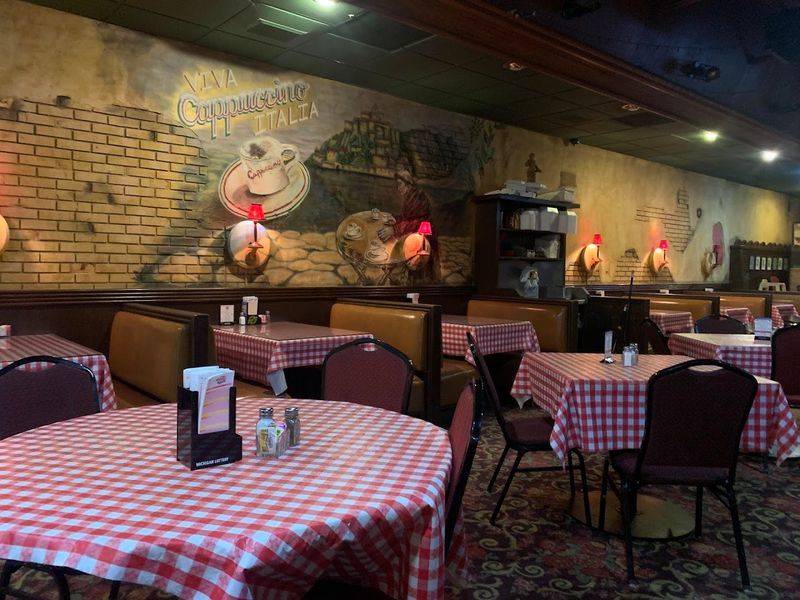
Walking into Cloverleaf without a plan means you might spend too long staring at the menu and miss the items that regulars already know by heart. The Detroit square pizza is the anchor — that much is obvious — but the size and topping selection matter more than most people realize going in.
A large pizza split half-and-half with different toppings is a practical approach for groups with mixed preferences, and the kitchen handles the division cleanly without skimping on either side.
Old-style pepperoni is the topping that comes up most consistently among long-term visitors. The bruschetta pizza has also built a dedicated following for those who want something brighter and more herb-forward.
For non-pizza options, the chicken parmesan is a serious contender — portions run large enough that one plate can comfortably feed more than one person, and the chicken piccata has been called the best version in the Eastpointe area by diners who order it repeatedly.
Timing matters at Cloverleaf. The restaurant operates Wednesday through Sunday, noon to 8 PM, and closes on Mondays and Tuesdays.
Friday evenings draw a crowd, and the kitchen runs at full pace through the dinner rush. Arriving closer to noon or mid-afternoon on a weekday gives you a calmer experience with more attentive service.
The bar is a genuine option for solo diners — it seats well and the beer selection is solid enough to hold its own alongside the food. If this is a first visit, start with the crunchy bread while the pizza bakes and do not skip dessert if the whipped cheesecake is on offer.
That sequence covers the full range of what Cloverleaf does best.
The Bar Side of Cloverleaf Is Worth a Visit on Its Own
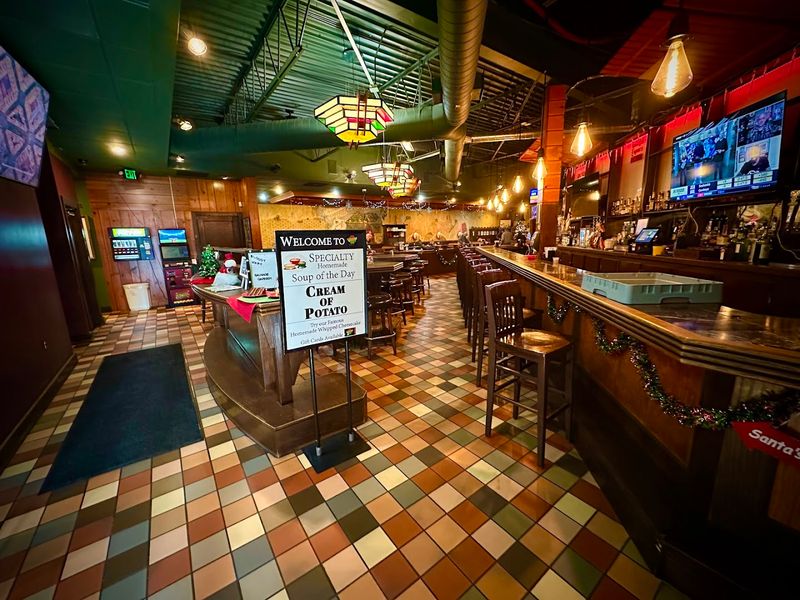
Cloverleaf is listed as a bar and restaurant, and that ordering is intentional. The bar side of the operation seats around 50 people and functions as its own distinct space within the building — a place where you can catch a game, have a cold beer, and order a full pizza without feeling like you wandered into the wrong room.
The bar selection is described as good rather than exhaustive, which fits the overall tone of the place: competent, comfortable, and not trying to be something it is not.
Solo diners and small groups tend to gravitate toward the bar naturally, especially on busy evenings when booth wait times stretch out. The seating at the bar puts you closer to the action of the room, and the staff working that section tends to keep things moving efficiently.
A cold beer alongside a square pizza is one of those combinations that does not require much explanation — it simply works, and Cloverleaf has been delivering that pairing for decades without overcomplicating it.
The pull-tab games available at the bar add a layer of casual entertainment that fits the neighborhood-bar energy of the space. For regulars, the bar is as much a social destination as a dining one.
Friday evenings in particular generate a lively atmosphere as the kitchen pushes through its busiest stretch of the week. The bar absorbs that energy well, giving people a place to wait comfortably or simply settle in for the evening.
Cloverleaf closes at 8 PM across all open days, so the bar experience is concentrated and unhurried rather than running late into the night — which gives the whole space a more relaxed, community-gathering quality than a typical late-night bar scene.
Why Cloverleaf Still Earns Its Reputation After All These Years
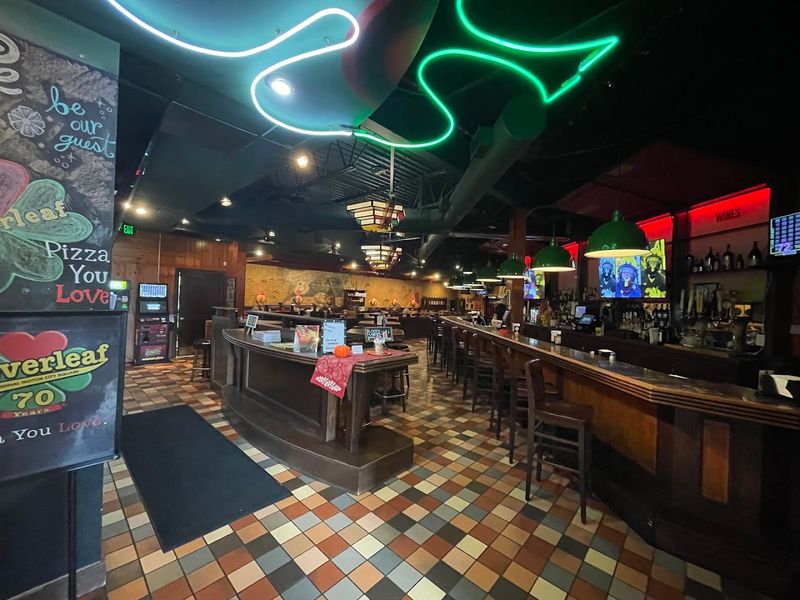
A 4.4-star rating across more than 2,500 reviews is not a fluke, and for a restaurant that has been operating since 1946, maintaining that kind of consistent feedback is a genuine accomplishment. Cloverleaf earns its reputation not through reinvention but through repetition — doing the same things well, meal after meal, for a customer base that ranges from first-timers making a pilgrimage to regulars who have been coming for decades.
That consistency is harder to achieve than it looks from the outside.
The pizza itself remains the clearest argument for why the place endures. The crust has a gentle char around the crispy edges, the sauce carries a tangy brightness without tipping into acidity, and the cheese pulls everything together in a way that feels balanced rather than heavy.
Those are not accidental qualities — they are the result of a recipe and process that has been refined over generations of the same family running the same kitchen on the same street.
Service experiences vary, as they do at any restaurant operating under the pressures of a busy Friday evening rush. But the visits where everything clicks — attentive staff, hot pizza arriving at the right moment, cold drinks staying full — consistently produce the kind of meal that people describe in specific, sensory terms rather than vague generalities.
That specificity is telling. People remember the sweet bread, the caramelized edge, the portion size of the chicken parm, the ranch dressing.
Those details stick because the food is built to make an impression. Cloverleaf is not coasting on its history — the history just happens to be the foundation under a kitchen that is still producing results worth talking about. That is why Gratiot Avenue keeps drawing people back.
Share this story