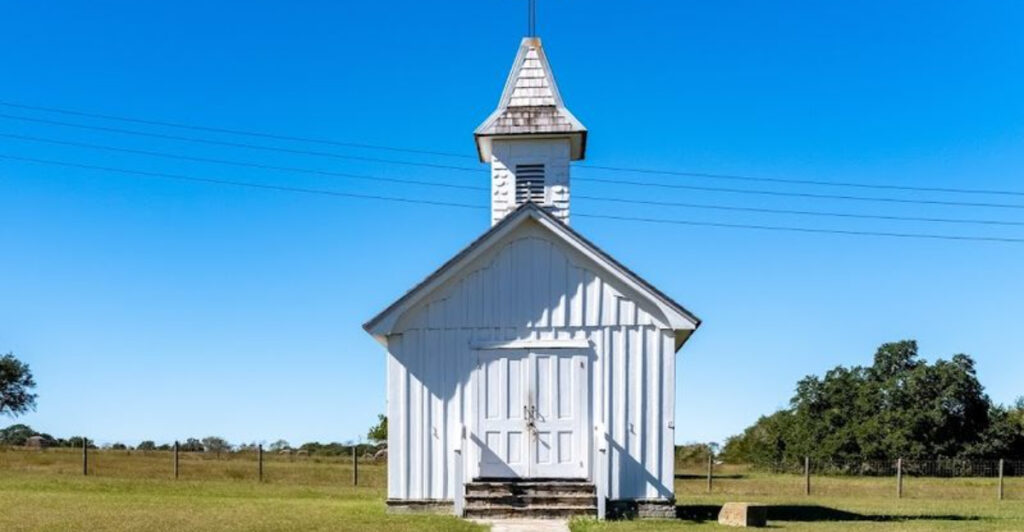
Tucked away along a quiet stretch of TX-237 near Round Top sits a little chapel that holds a mighty big claim to fame. St. Martin Catholic Church measures just 12 feet by 16 feet, making it one of the smallest active Catholic churches in the entire world. Despite its tiny size, this historic gem welcomes visitors year-round and still holds monthly Mass, proving that faith doesn’t need square footage to flourish.
1. A Church Small Enough to Miss If You Blink
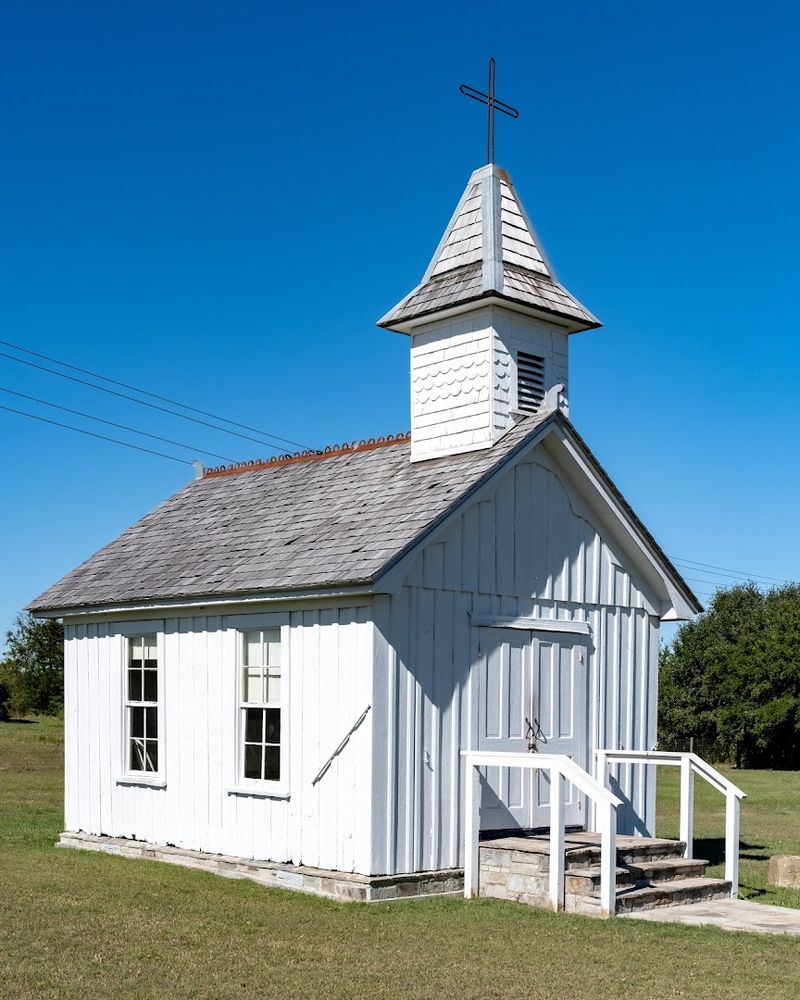
Picture this: you’re cruising down Highway 237, windows down, enjoying the rolling Texas countryside, when suddenly you spot what looks like a dollhouse version of a church. That’s St. Martin, and yes, it really is that small. At only 12 feet by 16 feet, this chapel could fit inside most people’s living rooms with space to spare.
Built back in the 1800s, the church was constructed by German and Czech immigrants who settled in the area. They wanted a place to worship but didn’t have much money or materials to work with. So they built what they could afford, and somehow that modest little structure has survived over a century of Texas weather, standing proud as a testament to their determination.
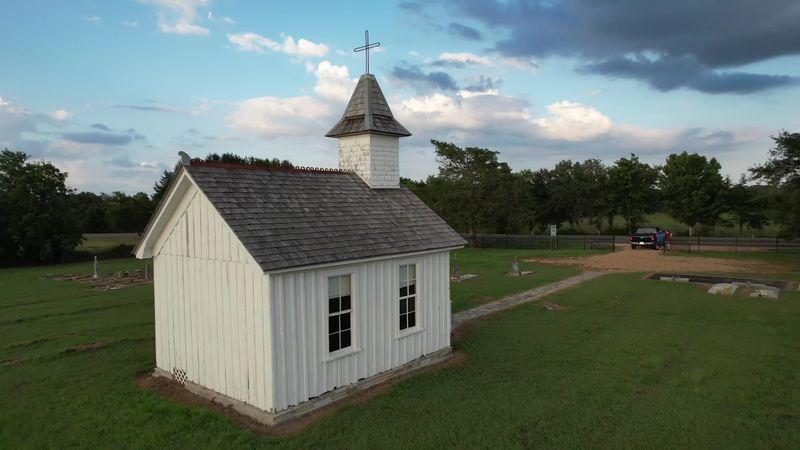
The white wooden exterior looks almost toy-like from the road, complete with a petite steeple and cross perched on top. Many drivers zoom right past without even noticing it’s there. But those who do stop find themselves charmed by its storybook appearance and the way it seems frozen in time.
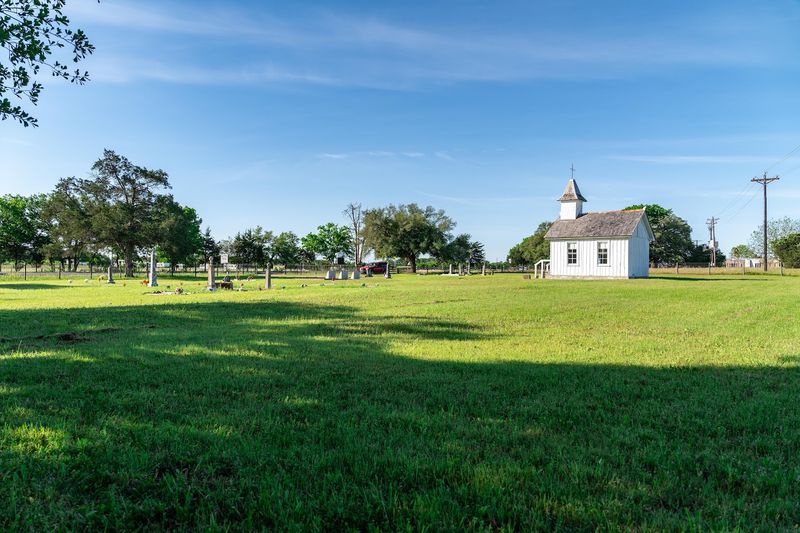
The building sits just off the highway with a simple fence and gate surrounding it. There’s no fancy parking lot or visitor center, just a patch of grass and a gravel area where you can pull off. The modest setting actually adds to the appeal, making you feel like you’ve stumbled upon a secret that most people rush right past without ever knowing what they missed.
2. Step Inside and Travel Back in Time
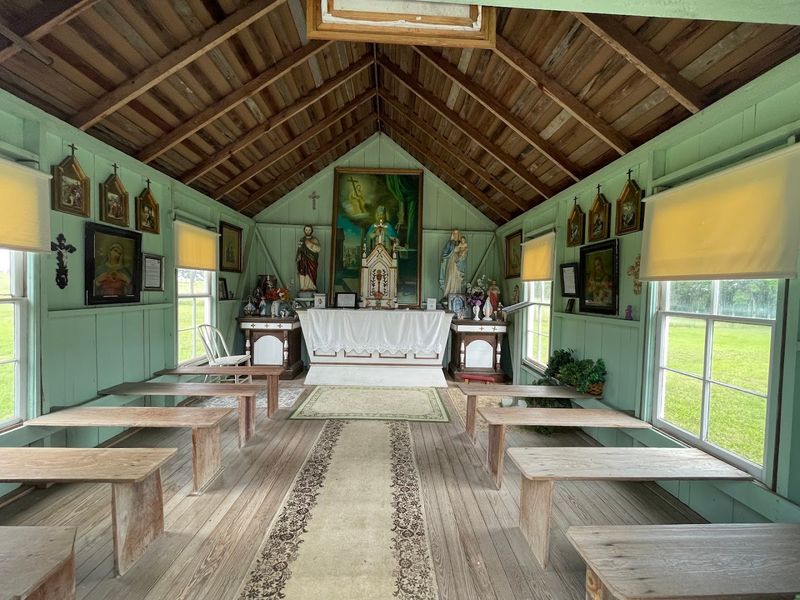
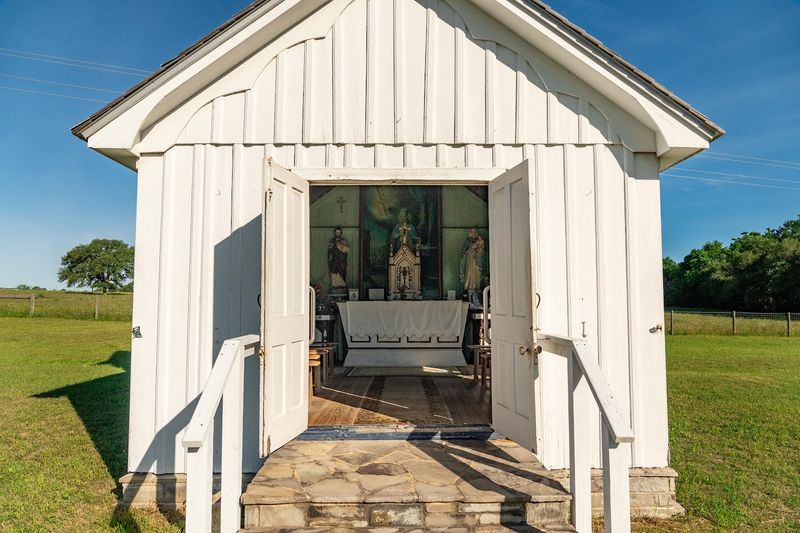
Here’s something special: unlike many historic sites, St. Martin’s door is usually unlocked during daylight hours. You can actually walk right in, no ticket required, no tour guide necessary. Just unlatch the gate, unlatch the door, and step into what feels like a portal to the past.
Inside, you’ll find everything a proper Catholic church needs, just scaled down to fit the space. There are wooden pews that can squeeze in about 20 people if everyone gets cozy. The altar stands at the front, surrounded by religious statues and icons that have been lovingly maintained over the decades.
What really catches your eye are the saints lining the walls. The Virgin of San Juan de los Lagos holds a place of honor, along with other figures that mean the world to the parishioners who still worship here. The decorations might seem elaborate for such a tiny space, but that’s exactly the point—the people who built and maintained this church didn’t let size limit their devotion.
Visitors often mention feeling transported the moment they cross the threshold. The aged wood, the flickering candles, the faint smell of incense—it all combines to create an atmosphere that big, modern churches sometimes struggle to achieve. You don’t need soaring ceilings or stained glass windows to feel reverence.
Sometimes a humble 12-by-16 room does the job better than any cathedral.
3. An Active Church That Still Holds Mass
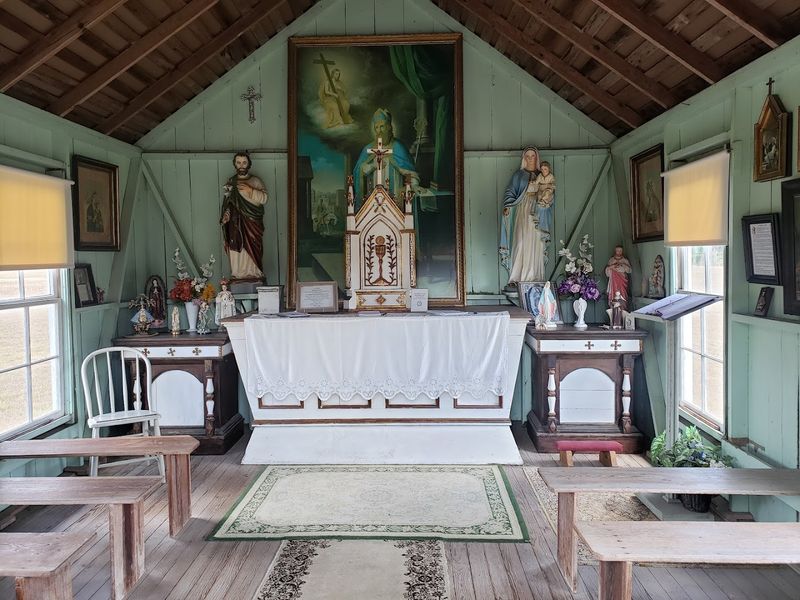
Most tiny historic churches become museums where you look but don’t touch, admire but don’t participate. St. Martin breaks that mold completely. This little chapel isn’t just a roadside attraction—it’s a living, breathing place of worship that holds Mass on the second Tuesday of every month.
Think about that for a second. While mega-churches with parking lots the size of football fields pack in thousands of worshippers, St. Martin quietly continues its ministry with a congregation that barely fills two dozen seats. There’s something beautifully stubborn about that, a refusal to let modern expectations dictate what a church should be.
The monthly services draw a mix of longtime parishioners and curious visitors who want to experience Mass in such an intimate setting. Imagine celebrating communion in a space where the priest is practically standing in your lap, where you can hear every word without a microphone, where there’s no hiding in the back row because there basically is no back row.
Between services, the church functions as a prayer chapel. Visitors leave written petitions asking for prayers, tucking them into corners or leaving them near the altar. When Mass is celebrated, these intentions get offered up along with the regular prayers.
It’s a beautiful system that connects strangers through shared faith, even if they never meet face to face.
4. Prayer Requests from Believers Worldwide
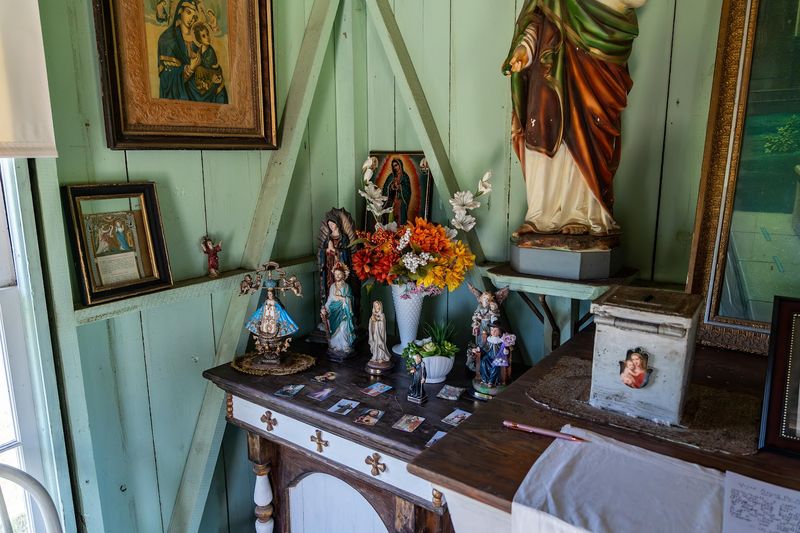
Walk into St. Martin on any given day and you’ll find something unexpected: dozens of handwritten notes scattered throughout the tiny space. These aren’t historical artifacts or informational plaques. They’re prayer requests left by people who’ve traveled from all over Texas and beyond, hoping their words might reach heaven a little faster from this special place.
Some notes are simple, just a name and a quick plea for health or guidance. Others run multiple pages, pouring out detailed struggles and desperate hopes. You’ll find them tucked beside statues, propped against the altar, even slipped into the cracks of the wooden pews.
Reading these petitions gives you goosebumps, not because it’s invasive—people leave them out knowing others will see—but because they reveal the raw humanity we all share. Someone’s asking for their mother’s cancer to go into remission. Another person needs help finding a job.
A young couple hopes for a baby. An elderly man misses his late wife.
The faith poured into these scraps of paper is palpable. People don’t drive out to the middle of nowhere and write their deepest fears on notebook paper unless they genuinely believe something powerful happens here. Whether you share their religious convictions or not, you can’t help but feel moved by the trust and vulnerability displayed on those handwritten pages scattered throughout this tiny sanctuary.
5. A Cemetery That Tells Stories
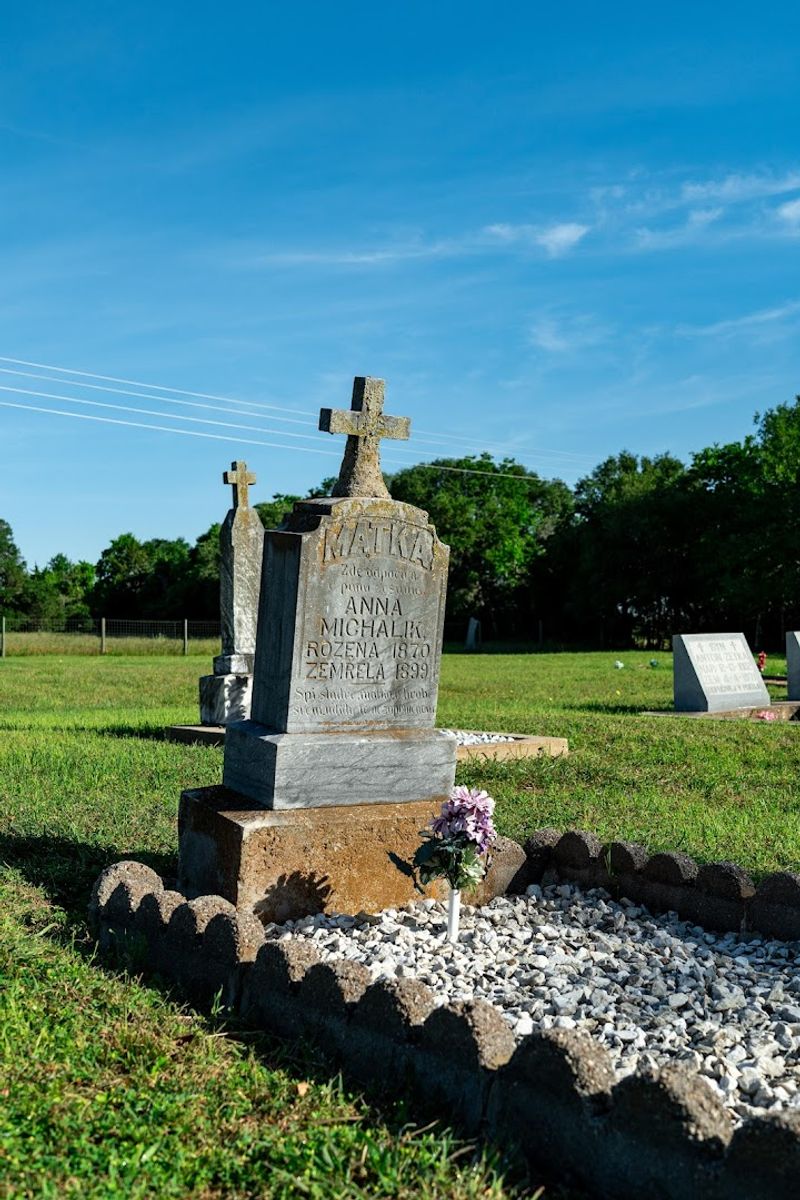
Right next to the church, you’ll find a small cemetery that’s almost as interesting as the chapel itself. The headstones date back over a century, marking the final resting places of the German and Czech families who built St. Martin and worshipped there for generations.
Wandering through old cemeteries might sound morbid, but there’s actually something peaceful about it, especially in a place like this. The graves are well-maintained, with flowers occasionally brightening the plots. Many of the names carved into the weathered stones are clearly German or Czech in origin—Schmidt, Mueller, Novak—connecting this little patch of Texas to the European immigrants who made it their home.
Some stones are so old that time and weather have nearly erased the inscriptions. Others remain surprisingly readable, offering birth and death dates that let you do the math on lives lived long ago. You’ll find entire families buried together, generations sharing the same plot, their stories intertwined in death as they were in life.
The cemetery adds context to the church. These weren’t wealthy people building monuments to themselves. They were hardworking farmers and ranchers who scraped together what they could to create a spiritual home.
Walking among their graves, you realize St. Martin isn’t just a quirky roadside attraction—it’s a memorial to real people whose faith mattered enough to build something permanent, even if that something was impossibly small.
6. Perfect for Intimate Weddings
Believe it or not, St. Martin has become a surprisingly popular wedding venue for couples who want something radically different from the typical ceremony. Several reviews mention people getting married there, and it’s not hard to understand the appeal. Where else can you have a wedding where literally every guest feels like they’re part of the inner circle?
With space for only about 20 people, you’re forced to keep the guest list to your absolute nearest and dearest. No awkward plus-ones from your husband’s bowling league. No distant cousins you haven’t seen since childhood showing up for the free meal.
Just the people who truly matter, packed into an intimate space that makes every moment feel significant.
The church’s historic character provides built-in charm that no decorator could match. You don’t need elaborate floral arrangements or expensive lighting—the aged wood and religious statuary create ambiance on their own. Couples have described their St. Martin weddings as deeply meaningful precisely because the setting strips away all the excess and focuses attention on what matters: two people making promises in front of God and their closest loved ones.
If you’re interested in getting married here, you’ll need to contact the parish office in Fayetteville, since St. Martin falls under their administration. The process apparently takes some planning, but couples who’ve done it say the effort pays off in memories of a wedding that felt genuinely special rather than like another cookie-cutter event at a generic venue.
7. Worth the Detour from Round Top
Round Top itself draws plenty of visitors, especially during antique show season when the tiny town’s population explodes from about 90 permanent residents to tens of thousands of treasure hunters. But even if you’re not there for antiques, St. Martin makes an excellent addition to any Round Top itinerary.
The church sits just a few minutes outside town on TX-237, making it an easy stop whether you’re coming or going. Unlike some historical sites that require serious backroad navigation, St. Martin is right there on a main highway. You can literally see it from your car, though you’d be missing out if you didn’t actually pull over.
Several reviewers mention discovering St. Martin by accident while exploring the Round Top area, then being so charmed they made it a regular stop on future visits. One person wrote about bringing different friends each time, and everyone loving it. Another mentioned their five-year-old child being completely enchanted by the tiny church, wanting to go inside and sit quietly—high praise from someone that age.
The Round Top area is gorgeous, full of rolling hills, wildflowers in spring, and that particular brand of rural Texas beauty that makes you understand why people write songs about this state. St. Martin fits perfectly into that landscape, a small gem that rewards those who take time to slow down and appreciate the details rather than rushing from one major attraction to the next.
8. A Place That Moves Believers and Non-Believers Alike
One of the most telling reviews of St. Martin comes from someone who identifies as atheist but still found the church “super cool.” That’s the magic of this place—you don’t have to share the religious beliefs to appreciate what it represents or to feel something when you step inside.
For believers, St. Martin offers a rare opportunity to experience faith stripped down to its essentials. Multiple reviews mention feeling God’s presence more strongly in this tiny chapel than in massive churches with all their modern amenities. There’s something about the simplicity, the history, the humble sincerity of the place that cuts through religious noise and gets straight to the spiritual heart of things.
But even if you’re not religious, St. Martin tells a compelling human story. It speaks to determination, community, the immigrant experience, and the power of tradition to survive across generations. It’s a monument to people who had almost nothing but built something that lasted, something that still serves its original purpose over a century later.
Visitors consistently use words like “peaceful,” “special,” and “moving” to describe their experience, regardless of their faith background. The church creates a space where you naturally quiet down, slow your breathing, and let yourself feel whatever bubbles up. In our loud, rushed, constantly connected world, finding places that invite genuine reflection has become increasingly rare.
St. Martin offers that gift to everyone who walks through its tiny door, no membership required.
Share this story