Out on the open prairie of northwest Oklahoma, a family once built a home out of the ground itself.
They cut blocks of earth, stacked them into walls, and raised children inside.
Most houses like that crumbled long ago, worn down by weather and time.
One of them did not.
More than a century later, it still stands, tucked safely inside a protective building near the small town of Aline.
Kids can walk through it, peek at the tools families used every day, and climb down into a real root cellar dug beneath the land.
It costs only a few dollars, it takes about an hour, and it might change how your family thinks about a normal school morning.
Keep reading to find out where it is, what is inside, and why it still matters.
1. A Prairie Home Hiding in Plain Sight
Plenty of Oklahoma drivers have cruised past it without a second glance.
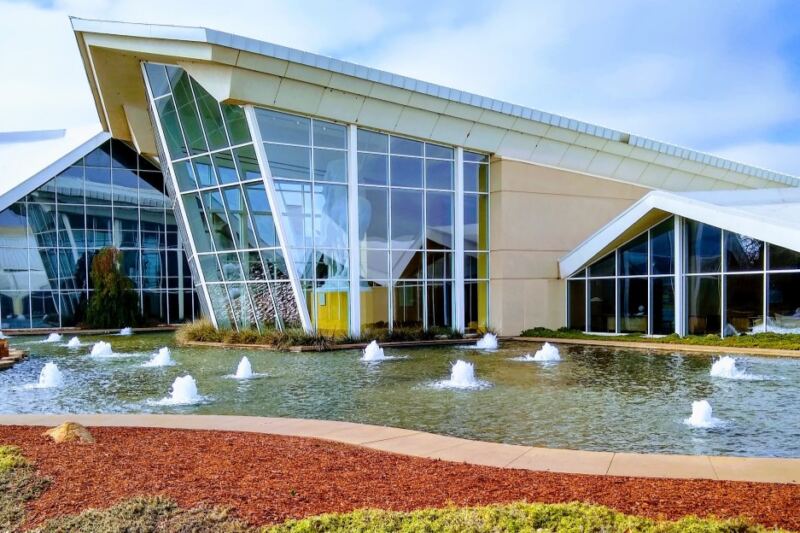
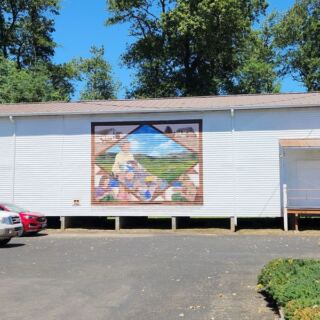
The Sod House Museum sits at 4628 OK-8, Aline, OK 73716, in the northwest part of the state.
From the road, it looks like a simple modern building.
The real treasure is inside, because that building was put up to shelter something much older.
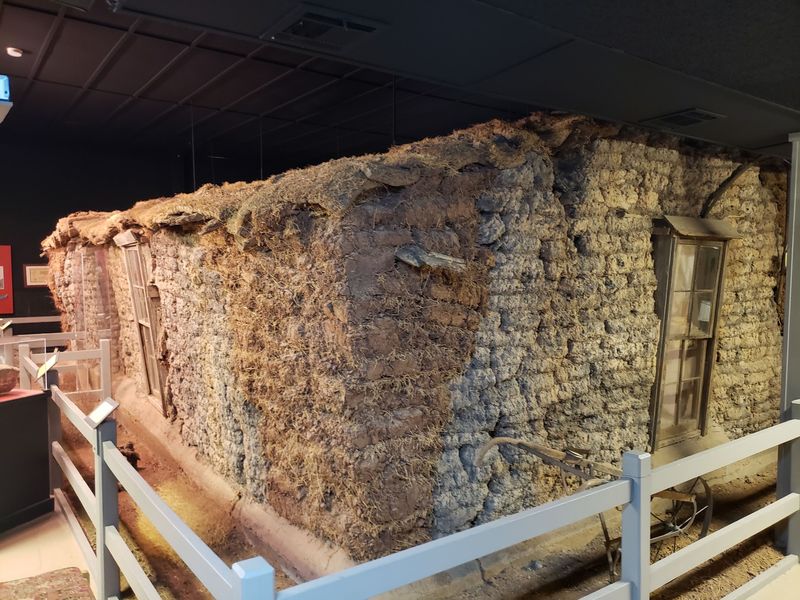
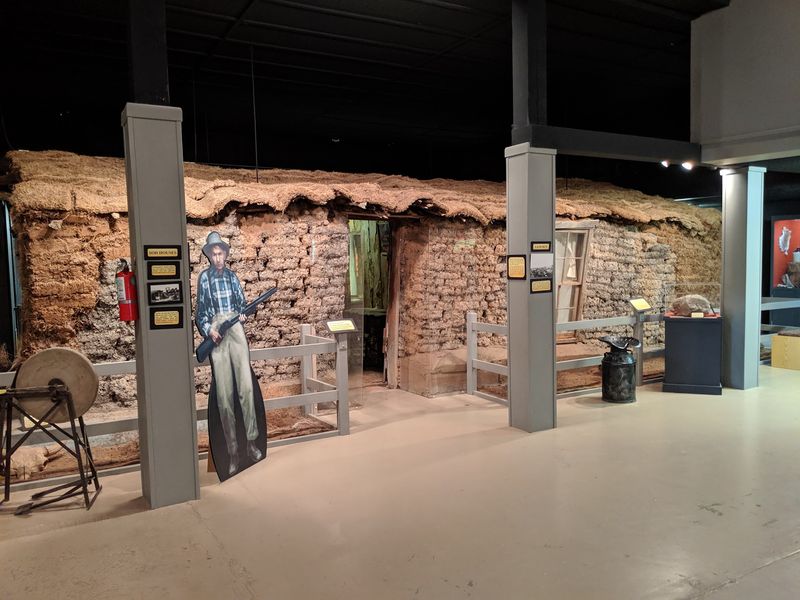
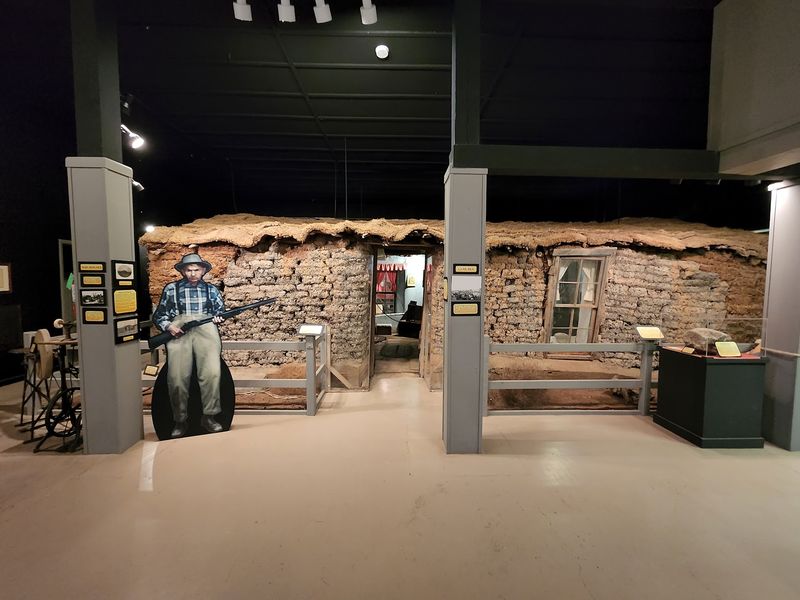
Under its roof stands what is known as the last remaining sod home in Oklahoma.
It is more than 100 years old and still stands on its original spot.
The museum is part of the Oklahoma Historical Society family of sites.
That connection helps explain why the house has been cared for so carefully over the years.
Many people discover it by accident.
Some notice the sign while heading somewhere else and decide to pull over on a whim.
Others plan their trip around it, especially those who already love Oklahoma history.
Either way, the stop tends to leave a bigger mark than the small building suggests.
Aline itself is a quiet farming community, which fits the story well.
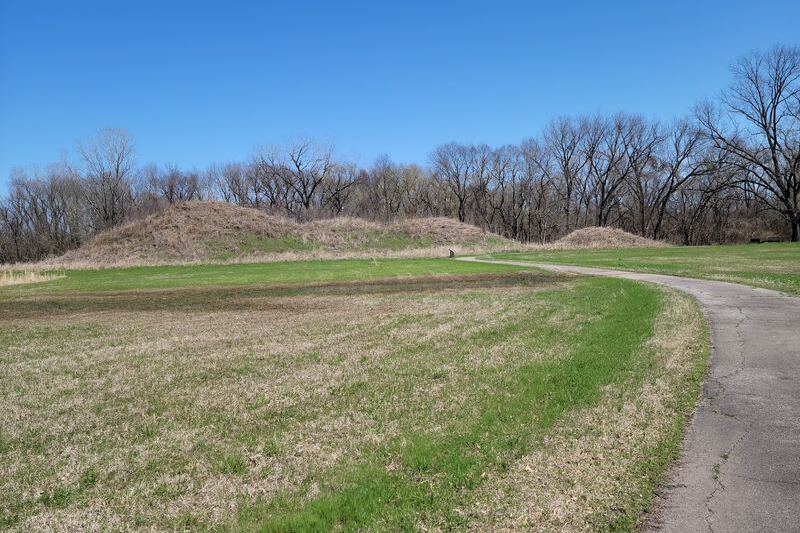
The land around it is the same kind of prairie that early settlers once worked.
So before anyone even steps inside, the setting has already set the scene.
The next question is how a house made of dirt managed to survive this long.
2. Built From the Ground Up, Literally
Lumber was scarce on the prairie, but dirt was everywhere.
That simple fact shaped how many land run families built their first homes.
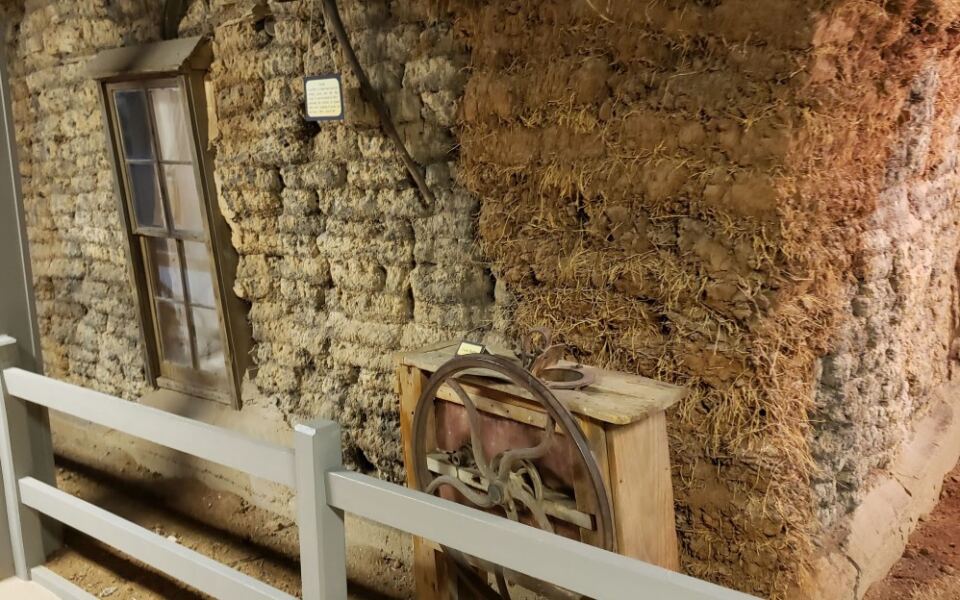
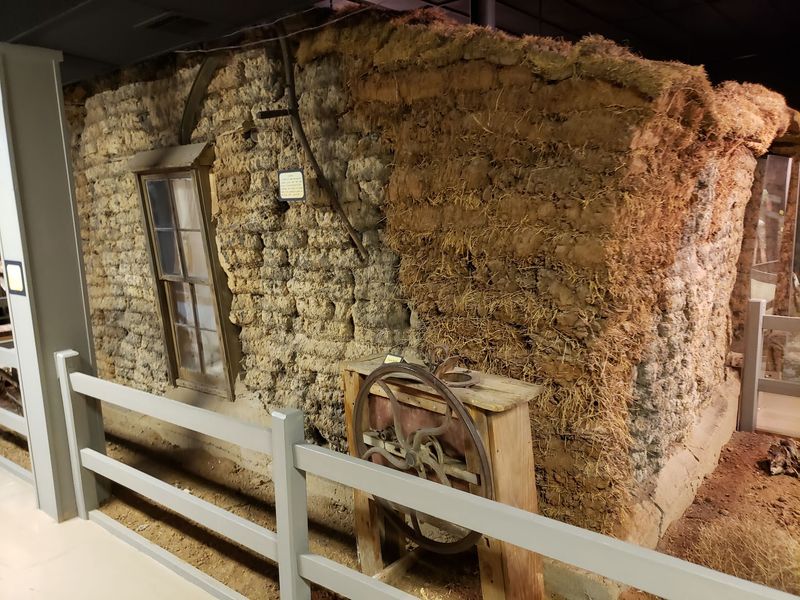
Settlers cut thick strips of prairie sod and stacked them like bricks.
The result was a sturdy shelter made from the very land they had just claimed.
Guides at the museum walk guests through how the house was built and how it changed over time.
They explain the progression of the home, step by step, so the story makes sense even to younger kids.
Here is the twist that surprises many people.
Homes like this were not expected to last very long, often only around five years.
Rain, wind, and wear usually took them down.
That is what makes this surviving house so remarkable.
Instead of a reconstruction, guests see the historic structure as it was originally built.
The walls themselves are the main exhibit.
It is a hands-on history lesson without a textbook in sight.
Few things explain pioneer grit better than standing next to walls made of earth, which leads right into the family that actually lived behind them.
3. The Land Run Family Behind the Walls
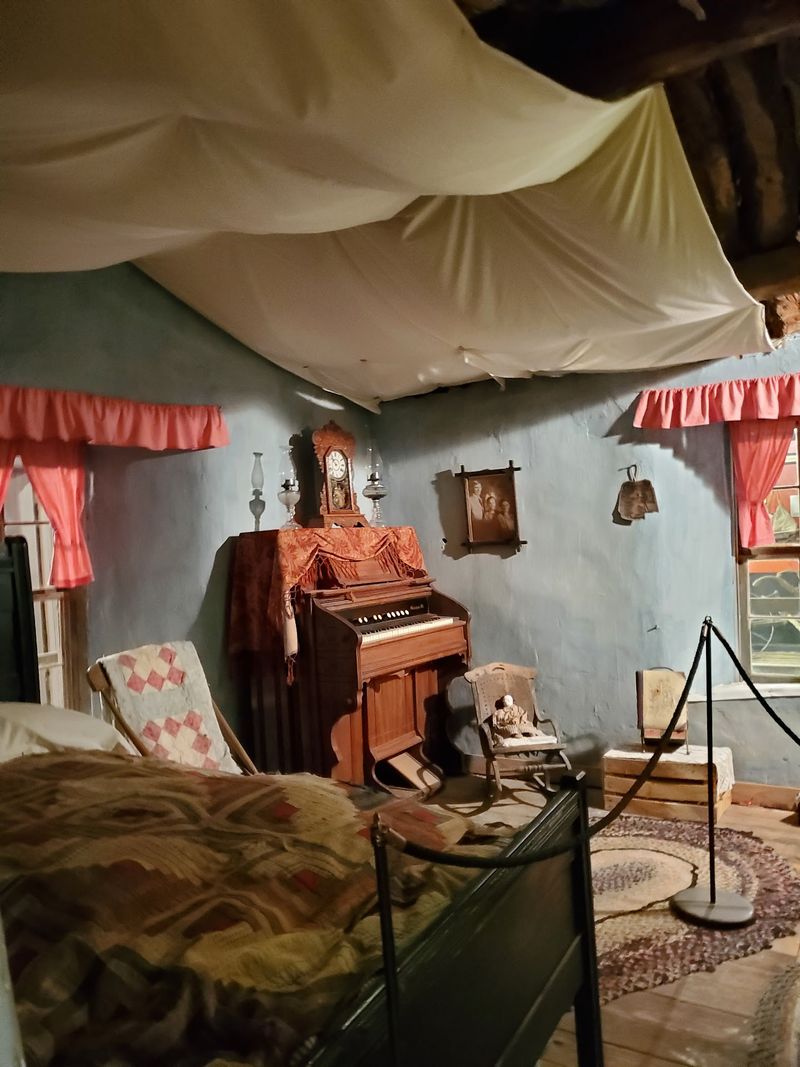
Every old house has a story, and this one starts with the Oklahoma Land Run period.
A settler built the original sod house during that busy, hopeful era of claims and new beginnings.
The museum is filled with memorabilia from that time.
Displays help connect the house to the bigger story of families racing to start fresh on the prairie.
Some guides even have personal ties to the man who built the original house.
Hearing the story from someone with that kind of connection adds a special layer to a visit.
Families who come here often find their own history in the exhibits.
Many Oklahomans had great-great-grandparents who lived in sod homes around 1900.
For them, the tour feels less like a field trip and more like a family reunion with the past.
Kids can finally see what grandma meant when she talked about how hard things used to be.
The museum does a nice job of showing what daily life was like, from what families ate to how they prepared for the next day.
It was a life built on planning, patience, and plenty of work.
Knowing who lived here makes the next stop on the tour even more meaningful.
4. Bedtime on a Pallet, Chores at Dawn
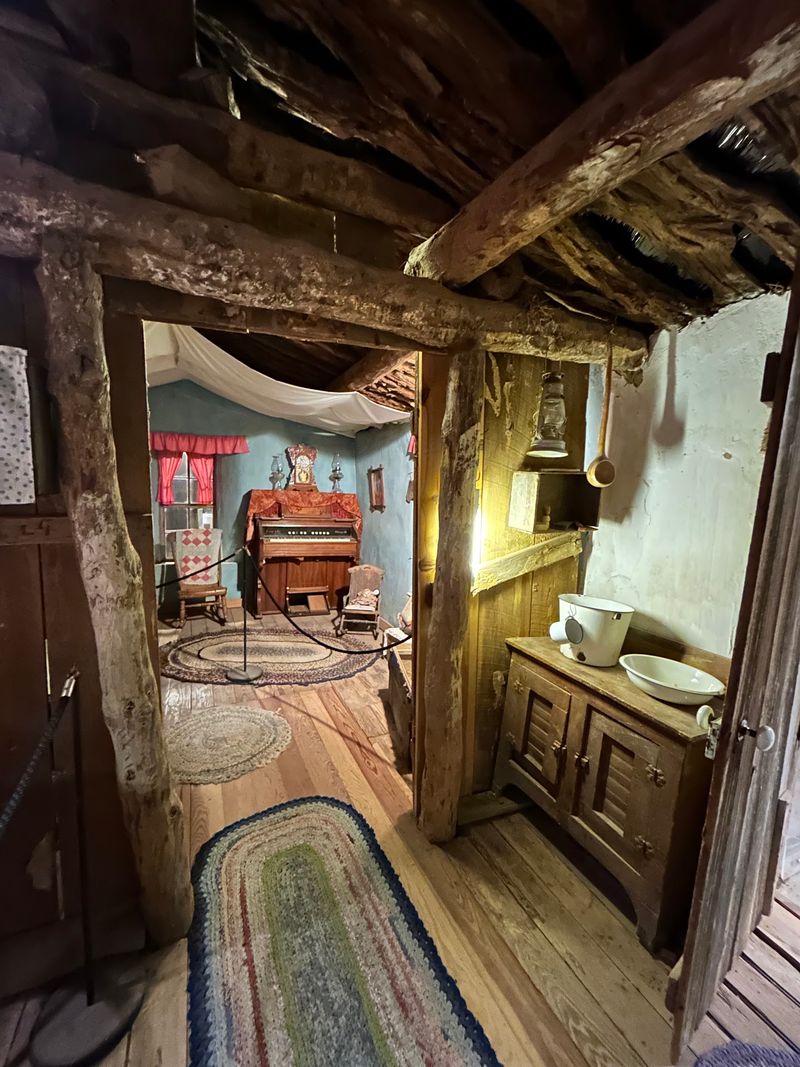
Modern kids complain about making their beds.
Prairie kids often did not even have one.
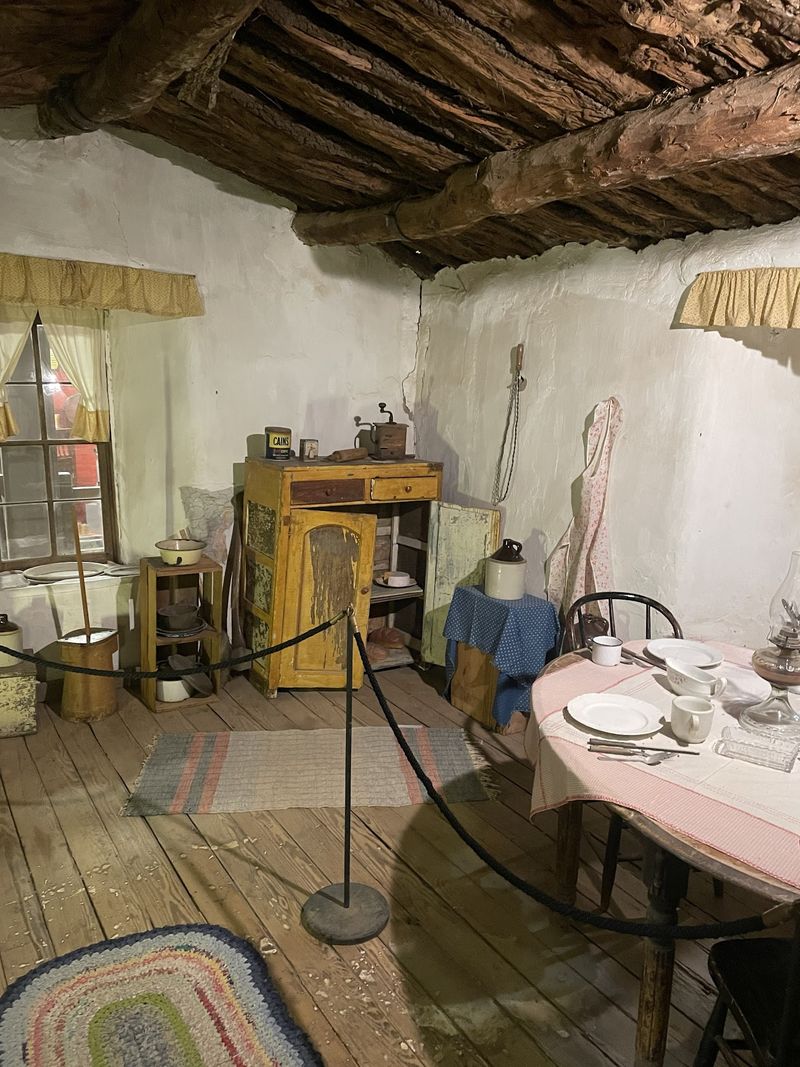
Inside the sod house, families learn that children sometimes slept on a pallet on the floor.
Mornings could start with chores like cleaning bedpans before breakfast.
That detail tends to land with young visitors.
Suddenly, unloading the dishwasher does not seem so bad.
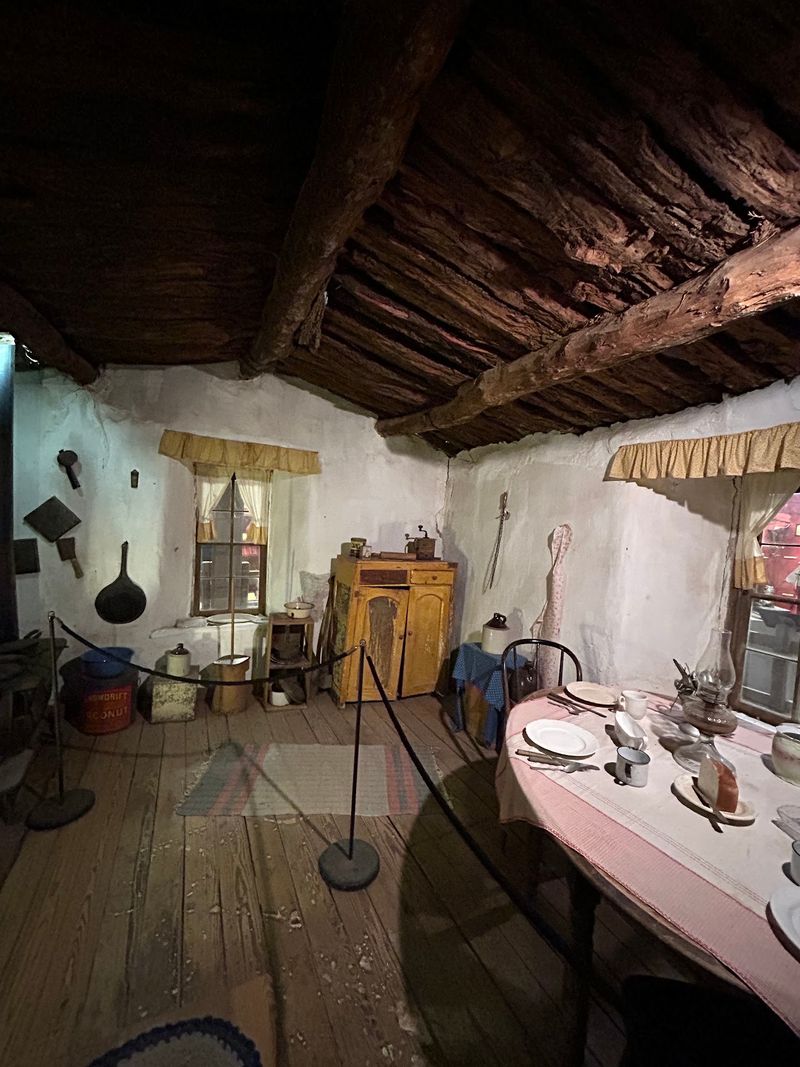
The home was small, so every corner had a purpose.
Sleeping, cooking, working, and family time all happened in close quarters.
Exhibits inside are intimate and informative.
They show how a household ran without electricity, running water, or any of today’s shortcuts.
Adults often walk away thinking about their own easy lives.
It is hard not to feel grateful for modern technology after learning how much effort simple tasks once took.
A seven-year-old can follow along easily, which makes the museum a smart pick for families.
Life back then was work, and the house shows it plainly.
Of course, a home needed more than a place to sleep.
Food had to be stored somewhere, and that is where things head underground.
5. Down the Steps Into the Root Cellar
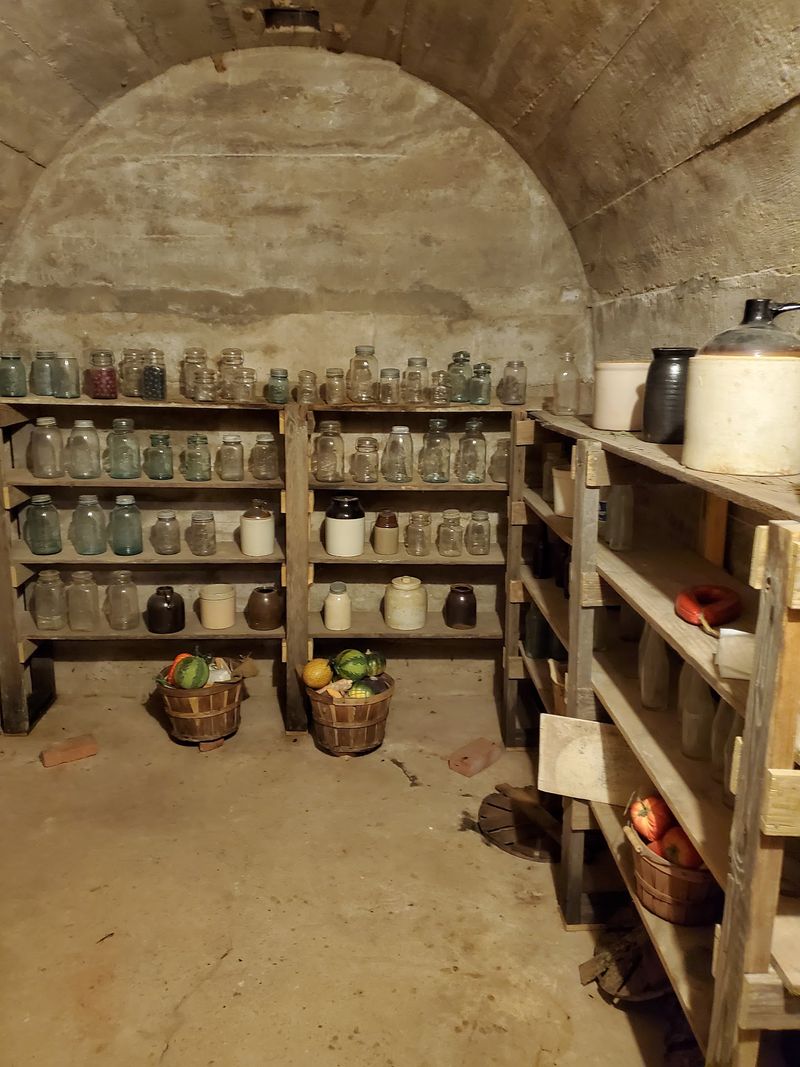
Few museums let guests go underground.
This one does.
A root cellar sits on the property, and visitors can walk right down into it.
It ranks among the favorite parts of the tour for many families.
The temperature drop is very noticeable once inside.
That cooler space is exactly why settlers dug it in the first place.
Families used root cellars to store food and prepare for the days ahead.
With no refrigerator, the ground itself did the job.
Like the house, the cellar was never expected to last this long.
Seeing both still standing together makes the site rare in Oklahoma.
Kids usually love this part because it feels like a small adventure.
Adults appreciate it because it shows how clever early families had to be.
It is also a good reminder that pioneer life involved a lot of planning.
Every harvest had to stretch until the next one came around.
Back above ground, there is still plenty more to see, especially for anyone who likes old tools and machines.
6. Old Farm Tools With Big Stories
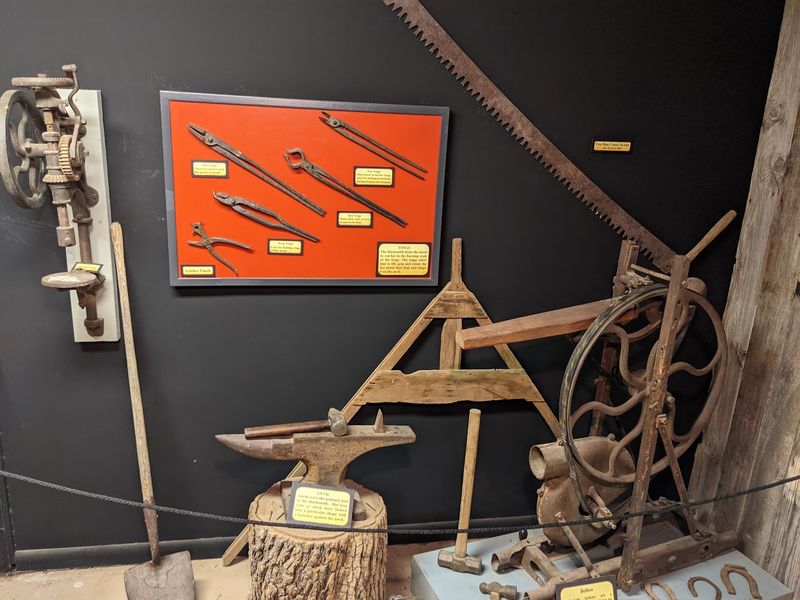
Grandma’s kitchen might be hiding in this museum.
Many guests spot items their grandparents used regularly.
The collection includes lots of period tools and household items.
Old farmers’ equipment is a highlight, giving a clear look at how families worked the land.
Artifacts are a big part of the experience here.
Many are original, and the stories behind them are shared during the tour.
That mix of objects and storytelling keeps things interesting.
Instead of reading tiny labels, guests learn how each item fit into daily life.
For kids, it is a chance to see what work looked like before machines did the heavy lifting.
Some tools look so unusual that guessing their purpose becomes a fun game.
For Oklahoma history buffs, the details are a treat.
There are lots of interesting tidbits tucked into every display.
The museum is well designed, so the exhibits flow naturally from one to the next.
Nothing feels crowded or confusing.
Still, the objects are only half the story.
The people telling it make an even bigger difference.
7. Guides Who Know Every Corner
Ask almost anyone what made their visit special, and the answer is often the staff.
Knowledgeable staff come up again and again when people talk about this place.
Guides are friendly and full of information.
Some guests have even received personal tours from the director.
Others describe the docent as a wealth of knowledge.
The curator has been known to pour real care into the museum.
That personal touch turns a quick stop into a memorable one.
Questions are welcome, and the answers come with stories attached.
Guests are encouraged to sign the visitor log and say hello.
It is the kind of small-town welcome that makes people want to return.
Many do come back, sometimes years later with their own kids.
Some first visited as children and later brought the next generation along.
Places like this depend on support from the public.
A visit, a chat, and a signature in the log all help keep the story going.
And sometimes, the museum adds a little extra cheer to the calendar.
8. Holiday Cheer on the Prairie
History gets a festive twist at certain times of year.
The museum has hosted special Christmas events with live music, drinks, and cookies.
During those gatherings, guests still get a full tour.
Staff explain what life was like in the house while families enjoy the holiday mood.
Grandparents have brought grandkids to these events, and the little ones end up learning plenty about Oklahoma history.
It turns a holiday outing into something with real meaning.
Special events are not guaranteed every season, so it is smart to check ahead.
The Oklahoma Historical Society website is a good place to start.
Even on a regular day, the museum suits many kinds of travelers.
Families, history fans, and curious road trippers all find something here.
It works well for people heading to nearby outdoor spots, too.
Some stop on the way to Gloss Mountain or a crystal digging trip in the area.
The museum is quaint, calm, and easy to enjoy at any age.
Next comes the practical part, because good planning keeps the trip smooth.
9. Hours, Fees, and a Cash-Only Reminder
Timing matters, because the doors are not open every day.
The museum runs Tuesday through Saturday, from 9 am to 5 pm.
It is closed on Sundays and Mondays.
Hours may change, so a quick call or website check before driving is a good idea.
There is a fee to enter.
Students have received discounted entry at $4, and veterans have been admitted free.
Here is the big tip.
Payment has been cash or check only, with no cards accepted, so bring paper money just in case.
Prices can shift over time, so treat these numbers as a guide.
Either way, it remains a low-cost outing for the whole family.
Most guests spend about an hour exploring.
It is a quick tour, which makes it easy to fit into a bigger day trip.
That short visit time is great for younger kids with limited patience.
It also leaves room for other stops in northwest Oklahoma.
With the basics covered, there is just one question left.
Is it worth the drive?
10. Why the Dirt House Deserves a Detour
Some places are big and flashy.
This one is small, honest, and full of heart.
The Sod House Museum gives families a real look at how people lived on the Oklahoma prairie.
It is well maintained, well presented, and easy to explore in an hour.
Kids get a lesson in gratitude without a lecture.
Adults get a fresh appreciation for the people who built this state.
It also proves that Oklahoma history is far from boring.
A dirt house that should have lasted five years has stood for over a century.
That alone makes the drive worthwhile.
Add the root cellar, the farm tools, and friendly guides, and the stop becomes a highlight.
Many guests call it a hidden gem and promise to return.
Some already have, more than once.
So next time the family needs a cheap, meaningful outing, point the car toward Aline.
Bring cash, bring curiosity, and leave with a story worth telling at the dinner table.
Share this story