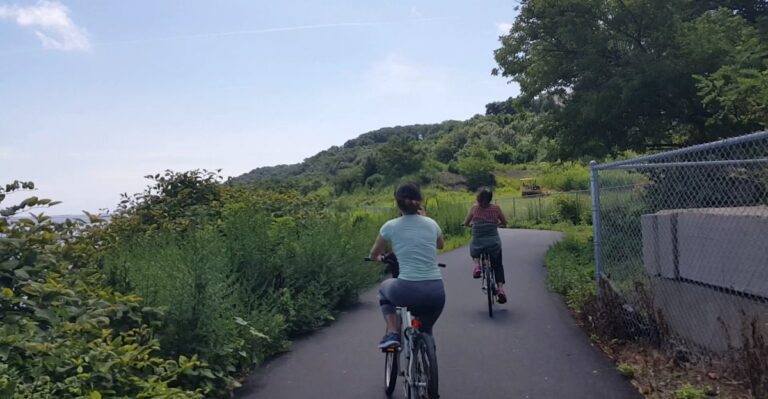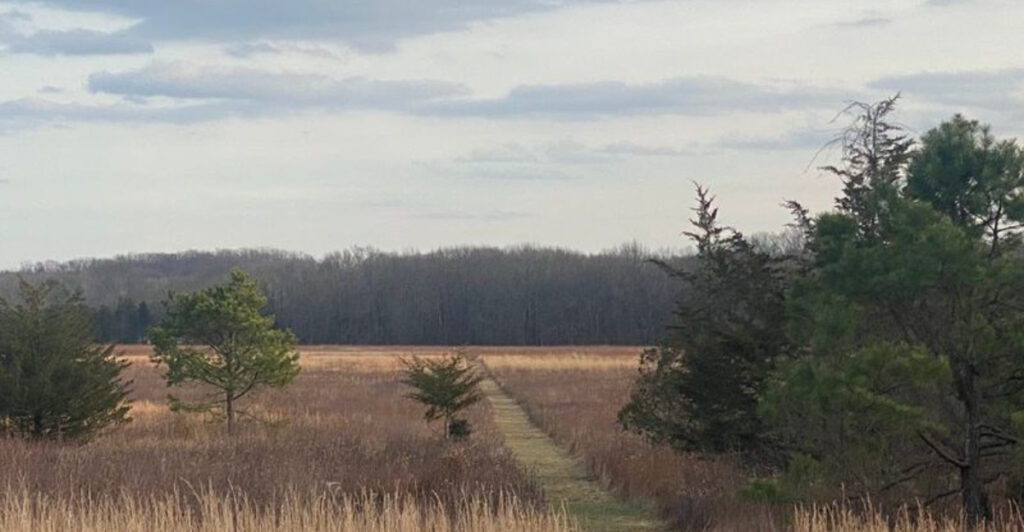
At Maurice River Bluffs, the trail suddenly lifts, the pine flats fall away, and you get one of those views that makes you stop mid-sentence: dark water, sandy banks, and a stretch of South Jersey that looks far wilder than people expect from New Jersey. That’s the thing about this state’s river trails.
The famous boardwalks and headline hikes get all the attention, while some of the best walks in New Jersey stay tucked beside tea-colored Pinelands rivers, old canal towpaths, rocky gorge streams, and surprisingly quiet greenways running through busy towns.
These are the places locals mention carefully, usually after they’ve made sure you’re the kind of person who won’t leave trash at the trailhead or blast music at full volume.
Some are easy, flat, and family-friendly. Others give you waterfalls, old mill ruins, or the kind of hush that feels impossible this close to the Turnpike.
All of them earn the detour—and a spot on this list.
1. Maurice River Bluffs
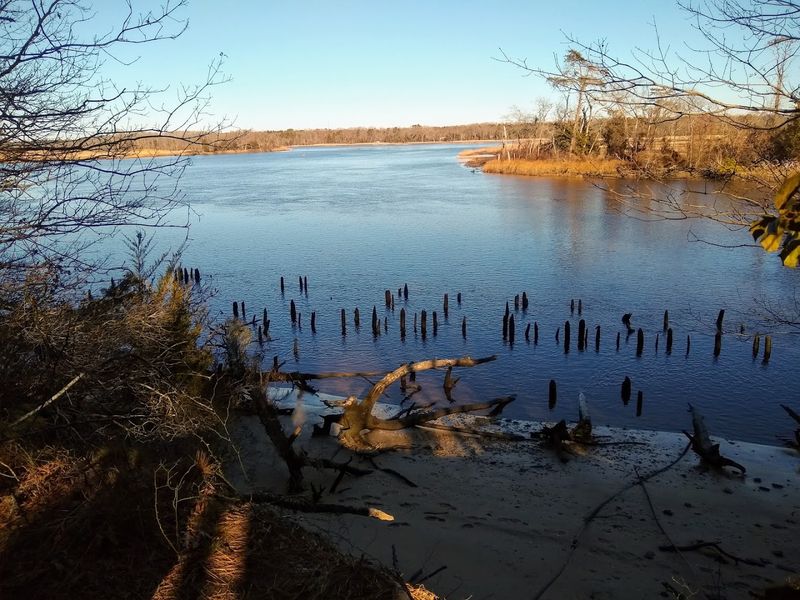
South Jersey does not usually get credit for elevation, which is exactly why Maurice River Bluffs feels like such a good secret.
Out in Millville, this preserve trades the usual flat-and-sandy Pine Barrens stereotype for actual rises and drops above the Maurice River, with bluff-top stretches that open to wide river views and quiet sandy turns through pitch pines.
The Nature Conservancy notes that it is one of the few South Jersey trail systems with meaningful elevation change, and that alone makes it stand out.
There are several marked trails here, so you can keep it short or stretch it into something more substantial, but a lot of hikers love the easy 2.6-mile loop because it gives you the river, the woods, and the overlook payoff without eating up your whole day.
The ground is generally soft with pine needles and sand rather than rocky footing, which makes it feel forgiving even if you’re not looking for a workout. It is popular with hikers and mountain bikers, so going earlier in the day helps, and the preserve’s kiosk and maps are worth checking before you head out.
What makes this one special is that rare New Jersey combo of Pine Barrens calm and unexpectedly dramatic river scenery in the same walk.
2. Musconetcong Gorge Trail
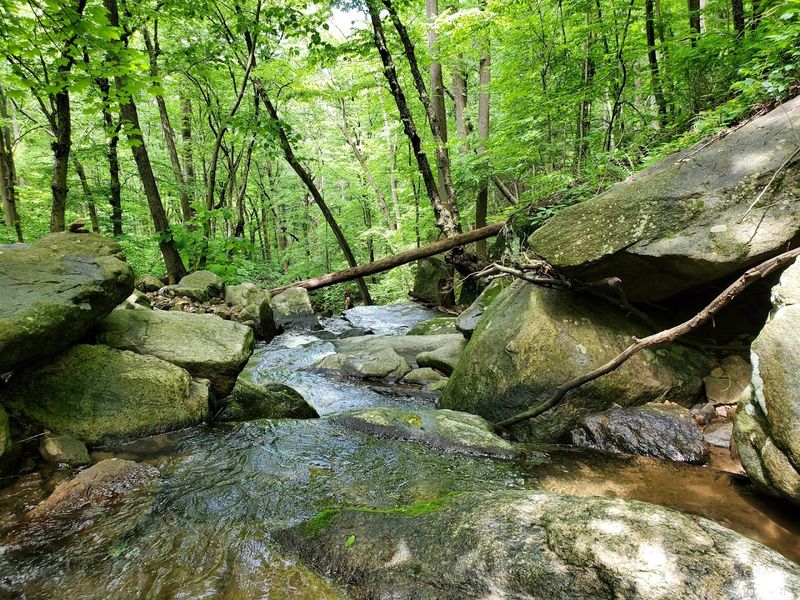
Water does the talking here. In Warren Glen, the Musconetcong Gorge trail system gives you cascades, rocky stream crossings, and a moody, folded-in landscape that feels more rugged than most people expect from a casual New Jersey day hike.
This preserve is managed by Hunterdon County, and the trail network includes shorter and longer options, plus a section of the Highlands Trail running through the area, so it can work for both a quick leg-stretcher and a more committed ramble.
The appeal is not just the river itself, but everything around it: hemlock shade, steep-sided ravines, and traces of the area’s industrial past, including old charcoal landings connected to paper-mill operations nearby.
It is the kind of place where the history is literally underfoot if you know what you’re looking at. Trails can be uneven and occasionally muddy, and multiple hiking sources warn that the markings can be a little spotty in places, so this is one to tackle with a saved map rather than pure optimism.
Parking is typically via the preserve access in the Warren Glen area, and spring or just after rain is prime time if you want the water features to really show off. This trail earns its place because it packs waterfalls, river views, and local history into one gorgeously compact stretch of northwest Jersey.
3. Paulinskill Valley Trail
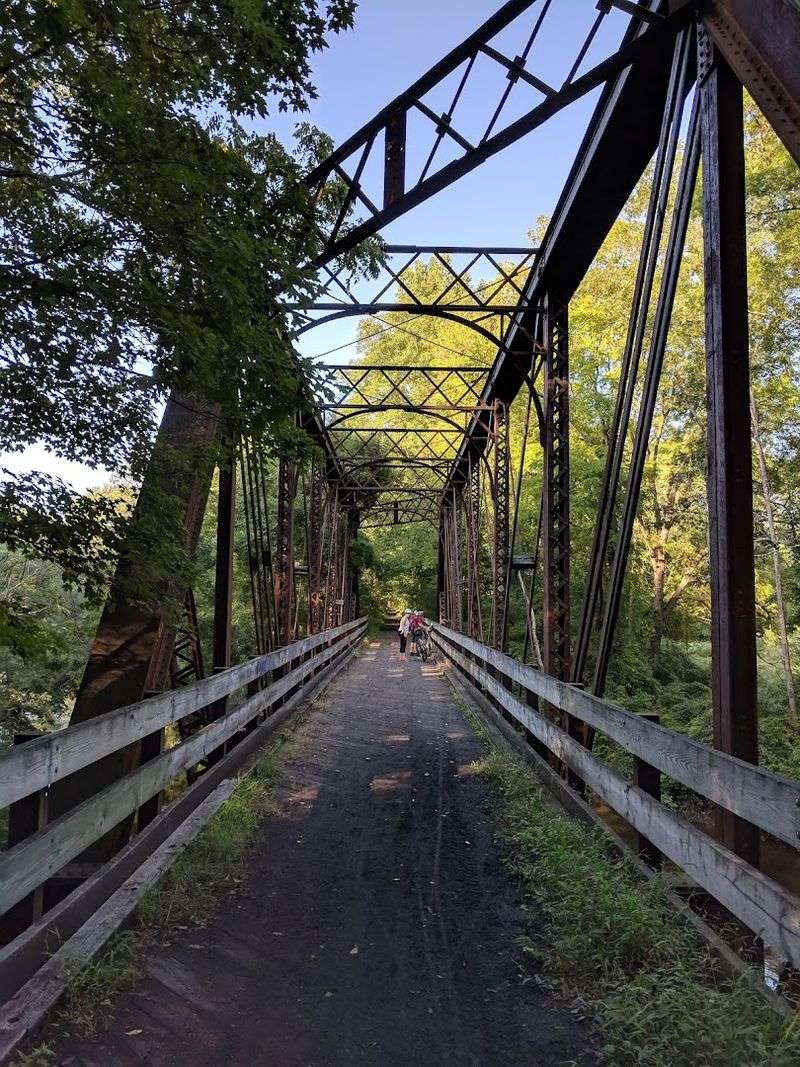
Rail trails can be bland if they’re just long and flat without much personality. The Paulinskill Valley Trail is not that.
This 27-mile former railroad corridor cuts through Sussex and Warren counties, following the Paulins Kill past wetlands, farms, woods, lake views, and old railroad remnants that give the whole route a lived-in, slightly ghostly charm. You do not need to hike all 27 miles, obviously; that is the beauty of it.
Locals tend to dip in at one of the access points near places like Columbia, Hainesburg, Warbasse Junction, or Sparta and turn it into exactly the kind of outing they want.
Because the grade is gentle and the surface is generally dirt, cinder, or ballast, it is especially good for a casual walk, a bike ride, or a family outing where nobody wants to hear the phrase “steep scramble.”
What keeps it interesting is the constant shift in scenery: one minute you are tracing the river through a quiet patch of woods, the next you are rolling past fields and old rail infrastructure that remind you how much history is tucked into this corridor.
Parking is available at multiple trailheads, which makes logistics easy. This one makes the list because it is the rare river trail that feels expansive and easygoing without ever feeling dull.
4. Black River Trail
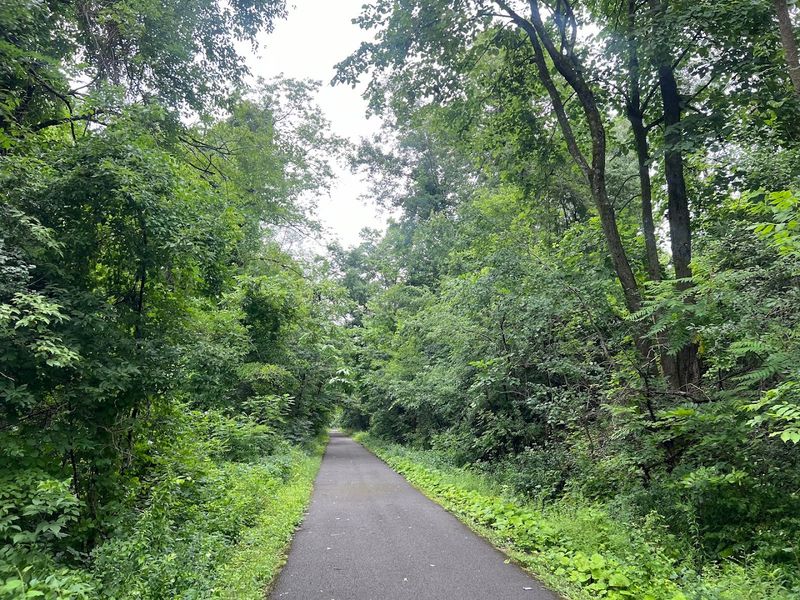
If your ideal trail includes a little local history, a little river drama, and the satisfying creak of old wood underfoot, Black River County Park is a strong pick. The trail near Chester starts close to Cooper Mill, an 1826 gristmill that immediately gives the place character before you even hit the woods.
From there, the route follows the Black River through the gorge, mixing forest sections with river views, small cascades, and a surprisingly atmospheric set of ruins if you take the side trip toward Kay’s Cottage. This is not one of those perfectly polished strolls where every inch feels curated.
It is better than that. The footing can vary, there are short road connections depending on the route, and in hunting season you will want bright colors, but the trade-off is a walk that feels rooted in the landscape rather than staged for it.
TrailLink puts the main county park trail around 2.3 miles point to point, though plenty of people piece together loops or longer variations. There is parking near Route 24 and around Cooper Mill, making it easy to access without a lot of planning.
The reason it belongs here is simple: few under-the-radar river trails give you such a good blend of working-history texture and genuinely pretty water-side walking.
5. Batsto River Trail (Wharton State Forest)
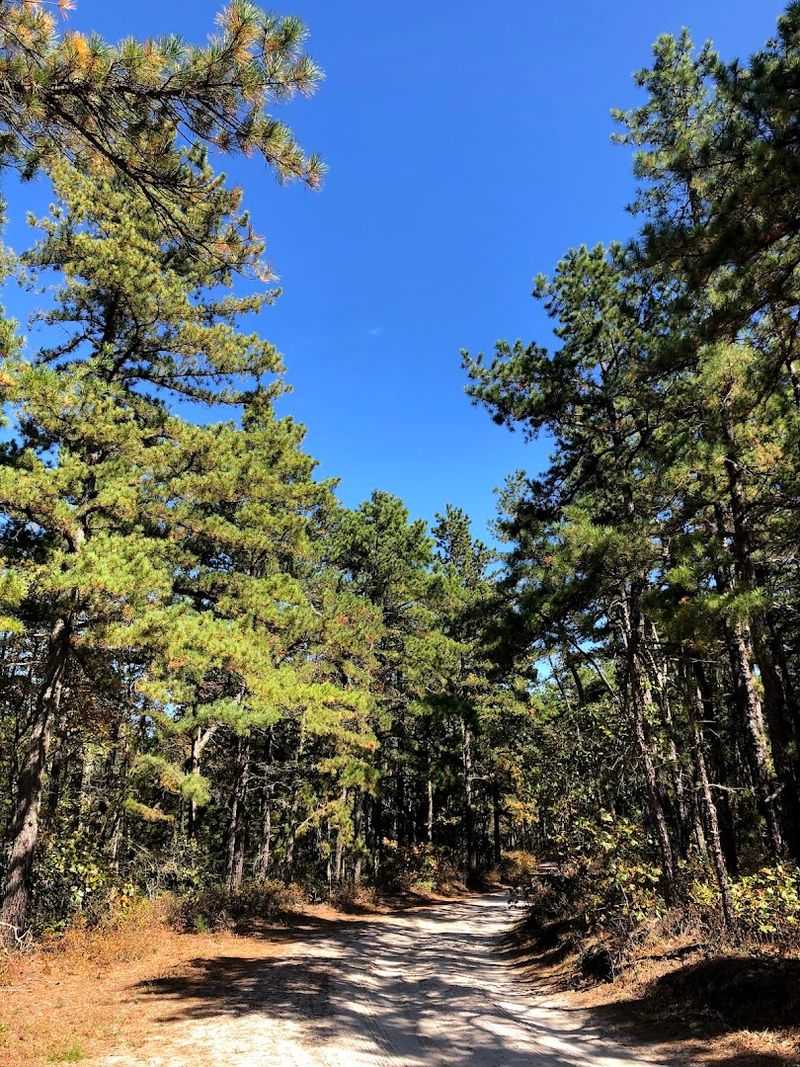
The water here looks steeped like iced tea, the sand is pale and powdery, and the pines smell warm even when the day is cool. That is the Batsto side of Wharton State Forest, where a river walk feels less like a Northeast hike and more like stepping into the strange, beautiful logic of the Pine Barrens.
Around Batsto Village, you can piece together routes that hug the Batsto River, wander past cedar swamps, and loop back through one of the state’s most fascinating historic villages.
The village itself matters here because it gives the trail context: this was once a major ironworks settlement, and today more than 30 nineteenth-century buildings still stand.
That means your hike can start with quiet riverbank miles and end with a mansion tour, a nature center stop, or just a slow walk through the old village streets. The terrain is mostly flat and sandy, which makes it approachable, but do not underestimate how that sand can wear on your legs in warmer weather.
Parking at Batsto is straightforward, and the forest is open year-round. This spot earns its place because it delivers that unmistakable Pine Barrens river mood—dark water, white sand, and history you can actually walk through.
6. Rancocas State Park North Shore
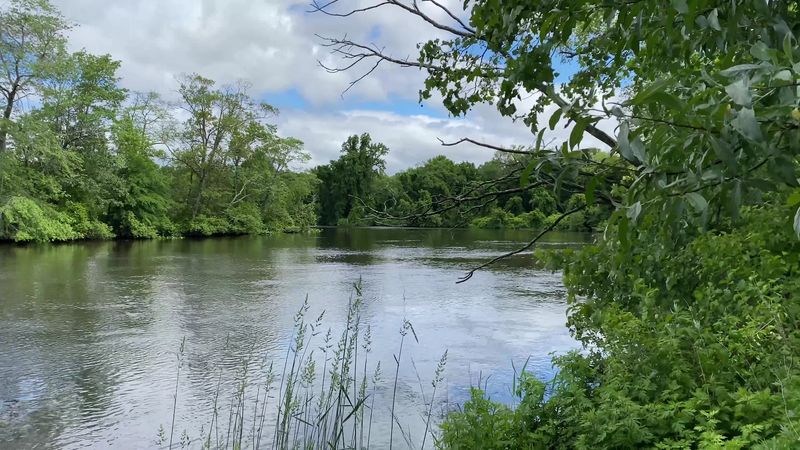
There is a reason birders love this place, and even if you cannot tell a warbler from a sparrow, you will still get it once you are under the trees.
Rancocas State Park feels lush in a way that catches people off guard, especially in Burlington County where many visitors do not expect this much forested creek-side calm so close to everyday suburbia.
The north shore section is a favorite because it gives you easy access to trails along Rancocas Creek without the crowds you find at more heavily promoted parks.
The state lists the park as open sunrise to sunset with no entrance fee, and Burlington County notes more than eight miles of blazed hiking and biking trails in the Hainesport section, plus fishing and canoe access.
That makes it flexible: come for a short walk under tall trees, bring binoculars, or treat it as a slow afternoon ramble by the water. You are not here for a grand summit or big reveal.
You are here for a creek winding through woods, for that surprisingly deep green feeling, and for a trail system that lets you choose your own pace. Parking is available at the park access points off Rancocas-Mt.
Holly Road and in the Hainesport area. It earns a spot because it proves that “hidden” in New Jersey can still mean seriously beautiful.
7. Lamington River Trail
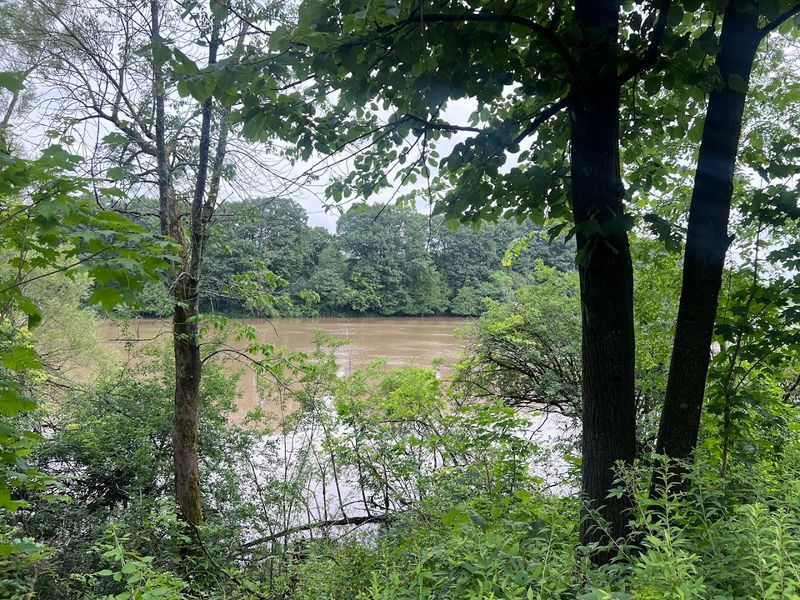
The Lamington does not announce itself with a flashy waterfall or some giant “scenic overlook” sign, which is part of the charm.
This river is more subtle than that, threading through one of the prettiest pockets of central Jersey with tree-lined bends, pastoral views, and those quiet, slightly old-money-feeling landscapes around Bedminster, Pottersville, and the Black River Greenway region.
Upstream, the Lamington is known as the Black River, so depending on where you start, this trail experience can blur into other preserved corridors in Morris, Hunterdon, and Somerset counties. That overlap is part of what locals like about it: you can stitch together a walk that feels personal rather than obvious.
The surrounding greenway landscape includes preserved farms, woods, and river-access land, and the river itself is less about spectacle than atmosphere. Think rocky shallows, small bridges, old-road views, and stretches where the water seems to keep the whole place cooler and quieter.
This is best for the hiker who likes wandering more than conquering. Check maps before you go, because access varies by preserve and route, and some of the nicest stretches are discovered through a little local homework rather than a giant trailhead sign.
It lands on this list because it feels like the kind of river walk New Jersey residents quietly keep for themselves.
8. Hackensack River Greenway
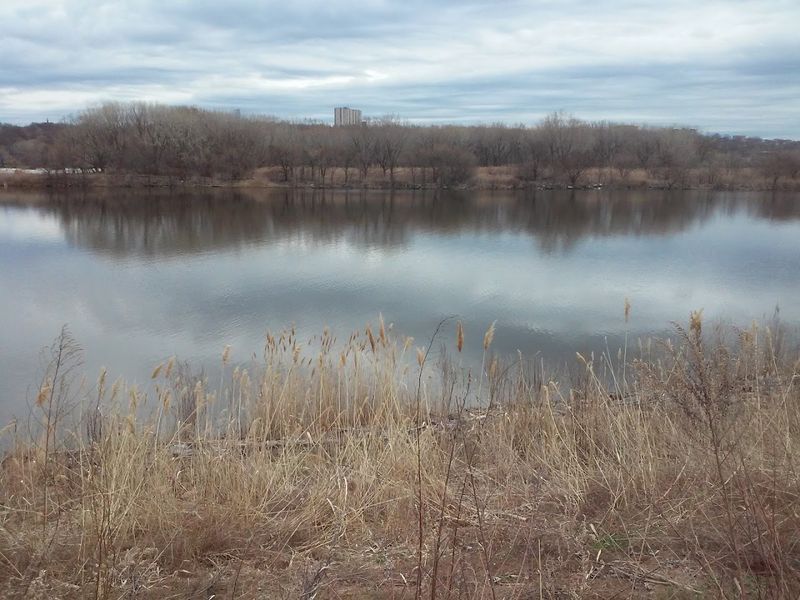
A river trail running through dense North Jersey has no business feeling this peaceful, and yet the Hackensack River Greenway in Teaneck keeps pulling it off.
Over roughly 3.5 miles, this greenway pairs a pedestrian walkway with a more natural trail corridor, creating a long, surprisingly leafy edge along the western side of town.
The setting is part of the appeal: this is not wilderness, exactly, but that contrast between nearby development and the calm of the riparian buffer makes the place memorable. You can hear birds, catch glimpses of the tide-influenced river, and walk through restored native plant areas without driving hours from the city.
The Friends group and township have leaned into stewardship here, which shows in the regular cleanups, gardens, and the sense that this is a well-loved community landscape rather than an abandoned strip of land beside the water. Access is spread out, but one reliable spot is around River Road in Teaneck, including the Mary S.
Topolsky Garden & Trail area. This is not the trail for someone chasing mountain laurel and big elevation.
It is for the walker who appreciates an urban escape with actual ecological value. It earns its place because few places in New Jersey hide this much nature in plain sight, right between people’s daily routines.
9. Manasquan River Linear Park
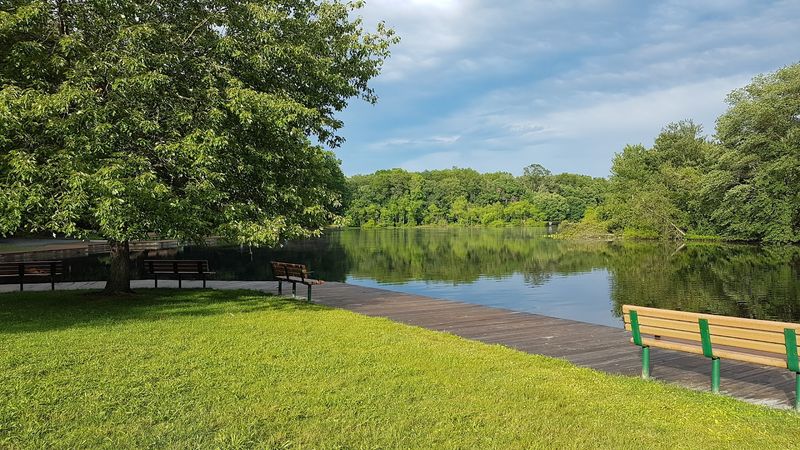
Some trails are about mileage. This one is about ease.
Manasquan River Linear Park is the kind of riverside walk you slip into when you want water, trees, and fresh air without turning the outing into a project. The linear park traces the Manasquan River through Monmouth County, and while it is not a backcountry-style experience, that is exactly why locals value it.
It is accessible, low-stress, and easy to work into a regular weekend routine. There are multiple access points in the Farmingdale area, including Ketcham Road, Southard Avenue, and West Farms Road, so you can choose a section that fits your time and energy.
Nearby, the broader Manasquan River Greenway preserves more than 540 acres along the river in a mostly natural state, with access for anglers and paddlers as well as walkers. That combination of protected open space and convenient entry gives the area its draw.
You might see fishermen, people launching small watercraft, or walkers just out for a quiet loop before dinner. Park closing times vary seasonally in the county system, so it is worth checking before heading out late.
This trail earns its spot because it offers something New Jerseyans always appreciate: a genuinely pretty river walk that is easy to enjoy on an ordinary day, not just a big one.
10. Passaic River Parkway
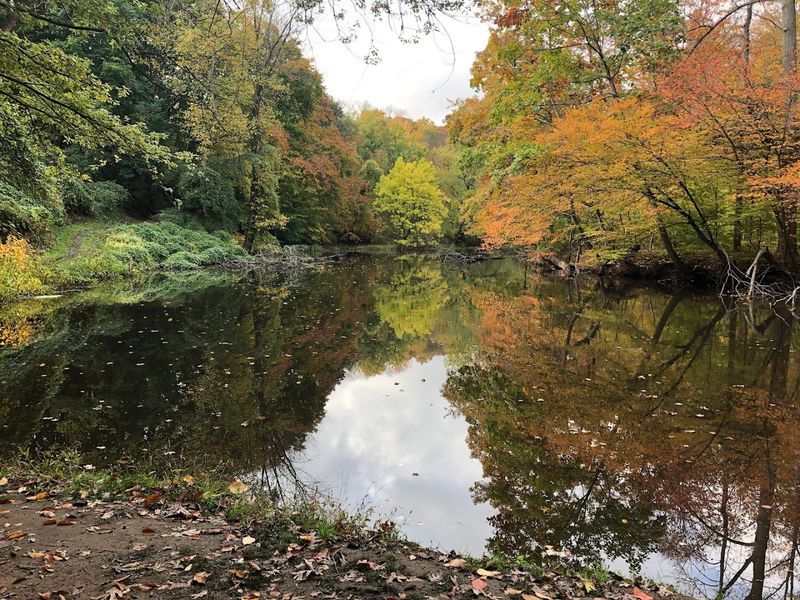
The Passaic River Parkway has old-school park-system pedigree, and you can feel it. This Union County green corridor was envisioned as part of the county’s “emerald necklaces,” influenced by the Olmsted Brothers’ park designs, which already gives it a more intentional, classic feel than a lot of pieced-together river walks.
The parkway stretches through Berkeley Heights, New Providence, and Summit, following the Passaic with trails and access points that are pleasantly low-key unless you already know to look for them. What stands out here is how the experience changes from segment to segment.
In one spot you are on a short wooded spur or field-edge path with river glimpses; in another, you are walking a mellow stretch that feels almost hidden behind neighborhoods and roads.
Summit’s trail map breaks part of the system into short linked trails, which makes this a good “choose your own distance” destination rather than an all-or-nothing hike.
It is especially good for locals who like returning to the same place and trying a different section each time. Parking depends on the entry point, so planning ahead helps.
It makes the list because it turns a historically designed county parkway into something more intimate than people expect: a quiet ribbon of river and trees in one of the busiest parts of the state.
11. Delaware and Raritan Canal Towpath
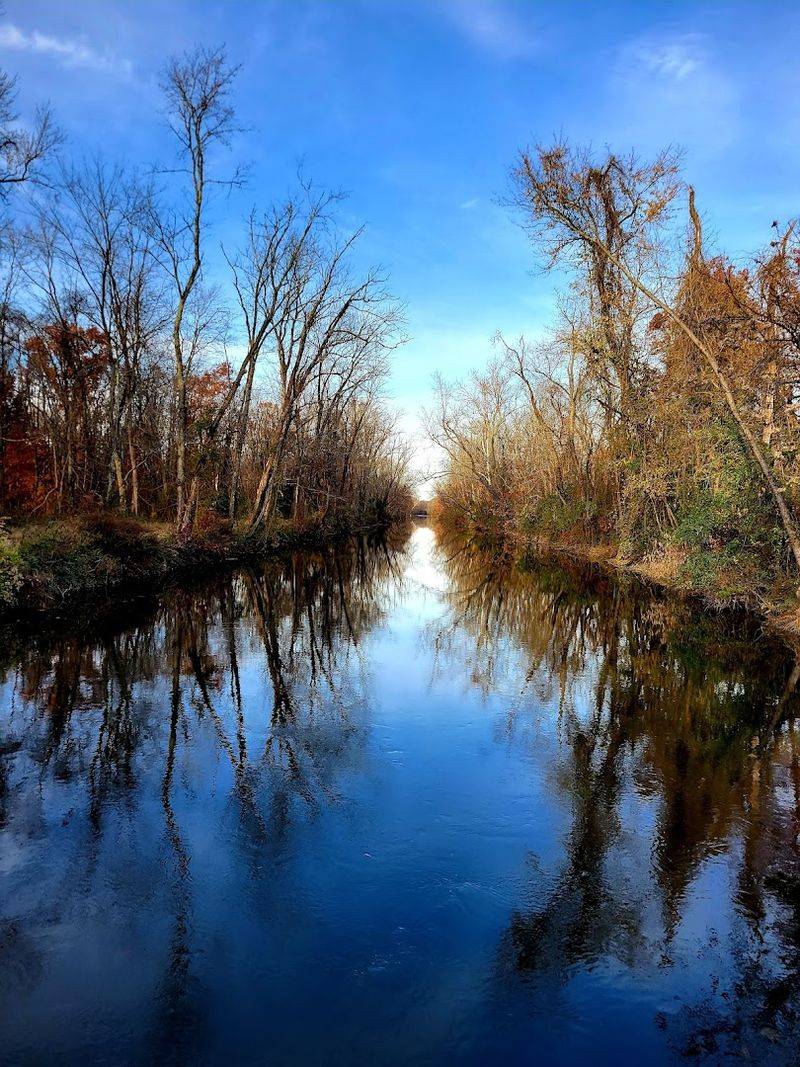
Calling the D&R Canal Towpath “hidden” is a little funny if you know how beloved it is, but vast and underplayed? Absolutely.
The full state park stretches about 70 miles, and that length is exactly what lets it still feel local and personal despite its reputation. Most people are not hiking the whole thing.
They are dropping into a favorite stretch near Lambertville, Stockton, Princeton, Kingston, or New Brunswick and claiming it as their own. The towpath follows the old canal route with a mostly flat natural surface, which makes it ideal for walking, biking, jogging, fishing, and slow scenic wandering.
The canal itself gives you one layer of interest; the river-adjacent views, old lock structures, bridges, and town-to-town variety give you the rest. Because the park is linear, it is easy to tailor the day—do a short out-and-back, plan a one-way with a second car, or combine it with lunch in one of the canal towns.
Officially, this is one of central Jersey’s most popular recreational corridors, but its sheer scale keeps many stretches feeling quiet. It earns its place because it is the rare classic trail that still offers plenty of unsung pockets where the water, history, and pace all line up just right.
12. South Mountain Reservation – Hemlock Falls / Rahway River route
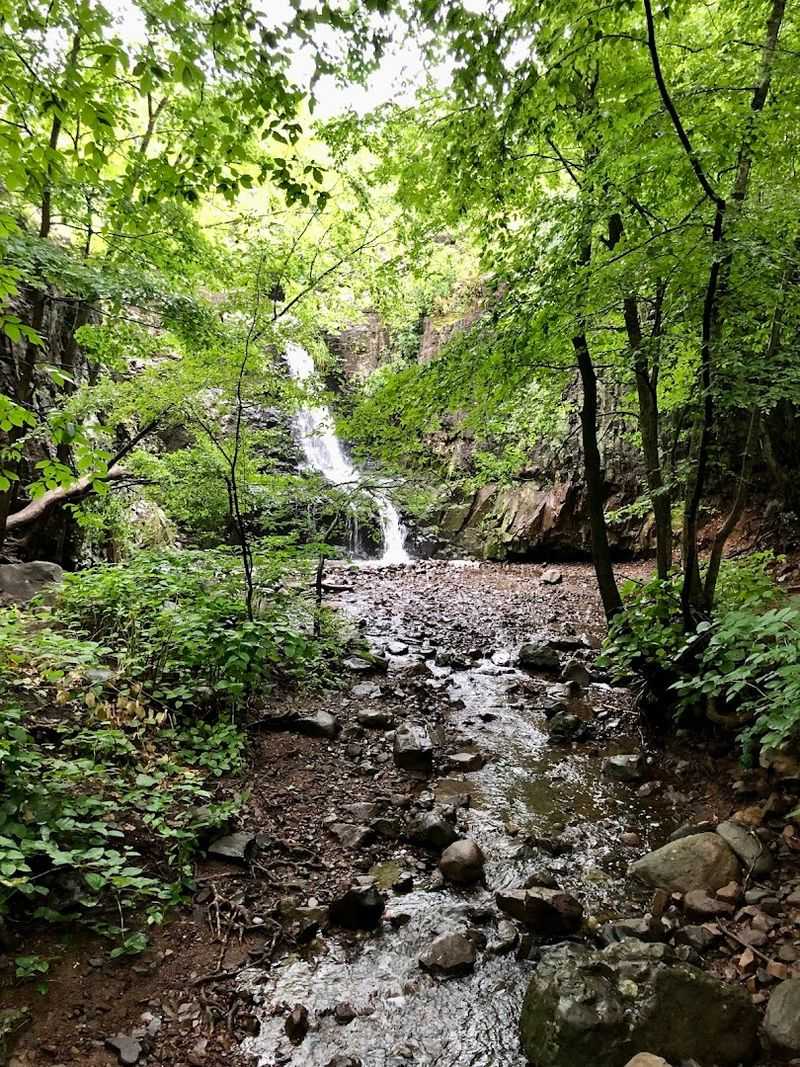
This one starts with a little drama. Hemlock Falls drops about 25 feet over a rock wall before joining the West Branch of the Rahway River, and after a good rain, it makes a serious entrance.
But the reason this route belongs on a list of river trails is not just the falls. It is the way the trail keeps you close to moving water afterward, folding the waterfall payoff into a longer, woodsy walk through one of North Jersey’s best reservations.
The popular loop using the Lenape, Rahway, and River trails clocks in around 5.9 miles and includes rocky footing, muddy sections after rain, stream crossings, and a broader sense of terrain than you get on many easy county-park walks. That makes it feel adventurous without becoming extreme.
The reservation also layers in little extras: another smaller cascade near the main falls, old stonework, and sections where the woods briefly make you forget you are in Essex County.
Parking is usually easiest from the South Orange Avenue lot, though arriving early is wise on weekends because this is no longer a total secret.
It earns its spot because the route gives you both of the things people always want from a trail day—waterfall drama at the start and a satisfying river walk after the applause dies down.
13. Batona Trail section along the Mullica River
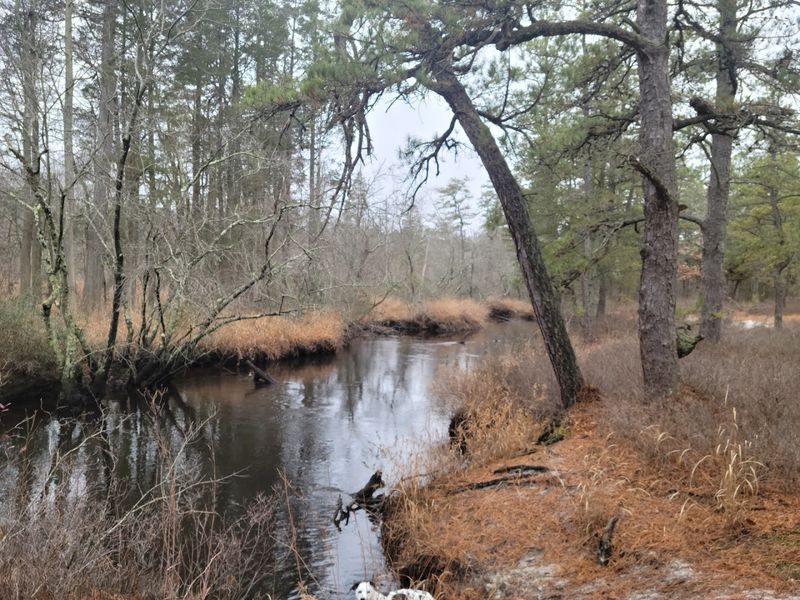
The Pine Barrens know how to do atmosphere better than almost anywhere in the state, and the Batona section along the Mullica River might be the purest example of that. Here, the famed 50-mile Batona Trail crosses through a landscape of tall pines, cedar-dark water, and sandy paths that feel softly lit even in broad daylight.
The Mullica stretch near Batsto is especially good because it distills the best parts of the larger trail into something day-hike friendly: flat walking, water views, wooden bridges, and enough quiet to make you lower your voice without realizing it. This is not summit-chasing terrain.
It is immersive terrain. You notice textures here—the tea stain in the river, the white sand at the edge, the way the pines close in and then suddenly part near the water.
Because it is in Wharton State Forest, you also get the benefit of pairing the hike with Batsto Village if you want a little history before or after. AllTrails and local Pinelands groups both highlight the Mullica loop area as a favorite entry point, and the broader Batona map is worth having if you want to extend your route.
This one earns its place because it gives you the Pine Barrens at their most haunting and memorable, with the Mullica quietly stealing the whole show.
Share this story