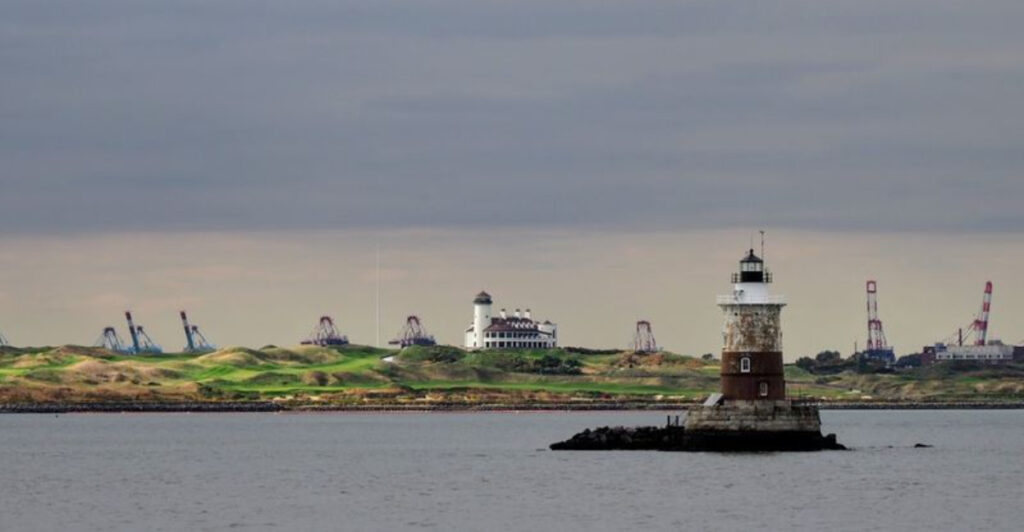
A pair of sandstone towers rises above the Highlands like a medieval fortress. Farther south, a red-and-white beacon stands at the very edge of Barnegat Inlet, while a Victorian cottage in North Wildwood hides its lantern among flower gardens.
New Jersey’s lighthouses are anything but a matching set. Some are striped giants built for the open Atlantic; others are skeletal iron towers that guided freighters along the Delaware River.
Two of the most intriguing sit alone in the water, resembling miniature houses dropped into the middle of a bay. Together, they tell a story shaped by shipwrecks, shifting sandbars, military history, engineering experiments, and generations of keepers who climbed spiral staircases before sunrise.
Several invite visitors all the way to the lantern room, while others are best appreciated from a shoreline or passing boat. Either way, these 13 beacons prove that New Jersey’s most memorable coastal architecture was designed to be useful—and became beautiful almost by accident.
1. Twin Lights of Navesink — Highlands
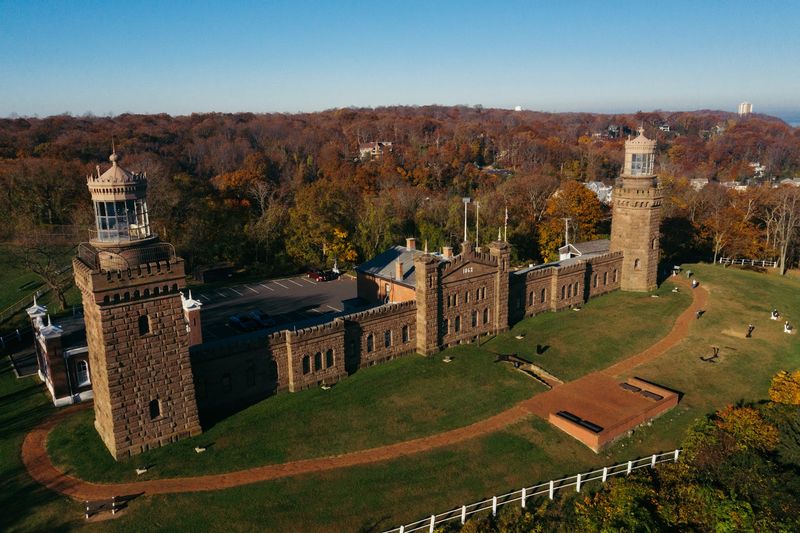
Few lighthouses make an entrance quite like Twin Lights. Perched high above Sandy Hook, the brownstone complex looks less like a solitary coastal beacon and more like a compact castle guarding the approach to New York Harbor.
Two mismatched towers rise from opposite ends of the fortress-like building, creating a silhouette that is instantly recognizable from the water below. The current station dates to the 1860s, but navigational lights have occupied this Highlands hilltop since the early 19th century.
Its résumé is unusually impressive: Twin Lights became the first American lighthouse station to use Fresnel lenses in 1841, and Guglielmo Marconi later demonstrated wireless telegraphy here while reporting on the 1899 America’s Cup races. The grounds deliver nearly as much drama as the architecture.
On a clear day, visitors can look across Sandy Hook, the Atlantic, Lower New York Bay, and the distant Manhattan skyline. Inside, museum exhibits dig into maritime communication, lighthouse technology, and the demanding routines of keepers who once maintained the station through cold, damp nights.
The grounds are generally open throughout the year, while tower access follows a more limited schedule and may involve a climbing fee. Even without tackling the stairs, the terraces and overlooks make this one of New Jersey’s strongest lighthouse stops for photographers.
2. Barnegat Lighthouse — Barnegat Light
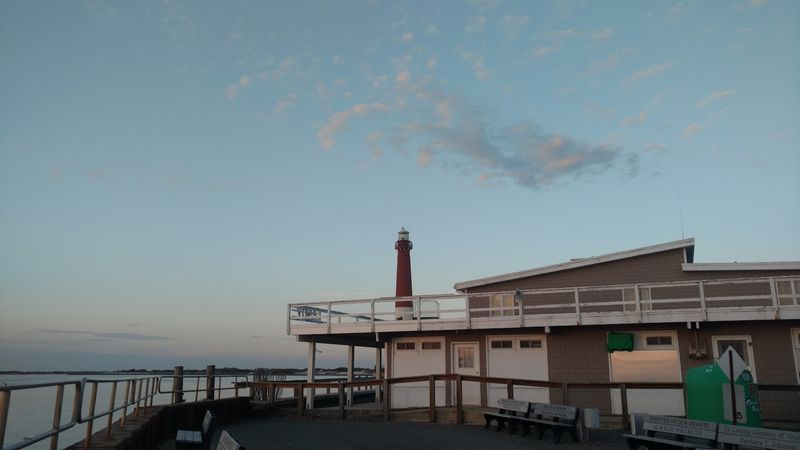
The best approach to “Old Barney” comes with salt spray in the air and fishing boats slipping through Barnegat Inlet. Its broad white base and deep red upper tower rise 163 feet over the northern tip of Long Beach Island, creating the kind of bold color contrast that seems designed for postcards.
Completed in 1859, the lighthouse was constructed after a deadly period of shipwrecks along this stretch of coastline. Engineer George G.
Meade, who would later become a major Civil War general, helped design the tower to provide mariners with a powerful seacoast light. Visitors willing to climb 217 steps are rewarded with a sweeping view over Barnegat Bay, Island Beach, the inlet, and the long ribbon of Long Beach Island.
Those who prefer to keep both feet at ground level can see live camera views inside the interpretive center. The surrounding state park gives the stop more staying power than a quick tower visit.
A short maritime forest trail winds through some of the island’s remaining coastal woodland, while the long jetty walkway draws anglers, bird-watchers, and anyone who enjoys watching rough inlet water collide with the rocks. The lighthouse was relit as an active navigational aid in 2009.
Admission to the site is free, and the tower is currently scheduled to open daily, though hours should be checked before making the drive.
3. Absecon Lighthouse — Atlantic City
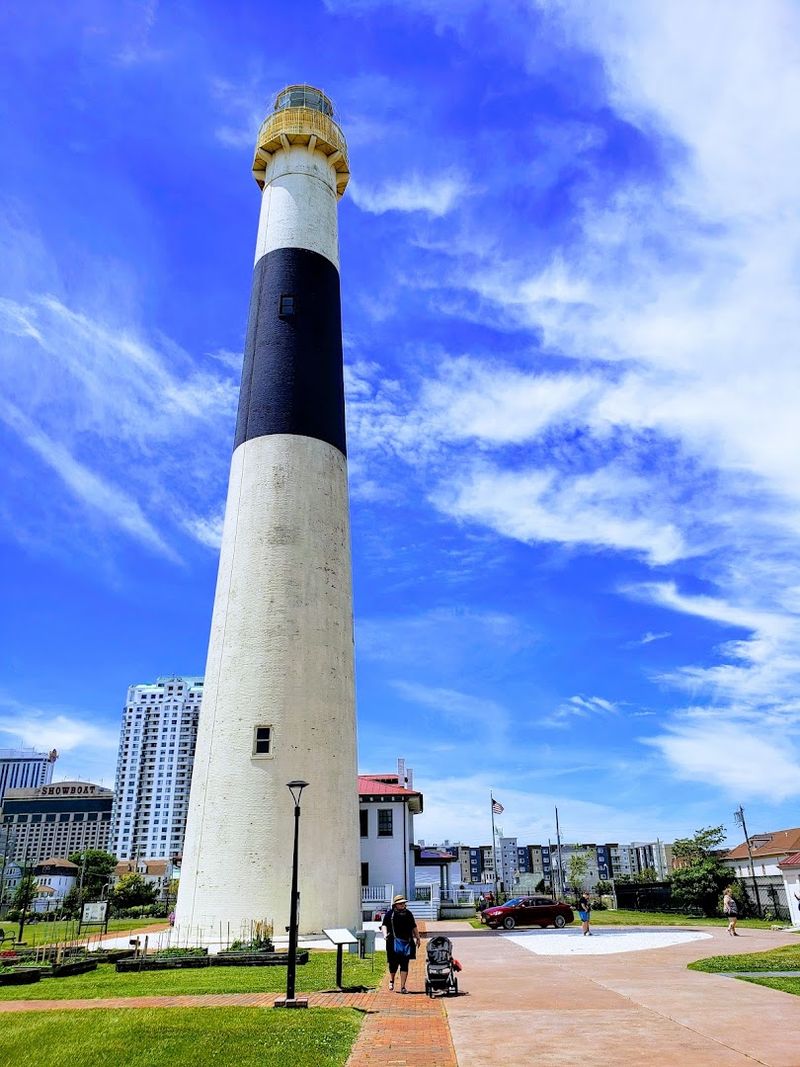
Atlantic City’s casino towers may own the modern skyline, but the city’s most commanding structure predates all of them. Absecon Lighthouse rises from the North Inlet neighborhood in broad bands of yellow, black, and yellow, its old masonry tower looking almost defiantly historic against the glassy buildings farther down the Boardwalk.
First illuminated in 1857, “Abby” stands 171 feet tall, making it New Jersey’s tallest lighthouse and one of the tallest masonry lighthouses in the country. Reaching the top requires 228 steps, but the climb is broken up by landings and bits of encouragement from staff.
The payoff is a wraparound view that takes in Absecon Inlet, the Atlantic City skyline, nearby neighborhoods, and the ocean beyond. The real showpiece waits inside the lantern room: the lighthouse retains its enormous original first-order Fresnel lens, a dazzling arrangement of glass prisms that once projected its fixed white light far out to sea.
Back on the ground, the reconstructed keeper’s cottage and museum exhibits cover shipwrecks, lighthouse work, local maritime life, and the tower’s long preservation effort. The two-acre property also offers free parking, a rare Atlantic City luxury.
Admission is charged for tower climbs, and summer hours are typically more generous, including select evening access that lets visitors watch the city begin to glow from above.
4. Cape May Lighthouse – Cape May Point
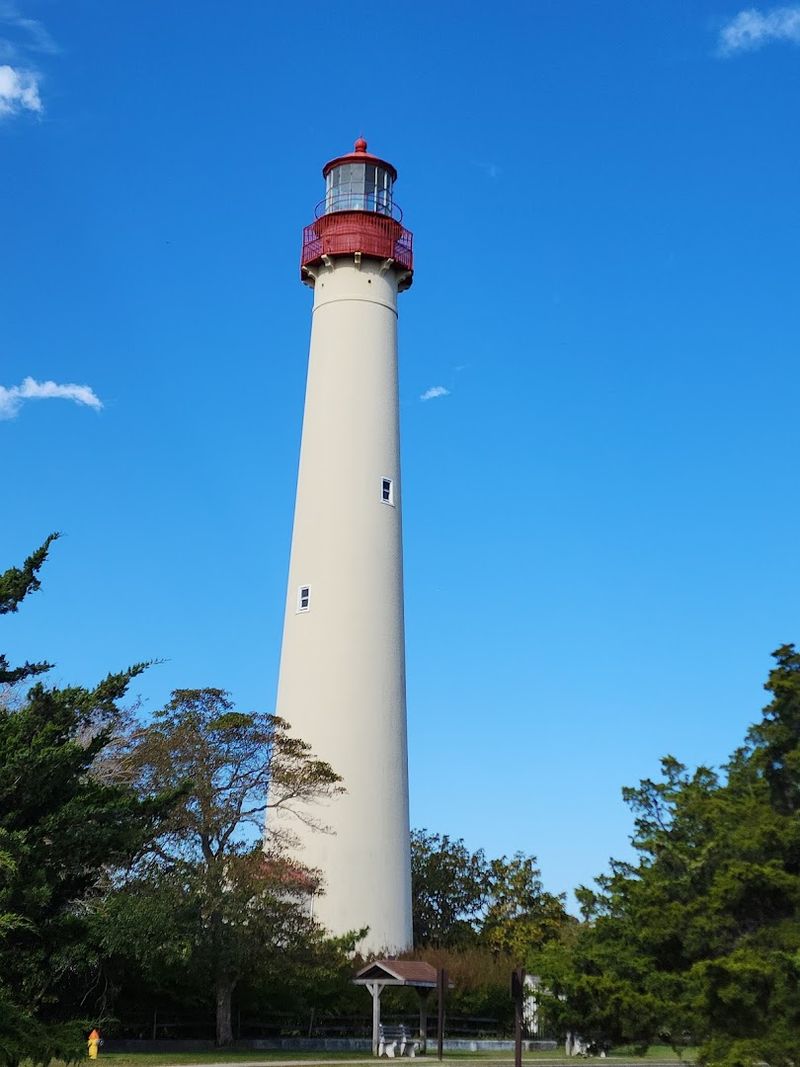
White brick, black lantern, blue sky, and waving dune grass: Cape May Lighthouse achieves its good looks without trying anything complicated. The current tower was completed in 1859 and stands 157 feet above Cape May Point, where the Atlantic Ocean and Delaware Bay meet.
Its clean, tapered shape has become one of the defining images of the southern Jersey Shore. The 199-step climb is manageable for most active visitors, especially with several landings available for strategic pauses.
At the top, the peninsula spreads out below in layers of forest, wetlands, beach, rooftops, and open water. The setting is what separates this lighthouse from many others.
It anchors Cape May Point State Park, a 244-acre landscape famous for fall bird migration, monarch butterflies, freshwater ponds, and easy walking trails.
A climb can be paired with the accessible Duck Pond Trail, a stroll through the dunes, or a look at Battery 223, a World War II gun emplacement now sitting surprisingly close to the shoreline because of decades of erosion.
The lighthouse remains an active aid to navigation, carrying on a local tradition that began with an earlier tower in 1823. There is no general fee to enter the state park, although lighthouse admission is charged.
Come early during summer or fall migration weekends, when the parking lot can fill with an entertaining mix of beachgoers, history fans, and very serious birders.
5. Sandy Hook Lighthouse – Highlands
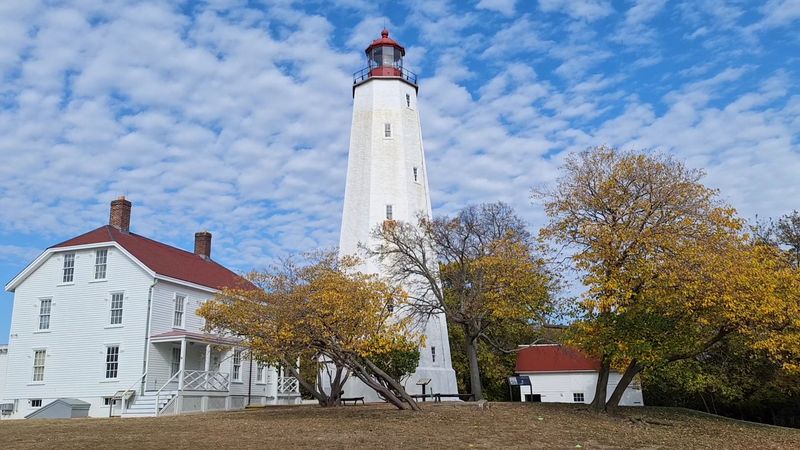
Its modest size can be misleading. Sandy Hook Lighthouse does not tower over the landscape like Absecon or Cape May, yet it holds a distinction no skyscraping beacon can steal: completed in 1764, it is the oldest operating lighthouse in the United States.
The octagonal white tower was funded by New York merchants who needed a dependable guide for ships entering the harbor, and its light has continued serving that basic purpose for more than two and a half centuries. The surroundings add another layer to the experience.
Rather than standing among souvenir shops or beachfront motels, the lighthouse occupies the historic Fort Hancock district, where yellow-brick military buildings, officers’ homes, old gun batteries, and wide parade grounds create a wonderfully strange time capsule.
Ranger-led climbs involve 95 stairs followed by a short ladder into the lantern area, so children must meet a height requirement and everyone must register in person.
Tours are first come, first served and operate on a limited schedule. The keeper’s quarters next door functions as a visitor center, making it a useful first stop before exploring the rest of Sandy Hook.
Parking around Fort Hancock is free, although seasonal beach parking fees apply elsewhere in the recreation area. The lighthouse’s plain appearance is part of its appeal: no dramatic stripes, decorative trim, or theatrical proportions—just thick colonial-era masonry still doing the job it was built to do in 1764.
6. Hereford Inlet Lighthouse – North Wildwood
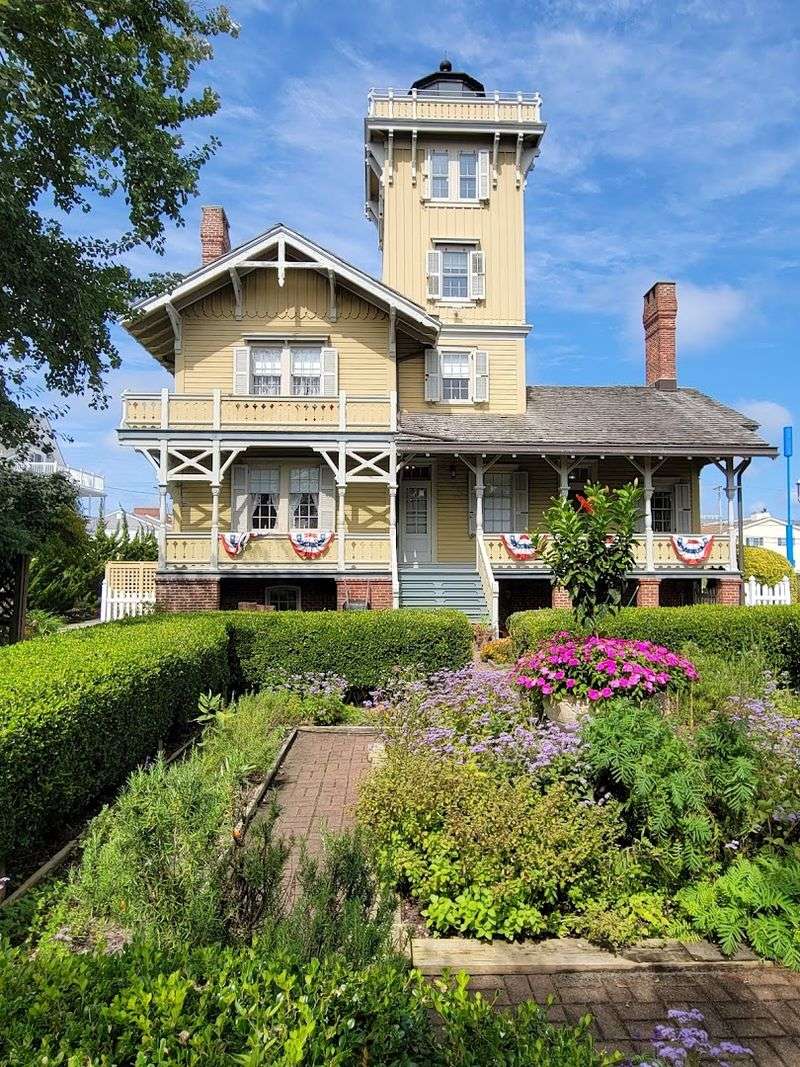
At first glance, Hereford Inlet Lighthouse could pass for an elaborate Victorian beach house whose owner added a lantern room for fun. Its red gables, board-and-batten siding, wraparound porches, and decorative wooden trim make it dramatically different from New Jersey’s familiar cylindrical towers.
Built in the 1870s in a style known as Swiss Carpenter Gothic or Stick Style, the residence and lighthouse were combined into one wonderfully eccentric structure. It guided ships around the strong currents and shifting sandbars at the entrance to Hereford Inlet, an area long known for difficult navigation.
Nature nearly claimed the building in 1913, when a severe storm damaged its foundation. Instead of abandoning it, crews moved the entire lighthouse roughly 150 feet inland to its present position.
Today, the tower remains an active aid to navigation, while the restored rooms introduce visitors to the keepers and families who once lived there. The gardens may be even more photogenic than the interior.
Winding paths pass flowers, herbs, shrubs, and butterfly-friendly plantings before reaching overlooks toward the inlet and seawall. That combination of architecture and landscaping gives Hereford the feel of a small coastal estate rather than a government station.
Admission is free, and the gardens are generally open from dawn to dusk. Interior hours can vary by season, so calling ahead is wise before planning a tour around the building itself.
7. Sea Girt Lighthouse – Sea Girt
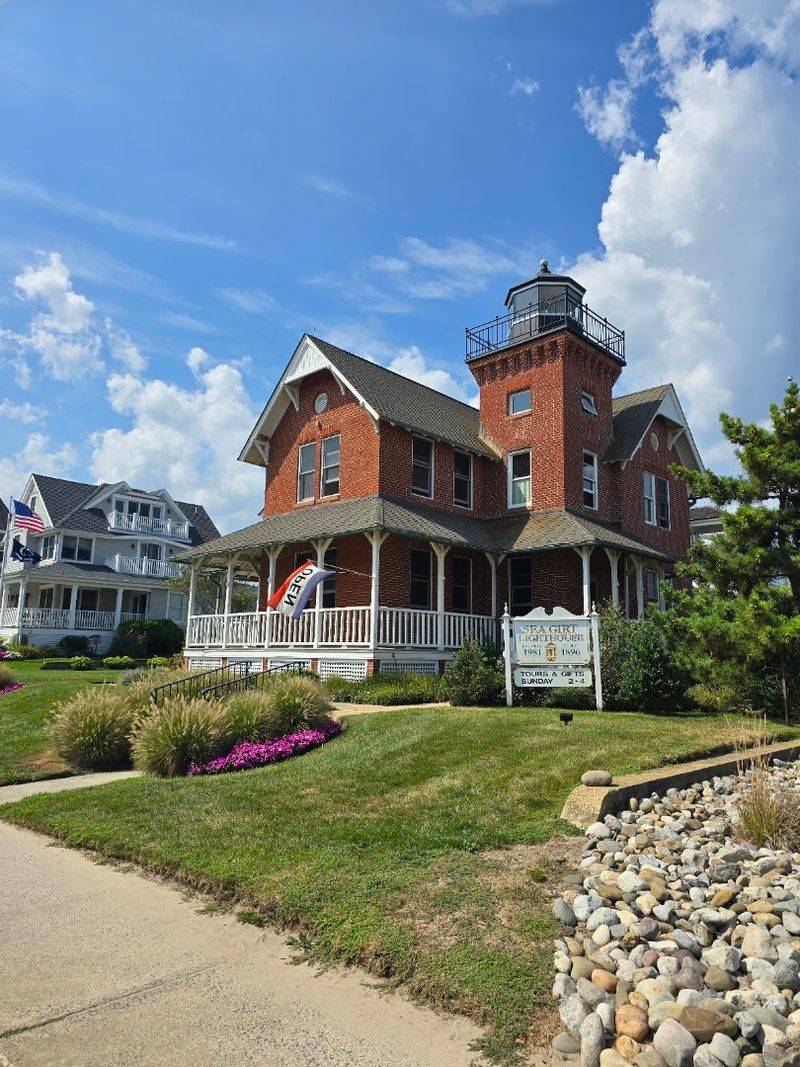
Brick walls and a front porch give Sea Girt Lighthouse the cozy appearance of a well-kept Shore home, but its square tower reveals that this was never an ordinary residence. First lit in December 1896, the station was built to cover a dark stretch of coastline between the powerful lights at Navesink and Barnegat.
Its lantern once sent a beam visible approximately 15 miles offshore, helping ships navigate near Sea Girt Inlet and Wreck Pond. Unlike larger standalone towers, the 44-foot brick tower rises directly from the keeper’s dwelling.
That compact design makes an interior tour feel unusually personal. Visitors move through rooms where lighthouse families cooked, worked, raised children, and listened for trouble at sea before continuing into the lantern room.
Exhibits include keeper photographs, historic logbooks, navigation equipment, a Fresnel lens, and artifacts connected with the 1934 Morro Castle disaster.
Crew members and local rescuers responded when the burning passenger liner drifted toward the New Jersey coast, making the lighthouse part of one of the state’s most dramatic maritime stories.
Sea Girt also played a role in early radio navigation and became the first shore light station equipped with a radio fog signal. Public tours are generally offered on Sunday afternoons from spring into late fall, excluding certain holiday weekends.
The residential neighborhood is quiet, so visitors should park thoughtfully and treat the stop more like a small community museum than a sprawling tourist attraction.
8. East Point Lighthouse – Heislerville
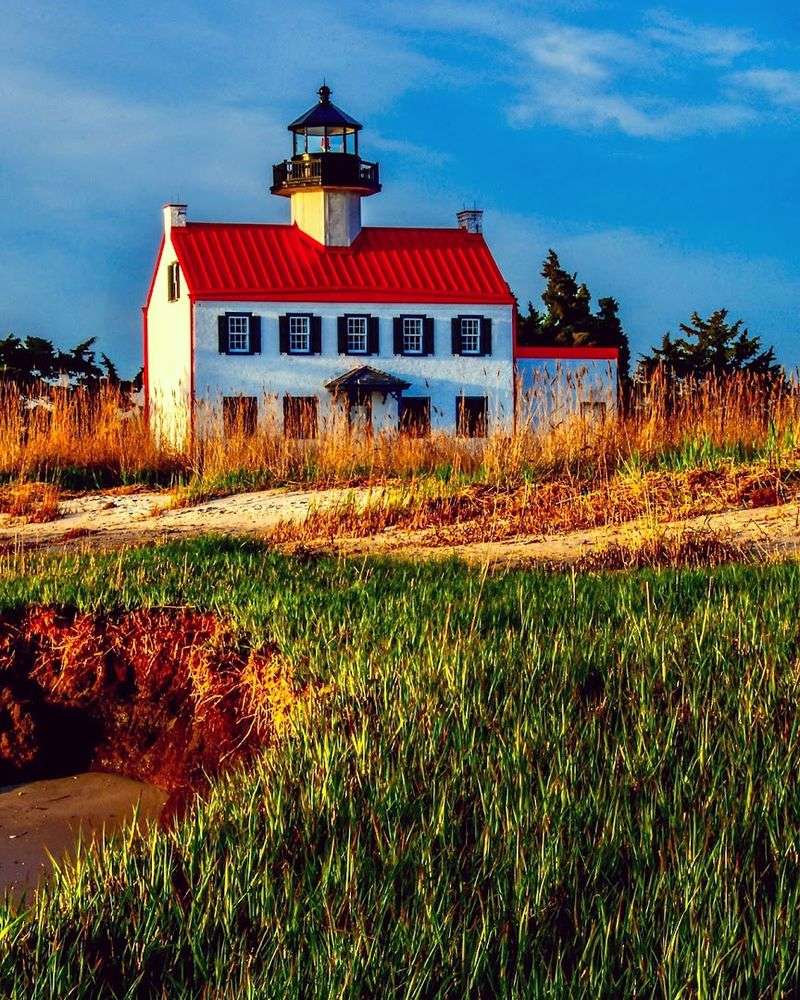
The road to East Point seems to run out of New Jersey before the lighthouse finally appears. Marsh grass stretches toward the horizon, birds sweep over the wetlands, and the white brick keeper’s house stands near the Delaware Bay with a red roof and matching lantern that can look almost unreal in late-afternoon light.
Built in 1849 near the mouth of the Maurice River, East Point is the oldest lighthouse in the Delaware River and Bay region and the bay’s only operating lighthouse. Its integrated design places the short tower directly atop the keeper’s dwelling, creating a balanced, almost storybook shape.
The remote location is central to its appeal. There are no boardwalk rides, tall hotels, or busy commercial strips nearby—only marsh, bay water, wind, and an exposed shoreline that has repeatedly threatened the property.
This is an especially rewarding stop for photographers and bird-watchers, since the surrounding Delaware Bayshore supports migrating shorebirds and other wildlife. Visitors can walk the grounds and approach the beach, but the lighthouse interior has remained closed amid an unresolved management dispute.
Because access conditions may change, anyone hoping to tour inside should verify the latest status before driving to Heislerville. Even when the doors are locked, the exterior is worth the trip.
Few New Jersey landmarks create such a striking contrast between neat architecture and a landscape that still feels raw, quiet, and governed by tides.
9. Finns Point Rear Range Lighthouse – Pennsville
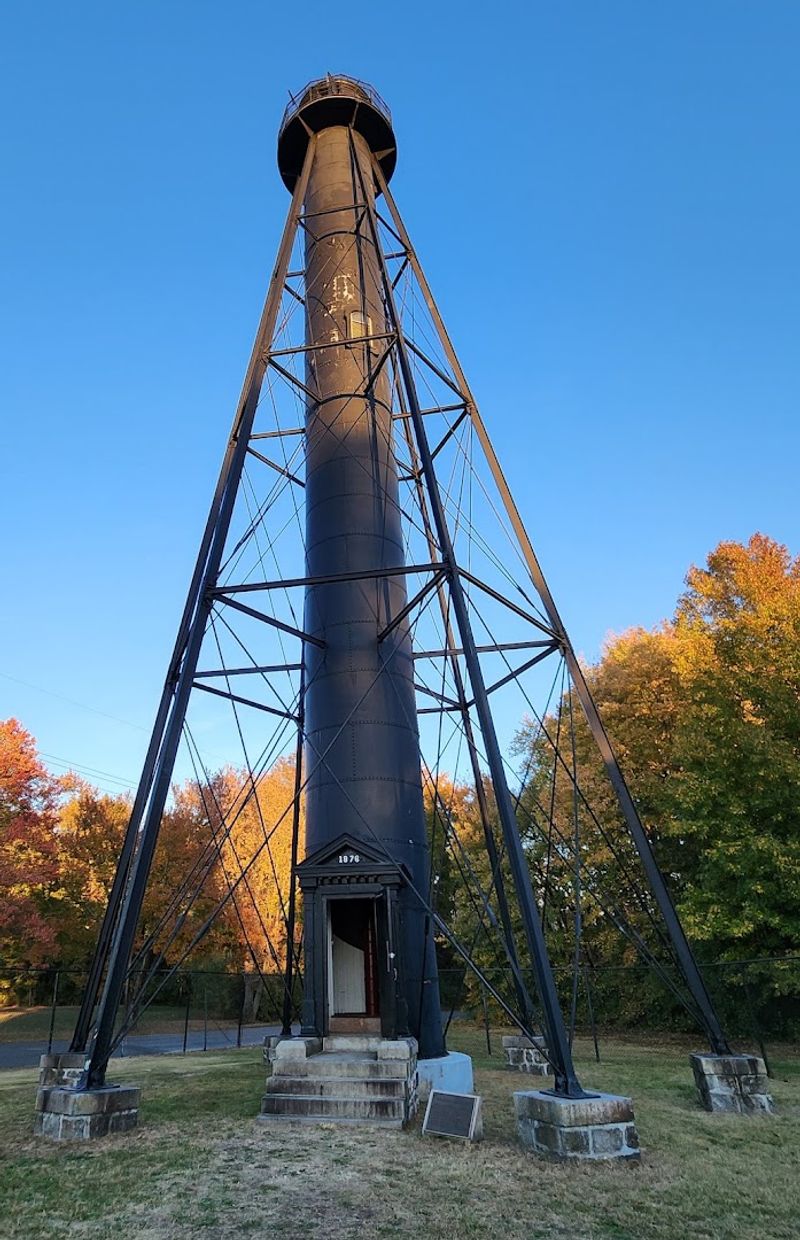
A black iron tower rising from the wetlands of Salem County is not the classic image most people associate with a lighthouse—and that is exactly why Finns Point is so memorable. Built in the 1870s, the 115-foot skeletal structure resembles an oversized piece of industrial lacework.
Its components were manufactured in Buffalo, transported by rail, and hauled to the site by mules before being assembled near the Delaware River. Finns Point operated as a rear range light, working with a smaller front light to create a navigational line.
When mariners positioned the two lights directly above one another, they knew their vessel was properly aligned within the shipping channel. The tower became obsolete after the channel shifted and was deactivated around 1950, but preservation efforts saved it from disappearing.
Inside the central cylinder, a 119-step spiral staircase leads upward, followed by a short ladder into the lantern area. Climbs are normally limited to scheduled open houses and special events rather than daily visits, making advance planning essential.
The lighthouse now sits within Supawna Meadows National Wildlife Refuge, where surrounding forests, grasslands, ponds, and tidal marshes attract waterfowl, raptors, and songbirds. Refuge trails are generally open during daylight hours, although some roads and sections have specific access restrictions.
Even when the tower is closed, its dark metal frame against green marshland or a pale winter sky makes this one of New Jersey’s most unusual lighthouse portraits.
10. Tinicum Rear Range Lighthouse – Paulsboro
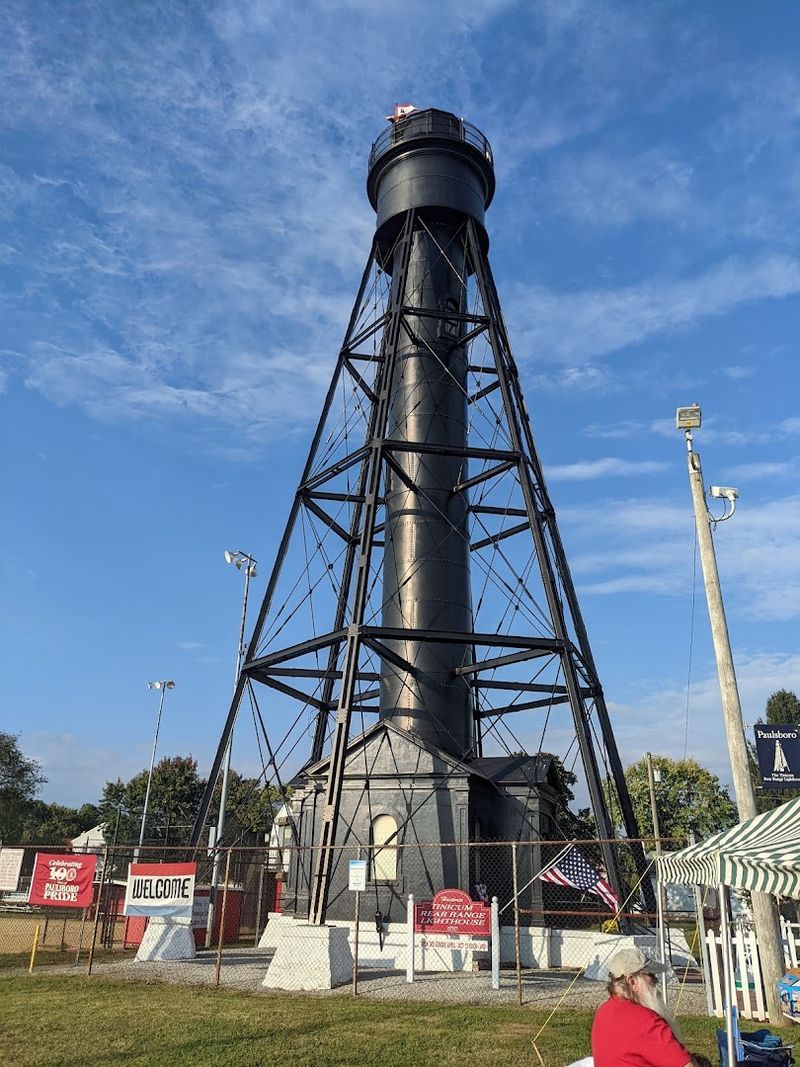
The view from Tinicum Rear Range Lighthouse is not a romantic sweep of untouched ocean. It is a working-river panorama of ships, tanks, bridges, neighborhoods, and industrial facilities—and that honesty is what makes the place fascinating.
The 85-foot iron tower has stood in Paulsboro since New Year’s Eve 1880, when its light was first displayed to guide vessels traveling north along the Delaware River toward Camden and Philadelphia. Like Finns Point, Tinicum is a range light.
Its fixed red beam lines up with a front-range light closer to the river, creating a precise pathway through the channel for commercial traffic. The structure itself is all exposed engineering: black metal legs, cross-bracing, platforms, and a central cylinder containing 112 steps.
Climbing it feels closer to ascending a historic water tower than entering a conventional lighthouse. From the top, the continuing purpose of the station becomes obvious as large vessels move along one of the region’s busiest waterways.
Tinicum remains an active navigational aid, which gives it a satisfying connection between 19th-century design and present-day shipping. Public tours are typically offered on the third Sunday of the month from spring through early fall, with special access during the annual lighthouse challenge.
Admission is generally free, though donations support preservation. Wear secure shoes, arrive prepared for steep stairs, and do not expect a polished coastal attraction.
Tinicum’s beauty comes from its geometry, machinery, and stubborn survival in the middle of a changing industrial landscape.
11. Tucker’s Island Lighthouse – Tuckerton
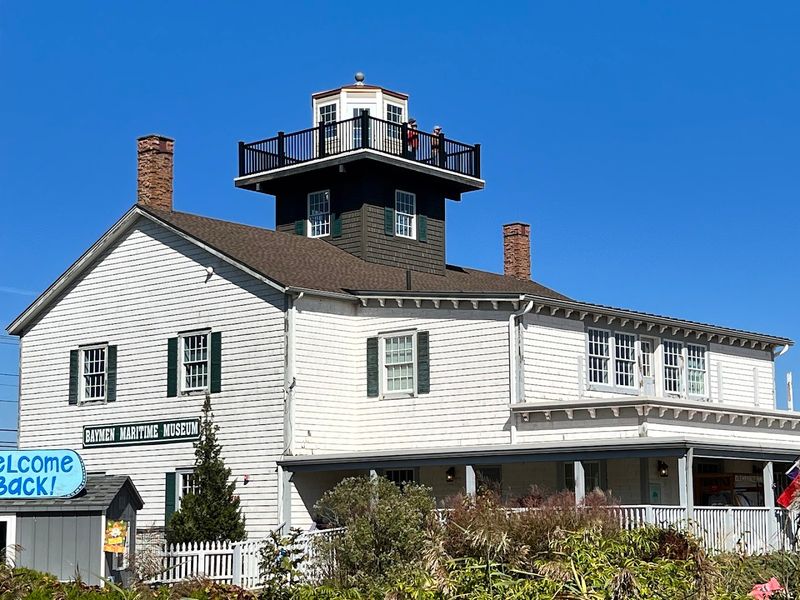
There is one important catch to Tucker’s Island Lighthouse: the tower visitors see today is a reproduction. The original stood on Tucker’s Island, a once-popular resort and maritime community off the southern end of Long Beach Island.
Relentless erosion steadily reduced the island until the lighthouse finally toppled into the ocean in October 1927. Tuckerton Seaport recreated the structure as the centerpiece of its 40-acre coastal heritage campus, giving visitors a physical connection to a place that the Atlantic erased.
The replica follows the distinctive house-and-tower appearance of the historic light, with a broad white dwelling, red roof, and central lantern. It is not an active navigational lighthouse, but it glows at night and can be climbed for a view over Tuckerton Creek and the surrounding seaport.
Exhibits inside cover lighthouses, local folk art, bay communities, and the vanished island itself. The wider museum makes this one of the most family-friendly stops on the list.
Visitors can explore historic and reconstructed buildings, learn about decoy carving and boatbuilding, walk a nature trail, or book seasonal creek tours and ferry rides. The seaport’s 2026 summer schedule lists daily hours from 10 a.m. to 4 p.m., with modest admission and additional charges for certain boat programs.
Purists may debate whether a replica belongs beside working beacons, but Tucker’s Island tells a crucial Jersey Shore story: sometimes the sea does not merely surround history—it swallows it.
12. Robbins Reef Lighthouse – Bayonne
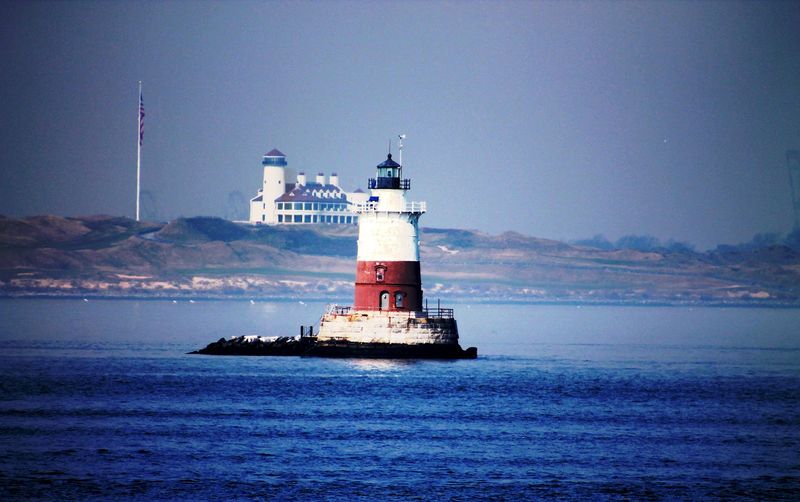
Robbins Reef Lighthouse looks like a tiny rust-red home set down in the middle of Upper New York Bay. Its cast-iron “sparkplug” design places living quarters, workspaces, and the lantern inside one compact offshore tower, with a broad caisson foundation protecting it from waves and ice.
The current structure was first lit in 1883 and remains an active, automated aid to navigation near the busy meeting point of the Kill van Kull and New York Harbor. Its most compelling chapter belongs to Katherine Walker, who served as keeper from 1895 to 1919.
Standing just 4 feet 10 inches tall, Walker maintained the light and fog signal, raised her children at the station, rowed them to school on Staten Island, and responded to emergencies in the surrounding harbor. Her story transforms the lighthouse from an attractive piece of engineering into a remarkably vivid home.
Imagine keeping house while freighters, ferries, fog, winter ice, and powerful currents moved around every wall. Robbins Reef is not currently open for regular public visits.
Restoration work continues with the goal of eventually welcoming tours, and its solar-powered light is maintained separately as a navigational aid. For now, this is a lighthouse to admire from the water or from a distant shoreline rather than one to climb.
That limited access only adds to its mystique: a solitary little tower, surrounded by one of the busiest urban harbors in America, still flashing every few seconds.
13. Great Beds Lighthouse – Raritan Bay near South Amboy
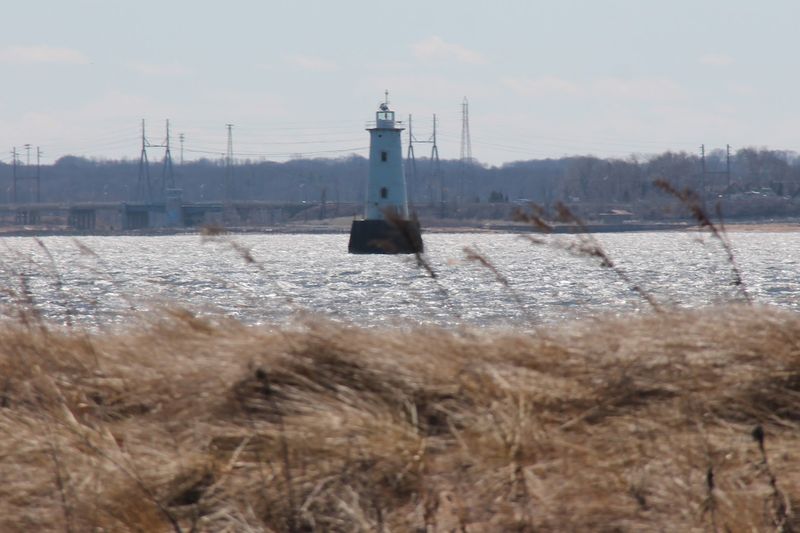
Small enough to resemble a model from shore, Great Beds Lighthouse has spent nearly a century and a half marking a dangerous shoal in Raritan Bay. The cast-iron tower was built and first lit in 1880, rising from a round caisson surrounded by protective stone.
Its white conical body and black lantern give it a crisp, graphic appearance, particularly when the bay turns steel gray behind it. Great Beds belongs to the same “sparkplug” family as Robbins Reef, a design suited to locations where a conventional land-based lighthouse could not properly mark the channel.
The tower stands roughly a mile east of South Amboy and remains an active, automated aid to navigation for vessels moving between the Atlantic and ports around Raritan Bay. There is no public interior access, and the structure can be reached only by boat.
That makes this the least hands-on stop in the collection, but it also preserves the lighthouse’s intended visual effect. Great Beds was meant to be seen from a distance, emerging from open water as a clear warning that shallow ground lay nearby.
Binoculars or a camera with a long lens help when viewing from the South Amboy area, while boaters receive the most complete look at its isolated setting. It is a fitting final masterpiece: not grand, ornate, or easily visited, but beautifully proportioned and still performing the quiet task assigned to it in 1880.
Share this story