A 39-foot Tyrannosaurus rex once stood among the trees in Bergen County, opening its jaws and roaring at families who had driven through perfectly ordinary North Jersey traffic to reach it. That strange, wonderful contrast was the heart of Field Station: Dinosaurs.
Located in Overpeck County Park in Leonia, the outdoor attraction filled its winding trails with more than 30 life-size animatronic dinosaurs. Children could dig for fossils, question paleontologists, dance with dinosaur performers, and meet Hadrosaurus foulkii, New Jersey’s official state dinosaur.
This was no hushed museum hall. It was part science lesson, part live theater, and part muddy-kneed expedition.
After welcoming more than one million visitors, the park closed permanently on November 9, 2025. Its departure left a dinosaur-sized gap in New Jersey’s family-attraction landscape, but also plenty of happy memories.
For 13 seasons, Field Station proved that prehistoric history felt right at home in the Garden State.
When Dinosaurs Roamed the Garden State
Field Station: Dinosaurs began its New Jersey run in 2012, though its first home was not in Leonia. The original park opened at Snake Hill in Secaucus, a wonderfully odd setting surrounded by highways, rail lines, and the unmistakable infrastructure of the Meadowlands.
That location lasted four seasons. When the property was needed for the Hudson County Schools of Technology campus, the park closed in September 2015 and began searching for another place to land.
The dinosaurs did not stay extinct for long. In 2016, the attraction reopened in the Henry Hoebel Area of Overpeck County Park.
The Leonia site, at 3 Overpeck Park Driveway off Fort Lee Road, gave the experience a greener and more convincing backdrop. Tall grasses, wooded paths, and the banks of Overpeck Creek surrounded the animatronic creatures.
With enough imagination, the sound of nearby traffic could fade behind a well-timed roar. The location was also easy to reach from much of North Jersey.
It sat near Interstate 95, Route 80, and Route 4, just a short drive from the George Washington Bridge. Families arriving from Manhattan could travel there in roughly an hour by subway and bus, while Bergen County residents had a genuine dinosaur park in their backyard.
The local setting mattered because New Jersey has real prehistoric credentials. Hadrosaurus foulkii was excavated in Haddonfield in 1858 after its bones were discovered in a marl pit.
It became the first nearly complete dinosaur skeleton found in North America and the first mounted dinosaur skeleton displayed publicly anywhere in the world. Field Station treated that history as more than a fun footnote.
Hadrosaurus appeared as a hometown star, reminding visitors that the Garden State’s story extends far beyond diners, boardwalks, and turnpike exits. Long before any of those appeared, this land had dinosaurs of its own.
Life-Sized Giants Hidden in Overpeck Park
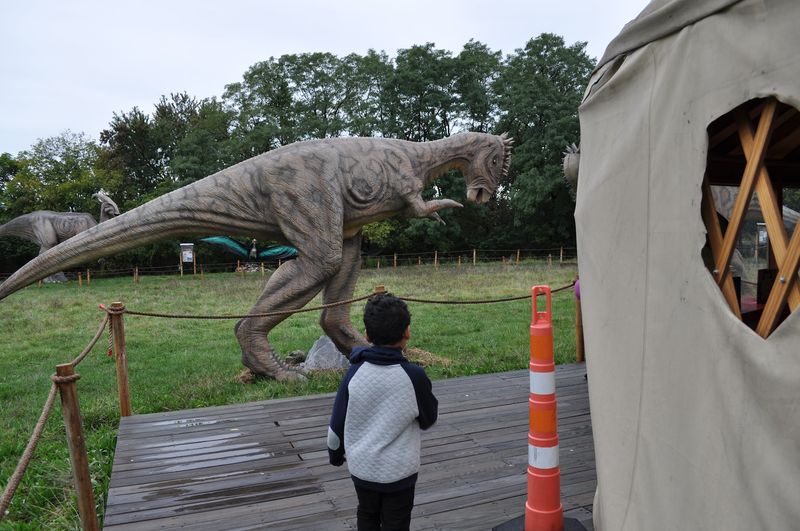
The first glimpse usually did the trick. A tail appeared through the brush, a massive head turned toward the trail, and suddenly every child within earshot became the group’s resident paleontologist.
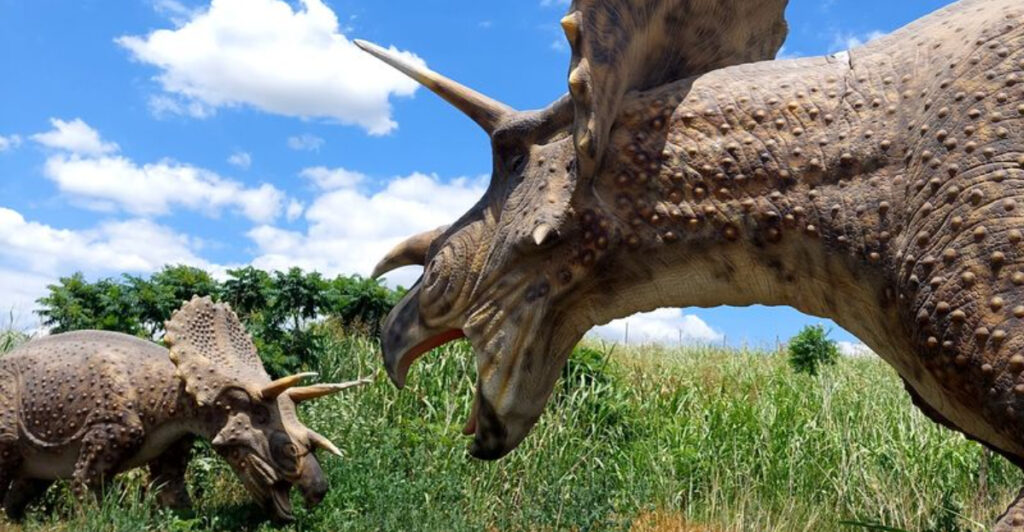
More than 30 full-size dinosaurs occupied the park during its later seasons. These were hand-sculpted animatronic figures built with internal machinery that allowed them to move, blink, breathe, and roar.
The natural surroundings gave them an advantage over dinosaurs displayed beneath museum lights. Here, a Stegosaurus could stand among tall grasses while a predator watched from behind a wall of leaves.
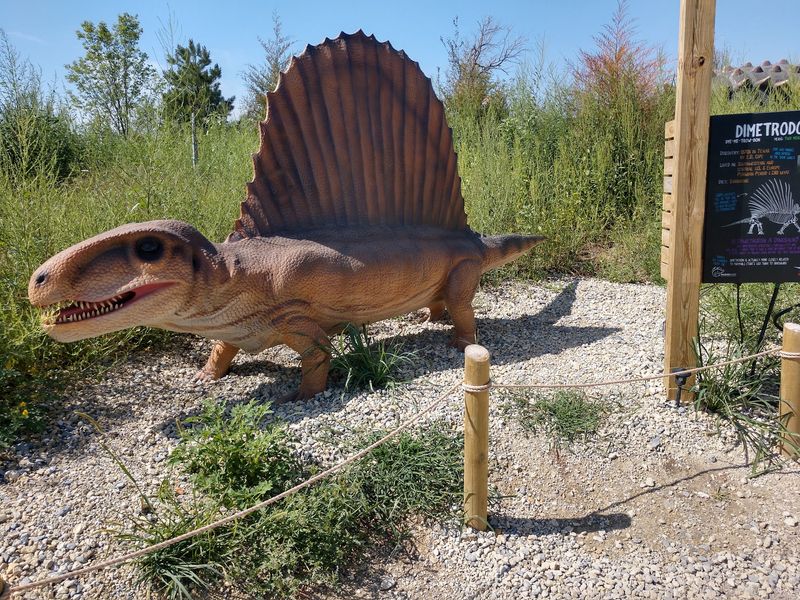
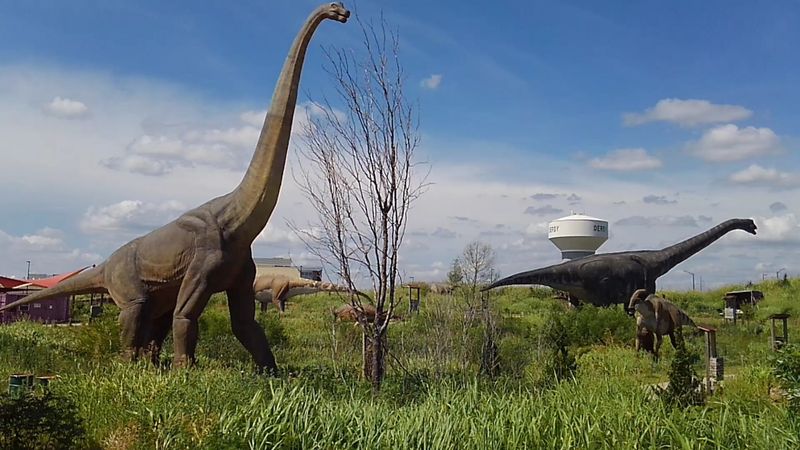
The collection included familiar heavy hitters such as Tyrannosaurus rex, Triceratops, Stegosaurus, and Apatosaurus. Hadrosaurus foulkii represented New Jersey, while less familiar species gave sharp-eyed young visitors something new to identify.
Signs beside the displays explained when the animals lived, what they ate, and how scientists understood their behavior. One of the park’s most famous early residents was a 90-foot Argentinosaurus.
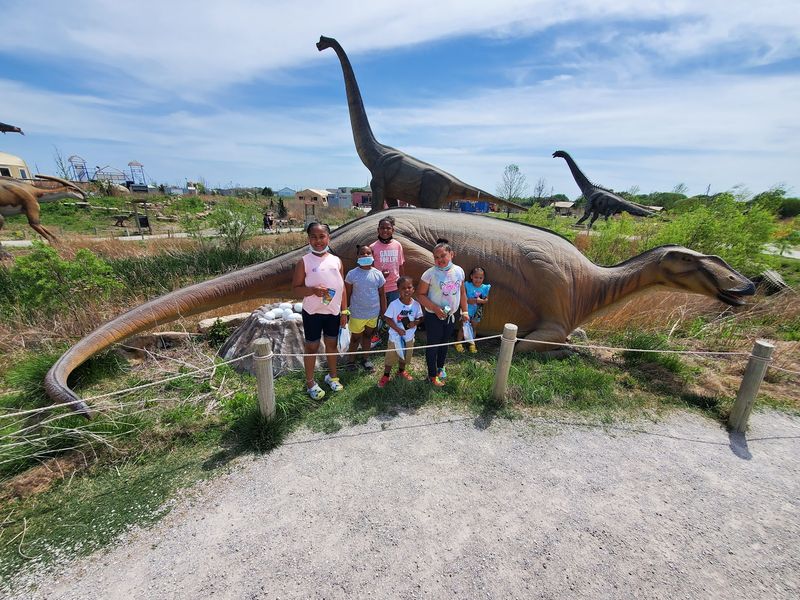
At the time it was acquired, the enormous sauropod was billed as the world’s largest animatronic dinosaur. It towered over the Riverview area until a fire destroyed it in 2016, shortly before the Leonia park opened.
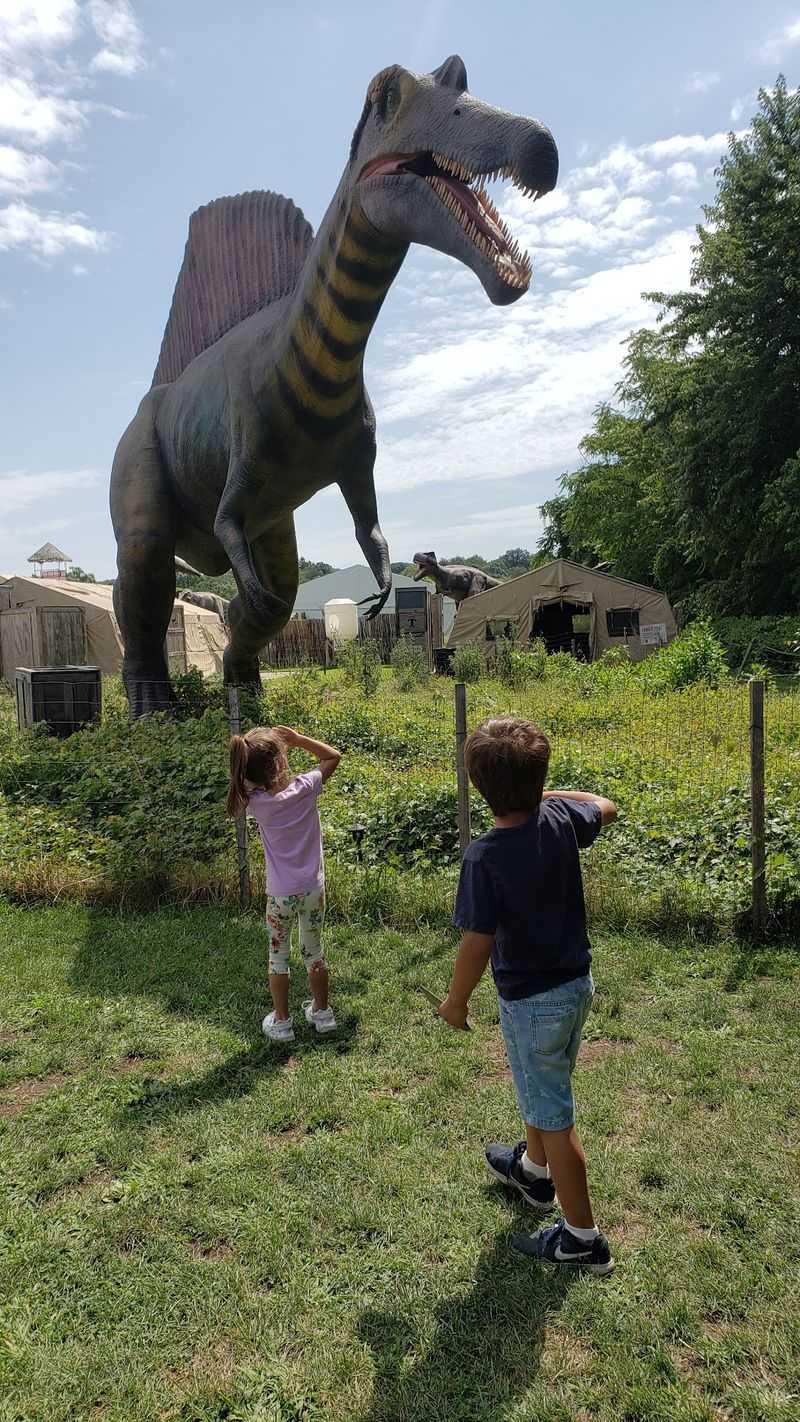
A Spinosaurus later joined the lineup after visitors voted on its replacement. The scale was difficult to appreciate in photographs.
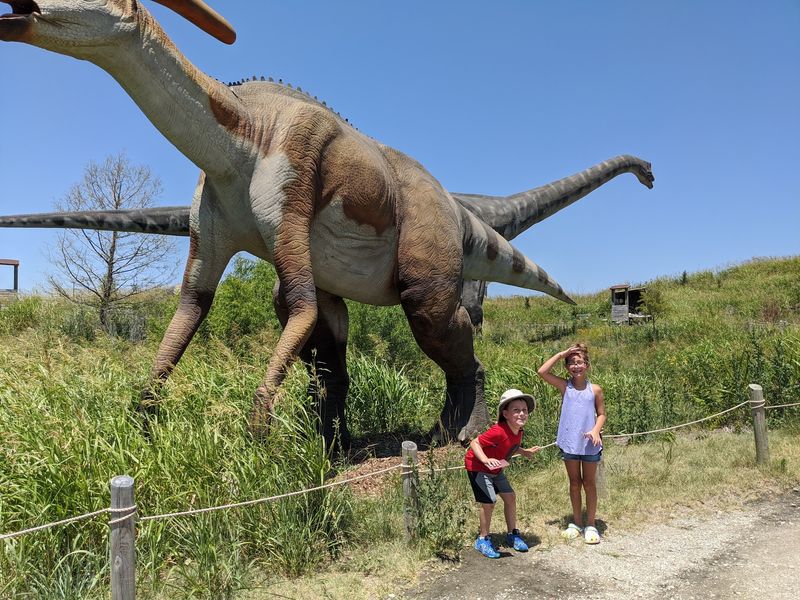
Standing beside a 39-foot T. rex made it immediately clear why prehistoric prey had a rough time. Even the 75-foot Apatosaurus had enough length to make an ordinary family snapshot look like a special-effects scene.
Still, the park never depended entirely on size. The movements, sound effects, wooded setting, and occasional appearance of a large dinosaur puppet kept the trails unpredictable.
Adults knew the creatures were machines. Children knew that too, at least until one of them turned its head.
Fossil Digs and Hands-On Prehistoric Fun
A patch of sand and a few digging tools could hold a child’s attention longer than almost any elaborate ride. At the Fossil Dig Site, young explorers brushed and scraped their way toward buried bones instead of simply looking at a finished skeleton behind glass.
The roughly 20-minute activity was designed primarily for children ages three through nine. Giant replica skeletons and prehistoric objects waited beneath the surface, while staff members explained how paleontologists uncover delicate remains without damaging them.
It was messy enough to feel like real fieldwork but structured enough that nobody needed a geology degree to participate. The Paleontologists’ Laboratory took that curiosity further.
Visitors could examine fossils, ask questions, and learn how a bone makes the long journey from the ground to a scientific collection. Some activities involved real fossils from the age of the dinosaurs, giving children the rare chance to handle evidence of prehistoric life rather than merely point at it.
Elsewhere, the Raptor Maze turned navigation into a game, while Stanley Stegosaurus offered a play area for younger guests. The Jurassic Zoo Bounce House provided a more energetic detour for children between 36 and 76 inches tall.
During its final season, that attraction cost an additional $8 plus tax and closed during rain or high winds. The park’s activity schedule was packed with names that took the subject seriously without acting solemn about it.
Kids could make dinosaur origami, join a scavenger hunt, help paint a 16-foot mural during Paleo Picasso, or test their memory in Mesozoic Concentration. Dinosaur Daycare featured hatchlings, while the Field Station Challenge invited families to show off what they had learned.
A standard 2025 day pass included the trails, fossil dig, shows, games, maze, and play areas. Admission for guests ages two and older was $23.75 online or $24.75 at the box office during the final season.
Children younger than two entered free, giving local families a full day of entertainment without the price tag of a major amusement park.
How Field Station Made Science an Adventure
Imagine trying to teach dinosaur diets with a lecture. Now replace the lecture with music, puppetry, audience participation, and a hungry T. rex.
Field Station understood which version children would remember. The T-Rex Feeding Frenzy used a live 15-foot puppet to explore what dinosaurs ate and how paleontologists reached those conclusions.
Rather than handing over a list of facts, performers walked the audience through clues. Teeth, fossils, body shape, and the scientific method became part of the show, often before the children realized a lesson had started.
That approach ran through the entire park. Great Moments of Discovery Theater connected modern birds to their dinosaur ancestors.
Backyard Fossil Hunter traveled through 400 million years of New Jersey’s geological history, when the state contained active volcanoes, mountains, and ancient watering holes. Children could touch fossils and even help judge a dinosaur beauty pageant.
The educational material was not improvised window dressing. Paleontologists helped shape the displays and programming, including experts who had worked at the New Jersey State Museum in Trenton.
School programs aligned with state curriculum standards in life science, Earth systems, and scientific practice. Field trips mixed an amphitheater performance with a workshop or game.
Instead of being told to remain quiet and keep their hands to themselves, students were expected to investigate, answer questions, and participate. Biology, geology, climatology, and paleontology were presented as connected pieces of the same story.
Even the sillier activities carried a scientific idea. Paleo Picasso asked children what color dinosaurs might have been, then explained why scientists cannot always know for certain.
Mesozoic Concentration showed that useful research tools could be found in garages, libraries, and playrooms. The Dinosaur Dance Party was less academically demanding, but not every moment needed a quiz attached.
That balance was Field Station’s cleverest trick. It respected the science without draining away the fun.
Children left knowing more than they did when they entered, usually with dusty knees and a favorite dinosaur to discuss all the way home.
Why New Jersey Families Loved This Jurassic Escape
For local parents, Field Station occupied a useful middle ground. It was bigger and more immersive than a small museum exhibit, but it did not require hotel reservations, a complicated itinerary, or an exhausting day of standing in ride lines.
The stroller-friendly trails made the park manageable for families with young children, its main audience. Most visitors could explore at their own pace, stopping for a show when attention spans began to wobble.
Tented pavilions provided some protection when the weather turned, and designated picnic tables allowed families to bring lunch rather than rely entirely on concessions. A printed daily schedule helped visitors choose among performances, workshops, and games.
That mattered because the park sometimes offered dozens of activities in a single day. Families might begin with the dinosaur trail, catch Feeding Frenzy at the amphitheater, dig for fossils, and finish with songs from the Dinosaur Troubadour.
Seasonal programming gave repeat visitors a reason to return. Dinosaurs After Dark transformed the grounds with lantern-lit trails on fall evenings.
Cretaceous Campout invited families to stay from Friday night until Saturday morning on select summer dates. Super Stars of Science brought special guests to the park, while Scout Days and school-break events filled dates when parents were already looking for something constructive to do.
The attraction also had a distinctly homegrown personality. It was not polished into bland perfection, and that was part of its appeal.
The dinosaurs stood outdoors through North Jersey summers, rainy weekends, and chilly autumn afternoons. The trails could get damp.
The robots showed signs of being well loved. Performers leaned into corny jokes with full commitment.
Then there was the simple thrill of proximity. Bergen County children did not have to travel across the country to walk beneath a sauropod or meet a roaring T. rex.
Their dinosaur park sat half a mile inside a county park entrance in Leonia, close enough for an ordinary Saturday outing. That accessibility helped Field Station welcome more than one million guests during its New Jersey run.
Remembering a One-of-a-Kind Dinosaur Destination
The final weekend arrived on November 6, 2025. For four last days, Field Station opened from 10 a.m. to 5 p.m., welcoming families who wanted one more walk along the trails.
On November 9, the gates closed permanently. The decision followed the expiration of the Leonia lease and the financial strain of operating the park.
By then, the attraction had completed 13 seasons across its Secaucus and Leonia homes. Its collection of more than 30 animatronic dinosaurs needed somewhere new to go, which led to one of the more unusual closing sales New Jersey has seen.
Individual figures briefly appeared for sale with prices that sounded almost comical beside their dimensions. A 39-foot T. rex was listed for about $2,700, while a feathered Velociraptor measuring roughly six and a half feet was offered for $700.
Buyers, however, had to handle dismantling and transportation. A bargain dinosaur stops looking quite so affordable when it requires a truck and possibly a crane.
The collection ultimately stayed together. Showboat Resort purchased the dinosaurs for a planned attraction beside its Atlantic City property, keeping the familiar creatures in New Jersey rather than scattering them among private yards, museums, and roadside attractions.
The move gave the story a fittingly Jersey second act, from the Meadowlands to Bergen County and then toward the Boardwalk. What disappeared from Leonia was more than a row of giant robots.
Field Station gave children permission to be loud about learning. It turned fossil evidence into games, state history into musical theater, and an afternoon in a county park into an expedition millions of years into the past.
For the families who remember packed show schedules, sandy hands, and a T. rex roaring through the trees, New Jersey’s dinosaur era never felt imaginary.
Share this story