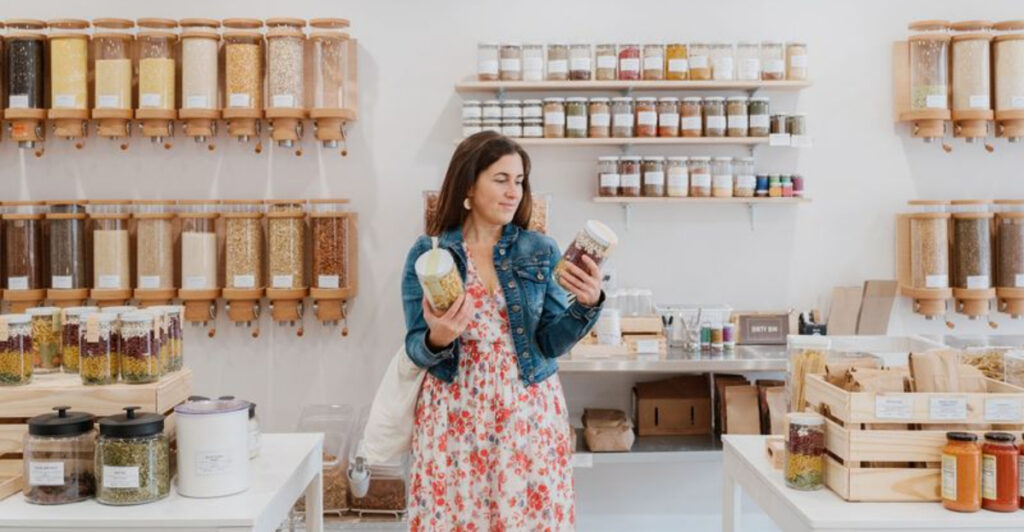
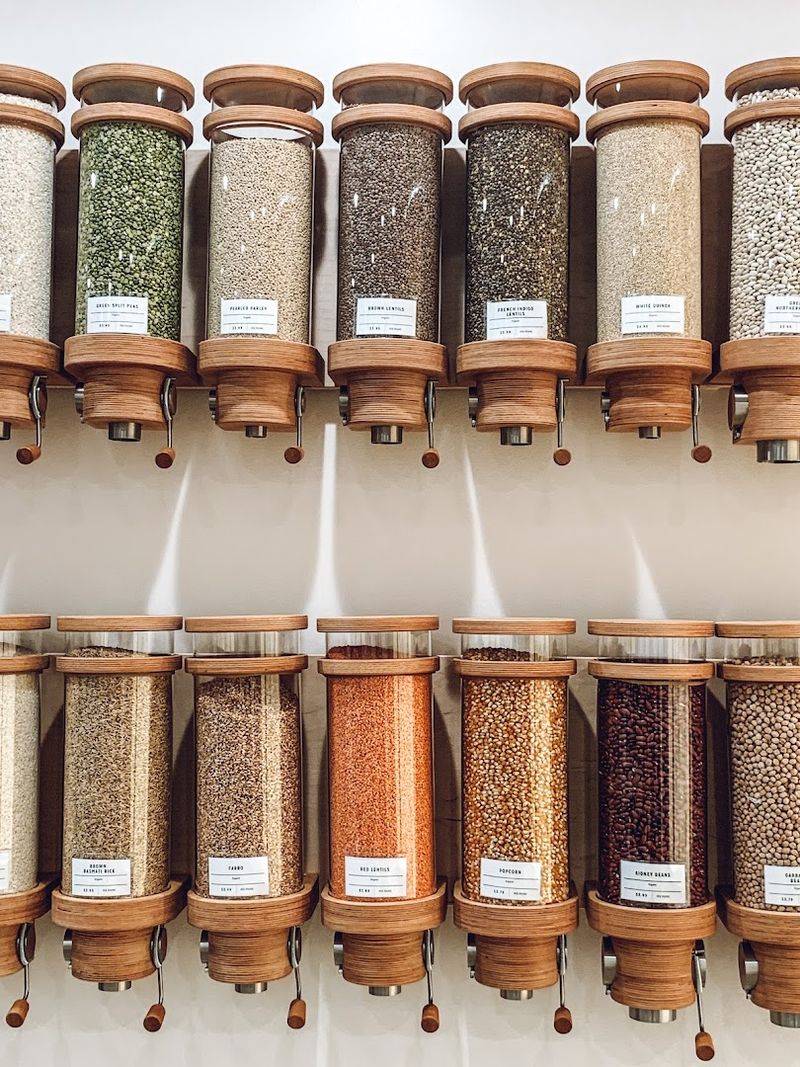
Rows of clear dispensers filled with rice, pasta, cereal, nuts, and candy line the walls, but the most important thing inside Dry Goods Refillery may be the empty jar in your hand. At this Montclair grocery store, shoppers skip the familiar parade of plastic bags, shrink-wrapped produce, and disposable bottles.
Instead, they buy exactly what they need and carry it home in containers designed to return again and again. Founder Rachel Garcia opened the business after realizing that reusable water bottles and cloth napkins could not solve the mountain of packaging that followed an ordinary grocery run.
Her answer became New Jersey’s first dedicated plastic- and package-free grocery store, now stocked with hundreds of foods, household supplies, and personal-care essentials. The system may sound like it requires a zero-waste instruction manual, but it is refreshingly straightforward.
Bring a jar, borrow one, fill it up, and leave with groceries instead of garbage.
Rachel Garcia Turned Her Family’s Plastic Frustration Into a Grocery Store
The idea began with an aggravatingly familiar sight: a kitchen filling up with trash even though the family living in it was actively trying to create less waste. Rachel Garcia packed lunches in reusable containers, carried refillable water bottles, used cloth napkins, and brought tote bags to the market.
Still, groceries arrived wrapped in plastic film, sealed behind cellophane windows, or tucked into packages that were headed for the garbage almost immediately. Farmers markets helped, but they could not supply everything a household needed.
Conventional supermarket bulk sections were limited, and bringing a personal container was often awkward or prohibited. Garcia did not simply want another store selling bamboo toothbrushes and reusable straws.
She imagined a proper neighborhood grocery where customers could pick up pantry staples, fresh food, cleaning products, and personal-care goods without acquiring a heap of packaging along the way. That stubborn idea became Dry Goods Refillery in 2020.
Launching any grocery business is complicated; opening an unfamiliar retail concept just as the pandemic disrupted everyday shopping added another layer entirely. Garcia nevertheless developed a system that made package-free buying approachable rather than intimidating.
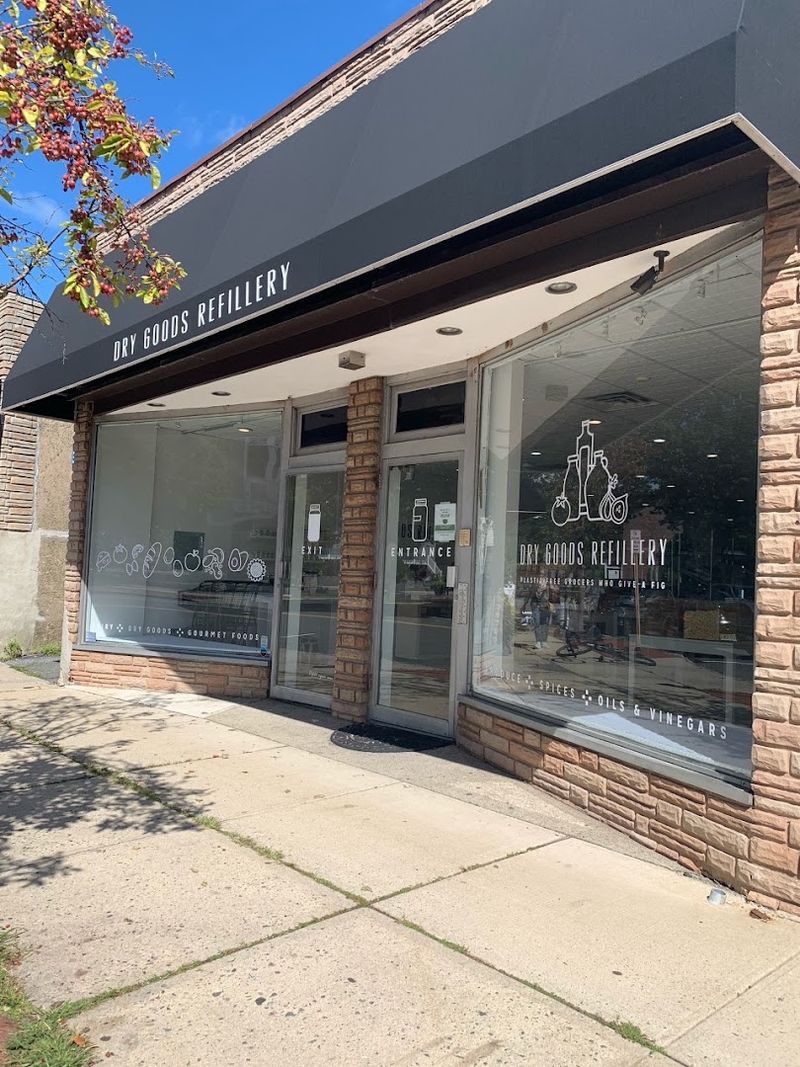
Her previous experience as a corporate buyer helped with the less glamorous realities of inventory, pricing, supplier relationships, and shifting customer demand. The business began in Maplewood before establishing its flagship store at 193 Bellevue Avenue in Montclair, roughly 15 miles from Manhattan.
What started as one New Jersey mother’s frustration has since earned national recognition, including a place among the U.S. Chamber of Commerce’s top 100 small businesses in 2024.
The bigger accomplishment, though, is wonderfully practical: Garcia turned the annoying moment of throwing away yet another plastic package into an entirely different way to stock the kitchen.
Dry Goods Refillery Introduced Package-Free Shopping to New Jersey
Before Dry Goods Refillery opened, New Jersey shoppers could bring reusable bags to supermarkets and occasionally scoop something from a bulk bin, but there was no dedicated grocery store built around eliminating disposable packaging from the entire trip.
Garcia’s business changed that by making the refill model the main event rather than a tiny aisle beside the produce section.
The concept borrows from the way people shopped before single-use packaging became standard. Customers once carried containers to merchants, bought ingredients by weight, and took home only the amount their households required.
Dry Goods Refillery updates that old habit with modern checkout technology, a broad inventory, and suppliers chosen for their environmental practices. Its arrival also predated New Jersey’s statewide plastic bag restrictions, which took effect in 2022.
While other retailers were figuring out how to replace checkout bags, this shop had already moved the conversation several steps further. A reusable tote helps at the register, but it does not eliminate the pasta bag, cereal liner, produce pouch, detergent bottle, and dozens of other packages inside it.
Dry Goods Refillery tackles those less obvious sources of waste. The shelves and dispensers are arranged to support an ordinary grocery run, not an occasional environmental splurge.
That distinction matters. Sustainable shopping becomes much easier to maintain when it includes food people regularly cook and products they routinely use.
There is also no requirement to become perfectly waste-free overnight. Someone can refill a single jar of rice, buy one bottle of dish soap, or pick up a loaf of locally made bread without treating the visit as a test of ecological purity.
Staff members explain the process, help first-timers weigh their containers, and answer the practical questions that inevitably arise. By removing the guesswork, the store makes an unconventional system feel surprisingly close to a normal trip for groceries.
Shoppers Can Bring Their Own Containers or Borrow Reusable Jars
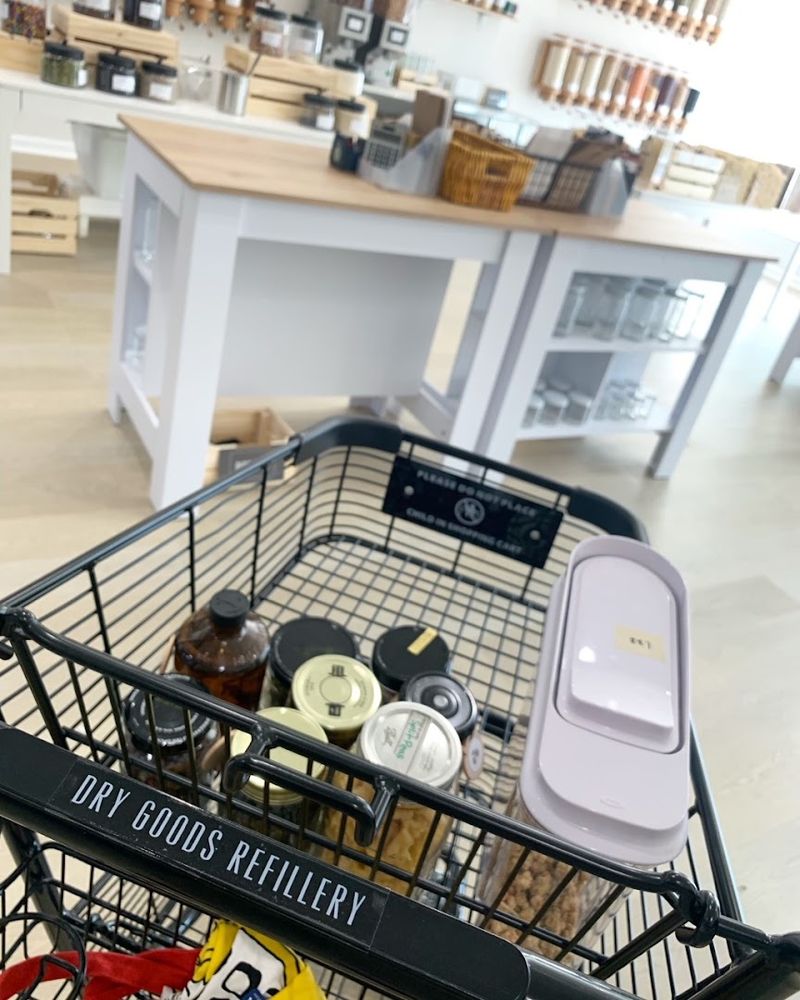
A first visit might begin with a tote bag full of mismatched mason jars, an old pasta-sauce container, and the sneaking suspicion that one has overcomplicated grocery shopping. The process inside is far easier than it appears.
Before filling anything, the empty container is weighed so its tare weight can be deducted at checkout. An RFID tagging system records that weight, preventing shoppers from paying for the glass or metal along with the food.
From there, customers dispense the amount they want, whether that means enough oats for a month or a small scoop of an unfamiliar spice for one recipe. Buying by weight cuts packaging, but it can also reduce food waste and unnecessary spending.
There is no need to purchase a full bag when only half a cup is required, and no oversized box lingering in a cabinet long after enthusiasm for its contents disappears. Forgetting to bring containers is not a shopping emergency, either.
Dry Goods Refillery operates a borrowing system that resembles the returnable milk-bottle model. Clean jars with dishwasher-safe labels can be used for items including tofu, sauces, and condiments, then returned so they can circulate again.
Shoppers may also find donated containers available, giving perfectly serviceable jars another life instead of sending them to recycling. The setup removes one of the biggest barriers to refill shopping: the feeling that it demands flawless preparation.
A customer does not need a coordinated collection of expensive containers or a pantry worthy of a home-organization show. A washed pickle jar works just fine.
Staff guide newcomers through each step, and the technology handles the arithmetic in the background. By the end of the trip, the once-unusual routine feels almost comically logical.
The shopper pays for the lentils, coffee, or granola inside the jar—not the jar itself and certainly not a wrapper destined for the bin.
More Than 275 Refillable Products Cover Groceries and Everyday Essentials
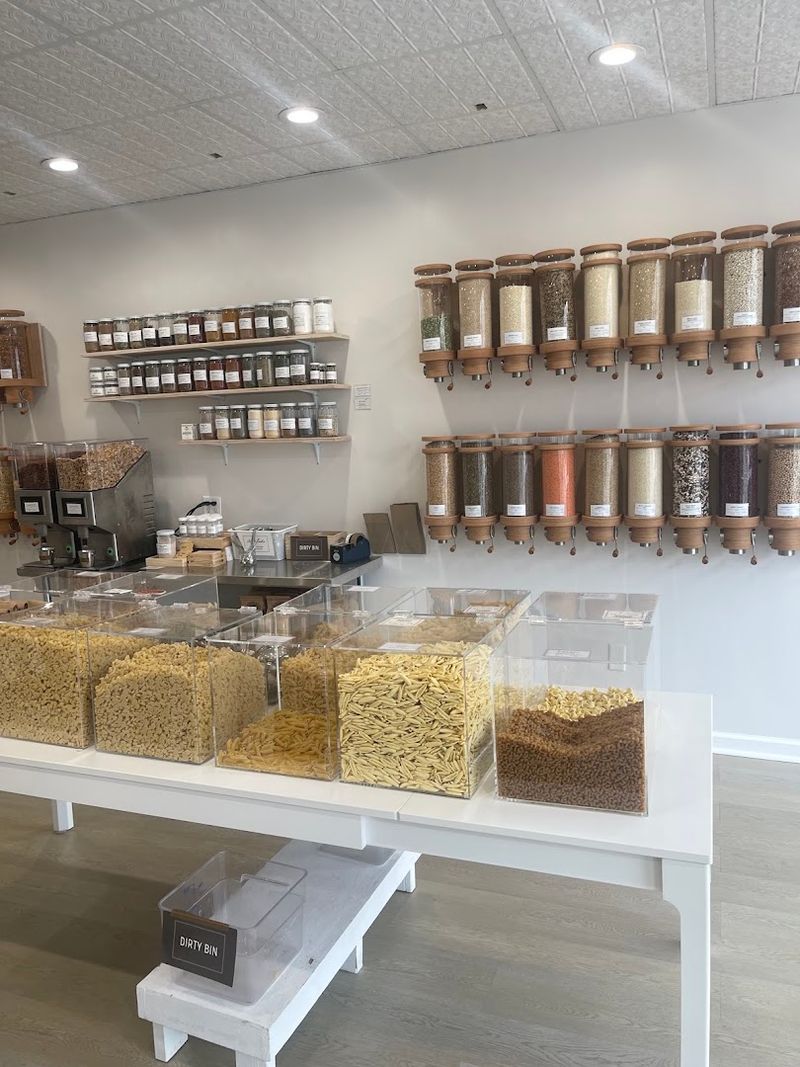
The bins are not limited to brown rice and virtuous-looking seeds. Dry Goods Refillery carries more than 275 refillable products, giving shoppers enough variety to build a pantry without resigning themselves to six versions of quinoa.
Grains, beans, pasta, flour, cereal, coffee, tea, nuts, dried fruit, spices, baking ingredients, oils, and snacks form the foundation of the selection. There are practical staples for weeknight cooking alongside treats that make the dispensers difficult to pass without stopping.
The ability to choose quantity is especially useful in the spice section, where supermarket jars can cost several dollars and outlast the recipe that prompted their purchase. Here, a shopper preparing one curry or batch of cookies can take only what is needed.
The store stretches beyond dry goods despite its name. Fresh produce, dairy products, eggs, bread, sauces, tofu, and pasta help turn the space into a functioning neighborhood grocery rather than a specialty bulk shop.
Household and personal-care refills add another layer. Dish soap, laundry products, cleaners, shampoo, conditioner, deodorant, and other everyday essentials address the bottles that quietly accumulate under sinks and along shower ledges.
Customers can refill a container they already own instead of buying a new pump or plastic jug every time the product runs low. That range is crucial because waste does not come from one aisle.
It builds through hundreds of small purchases made throughout the year. Dry Goods Refillery also ships more than 350 items nationwide without plastic, extending the concept beyond its Montclair storefront.
Yet the in-person experience remains the clearest demonstration of how the system works. A wall of bulk dispensers makes packaging suddenly visible by its absence.
The cereal is still cereal, the olive oil still belongs beside the stove, and the candy remains fully capable of derailing a sensible shopping list. The difference is what does not follow those products home.
Local Partnerships Keep Food Fresh and Packaging Out of the Trash
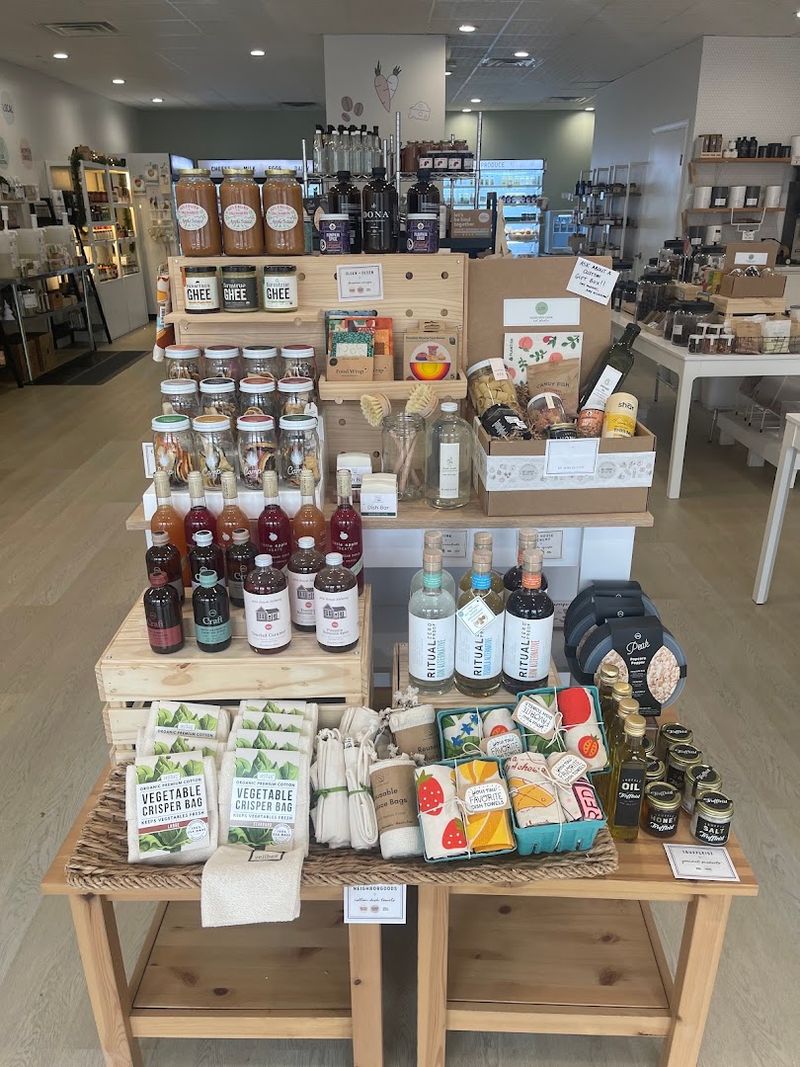
Montclair and its neighboring towns have no shortage of bakers, coffee roasters, small food producers, and independent merchants, giving Dry Goods Refillery a strong local network to draw from.
Garcia has used those connections to create a more circular supply chain, one in which packaging can be returned, reused, composted, or avoided altogether.
Coffee and granola producers, for example, can deliver goods in reusable tubs that go back to them rather than being discarded after a single shipment. Bakers and butchers can use compostable bags supplied by the store when conventional plastic-free delivery is not practical.
These arrangements require more coordination than simply accepting cases packed in layers of film, but they keep waste from being shifted behind the scenes. A shop cannot honestly call itself package-free if customers see pristine dispensers while mountains of supplier packaging pile up in the stockroom.
Local sourcing brings another advantage that shoppers can taste. Shorter lead times allow the store to carry fresh bread, eggs, dairy, produce, sauces, and pasta from nearby makers without ordering enormous quantities far in advance.
Smaller deliveries help keep inventory lean, reduce spoilage, and make room for new products without committing to warehouse-sized orders. Garcia’s buying background comes into play here, balancing environmental goals with the practical demands of keeping popular items available and prices manageable.
The partnerships also turn the store into a showcase for small New Jersey businesses that might otherwise struggle for supermarket shelf space.
Their products sit alongside fair-trade goods, items from small family farms, and supplies transported through lower-impact methods such as carbon-neutral shipping or electric delivery vehicles.
The result is not local for local’s sake. Each shorter trip, reusable tub, and compostable bag fits into a larger effort to prevent waste before it exists, while keeping more of the store’s relationships rooted in the communities surrounding Montclair.
Nearly 150,000 Containers Have Been Kept Out of Landfills
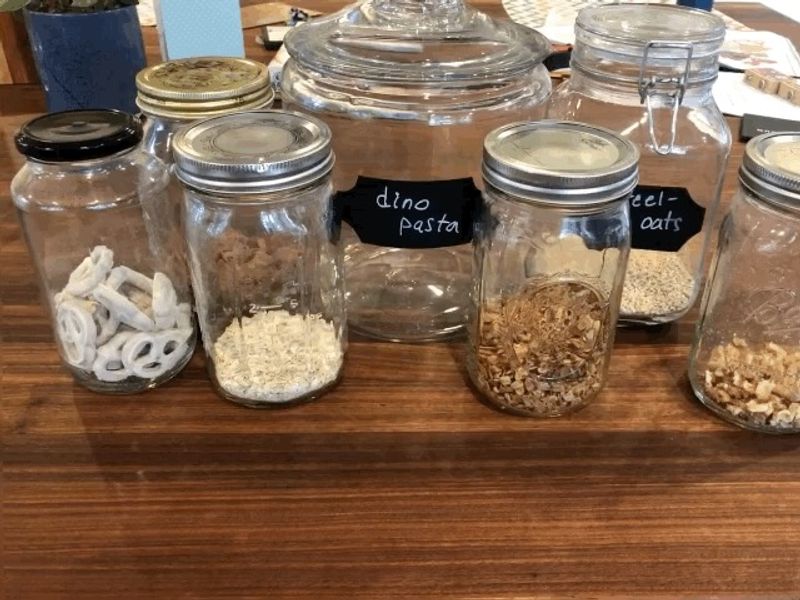
One jar of oatmeal does not look like an environmental breakthrough. Repeat that refill across thousands of shopping trips, however, and the arithmetic becomes difficult to ignore.
Within just a few years, Dry Goods Refillery estimated that its customers had prevented nearly 150,000 containers from entering landfills. That total includes the plastic pouches, bottles, tubs, wrappers, and boxes that ordinarily accompany pantry staples and household products.
Some might technically have carried recycling symbols, but recycling alone cannot solve the volume of disposable packaging moving through American homes. Avoiding a container entirely removes the need to manufacture it, transport it, sort it, process it, or discard it when no viable recycling market exists.
The store’s impact is therefore built from small, repeatable decisions rather than grand gestures. A family refills the same laundry bottle for months.
A coffee drinker returns with the same tin each week. A baker buys precisely the amount of specialty flour needed and avoids both a plastic bag and forgotten leftovers.
The number also demonstrates that convenience and sustainability do not have to be opponents.
Dry Goods Refillery has recorded double-digit sales growth in multiple years, survived the disruptions of the pandemic and inflation, added online ordering and nationwide shipping, and received recognition as a business willing to challenge an established retail model.
Its Montclair shop has become a community hub partly because the experience still provides something online shopping cannot dispense from a bin: conversation. Staff learn what regulars cook, first-time shoppers receive patient guidance, and local producers become recognizable names rather than tiny print on a label.
Nearly 150,000 avoided containers is the headline-worthy measurement, but the quieter change may be even more important. Inside this Bellevue Avenue grocery store, reusing a jar is no longer an unusual environmental statement.
It is simply how the rice, pasta, soap, or cereal gets home.
Share this story